
Introduction
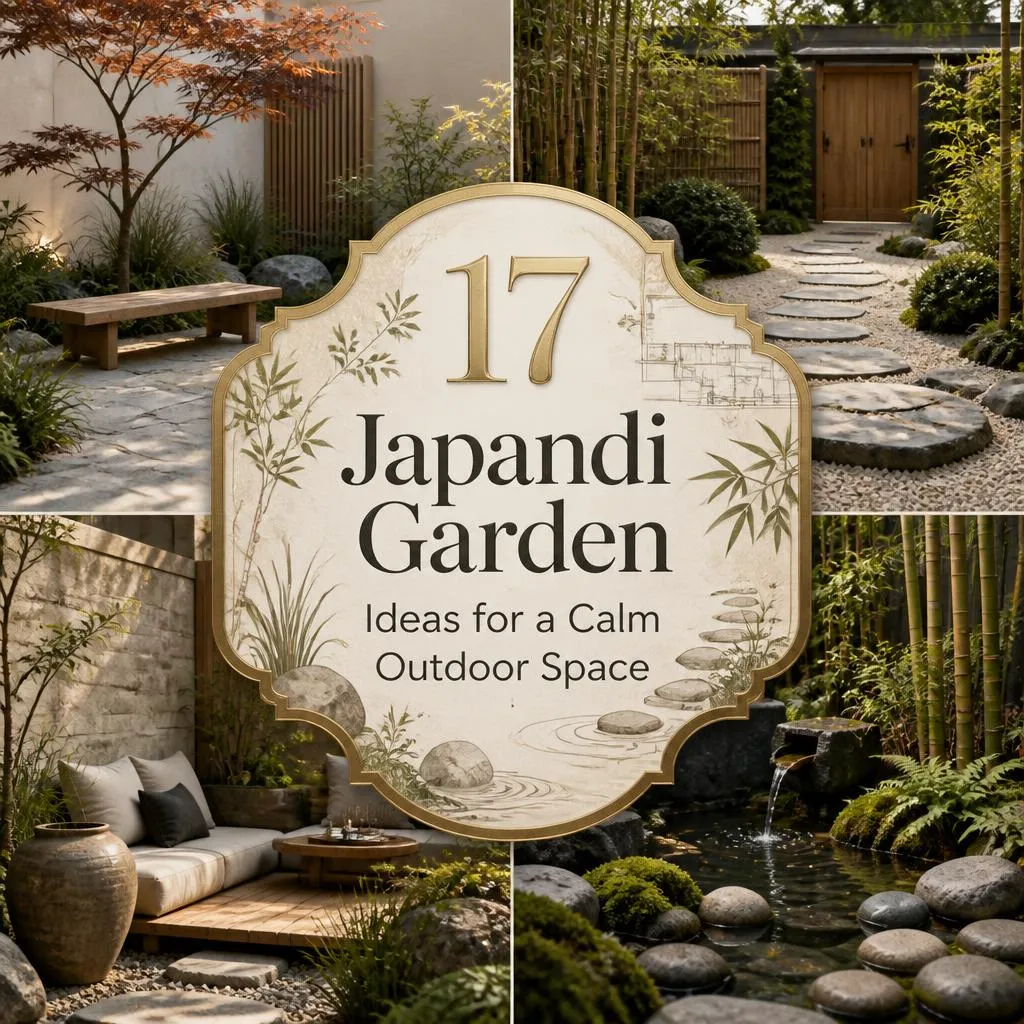
Japandi garden ideas blend the quiet structure of a Japanese garden with the warm, uncluttered ease of Scandinavian design, resulting in outdoor spaces that feel calm rather than empty. Think charred timber fencing, a single well-pruned tree instead of a dozen competing shrubs, low natural-fiber furniture, and warm clay tones standing in for bright florals. This guide gathers seventeen distinct ways to bring that restrained, materials-first philosophy into a real garden, whether that means a compact front entry, a full backyard redesign, or a single gravel corner in an otherwise ordinary yard. Each idea focuses on genuine materials and proportion rather than a themed shopping list, the kind of considered, slow-to-tire-of styling worth building an abode’s outdoor space around.
A Few Practical Notes on Japandi Materials and Safety
A few practical realities are worth sorting out before starting, since Japandi’s restrained look depends more on material quality and plant health than on decor quantity. First, not every plant associated with this style suits every climate: Japanese maple thrives in temperate zones with some afternoon shade but struggles in intense heat or hard frost, so gardeners in harsher climates often substitute a well-shaped serviceberry or smoke bush for similar structure and color. Second, gravel and moss both look effortless but are not maintenance-free, gravel needs an occasional rake and edge to stay crisp and weed-free, while moss only thrives in consistent shade and moisture and will brown out in a sunny, dry corner. Third, if a water basin or small pond is part of the plan, treat it as a genuine safety feature: any standing water deep enough to submerge a small child’s face is a drowning risk and should be fenced, covered, or kept shallow if young kids have unsupervised yard access, and any pump should run on a GFCI-protected outdoor outlet. Finally, if structured hedging is part of the look, note that boxwood, a common choice for clipped Japandi hedges, is listed as toxic to dogs and cats by the ASPCA, so households with pets that chew on garden plants may prefer Japanese holly or podocarpus for a similar clipped silhouette.
It is also worth saying plainly that this style will not suit every taste. If after reading through these ideas the pared-back Japandi look feels too spare for you, a warmer, more layered boho backyard approach might fit your outdoor space and personality better instead.
17 Japandi Garden Ideas to Try in Your Outdoor Space
Each idea below is genuinely distinct in material, technique, and scale, so scan for the ones that fit your climate and space rather than trying to layer every element into one small yard.
1. Charred Timber Privacy Fence
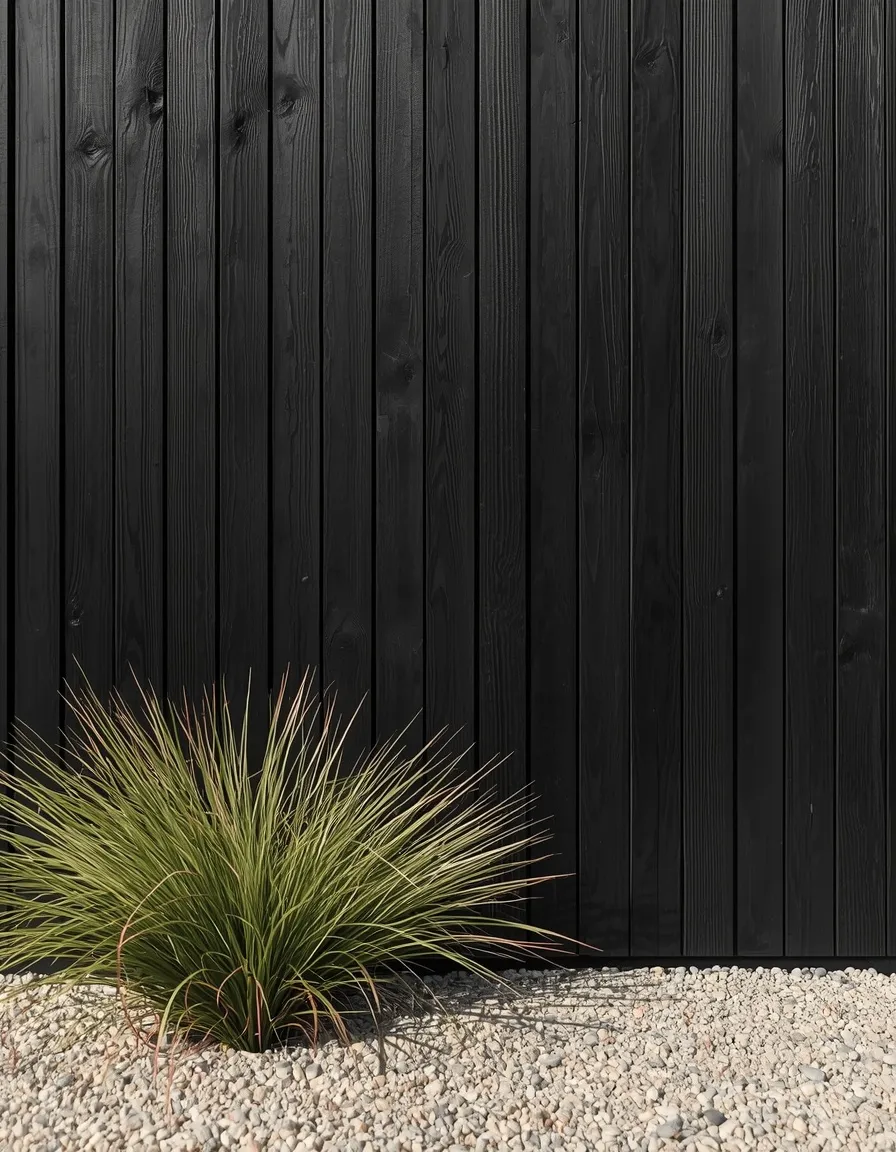
A fence built from vertical boards finished in the Japanese shou sugi ban technique, charred to a deep, matte black and sealed with natural oil, gives a garden boundary the same quiet weight as a stone wall without ever feeling heavy or ornamental.
Use pre-charred cladding boards from a reputable supplier rather than attempting the torch-charring process yourself unless you have real experience with controlled outdoor burning, since DIY charring involves an open flame against dry timber and should only be done outdoors, away from structures, with a hose or extinguisher on hand. Pair the dark fence with lighter gravel or pale stone underfoot so the boundary reads as a backdrop rather than swallowing the whole garden in black. This technique also naturally resists rot and insects, which is part of why it has been used on Japanese buildings for centuries.
- Creates a striking, low-maintenance boundary with genuine historical grounding
- Suits gardens wanting privacy without a solid, closed-off wall feeling
- Solves the flimsy look of standard stained fence panels
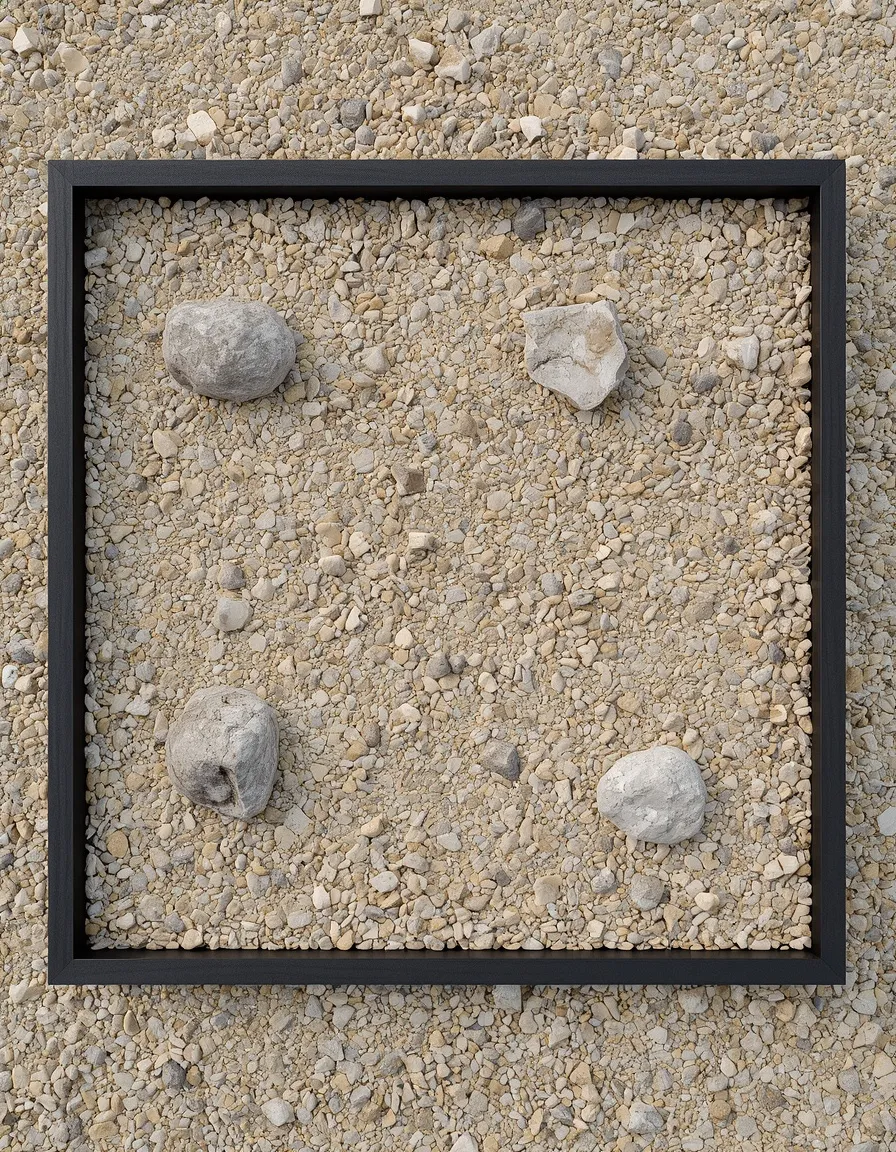
2. Raked Gravel Zen Corner
A small, contained square of raked pale gravel, punctuated by two or three placed stones and nothing else, gives even a modest garden a genuine meditative focal point borrowed directly from Japanese dry garden tradition.
Keep this feature contained with a timber or steel edge rather than letting it blend into surrounding beds, since a defined boundary is part of what makes a raked gravel area read as intentional rather than unfinished. Use a wide-tooth rake kept specifically for this purpose, and re-rake weekly or after wind and rain disturb the pattern, which is a genuine maintenance commitment rather than a one-time install. This idea works best as a small, contemplative accent, roughly 6 by 6 feet (1.8 by 1.8 m) or less, rather than the garden’s main feature.
- Adds a genuine meditative element distinct from planted areas
- Suits small courtyards and side-yard corners as well as larger gardens
- Solves the want for texture and pattern without any planting
3. Neutral Stone Stepping Path
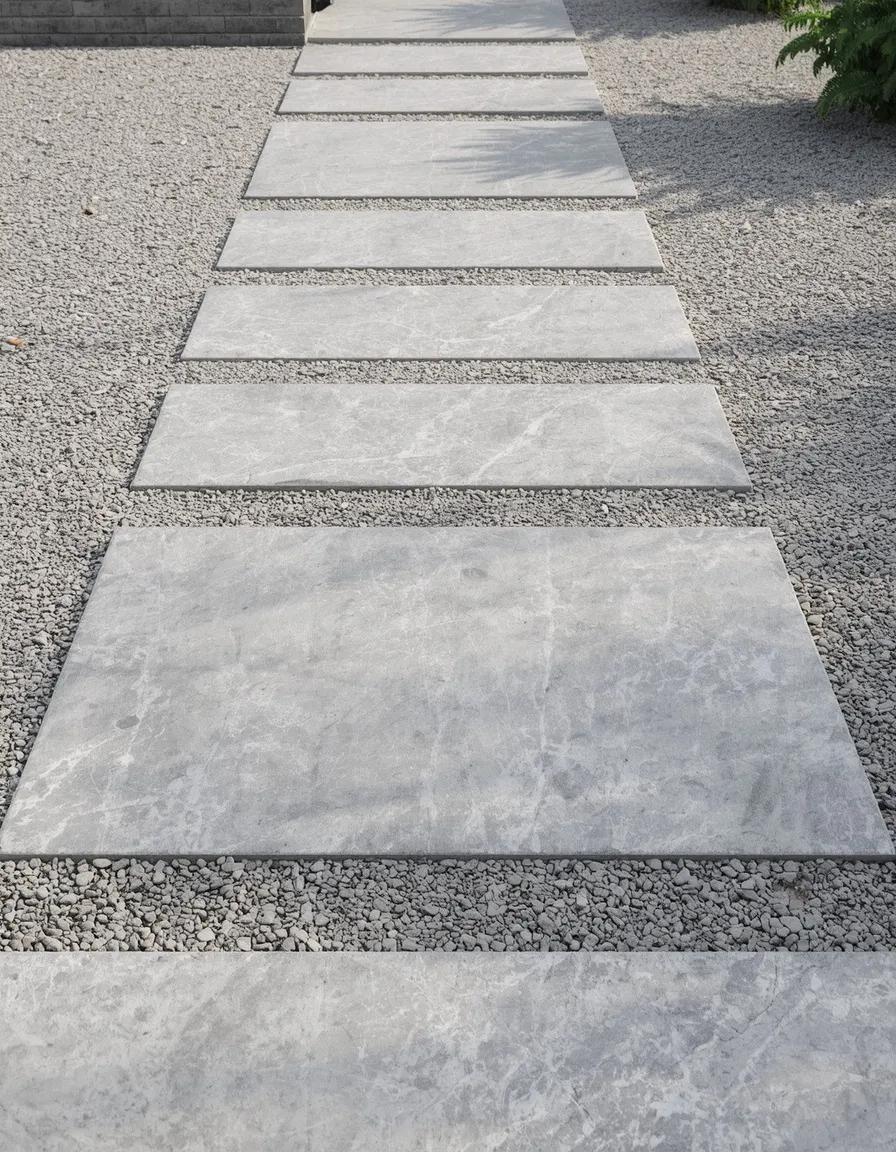
Large, flat, irregularly shaped stone pavers set with wide gaps of gravel or moss between them lead through the garden in a deliberately uneven rhythm, the kind of path that slows a visitor’s pace rather than rushing them through.
Space stones by natural stride length, roughly 24 to 28 inches (61 to 71 cm) center to center, and vary the gap widths slightly rather than setting them in a perfectly even grid, which is part of what gives a Japandi path its organic, unforced feel. Choose a single stone type throughout, granite, slate, or sandstone depending on regional availability, rather than mixing materials, which keeps the palette calm. Set stones on a compacted gravel base rather than directly on soil to prevent shifting and puddling after rain.
- Creates a deliberate, slow-paced garden circulation route
- Suits gardens wanting texture underfoot without a solid poured path
- Solves the harsh, utilitarian look of standard concrete pavers
4. Low-Profile Teak Furniture
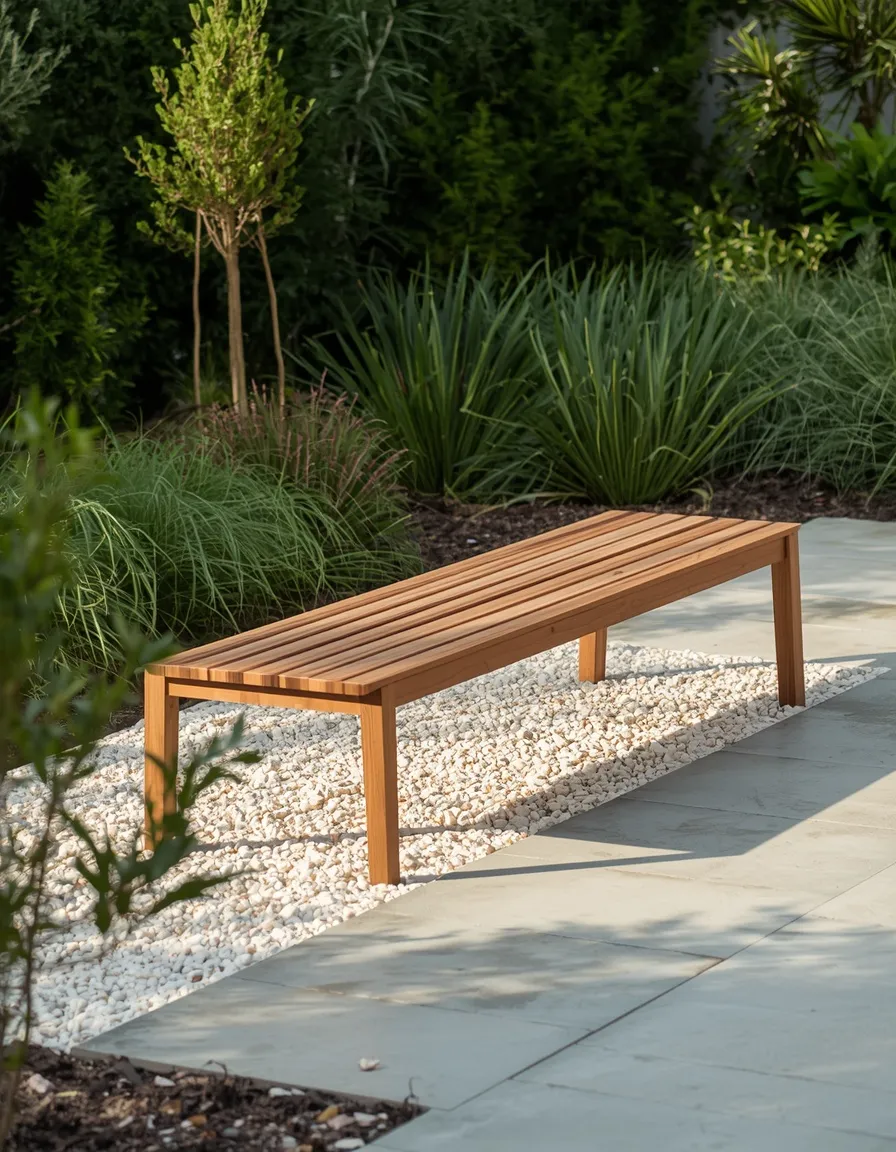
A low teak bench or a slim-legged lounge chair, sitting closer to the ground than typical Western patio furniture, brings the grounded, floor-oriented proportions common to both Japanese and Scandinavian interiors out into the garden.
Choose furniture with visible joinery and minimal hardware over anything heavily upholstered or bulky-framed, since exposed wood grain and simple lines are core to the look. Untreated teak silvers naturally over a year or two outdoors, which most Japandi styling embraces rather than fights with regular oiling, though an occasional teak oil application keeps the wood from drying and cracking in very hot, dry climates. This furniture works best kept to one or two pieces per seating area rather than a full matching set, leaving visible open space around it.
- Grounds the seating area with a calm, low horizontal line
- Suits patios and decks wanting an uncluttered, spacious feel
- Solves the bulky, overly cushioned look of typical outdoor furniture sets
5. Structured Pruned Trees with Soft Grasses
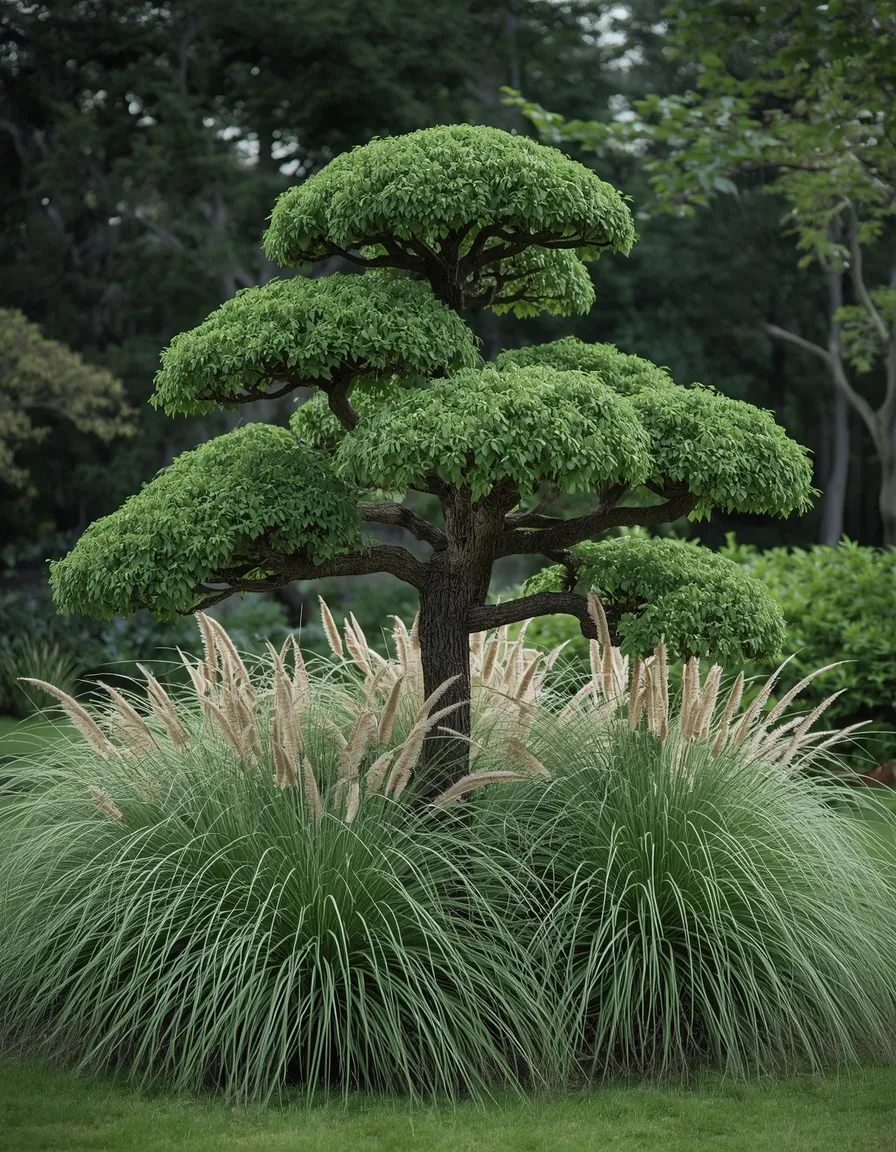
A single, carefully pruned tree, shaped in the cloud-pruning style known as niwaki, standing above a loose drift of ornamental grasses at its base pairs Japanese structural discipline with Scandinavian planting softness in one composition.
Choose a naturally small or slow-growing tree, Japanese maple, pine, or a well-shaped olive in warmer climates, and commit to annual structural pruning rather than letting it grow unchecked, since the cloud-like shaping is maintained through ongoing cuts, not a one-time trim. Underplant with feathery grasses like Mexican feather grass or a native equivalent, which move in wind and soften the tree’s formal shape without competing with it. This combination anchors a garden view from a single fixed point, a window or seating area, more effectively than scattered planting throughout the yard.
- Creates a genuine focal point visible from indoors year-round
- Suits gardens wanting structure without a fully formal, clipped look
- Solves the busy, cluttered look of many small unrelated plants
6. Warm Clay Pots and Pathways
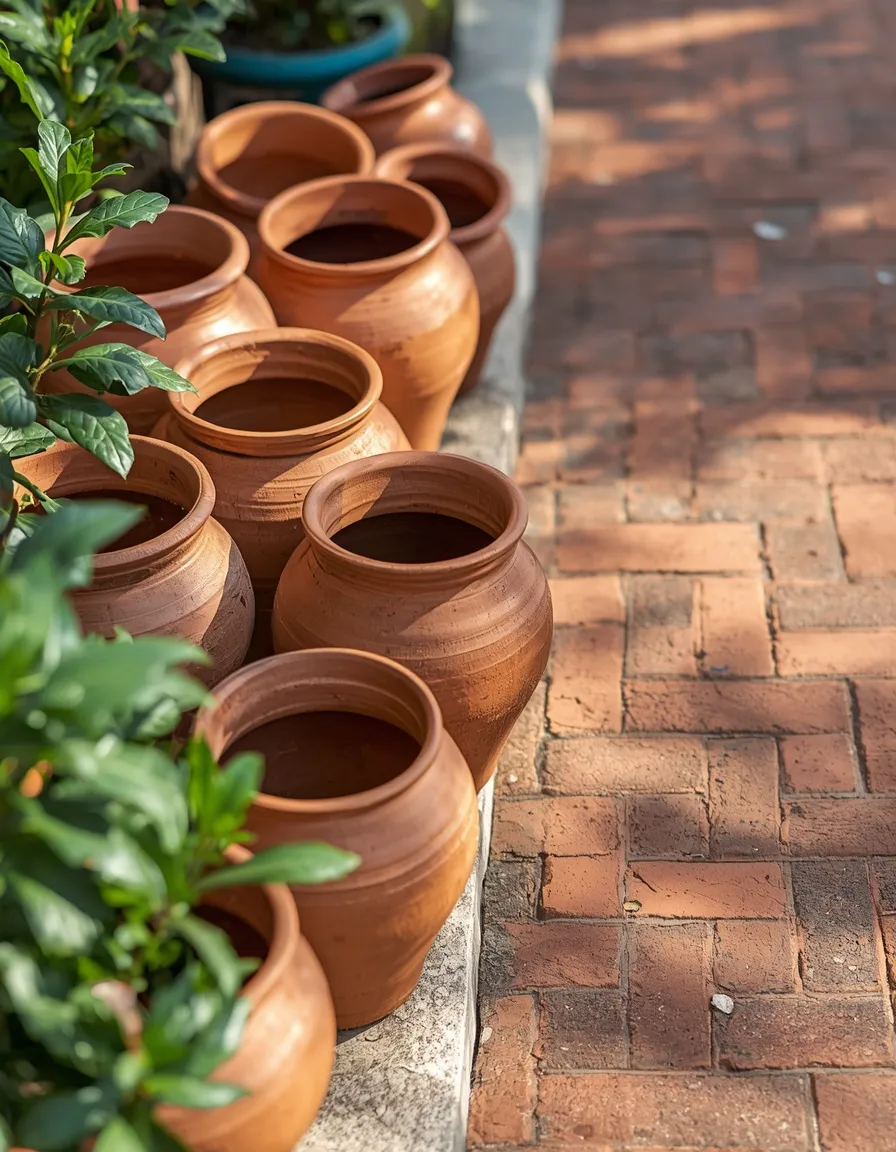
Unglazed terracotta pots in varying sizes, paired with a warm clay-toned brick or paver pathway, bring the earthy, sun-baked color that keeps a Japandi garden from tipping too far into cold, gray minimalism.
Stick to one clay tone family throughout rather than mixing bright glazed pottery with the terracotta, since the warmth of unglazed clay against pale gravel or timber is the specific contrast this look depends on. Terracotta is porous and dries out faster than glazed or plastic containers, so plants in these pots typically need watering slightly more often, especially through summer; group thirstier plants together so watering stays efficient. This pairing works particularly well as a warming counterpoint to the charred timber fence idea above, balancing dark and warm tones across the same garden.
- Introduces warmth that prevents an all-neutral garden from feeling cold
- Suits patios, entries, and container-heavy small gardens
- Solves the sterile look of an all-gray or all-green palette
7. Minimalist Water Basin Feature
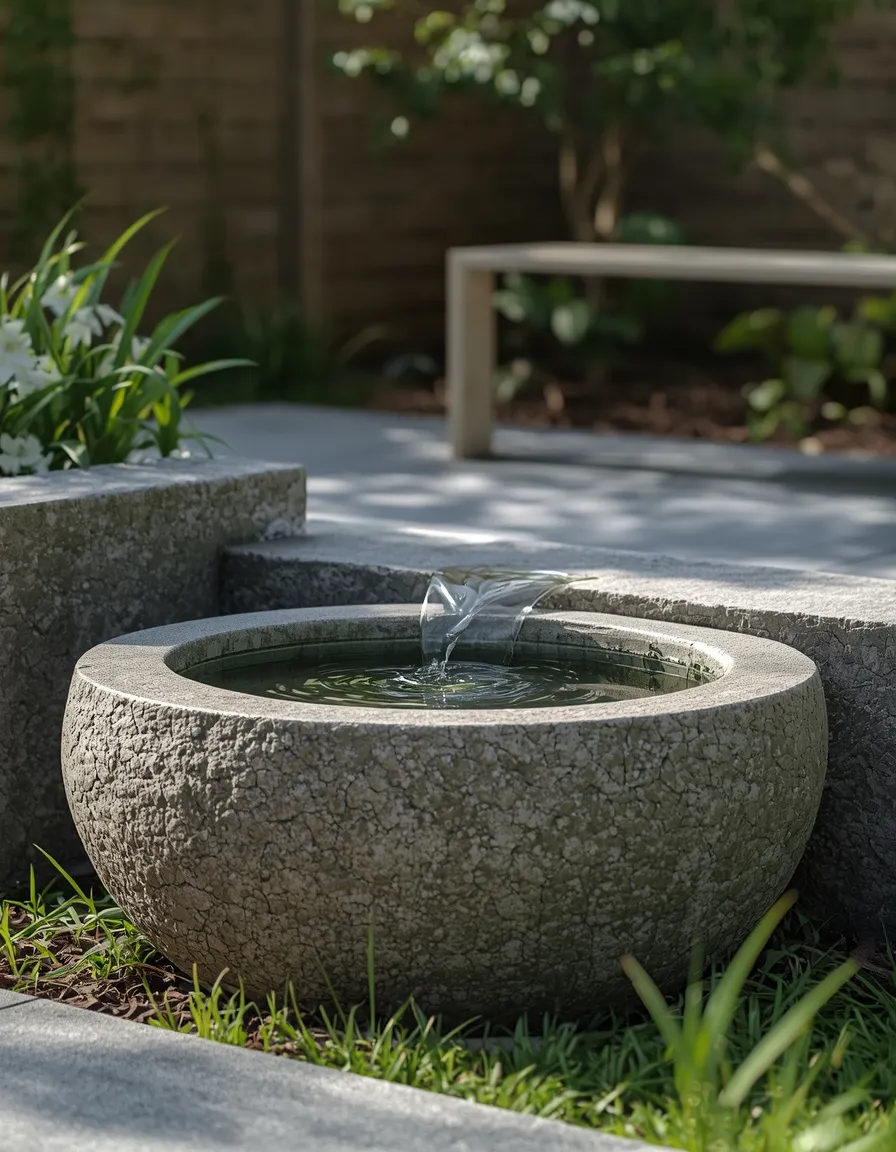
A single stone or cast-concrete basin, filled with still or gently trickling water and set low to the ground near a seating area, brings the quiet sound and reflection of a traditional tsukubai water basin into a modern garden without any elaborate pond system.
Choose a basin with a simple, geometric or naturally irregular stone shape rather than anything ornately carved, and run any pump on a dedicated GFCI-protected outdoor outlet, since combining water and electricity outdoors carries a real shock risk without proper grounding. If young children have unsupervised access to the garden, keep the water depth shallow, under about 2 inches (5 cm), or choose a bubbling rock feature with no open standing water at all, since even a small basin poses a drowning risk to a toddler. Clean and refresh the water regularly to prevent mosquito breeding in warmer climates.
- Adds sound and movement without a full pond installation
- Suits small courtyards where a full water garden is not practical
- Solves the static, silent feeling of an all-hardscape or all-plant garden
8. Woven Natural Fiber Outdoor Rug
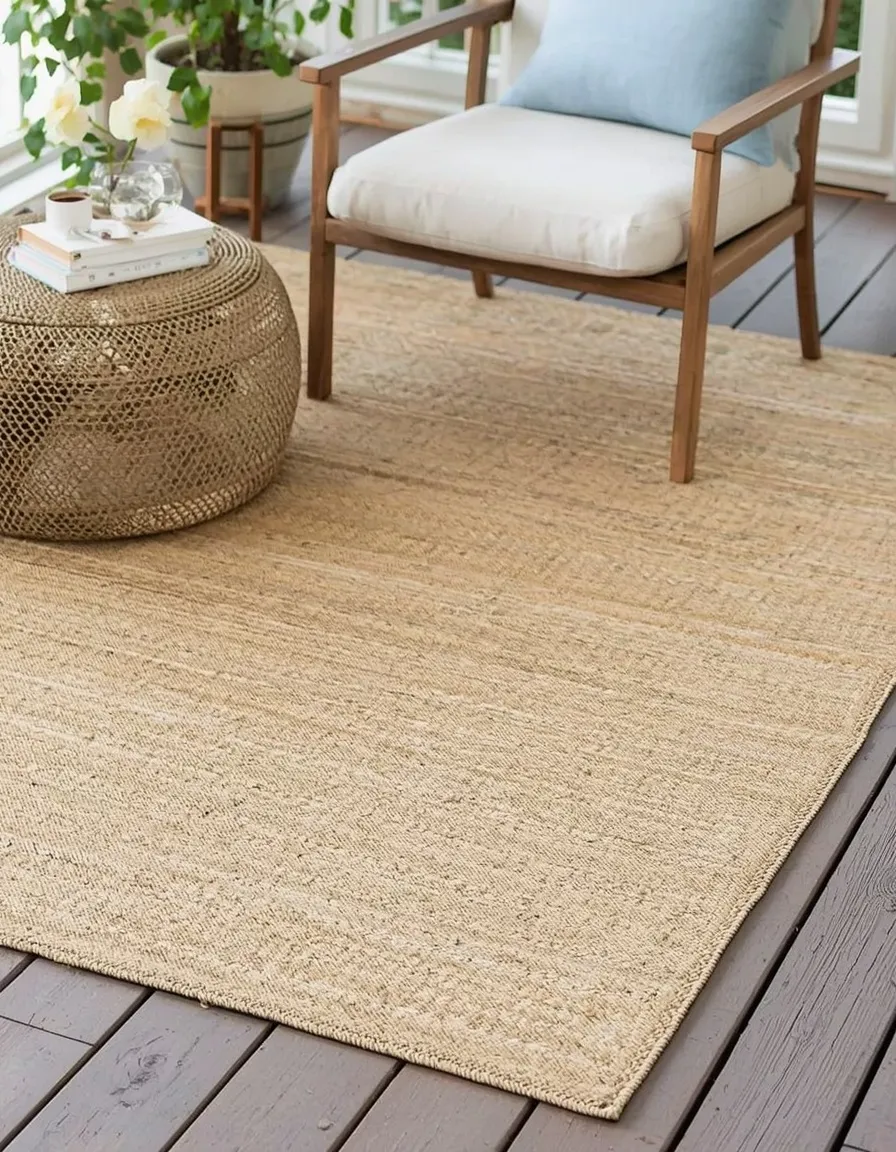
A flatwoven rug made from a durable natural fiber look, like sisal-look polypropylene or treated jute, laid under a low seating group on a deck or patio, adds texture underfoot in the same muted, undyed color family as the rest of the space.
Choose an outdoor-rated synthetic that mimics natural fiber rather than true jute or sisal for anywhere exposed to rain, since genuine plant fibers mildew and degrade quickly outdoors, while a well-made polypropylene version holds the same visual texture and dries out without damage. Size the rug to extend slightly beyond the furniture group’s footprint so it reads as an anchor rather than a small mat floating under a chair. Roll and store the rug during winter in climates with heavy snow or prolonged freezing, which extends its usable life significantly.
- Softens hard decking or paving without permanent installation
- Suits covered or partly covered patios more than fully exposed ones
- Solves the cold, bare look of unstyled outdoor flooring
9. Indoor-Outdoor Deck Threshold
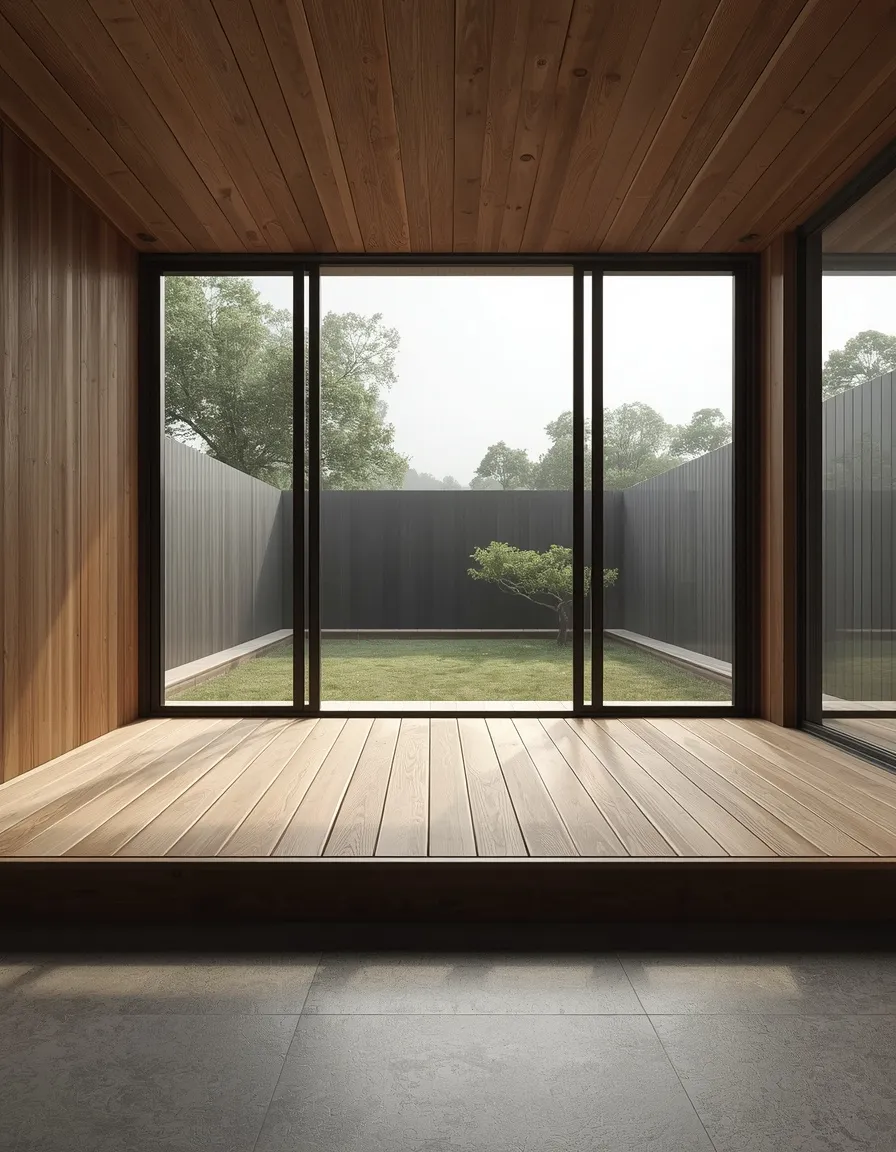
A low timber deck built flush with an interior floor level, accessed through a wide sliding or folding glass door, recreates the engawa-style transition found in traditional Japanese homes, where the boundary between inside and the garden almost disappears.
Match the deck’s flooring tone as closely as possible to the interior floor, or choose a complementary warm wood tone if an exact match is not possible, since visual continuity across the threshold is what makes this idea work. A wide sliding or bifold door, rather than a standard hinged patio door, makes the connection feel more open when fully retracted. This idea requires more structural planning than most others on this list, so it suits a renovation or new build more than a quick weekend update, but it delivers the strongest indoor-outdoor connection of any single idea here.
- Blurs the line between interior living space and the garden
- Suits homes with a renovation or new deck build already planned
- Solves the abrupt, disconnected feeling of a standard step-down patio
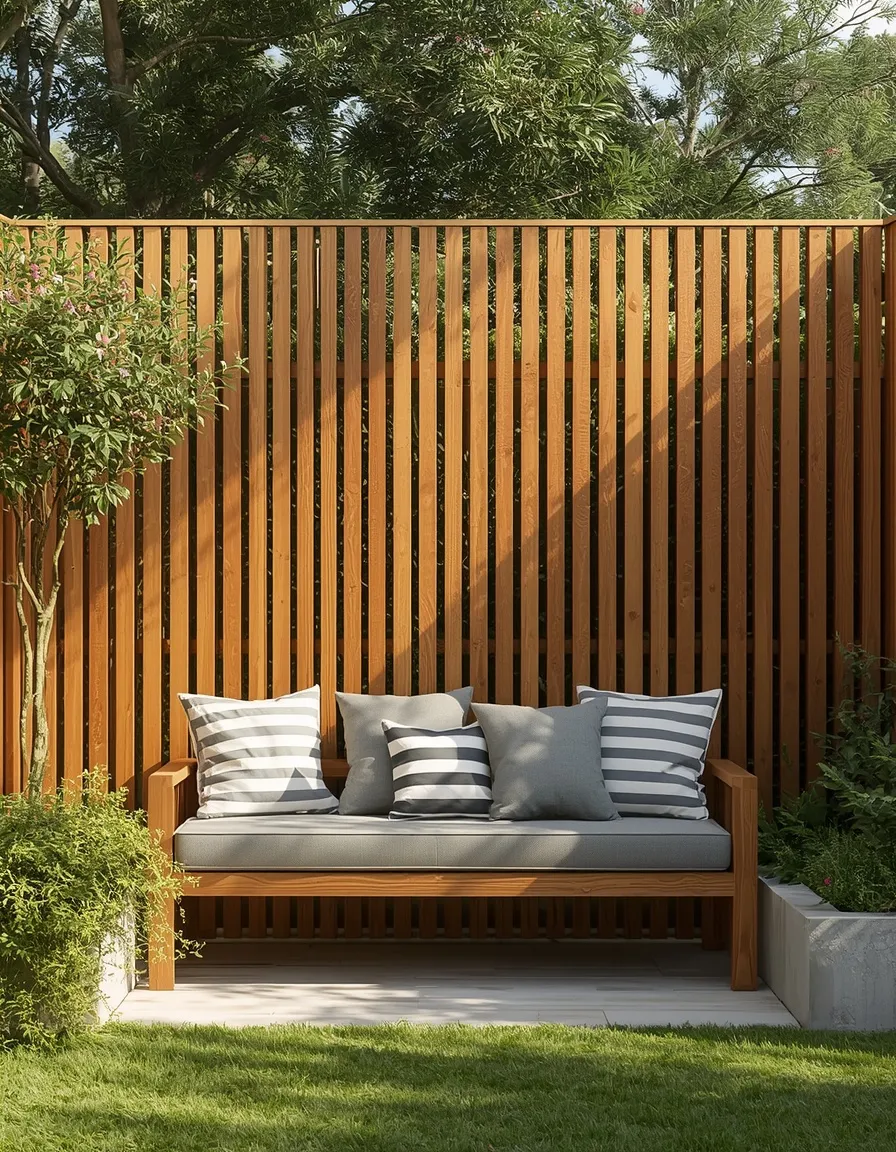
10. Textured Timber Slat Garden Wall
A freestanding wall of evenly spaced vertical timber slats, positioned behind a seating nook or planting bed rather than along a property line, creates a textured backdrop that filters light into narrow moving stripes throughout the day.
Space slats with consistent gaps, typically matching the slat’s own width, so the rhythm reads as deliberate, and mount them on a simple steel or timber frame set in concrete footings for stability in windy conditions. Unlike the solid charred fence used for boundary privacy, this wall works as an internal garden feature, placed to catch afternoon light or partially screen a utility area like a bin store or shed. Leave the timber to weather naturally to a soft gray, or apply an exterior oil to preserve its warmer original tone, depending on which look suits the rest of the garden.
- Adds a textured, light-filtering backdrop within the garden itself
- Suits screening a utility area without a fully solid, closed structure
- Solves the flat, background-less look of an open lawn or patio
11. Moss and Stone Ground Cover
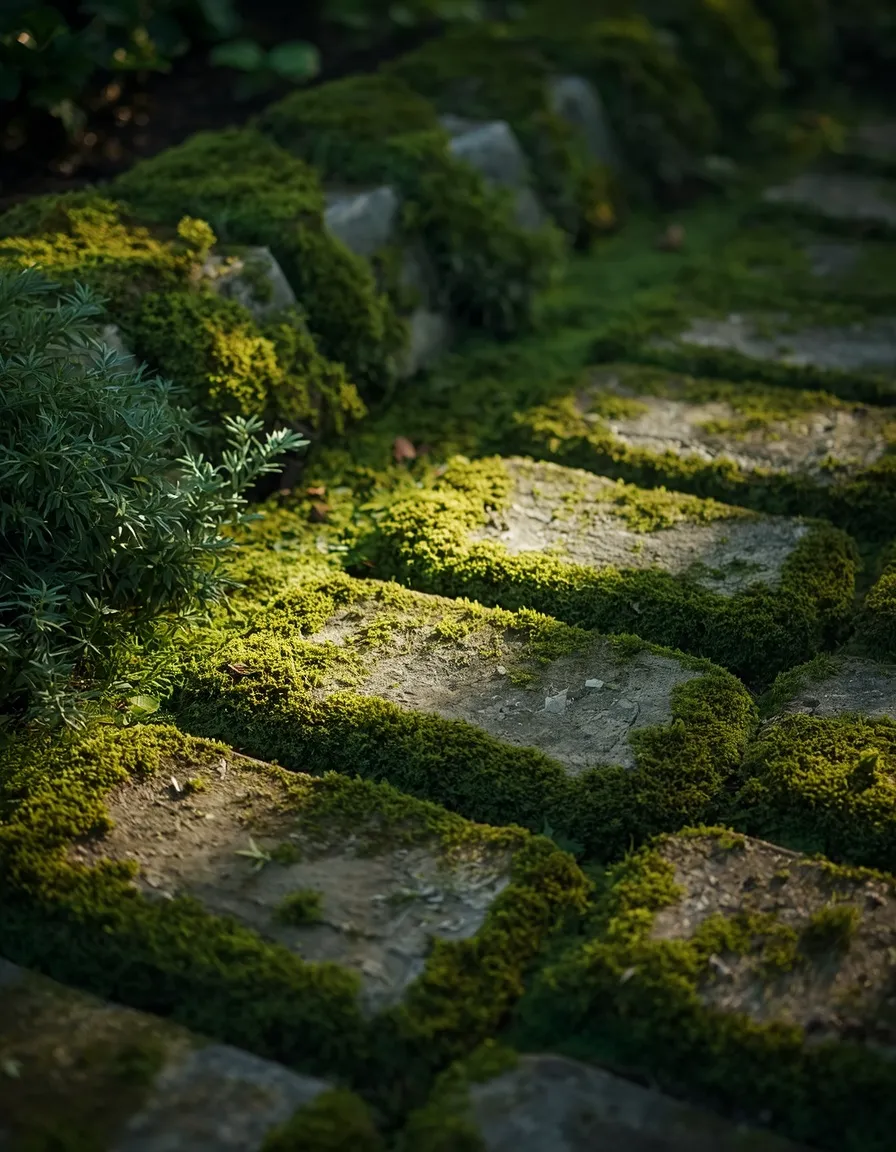
A shaded corner planted entirely in moss, threaded between larger flat stones rather than grass or mulch, gives a Japandi garden its softest, quietest texture, the kind that muffles footsteps and stays a consistent green through most of the year.
Moss needs consistent shade and moisture to establish and spread, so this idea only works in genuinely shaded, humid-enough spots, typically under tree canopy or on a north-facing side yard; attempting it in full sun or a dry climate leads to constant browning and replanting. Water newly laid moss daily for the first few weeks until it roots into the surface below, then reduce to occasional misting during dry spells once established. Keep foot traffic to the stone stepping points only, since moss does not tolerate regular walking pressure the way turf grass does.
- Provides year-round green texture in spots too shaded for grass
- Suits climates or garden corners with reliable natural shade and moisture
- Solves the bare, patchy look of grass struggling in deep shade
12. Wabi-Sabi Container Garden
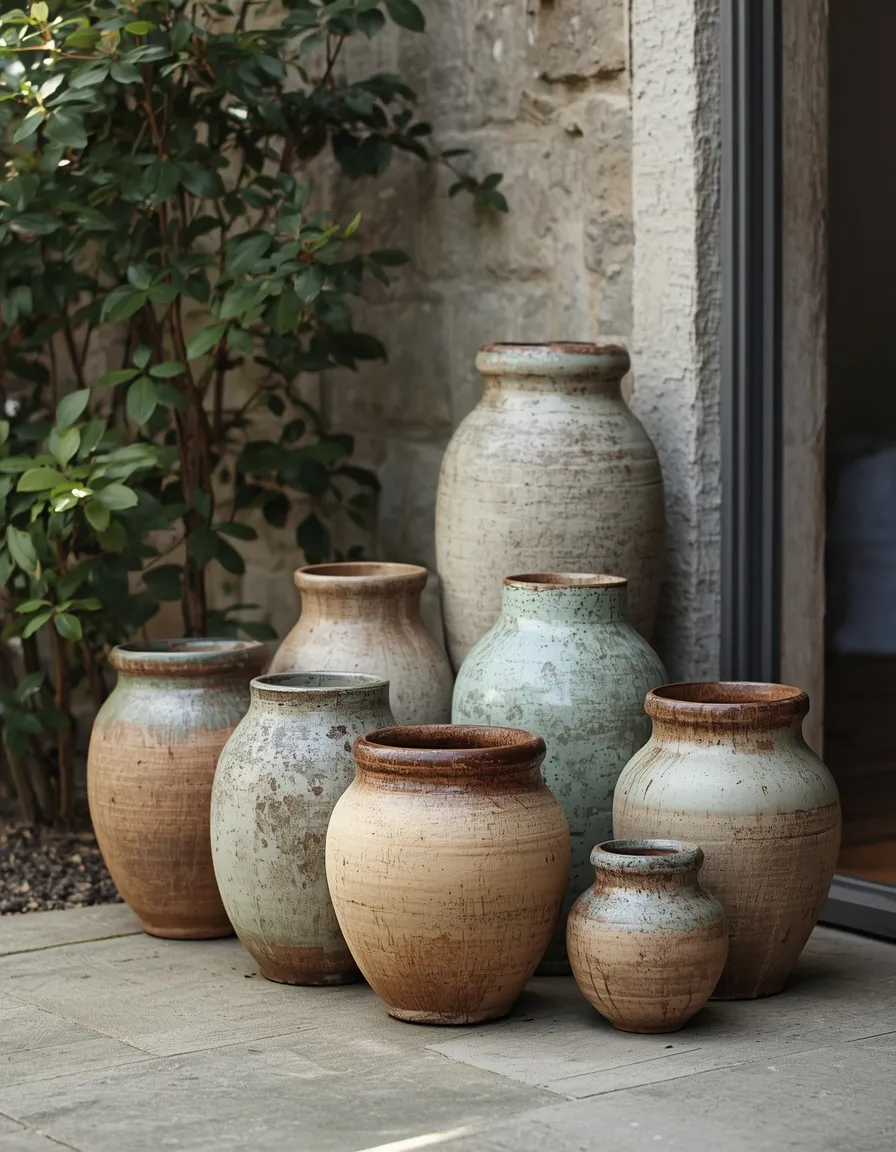
A cluster of deliberately imperfect, handmade ceramic pots, each with slightly different glaze pooling, asymmetric shaping, or a visible maker’s mark, gathered together rather than matched, brings the wabi-sabi appreciation for natural imperfection directly into container planting.
Choose pots from different makers or batches rather than a matching set from one retailer, and resist the urge to arrange them in a perfectly symmetrical line; a slightly irregular cluster, varied heights and one plant type repeated across two or three pots, reads as intentional rather than mismatched. This idea suits gardeners drawn to ceramics and craft as much as horticulture, and works particularly well near an entry or seating area where the pots can be appreciated up close rather than viewed from a distance. Rotate seasonal plantings within the same pots rather than buying new containers each season, which keeps the collection cohesive over time.
- Celebrates handmade imperfection rather than uniform, mass-produced planters
- Suits entries and close-up seating areas over distant garden views
- Solves the overly matched, showroom feeling of identical container sets
13. Charcoal Accent Furniture and Pots
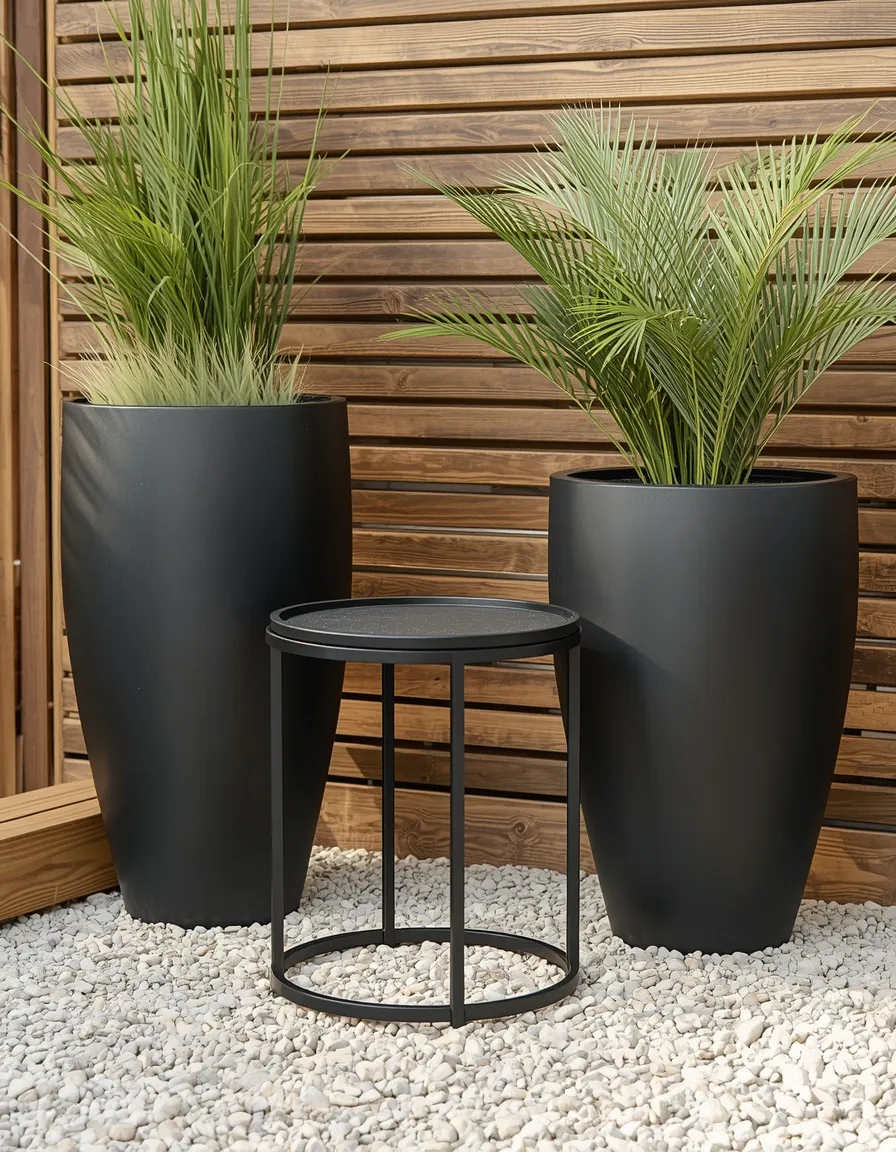
A scattering of charcoal-black planters, a matte black steel side table, or dark-stained trim against an otherwise pale, natural-material garden adds contrast and definition, the same way a single dark object grounds a Scandinavian interior.
Limit charcoal accents to about a third of the garden’s visible elements at most, since Japandi’s balance depends on pale and warm-toned materials remaining the dominant note, with dark accents used sparingly for contrast rather than as an equal partner. Matte black outdoor-rated steel and powder-coated aluminum hold their finish far better through weather exposure than painted wood, which chips and needs regular touch-up. This idea pairs naturally with the charred timber fence, letting one strong dark material story run through both hardscape and furniture.
- Adds visual weight and contrast to an otherwise pale material palette
- Suits gardens that already lean heavily neutral or pastel
- Solves the flat, low-contrast look of an all-beige garden scheme
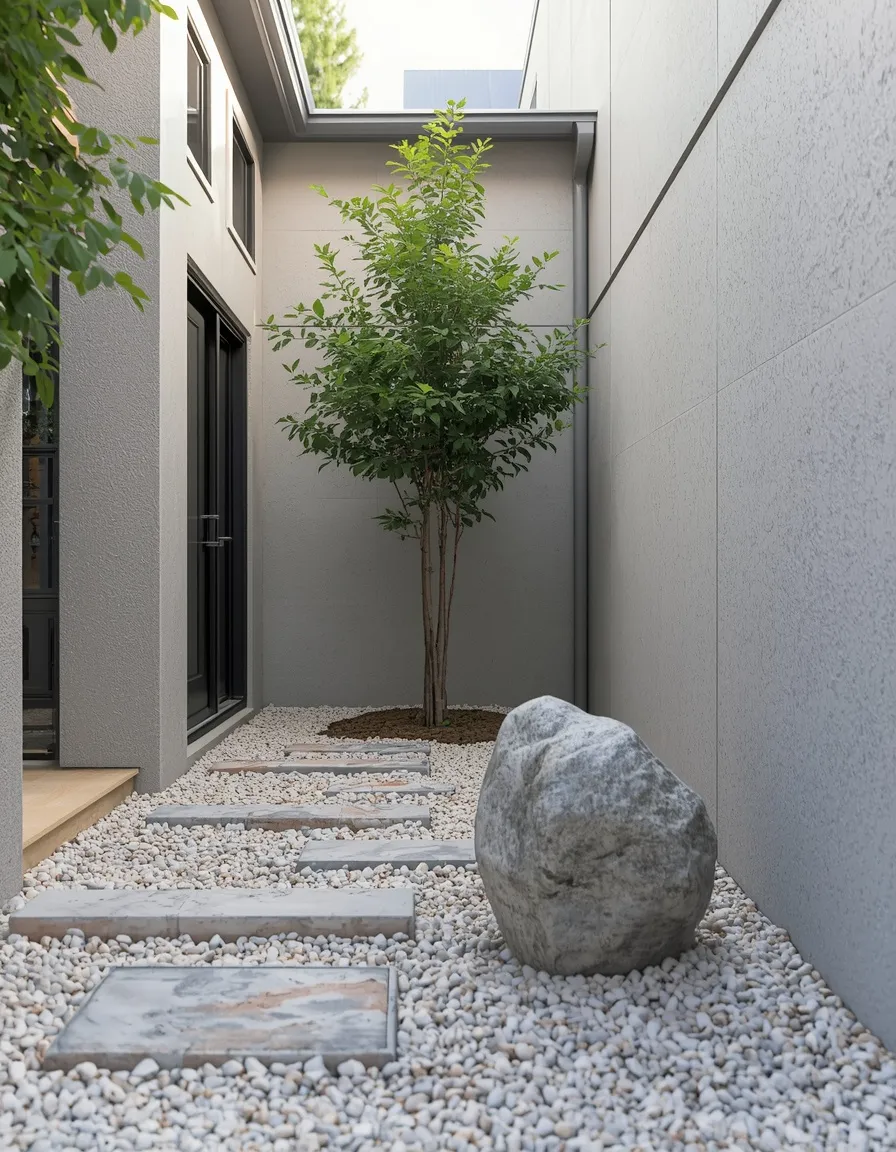
14. Japandi Front Garden Entry
A narrow front garden bed, gravel underfoot, a single specimen tree, and one or two large stones set with intention rather than scattered, gives a home’s entry the same calm, uncluttered first impression as a well-designed backyard.
Keep the plant palette to two or three species maximum in a small front garden, since a limited palette repeated consistently reads as considered in a space passersby only glimpse briefly, while a wide mix of unrelated plants reads as cluttered at that scale. Position the specimen tree or largest stone slightly off-center rather than dead-center on the front door, borrowing the asymmetry common in Japanese garden composition, which tends to look more natural and less formal than a perfectly centered arrangement. Check with your local council or HOA before removing an existing front lawn entirely, since some areas have specific rules about front-yard landscaping changes.
- Creates a calm, considered first impression from the street
- Suits smaller front gardens better than sprawling backyard-scale ideas
- Solves the busy, unplanned look of a typical mixed foundation planting
15. Layered Dry Gravel Garden Zones
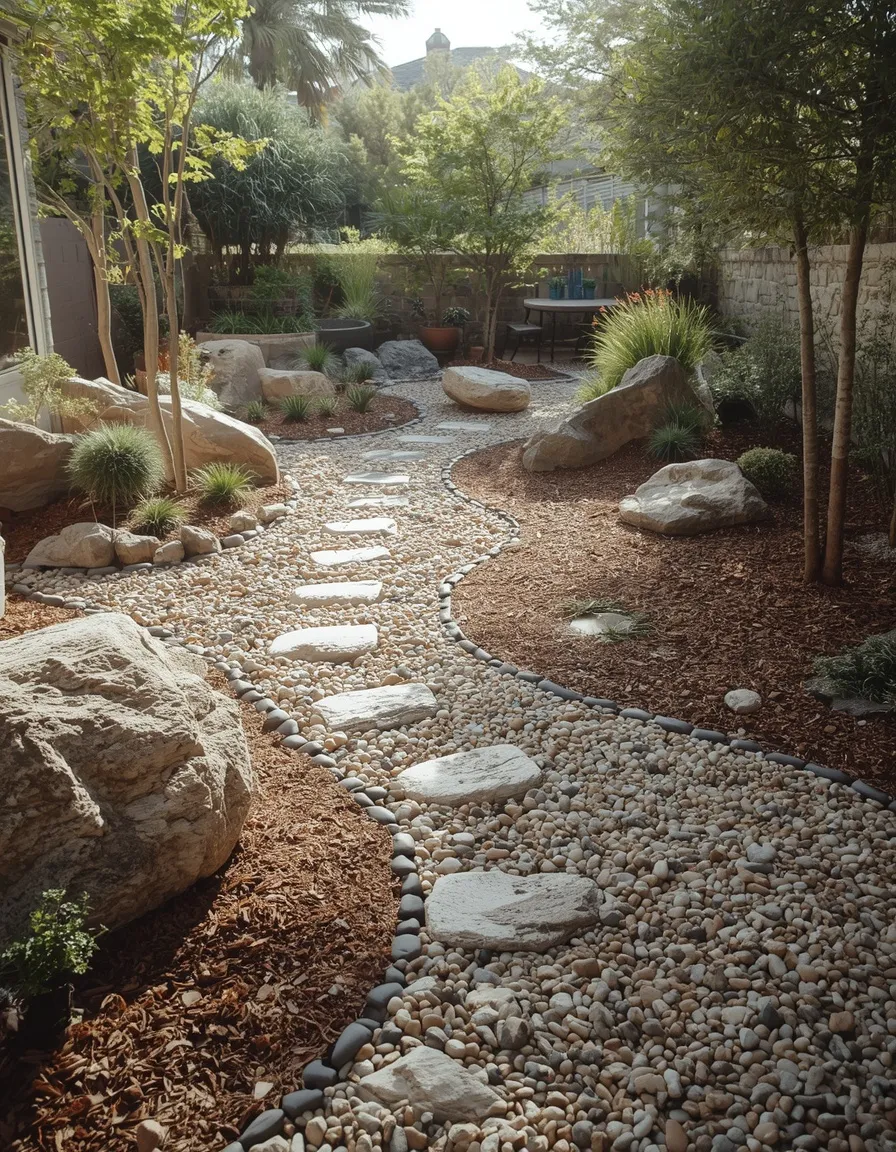
Broader than a single raked zen corner, a full dry garden layout combines several gravel zones of slightly different stone sizes and tones, punctuated by larger boulders and structural planting, to fill an entire backyard or side garden without relying on lawn.
Vary gravel size and color between zones, a finer pale gravel near seating areas and a coarser, darker stone further out, to create depth and visual zoning without any planting at all in some sections. This layout suits low-water, low-maintenance gardens in dry climates particularly well, since established dry gardens need far less irrigation than an equivalent lawn once boulders and structural plants are in place. Lay a permeable weed barrier fabric beneath all gravel zones before installation, since skipping this step is the most common reason a dry garden fills with weeds within a single growing season.
- Replaces water-intensive lawn with a genuinely low-maintenance alternative
- Suits dry, sunny climates better than the shaded moss idea above
- Solves the ongoing mowing and watering demands of a full lawn
16. Linen and Natural Fiber Textiles
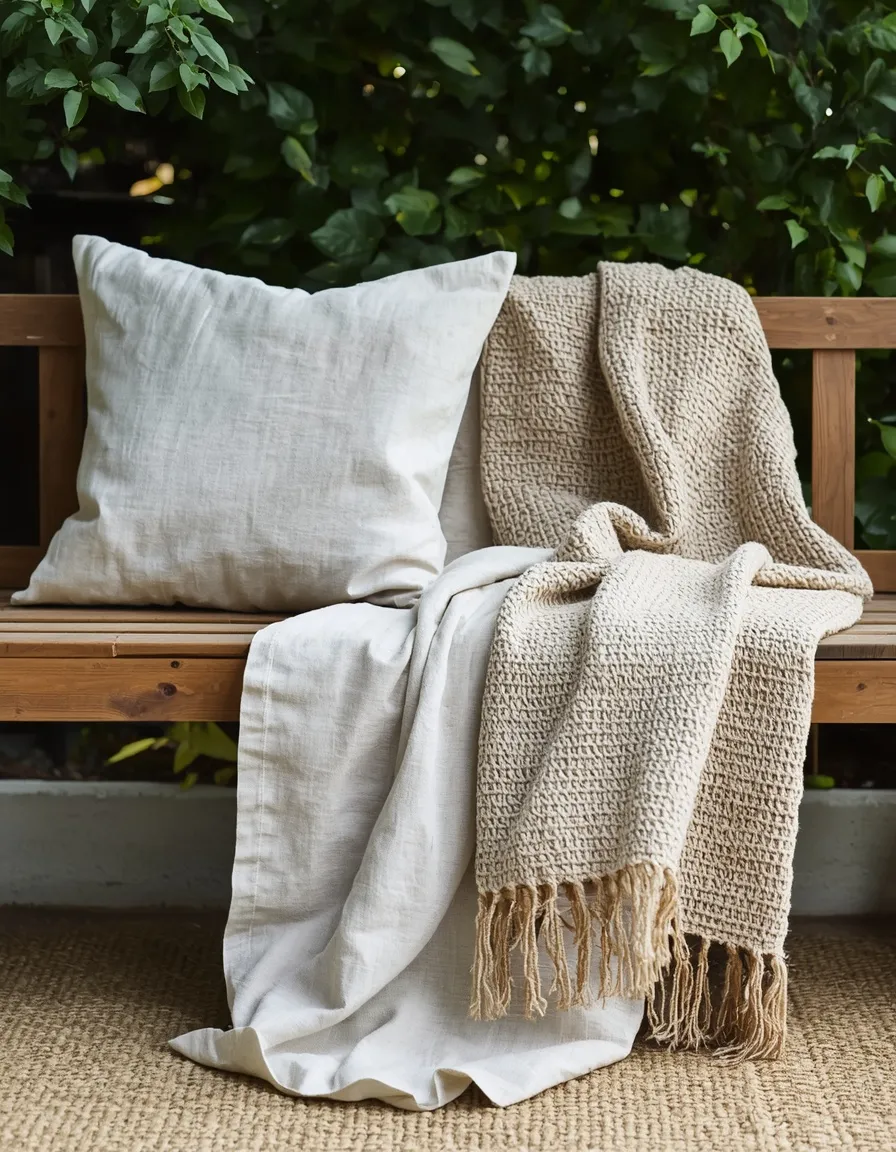
Loose linen cushion covers and a simple woven throw draped over an outdoor bench soften the garden’s hard materials, wood, stone, and steel, with the same relaxed, undyed textile texture found in Scandinavian interiors.
Choose outdoor-rated linen-look fabric with a water-resistant finish over true linen for anything left outside regularly, since genuine linen holds moisture and mildews faster than performance fabric blends designed for exterior use. Stick to a narrow, undyed or lightly stone-washed color range, oatmeal, sand, soft gray, rather than patterned or brightly colored textiles, which pull focus away from the material palette everywhere else in the garden. Bring cushions indoors overnight or store them in a weatherproof box during extended rain, since even outdoor-rated fabric fades and wears faster with constant sun and moisture exposure.
- Adds tactile softness without introducing pattern or bright color
- Suits any seating area wanting a more finished, lived-in feel
- Solves the hard, unwelcoming feel of bare wood or stone seating
17. Minimal Steel Garden Bed Edging
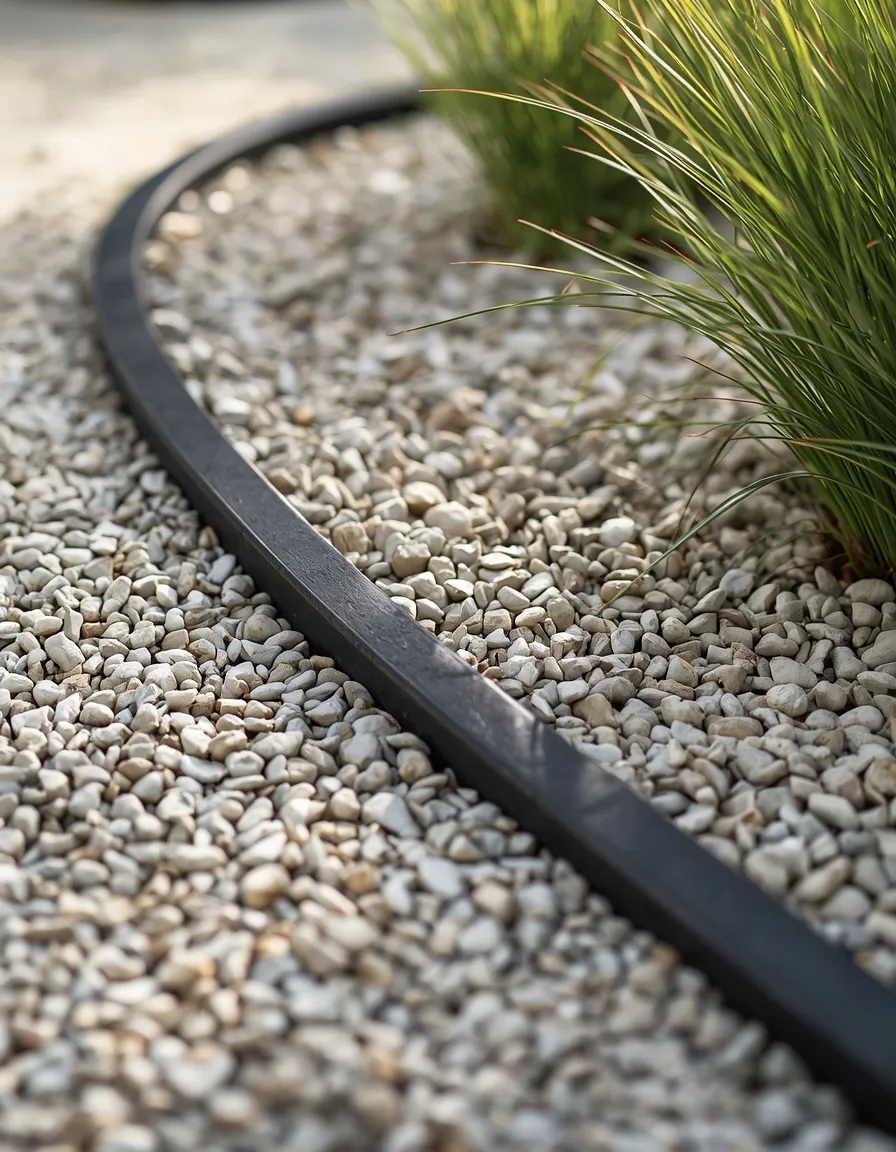
A slim strip of blackened steel, sunk flush along the border between gravel and planting beds, creates a crisp, nearly invisible line that keeps materials separated without the bulky look of timber or stone edging.
Choose steel edging with a rolled or rounded top rather than a sharp raw edge, since an exposed sharp metal lip along a path is a genuine tripping and cutting hazard, especially in gardens used by children or pets. Install edging slightly below the surrounding gravel or mulch line so it reads as a subtle transition rather than a visible barrier, and expect a natural rust patina to develop over the first year unless the steel is pre-weathered, which many Japandi gardens embrace as part of the material’s aging story. This detail matters most where two contrasting materials meet, gravel against a lawn edge or a planting bed against a path.
- Creates crisp material transitions without a bulky visible border
- Suits modern, minimal layouts better than timber or brick edging
- Solves the messy, blurred line where gravel spreads into planting beds
Final Thoughts
Japandi garden ideas succeed less through any single purchase and more through restraint, one well-chosen tree, one considered material palette, plenty of open space left deliberately empty rather than filled. Whether that means starting with a small raked gravel corner, swapping a standard fence panel for charred timber, or simply committing to fewer, better plants, the goal throughout is a garden that feels settled rather than styled. That kind of considered, livable approach to outdoor space is what Sunday Abode is built around, and for more ways to bring natural materials and calm structure into a garden, the garden design category covers layout and planting well beyond this one aesthetic. Start with the one or two ideas that suit your climate and space honestly, and let the garden’s materials age into the rest.
FAQs
What is the difference between Japandi and a typical minimalist garden?
A purely minimalist garden often strips out warmth along with clutter, leaning cold and stark, while Japandi keeps the restraint but adds warm materials, clay, natural wood, woven textiles, so the result feels calm rather than empty. The Japanese half of the style also brings intentional asymmetry and structural planting that a strictly minimalist approach often skips.
Can I create a Japandi garden in a small front yard?
Yes, and a compact front garden is actually one of the easier places to start, since a limited plant palette and one considered focal point read especially well at a smaller scale. Keep the plant selection to two or three species and position elements slightly off-center rather than symmetrically for the most authentic look.
What if I can’t grow Japanese maple in my climate?
Substitute a similarly structured small tree suited to your region, serviceberry, smoke bush, or a well-shaped olive in hot, dry climates all provide comparable seasonal color and manageable size. The specific species matters less than choosing one well-pruned specimen tree over several unrelated shrubs.
Is a raked gravel garden actually low maintenance?
Not entirely, though it avoids mowing and regular watering. A raked zen corner needs weekly re-raking to maintain its pattern and occasional weeding along the edges, so it trades lawn maintenance for a different, lighter kind of upkeep rather than eliminating maintenance altogether.
Are any common Japandi garden plants unsafe for pets?
Boxwood, a frequent choice for clipped hedging in this style, is listed as toxic to dogs and cats by the ASPCA, so households with plant-chewing pets may prefer Japanese holly or podocarpus for a similar look. Japanese maple, by contrast, is not toxic to dogs or cats, though chewed branches can pose a choking or blockage risk regardless of toxicity.
How do I add water safely if I have young children?
Keep any water basin shallow, under about 2 inches (5 cm), or choose a bubbling rock feature with no open standing water at all rather than a deeper basin or pond. Any water pump should run on a GFCI-protected outdoor outlet, and deeper water features should be fenced or supervised whenever young children have yard access.
Can I mix Japandi with other garden styles I already have?
Yes, most gardens evolve rather than getting rebuilt from scratch, so introducing a few Japandi elements, a raked gravel corner, low teak seating, warm clay pots, into an existing layout works well without a full redesign. Keep new additions to a similar restrained material palette so they read as intentional rather than a mismatched addition.
A note on safety: keep water features shallow or fenced around young children, use GFCI-protected outlets for any pump, choose rounded steel edging, and avoid boxwood in gardens shared with plant-chewing pets.