

Some rooms feel as though they’ve been quietly gathering stories for a hundred years. Old world interior design ideas capture exactly that: the warmth of aged plaster, the weight of carved wood, the soft gleam of candlelight on tarnished brass. Rooted in centuries of European craft, from Italian villas to French chateaux and Spanish courtyards, this style trades trendiness for texture, patina, and character that only deepens with time. The good news is you don’t need a rambling estate to get it. At Sunday Abode, we love decor with a sense of soul, and these 15 ideas show how to bring genuine old-world charm to any home, including a lighter, modern version that never feels heavy or dated.
Key Takeaways
- Old world interior design draws on historic European style, Italian, French, and Spanish, favoring natural materials, aged patina, and craftsmanship over trends.
- Build the look with real texture: lime-washed or plaster walls, stone and terracotta, carved and reclaimed wood, wrought iron, brass, linen, and velvet.
- The biggest mistake is pastiche, sponge-painted orange walls and fake antiquing read as a 2000s theme restaurant. Real materials and restraint beat faux finishes every time.
- Modern old world lightens the palette, edits the furniture, and mixes in clean-lined pieces so the style feels current rather than dark and heavy.
- Thrifted and inherited antiques make this one of the most sustainable, budget-friendly styles to build slowly over time.
1. Tuscan Villa Living Room
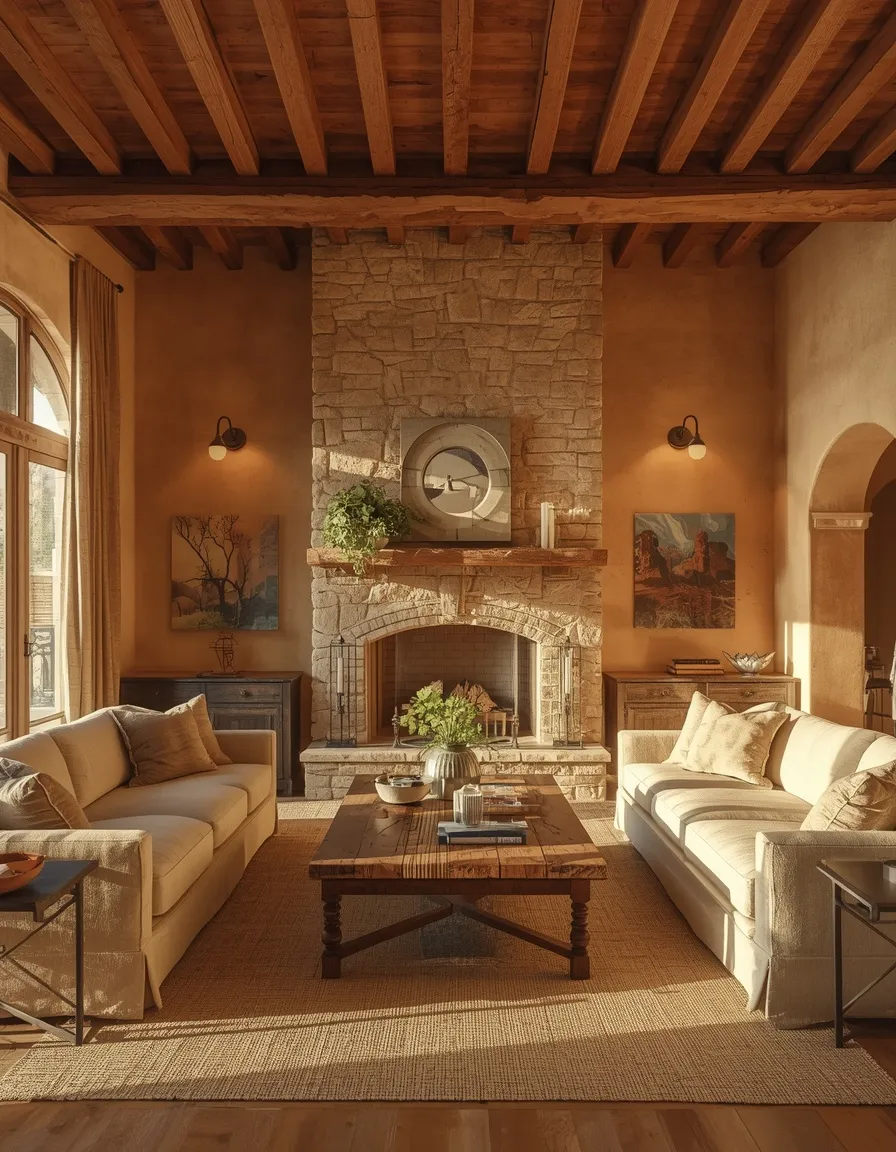
A Tuscan-style living room feels sun-warmed and softly worn, like a farmhouse in the Italian countryside. Textured plaster walls in warm cream, exposed wooden ceiling beams, a stone fireplace, and deep linen sofas come together in a room that invites you to sit for hours.
Anchor the room with natural, tactile surfaces: lime-washed or plaster-textured walls, terracotta or stone flooring, and exposed or faux-beamed ceilings. Layer in a generously proportioned linen or leather sofa, a reclaimed wood coffee table, and wrought-iron accents. Keep the palette to warm neutrals, cream, sand, ochre, olive, rather than the sponge-painted orange of dated Tuscan makeovers. If you have a working fireplace, keep decor and textiles well clear of the firebox and use a screen. This suits homes with generous light and a love of relaxed, rustic warmth.
- Best for: relaxed, rustic warmth in a main living space.
- Watch out: skip sponge-painted orange walls; warm neutrals age far better.
- Key elements: plaster walls, beams, stone fireplace, linen sofa, wrought iron.
2. French Country Elegance
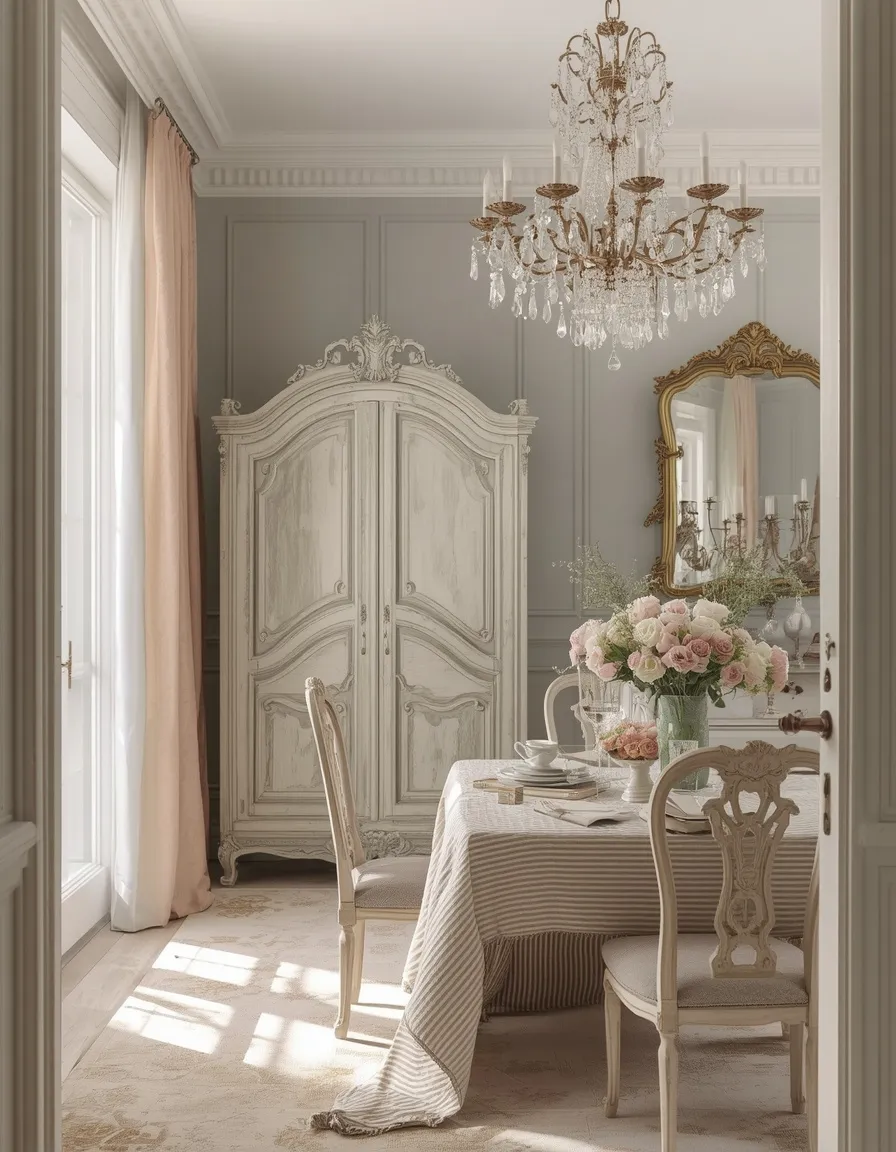
A French country room is old world at its most graceful. Soft gray-and-cream walls, a limewashed armoire, delicate toile or ticking-stripe fabrics, and a crystal chandelier create a look that’s refined but entirely liveable.
Lean into a softer, cooler palette than Italian style: dove gray, cream, and pale blue, layered with weathered painted wood. Add curved, carved furniture with cabriole legs, an antique mirror with a gilded frame, and a chandelier for a touch of faded glamour. Mix in linen slipcovers so the elegance stays relaxed rather than formal. Anchor any tall armoire to the wall with a furniture strap, especially in homes with children. This suits bedrooms, living rooms, and anyone drawn to soft, romantic old-world charm.
- Best for: soft, romantic elegance in a bedroom or living room.
- Watch out: strap tall armoires to the wall so they can’t tip.
- Key elements: gray-cream palette, carved painted wood, gilded mirror, chandelier.
3. Modern Old World Blend
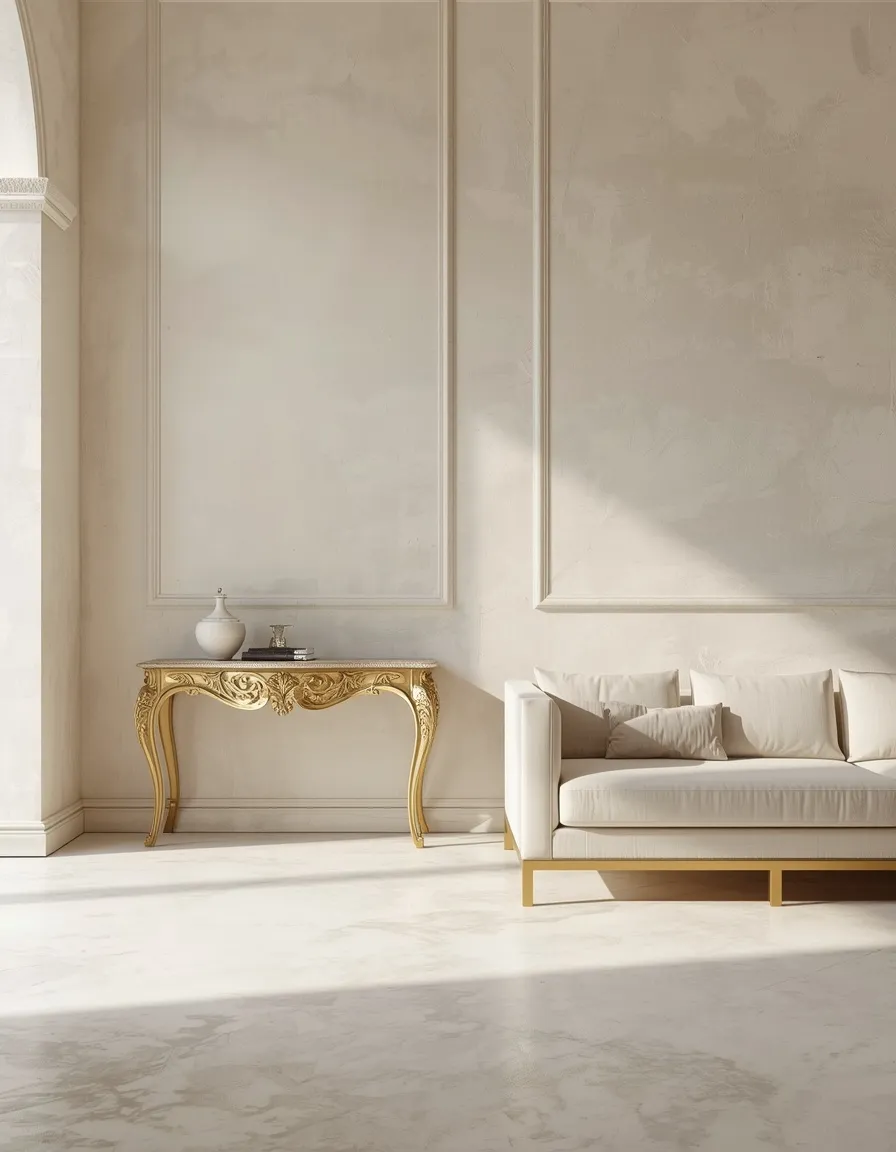
Modern old world keeps the soul and sheds the heaviness. Pale plaster walls, one or two antique statement pieces, clean-lined modern seating, and restrained styling create a room that feels historic and current at once.
The formula is simple: keep the old-world materials, plaster, wood, stone, brass, but lighten the palette and edit ruthlessly. Choose a light, warm wall color, pair a carved antique console or a heavy oak table with a simple contemporary sofa, and leave negative space rather than filling every surface. One or two genuine antiques carry more weight than a room crowded with reproductions. This mix works especially well in apartments and newer homes that lack period detail. It’s the most liveable version of the style for most homes today.
- Best for: apartments and new-build homes without period detail.
- Why it works: light walls and edited furniture keep old-world texture from feeling dark.
- Key elements: pale plaster, one antique statement piece, clean modern seating.
4. Romantic Old World Bedroom
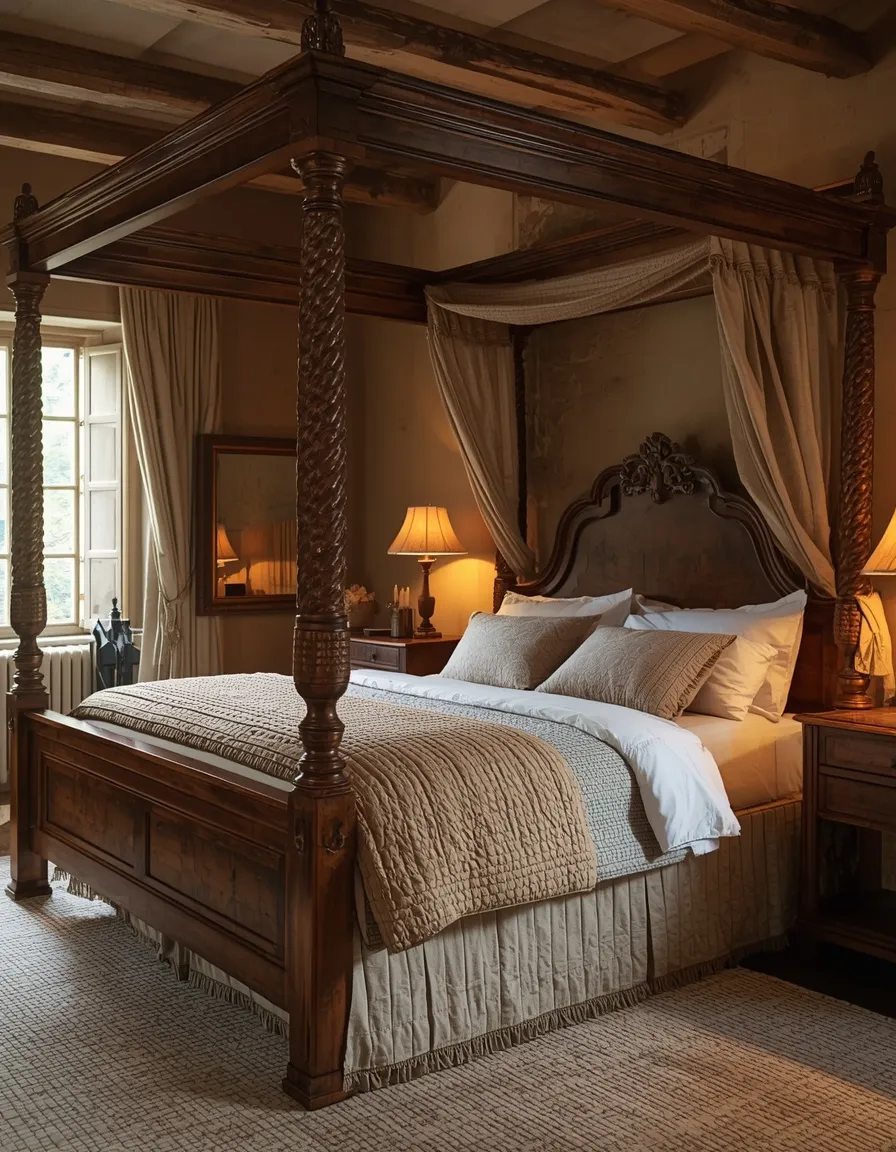
An old world bedroom feels like a candlelit retreat in a European guesthouse. A carved or wrought-iron bed, layered white linens, an antique mirror, and softly draped curtains create a room built entirely for rest and romance.
Start with a substantial bed, carved wood, a four-poster, or wrought iron, and dress it in layers of white or oatmeal linen with a quilted coverlet. Add an antique nightstand, a gilded or foxed mirror, and heavy linen or velvet curtains that pool slightly on the floor. Warm, low lighting is essential: use bedside lamps and candles rather than harsh overheads. If you burn real candles, never leave them unattended and keep them clear of fabric. This suits main and guest bedrooms of any size.
- Best for: a restful, romantic main or guest bedroom.
- Watch out: never leave real candles unattended or near draping fabric.
- Key elements: carved or iron bed, layered linens, antique mirror, low warm light.
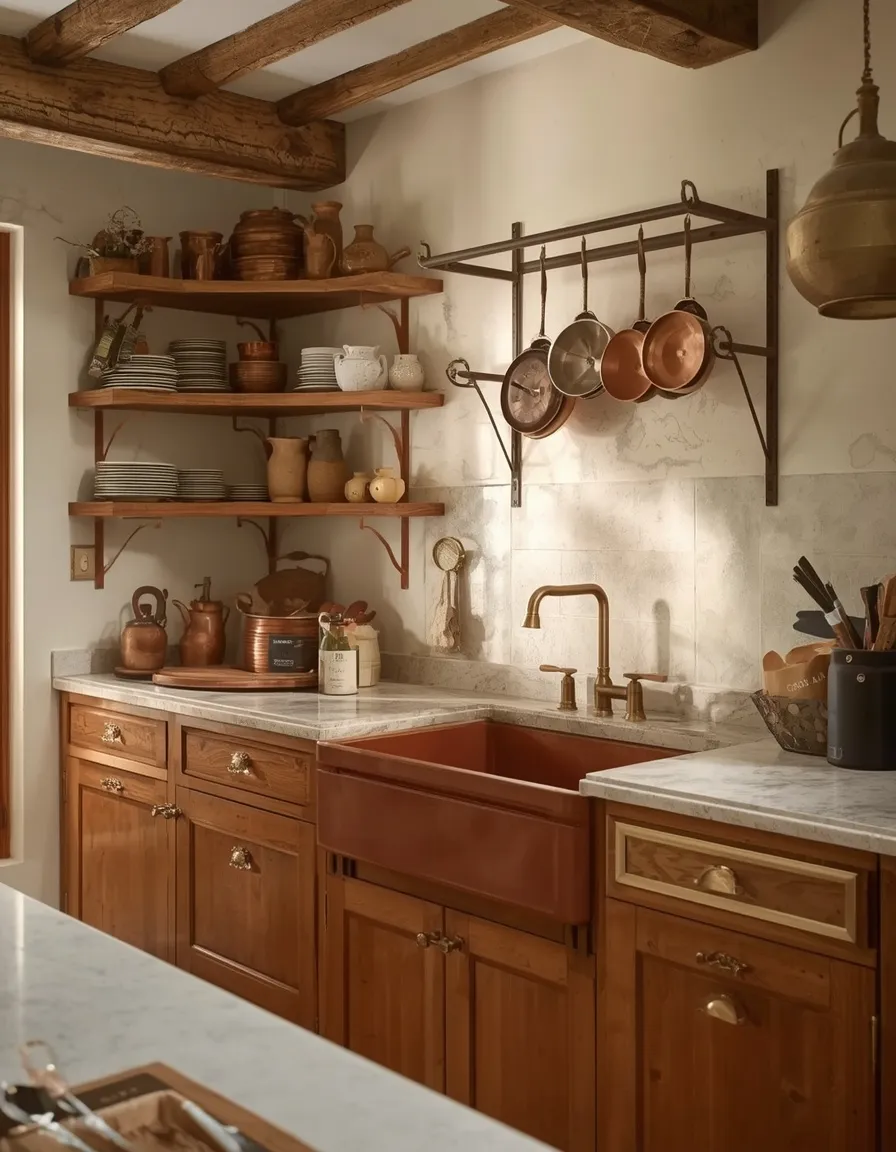
5. Rustic European Kitchen
An old world kitchen looks like it has fed generations. Open shelving stacked with ceramics, a farmhouse sink, a copper pot rack, butcher-block or stone counters, and warm wooden cabinetry make a kitchen feel like the true heart of the home.
Choose natural, hardworking materials: a fireclay farmhouse sink, honed stone or butcher-block counters, and cabinetry in wood or a soft muted color rather than glossy white. Swap a few upper cabinets for open shelves and stack them with earthenware, copper pots, and glass jars. Unlacquered brass fixtures develop a living patina over time, which is the point. Aged copper cookware is beautiful but needs re-tinning if the interior lining wears through. This suits anyone renovating, and open shelving alone can shift a plain kitchen toward old world.
- Best for: renovators, or a quick shift via open shelving alone.
- Why it works: unlacquered brass and copper build genuine patina over time.
- Key elements: farmhouse sink, open shelves, copper, stone counters, wood cabinets.
6. Spanish Colonial Character
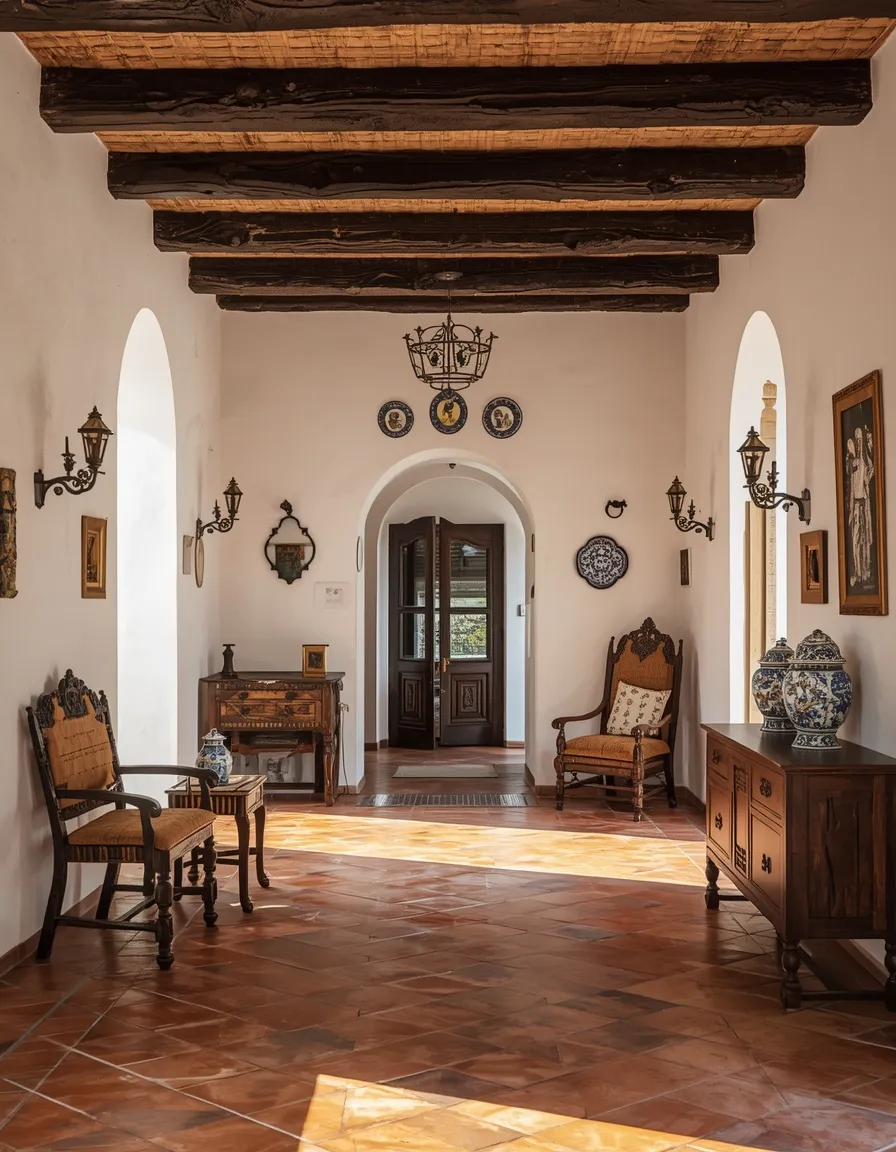
Spanish colonial style brings sun-baked drama to old world design. Whitewashed walls, dark carved wood, terracotta tile floors, arched doorways, and black wrought-iron details create a room with bold contrast and Mediterranean soul.
Build on high-contrast bones: white or cream plaster walls against dark, heavy wood beams and furniture. Add terracotta or patterned cement tile underfoot, wrought-iron light fixtures and hardware, and a few hand-painted talavera-style ceramics for color. Arched doorways or niches, if your home has them, are the signature detail. Keep decoration sparse so the strong architecture reads clearly. This suits homes with white walls and dark wood, and works beautifully in warm climates and sunny rooms where the contrast comes alive.
- Best for: sunny rooms and homes with white walls and dark wood.
- Why it works: strong white-and-dark contrast lets the architecture carry the room.
- Key elements: whitewashed plaster, dark beams, terracotta tile, wrought iron.
7. Antique Layered Gallery Wall
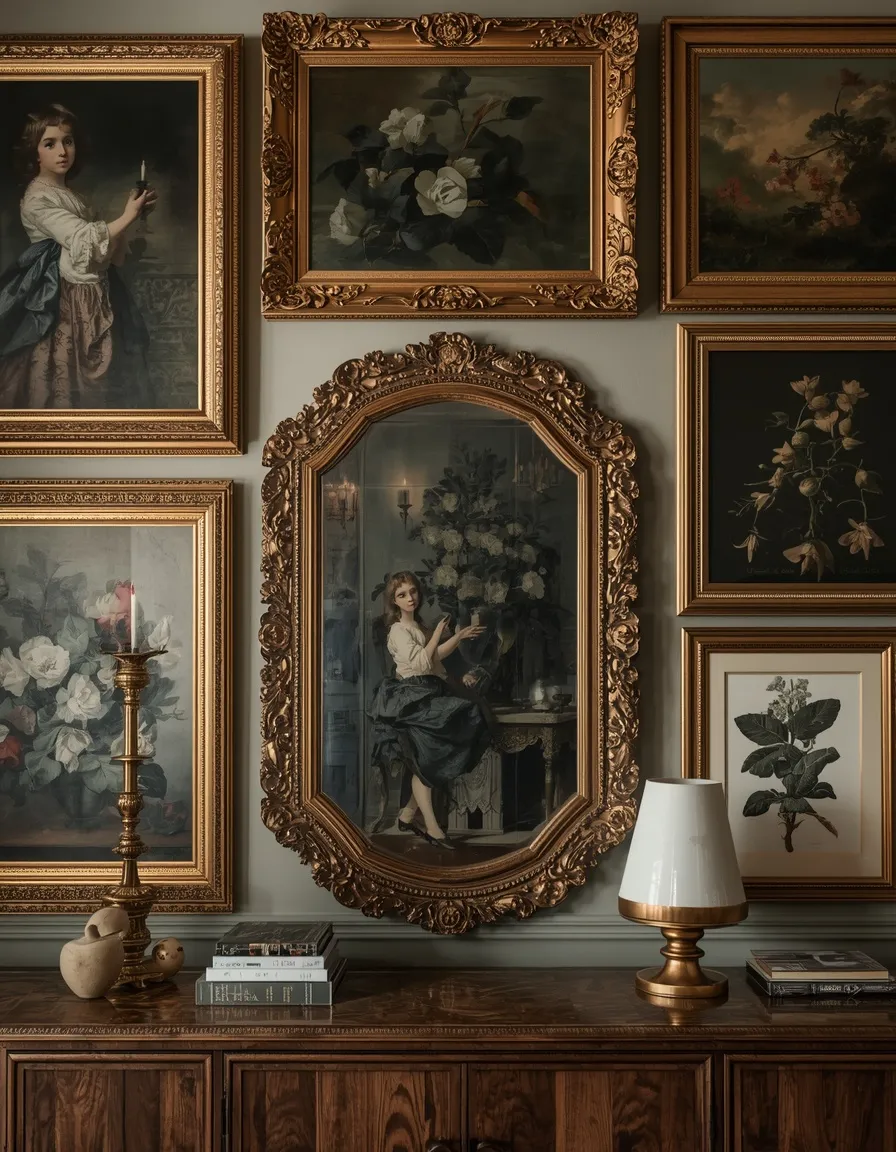
A wall of antique art and mirrors gives a room instant history. Gilded frames, moody oil paintings, foxed mirrors, and botanical prints hung salon-style turn a blank wall into a collected, centuries-old story.
Hang pieces salon-style, closely spaced in an organic arrangement rather than a rigid grid, mixing gilded frames, dark wood, and a foxed antique mirror or two. Lay the arrangement out on the floor first, keeping roughly 5–8 cm (2–3 in) between frames. Thrift stores, estate sales, and flea markets are the natural hunting ground, making this a genuinely affordable way in. Use proper wall anchors for heavy gilded frames and mirrors, which can be far heavier than they look. This suits a dining room, hallway, or living-room feature wall.
- Best for: instant history on a budget; thrifters and collectors.
- Watch out: use proper anchors; antique mirrors and gilded frames are heavy.
- Key elements: gilded frames, oil paintings, foxed mirror, salon-style hang.
8. Venetian Plaster Walls
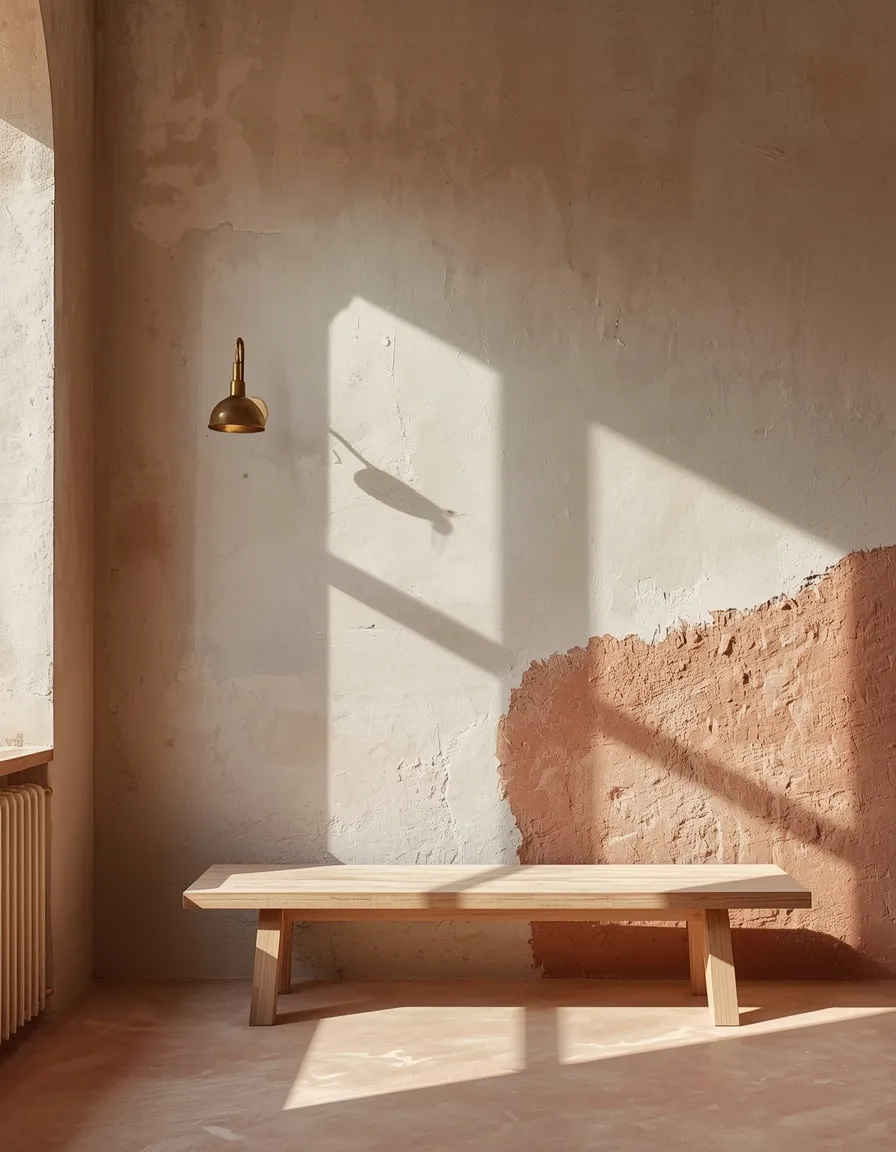
Textured plaster walls are the single most transformative old-world feature. Their soft, cloudy depth catches light in a way flat paint never can, giving even a plain modern box of a room a sense of age and craft.
Use real lime wash or Venetian plaster for genuine depth, applied in thin layers with a trowel or brush for a subtly mottled finish. Warm off-whites, soft clay, and pale ochre suit the style best. This is a real DIY project but a forgiving one, since irregularity is the goal rather than a flaw. Avoid the heavy sponge-painting and faux-marbling of dated makeovers, which read as pastiche. Renters can approximate the look with limewash-effect wallpaper. This suits any room and is the highest-impact change you can make.
- Best for: any room; the highest-impact single old-world change.
- Watch out: real limewash beats faux sponge-painting, which reads as dated pastiche.
- Key elements: lime wash or Venetian plaster, warm off-white or clay tones.
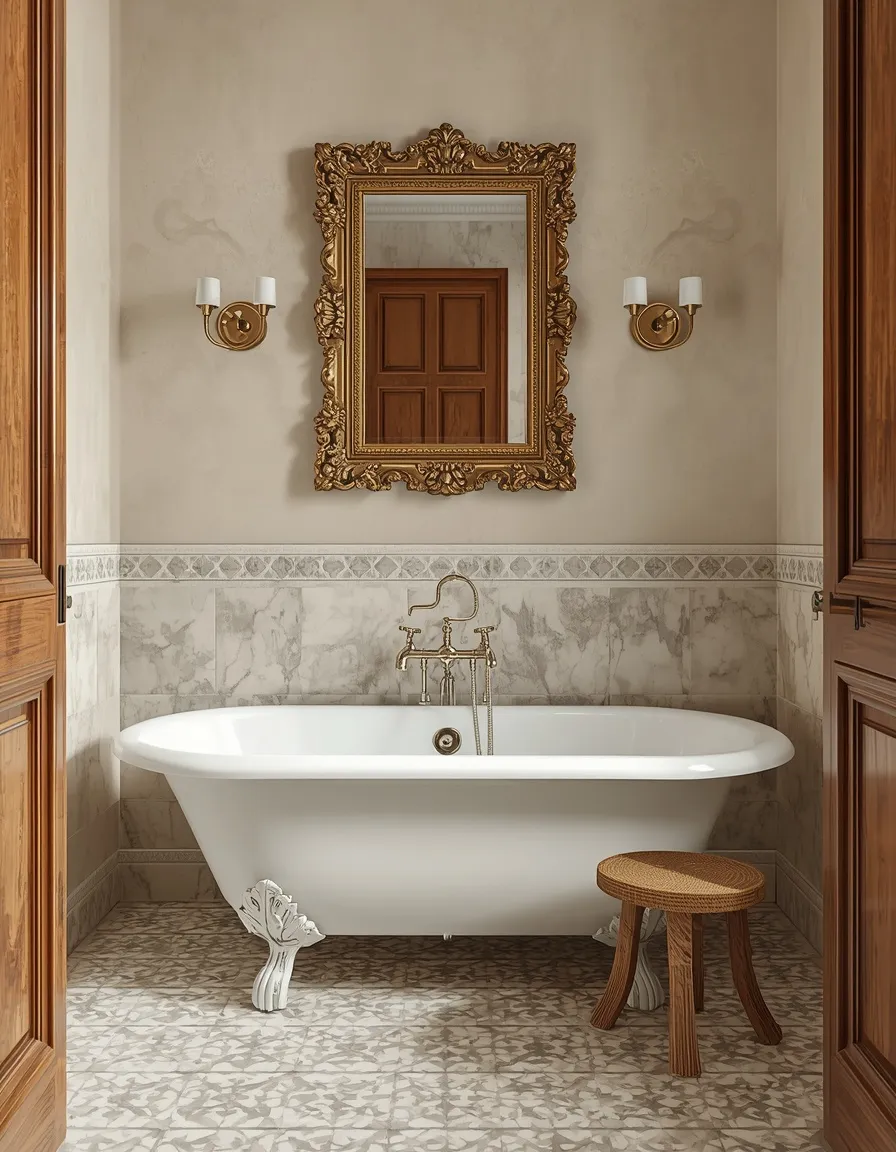
9. Old World Bathroom Retreat
An old world bathroom feels like a small, serene chapel. A freestanding tub, marble or stone surfaces, unlacquered brass fixtures, an antique mirror, and warm sconce lighting turn a functional room into a quiet retreat.
Center the room on a freestanding tub, a classic clawfoot or a simple slipper shape, and pair it with marble, stone, or a patterned cement-tile floor. Unlacquered brass taps will darken and patina with use, which suits the style perfectly. Add a gilded or wood-framed antique mirror, sconces flanking it for soft light, and a small wooden stool. In a rental or on a budget, swapping the mirror, lighting, and hardware alone shifts the whole feel. This suits any bathroom wanting warmth instead of clinical white.
- Best for: warming up a clinical bathroom; renters (swap mirror and hardware).
- Why it works: unlacquered brass patinas naturally, deepening the old-world feel.
- Key elements: freestanding tub, marble or stone, brass fixtures, antique mirror.
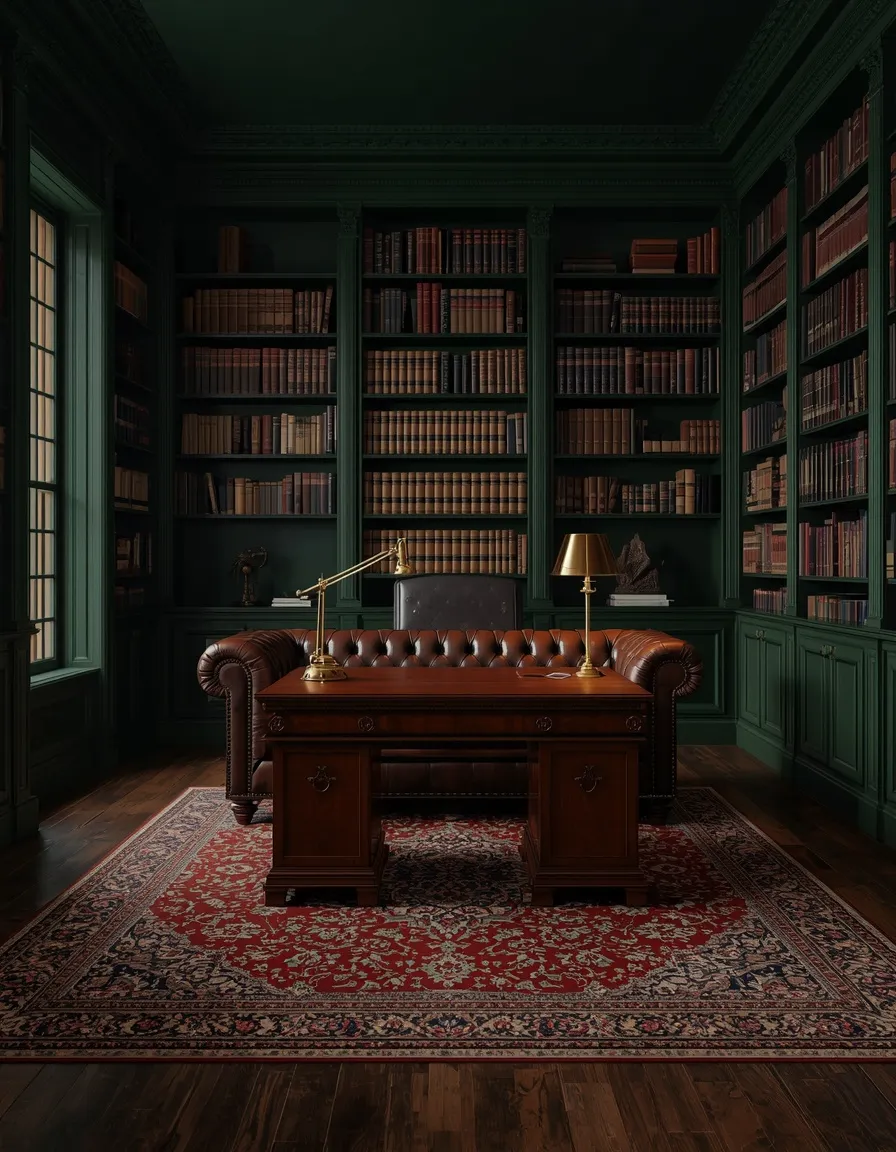
10. Dark Academia Study
A study steeped in old world character feels scholarly and enveloping. Deep green or oxblood walls, floor-to-ceiling bookshelves, a leather chesterfield, a brass desk lamp, and a worn Persian rug create a room made for long evenings and good books.
Go rich and moody with the walls, deep green, oxblood, or near-black, and fill them with built-in or freestanding bookshelves. Add a leather armchair or chesterfield, a heavy wooden desk, a brass banker’s lamp, and layered warm lighting rather than a single overhead. A worn Persian or Oriental rug grounds the whole room. Dark colors work best in a room with either good natural light or generous lamp lighting; in a truly dim room they can feel oppressive. Anchor tall bookshelves to the wall. This suits home offices and reading rooms.
- Best for: home offices and reading rooms wanting an enveloping mood.
- Watch out: dark walls need good lamp lighting; anchor tall bookshelves.
- Key elements: deep walls, bookshelves, leather seating, brass lamp, Persian rug.
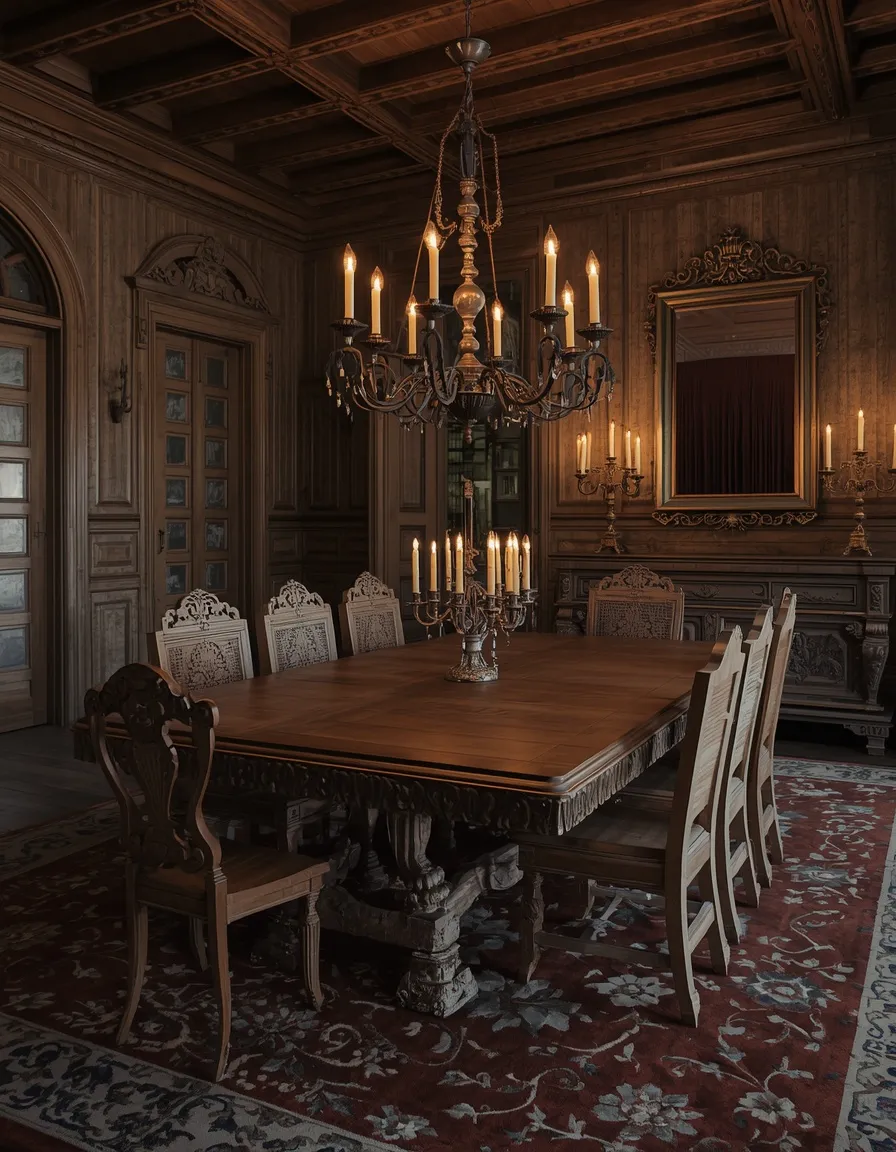
11. Grand Old World Dining Room
An old world dining room is built for long, candlelit dinners. A heavy carved wood table, mismatched antique chairs, a wrought-iron or crystal chandelier, and a sideboard laden with ceramics create a room with genuine gravitas.
Choose a substantial table in reclaimed or dark-stained wood, then pair it with chairs that don’t perfectly match, a set of antiques plus two carvers reads as collected rather than showroom-bought. Hang the chandelier roughly 75–90 cm (30–36 in) above the tabletop for the right proportion. Add a sideboard, a large mirror, and candlesticks for warm evening light. Keep taper candles well clear of overhanging greenery or linens, and never leave them burning unattended. This suits homes that entertain and love a room with presence.
- Best for: homes that entertain and want a room with real presence.
- Watch out: hang the chandelier 75–90 cm (30–36 in) above the table; candle safety.
- Key elements: carved wood table, mismatched antique chairs, chandelier, sideboard.
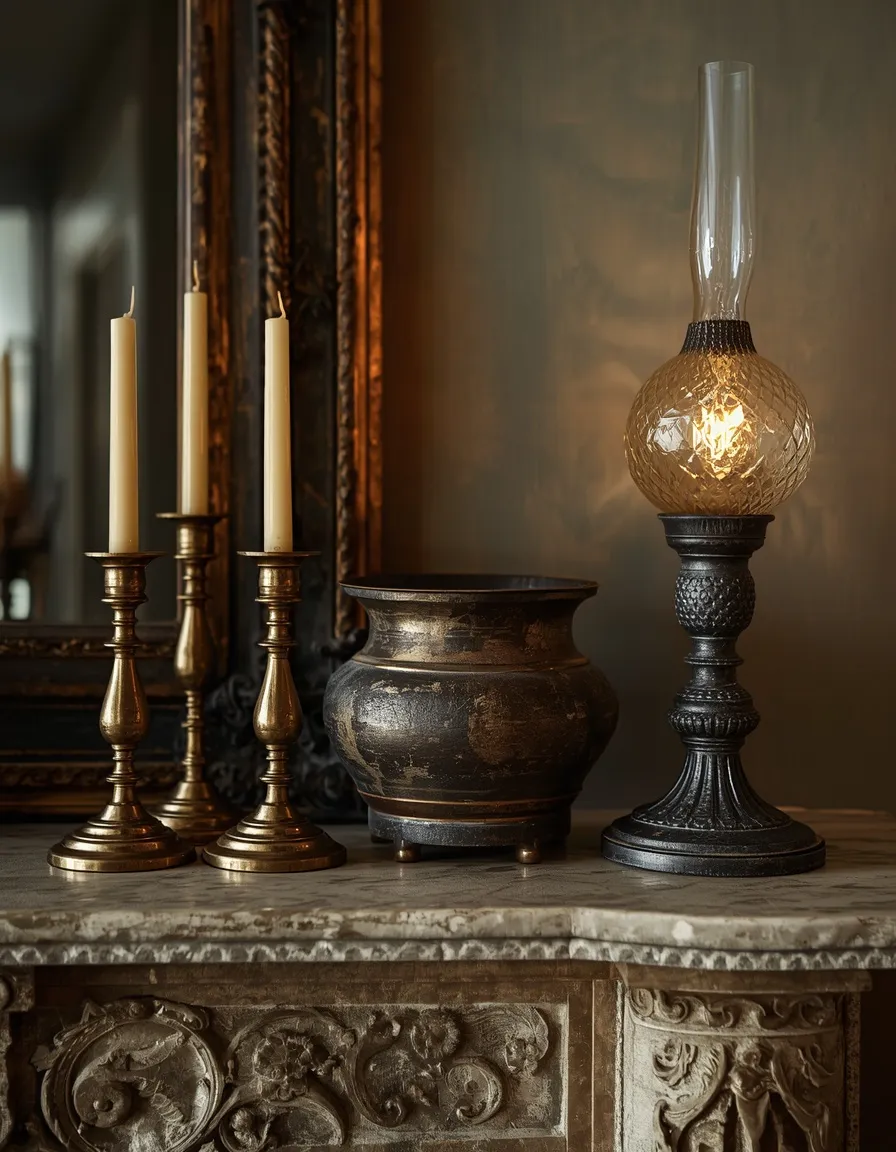
12. Patina and Aged Metal Accents
Layers of aged metal give a room the unmistakable glow of age. Tarnished brass candlesticks, an antique copper vessel, weathered wrought iron, and a mercury-glass lamp catch warm light and add the soft gleam that flat new finishes can’t fake.
Collect metals with genuine age rather than artificially distressed reproductions: unlacquered brass, aged copper, blackened iron, and pewter all deepen naturally with time and handling. Mix metal tones freely, since old world style has never been about matching. Group candlesticks in odd numbers on a mantel or sideboard, and let tarnish stay rather than polishing everything to a shine. Take care with genuinely antique painted metal or furniture, which may contain lead paint, and don’t use it where small children could chew or scratch it.
- Best for: adding age and warmth to a room without a renovation.
- Watch out: genuinely old painted pieces may contain lead paint; keep from children.
- Key elements: tarnished brass, aged copper, wrought iron, mercury glass.
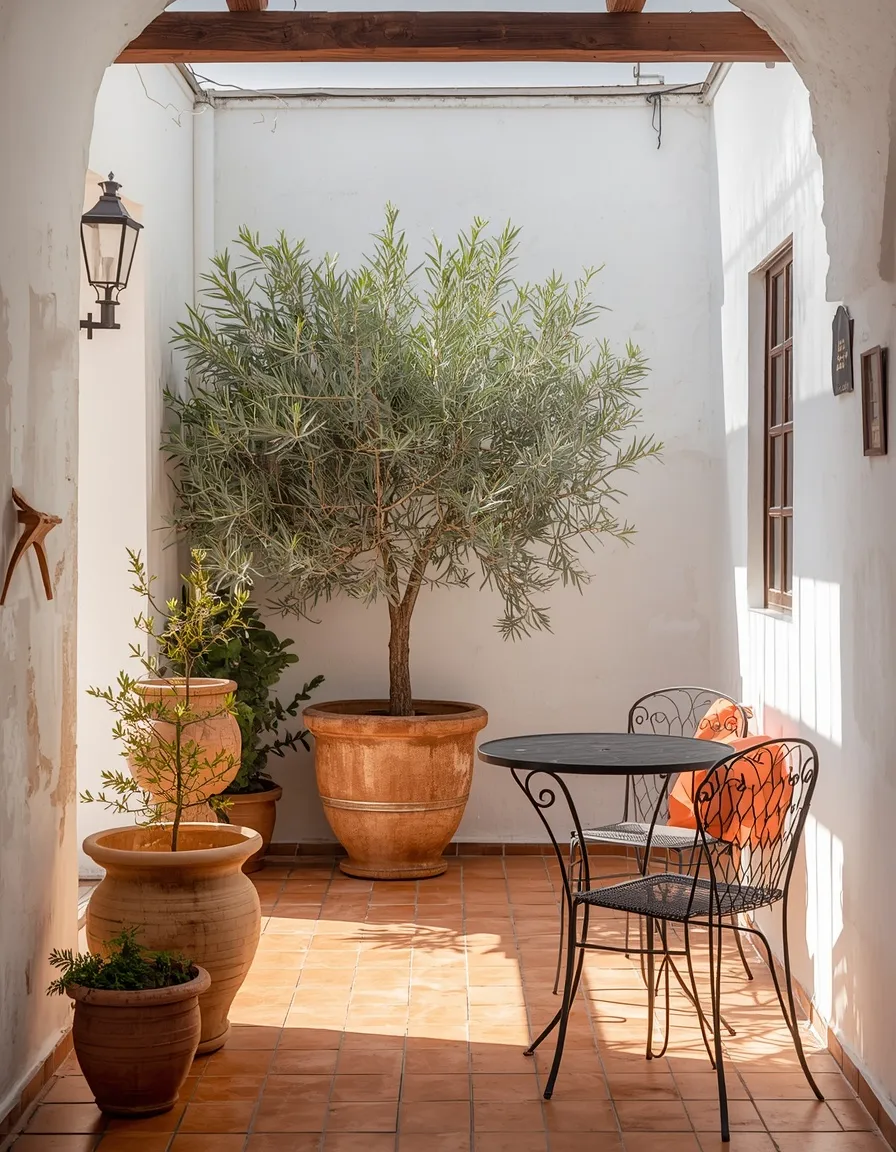
13. Mediterranean Courtyard Feel
Bringing the Mediterranean courtyard indoors gives old world style a lighter, greener mood. Stone or terracotta floors, olive trees and rosemary in aged pots, an iron bistro table, and whitewashed walls create a sunlit, garden-adjacent room.
Use terracotta and stone underfoot, keep walls whitewashed or pale plaster, and add potted greenery in weathered terracotta pots, an olive tree, rosemary, or a citrus in a bright spot. A wrought-iron bistro set and a wall-mounted fountain or aged urn complete the courtyard feel. Olive and citrus trees need plenty of direct sun indoors, so a south-facing window is essential; without one, they’ll slowly decline. This suits sunrooms, garden rooms, and bright kitchens, and beautifully bridges house and garden.
- Best for: sunrooms, garden rooms, and bright kitchens.
- Watch out: olive and citrus trees need direct sun; they fail in dim rooms.
- Key elements: terracotta, whitewash, olive tree, aged pots, iron bistro set.
14. Antique Textiles and Velvet Layers
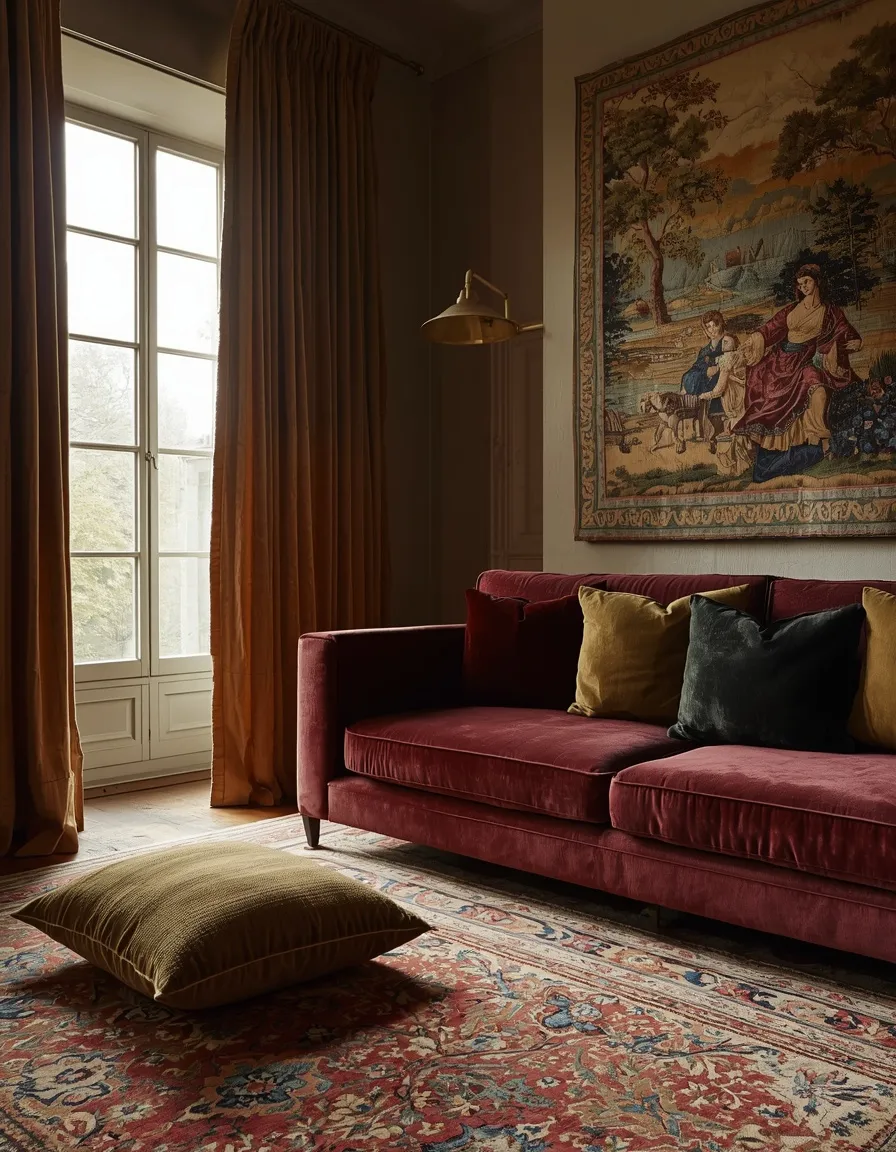
Layered old textiles give a room its softness and depth. A faded Persian rug, velvet cushions in jewel tones, heavy linen curtains, and an antique tapestry or quilt bring color, warmth, and a sense of long use.
Layer textiles generously but tonally: a worn Oriental or Persian rug as the foundation, velvet cushions in deep garnet, olive, or gold, and floor-length linen or velvet curtains. A vintage tapestry, kilim, or heirloom quilt adds a genuine sense of history. Faded and worn is desirable here, a rug with softened colors reads far better than a crisp new reproduction. Keep antique textiles out of harsh direct sun, which fades and rots fibers over time. This suits living rooms and bedrooms and is an easy, rental-friendly way in.
- Best for: renters and anyone wanting old-world depth without renovating.
- Watch out: keep antique textiles out of harsh direct sun to prevent fading.
- Key elements: faded Persian rug, velvet cushions, linen curtains, tapestry.
15. Slow-Collected Antique Home
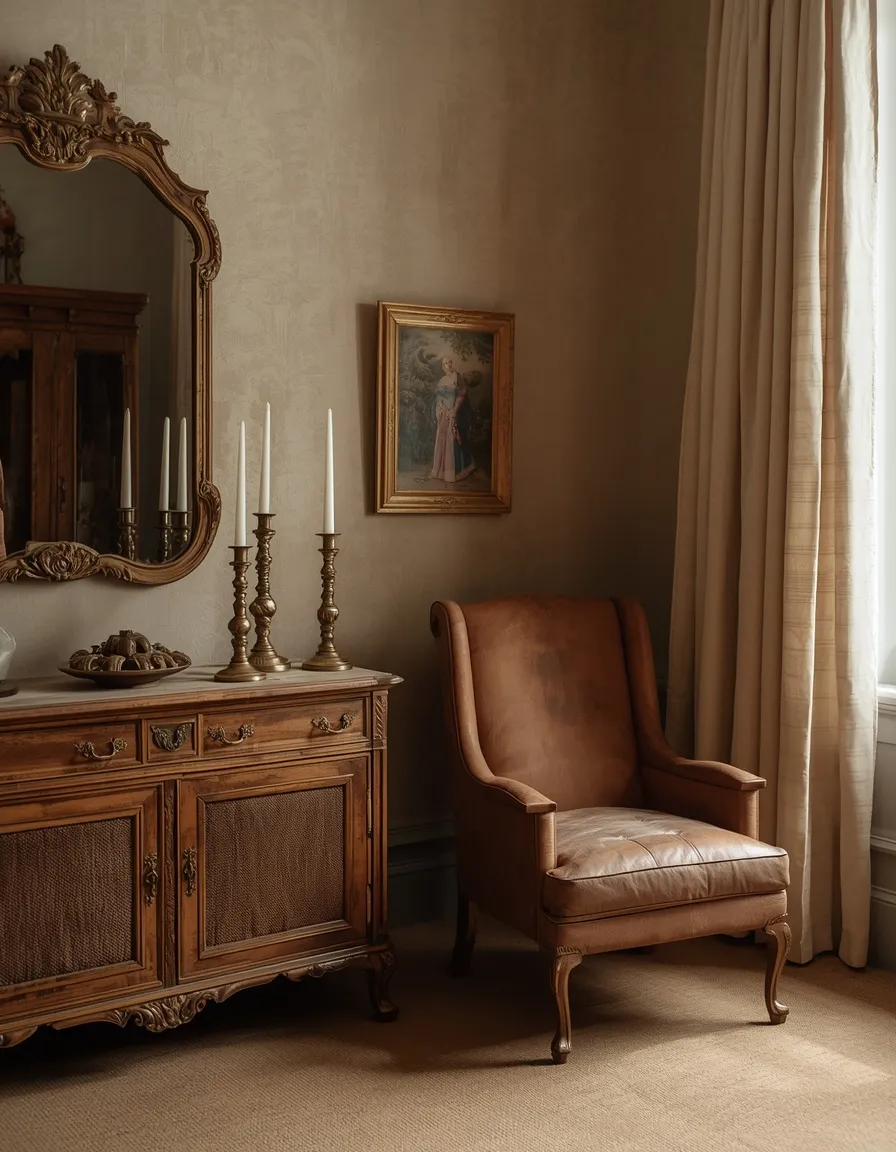
The truest old world home isn’t decorated in a weekend, it’s gathered over years. A room of inherited, thrifted, and slowly found pieces, each with its own story, has a depth no complete furniture set can imitate.
Approach this as a philosophy rather than a shopping list: buy fewer, better, older things, and leave gaps until the right piece appears. Estate sales, auctions, and flea markets are where genuine antiques cost less than new reproductions, making this both sustainable and often cheaper. Unify the mix with a consistent warm palette and repeated materials, wood, brass, linen, so the collection reads as one room, not a junk shop. Check secondhand upholstery for pests and odors before bringing it home. This suits patient, character-loving decorators.
- Best for: patient decorators building a home with real character over time.
- Why it works: a warm palette and repeated materials unify a slowly gathered mix.
- Watch out: check secondhand upholstery for pests and odors before buying.
How Do You Get Old World Charm Without It Looking Dated?
Get old-world charm by using real materials and restraint, not faux finishes. The style goes wrong when it becomes pastiche, sponge-painted orange walls, artificially distressed furniture, and every surface crowded with reproductions read as a 2000s theme restaurant, not a European home.
Three habits keep it feeling timeless. First, choose genuine texture over painted illusion: real limewash, stone, unlacquered brass, and worn wood age beautifully, while faux-marbling and heavy antiquing look dated within a few years. Second, edit, one substantial antique in a calm room carries far more presence than a dozen reproductions competing for attention. Third, lighten up: a warm off-white or soft clay wall lets carved wood, iron, and velvet read as rich rather than gloomy.
That instinct for lightening a heavy palette is worth borrowing from the opposite end of the spectrum, our guide to decorating with a white palette shows how a pale backdrop makes texture and character stand out, which is exactly the trick behind modern old world. You’ll find both among our trending interior decor ideas.
The Materials That Define the Style
Old world interior design is built from a short, consistent list of natural materials that improve with age. Get the materials right and the style follows almost automatically.
The core palette is plaster or limewashed walls, stone and terracotta, carved and reclaimed wood, wrought iron, unlacquered brass and copper, marble, linen, velvet, and worn wool rugs. What unites them is that all of them age well: brass tarnishes, wood softens, stone wears smooth, linen relaxes. Modern materials that look perfect on day one and worse every year after, high-gloss laminate, chrome, synthetic velvet, fight the whole premise. Keep the color story warm and earthy: cream, sand, clay, olive, oxblood, and gold, with black iron for contrast.
Which Old World Style Suits Your Home?
Old world is a family of related European styles, not a single look. This quick reference shows what each brings, so you can choose the one that fits your home and light.
| Style | Palette & materials | Best suited to |
| Tuscan / Italian | Warm cream, ochre, terracotta, beams | Relaxed, rustic, sunny homes |
| French country | Dove gray, cream, painted carved wood | Soft, romantic bedrooms and salons |
| Spanish colonial | Whitewash, dark wood, iron, tile | High-contrast, sunlit rooms |
| Mediterranean | Whitewash, stone, olive, terracotta | Sunrooms and garden-adjacent rooms |
| Dark academia | Deep green, oxblood, leather, brass | Studies and reading rooms |
| Modern old world | Pale plaster, one antique, clean lines | Apartments and new-build homes |
Conclusion
What makes old world interior design endure is that it was never chasing a trend in the first place. Real plaster, worn wood, tarnished brass, and a faded rug only look better with each passing year, which is why a room built this way quietly outlasts every passing fashion. Start with one change, a limewashed wall, a salon-style gallery of thrifted frames, a single carved antique in an otherwise calm room, and let the rest gather slowly. For more character-rich inspiration, browse our trending interior decor ideas, then go find the one old, imperfect, beautiful thing your home has been missing.
Frequently Asked Questions
Q: What is old world interior design?
Old world interior design is a style rooted in historic European interiors, Italian, French, and Spanish, that favors natural materials, aged patina, and craftsmanship over trends. Signature elements include plaster or limewashed walls, carved and reclaimed wood, stone and terracotta, wrought iron, unlacquered brass, and layered antique textiles. The goal is a room that looks gathered over generations rather than bought as a set.
Q: How do I get old world style without it looking dated?
Use real materials rather than faux finishes, and edit hard. Genuine limewash, stone, worn wood, and unlacquered brass age beautifully, while sponge-painting, faux-marbling, and heavy artificial distressing read as dated pastiche. Keep walls warm but light, and let one substantial antique carry a calm room instead of crowding it with reproductions.
Q: Can old world design work in a modern home or apartment?
Yes, that’s exactly what modern old world does. Keep the old-world materials like plaster, wood, and brass, but lighten the wall color, edit the furniture, and pair one or two genuine antiques with clean-lined contemporary seating. This works especially well in newer homes and apartments that lack period architectural detail, since the character comes from the pieces rather than the building.
Q: What colors are used in old world interiors?
The palette is warm and earthy: cream, sand, clay, ochre, olive, oxblood, and gold, with black wrought iron for contrast. French country leans cooler with dove gray and pale blue, while Spanish colonial uses high-contrast whitewash against dark wood. Modern versions keep these tones but lighten the walls considerably so the room doesn’t feel heavy.
Q: Is old world decorating expensive?
It doesn’t have to be, it’s often one of the most affordable styles. Genuine antiques from estate sales, auctions, and flea markets frequently cost less than new reproductions, and thrifted frames, mirrors, brass, and rugs are the natural building blocks. The style rewards buying slowly and secondhand rather than furnishing a room all at once.
Q: Which old world elements have the biggest impact?
Textured plaster or limewashed walls make the single biggest difference, since they change how light falls in the whole room. After that, a salon-style gallery wall of antique frames and mirrors, unlacquered brass fixtures that patina over time, and a faded Persian rug deliver the most character for the least structural work, all achievable in a rental.