


There’s a reason designers keep coming back to it: a white room, done well, feels like a deep breath. The best white interior design ideas prove that white is never really plain, it’s a backdrop that makes light, texture, and shape do the talking, from a linen sofa’s soft slouch to the grain of an oak table. Get it right and a room feels calm, spacious, and quietly expensive. Get it wrong and it can feel like a waiting room. At Sunday Abode, we think the difference comes down to a few things nobody tells you, the undertone you choose, the textures you layer, and how honestly you plan for real life. These 16 ideas cover all three.
Key Takeaways
- White is not one color: every white has a warm, cool, or neutral undertone, and choosing the wrong one for your room’s light is the most common mistake.
- Texture, not more color, is what keeps a white room from feeling sterile. Layer linen, boucle, wood, plaster, rattan, and stone in the same tone.
- Match the white to your light: north-facing rooms need warm whites; bright south-facing rooms can carry cooler, crisper whites.
- White works in real homes with kids and pets if you plan for it, scrubbable paint finishes, performance fabrics or washable slipcovers, and sensible grout.
- A single accent, black, grey, navy, wood, or greenery, gives a white scheme structure without spoiling its calm.
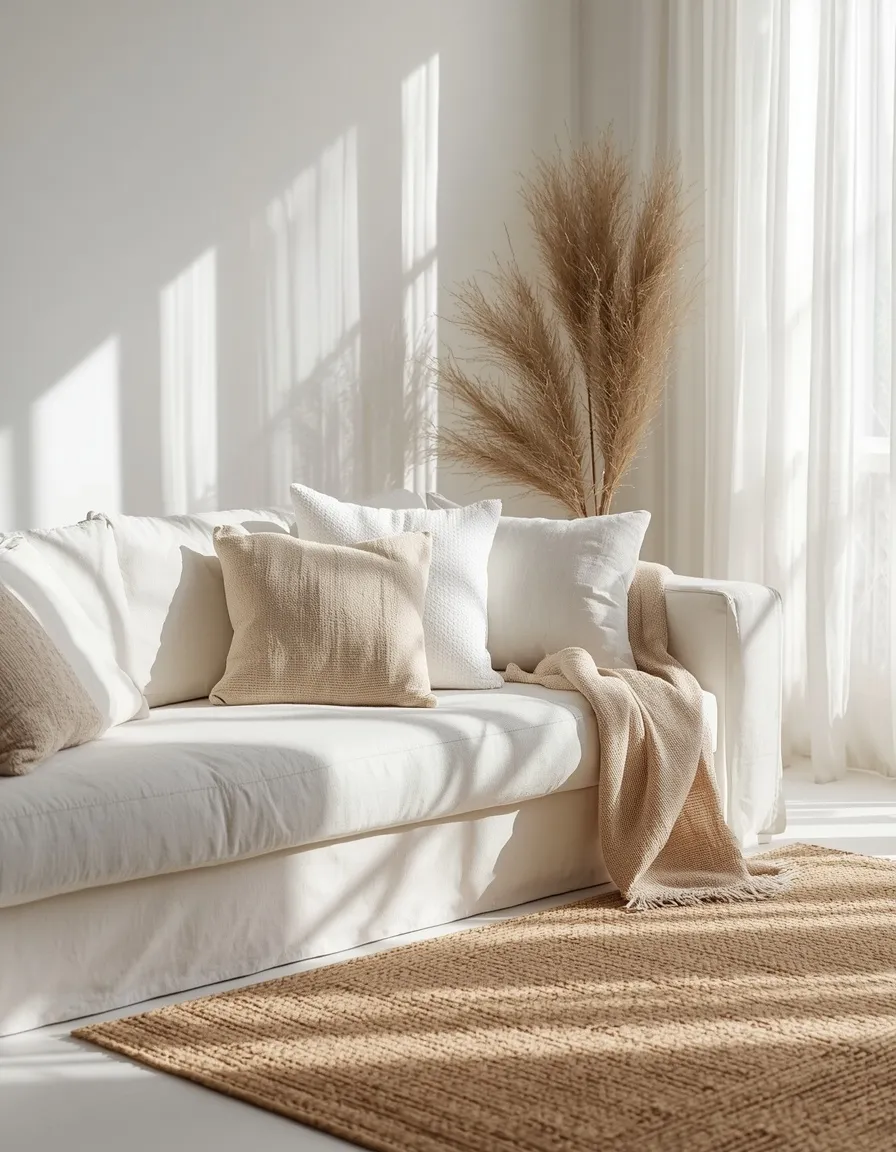
1. Serene All-White Living Room
An all-white living room is white interior design in its purest form. A white sofa, pale walls, cream rug, and airy linen curtains create a room that feels light-filled, spacious, and utterly calm, where sunlight becomes the main event.
The trick to an all-white room is layering shades and textures rather than matching everything exactly. Pair a soft white wall with a slightly warmer cream sofa, a chunky boucle cushion, a nubby linen throw, and a jute rug so the eye reads depth instead of flatness. Choose one white family, warm or cool, and stay within it. For real-life durability, pick a performance fabric or a washable slipcover for the sofa. This suits bright rooms and anyone craving a genuinely restful, minimalist space.
- Best for: bright rooms and anyone wanting maximum calm and space.
- Watch out: layer several whites and textures; exact matching looks flat.
- Key elements: white sofa, layered creams, boucle, linen, jute rug.
2. Warm Scandinavian White
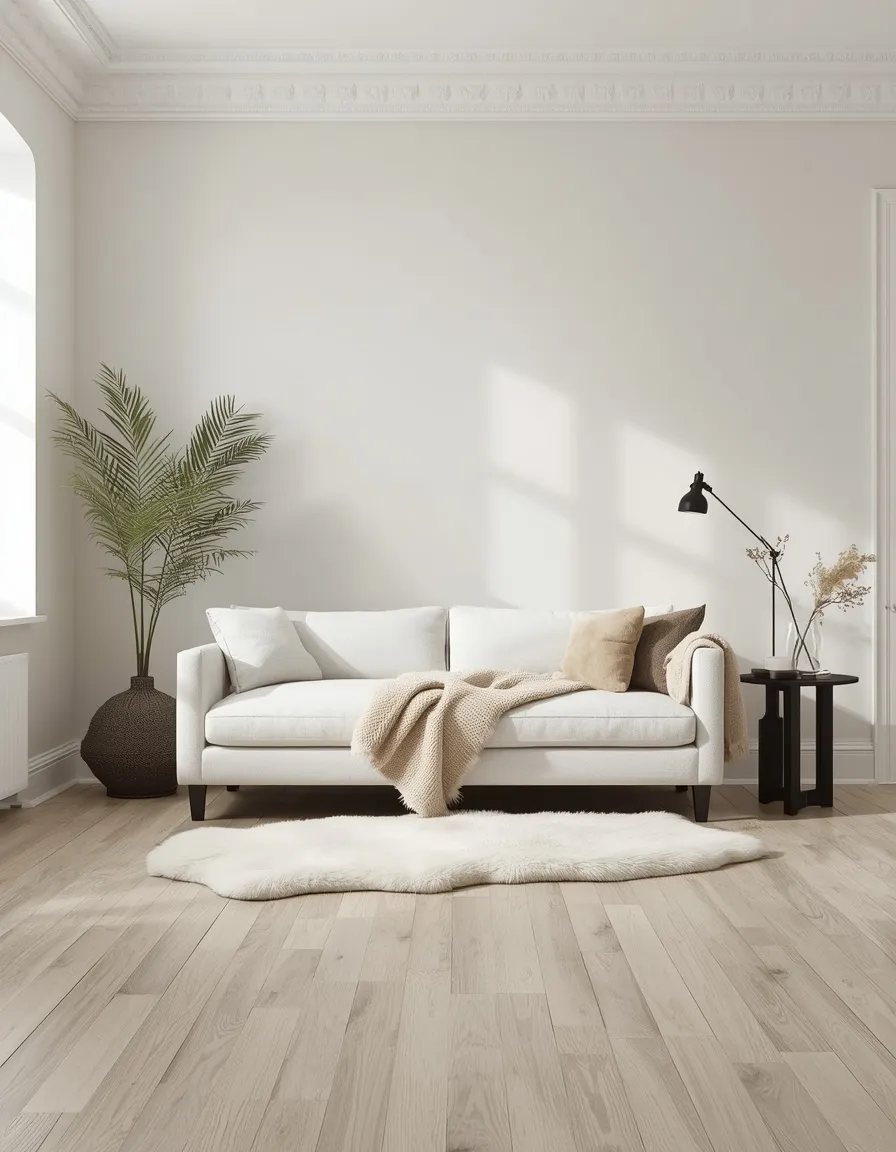
Scandinavian style pairs soft white walls with warm natural wood for a look that’s bright but never cold. Pale oak floors, a white sofa, wool throws, and simple black accents create a room that feels light, cozy, and effortlessly liveable.
Use a warm off-white on the walls rather than a stark brilliant white, then bring in blonde woods, oak, ash, birch, for floors and furniture. Add texture through sheepskin, chunky wool, and linen, and keep a few slim black accents for definition. This is the most forgiving white scheme for cooler, darker climates, since the wood warmth stops the room feeling clinical in low winter light. It suits apartments and family homes alike and pairs beautifully with plants.
- Best for: cooler climates and darker rooms that need warmth.
- Why it works: blonde wood keeps warm-white walls from ever feeling clinical.
- Key elements: warm off-white walls, pale oak, sheepskin, wool, black accents.
3. Black and White Minimalist
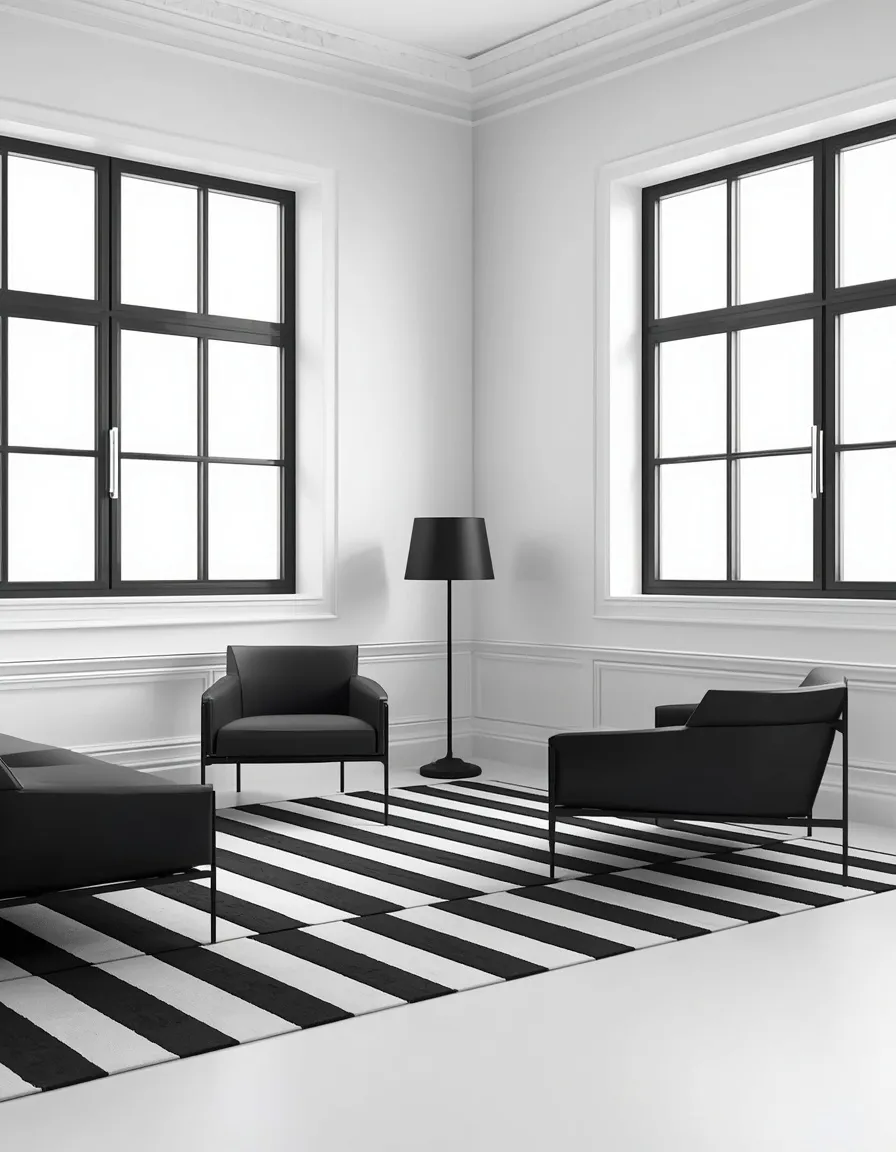
A black-and-white minimalist room is graphic, confident, and endlessly modern. Crisp white walls, black-framed windows or art, a monochrome rug, and clean-lined furniture create a look defined by shape and contrast rather than color.
Keep the palette strictly disciplined: white walls, one or two black anchors, a black steel frame, a matte black lamp, a graphic rug, and nothing extraneous. Roughly an 80/20 white-to-black ratio keeps the room feeling airy rather than heavy. Because there’s no color to hide behind, form and quality matter, so choose fewer, better pieces with strong silhouettes. Adding a wood or leather element prevents the scheme from feeling severe. This suits modern homes, apartments, and confident minimalists.
- Best for: modern apartments and confident minimalists.
- Why it works: an 80/20 white-to-black ratio stays airy instead of heavy.
- Key elements: white walls, black frames and lamps, graphic rug, strong shapes.
4. Grey and White Living Room
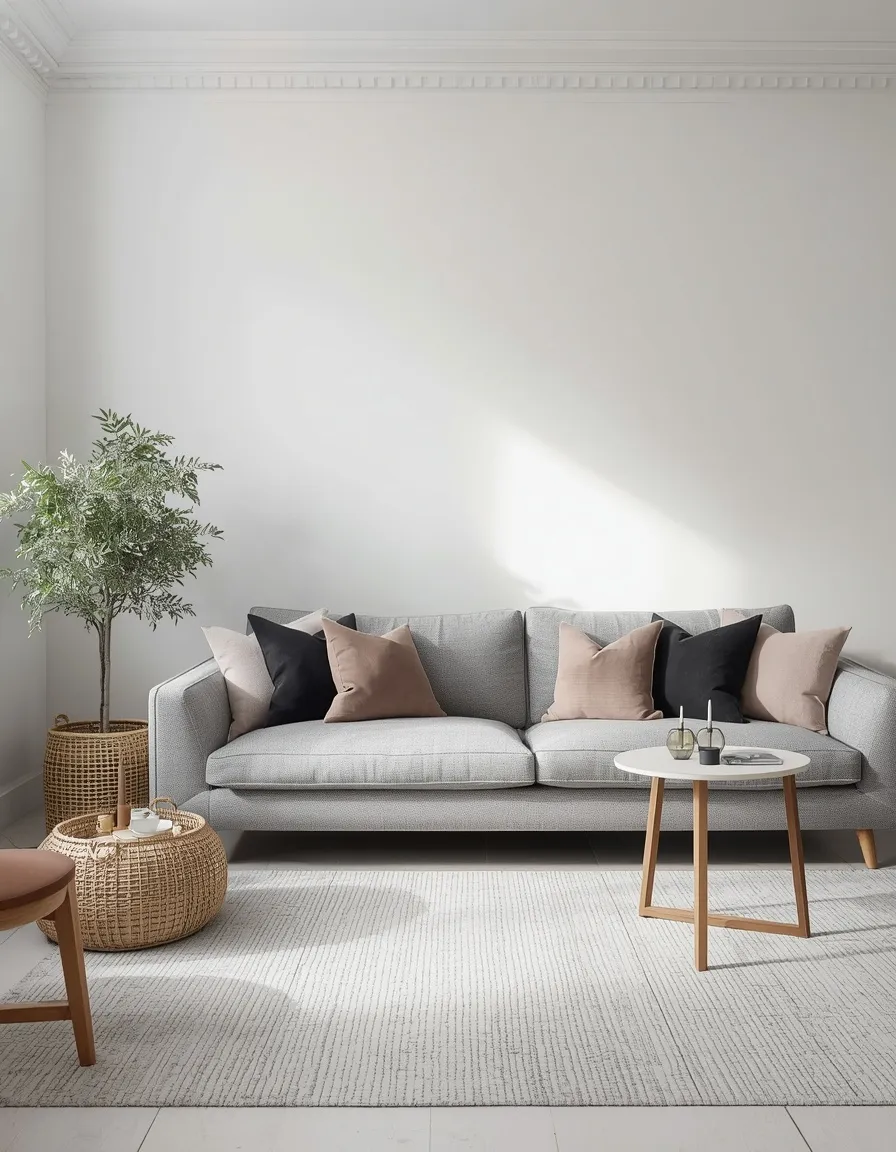
Grey and white is the most liveable modern scheme there is. Soft white walls, a grey sofa, layered cushions in charcoal and dove, and a textured rug create a room that’s calm, forgiving, and easy to live with day to day.
Build the room in tonal layers: white walls, a mid-grey sofa, and cushions and throws spanning pale dove to deep charcoal. Matching the undertones matters, a cool grey next to a warm cream white will look muddy, so keep both cool or both warm. Grey upholstery hides everyday wear far better than white, which makes this the practical choice for families. Add wood or brass so the scheme doesn’t tip into flat and gloomy. This suits busy family living rooms.
- Best for: family living rooms needing calm that hides everyday wear.
- Watch out: keep grey and white undertones consistent or the mix looks muddy.
- Key elements: white walls, grey sofa, tonal cushions, wood or brass warmth.
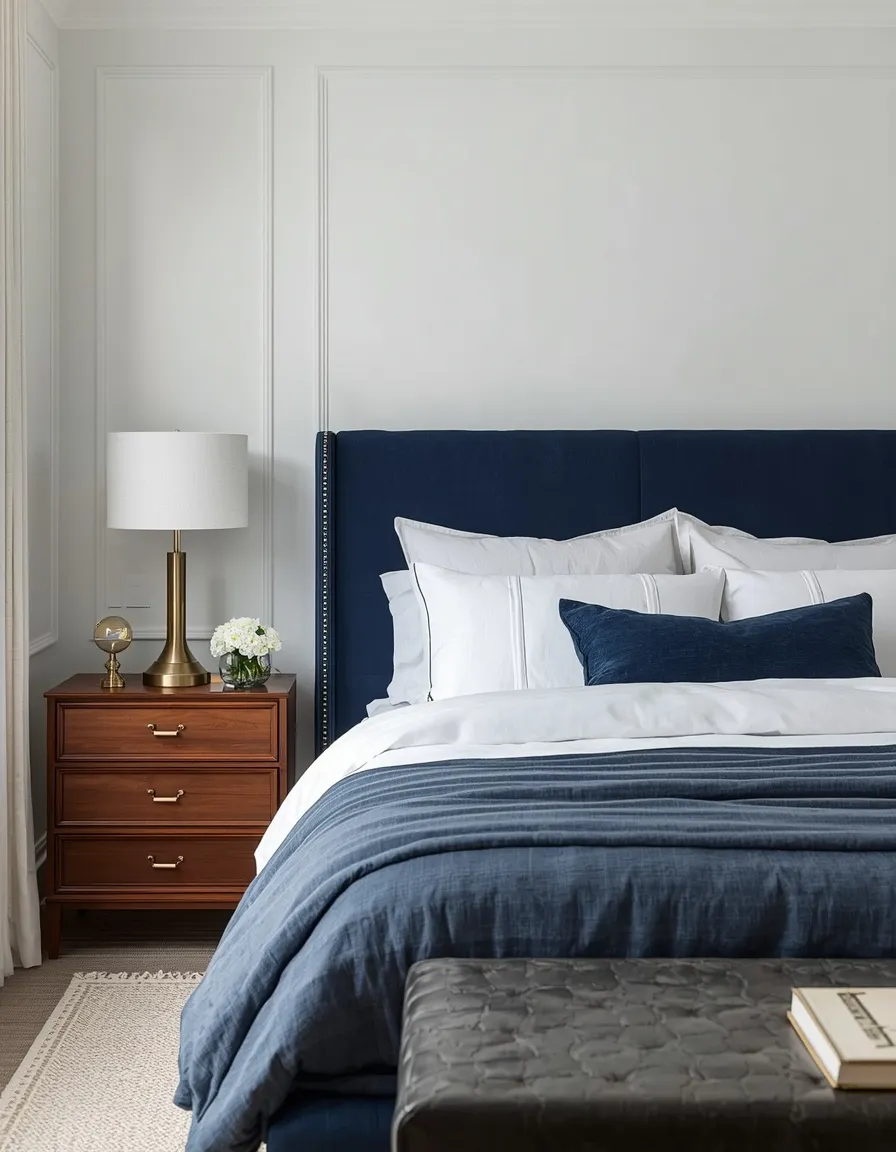
5. Navy and White Bedroom
Navy against white is a bedroom scheme with real depth and quiet drama. Crisp white bedding and walls paired with a navy headboard, accent wall, or layered throws create a restful room that feels both fresh and grounded.
Keep the walls and bedding white so the room stays light, then bring navy in through a single substantial element, an upholstered headboard, one painted accent wall, or heavy navy curtains. Add brass or warm wood accents, which sing against navy far better than chrome. Navy is dark, so give the room good layered lighting: bedside lamps plus a dimmable overhead. This classic, timeless pairing suits main bedrooms and guest rooms and is especially good for those who find all-white too stark.
- Best for: bedrooms wanting depth without losing lightness.
- Why it works: white walls keep the room airy while navy gives it grounding.
- Key elements: white bedding, navy headboard or accent wall, brass, warm wood.
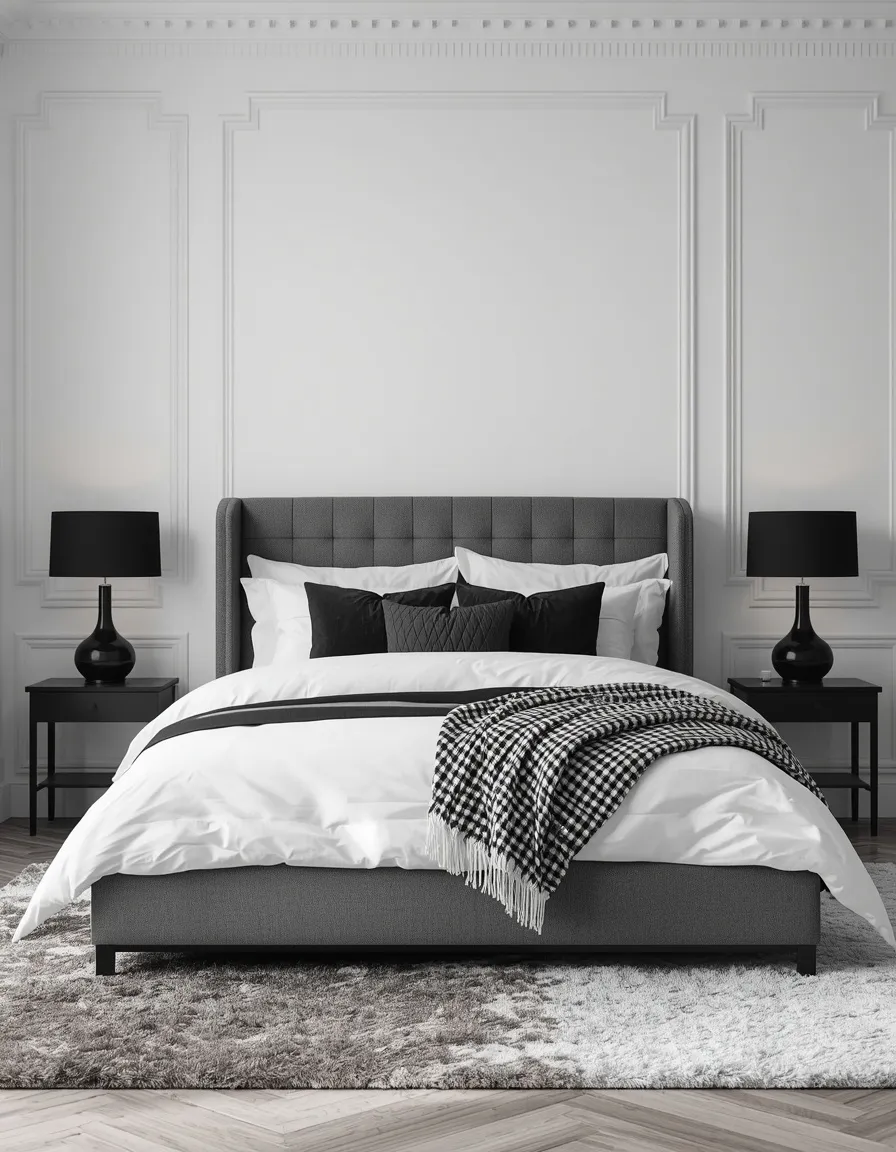
6. Black, White and Grey Bedroom
A black, white, and grey bedroom is sophisticated, restful, and quietly modern. White walls and bedding, a grey upholstered bed, charcoal cushions, and slim black details create a monochrome scheme with real depth.
Work the scheme as a gradient rather than a hard contrast: white walls and linens, a mid-grey bed or headboard, charcoal accents, and a few sharp black touches in lamps or frames. Texture is essential here, waffle cotton, linen, wool, and a plush rug stop a monochrome room from reading as cold. Keep the black light: too much and a bedroom starts feeling heavy rather than calm. This suits modern bedrooms and anyone who wants sophistication without committing to color.
- Best for: modern bedrooms; sophistication without color commitment.
- Watch out: go light on the black; too much makes a bedroom feel heavy.
- Key elements: white linens, grey upholstered bed, charcoal cushions, black details.
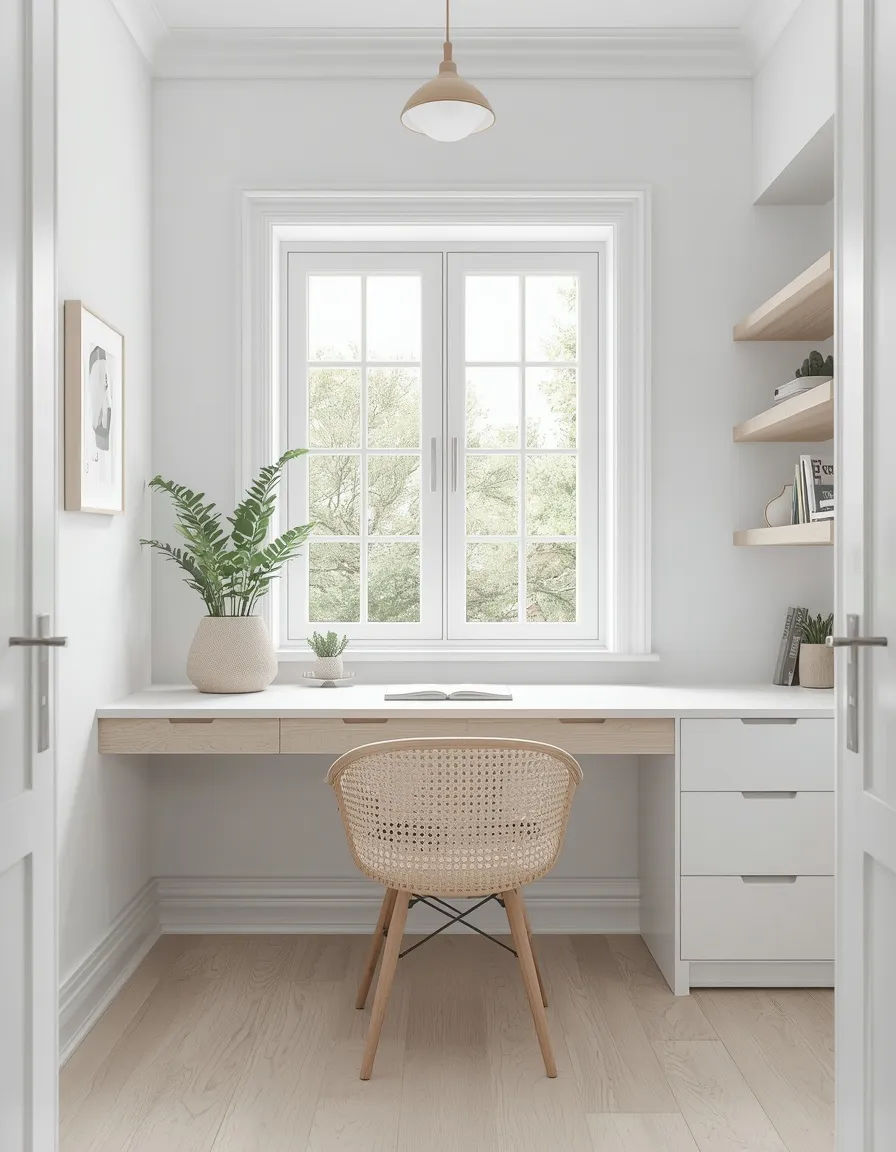
7. Modern White Home Office
A white home office feels clear-headed and focused. White walls, a pale desk, open shelving, and a single plant create a bright, uncluttered workspace where nothing competes for your attention.
Use white as a calm backdrop, then keep the desk surface genuinely clear, with storage in closed cabinets or tidy baskets rather than on display. A white or pale wood desk beneath a window maximizes natural light, which reduces screen glare and eye strain. Add warmth with an oak shelf, a woven chair, or a plant so the room doesn’t feel like an office cubicle. Good task lighting matters, a white room can still be poorly lit. This suits small spaces and anyone easily distracted by visual clutter.
- Best for: small home offices and anyone distracted by visual clutter.
- Why it works: a clear white backdrop reduces visual noise and aids focus.
- Key elements: white desk by a window, closed storage, oak shelf, task lamp.
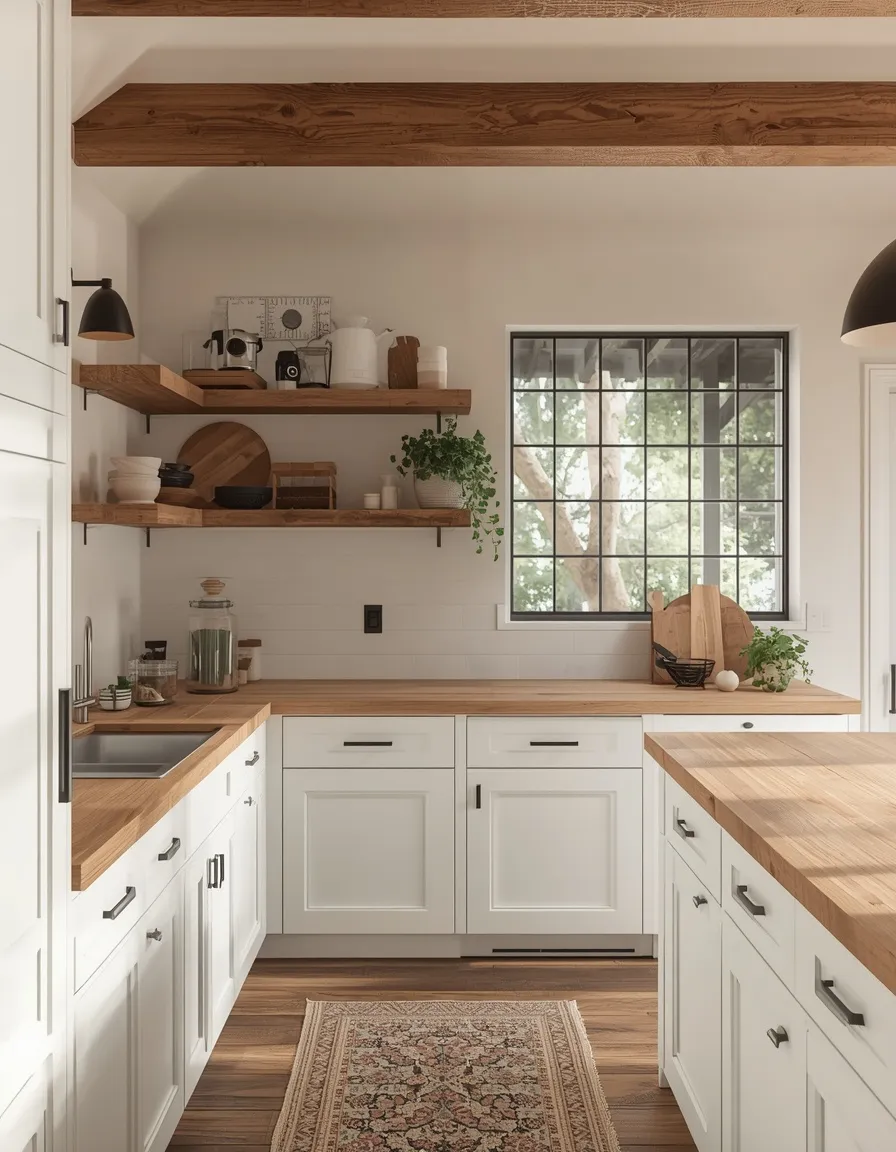
8. Modern Rustic White Kitchen
White cabinets against rustic wood make one of the warmest kitchen schemes going. Shaker-style white cupboards, a butcher-block or reclaimed wood counter, exposed beams, and matte black hardware create a kitchen that feels fresh but full of character.
Pair white cabinetry with genuinely warm materials: butcher-block or timber counters, open wood shelving, and a farmhouse sink. Matte black or aged brass hardware gives the white cabinets definition. Choose a hardwearing cabinet finish, satin or semi-gloss wipes clean far better than flat matte around cooking splatter. Wood counters need oiling every few months to stay sealed against water. This suits farmhouse, cottage, and modern rustic kitchens, and is the friendliest way to keep a white kitchen from feeling clinical.
- Best for: farmhouse and modern rustic kitchens wanting warmth.
- Watch out: oil wood counters every few months; use satin, not flat, on cabinets.
- Key elements: white shaker cabinets, wood counters, black hardware, farmhouse sink.
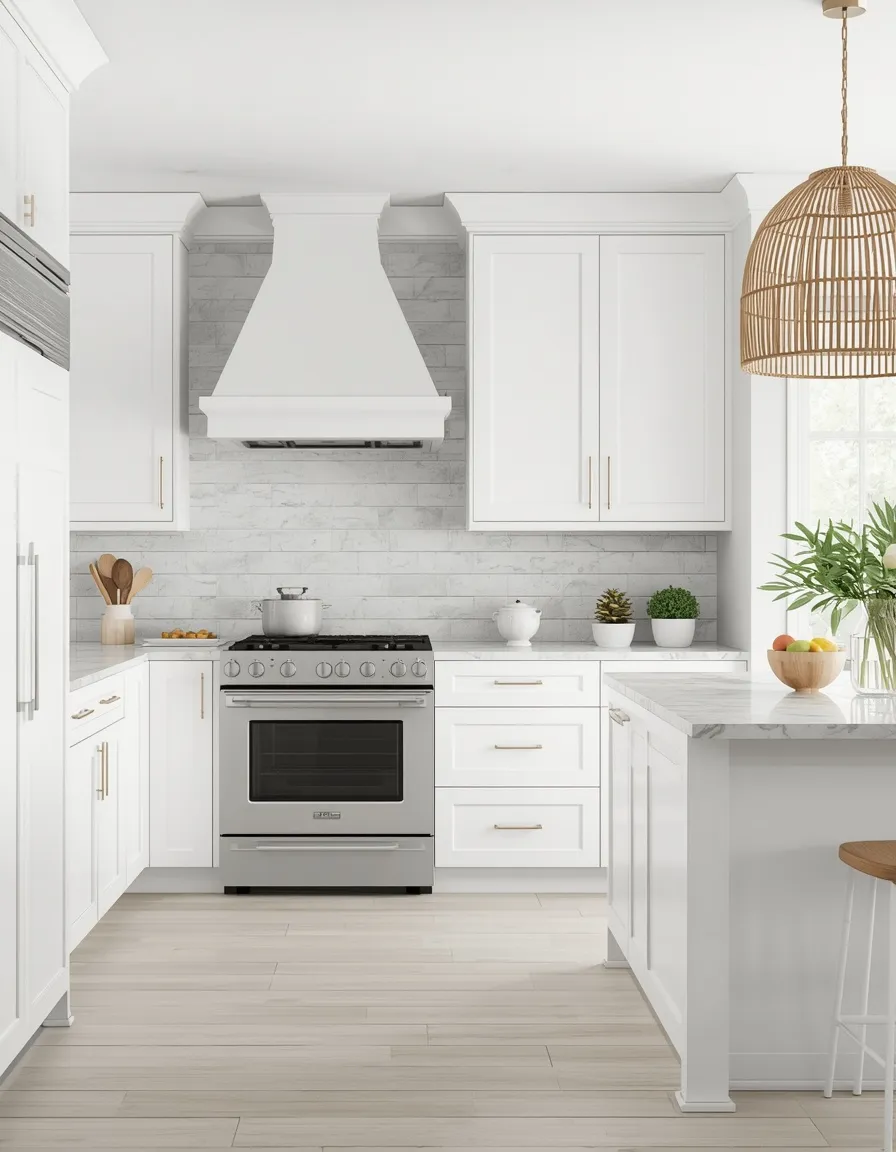
9. Crisp All-White Kitchen
An all-white kitchen is timeless, bright, and endlessly adaptable. White cupboards, white appliances or panel-ready fronts, marble-look counters, and a subway-tile backsplash create a seamless, light-filled cooking space.
For a genuinely cohesive look, match the white of the appliances to the white of the cabinets, mismatched whites are what make white appliances look dated, not the appliances themselves. Integrated or panel-ready fronts hide appliances completely. Choose a darker grout for the backsplash and floor, since brilliant white grout stains quickly in a working kitchen and is difficult to keep looking clean. Add texture through a fluted island, a rattan pendant, or open wood shelving. This suits small kitchens, which white makes feel notably larger.
- Best for: small kitchens; white visually enlarges a tight space.
- Watch out: match appliance and cabinet whites, and use darker grout, not white.
- Key elements: white cupboards, matched appliances, subway tile, textured island.
10. Layered White-on-White Texture
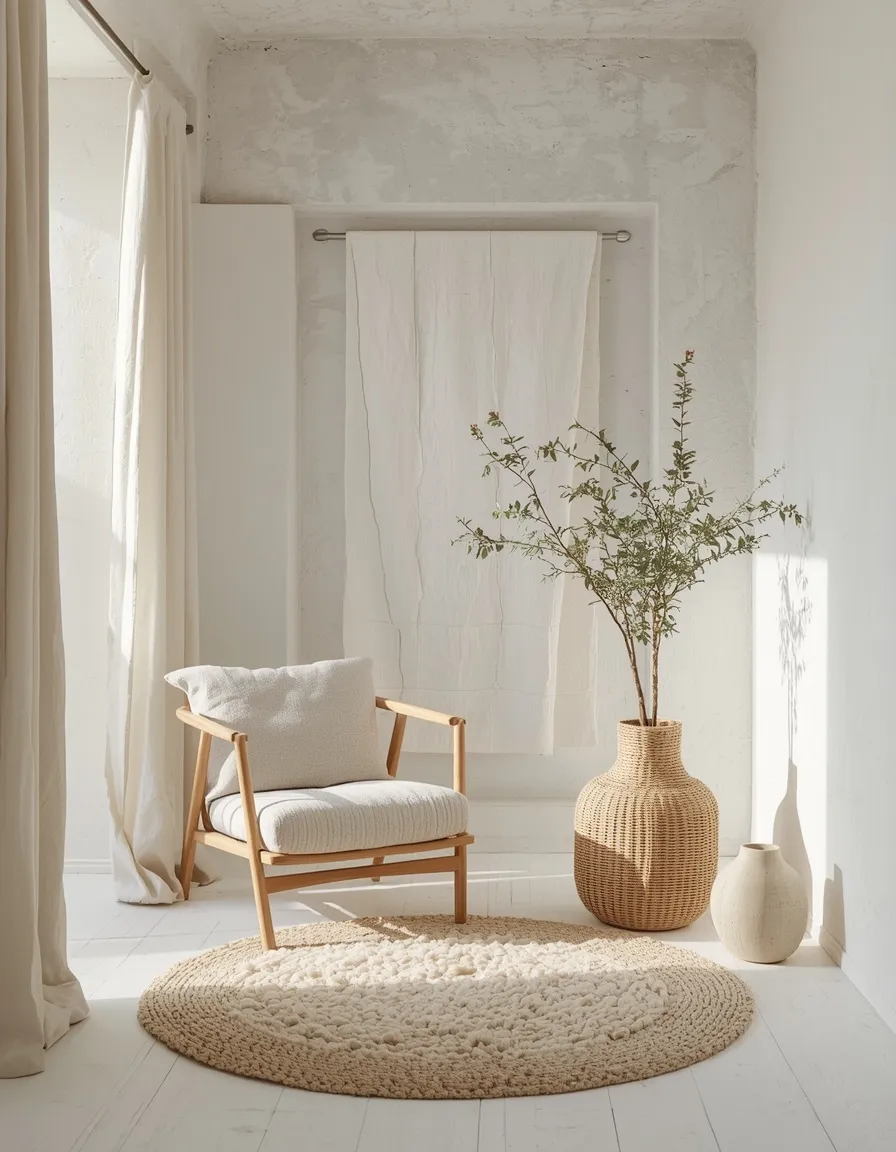
A white-on-white room proves texture can carry an entire scheme. Plaster walls, a boucle chair, linen curtains, a chunky wool rug, and ceramic vessels create a room with no color at all and yet real richness and depth.
Since there’s no color doing the work, texture becomes the whole design. Combine at least four or five distinct surfaces: limewashed or plaster walls, nubby linen, boucle, wool, rattan, unglazed ceramic, and pale wood. Vary the finishes too, matte against a soft sheen catches light differently and creates subtle shadow. This is the single best fix for a white room that feels sterile, and it costs nothing extra to plan. It suits minimalists, and works in any room from bedroom to living room.
- Best for: fixing a white room that feels flat or sterile.
- Why it works: four or five contrasting textures create depth where color would.
- Key elements: plaster walls, boucle, linen, wool, rattan, ceramic, pale wood.
11. Coastal White Retreat
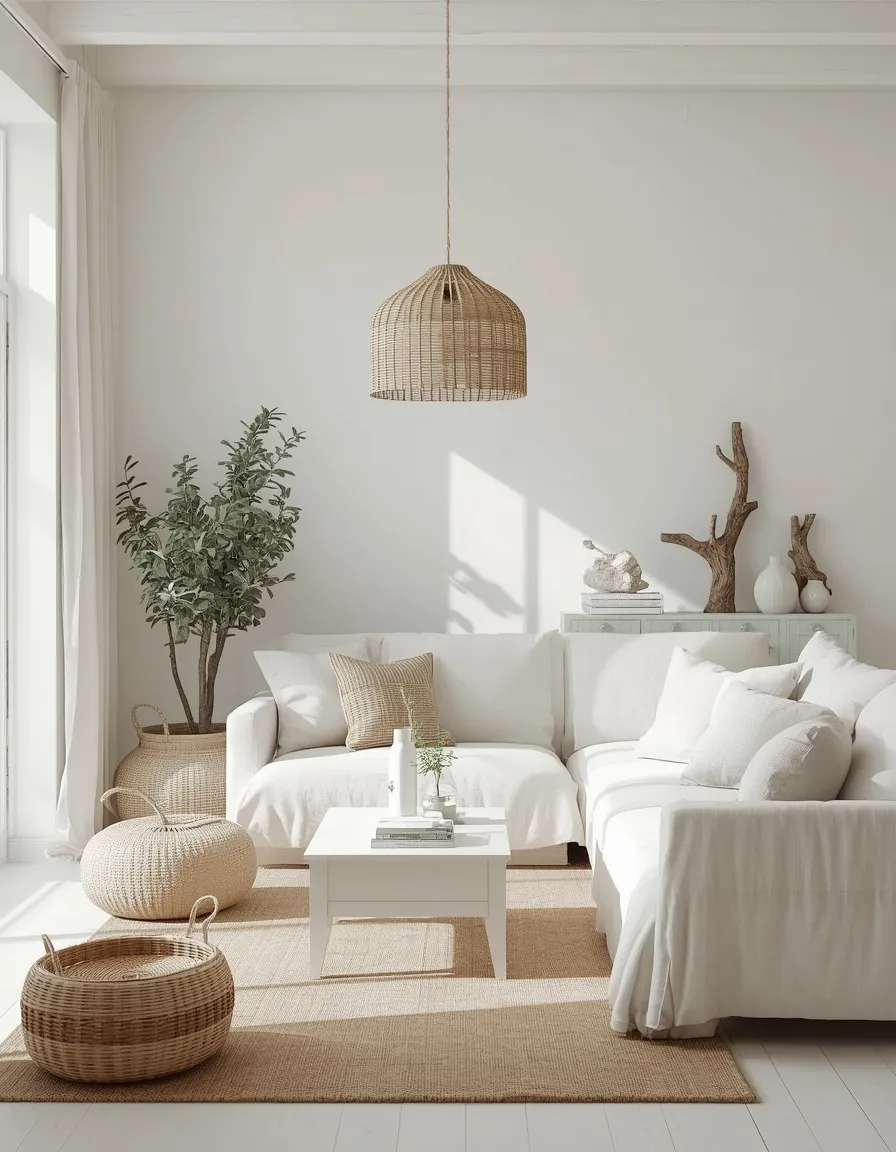
Coastal white is breezy, relaxed, and full of light. Whitewashed walls, slipcovered sofas, pale driftwood tones, jute, and the softest hint of blue create a room that feels like a morning by the sea.
Keep the whites soft and slightly warm rather than stark, and build in natural textures: jute rugs, rattan pendants, linen slipcovers, and bleached or driftwood-toned timber. A whisper of pale blue or sea-glass green in a cushion or vase is enough; more, and it tips into theme decor. Washable linen slipcovers are the practical hero here, since they can be pulled off and laundered. This suits bright, airy rooms and anyone who wants white with a relaxed, holiday feel year-round.
- Best for: bright, airy rooms wanting a relaxed year-round holiday feel.
- Watch out: a whisper of blue is plenty; more reads as themed beach decor.
- Key elements: warm whitewash, linen slipcovers, jute, rattan, driftwood tones.
12. Warm Cream and Off-White Scheme
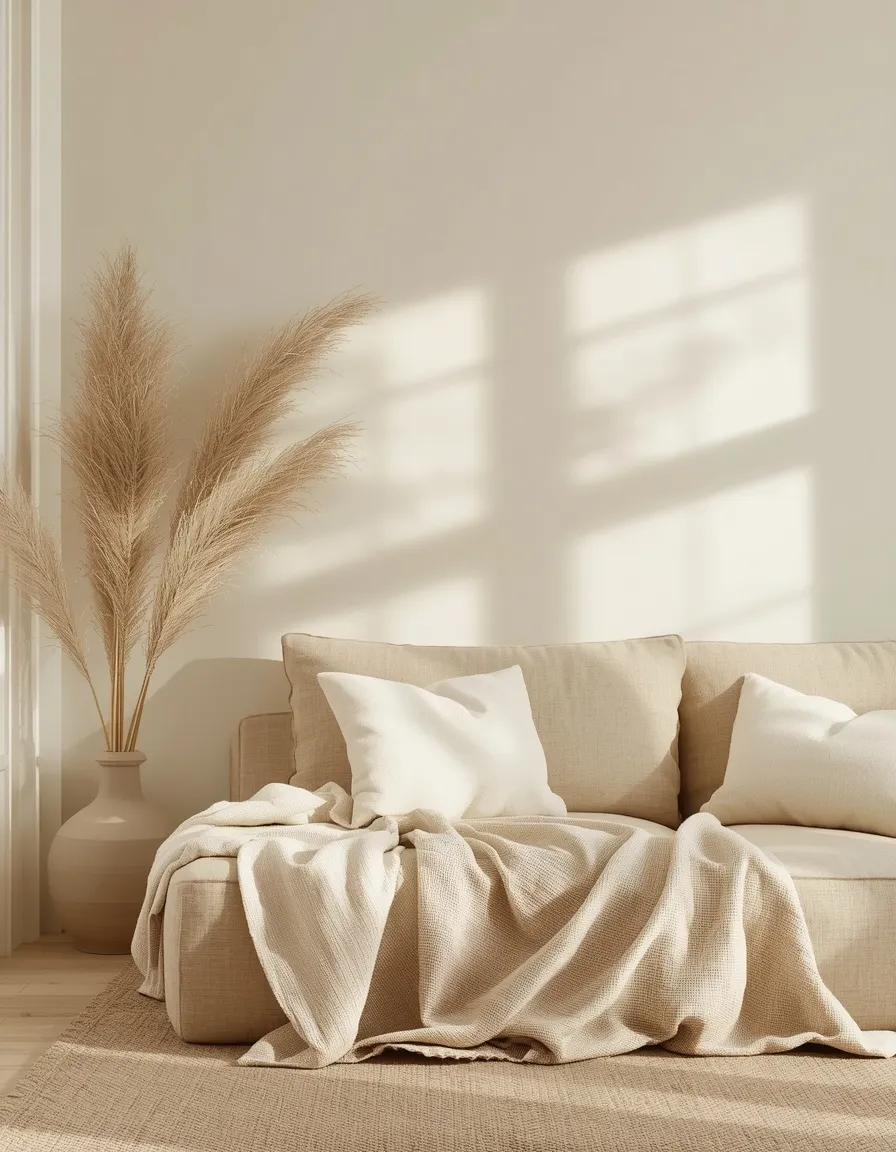
A cream and off-white room is white’s softer, more forgiving cousin. Layers of ivory, bone, oatmeal, and greige create a scheme that glows warmly in low light and never feels cold or clinical.
Swap brilliant white for warmer neutrals, cream, ivory, bone, oatmeal, and layer several of them together. This scheme is far kinder in north-facing rooms and dim spaces, where a cool white would look grey and lifeless. Keep every element in the warm family; a single cool, blue-toned white will jump out and look dirty against the creams. Add texture through wool, linen, and pale wood. This suits north-facing rooms, cozy homes, and anyone who finds stark white unwelcoming.
- Best for: north-facing rooms and anyone who finds stark white cold.
- Watch out: keep every white warm; one cool-toned white will look dirty.
- Key elements: cream, ivory, bone, oatmeal, greige, wool and linen texture.
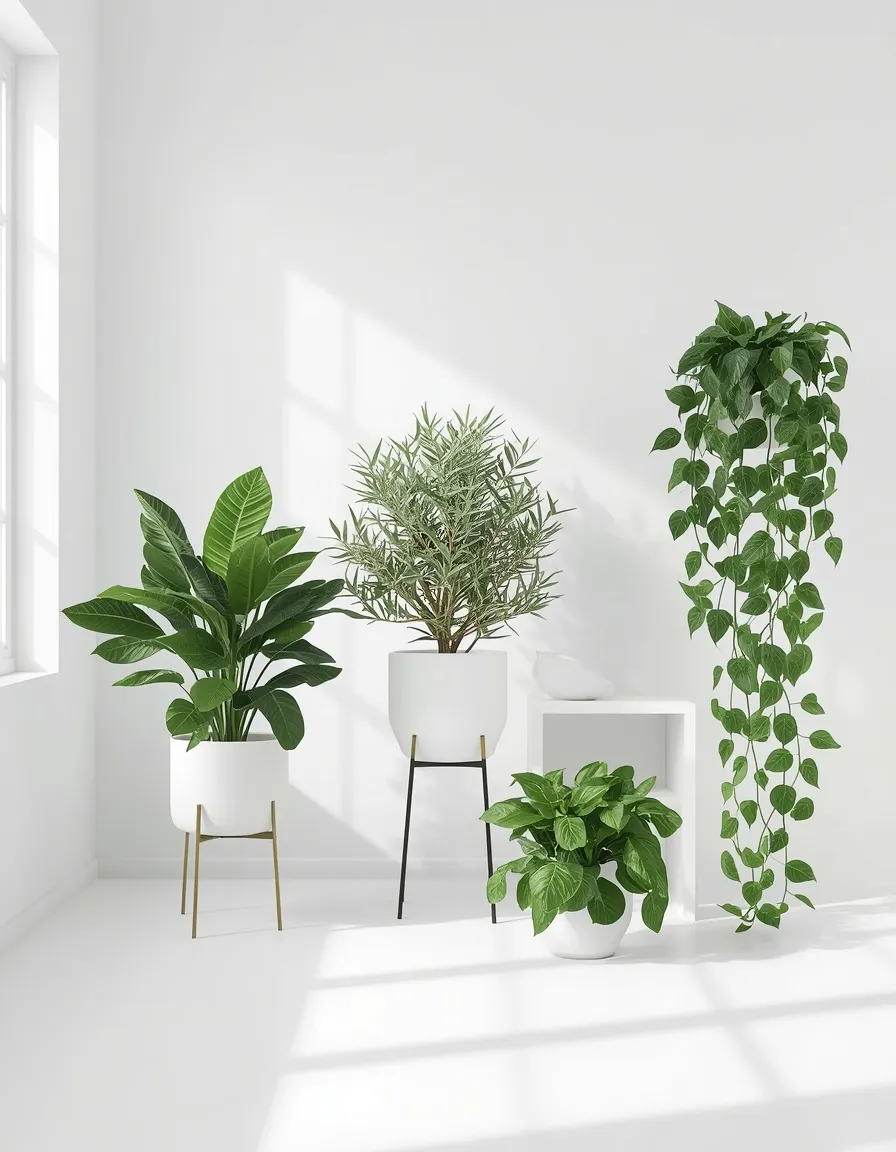
13. White and Green Plant Room
White walls make the perfect gallery for greenery. A bright white room filled with monstera, olive, and trailing pothos turns plants into living artwork, their leaves crisp and vivid against the pale backdrop.
Use white as a clean canvas and let plants supply all the color, grouping them at varying heights on stands, shelves, and the floor. Green reads more intensely against white than against any other wall color, so a handful of plants goes a long way. Match plants to the room’s real light, bright indirect for a monstera, direct sun for an olive tree. If pets share the home, note that monstera and pothos are toxic if chewed and place them out of reach. This suits bright rooms and plant lovers.
- Best for: bright rooms and plant lovers wanting maximum green impact.
- Watch out: monstera and pothos are toxic to pets; place them out of reach.
- Key elements: white walls, layered plants at varied heights, plant stands.
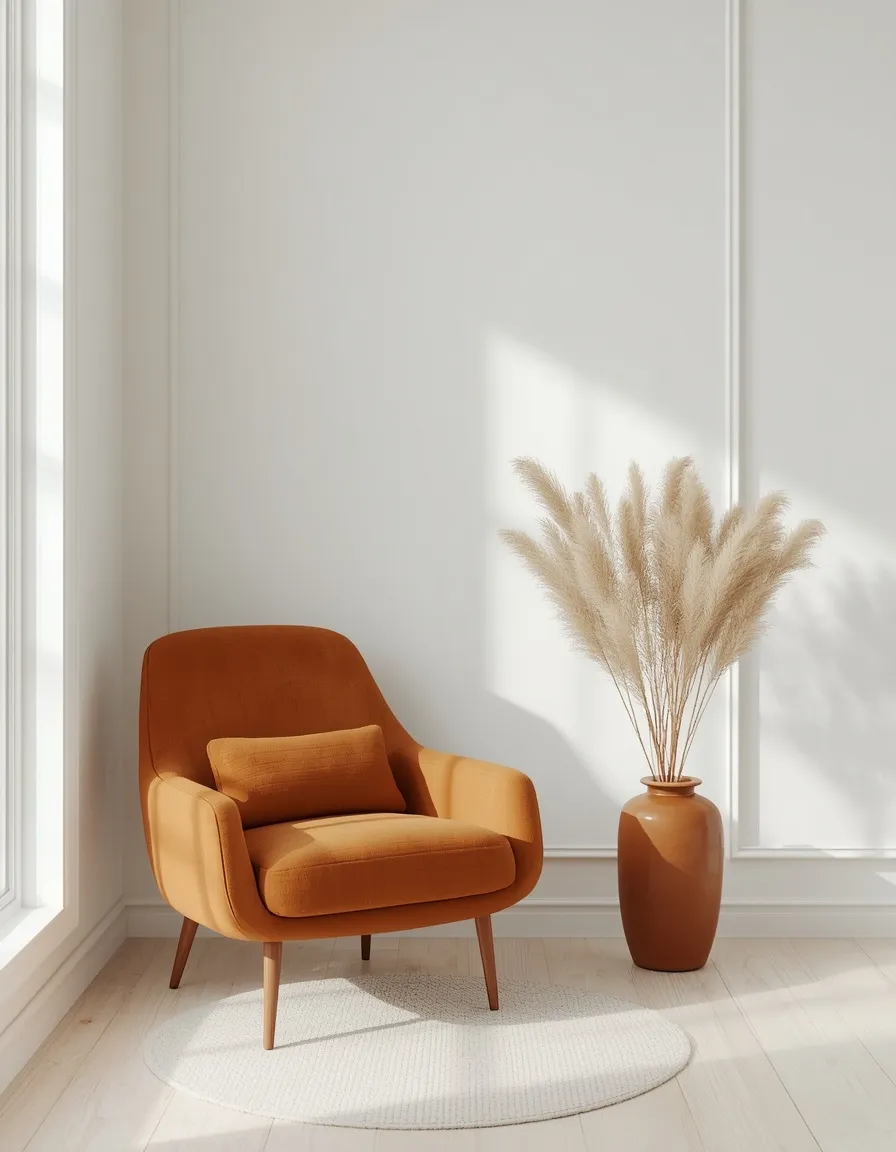
14. White with a Single Bold Accent
One saturated color against a white room lands with real impact. A single deep accent, plum, ochre, rust, or forest green, in an armchair, a piece of art, or a set of cushions gives a white scheme personality without disturbing its calm.
Choose one accent color and repeat it two or three times around the room, a chair, a cushion, a vase, so it reads as intentional rather than accidental. Keeping the accent to roughly 10 percent of the room preserves the airy white feel while giving the eye somewhere to land. Because it’s a small commitment, it’s also easy to change: swap cushions and art for a whole new mood without repainting. This suits renters, minimalists who want a little color, and anyone who likes to redecorate seasonally.
- Best for: renters and minimalists who want color without commitment.
- Why it works: one accent repeated 2–3 times reads intentional, not accidental.
- Key elements: white base, one saturated accent at ~10% of the room, art.
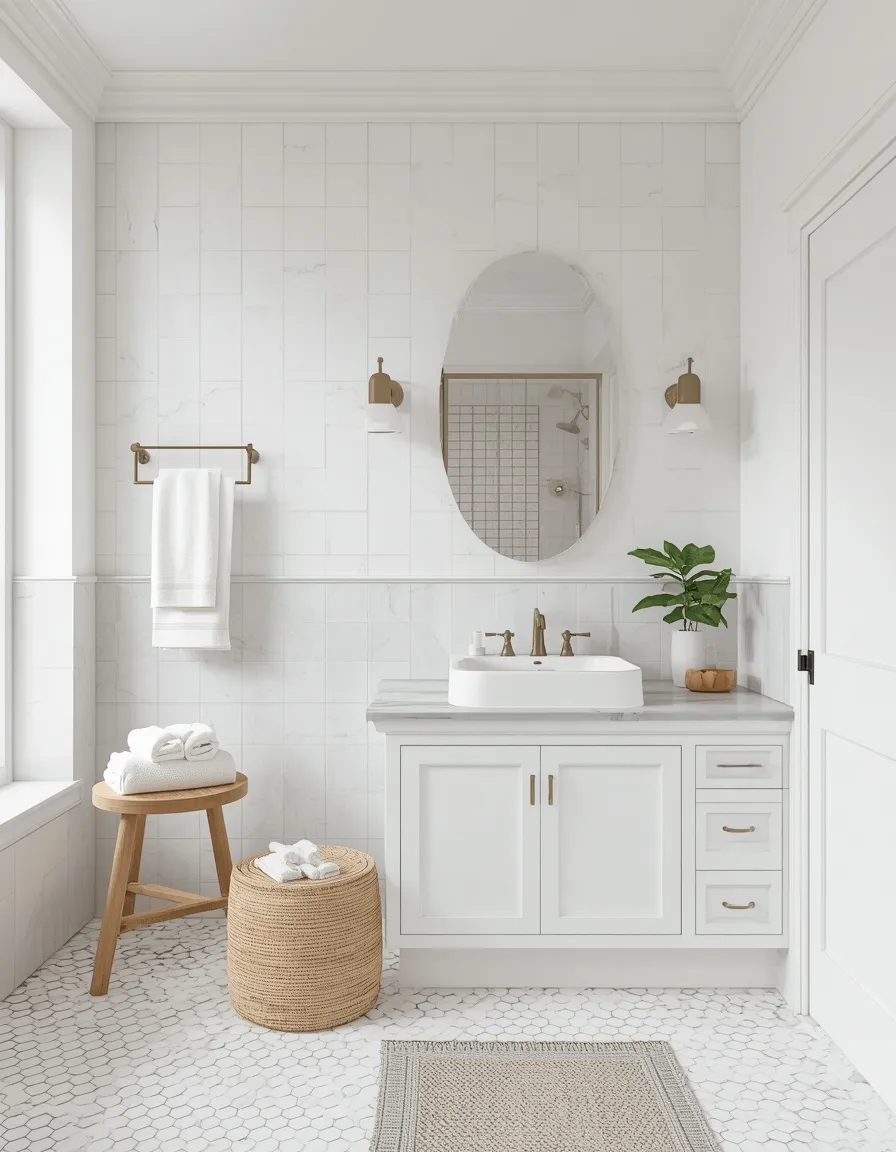
15. Bright White Spa Bathroom
A white bathroom feels clean, calm, and genuinely spa-like. White tile, a white vanity, marble-look surfaces, warm wood accents, and fluffy towels create a bright, restorative room to start and end the day in.
Keep the surfaces white but vary the tile shape and finish, subway, zellige, fluted, or hexagon, so the room has texture rather than reading as a blank box. Warm it with a wood stool, a rattan basket, and brass or matte black fixtures. Choose grey or beige grout instead of white, which discolors quickly in a wet room, and make sure the bathroom is well ventilated to prevent mold on pale surfaces. This suits any bathroom, and white makes a small one feel considerably larger.
- Best for: small bathrooms; white makes a tight space feel larger.
- Watch out: use grey or beige grout, and ventilate well to prevent mold.
- Key elements: varied white tile shapes, wood stool, rattan, brass fixtures.
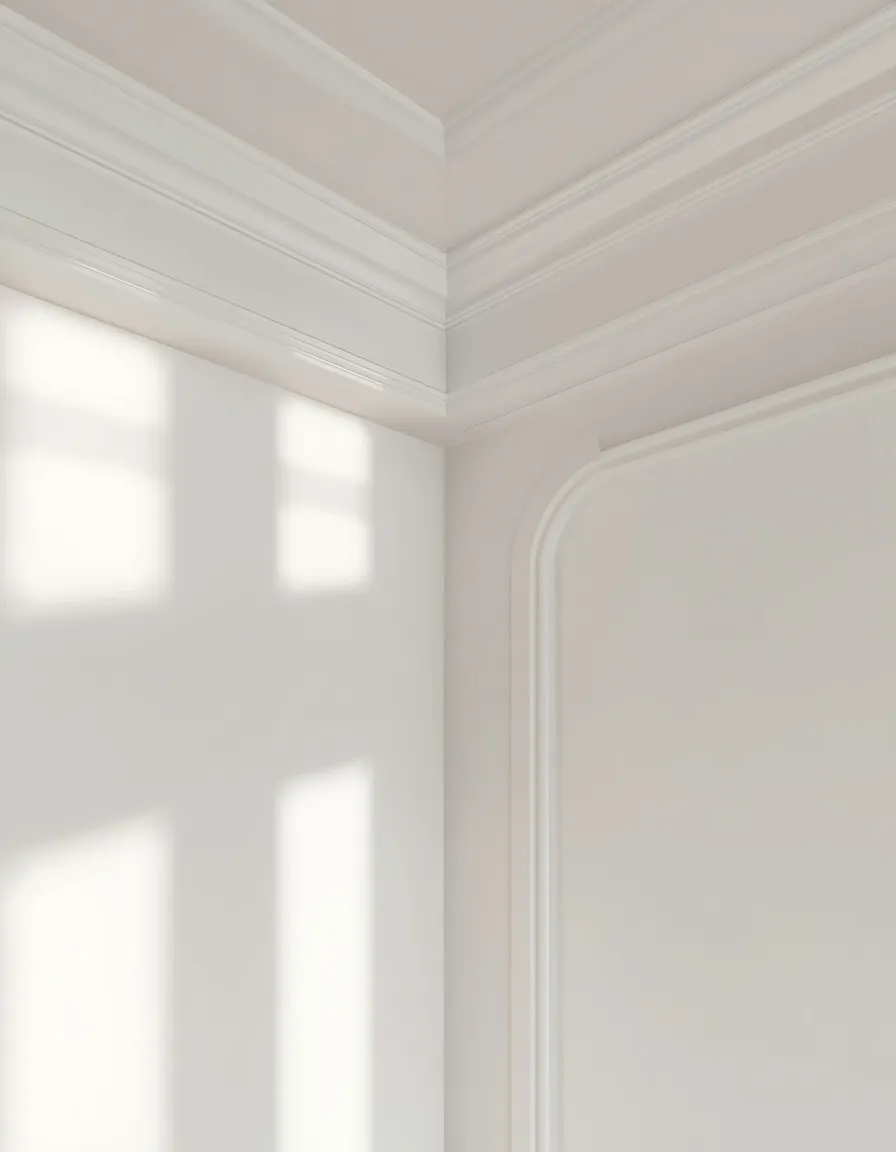
16. White Ceiling and Architectural Detail
White is at its most powerful overhead. A crisp white ceiling with molding, paneling, coffers, or a recessed tray turns the most overlooked surface in the room into a quiet architectural feature that adds height and polish.
Painting the ceiling a shade brighter than the walls makes a room feel taller, while carrying the wall color up onto the ceiling makes a large room feel cozier, a genuinely useful lever most people never pull. White paint on architectural detail like molding, beams, or a tray ceiling lets shadow do the work, so the shape reads clearly without any color at all. Use a flat or matte finish on ceilings to hide imperfections, since sheen highlights every bump. This suits any room, especially plain modern boxes lacking character.
- Best for: plain modern rooms lacking architectural character.
- Why it works: a ceiling brighter than the walls makes a room feel taller.
- Key elements: white molding, paneling or tray ceiling, matte ceiling finish.
How Do You Choose the Right White Paint?
Choose white paint by its undertone and your room’s light direction. Every white leans warm, cool, or neutral, and picking the wrong one is the single most common reason a white room disappoints.
North-facing rooms get cool, indirect light all day, which amplifies any blue or grey undertone, so a cool white will read cold and grey there, and a warm white with a cream or beige base will look far better. South-facing rooms get warm, generous light and can carry crisper, cooler whites without feeling stark. East-facing rooms are warm in the morning and cooler later; west-facing rooms do the reverse.
Always test before committing. Paint a large sample patch, at least 30 x 30 cm (12 x 12 in), on more than one wall, then look at it in morning light, afternoon light, and lamplight before deciding. Whites shift dramatically through the day, and a chip in the store tells you almost nothing. When painting, choose low-VOC paint and ventilate the room well while it dries.
White also rewards paying attention to surfaces people usually ignore, like the ceiling. Our guide to the reverse tray ceiling shows how much architectural interest a pale ceiling can add, an idea that pairs beautifully with these schemes. You’ll find more like it among our trending interior decor ideas.
Making White Work in a Real Home
White survives kids, pets, and daily life if you choose the right finishes from the start. The problem is almost never the color, it’s specifying delicate materials in places that take a beating.
On walls, use a scrubbable eggshell or satin finish in hallways, kitchens, and children’s rooms; flat matte looks beautiful but marks easily and rarely wipes clean. For upholstery, choose a performance fabric or a removable, washable slipcover rather than a delicate white cotton, a slipcovered sofa can go in the wash, which is what makes a white sofa genuinely liveable. In kitchens and bathrooms, pick grey or beige grout instead of white, which stains and discolors within months. And keep a little of the original paint for touch-ups, since a scuffed white wall is the easiest thing in the world to fix.
Which White Suits Your Room?
Whites fall into a few broad families, and matching the family to your room’s light is what makes the scheme work. Use this as a starting point before you test samples.
| White family | Undertone | Best suited to |
| Crisp / pure white | Neutral, little to no bias | Bright south-facing rooms, modern schemes |
| Cool white | Blue, grey, or violet | Sunny rooms, black-and-white and grey schemes |
| Warm white | Yellow, cream, or beige | North-facing and dim rooms; wood-heavy spaces |
| Greige / off-white | Grey-beige balance | Busy family rooms; a forgiving all-rounder |
| Soft cream / ivory | Strongly warm | Cozy rooms, old-world and rustic interiors |
Conclusion
The best white interior design ideas all rest on the same three decisions: choose a white whose undertone suits your room’s light, layer enough texture that the eye never gets bored, and specify finishes that can survive the life you actually live. Do that, and white stops being a safe default and becomes a genuine design choice, one that makes a small room feel bigger, a dark room feel brighter, and everything you own look better against it. For more inspiration, browse our trending interior decor ideas, then go tape a few paint samples to the wall and watch how they change through the day.
Frequently Asked Questions
Q: How do I stop a white room from looking sterile?
Layer texture rather than adding more color. Combine at least four or five contrasting surfaces, linen, boucle, wool, rattan, plaster, unglazed ceramic, and pale wood, so light catches them differently and creates subtle shadow and depth. Warm wood and greenery also soften a white scheme instantly. Texture, not color, is what gives an all-white room richness.
Q: What is the best white paint for a north-facing room?
Choose a warm white with a cream or beige undertone. North-facing rooms receive cool, indirect light that exaggerates any blue or grey bias, so a cool white will look grey and cold there. Always test a large sample patch, at least 30 x 30 cm (12 x 12 in), on more than one wall and check it in morning, afternoon, and lamplight before committing.
Q: Is white interior design practical with kids and pets?
Yes, if you specify the right finishes. Use a scrubbable eggshell or satin paint in high-traffic areas rather than flat matte, choose performance fabric or removable washable slipcovers for upholstery, and pick grey or beige grout instead of white. A slipcovered white sofa that goes in the wash is far more practical than a delicate one in any color.
Q: What colors go best with white walls?
Almost anything, which is white’s great advantage. Black gives graphic structure, grey is the most forgiving and liveable, navy adds depth without heaviness, and natural wood adds warmth. Greenery reads more vividly against white than any other wall color. For a bolder look, pick one saturated accent and repeat it two or three times around the room.
Q: Do white kitchens with white appliances look dated?
Not inherently, the problem is usually mismatched whites. White appliances look dated when their white clashes with the cabinet white beside them. Match the two carefully, or choose panel-ready appliances that disappear into the cabinetry. Adding texture through a fluted island, wood shelving, or a rattan pendant keeps an all-white kitchen looking current.
Q: Does painting a room white really make it look bigger?
It genuinely helps, because white reflects more light than darker colors and softens the visual boundaries between walls, floor, and ceiling. Painting the ceiling a shade brighter than the walls adds a further sense of height. White is especially effective in small bathrooms and kitchens, though good lighting and uncluttered surfaces matter just as much as the paint color.