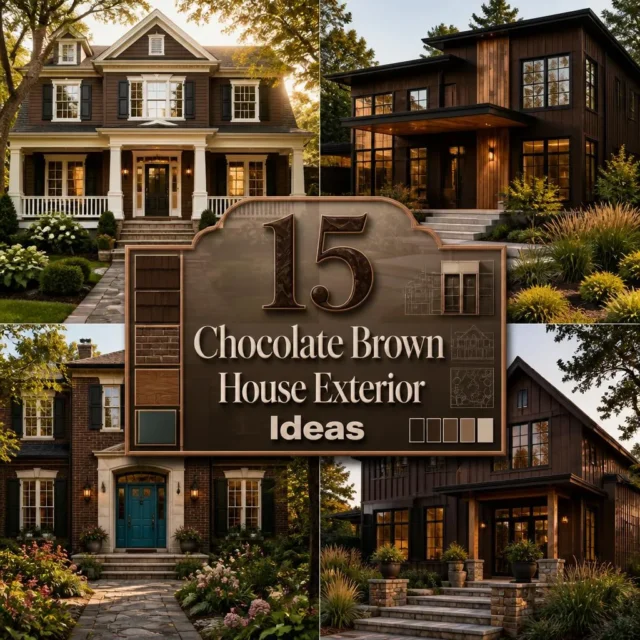

There’s a reason chocolate brown keeps returning to the front of the house. Chocolate brown house exterior design ideas work because the color already belongs outdoors, it’s the shade of bark, soil, and weathered timber, so a brown house settles into its surroundings instead of shouting over them. Paired with crisp white trim it reads classic; against black window frames and cedar it turns sharply modern. At Sunday Abode, we think curb appeal comes from getting the whole composition right, not just the paint chip. These 15 ideas cover every style and budget, along with the practical realities of dark exterior color that most inspiration galleries quietly leave out.
Key Takeaways
- Chocolate brown suits nearly every architectural style, shifting from classic to modern depending on the trim, door, and window colors you pair with it.
- Choose your brown around what you can’t change, the roof, brick, and stone are fixed, and clashing undertones are the most common exterior mistake.
- Dark colors absorb more heat and fade faster in strong sun, so use a quality fade-resistant exterior paint and expect more upkeep than a pale house.
- If you have vinyl siding, you must use paint formulated as vinyl-safe, painting vinyl too dark can warp it and void the warranty.
- Check local rules first: many neighborhoods, HOAs, and conservation areas restrict exterior colors before you buy a single tin.
1. Chocolate Brown and Crisp White
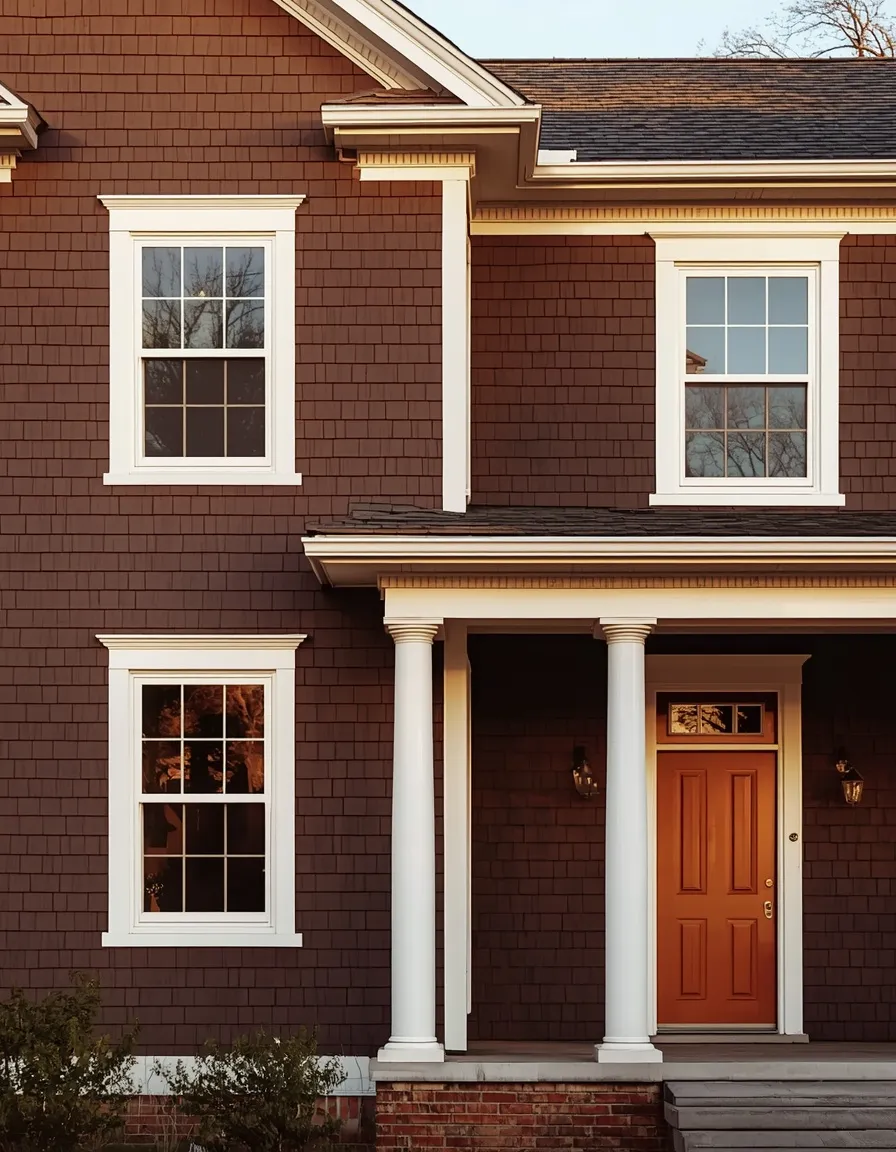
Deep chocolate brown siding against bright white trim is the pairing that never dates. The white frames the windows, eaves, and porch columns like a sharp outline, making the dark body look intentional and architectural rather than heavy.
Keep the brown for the main body and reserve pure white for trim, fascia, and window surrounds, roughly a 70/20 split, with the last 10 percent going to a door or shutter accent. The contrast is what does the work, so avoid a soft cream if you want this crisp effect; a clean white reads far sharper. This scheme suits colonial, farmhouse, and traditional homes, and it’s the safest, most resale-friendly way to use a dark brown exterior.
- Best for: traditional, colonial, and farmhouse homes; resale-friendly.
- Why it works: a clean white outline keeps a dark body looking sharp, not heavy.
- Key elements: brown body, pure white trim, one accent door color.
2. Modern Brown and Black
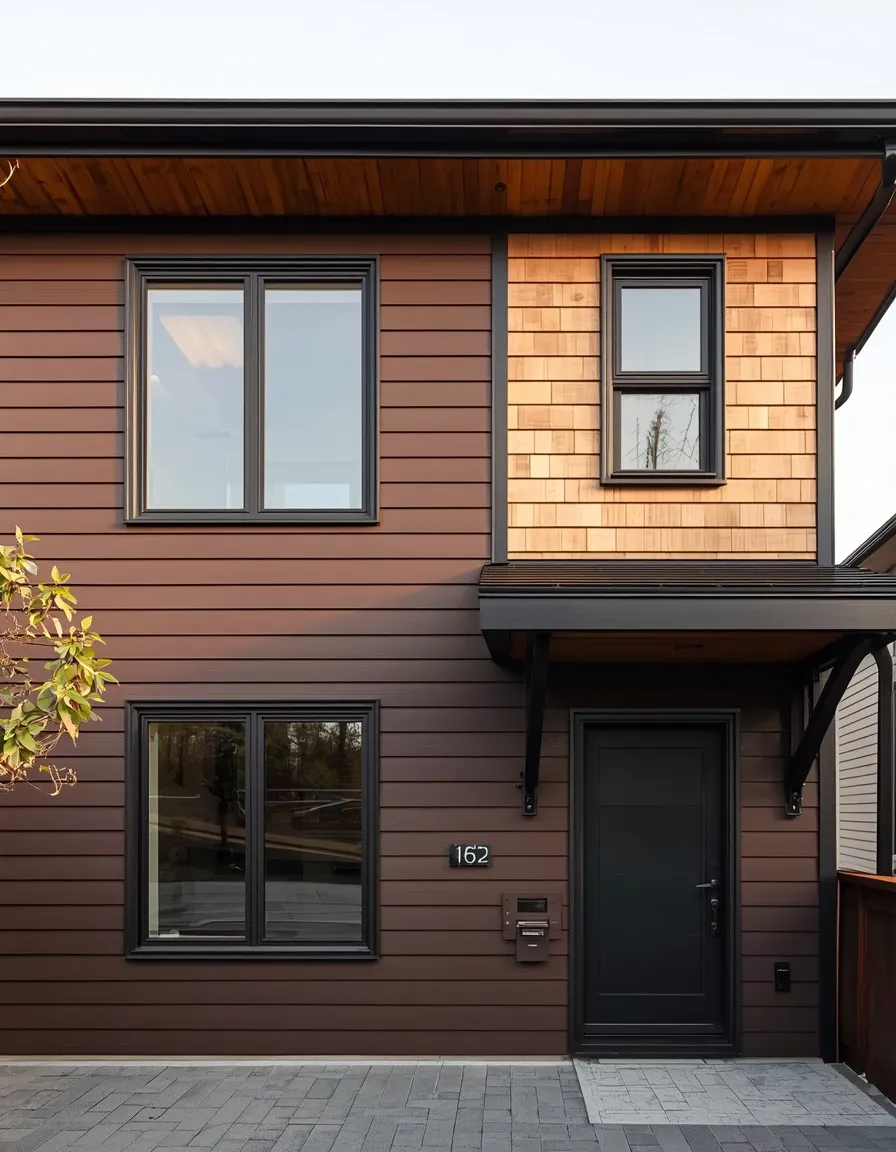
Chocolate brown paired with black window frames and a black door is the sharpest, most contemporary version of this palette. The two dark tones layer rather than contrast, giving a home a confident, tailored, distinctly modern silhouette.
Use a warm chocolate brown on the body and matte black on windows, gutters, and the door, letting the difference in undertone rather than lightness create the definition. Because both colors are dark, the composition can go flat, so add texture through wood cladding, a cedar soffit, or board-and-batten siding to give the eye something to catch. Black metal absorbs a lot of heat, so avoid it on anything you’ll touch in full sun. This suits modern, minimalist, and new-build homes.
- Best for: modern, minimalist, and new-build homes.
- Watch out: two dark tones can flatten; add wood or board-and-batten texture.
- Key elements: warm brown body, matte black windows and door, timber accents.
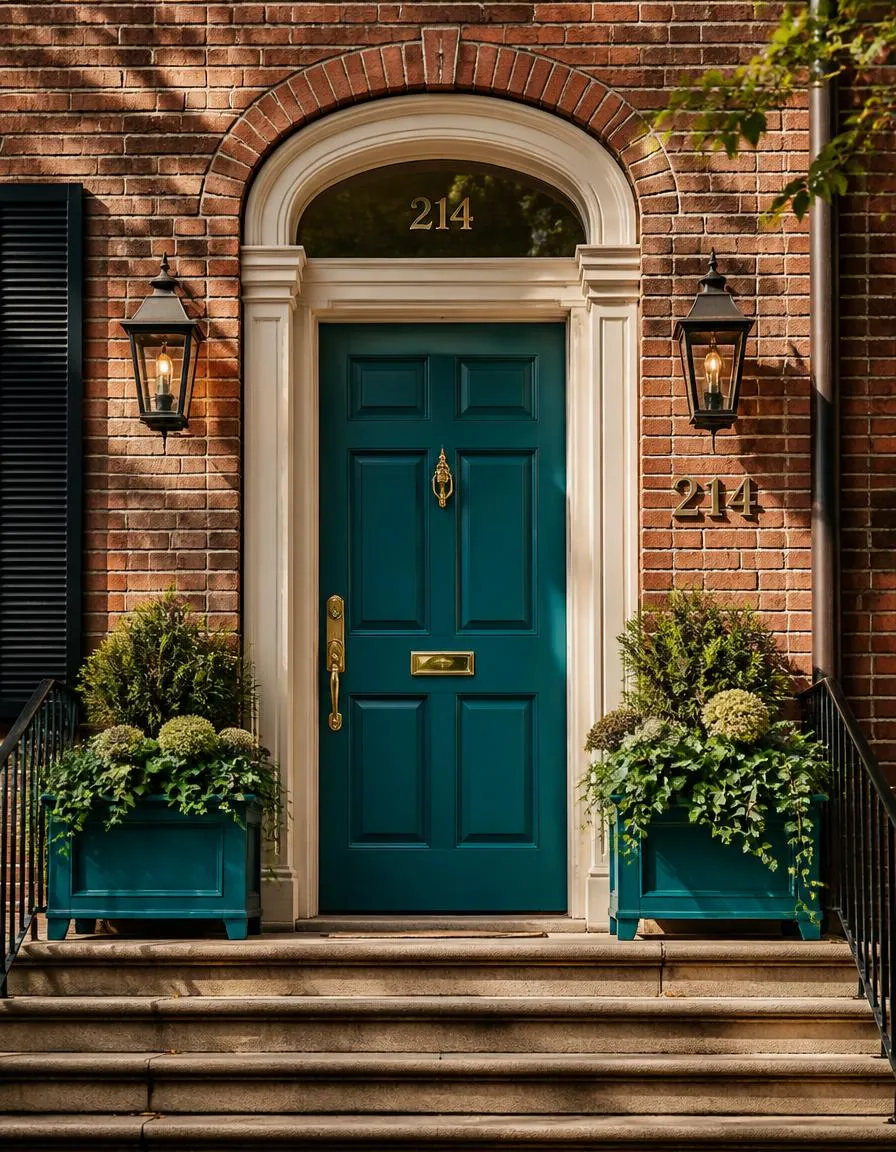
3. Brown Brick with a Bold Door
On a brown brick house, the front door is where all the personality lives. A single saturated color, teal, deep red, mustard, or forest green, against the brick’s earthy texture turns a plain facade into something memorable.
Since brick can’t be easily changed, work with its undertone rather than against it. Warm red-brown brick sings alongside teal, olive, or mustard; cooler grey-brown brick handles navy or black better. Paint the door and repeat the color once more, in planters, house numbers, or a porch light, so it reads as a deliberate scheme. A door is the cheapest, highest-impact exterior update there is, often achievable in a weekend. This suits brick homes of any age and any budget.
- Best for: brick homes; the cheapest high-impact curb-appeal update.
- Why it works: repeating the door color once more makes it read as a scheme.
- Key elements: brown brick, one saturated door color, matching planters or numbers.
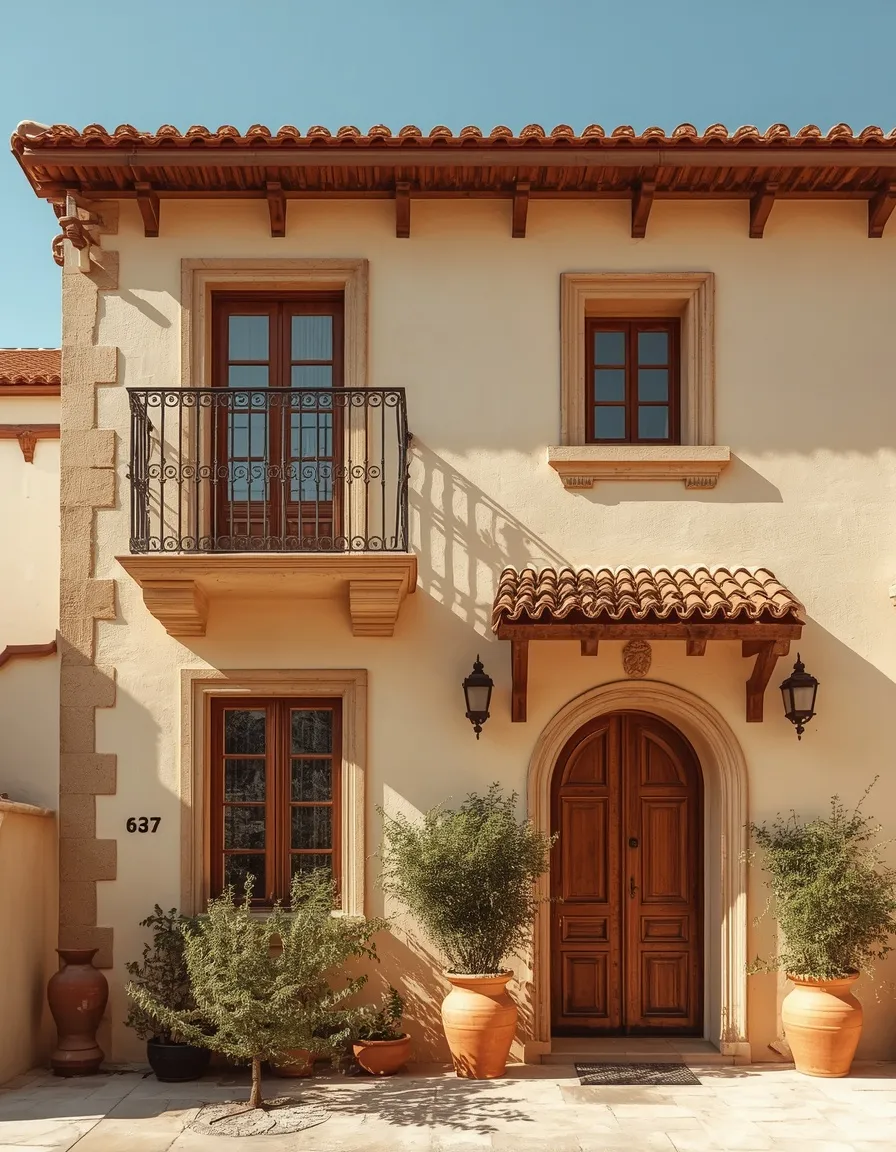
4. Stucco with a Brown Roof
A pale stucco body beneath a rich brown roof is the classic Mediterranean and Southwestern combination. The warm, textured render glows in sunlight while the dark roofline anchors the whole house against the sky.
When the roof is brown and staying, treat it as the fixed anchor and choose a body color that shares its undertone, warm creams, sand, taupe, and greige all sit beautifully beneath a brown roof, while a cool grey-white will fight it. Add wrought-iron details and terracotta pots to complete the look. Stucco is porous, so use a breathable masonry paint rather than a standard exterior acrylic, which can trap moisture in the wall. This suits Mediterranean, Spanish, and warm-climate homes.
- Best for: Mediterranean and Spanish-style homes with an existing brown roof.
- Watch out: stucco needs breathable masonry paint, not standard exterior acrylic.
- Key elements: warm cream or sand stucco, brown roof, iron details, terracotta.
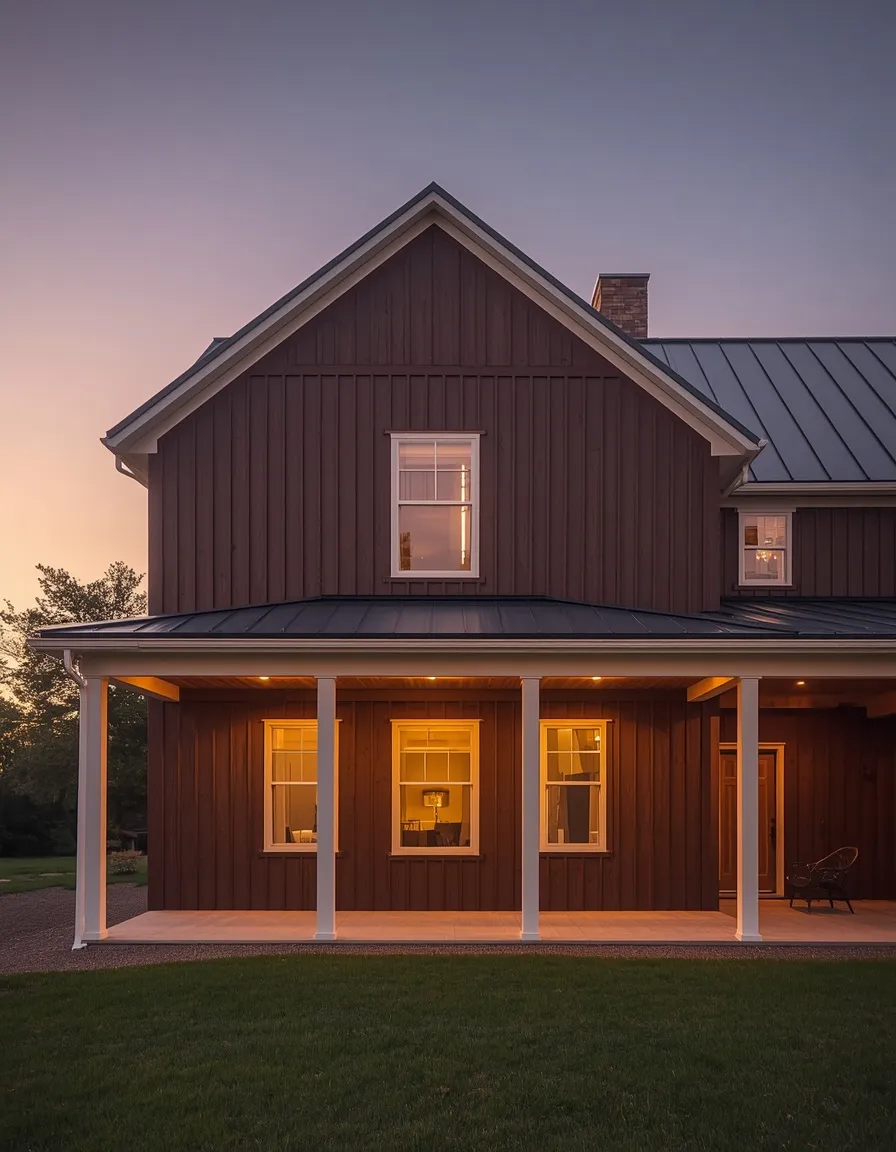
5. Dark Brown Modern Farmhouse
A modern farmhouse in deep chocolate brown feels grounded and quietly dramatic. Board-and-batten siding in dark brown, a standing-seam metal roof, white-trimmed windows, and a generous porch create a silhouette that’s rustic and current at once.
Vertical board-and-batten is what makes this read as farmhouse rather than simply a dark house, so lean into the texture and shadow lines. Keep the trim white or a very pale greige, add a natural cedar porch ceiling for warmth, and finish with black metal light fixtures. A dark body makes a large farmhouse feel more intimate and settled in its landscape, which is exactly why it works on generous rural plots. This suits farmhouse and modern rustic homes with land around them.
- Best for: modern farmhouses, especially on larger rural plots.
- Why it works: vertical board-and-batten shadow lines keep a dark body from reading flat.
- Key elements: brown board-and-batten, metal roof, white trim, cedar porch ceiling.
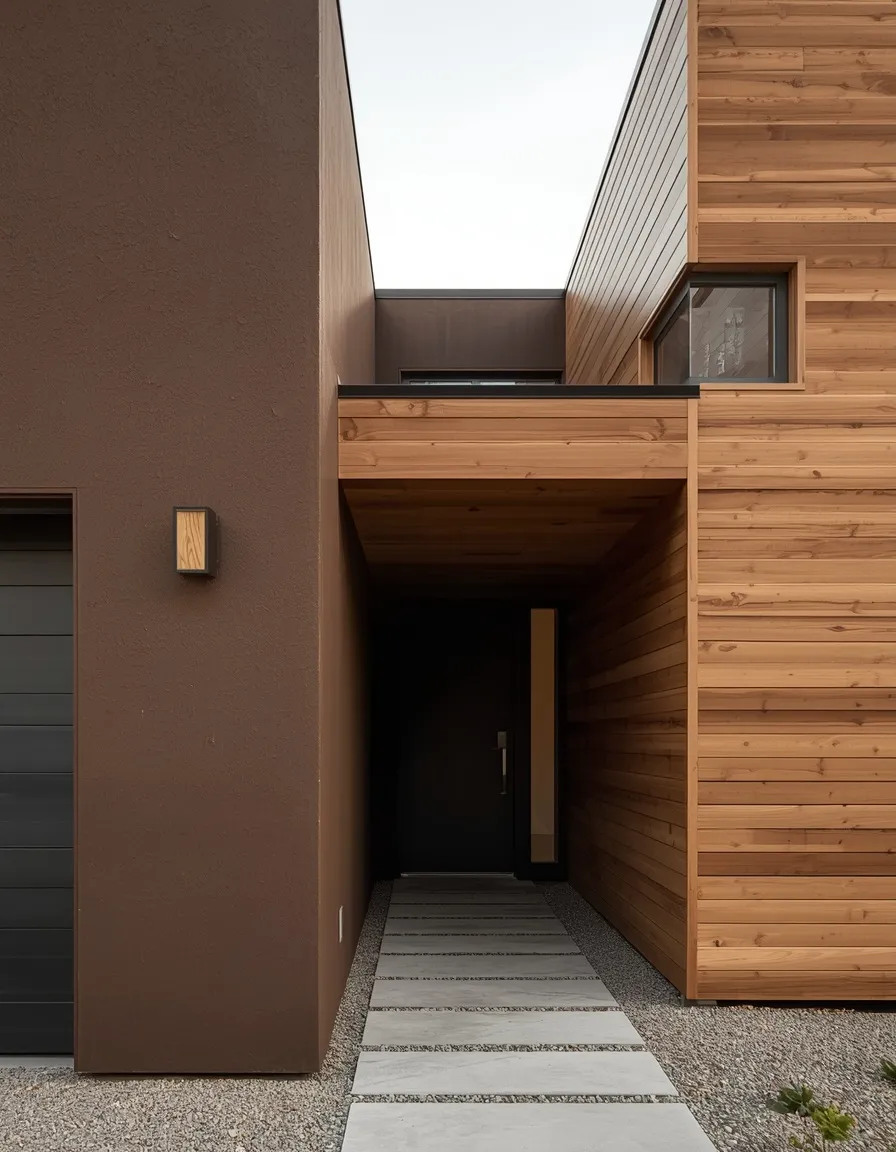
6. Brown and Natural Cedar
Chocolate brown paired with warm natural cedar is the most organic version of the palette. Painted brown sections beside raw or oiled timber create a rich, layered facade that feels like it grew out of the landscape.
Use painted chocolate brown on the main volumes and real cedar or larch cladding on a feature section, an entry, a gable, a garage face. The contrast between flat painted color and living grain is the whole point, so don’t stain the wood so dark that it merges with the paint. Untreated cedar weathers to a silver-grey over a few years, so decide now whether you’ll oil it annually to hold the warm tone. This suits modern, Scandinavian, and mountain homes.
- Best for: modern, Scandinavian, and mountain-style homes.
- Watch out: untreated cedar silvers over time; oil annually to keep it warm.
- Key elements: brown painted body, cedar feature cladding, contrast of grain vs paint.
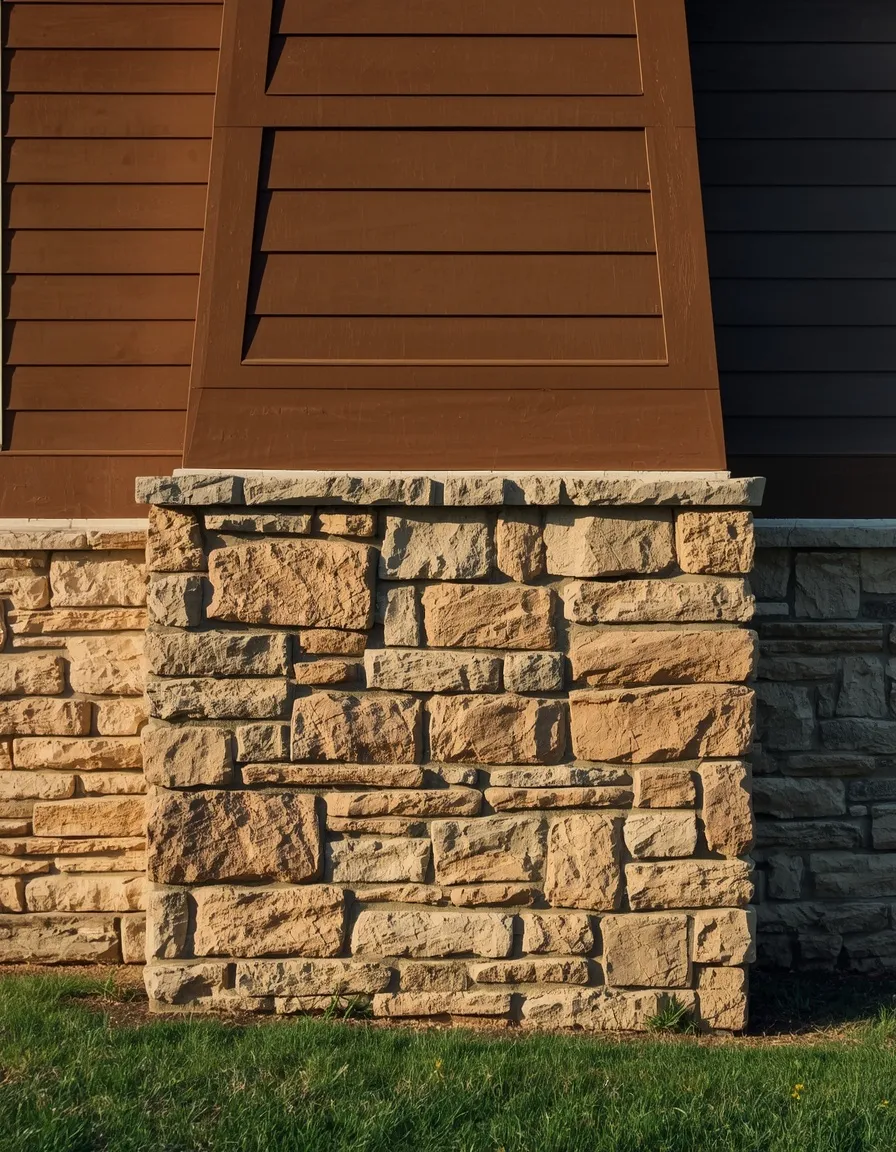
7. Brown with Stone Accents
Chocolate brown against natural stone gives a house real weight and permanence. A stone base, chimney, or entry column beneath brown siding grounds the facade and adds texture that no paint color can imitate.
Let the stone lead the palette, since it’s the element you can’t repaint: pull the brown from a tone already present in the stone so the two clearly belong together. Stone at the base of a house also visually anchors it, which is particularly useful on tall or narrow facades. Keep the trim simple so the stone stays the focus. This suits craftsman, lodge, and traditional homes, and works especially well where the stone is local to the region.
- Best for: craftsman, lodge, and traditional homes with existing stonework.
- Why it works: a stone base visually anchors a tall or narrow facade.
- Key elements: stone base or chimney, brown siding pulled from a stone tone.
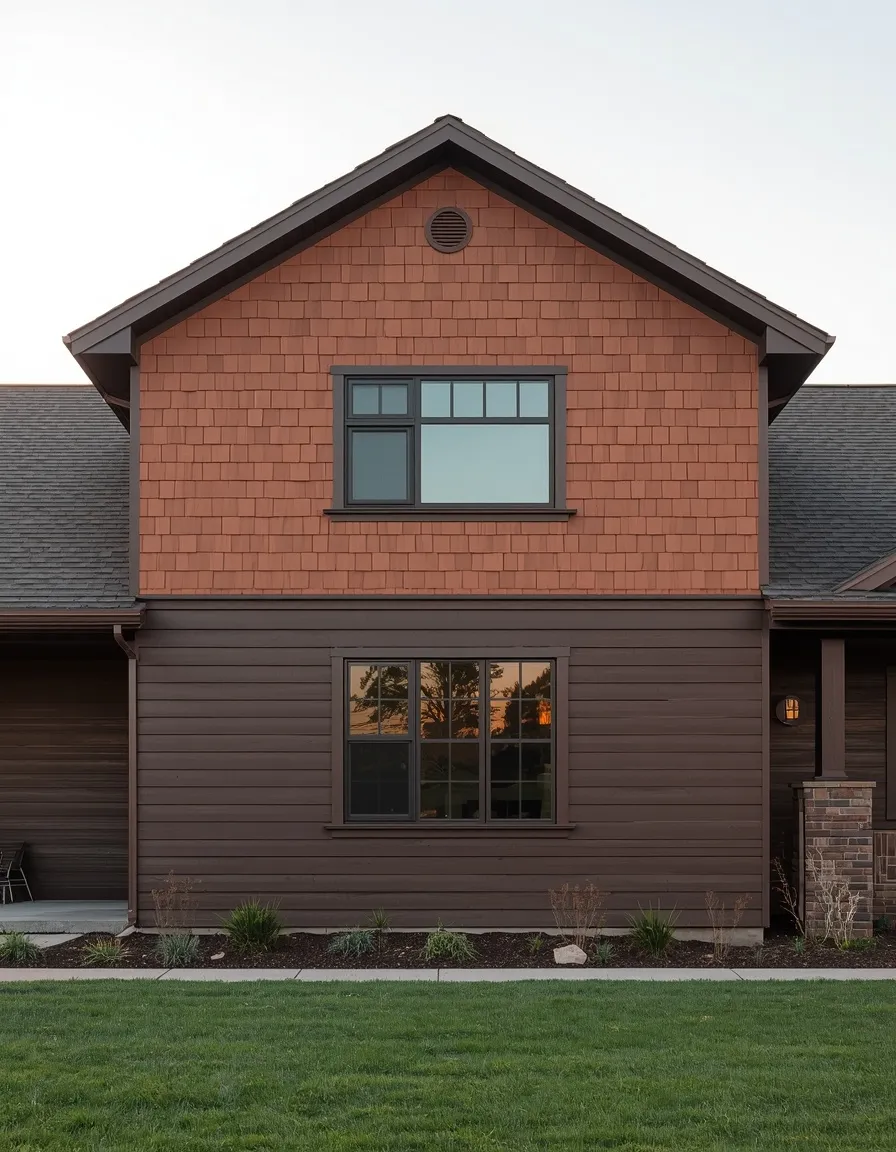
8. Two-Tone Brown Gradient
Two shades of brown on one house creates depth without introducing another color at all. A deeper chocolate on the lower level or body, with a lighter mocha or taupe above, gives a facade subtle dimension and a custom, considered look.
Put the darker shade lower and the lighter one higher, this mirrors how we read weight in a landscape and makes a house feel stable rather than top-heavy. Choose two browns at least three or four steps apart on the same paint strip, since shades that are too close will simply look like a mistake or a patch repair. This is a smart way to break up a large blank facade. It suits split-level, ranch, and larger homes with big uninterrupted wall areas.
- Best for: split-levels, ranches, and homes with large blank facades.
- Watch out: pick browns several steps apart; too-similar shades look like a patch.
- Key elements: darker brown below, lighter mocha above, shared undertone.
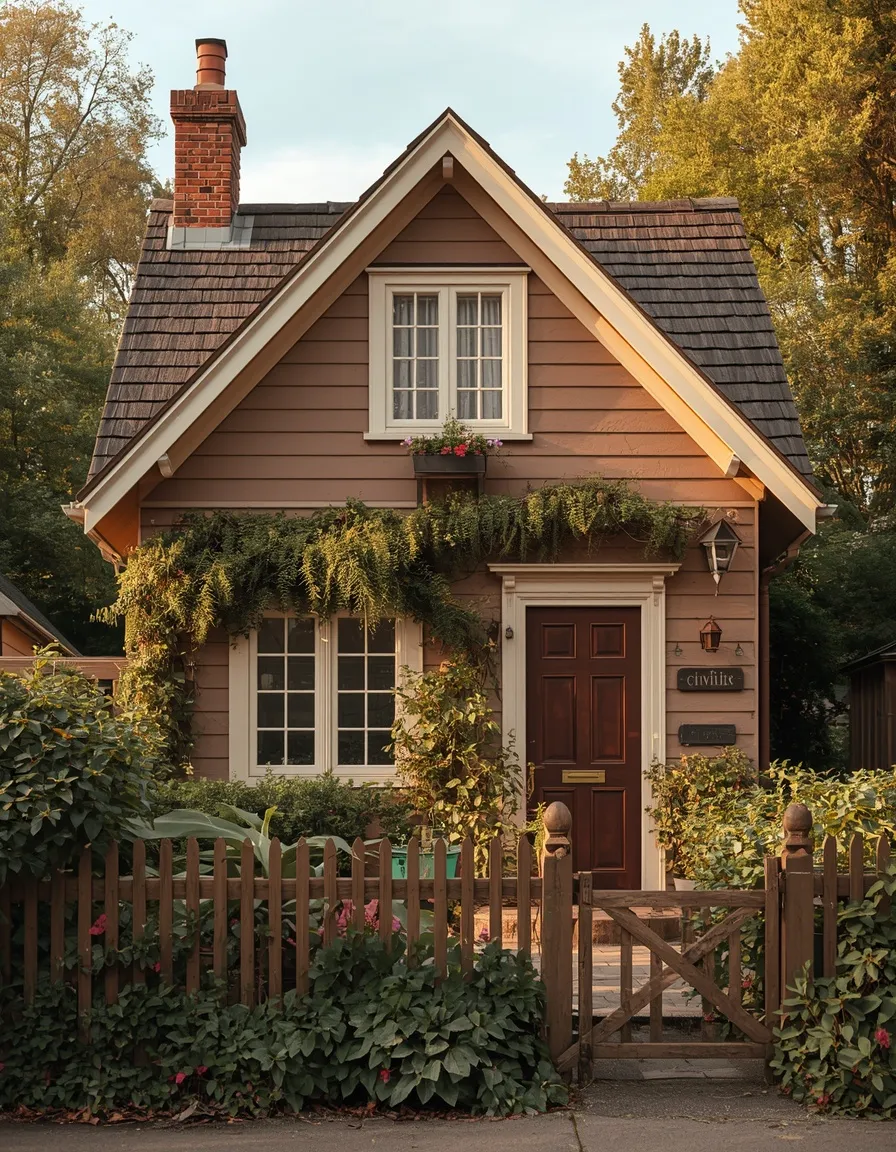
9. Small Cottage in Warm Brown
On a small house, a warm chocolate brown feels cozy rather than imposing. A compact cottage in soft brown with cream trim, a picket fence, and climbing greenery becomes storybook-charming instead of dark and heavy.
For a small home, choose a warmer, slightly lighter brown, a mocha or cocoa rather than a near-black espresso, since very dark colors can make a small facade look smaller and denser. Cream or soft white trim lifts it, and generous planting softens the outline. Keep the palette to three colors total; on a small facade, more than that reads as busy. This suits cottages, bungalows, and small homes anywhere, and it’s a rare case where warmth beats drama.
- Best for: cottages, bungalows, and small houses.
- Watch out: very dark brown shrinks a small facade; choose warmer mocha tones.
- Key elements: warm mocha body, cream trim, three colors maximum, soft planting.
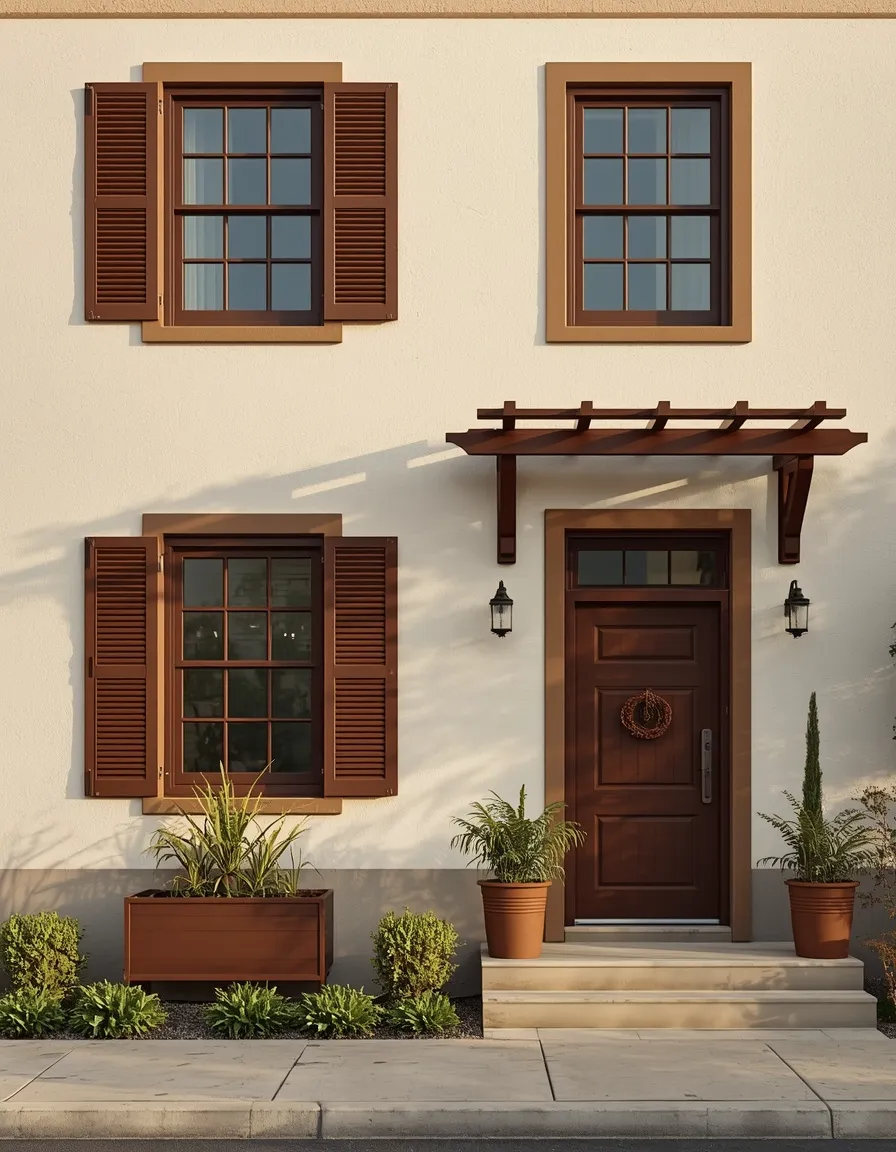
10. Brown Windows as the Feature
Sometimes the brown belongs in the frames, not the walls. A pale house, white, greige, or soft stone, with rich chocolate brown window frames and doors gets warmth and definition without committing to a dark body.
This inversion is the smart choice when the windows are already brown, whether that’s timber, uPVC, or aluminum, and replacing them isn’t in the budget. Instead of fighting them, pull a warm neutral body color that flatters brown, cream, greige, or warm white, and repeat the brown in the door, pergola, and planters so it looks deliberate. Existing brown windows are a very common problem people try to design around; this turns them into the feature instead. It suits any home with brown frames already in place.
- Best for: homes with existing brown windows that can’t be replaced.
- Why it works: repeating the brown in door and planters turns a constraint into a scheme.
- Key elements: pale warm body, brown frames and door, repeated brown accents.
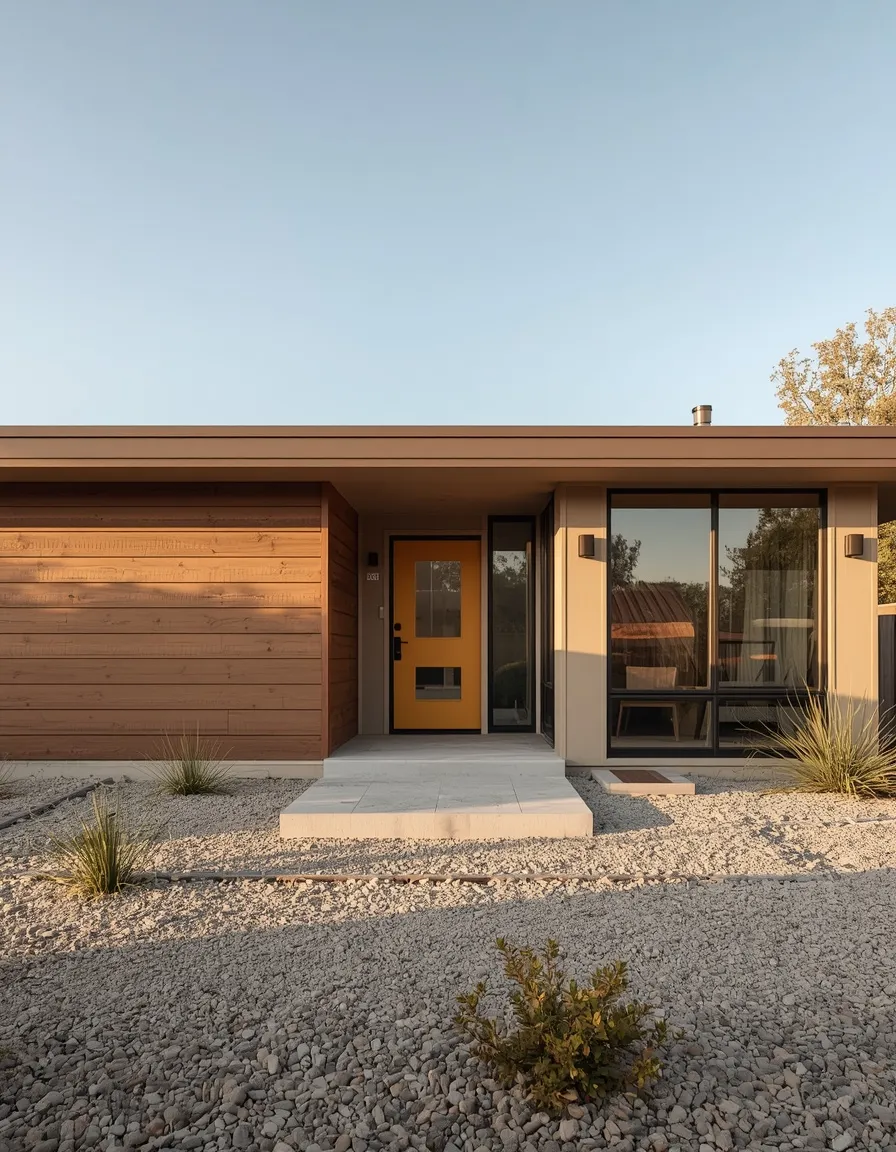
11. Mid-Century Brown and Wood
Mid-century homes wear chocolate brown beautifully. Low horizontal lines, a flat roof, brown-stained siding, big glass panes, and a bright accent door capture that clean, optimistic 1960s spirit.
Emphasize the horizontal: use brown on long siding runs and let large windows and clerestory glazing break it up. A single confident accent color on the door, mustard, orange, or turquoise, is authentic to the period and stops the palette feeling somber. Keep landscaping architectural, with gravel, boulders, and structural planting rather than fussy borders. This suits mid-century, ranch, and modernist homes, and it’s a look that rewards restraint.
- Best for: mid-century, ranch, and modernist homes.
- Why it works: a bright period accent door stops a brown palette feeling somber.
- Key elements: horizontal brown siding, big glazing, mustard or turquoise door.
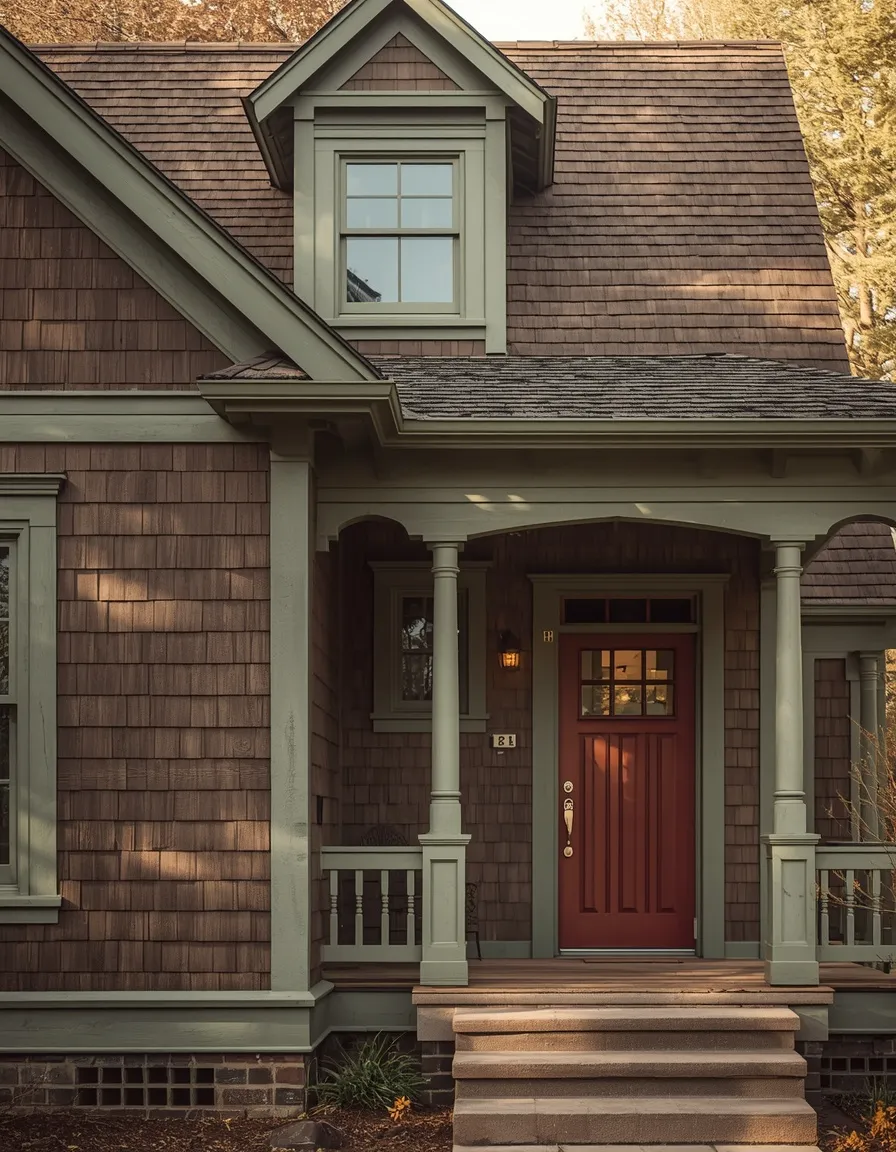
12. Craftsman Brown with Green Accents
A craftsman bungalow in chocolate brown with muted green trim is the palette the style was born with. Deep brown shingles, sage or olive window frames, tapered porch columns, and exposed rafter tails create a facade rich in earthy, handcrafted character.
Craftsman homes were designed around natural, earthy palettes, so brown and green together are historically true rather than a modern experiment. Use brown on the body, a muted green on trim and window sashes, and a third deeper accent, oxblood or dark bronze, on the door. Highlight the architectural details, especially the rafter tails and bracket work, since these are the whole point of the style. This suits craftsman, bungalow, and arts-and-crafts homes.
- Best for: craftsman, bungalow, and arts-and-crafts homes.
- Why it works: brown-and-green is historically authentic to the craftsman style.
- Key elements: brown shingles, sage or olive trim, oxblood door, exposed rafters.
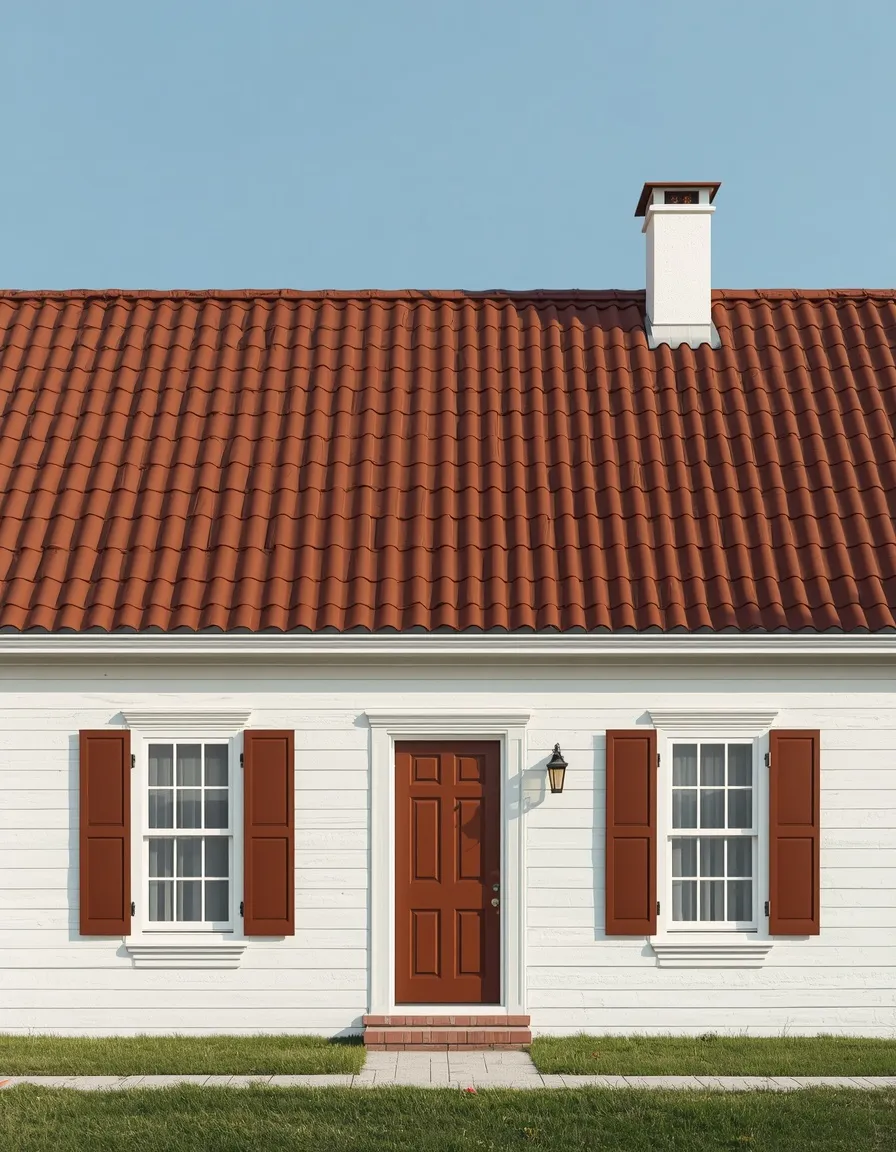
13. White House with Brown Roof
A crisp white house beneath a chocolate brown roof is the reverse of the expected, and it’s striking. The pale body makes the home feel bright and generous while the dark roof gives it a strong, grounding cap.
When you have a brown roof you can’t replace, a white or off-white body is one of the most reliable partners for it. Match the white’s undertone to the roof, a warm brown roof wants a warm white or cream, not a stark blue-white, which will look cold and mismatched above it. Repeat the brown in the front door, shutters, or pergola so the roof doesn’t sit up there as an orphan. This suits farmhouse, coastal, and traditional homes with an existing brown roof.
- Best for: homes with a brown roof that isn’t being replaced.
- Watch out: match a warm brown roof with a warm white; a blue-white will clash.
- Key elements: warm white body, brown roof, brown repeated in door or shutters.
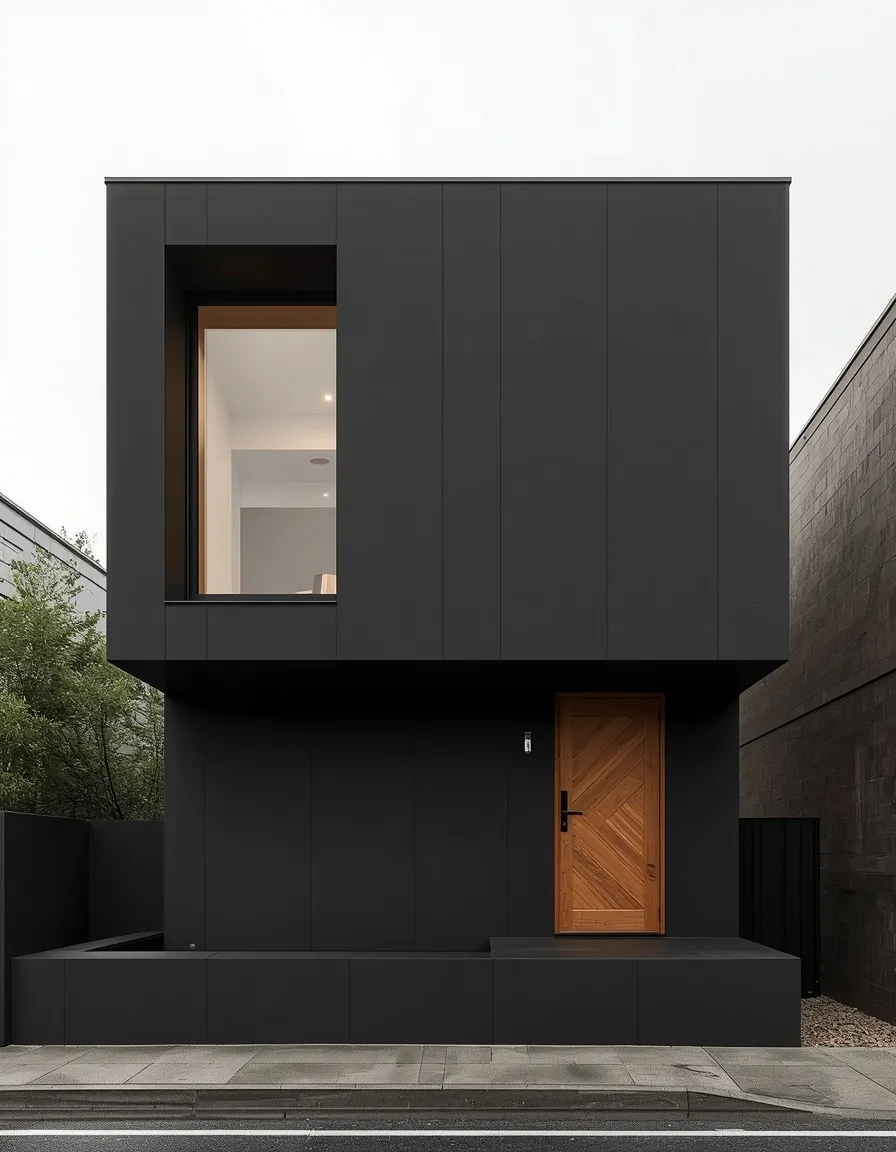
14. Espresso Brown Minimalist Cube
A near-black espresso brown on a simple modern cube is dark, sophisticated architecture at its most stripped-back. Flat planes, hidden gutters, frameless glass, and one warm timber door make the house read as a single sculptural object.
With a form this simple, the finish carries everything, choose a matte or low-sheen exterior paint, since gloss on a large flat plane exposes every ripple in the substrate. A single warm timber door or a run of slatted screening prevents the whole thing from feeling severe. Very dark walls absorb significant solar heat, so this suits cooler climates far better than hot ones, and it pairs best with good insulation. This suits modern, architect-designed, and minimalist homes.
- Best for: modern architect-designed homes in cooler climates.
- Watch out: very dark walls absorb solar heat; better suited to cool climates.
- Key elements: espresso matte body, flat planes, one warm timber door.
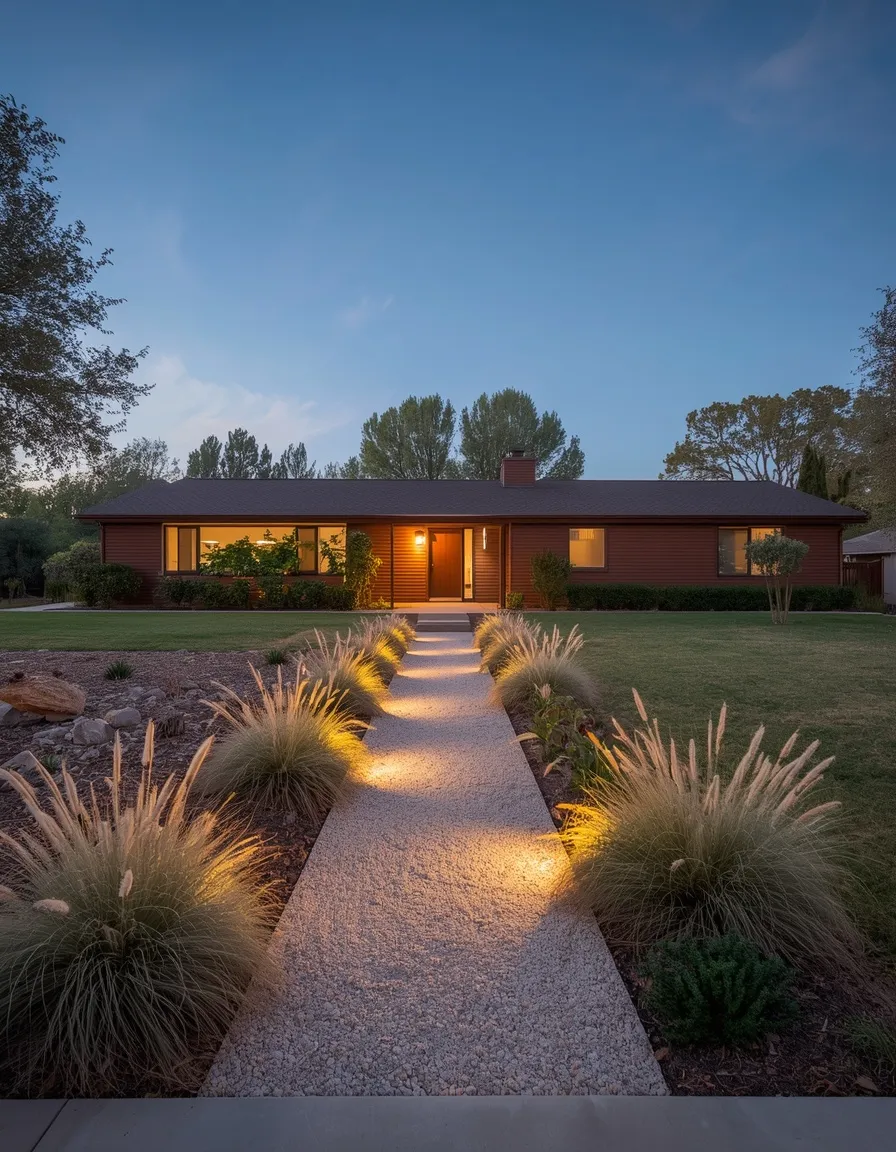
15. Brown Ranch with Curb-Appeal Landscaping
On a long, low brown ranch house, the landscaping does half the design work. Layered planting, a defined path, warm lighting, and a refreshed entry turn a plain brown facade into a genuinely welcoming home.
A dark house needs its edges drawn: use pale gravel or stone for the path, plant light-foliage shrubs and grasses that stand out against the brown, and add warm-toned lighting so the facade doesn’t disappear at dusk. Layer planting in three depths, low border, mid shrubs, and one taller anchor tree, for a properly designed look. This is the highest-value change available to anyone who can’t afford to repaint at all, and it suits ranch, bungalow, and any brown home needing curb appeal on a budget.
- Best for: any brown home needing curb appeal without repainting.
- Why it works: pale paths and light foliage draw the edges of a dark facade.
- Key elements: layered planting in three depths, pale path, warm entry lighting.
How Do You Choose the Right Brown for Your House?
Choose your brown around the elements you can’t change. The roof, brick, stone, and window frames are already fixed, and matching your paint’s undertone to theirs matters far more than the exact shade you fall in love with on a chip.
Browns run warm (red, orange, or yellow undertones) or cool (grey and taupe undertones), and mixing the two families is the single most common exterior mistake. A cool grey-brown beside warm red-brown brick will look muddy and accidental; a warm cocoa beside the same brick will look considered. Take a brick, a roof tile, or a photo of the fixed material to the paint store and match against it in daylight, not under store lighting.
Then test properly. Paint sample patches at least 60 x 60 cm (2 x 2 ft) on more than one side of the house, a north-facing wall and a sun-facing wall will make the same brown look like two different colors, and look at them in morning light, midday, and dusk before committing. Also check your local rules before you buy: many neighborhoods, homeowners’ associations, and conservation areas restrict exterior colors, and it’s a costly thing to discover afterwards.
What Dark Exterior Paint Really Demands
Dark colors work harder outdoors than pale ones. Chocolate brown absorbs more solar heat and fades faster under strong UV, so the paint you choose and the surface you put it on both matter more than they would on a white house.
Buy a quality exterior acrylic with good fade resistance, since cheap dark paint chalks and dulls noticeably faster in sun-exposed positions. Expect a dark house in a bright climate to need repainting sooner than a pale one, and accept that south-facing walls will fade first. If your siding is vinyl, this is critical: painting vinyl a color darker than its original can cause it to absorb heat, warp, and buckle, and doing so typically voids the manufacturer’s warranty, use only paint specifically formulated as vinyl-safe for dark colors, and check the warranty terms first.
Two genuine safety points. Older homes may have lead paint beneath the current coat, and sanding or scraping it releases lead dust that is hazardous, especially to children, if your house predates modern lead regulations, have the paint tested and follow safe removal practice or hire a certified professional. And exterior painting means working at height, so leave two-story facades, steep gables, and anything requiring ladder work on uneven ground to professionals with proper equipment.
A warm, earthy exterior naturally invites the same instinct indoors. If chocolate brown outside makes you want more natural texture and warmth within, our guide to bohemian tropical style carries that feeling through the front door with rattan, timber, and greenery. Both sit among our trending interior decor ideas.
Matching Brown to What You Already Have
Your fixed elements decide your palette. Use this as a starting point for pairing a brown scheme with the roof, brick, or stone you’re keeping.
| Fixed element | Brown scheme that works | Trim / accent |
| Warm red-brown brick | Warm cocoa or chocolate body | Cream trim; teal or olive door |
| Cool grey-brown brick | Taupe or greige-brown body | White trim; navy or black door |
| Brown roof | Warm white, cream, or sand body | Brown door and shutters to echo roof |
| Natural stone base | Brown pulled from a stone tone | Simple trim; let stone lead |
| Existing brown windows | Pale warm body (cream, greige) | Brown door and planters |
| Cedar or timber cladding | Mid chocolate painted sections | Black metal fixtures |
Conclusion
The best chocolate brown house exterior design ideas all begin in the same place: not with the paint chip, but with the roof, brick, and stone you already own. Match your brown’s undertone to those fixed elements, decide whether white trim, black frames, or natural cedar sets the tone you want, and choose a paint built to hold its color in the sun. Do that, and brown becomes what it always was outdoors, the color of bark and earth, and a house that looks like it belongs exactly where it stands. For more inspiration, browse our trending interior decor ideas, then go hold a paint sample against your own brickwork in daylight.
Frequently Asked Questions
Q: What colors go with a chocolate brown house exterior?
Crisp white trim is the most reliable and resale-friendly partner, giving a dark brown body a sharp architectural outline. Black window frames create a modern look, cream and sage suit craftsman and cottage styles, and natural cedar adds warmth. For the front door, teal, olive, mustard, and oxblood all work beautifully against brown.
Q: What color trim looks best on a brown house?
Pure white gives the crispest contrast and works on almost every style. Cream or soft greige is gentler and better suited to cottages and warm-toned brick, while black trim produces a bold, contemporary result. Whatever you choose, match its undertone to the brown, a cool white beside a warm brown will look mismatched.
Q: Does dark brown exterior paint fade quickly?
Dark colors do fade faster than pale ones under strong UV, and sun-facing walls will always fade first. Use a quality exterior acrylic with good fade resistance rather than a cheap paint, which will chalk and dull noticeably sooner. Expect a dark house in a bright climate to need repainting sooner than a white one.
Q: Can you paint vinyl siding chocolate brown?
Only with paint specifically formulated as vinyl-safe for dark colors. Painting vinyl darker than its original shade makes it absorb more heat, which can cause warping and buckling, and doing so typically voids the manufacturer’s warranty. Check the warranty terms and use a vinyl-safe formulation designed to reflect heat before going dark.
Q: What exterior color goes with a brown roof?
Warm neutrals are the safest partners for a brown roof: cream, sand, taupe, greige, and warm white all share its undertone. Avoid a cool blue-toned white or grey, which will look cold and mismatched beneath warm brown tiles. Echo the roof color in the front door or shutters so it reads as part of the scheme.
Q: Is chocolate brown a good color for a small house?
Yes, but choose a warmer, lighter brown such as mocha or cocoa rather than a near-black espresso, since very dark shades can make a small facade look denser and smaller. Pair it with cream or soft white trim, keep the palette to three colors total, and use generous planting to soften the outline.