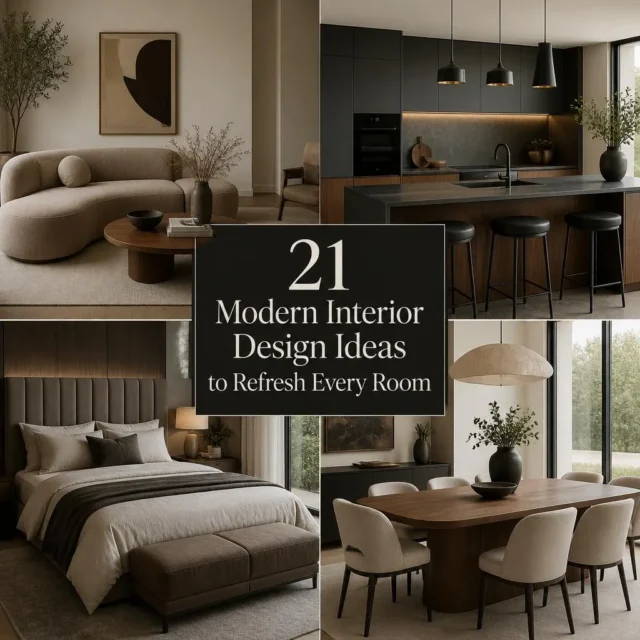

Modern interior design ideas often start with a single shift: less clutter, more intention, and materials that feel good to touch. Walk into a home that has embraced this look and you will notice calm color palettes, clean lines, and furniture that earns its place rather than just filling a corner. At Sunday Abode, we think of every home as its own kind of abode, a space that should feel curated without feeling cold. This guide walks through twenty-one modern interior design ideas that work across living rooms, kitchens, bedrooms, and shared walls, whether you are renovating a whole floor plan or refreshing a single room for 2026. Each idea includes the practical detail you need to actually execute it, not just admire it.
Modern Interior Design Ideas by Room and Style
1. Warm Minimalist Palettes
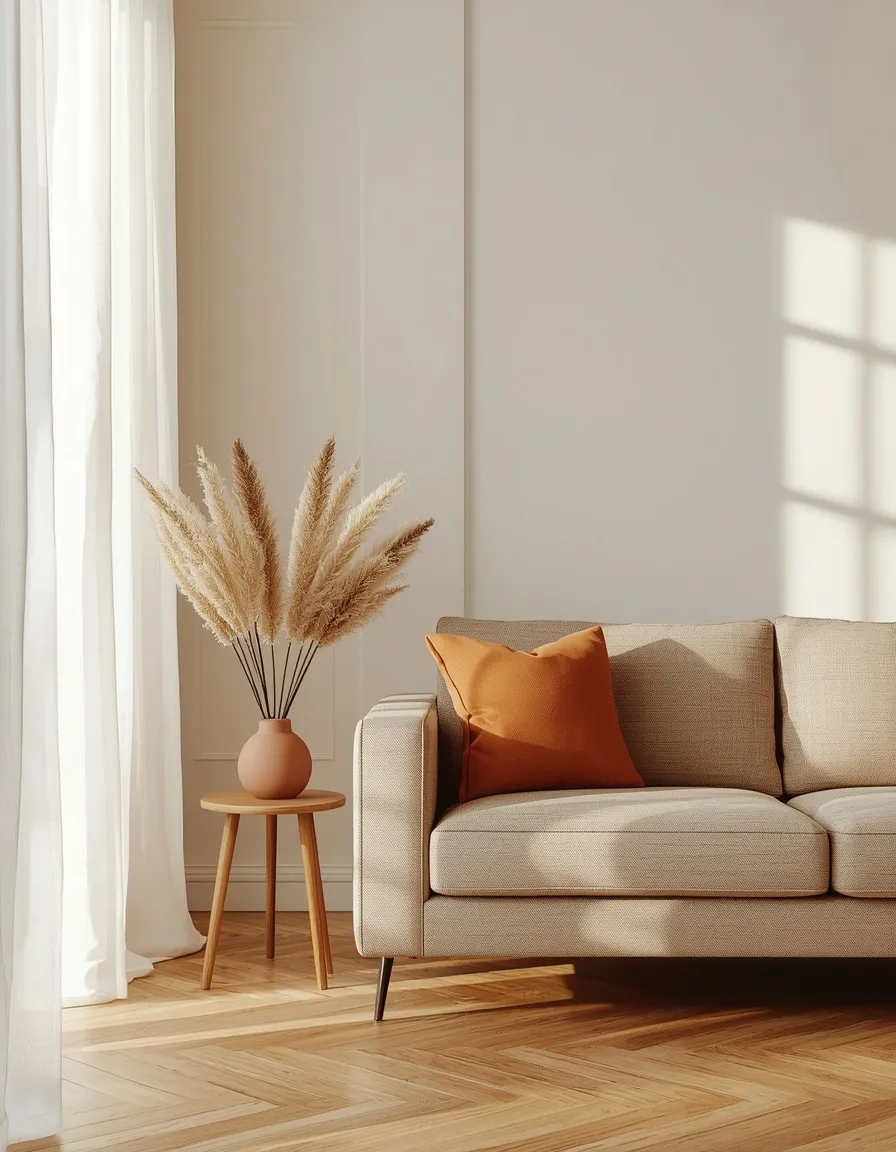
Picture a living room washed in soft ivory, oat, and warm taupe, where every surface feels touchable rather than sterile. This is warm minimalism: the disciplined lines of modern interior design softened by tactile, sun-warmed color instead of stark white or gray.
Start with a base of two or three warm neutrals on walls, upholstery, and flooring, then add contrast through natural wood tones and one deeper accent color like rust or olive. This palette works especially well in north-facing rooms that need visual warmth, and in open-plan homes where too many colors can feel busy. A common mistake is layering warm neutrals that are too similar in undertone, which reads as murky rather than cohesive; test paint swatches together in daylight before committing.
- Works in low-light rooms that need visual warmth
- Easier to update seasonally than a bold color scheme
- Solves the “cold minimalism” complaint many homeowners have
2. Curved Furniture Silhouettes
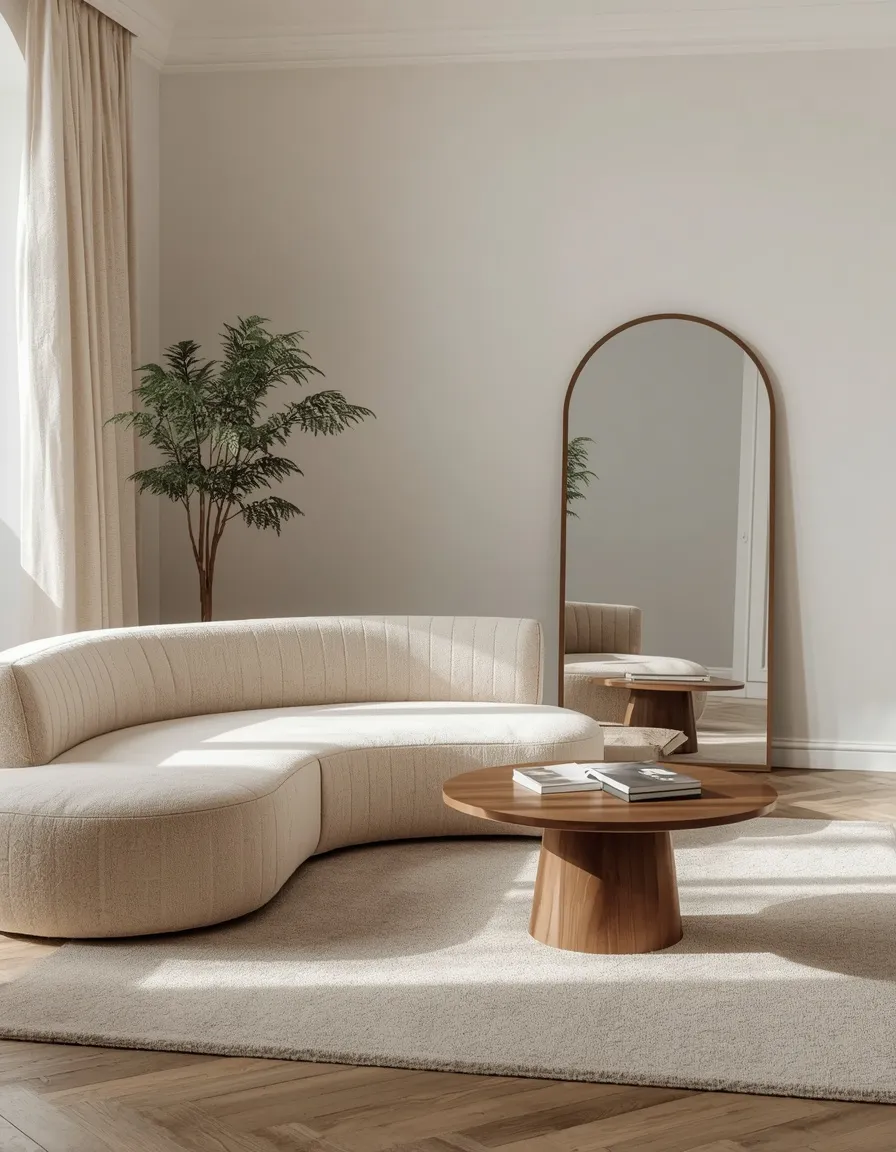
A living room built around a gently curved sofa and an arched mirror softens the geometry of a modern interior design plan without losing its clean, intentional feel. Curves catch light differently than straight edges, creating movement even in a still room.
Introduce curves gradually through one anchor piece, such as a rounded sofa or an oval coffee table, rather than replacing every straight-lined item at once. This works well in smaller living rooms, since curved furniture often improves traffic flow around tight corners. A frequent misstep is pairing too many curved pieces together, which can feel indecisive; balance curves against at least one strong straight line, like a rectangular rug or a linear shelving unit.
- Improves walking paths in compact living rooms
- Adds softness without abandoning a modern look
- Pairs well with warm minimalist palettes
3. Sculptural Statement Lighting
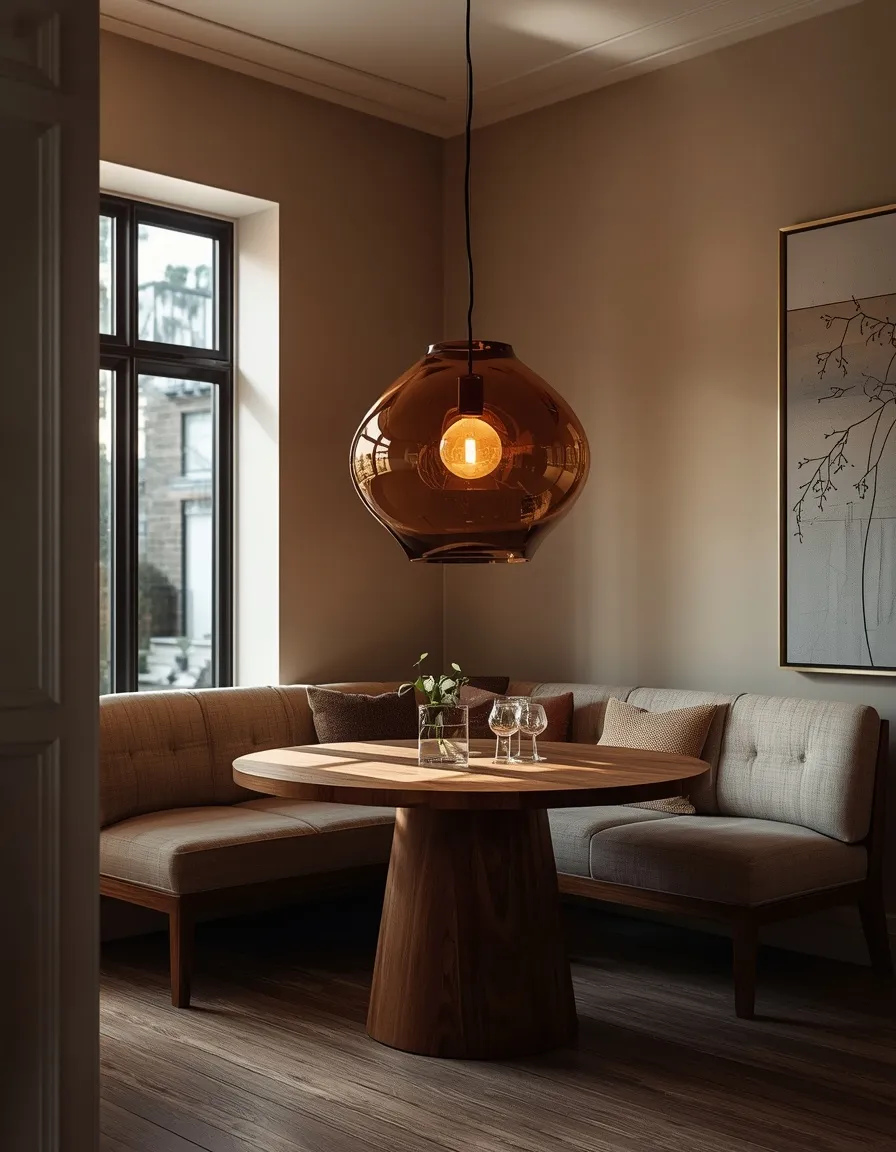
Above a dining table or reading nook, a single oversized pendant with an unusual silhouette, think hand-blown glass or woven rattan, can do more visual work than an entire wall of decor. In modern interior design, lighting is often the first thing that signals real intention.
Choose one sculptural fixture per zone rather than scattering several, and size it to the space beneath it; as a general rule, a pendant should measure roughly one-third the width of the table it hangs over. This works best over dining tables, kitchen islands, and reading corners. If the fixture requires hardwiring or moving an existing electrical box, hire a licensed electrician rather than attempting it yourself, since ceiling wiring is not a safe DIY shortcut.
- Anchors a room’s style without extra furniture
- Works over dining tables, islands, and reading nooks
- Requires professional installation for hardwired fixtures
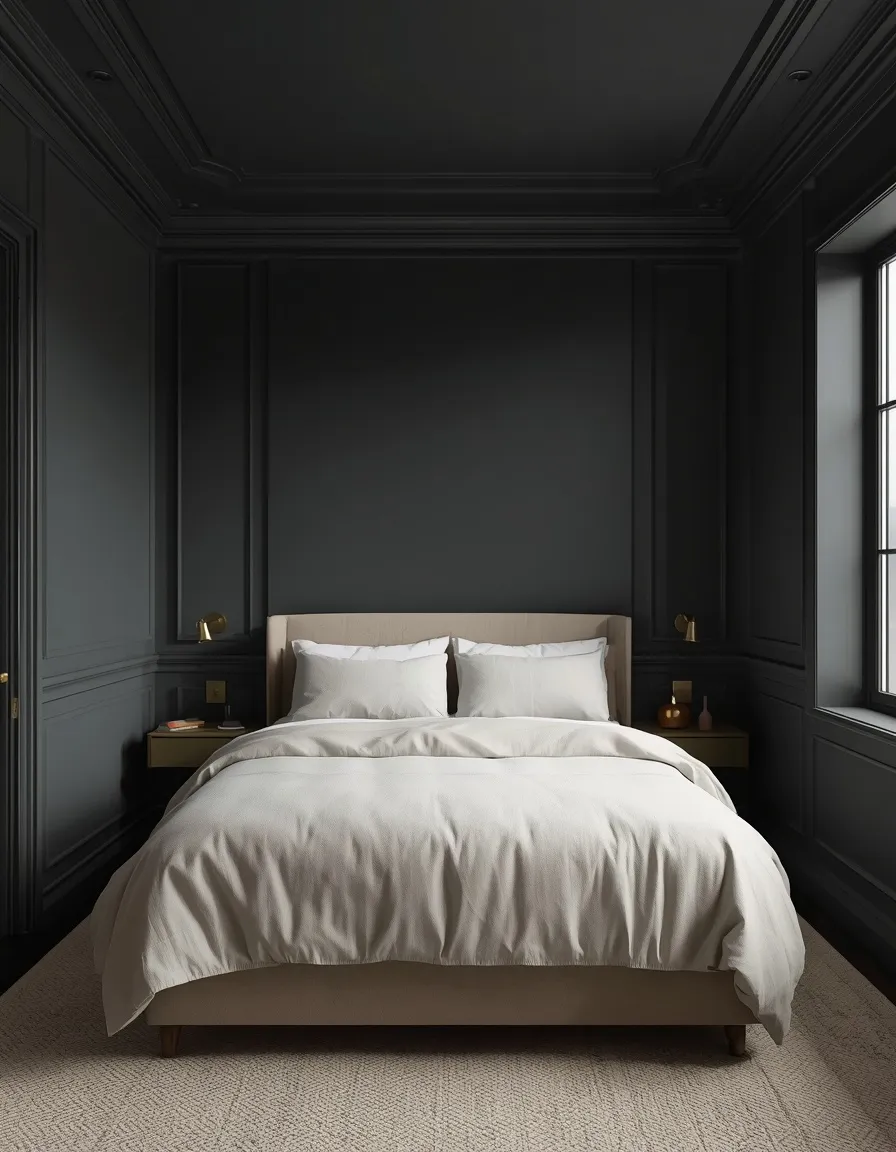
4. Monochrome Color Blocking
Imagine a wall painted in a deep charcoal from floor to ceiling, with the trim, baseboards, and even the door painted to match, so the color reads as one uninterrupted plane. This monochrome technique is one of the more dramatic modern interior design ideas that white-and-dark palettes can build on.
Pick one dominant hue, whether that is soft white, warm greige, or deep ink, and extend it across trim, walls, and sometimes ceiling for a cocooning effect. This works especially well in smaller bedrooms and powder rooms, where breaking up the color with contrasting trim can make the space feel choppier rather than larger. A common error is choosing a color too saturated for a room with limited natural light; test a full sample board on the wall for several days before committing.
- Makes small rooms feel enveloping rather than cramped
- Works in both light neutrals and deep dark tones
- Reduces visual “cutting” from mismatched trim colors
5. Japandi Living Rooms
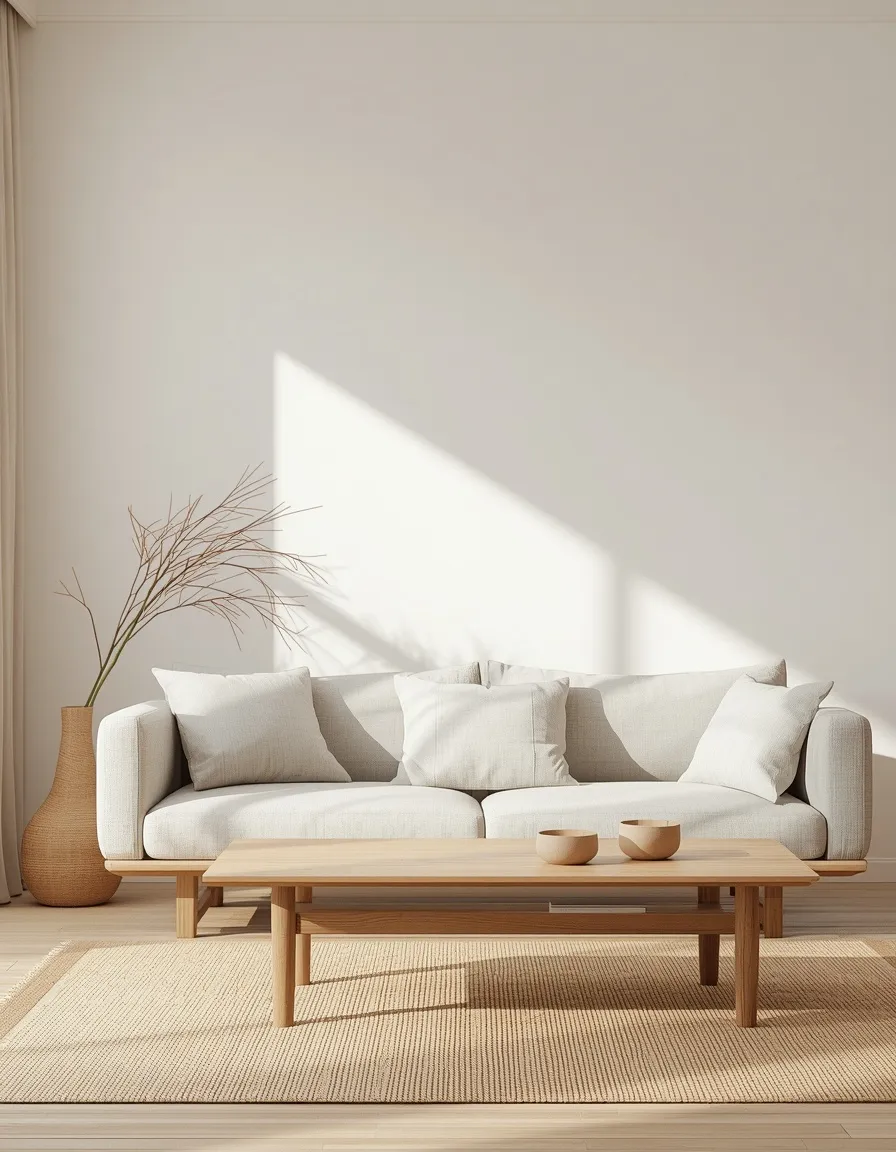
A living room with low, blonde-wood furniture, a handful of ceramic pieces, and negative space around every object captures the Japandi influence now common in modern interior design living room schemes: Scandinavian restraint meeting Japanese materiality.
Furnish with low-profile pieces, natural materials like oak, linen, and stone, and a strict edit of decorative objects, leaving visible floor and wall space around each grouping. This style suits open-plan living rooms and reading corners where calm matters more than density. Resist the temptation to add decorative clutter to fill negative space; Japandi’s core value is restraint, and overfilling the room undoes the entire effect.
- Suits open-plan and small living rooms alike
- Prioritizes natural materials over synthetic finishes
- Pairs naturally with warm minimalist palettes
6. Handleless Kitchen Cabinetry
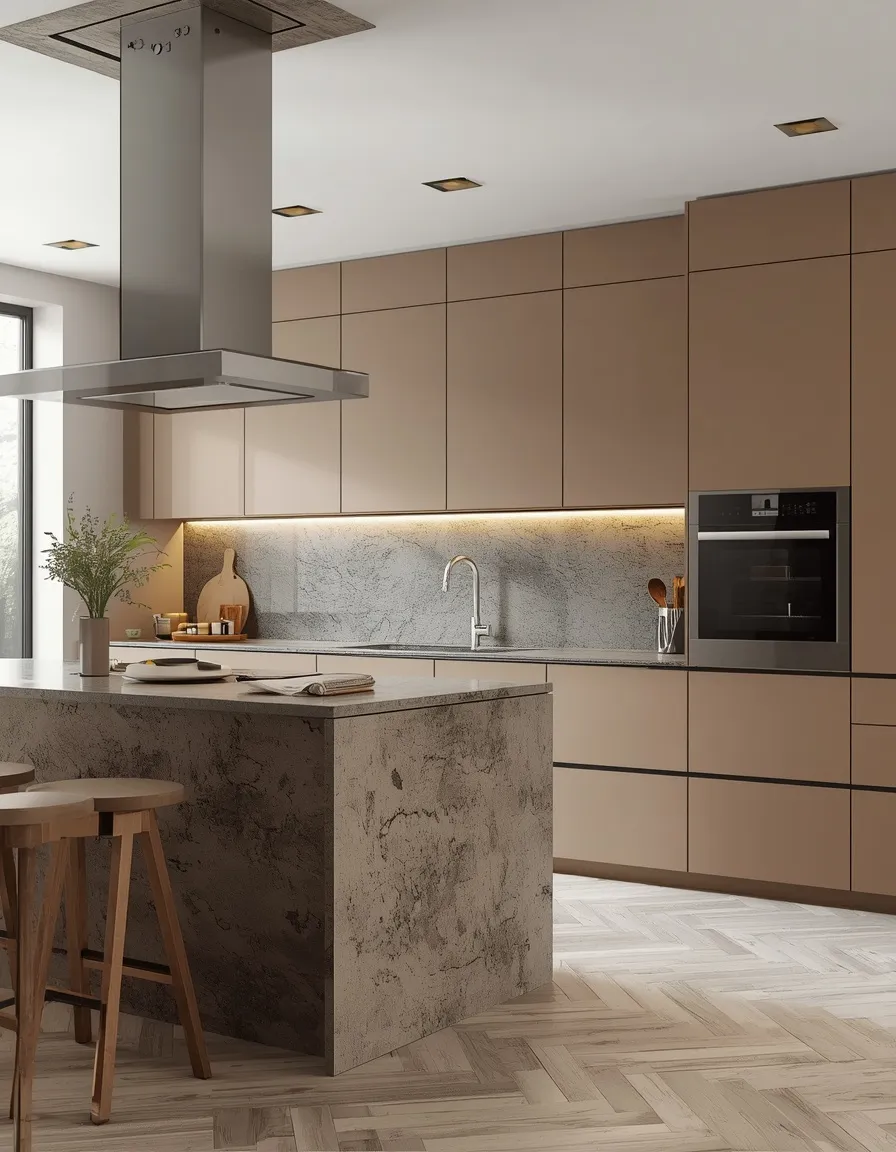
Run a hand along a kitchen wall of flat-front cabinetry with no visible knobs or pulls, just a discreet finger groove or push-to-open mechanism, and the whole kitchen reads sleeker and more architectural. Handleless cabinetry is a defining feature in modern interior design kitchen renovations.
Choose either a routed finger-pull channel or push-latch hinges depending on budget, since push-latch hardware costs less but requires slightly more force to open. This works particularly well in galley and small kitchens, where hardware can visually clutter narrow walkways. A practical downside worth planning for: handleless doors show fingerprints more readily on matte dark finishes, so factor in a wipeable matte lacquer or textured laminate if the kitchen sees heavy daily use.
- Streamlines narrow galley kitchens visually
- Reduces snagging on clothing or bags in tight spaces
- Push-latch hardware is a lower-cost alternative to routed pulls
7. Waterfall Edge Islands
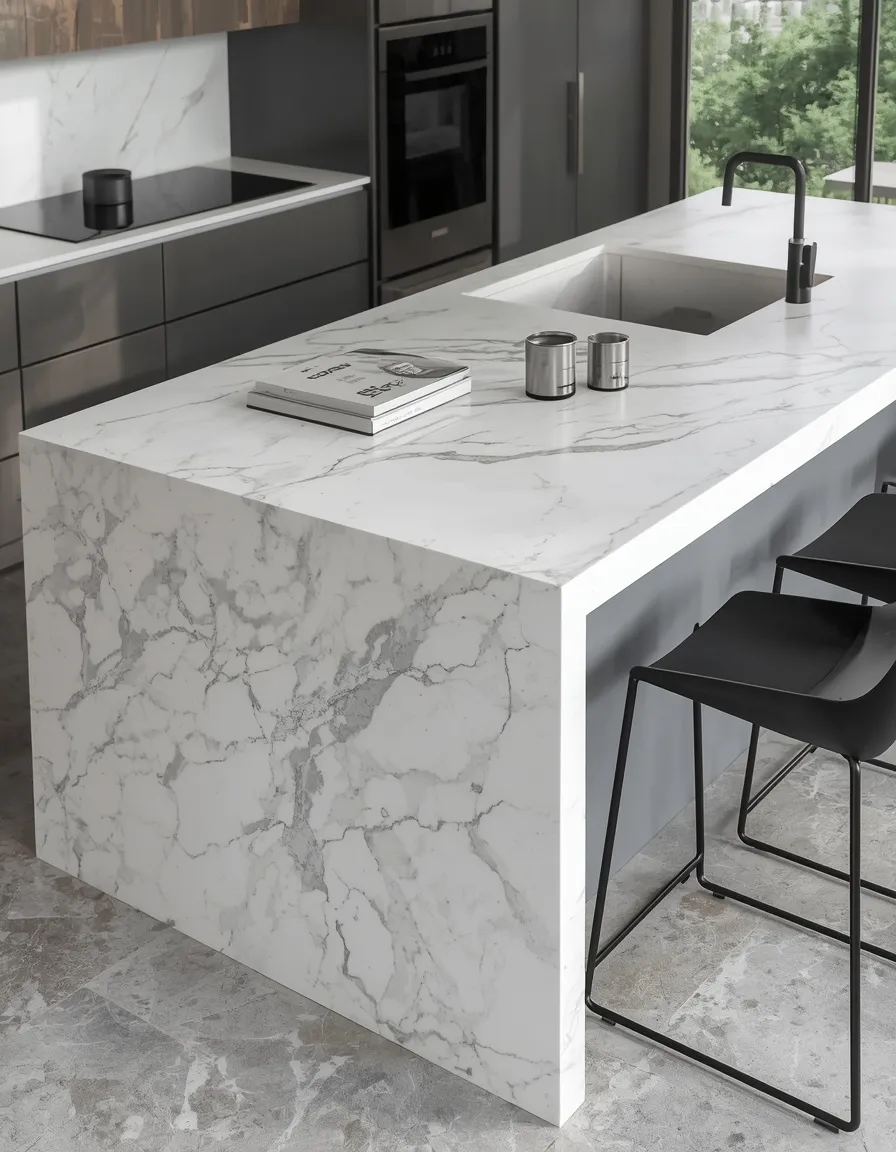
A kitchen island where the countertop material continues seamlessly down both sides to the floor, with no visible seam at the corner, gives the whole kitchen a monolithic, sculptural presence that photographs beautifully for a reason.
This detail works best with engineered quartz or porcelain slabs, which can be mitred more precisely than natural stone and resist chipping at the vulnerable corner edge. Because a full waterfall island adds meaningful weight and cost, confirm with a contractor or fabricator that the surrounding cabinetry and subfloor can support the slab, especially in older homes. Budget-conscious versions can apply the waterfall detail to just one end of the island rather than both.
- Works well with quartz or porcelain for durability
- Single-side waterfall lowers material cost significantly
- Requires structural confirmation before installation in older homes
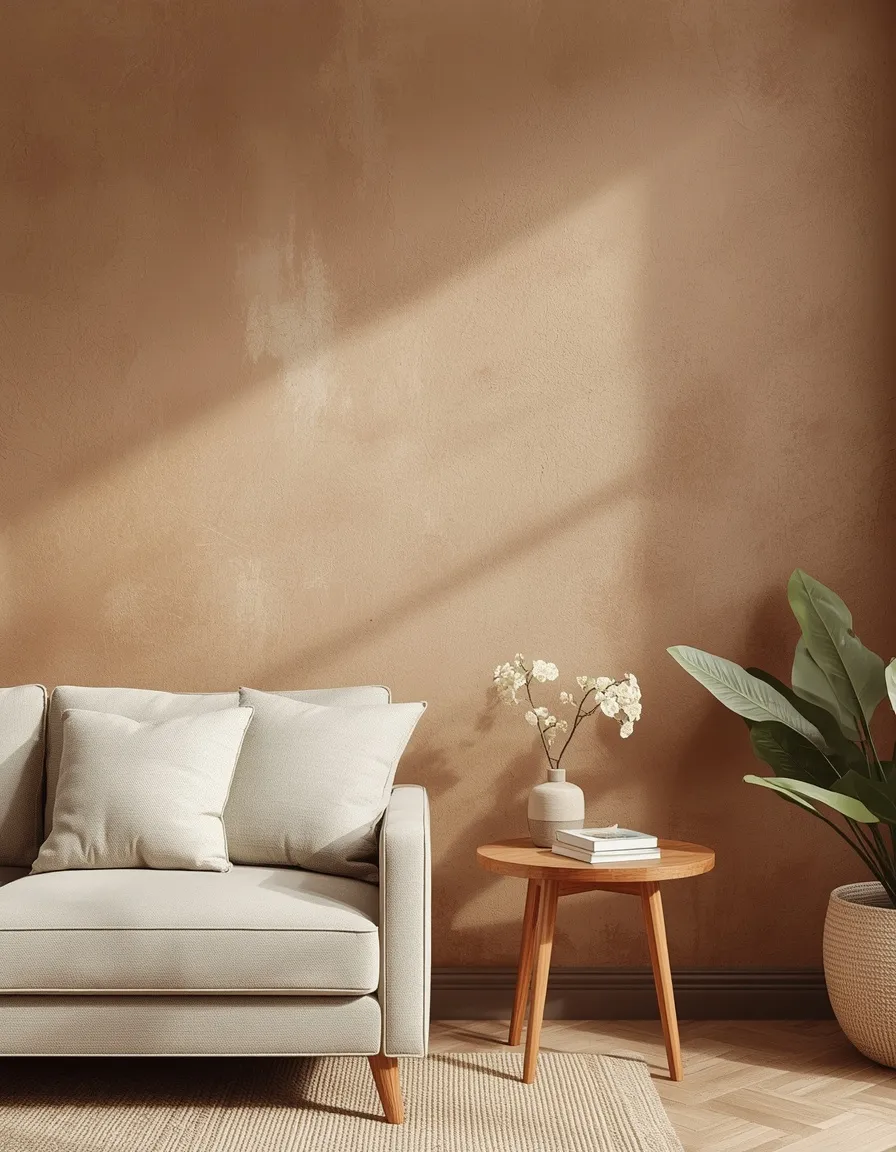
8. Textured Plaster Walls
Instead of flat, glossy paint, run a palm-finished limewash or microcement plaster across a single feature wall, and watch how it catches light differently throughout the day, adding depth that flat paint simply cannot.
Apply limewash or microcement to one accent wall first, since full-room application is costly and can read as heavy in a small space; a fireplace surround, headboard wall, or entry hallway are ideal test locations. These finishes are typically low-VOC once fully cured, but ventilate the room well during application and drying, in line with general indoor air quality guidance from the U.S. Environmental Protection Agency on limiting exposure to wet plaster and paint fumes.
- Adds depth without pattern or wallpaper
- Best applied to one accent wall first
- Requires proper ventilation during application and cure time
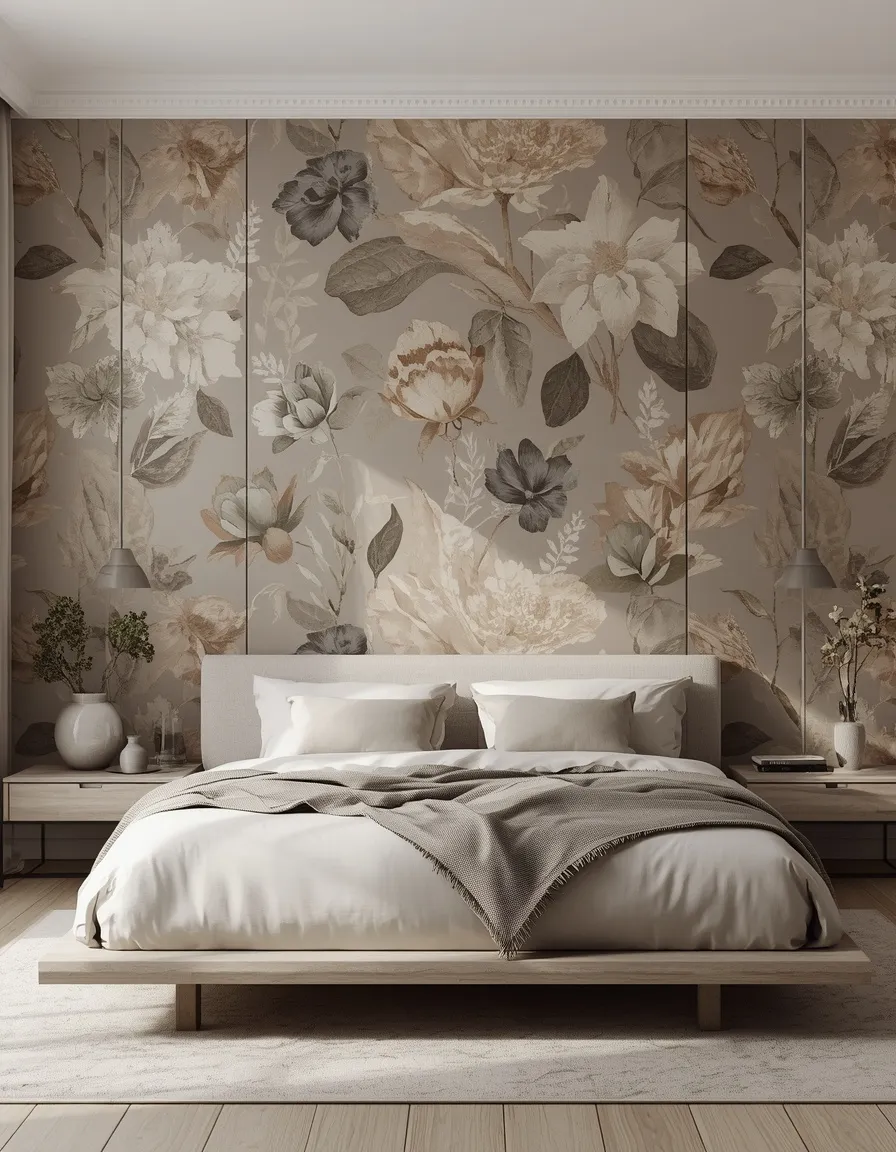
9. Modern Bedroom Wallpaper
A textured, large-scale wallpaper behind the headboard, in a muted botanical print or an abstract linen-look pattern, turns a plain modern bedroom into a space with real character without touching the rest of the room’s restrained palette.
Limit wallpaper to the headboard wall in bedrooms with lower ceilings, since wrapping all four walls in a busy pattern can make a small room feel smaller. Choose a paper with a subtle, tone-on-tone pattern for a modern interior design ideas bedroom look, and save bolder prints for larger primary suites. Peel-and-stick options are a practical, renter-friendly variation that avoids the commitment of pasted paper.
- Adds pattern without disrupting a neutral color scheme
- Peel-and-stick versions suit rentals and temporary homes
- Best kept to a single headboard wall in smaller rooms
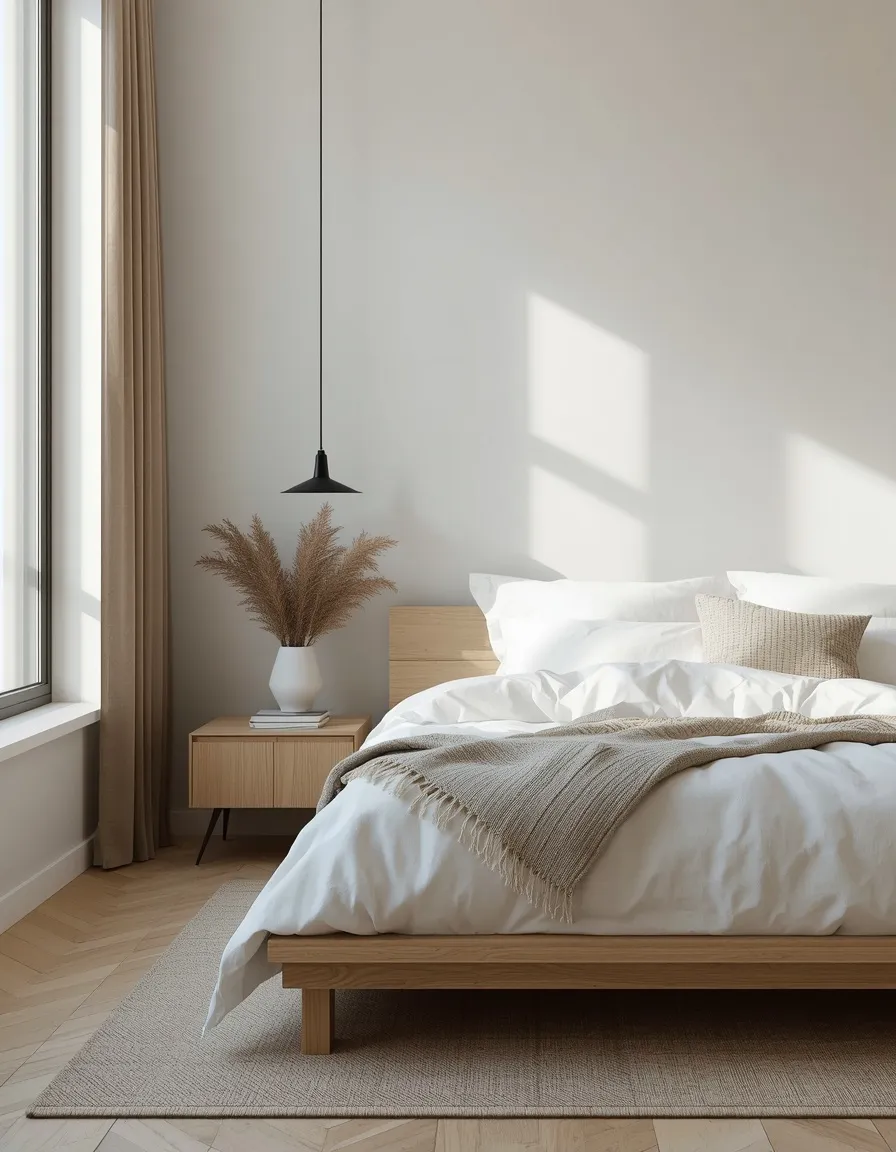
10. Low-Profile Platform Beds
A platform bed sitting just 30 to 40 centimeters (about 12 to 16 inches) off the floor, with no visible box spring or bulky frame, gives a bedroom an open, grounded feeling that taller traditional frames rarely achieve.
Pair a low platform frame with a mattress specifically rated for platform use, since not every mattress performs well without a box spring’s added support. This look works particularly well in bedrooms with lower ceilings, where a tall headboard and frame can make the room feel visually compressed. If young children climb on furniture in the room, choose a frame with rounded corners and confirm any attached headboard is securely anchored to the wall.
- Suits bedrooms with lower ceiling heights
- Requires a mattress specifically rated for platform frames
- Rounded corners are safer in children’s or shared bedrooms
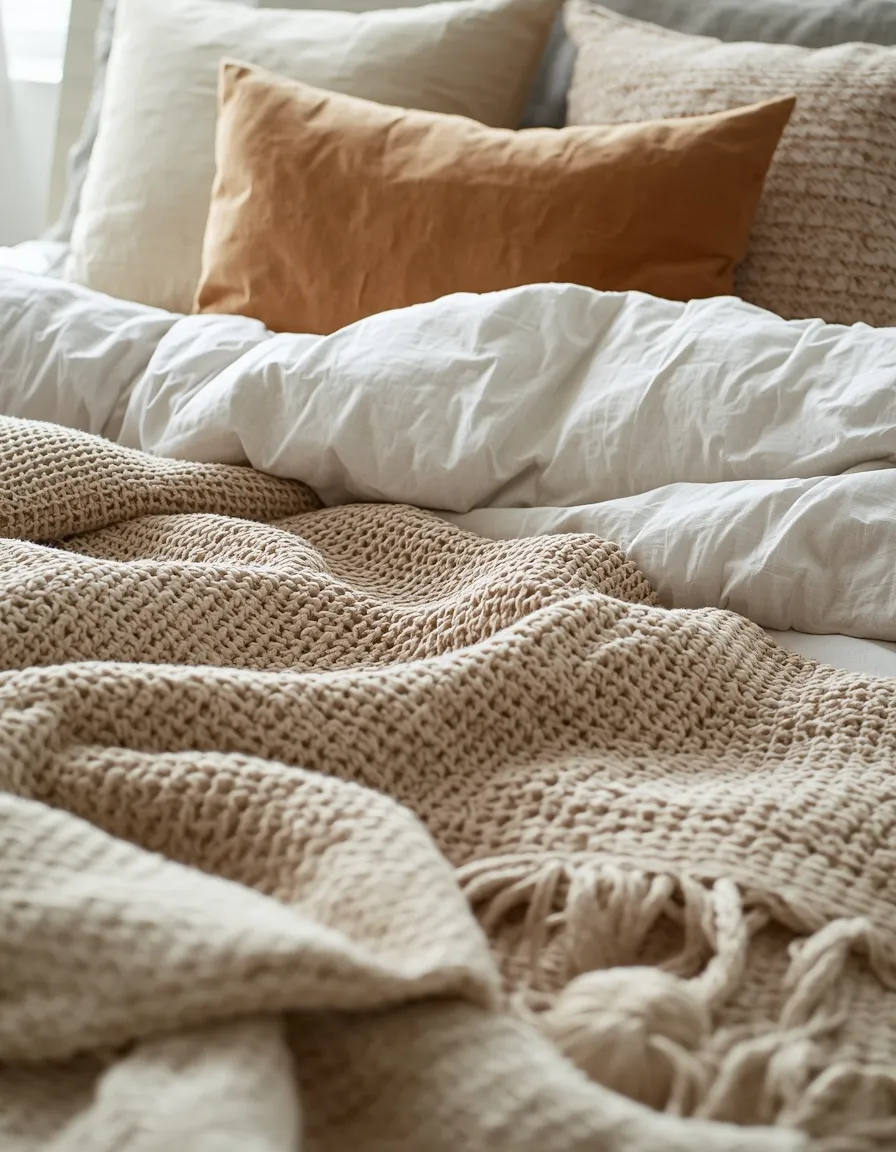
11. Layered Bedroom Textiles
A bed dressed in three or four layers, a fitted linen sheet, a waffle-weave blanket, a chunky knit throw, and two mismatched but tonal cushions, brings warmth to an otherwise pared-back modern bedroom without adding a single piece of furniture.
Layer textiles in varied but related textures rather than matching sets, mixing linen, bouclé, wool, and cotton within one tonal family for depth. This technique works in any bedroom style but is especially useful for balancing very minimalist or monochrome rooms that risk feeling flat. Avoid the common mistake of over-matching every textile in the same exact shade, which reads as staged rather than lived-in. If you are still refining the wall and bedding tones themselves, our bedroom color palette ideas guide can help you choose colors that layer well together.
- Softens minimalist or monochrome bedrooms
- Costs less than furniture changes to refresh a room
- Works across seasons by swapping throw weights
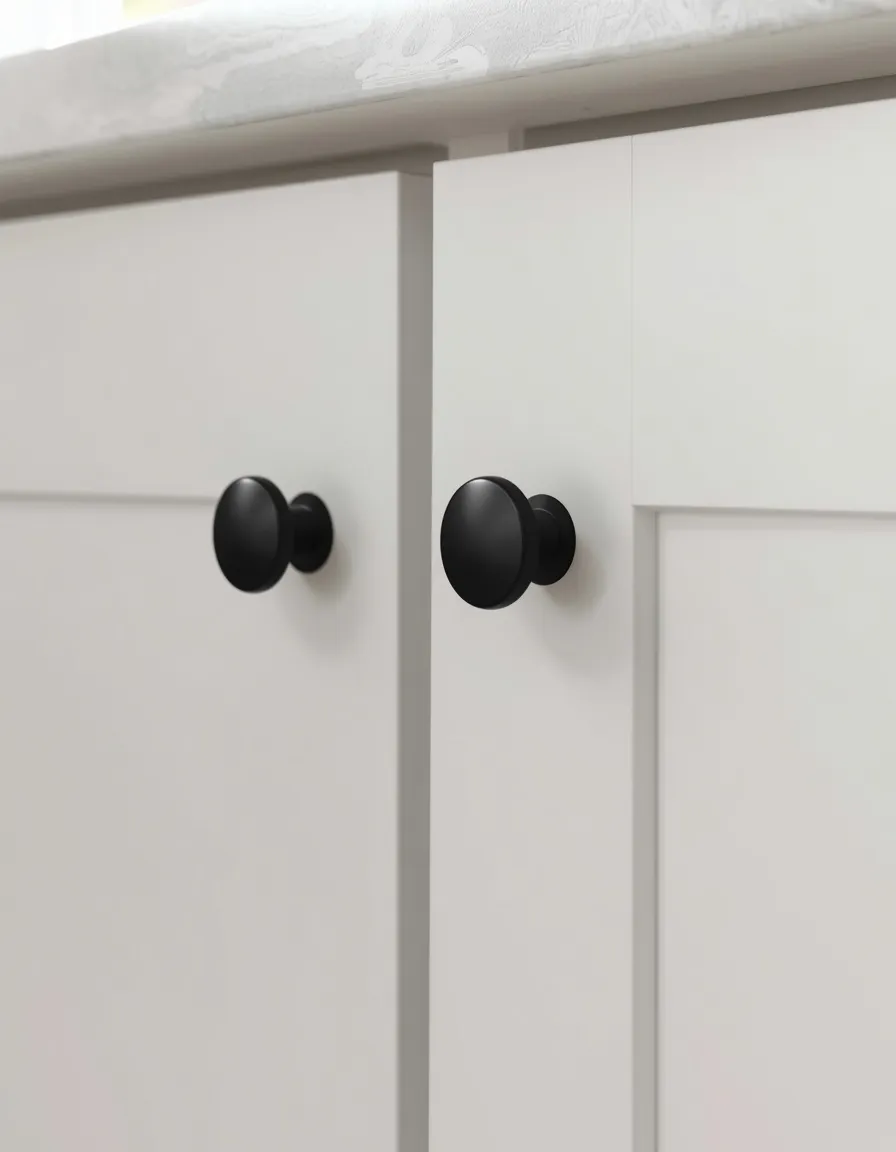
12. Matte Black Hardware
Swap out builder-grade brass or chrome cabinet pulls, faucets, and light switch plates for matte black hardware, and even an otherwise unchanged kitchen or bathroom suddenly reads current and intentional.
Replace hardware room by room, starting with the kitchen or primary bathroom for the highest visual impact per dollar spent. This update works in rentals too, since most cabinet hardware can be swapped out and the original pieces saved for move-out. A common mistake is mixing matte black with high-shine chrome in the same sightline; keep metal finishes within a room limited to two tones maximum for a cohesive look.
- One of the lowest-cost modern interior design updates
- Renter-friendly since original hardware can be reinstalled
- Limit to two metal finishes per room for cohesion
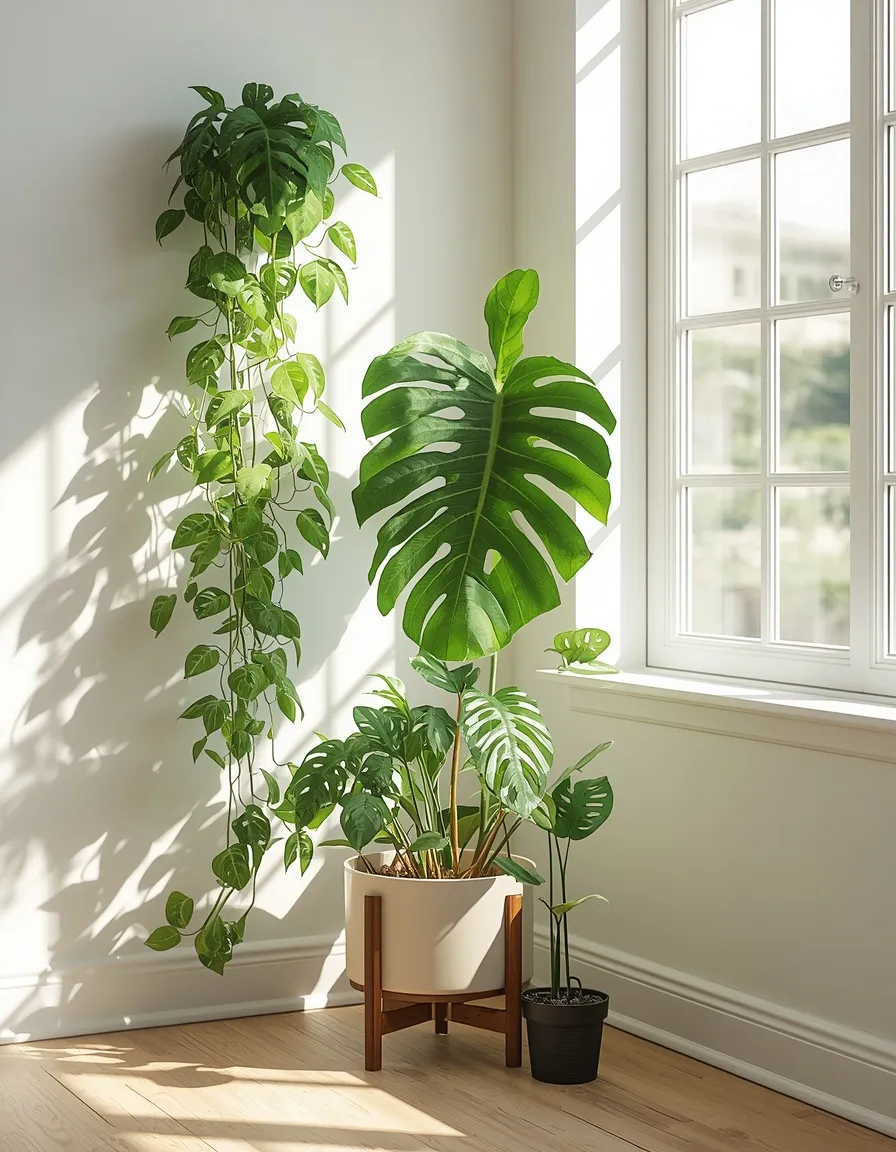
13. Living Greenery Displays
A cluster of trailing pothos, an upright fiddle leaf fig, and a low snake plant grouped by height near a bright window brings the organic texture that strict minimalism often lacks, softening hard edges with living, changing color.
Group plants in odd numbers and varied heights for a natural, gallery-like arrangement rather than a single row. Choose species suited to the room’s actual light level, since a fiddle leaf fig in a dim hallway will decline no matter how well it is watered. If pets share the home, check plant toxicity before buying; the ASPCA maintains a searchable list of plants toxic to cats and dogs, and pothos, in particular, is one to keep out of reach.
- Softens hard-edged modern furniture and materials
- Choose species matched to actual room light, not aspiration
- Confirm pet safety before bringing new plants into the home
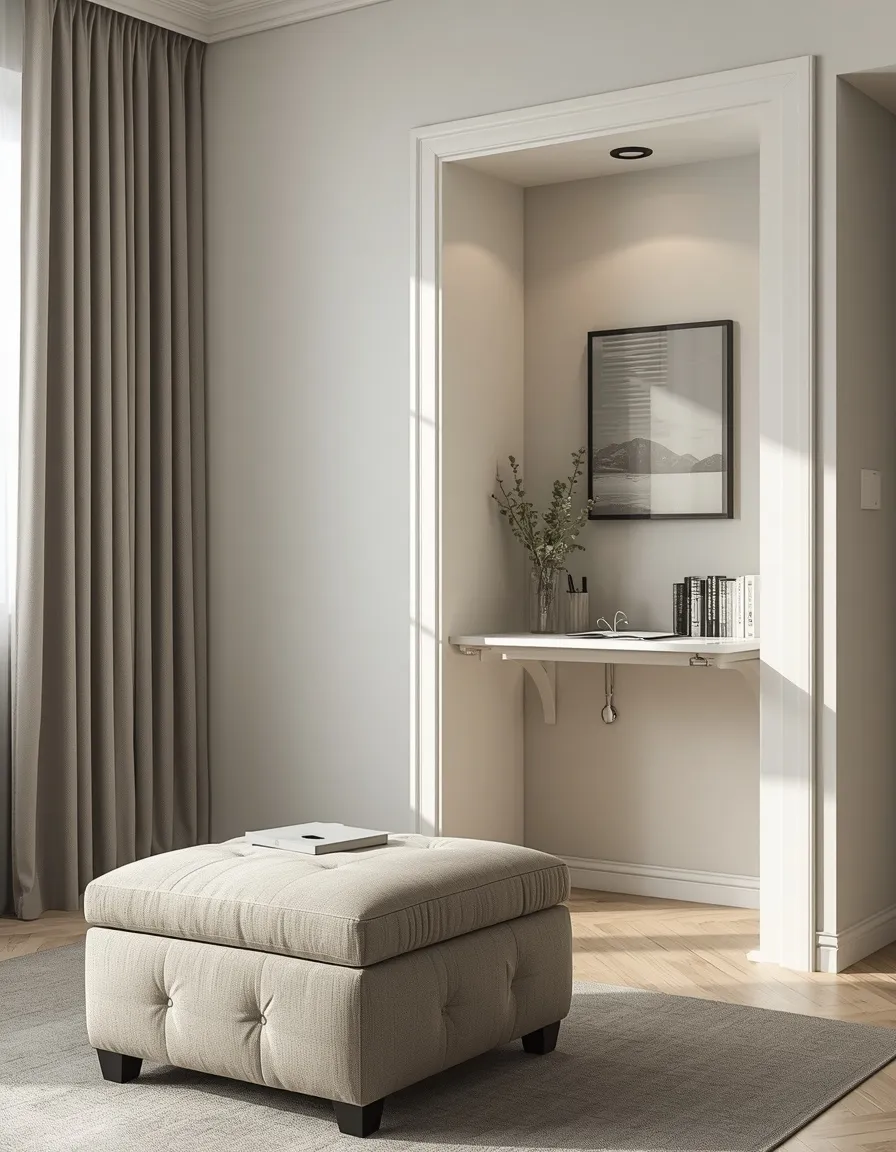
14. Multifunctional Small-Space Furniture
A storage ottoman that doubles as a coffee table, a daybed that hosts guests overnight, and a wall-mounted folding desk that disappears when not in use let a compact apartment deliver full function without feeling crowded.
Prioritize pieces with genuine dual function over ones with a single decorative purpose when square footage is limited, and measure clearances for fold-down or sliding mechanisms before buying. This approach suits studio apartments and shared rooms especially well. If installing a wall-mounted fold-down bed or desk, confirm it is anchored into wall studs rather than drywall alone, since these pieces carry real weight when deployed.
- Ideal for studio apartments and shared rooms
- Reduces the need for separate, single-purpose furniture
- Wall-mounted pieces must be anchored into studs for safety
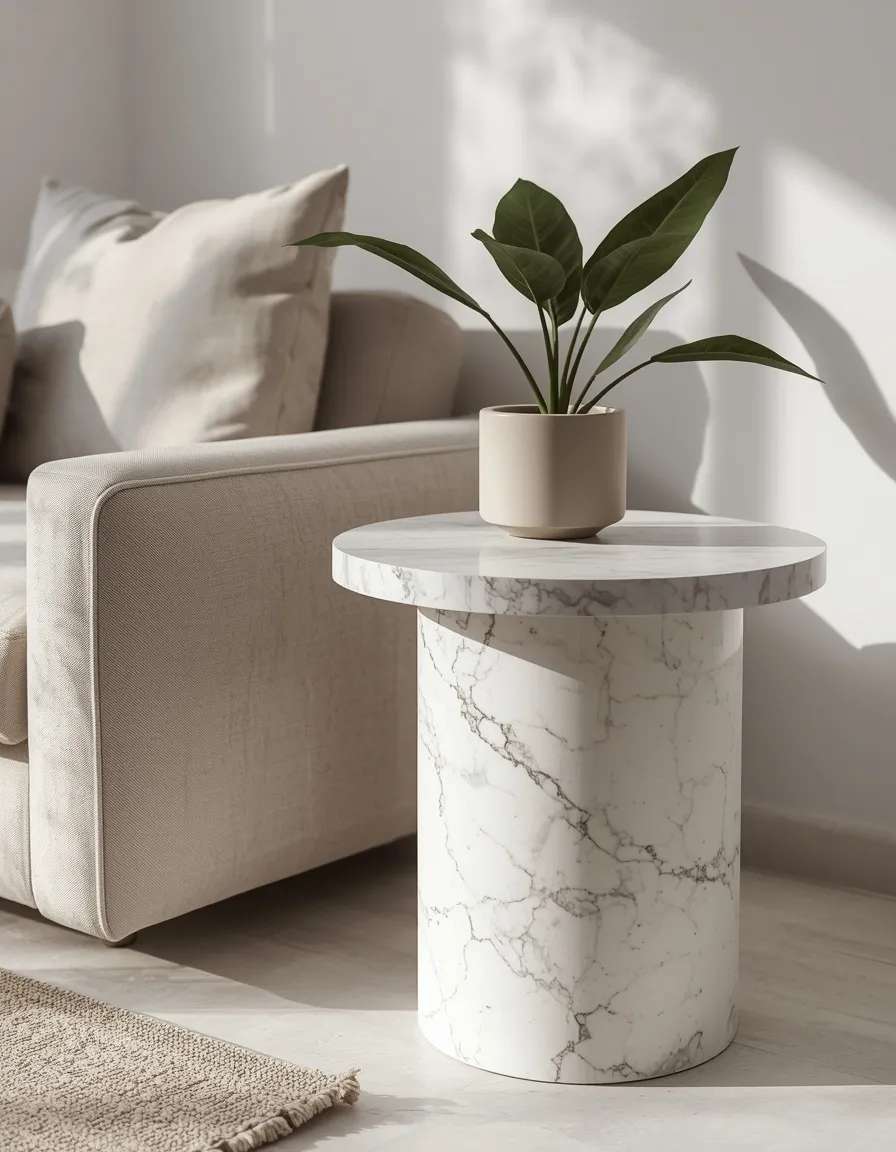
15. Natural Stone Accents
A honed marble side table, a travertine plinth used as a plant stand, or a raw stone bathroom sink brings the same organic irregularity to a room that no manufactured material can replicate, each vein and fleck genuinely one of a kind.
Introduce stone through smaller accent pieces before committing to large-scale surfaces like countertops, since this lets you test how a particular stone’s veining reads against your existing palette. Honed, matte finishes generally suit modern interior design style better than high-polish stone, which can read more traditional. Porous stones like travertine and some marbles need periodic sealing to resist staining, particularly in kitchens and bathrooms.
- Honed finishes suit modern spaces better than glossy polish
- Test with small accent pieces before large installations
- Porous stone needs periodic sealing in wet areas
16. Invisible Smart Technology
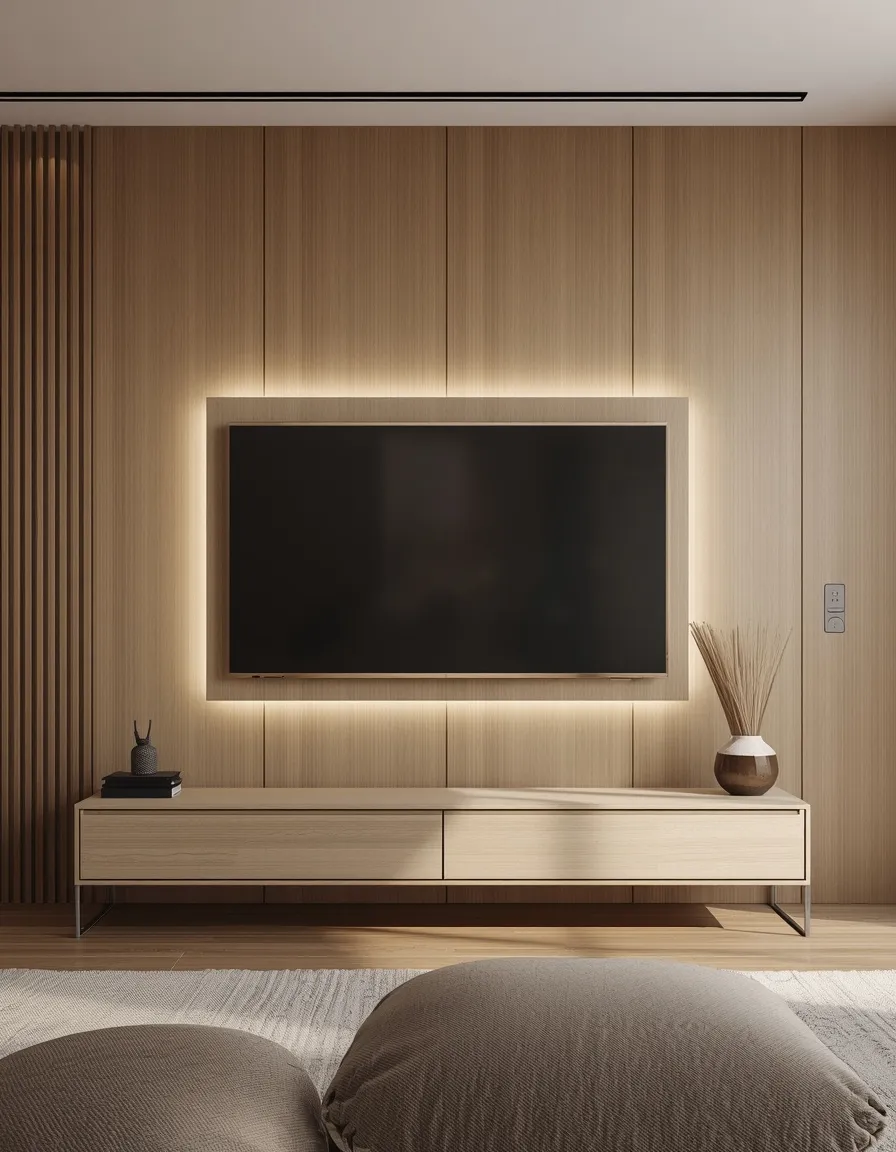
A living room with hidden in-ceiling speakers, a television that recesses into art mode against the wall, and lighting controlled by a single wall panel instead of a cluttered remote drawer shows how far smart technology has moved from gadget-forward to genuinely invisible.
Prioritize systems with wall-mounted or app-based controls over visible hubs and speakers, and plan wiring during any renovation rather than retrofitting later, since concealed cabling is far easier to install before walls are closed. This integration suits both full renovations and rental-friendly plug-in systems using smart bulbs and compact speakers. Keep any exposed cords managed with cable channels, both for the finished look and to reduce a tripping hazard near walkways.
- Rental-friendly versions use plug-in smart bulbs and speakers
- Plan wiring during renovation, not after walls close
- Manage cords to reduce tripping hazards near walkways
17. Reclaimed and Sustainable Materials
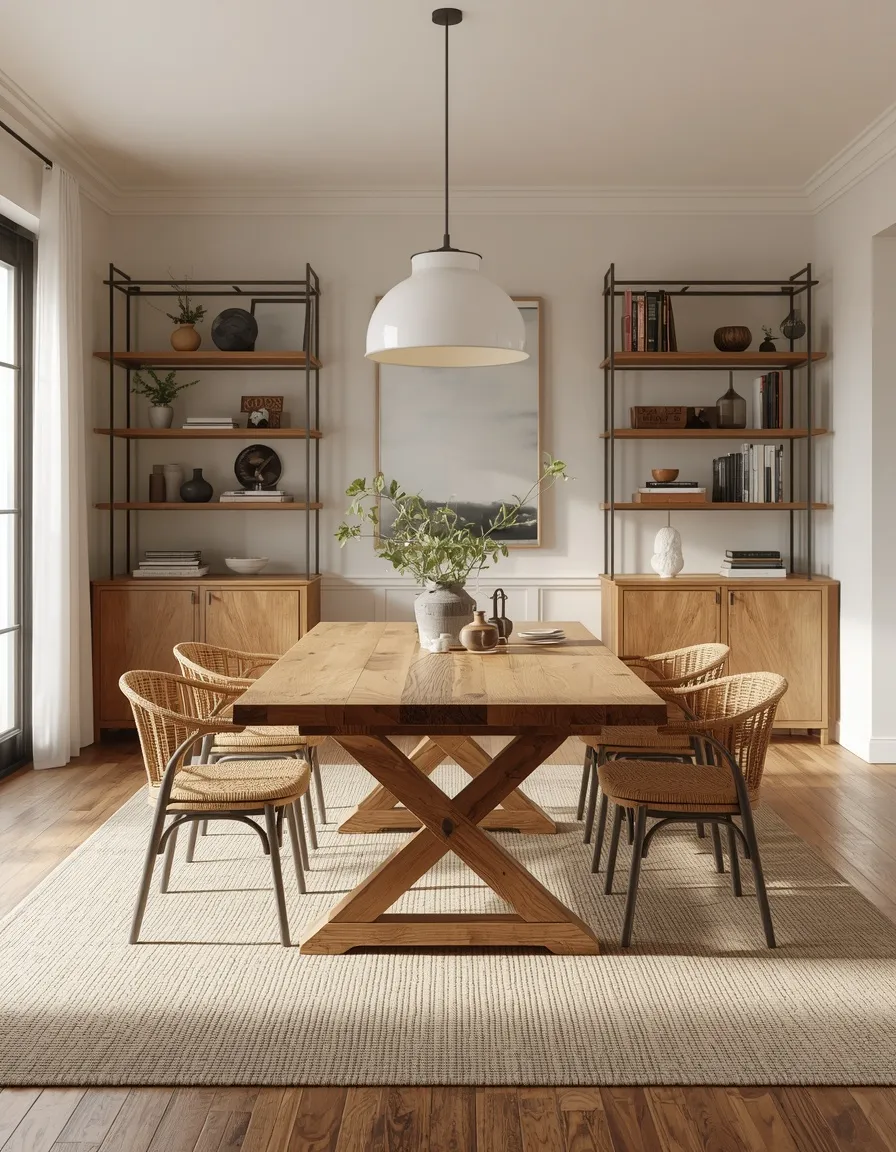
A dining table built from reclaimed barn oak, a rug woven from recycled cotton fibers, and shelving made from FSC-certified wood bring texture and story to a room while addressing a growing priority in modern interior design ideas for 2026: material sourcing that holds up to scrutiny.
Look for FSC (Forest Stewardship Council) certification on new wood pieces and ask furniture retailers directly about reclaimed sourcing, since the term is sometimes used loosely in marketing without real provenance. This approach fits any budget, from a single reclaimed-wood shelf to a full sustainably sourced furniture plan. Buying secondhand or vintage furniture is one of the most accessible sustainable choices available, often at a lower price than comparable new pieces.
- FSC certification confirms responsible wood sourcing
- Secondhand furniture is a budget-friendly sustainable option
- Works at any price point, not just high-end renovations
18. Curated Modern Gallery Walls
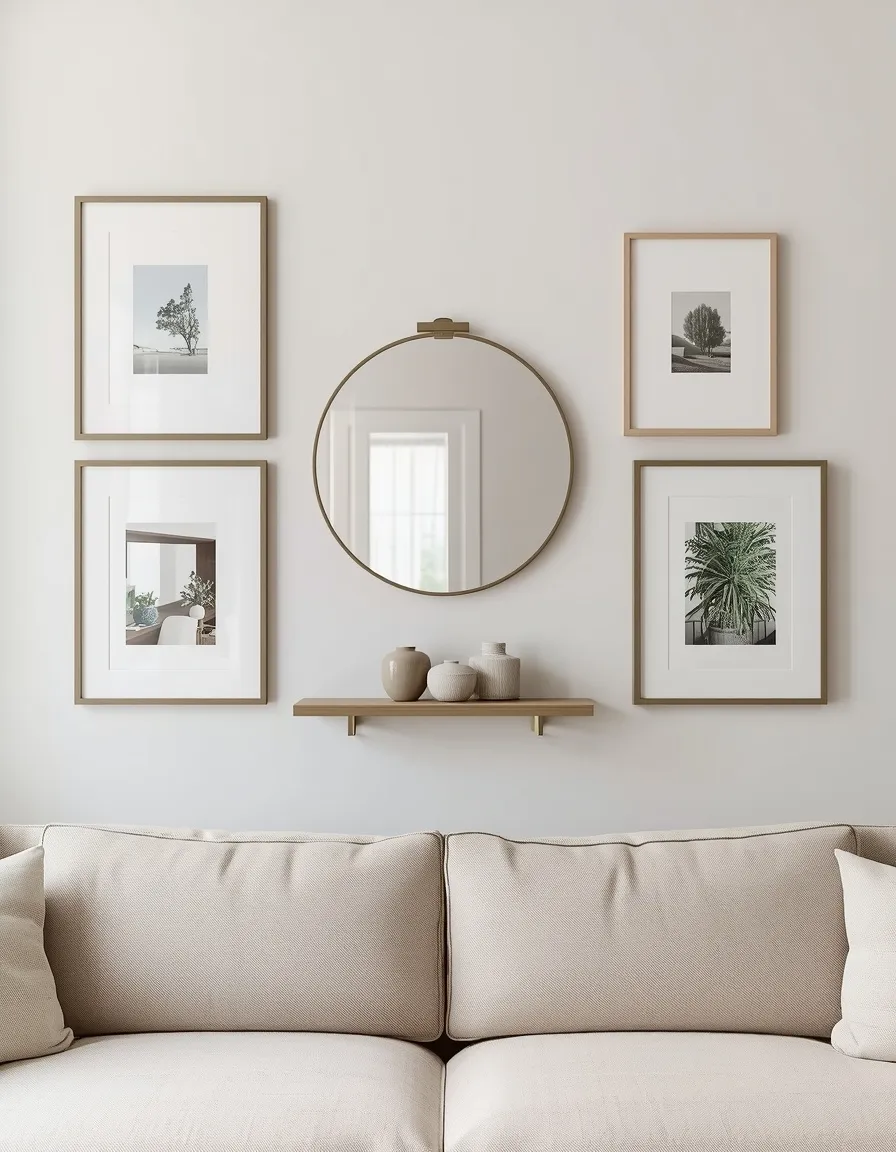
A cluster of framed prints, a mirror, and one small sculptural shelf arranged with generous, even spacing around a sofa turns a blank wall into the room’s focal point, without the visual noise of a tightly packed traditional gallery wall.
Plan the layout on the floor or with paper templates taped to the wall before hanging anything, keeping consistent gaps, roughly 5 to 8 centimeters (2 to 3 inches), between frames for a cohesive composition. Use proper wall anchors rated for the frame’s weight, especially in rental apartments with hollow drywall, rather than relying on adhesive strips for anything heavier than a lightweight print. Mixing frame finishes in the same metal tone keeps an eclectic mix feeling intentional.
- Plan layout on the floor before hanging anything
- Use weight-rated anchors, not adhesive strips, for heavier frames
- Consistent spacing reads as curated rather than cluttered
19. Open Shelving Vignettes
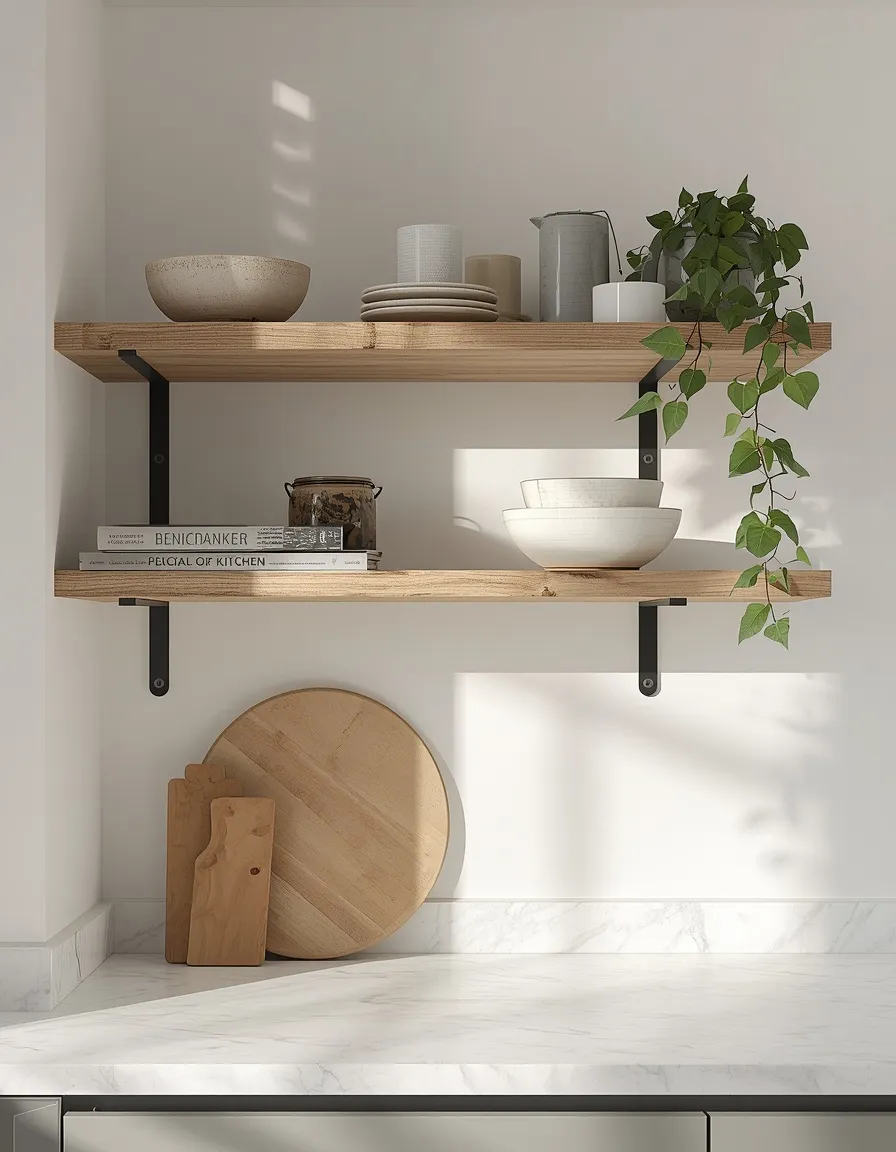
A run of open oak shelves in a kitchen, styled with a handful of ceramic bowls, a small stack of cookbooks, and one trailing plant, replaces upper cabinets with something that feels more like a curated display than storage.
Style open shelves with roughly 60 percent “everyday useful” items and 40 percent decorative pieces, so the display still functions as real storage rather than purely for show. This works best in kitchens with consistent daily use, since open shelving requires more frequent dusting than closed cabinetry, and suits households that keep dishware relatively uniform in color and style. Avoid overcrowding each shelf; negative space between groupings is part of what keeps the look intentional.
- Mixes function and display rather than pure decoration
- Suits kitchens with uniform, coordinated dishware
- Needs more frequent dusting than closed cabinetry
20. Zone-Defining Area Rugs
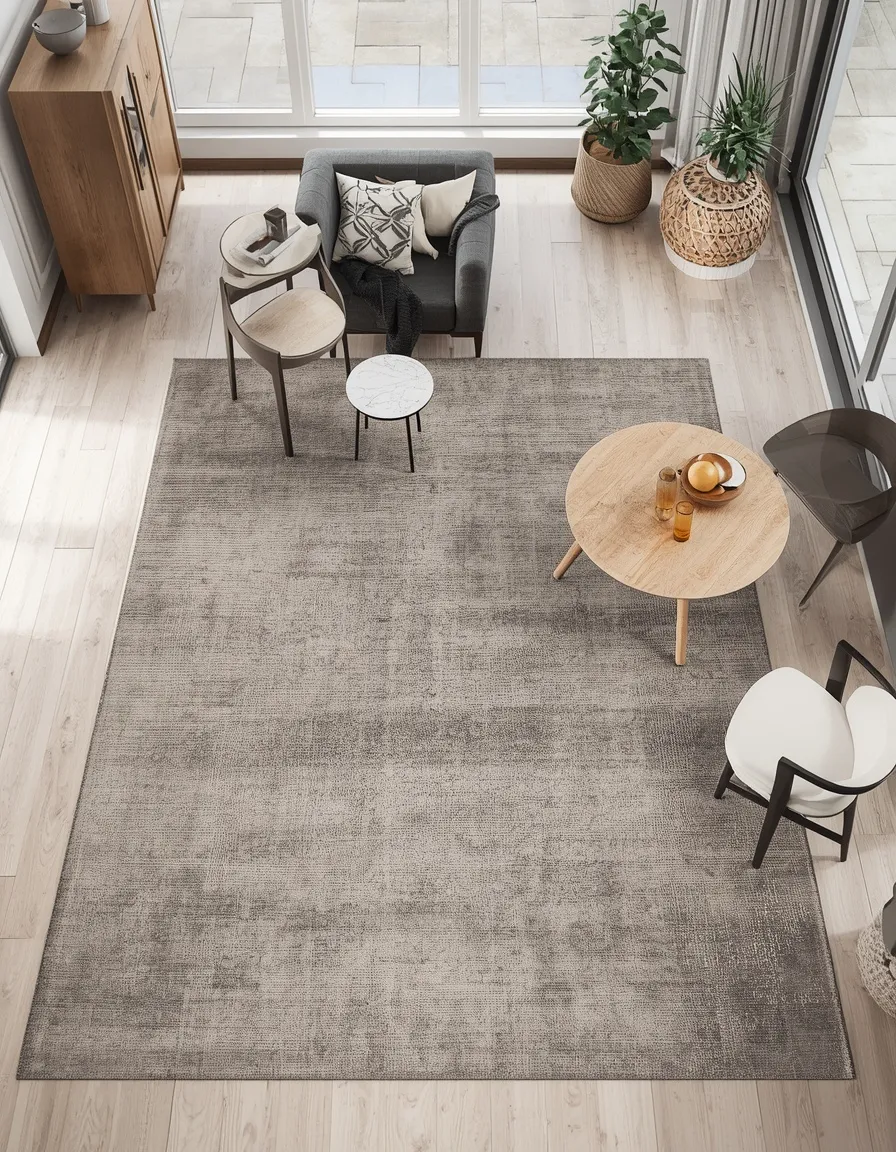
In an open-plan living and dining space, a large wool rug anchoring the seating area and a second, smaller rug beneath the dining table visually separate two functions without a single wall or divider.
Size the living room rug so at least the front legs of every seating piece rest on it, which reads as intentional rather than undersized. For dining areas, choose a rug large enough that chairs stay on it even when pulled out, typically 60 to 90 centimeters (24 to 36 inches) larger than the table on each side. Wool and wool-blend rugs tend to hold their shape and resist crushing better than pure synthetic options in high-traffic zones.
- Defines separate zones in open-plan layouts
- Sizing rule: at least the front furniture legs on the rug
- Wool blends resist crushing better in high-traffic areas
21. Mixed Metal Finishes
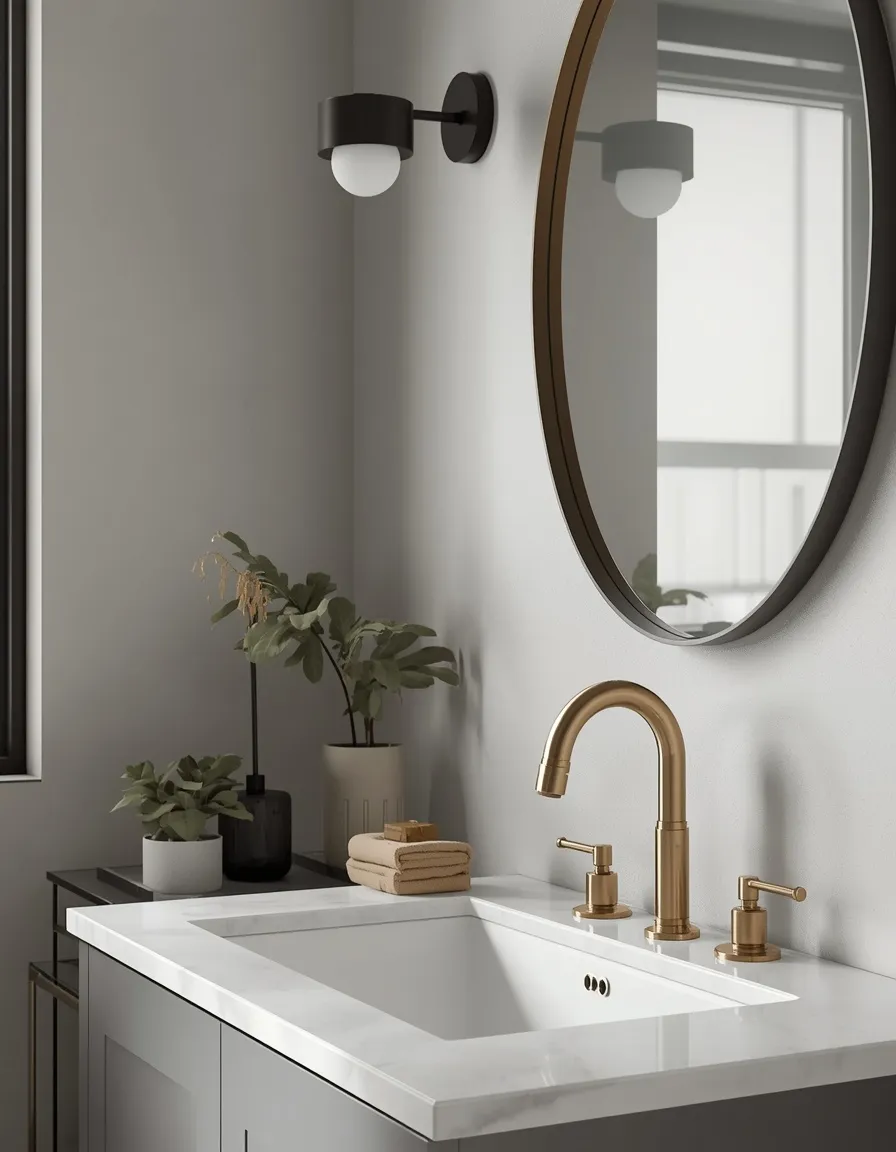
A room combining brushed brass door handles, matte black light fixtures, and a warm bronze mirror frame proves that modern interior design does not require every metal finish in the house to match exactly.
Anchor a mixed-metal room with one dominant finish making up roughly 60 percent of the metal accents, then use one or two supporting finishes for the remainder, rather than distributing them evenly. This approach works particularly well in kitchens and bathrooms with multiple fixtures, faucets, cabinet hardware, and lighting, that would otherwise feel repetitive if uniform. Keep finishes within the same general warmth (warm metals together, cool metals together) for the most cohesive result.
- One dominant finish should lead, not an even split
- Works especially well in kitchens and bathrooms
- Keep warm and cool metal tones grouped separately
Final Thoughts on Modern Interior Design Ideas
The best modern interior design ideas rarely rely on a single dramatic gesture. More often, it is the layering of a warm palette, one sculptural light fixture, honest materials, and a rug sized correctly for the room that adds up to a home that feels both current and comfortable to live in. Start with whichever idea solves your most immediate frustration, whether that is a kitchen that photographs flat or a bedroom that never quite feels finished, and build outward from there. For more seasonal and style-driven inspiration, Sunday Abode’s trending ideas category is a good next stop. Pin the ideas that fit your space now, and revisit the rest as your rooms evolve.
Frequently Asked Questions About Modern Interior Design Ideas
What defines modern interior design compared to contemporary style?
Modern interior design refers to a specific style rooted in clean lines, functional furniture, and a restrained material palette of wood, metal, glass, and stone, largely inspired by early to mid-20th-century design movements. Contemporary style, by contrast, simply means whatever is currently trending, which can shift year to year and often borrows from modern, minimalist, and other aesthetics at once.
How do I start a modern interior design ideas project on a budget?
Begin with the lowest-cost, highest-impact changes covered in this guide, such as swapping cabinet hardware to matte black or introducing one warm neutral paint color, before moving on to furniture. Editing what is already in the room, removing excess decor and simplifying the color palette, often does more for a modern look than any single purchase.
What colors work best in a modern interior design 2026 palette?
Warm neutrals like oat, taupe, and greige remain the dependable base, paired with one deeper accent such as olive, rust, or ink for contrast. Monochrome color blocking in a single dominant hue is also a strong 2026 direction, particularly in bedrooms and powder rooms.
Can modern interior design ideas work in a small apartment or rental?
Yes, and several ideas in this guide, including multifunctional furniture, peel-and-stick wallpaper, and swappable matte black hardware, were chosen specifically because they suit rentals and smaller footprints. Focus on furniture with genuine dual function and finishes that can be reversed at move-out.
What materials are trending in modern interior design for 2026?
Natural and reclaimed materials are leading the shift, including honed stone, FSC-certified or reclaimed wood, and textured plaster finishes like limewash and microcement. These materials add tactile depth that flat paint and manufactured surfaces cannot replicate.
Is modern interior design too cold or minimalist for a family home?
Not when it is executed with warmth in mind. Warm minimalist palettes, layered textiles, and living greenery displays, all covered above, keep a modern home comfortable and livable rather than sparse, and durable materials like wool rugs and engineered stone hold up well to daily family use.
How do I mix modern interior design with existing traditional furniture?
Introduce modern elements gradually through lighting, hardware, and one or two anchor furniture pieces rather than replacing an entire room at once. A curved modern sofa or a sculptural pendant light can coexist with an inherited wood dresser or an antique mirror as long as the overall color palette stays cohesive.