
Introduction
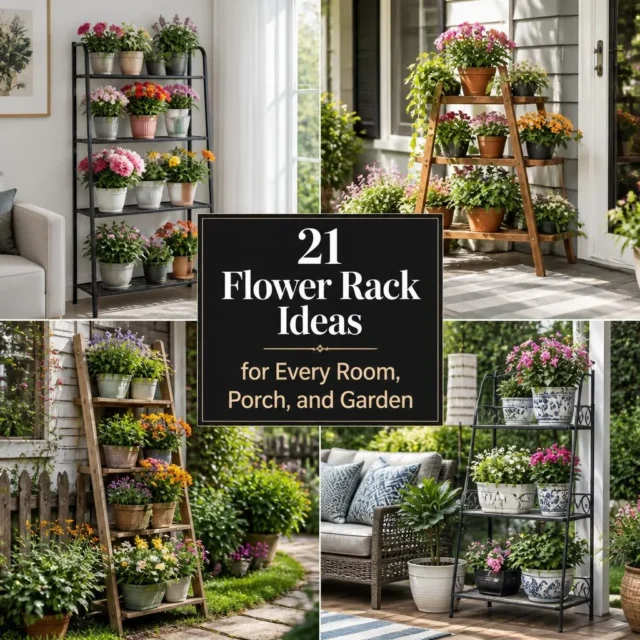
Picture a plain porch corner turned into a cascade of petunias tumbling down three wooden steps, or a bare apartment wall transformed into a small gallery of trailing pothos in floating pots. These flower rack ideas do more than hold plants, they give a home genuine structure for color, whether that structure is a budget PVC frame built in an afternoon or a wrought iron stand built to last decades. This guide gathers 21 flower rack ideas for real spaces, small balconies, blank interior walls, weekend DIY projects, and full outdoor gardens, with practical guidance on materials, placement, and safety for each one. Wherever a home needs a little more bloom, that is the spirit behind everything on Sunday Abode: practical, ideas-first inspiration for a well-loved space.
Indoor Flower Rack Ideas
Indoor racks need to do double duty: hold plants well and fit real furniture and traffic patterns. These five ideas work in apartments, rentals, and family homes alike.
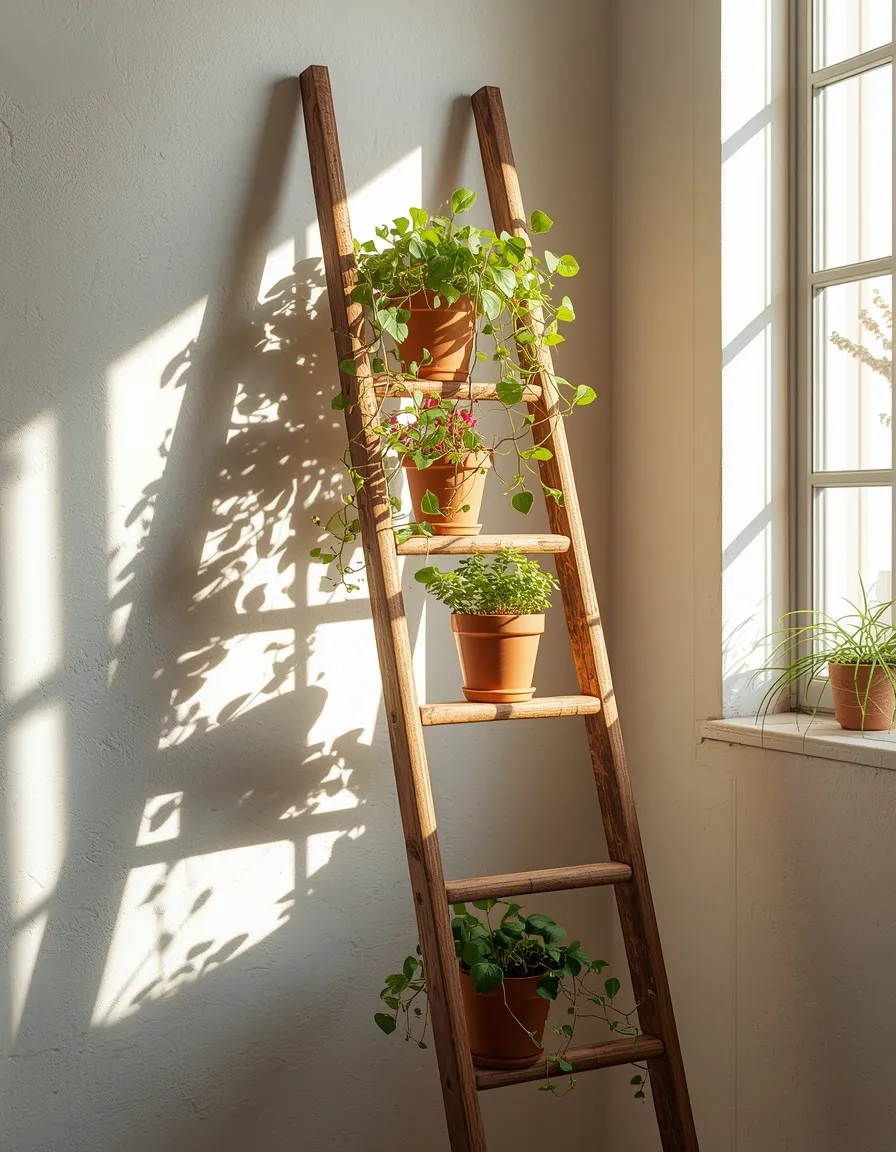
Tiered Ladder Plant Stand
A slim wooden ladder leaned against a sunlit wall instantly turns three or four plain terra cotta pots into a curated indoor garden. Each rung becomes its own shelf, letting trailing pothos spill from the top step while compact African violets sit at eye level below.
This works best in a spot with bright, indirect light, such as near an east-facing window, since a single ladder frame receives fairly even light across all its rungs. Choose a ladder with rungs spaced at least 25cm (10in) apart to keep leaves from crowding, and always test that it stands flush against the wall before loading it with pots, since a rung packed with heavy ceramic can tip a poorly braced ladder forward. A common mistake is placing the heaviest pots on the top rung; keep the bulk of the weight low for a stable base.
- Works in narrow corners where a full plant stand won’t fit
- Groups multiple plant sizes into one visual column
- Solves the too-many-small-pots, nowhere-to-put-them problem
- Easy to reposition seasonally as light shifts
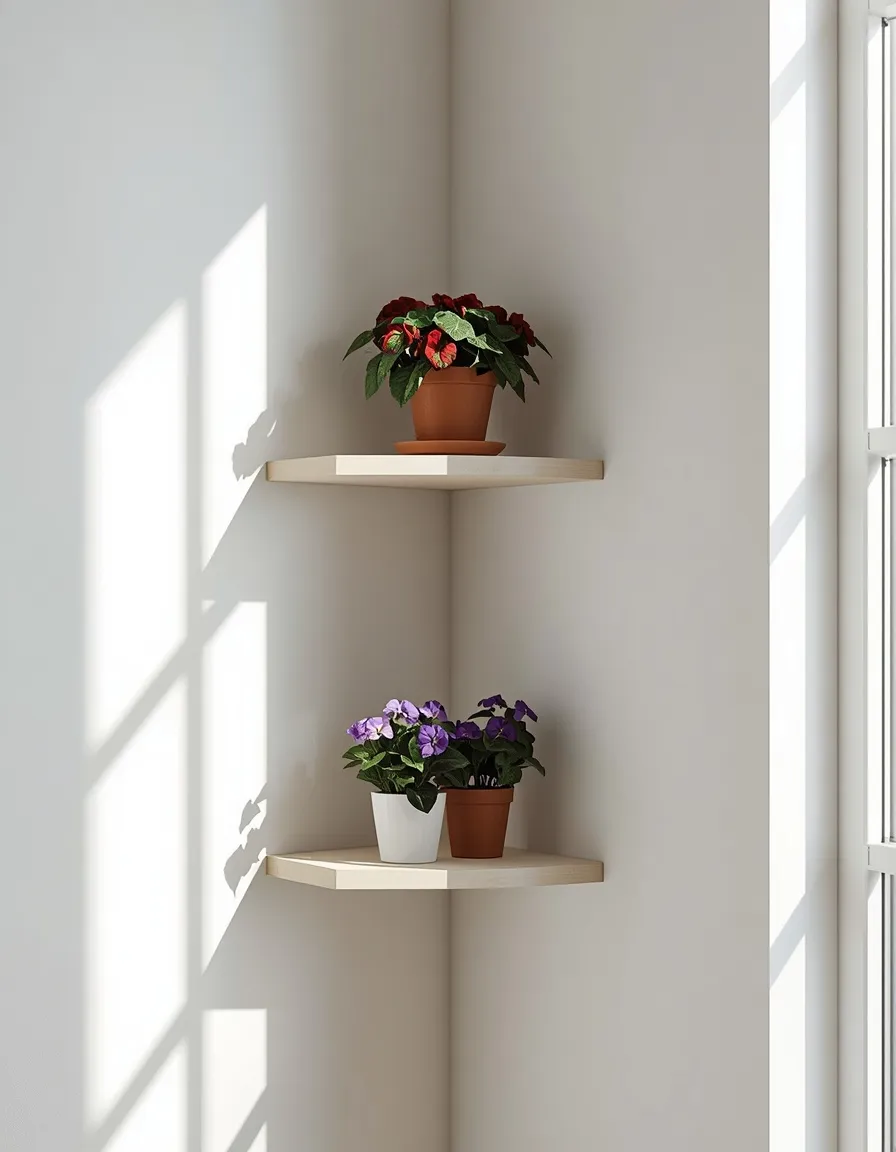
Corner Window Flower Shelf
A tiered corner shelf tucked into the angle where two walls meet turns dead space into the brightest display spot in the room, with each shelf catching light from both directions.
Corner shelving suits small apartments and rental units where floor space is limited, and it works especially well behind a sofa or beside a reading chair. Install with two studs or heavy-duty corner brackets rather than adhesive strips, since flower pots weighted with wet soil are heavier than they look; a fully soaked medium pot can exceed 2kg (4.5lb). Space shelves roughly 30 to 35cm (12-14in) apart so taller flowering plants like begonias have headroom. Avoid glass shelving in homes with young children or pets, since it can crack under uneven pot weight.
- Maximizes light exposure in a compact footprint
- Ideal for studio apartments and small bedrooms
- Keeps floor space open for furniture
- Pairs well with a mix of trailing and upright blooms
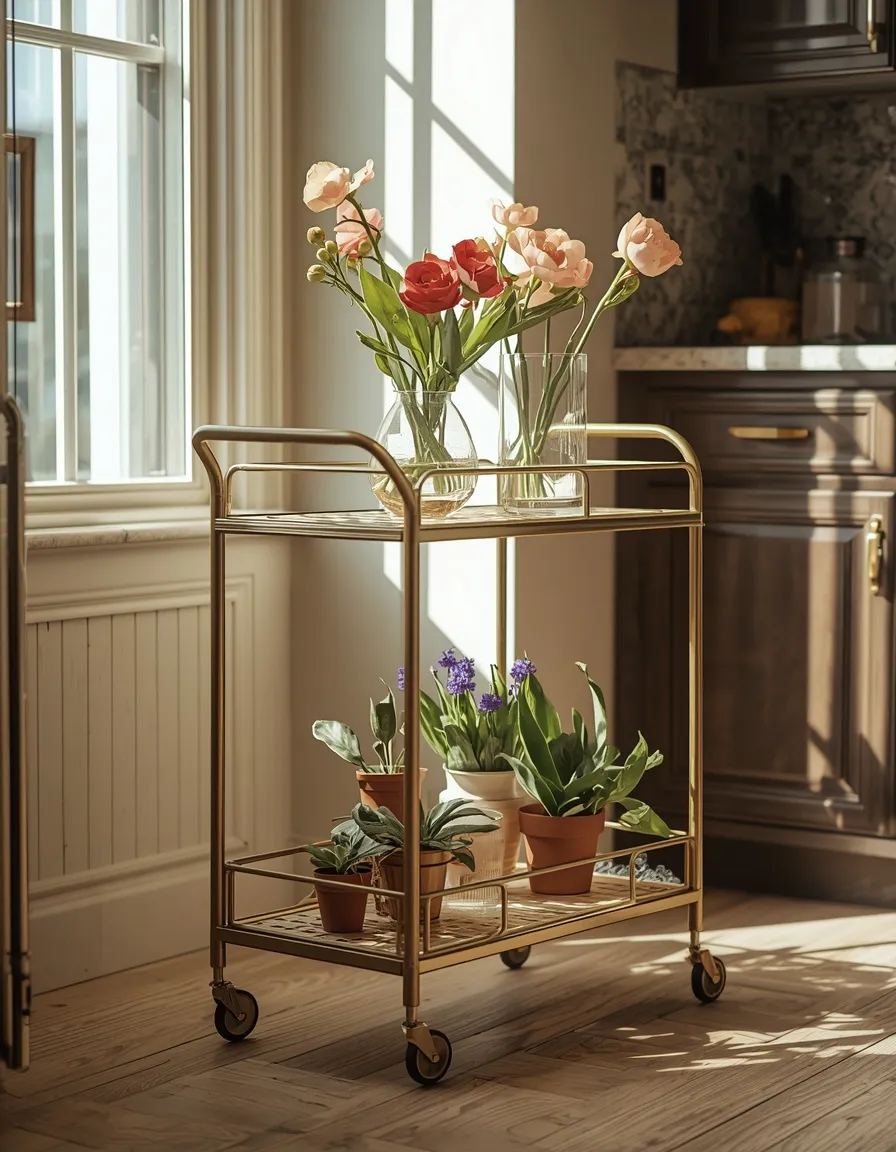
Rolling Bar Cart Rack
A repurposed bar cart on locking casters carries a moving garden from the kitchen to the patio door, letting a household chase the best light through the day without repotting anything.
This idea suits renters and anyone who wants flexibility rather than a fixed display, since the whole rack rolls out of the way for cleaning or entertaining. Choose a two or three-tier cart with a solid lower shelf for the heaviest pots and a lighter top shelf for cut flower vases. Lock the wheels once positioned, and keep the cart away from stairways or high-traffic hallways where a bump could send water and soil across the floor. A galvanized metal tray liner protects the shelves from water rings and soil residue.
- Follows sunlight around the home through the seasons
- Doubles as a serving cart when guests visit
- Solves the problem of fixed shelving in rented spaces
- Contains water spills better than open shelving
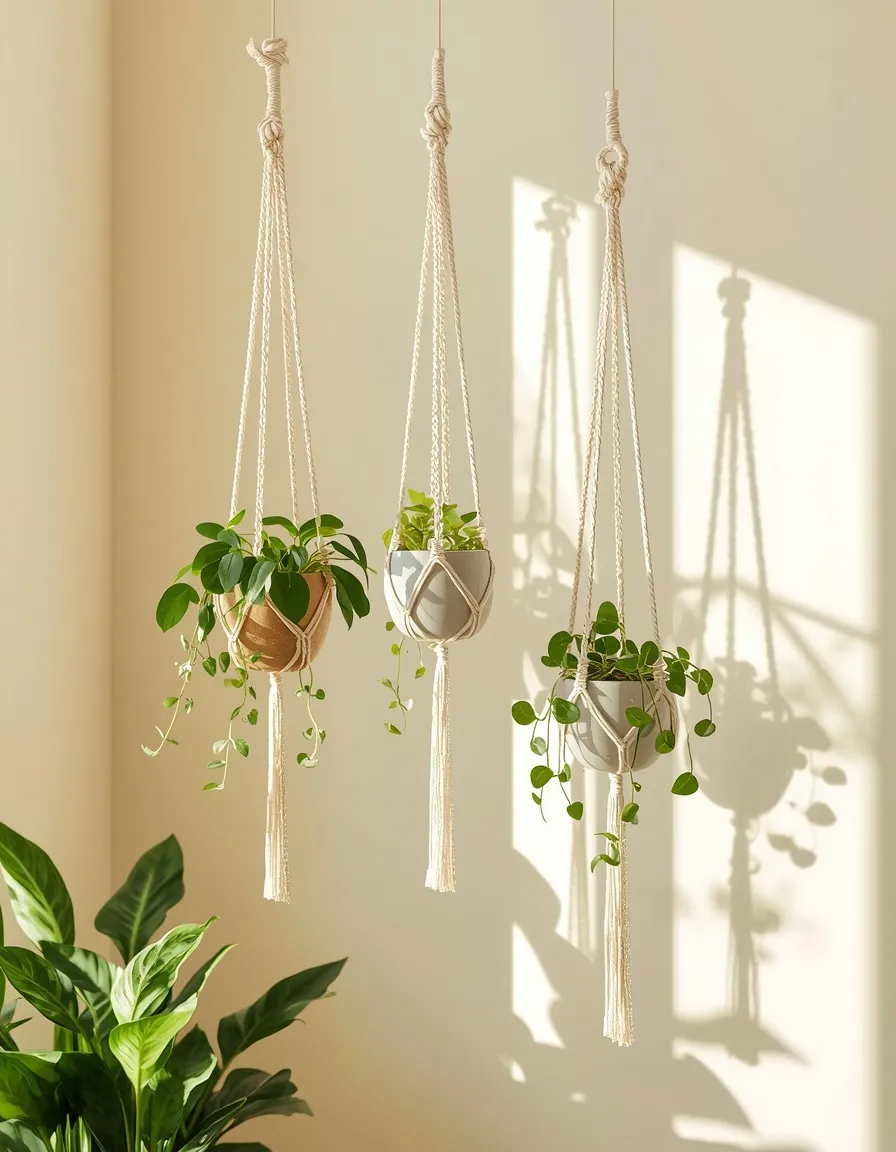
Macrame Hanging Rack
Suspended cotton macrame slings hold trailing plants like string of pearls or pothos at varying heights, filling vertical space above furniture rather than competing for floor room.
A macrame rack is well suited to bright rooms with ceiling joists strong enough to anchor a hook rated for at least 10kg (22lb), since a soaked hanging pot is heavier than an empty one. Stagger the hanging lengths so foliage doesn’t overlap and block light to the lower plants. If pets share the home, choose non-toxic trailing varieties such as spider plant, since dogs and cats can reach swinging pots more easily than potted plants left on the floor. The ASPCA maintains a full list of plants that are safe and unsafe for animals, which is worth checking before choosing what to hang.
- Frees up floor and shelf space entirely
- Adds texture and movement to a plain wall
- Solves the no-surface-space-left problem in small rooms
- Best for trailing or cascading flower varieties
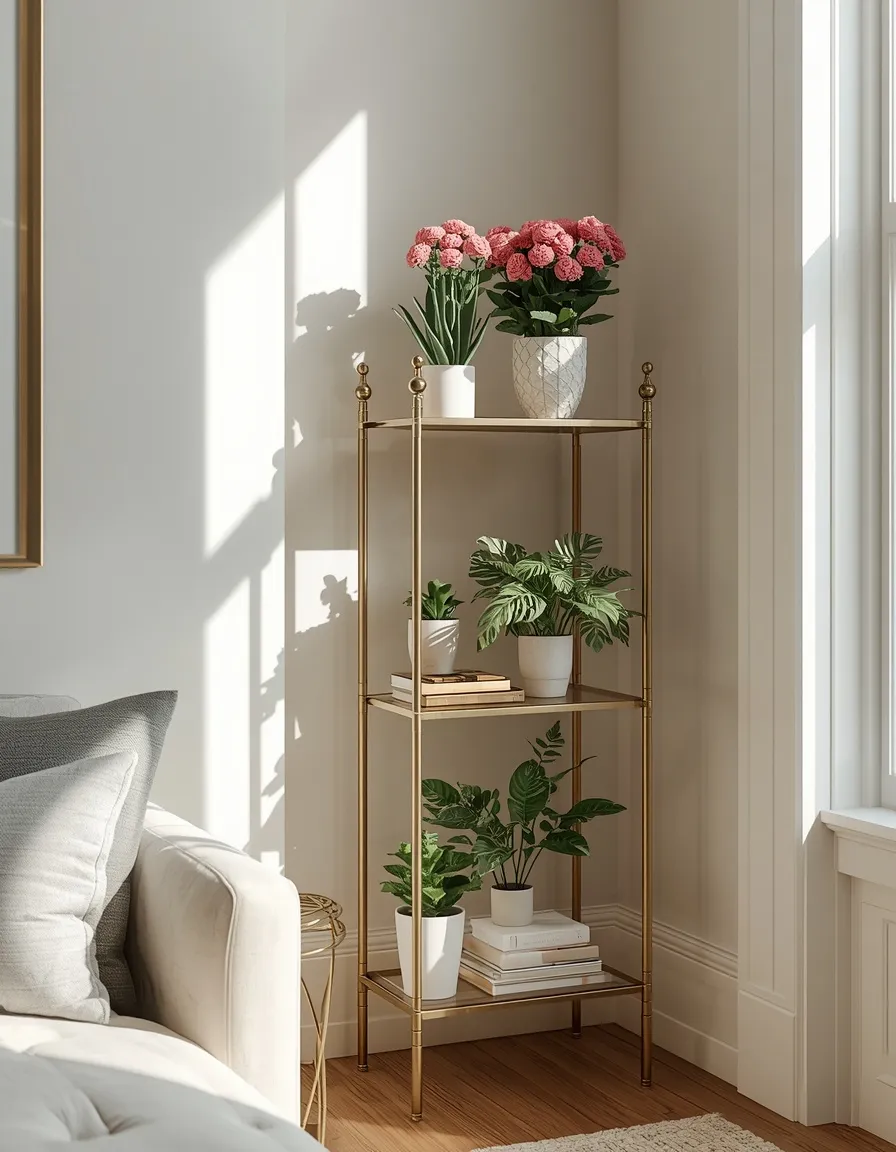
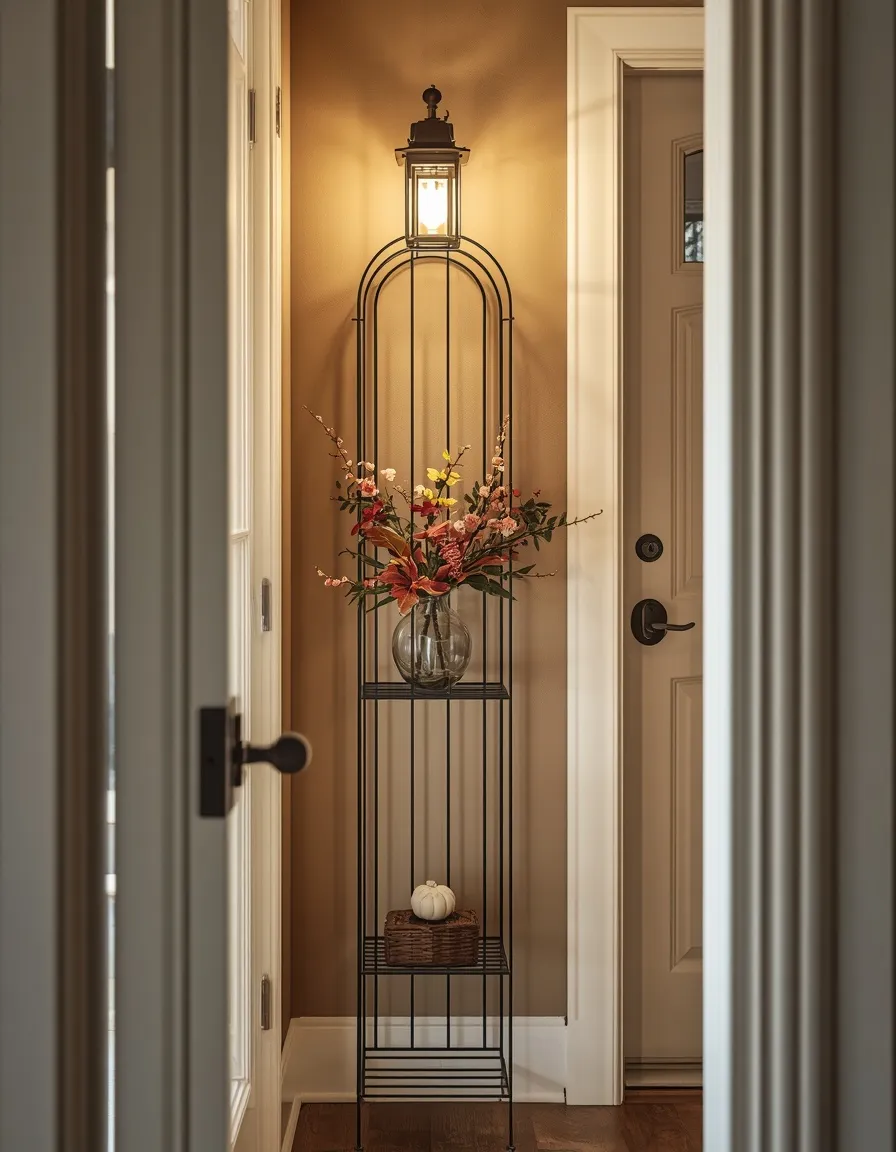
Etagere Display Shelf
An open-frame etagere with slim metal or brass legs gives flowering plants a furniture-grade home, turning a living room corner into a curated display rather than an afterthought shelf.
This style suits more formal interiors, such as a dining room or entryway, where the rack itself is meant to be noticed alongside the blooms. Vary pot heights and leaf textures across the shelves rather than lining up identical containers, since an etagere reads best with visual rhythm. Keep the lowest shelf clear of blooms that need frequent watering if there’s carpet underneath, since drips are harder to catch on an open frame than on a solid-backed shelf.
- Reads as furniture, not just plant storage
- Suits formal or transitional interior styles
- Solves the generic-plastic-shelf look
- Works well as a room divider in open-plan spaces
Outdoor Flower Rack Ideas
Outdoor racks face wind, rain, and temperature swings that indoor pieces never see, so material choice and anchoring matter more here than anywhere else in the home.
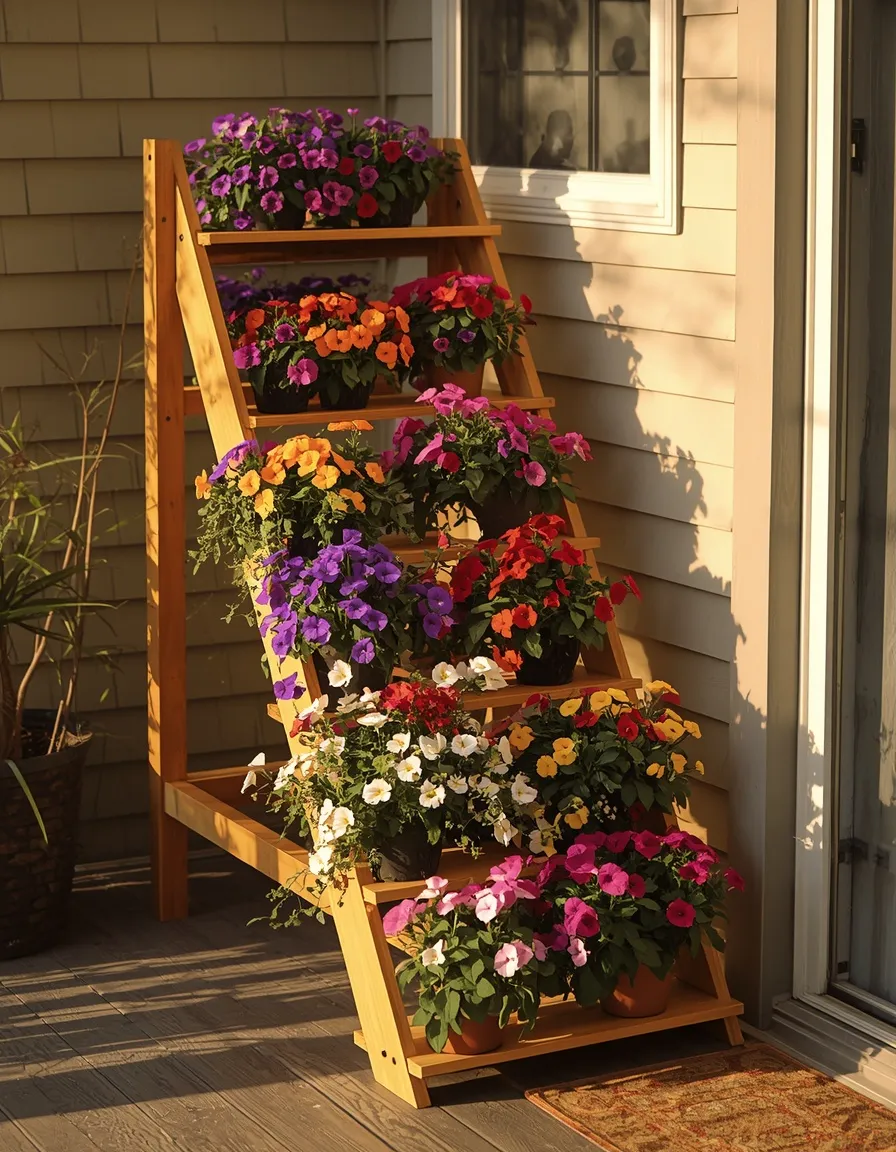
Multi-Tier Garden Staircase Rack
A freestanding wooden or metal staircase rack, stepping down in height like actual stairs, lets a full container garden of petunias, marigolds, and geraniums cascade down a patio or porch corner in one continuous wave of color.
This design earns its keep on patios and porches where a flat bed isn’t an option, since each step holds a different sun exposure as the rack turns through the day. Anchor the frame to the ground with stakes or place it against a wall in regions with strong seasonal wind, since a fully planted staircase rack can weigh over 45kg (100lb) and become top-heavy in gusts. Rotate pots occasionally so growth stays even on all sides, and choose a rack finished in marine-grade sealant or powder-coated steel if it will stay outside year-round. Positioned near a home’s main path, a rack like this pairs naturally with well-planned garden gate ideas, tying together one cohesive first impression from gate to porch.
- Creates a dramatic focal point from a small footprint
- Suits patios, porches, and driveway entries
- Solves uneven sun exposure by staggering tiers
- Works with mixed annuals for continuous color
Balcony Railing Flower Rack
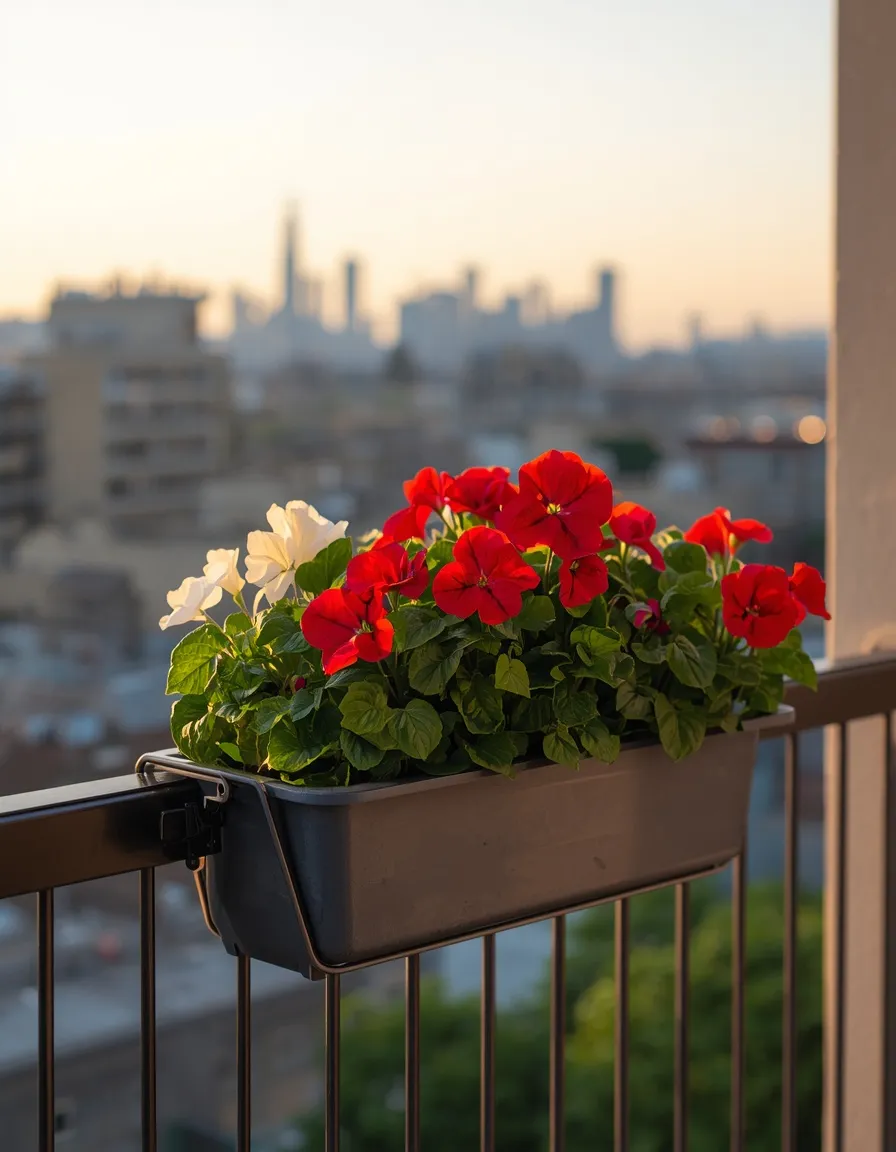
A trough-style rack that clips directly onto a balcony or deck railing turns unused vertical space into a full row of blooming color without taking up any floor room at all.
This is the standard solution for apartment balconies and narrow decks, and it works on both indoor-facing and street-facing rails. Choose brackets rated for the specific railing thickness and always check building or association guidelines before mounting anything on a shared exterior, since some buildings restrict overhanging planters above walkways due to fall risk. Position the rack on the inward-facing side of the rail where possible, and use a drip tray underneath to protect the balcony below from soil runoff and staining.
- Adds a garden to spaces with zero floor area
- Suits high-rise balconies and townhouse decks alike
- Solves overhang and drip concerns with a catch tray
- Works well with self-watering trough inserts for travel days
Pallet Vertical Planter Rack
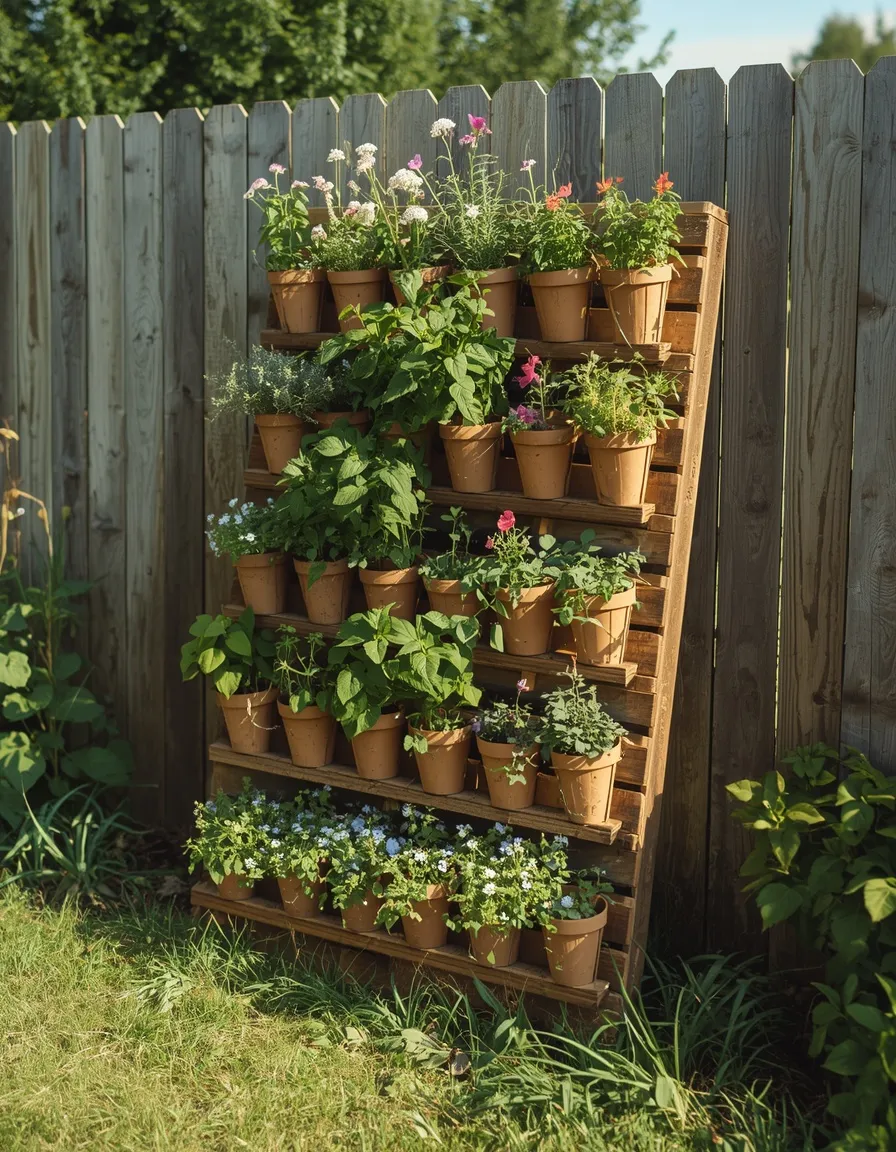
A reclaimed wooden pallet, stood upright and lined with landscape fabric, becomes a full wall of individual planting pockets, perfect for a herb-and-flower mix along a fence or garden shed.
This budget-friendly project works best leaned against a solid wall or fence for support rather than freestanding, since a loaded pallet is front-heavy once filled with wet soil. Look for pallets stamped HT (heat-treated) rather than MB (methyl bromide), since chemically fumigated pallets aren’t safe for growing edible plants nearby. Sand rough edges and wear gloves during construction, as reclaimed wood often carries splinters and staples. Staple landscape fabric across the back and bottom of each gap before adding soil to keep it from spilling through.
- Turns a flat fence or shed wall into growing space
- Ideal for renters who can’t dig a garden bed
- Solves the small-yard, no-bed-space problem
- Works for mixed flowers, herbs, and trailing greens
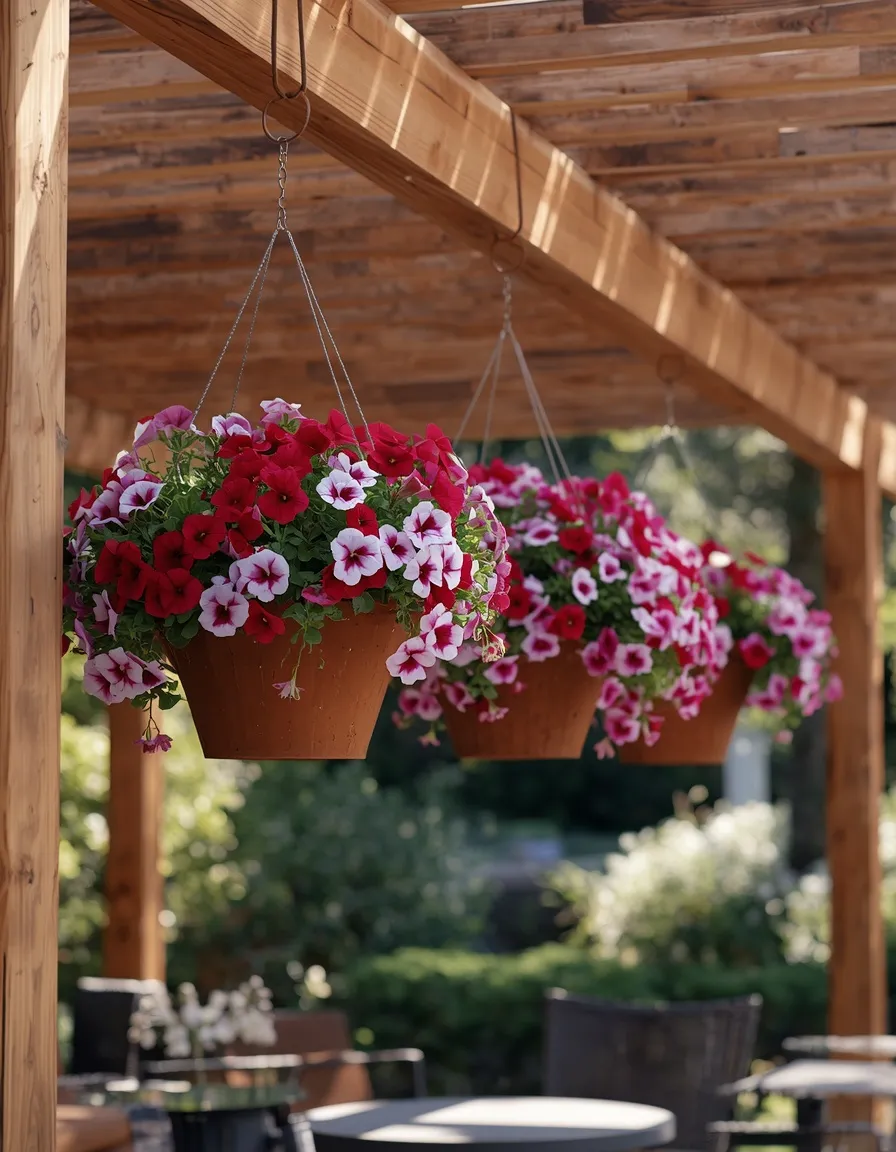
Pergola Hanging Rack
A run of matching hanging baskets suspended from a pergola beam frames an outdoor seating area in blooms at eye level, turning a plain overhead structure into the garden’s main event.
This idea suits established pergolas, arbors, and covered porches with beams strong enough to bear real weight, since a large hanging basket can reach 9kg (20lb) once watered. Confirm the beam’s load rating before adding more than two or three baskets in one section, and use S-hooks and swivel brackets rated for outdoor use rather than indoor picture hooks, which corrode and fail quickly outside. Space baskets evenly so foliage doesn’t crowd sightlines from the seating below, and choose heat-tolerant varieties like petunias or verbena for beams in full sun.
- Frames outdoor seating without using floor space
- Suits pergolas, arbors, and covered porches
- Solves the empty-overhead-beam styling gap
- Works best with heat-tolerant, sun-loving blooms
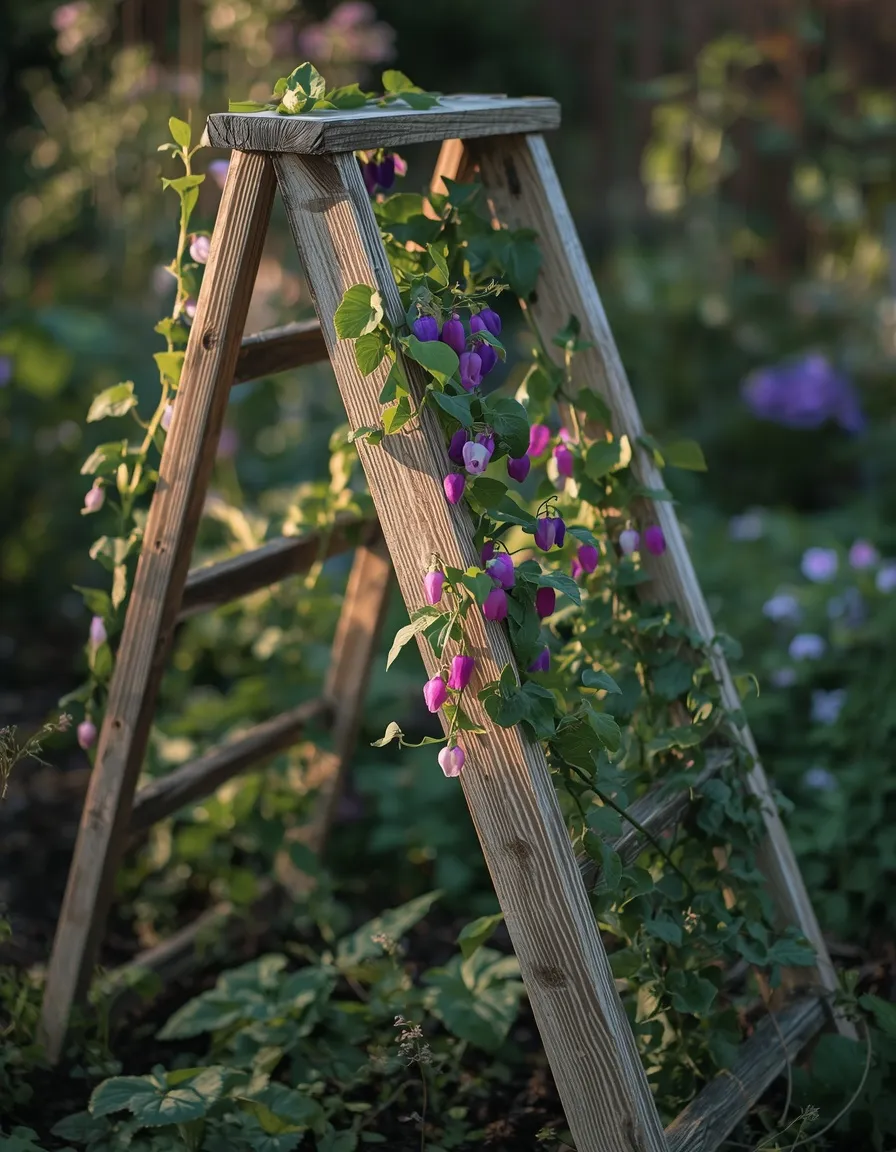
Repurposed Ladder Garden Rack
An old wooden extension ladder laid flat between two low supports, or leaned open A-frame style in a garden bed, gives climbing sweet peas or trailing nasturtiums a rustic structure to grow through.
This is a genuinely useful way to give a weathered ladder a second life rather than sending it to landfill, and it suits cottage-style and rustic garden themes especially well. Check for loose rungs or splintering before placing it in a bed, and treat bare wood with an outdoor sealant so it holds up through a full growing season of rain. An A-frame position, opened to a stable base, holds better in wind than a flat lean against a fence, since it can’t be pushed over sideways as easily.
- Gives a weathered ladder genuine second-life use
- Suits cottage, farmhouse, and rustic garden styles
- Solves the need-a-trellis-but-don’t-want-to-buy-one gap
- Works well for climbing and trailing flower varieties
Wall-Mounted Flower Rack Ideas
A wall-mounted rack frees up every inch of floor space, which makes it one of the strongest options for small entryways, hallways, and rental kitchens where furniture isn’t an option.
Floating Wall Pot Shelves
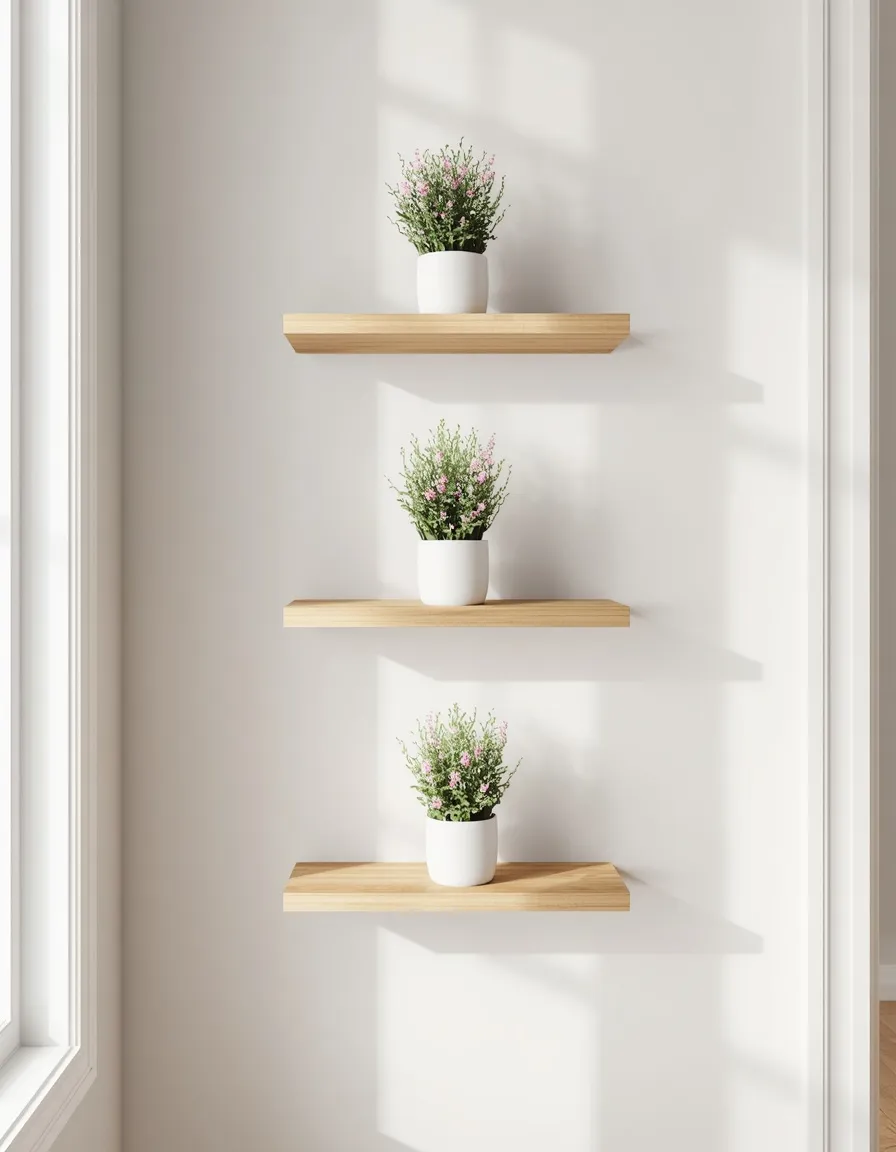
A row of slim floating shelves, mounted at staggered heights along a blank wall, holds a lineup of small potted flowers like a gallery wall made of living color instead of frames.
This suits entryways, kitchen windows, and narrow hallways where a full rack would jut too far into a walkway. Mount into wall studs with weight-rated brackets rather than relying on drywall anchors alone, since a shelf of soaked ceramic pots can pull loose over time under repeated vibration from foot traffic. Keep shelf depth to around 15cm (6in) so pots don’t protrude past the shelf edge into passing shoulders and elbows. Group pots in odd numbers per shelf for a more natural, less rigid look.
- Adds greenery without narrowing a walkway
- Suits entryways, hallways, and above-counter kitchen walls
- Solves the no-counter-space-left problem
- Works well for a curated, gallery-style arrangement
Pegboard Flower Rack
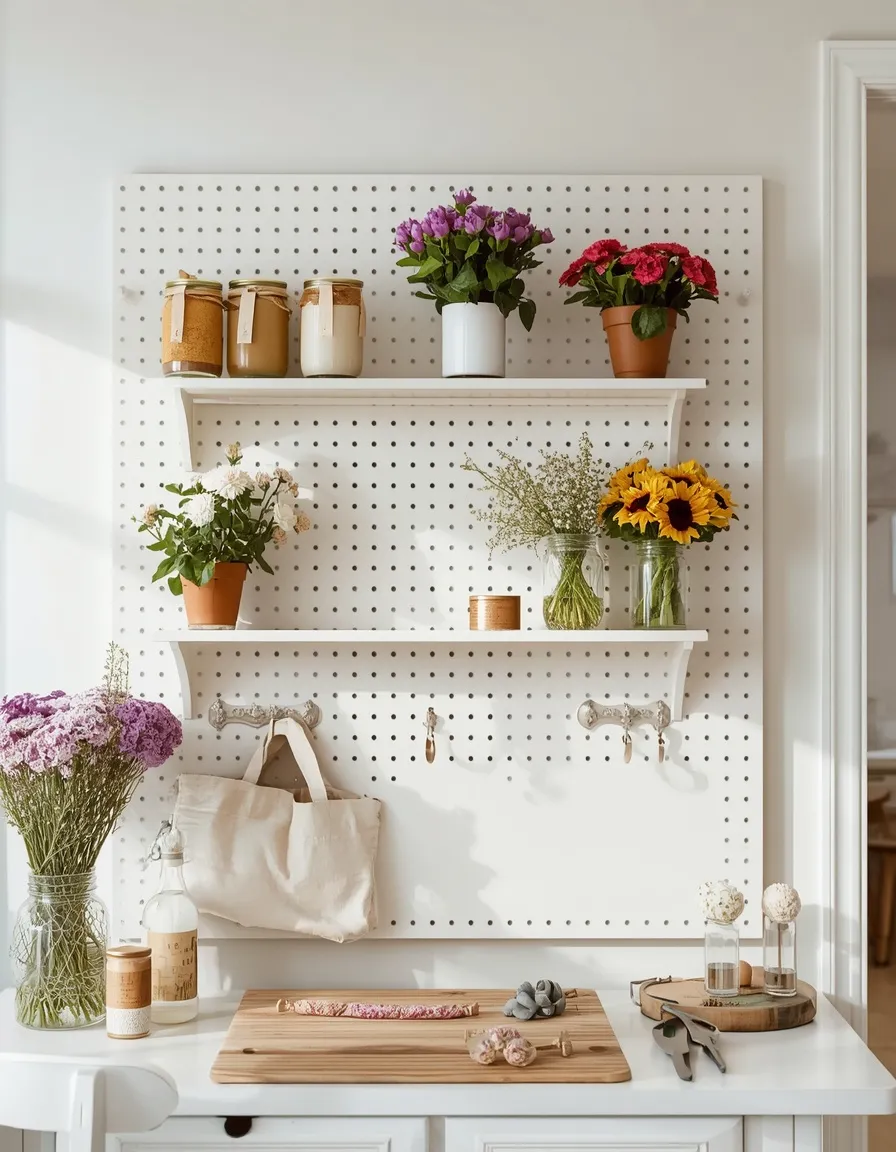
A painted pegboard panel fitted with adjustable hooks and small shelf brackets turns one wall into a fully rearrangeable flower display that can be reconfigured in minutes as plants grow or seasons change.
This is especially practical in a home office, craft room, or kitchen where the display needs to flex around other wall storage. Use pegboard hooks rated for at least 5kg (11lb) per hook if hanging anything heavier than a small cutting or propagation jar, and space the hardware so it sits over a stud line or backing board for real support. Repaint the board seasonally for an easy refresh, since pegboard is one of the few rack styles that takes color changes well.
- Fully adjustable as plants grow or seasons change
- Suits multi-purpose rooms like offices and craft spaces
- Solves the want-to-rearrange-without-new-holes problem
- Works for both flower pots and cut-flower vases
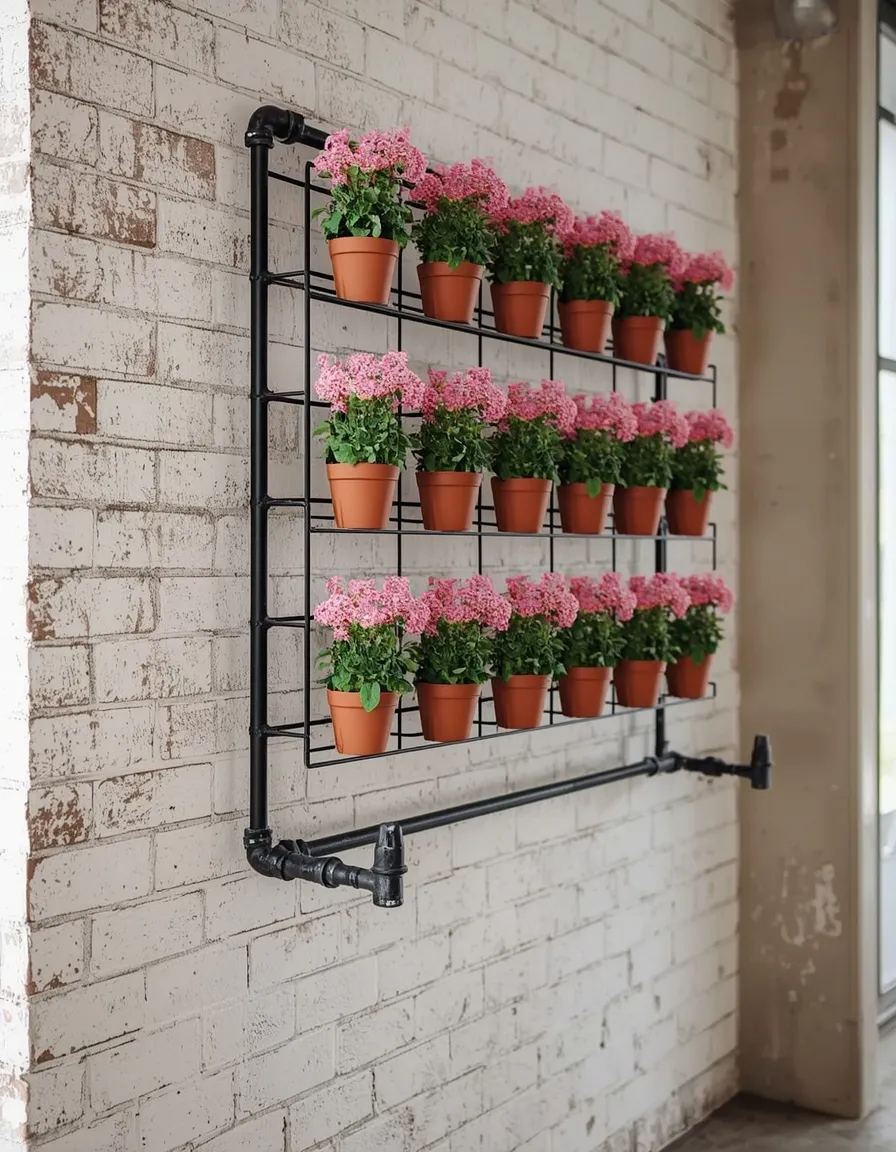
Vertical Pipe Wall Rack
Black iron pipe fittings, mounted horizontally in a ladder-like grid, hold a run of matching pots at even intervals for a clean, industrial-style flower wall that reads more like architecture than décor.
This style suits loft apartments, modern kitchens, and industrial-lean living rooms, where the exposed hardware itself is part of the look rather than something to hide. Use galvanized or black iron pipe rather than raw untreated steel outdoors, since untreated pipe rusts and can stain painted walls beneath it. Anchor each flange into a stud, and keep pot sizes uniform across the grid, since mismatched pot widths break the clean geometric pattern that makes this style work.
- Suits industrial, loft, and modern interior styles
- Creates a strong geometric focal wall
- Solves the want-structure-not-clutter styling goal
- Works best with uniform pot sizes for a clean grid
Entryway Wall Flower Rack
A slim wall-mounted rack just inside the front door, holding one or two seasonal arrangements, gives every arrival home a small, deliberate welcome without eating into narrow entryway floor space.
This works especially well in entryways too tight for a console table, and it rewards a light touch: one or two well-chosen pots read as intentional, while a crowded rack in a small entry reads as clutter. Anchor firmly into a stud, since an entryway rack takes more incidental bumps from bags and coats than racks elsewhere in the home. Swap the display with the seasons, cool-toned bulbs in spring and warm mums in fall, to keep the first impression current.
- Fits entryways too narrow for furniture
- Creates a welcoming first impression at the door
- Solves the empty-entry-wall styling gap
- Works well for rotating seasonal displays
DIY Flower Rack Ideas
These builds use inexpensive, widely available materials, and none require advanced woodworking or welding skills to finish in a weekend.
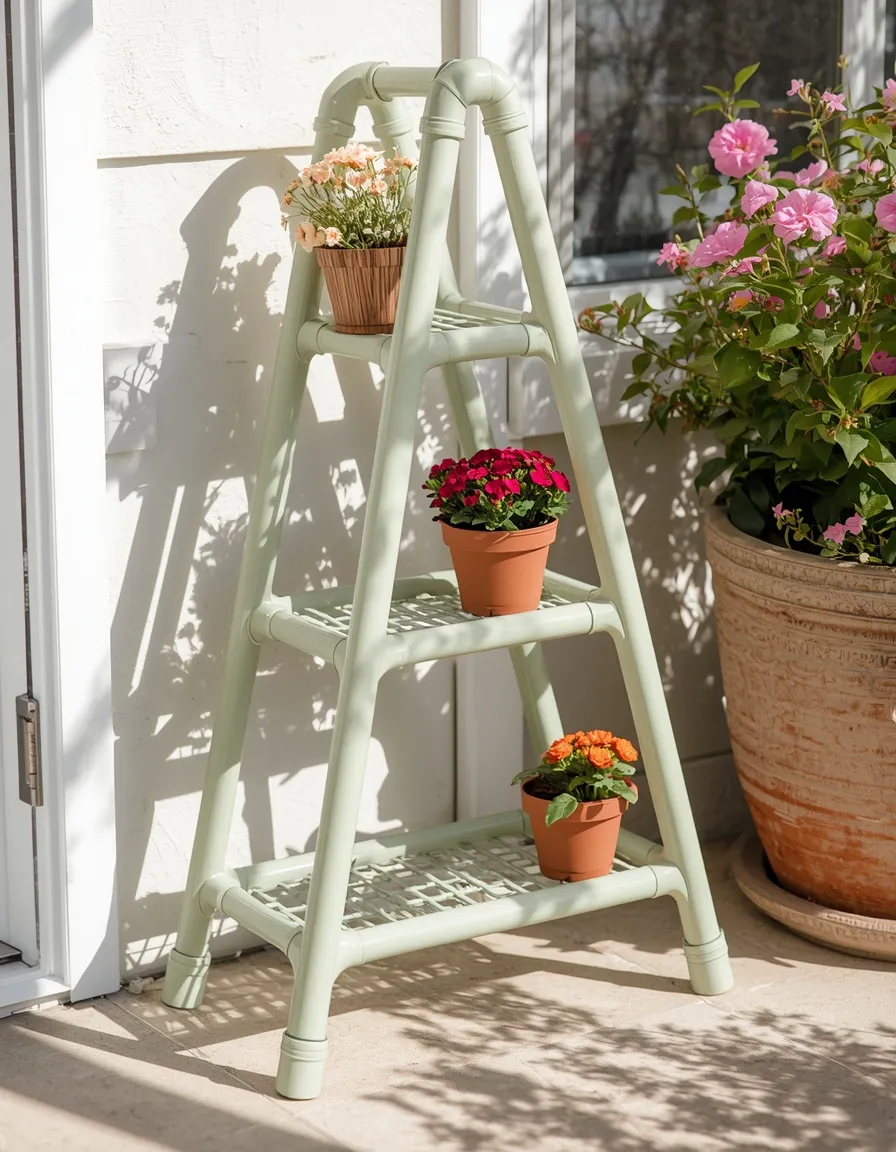
PVC Pipe Flower Rack
Lengths of PVC pipe, cut and glued into a simple A-frame or ladder shape, make one of the lightest and least expensive flower racks a beginner can build in an afternoon.
This project suits first-time DIYers and anyone building for a rental, since PVC is inexpensive, weatherproof, and forgiving of mistakes. Drill drainage holes into any horizontal sections that could pool rainwater, since standing water in pipe joints can become a mosquito breeding site within days in warm climates. Wear safety glasses when cutting pipe with a miter saw, and prime and cement joints in a ventilated area, since PVC cement fumes are strong. Paint with an exterior-rated spray paint once assembled, since bare white PVC can look plasticky against garden greenery.
- One of the most budget-friendly DIY builds available
- Suits total beginners with basic tools
- Solves the weatherproofing problem without extra sealant
- Works well painted to match any garden color scheme
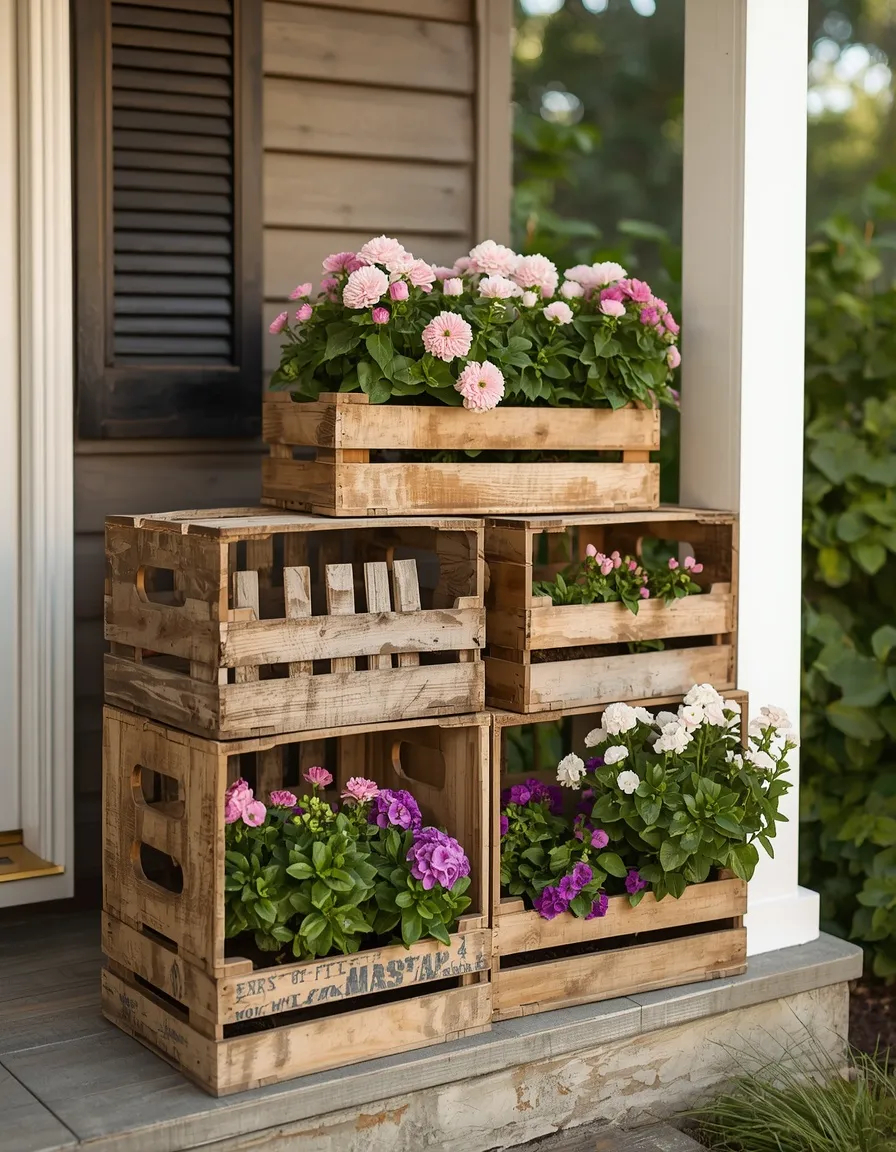
Wooden Crate Stacking Rack
Wooden fruit crates, stacked and staggered like offset building blocks, create an instant modular flower rack with no cutting or joinery required, just crates, wood glue, and an afternoon.
This suits farmhouse, cottage, and rustic-styled gardens or porches, and it scales easily; add more crates as a plant collection grows. Secure stacked crates to each other with L-brackets or wood screws rather than stacking loose, since an unsecured stack can shift or topple if bumped, especially with children or pets nearby. Line the base of each crate with landscape fabric if using it to hold loose soil rather than potted plants, and seal raw wood with an exterior stain if it will live outdoors year-round.
- Requires no cutting or advanced tools
- Suits farmhouse and cottage garden styles
- Solves the want-it-to-grow-with-my-collection need
- Works well indoors or outdoors depending on the stain used
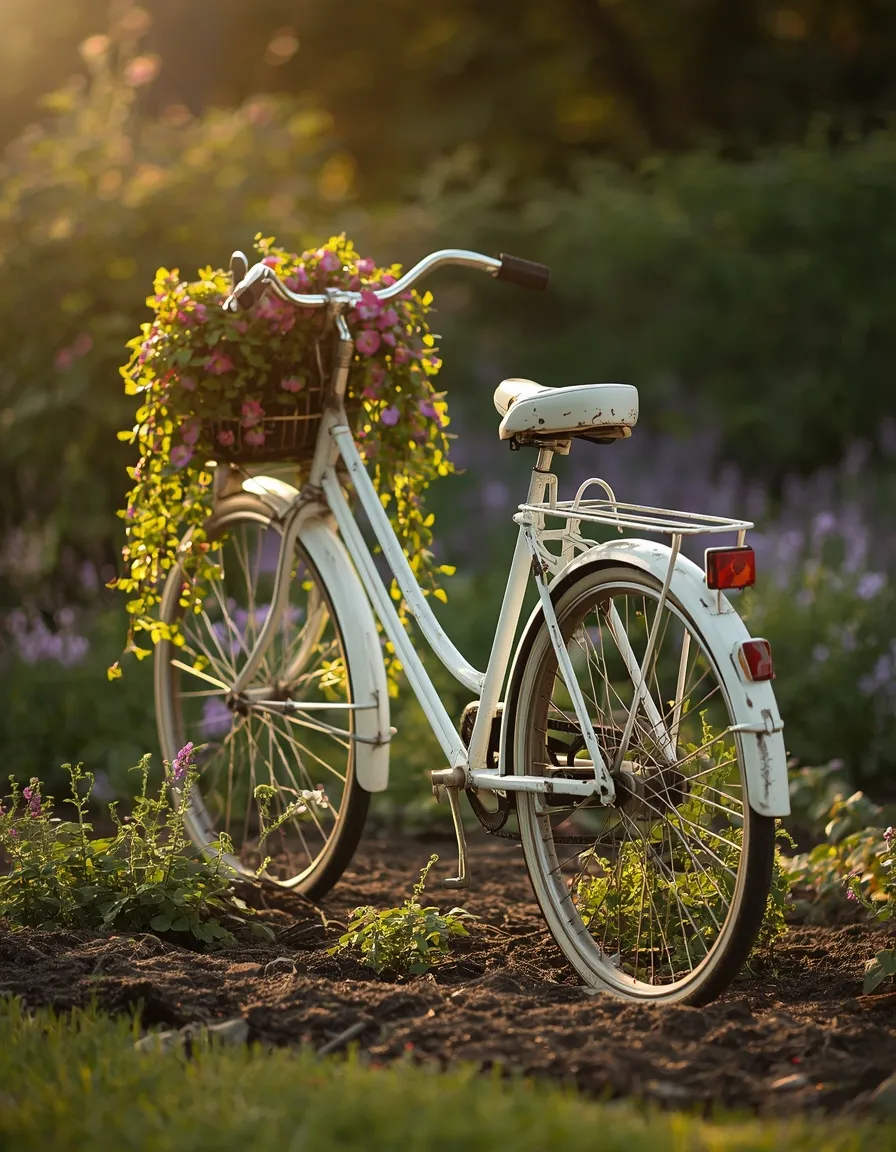
Repurposed Bike Flower Rack
An old bicycle, frame stripped of its chain and gears and mounted upright in a flower bed, turns its baskets, panniers, and even the wheel spokes into an unexpected, conversation-starting flower rack.
This works as a genuine focal point in cottage gardens, farmhouse yards, and driveway entries where a bit of whimsy is welcome. Anchor the frame securely, either by setting the rear wheel in a shallow concrete-filled bucket or staking the frame to a post, since an unsecured bike is easy to knock over and can injure someone if it falls. Remove any sharp chain or pedal hardware before planting, and choose trailing flowers for the baskets so blooms spill naturally over the frame’s curves.
- Gives a retired bicycle genuine second-life use
- Creates a strong conversation-piece focal point
- Solves the want-something-nobody-else-has request
- Works best anchored firmly against tipping
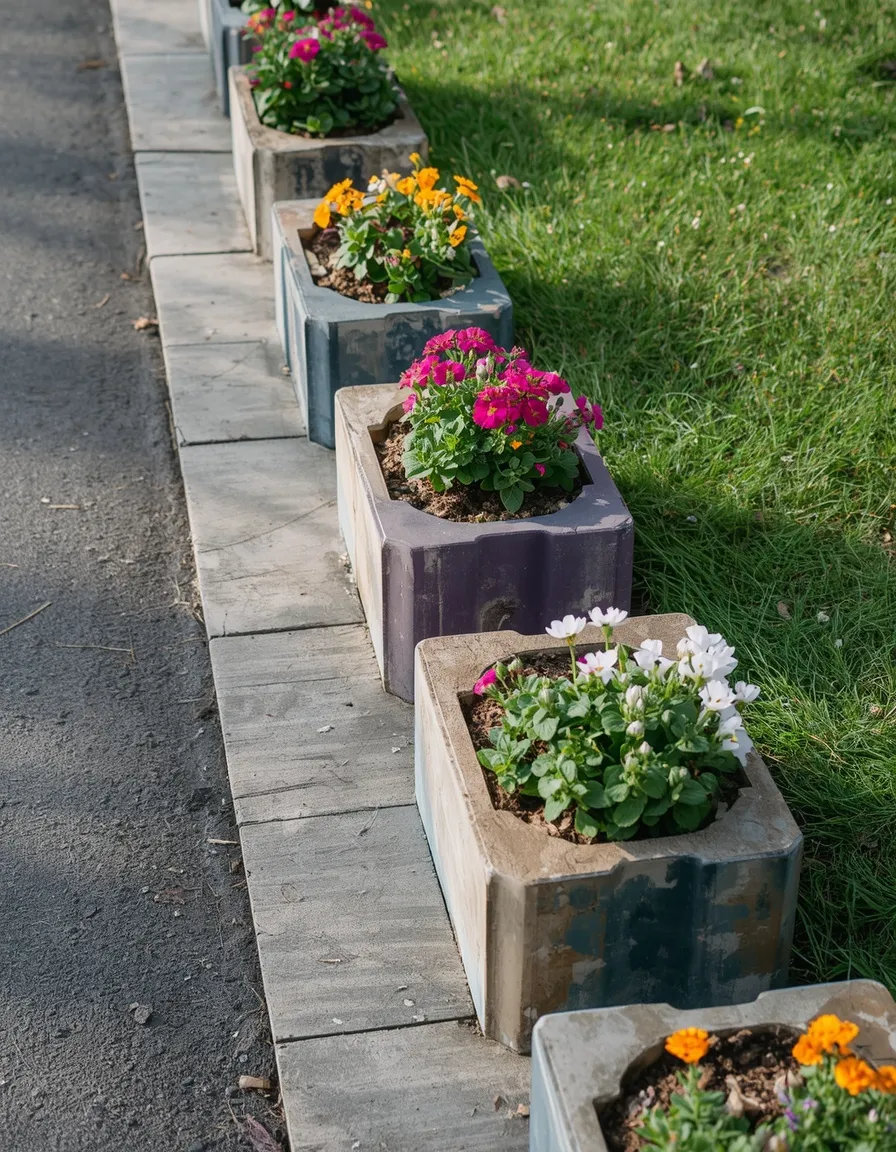
Concrete Block Flower Rack
Stacked concrete or cinder blocks, laid with their hollow cores facing up, form an instant modular flower rack along a driveway or garden edge, no tools, cutting, or fasteners required.
This suits budget-conscious gardeners and anyone who wants a rack that can be rearranged or expanded without any building skill at all. Stack no more than two or three blocks high without mortar or adhesive, since a taller unsecured stack is a genuine tip-over risk around children and pets. Wear gloves when lifting blocks, since standard concrete blocks weigh 15 to 18kg (33-40lb) each and have rough, abrasive edges. Paint the blocks in a bold color to soften the industrial look, or leave them raw for a minimalist garden edge.
- Needs zero tools or building skill to assemble
- Suits driveway edges and low garden borders
- Solves the want-it-removable-not-permanent need
- Works well painted for a bolder look
Metal and Wooden Flower Rack Styles
Material drives both the look and the lifespan of a flower rack. These three styles show what iron, cedar, and a mix of both bring to a display.
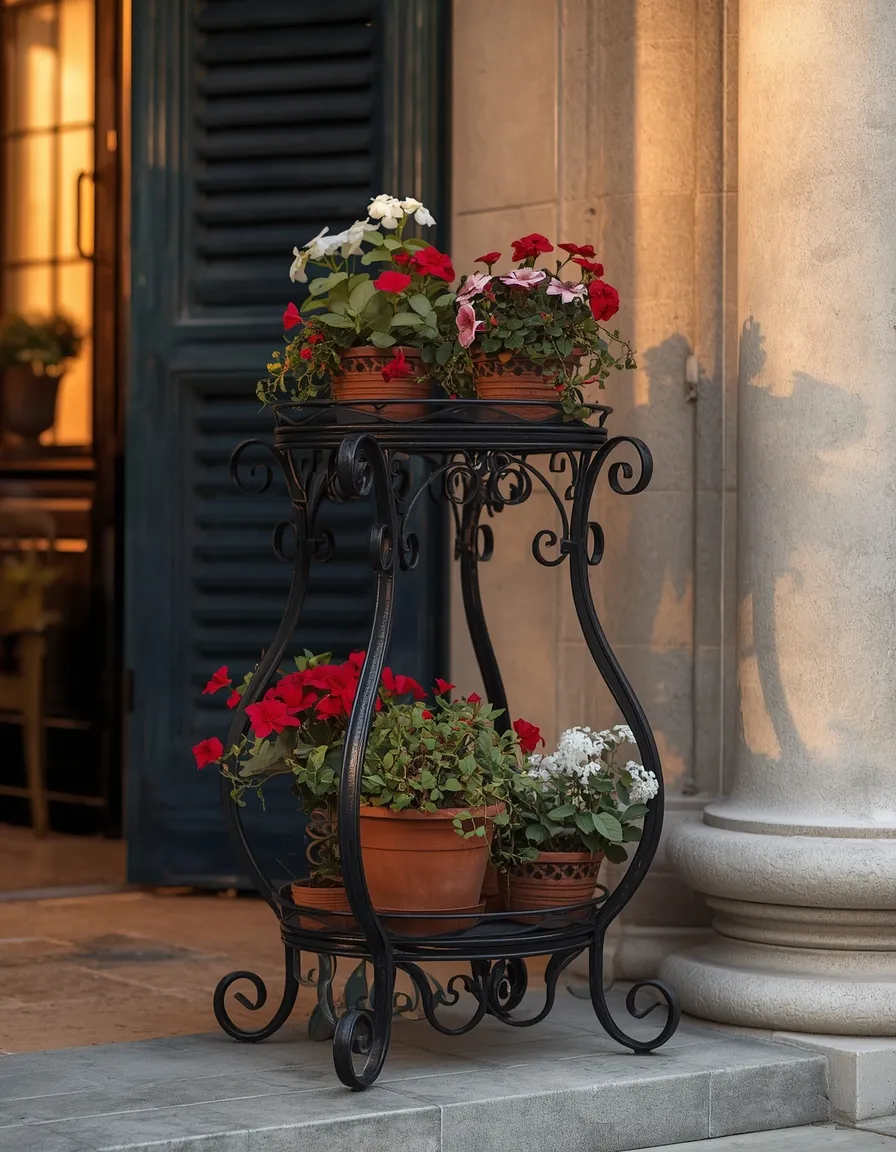
Wrought Iron Flower Rack
A scrollwork wrought iron stand, with its curling arms and dark matte finish, brings an old-world, formal character to a porch or garden that lighter materials simply can’t match.
This style suits traditional, cottage, and Mediterranean-inspired homes, and it holds up outdoors for decades with basic care. Choose a rack with a powder-coated or rust-resistant finish for coastal or humid climates, since bare cast or wrought iron corrodes quickly near salt air or persistent moisture. Touch up any chips in the coating with a matching rust-inhibiting paint each season to stop corrosion before it spreads, and set felt pads under the feet if the rack sits on a stone or tile patio to prevent scratching.
- Suits traditional, cottage, and formal garden styles
- Holds up for years with minimal upkeep
- Solves the need-something-sturdy-and-permanent request
- Works best with a rust-resistant powder-coated finish
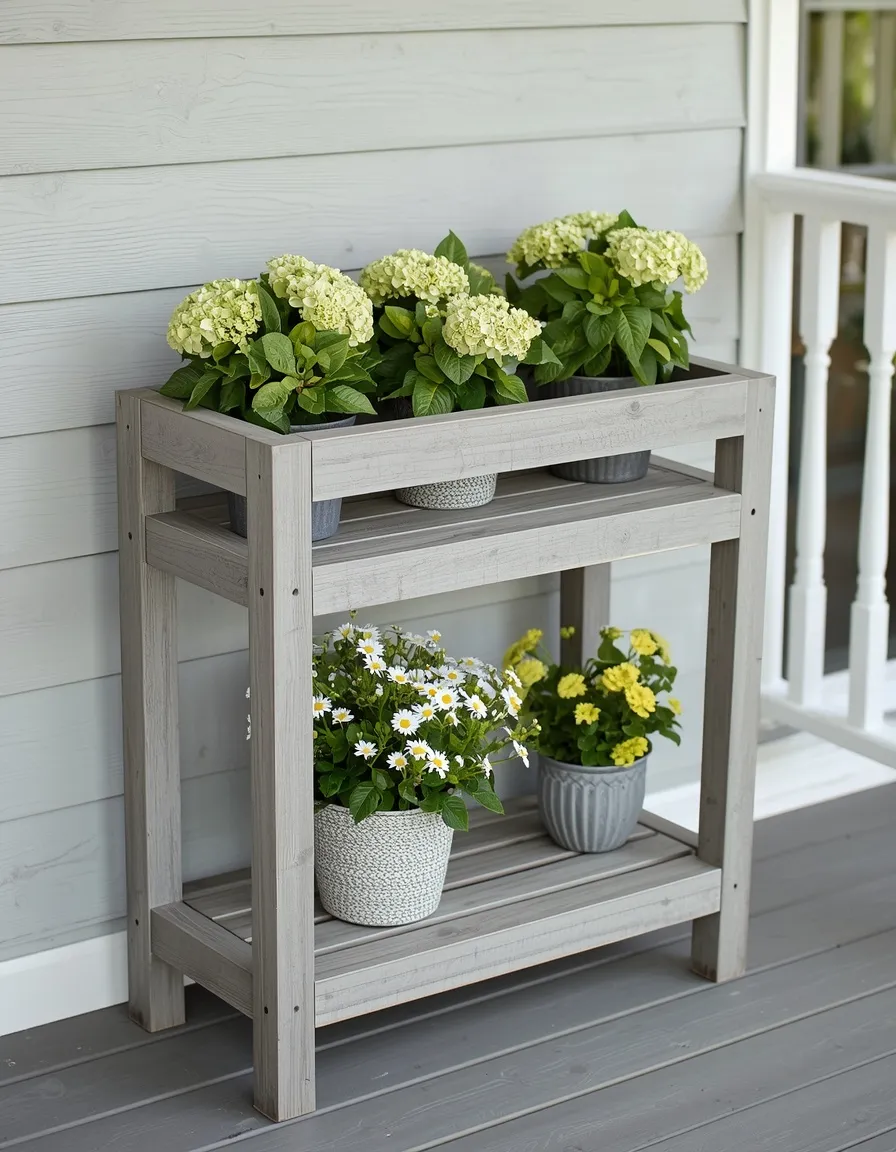
Rustic Cedar Flower Rack
A rack built from raw cedar boards, left unpainted to weather naturally to a soft silver-gray, brings warmth and a distinctly outdoor character that metal racks can’t replicate.
Cedar is a strong choice for outdoor flower racks specifically because it resists rot and insects naturally, unlike pine or fir, which need heavier chemical treatment to last outdoors. This suits farmhouse, coastal, and natural-garden styles where a raw, aged look is the goal rather than something to avoid. Seal joints with exterior wood glue and rust-resistant screws rather than nails, which back out over seasons of wet and dry cycling, and elevate the rack’s feet slightly off wet soil or concrete to slow moisture wicking into the base.
- Naturally resists rot and insects without heavy treatment
- Suits farmhouse, coastal, and natural garden styles
- Solves the want-it-to-age-gracefully request
- Works well left unfinished for a weathered patina
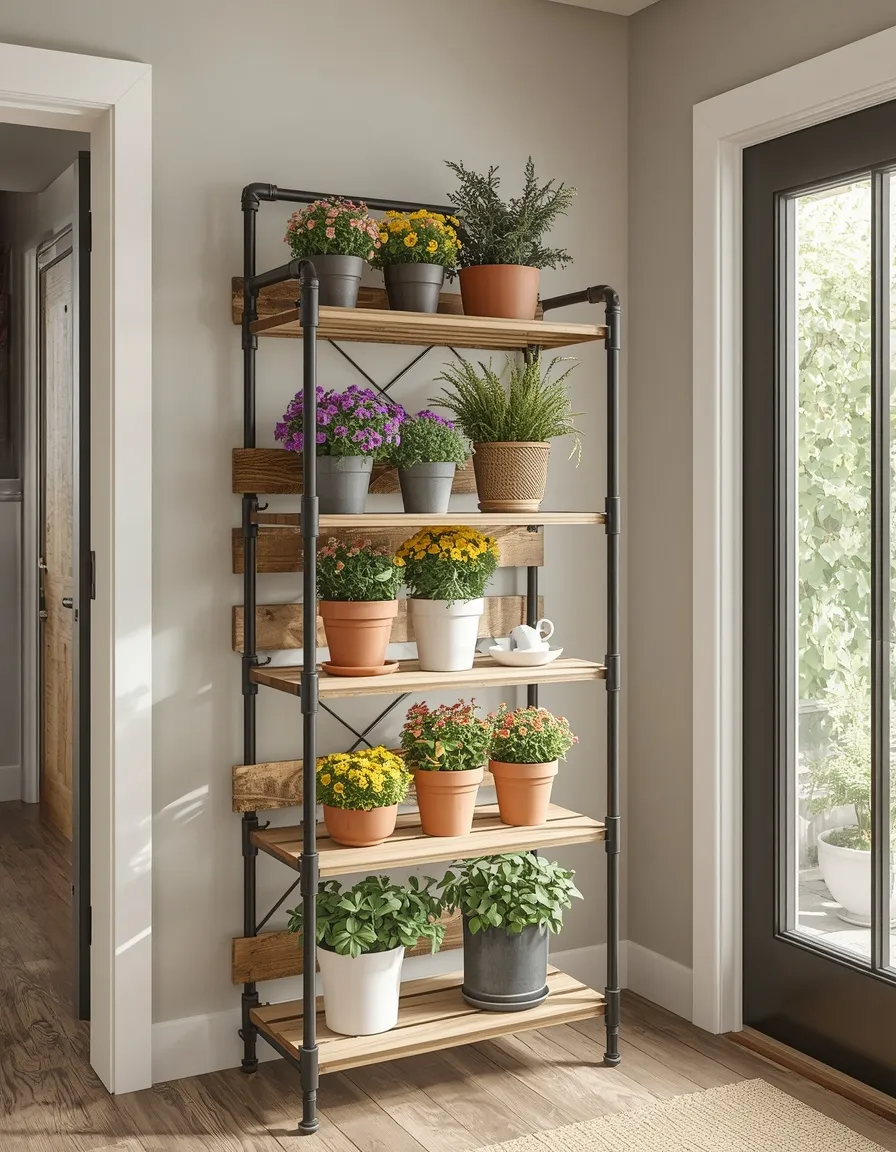
Industrial Pipe and Wood Rack
Reclaimed scaffold boards set into black iron pipe fittings combine the warmth of real wood with the structure of metal piping, a pairing that reads equally well indoors or on a covered porch.
This hybrid style suits transitional spaces that need to bridge an indoor room and an adjacent porch or sunroom, since the material mix works in both settings without looking out of place. Sand any reclaimed board smooth before use and check for old nails or staples left in the wood. Seal indoor boards with a matte wax finish and outdoor boards with a full exterior sealant, since the two environments demand very different levels of moisture protection. Match pipe fittings in a single finish, raw black or galvanized, rather than mixing metals for a more considered look.
- Bridges indoor and covered outdoor spaces visually
- Suits transitional and modern-rustic interiors
- Solves the mismatched-material problem of mixed racks
- Works well as a room-to-porch design anchor
Conclusion
A flower rack is one of the simplest ways to turn a flat wall, empty corner, or bare porch step into a real point of interest, and the right style depends entirely on the space, budget, and finish that fits a home. From a weekend PVC build to a wrought iron stand meant to outlast the plants it holds, these flower rack ideas offer a starting point for nearly every setting and skill level. For more flower styling inspiration beyond racks alone, Sunday Abode’s flowers category is worth a browse. Start with one rack, one wall, or one porch step, and let the rest of the space grow from there.
Frequently Asked Questions
What’s the best material for an outdoor flower rack?
For durability outdoors, powder-coated steel and rust-resistant wrought iron hold up best in most climates, while naturally rot-resistant woods like cedar are strong choices where a warmer, more organic look is preferred. Avoid untreated pine or raw iron outdoors, since both degrade quickly once exposed to repeated rain and humidity.
How do I make a DIY flower rack without power tools?
Stacked wooden crates or concrete blocks are the easiest no-tool options, since both rely on gravity and simple bracing rather than cutting or drilling. A ladder-style rack made from a repurposed wooden or metal ladder is another strong no-build option, needing only a stable lean or a couple of anchor points.
How much weight can a wall-mounted flower rack hold?
This depends entirely on the anchoring, not just the bracket rating. A rack mounted into wall studs with proper screws can typically hold significantly more weight than the same rack mounted with drywall anchors alone, so always check what’s behind the wall before loading it with soaked pots.
What’s a good flower rack idea for a small balcony with no floor space?
A railing-mounted trough rack is the most space-efficient option, since it uses the balcony rail itself rather than any floor area. A hanging macrame rack from an overhead structure is a strong second choice where railings aren’t suitable for mounting hardware.
Are hanging flower racks safe around pets?
They can be, provided the trailing plant variety is non-toxic; many popular trailing plants like pothos and philodendron are toxic to cats and dogs if chewed. Choosing a pet-safe trailing plant such as spider plant, and hanging it high enough to be out of easy jumping range, keeps a hanging rack low-risk for curious pets.
Can a flower rack be used indoors and outdoors interchangeably?
Only if it’s built from weatherproof materials to begin with; a rack designed for indoor use, especially anything with untreated wood or a decorative painted finish, will typically warp, rust, or fade quickly outdoors. If year-round flexibility matters, choose a rack rated for outdoor use even if it will mostly live inside.
How do I keep a wooden flower rack from rotting?
Elevate the rack’s feet slightly off wet soil, concrete, or decking so moisture doesn’t wick continuously into the base, and reseal exposed wood with an exterior sealant at least once a year. Naturally rot-resistant woods like cedar need this maintenance far less often than pine or fir.