
Introduction
Blank walls are quietly wasting some of the most useful space in your home. Floating shelf ideas solve that in the most elegant way possible, slim, bracket-free ledges that seem to hover, holding books, plants, ceramics, or the everyday clutter that never has a home. Because there’s no bulky hardware on show, floating shelves suit almost any style, from a pared-back Scandinavian bedroom to a warm, layered living room. They work as hard in a rented studio as they do in a forever home, adding storage and display without eating floor space. This guide walks through 21 distinct, genuinely useful ideas, room by room and style by style, with practical mounting and styling advice so your abode gains both function and character.
1. Living Room Statement Wall
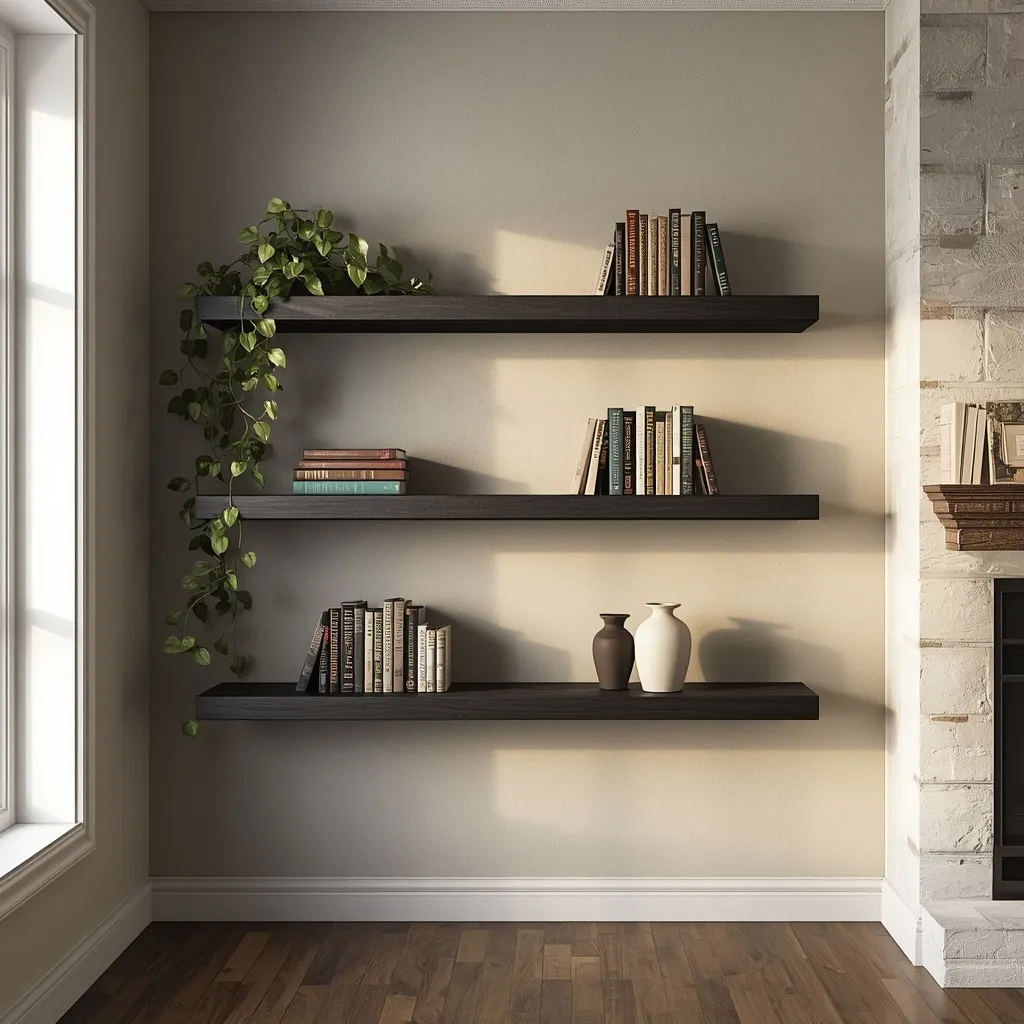
A run of long floating shelves above a sofa or media unit turns an empty wall into the room’s focal point. Picture three matte-black oak ledges spanning the alcove beside a fireplace, layered with art books, a trailing pothos, and a couple of sculptural vases, the arrangement reads as intentional, not cluttered.
The styling logic here is the “rule of thirds”: vary heights, group objects in odd numbers, and leave roughly a third of each shelf empty so the eye can rest. Space shelves about 30–40 cm (12–16 in) apart vertically. For a living room, weight matters, a shelf loaded with hardbacks can carry 10–15 kg (22–33 lb), so always locate the wall studs (spaced 40–60 cm / 16–24 in apart) and screw into them, or use heavy-duty toggle anchors rated well above your intended load. The common mistake is over-styling; edit ruthlessly and let a few good pieces breathe.
- Why it works: Draws the eye up and makes a low-ceilinged room feel taller.
- When to use it: Above a sofa, console, or media unit where you want display without floor furniture.
- Solves: Bare-wall syndrome and nowhere to show off books or objects.
2. Bedside Shelf Instead of a Nightstand
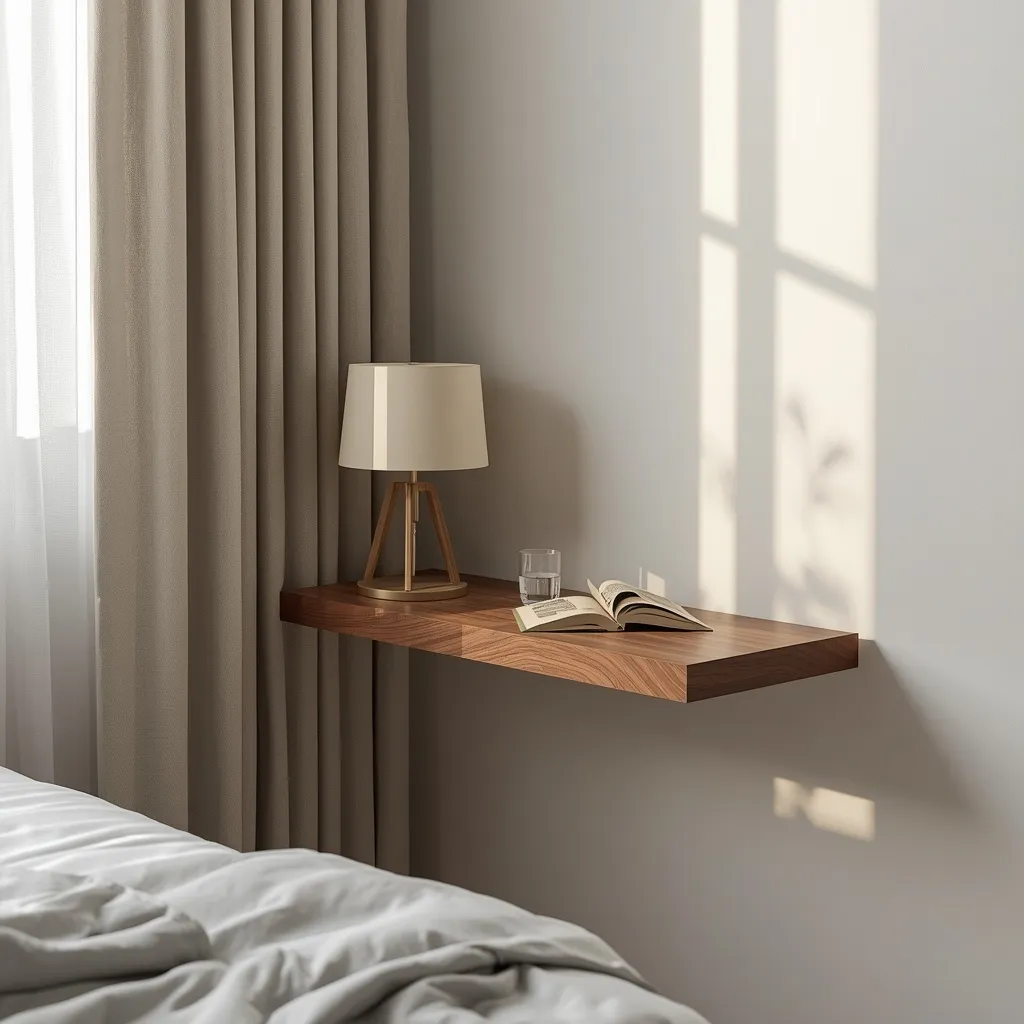
Swap a bulky nightstand for a single floating shelf beside the bed and instantly reclaim floor space, a lifesaver in small or rented bedrooms. A slim walnut ledge at mattress height holds a lamp, a book, and a glass of water while keeping the area beneath open and airy.
Mount the shelf so its surface sits roughly level with the top of your mattress, usually 55–65 cm (22–26 in) from the floor. Keep the depth modest, 15–20 cm (6–8 in) is plenty for essentials and stops the shelf jutting into walking space. If you want a lamp up there, run the cord down the wall behind the headboard and secure it with adhesive clips so it doesn’t dangle. This works beautifully in bedroom schemes that lean minimalist; pair matching shelves on both sides for symmetry.
- Why it works: Frees floor space and modernises the classic nightstand.
- When to use it: Tight bedrooms, rentals, or minimalist and Japandi styles.
- Solves: Cramped walking room and heavy, dated bedside furniture.
3. Open Kitchen Shelving
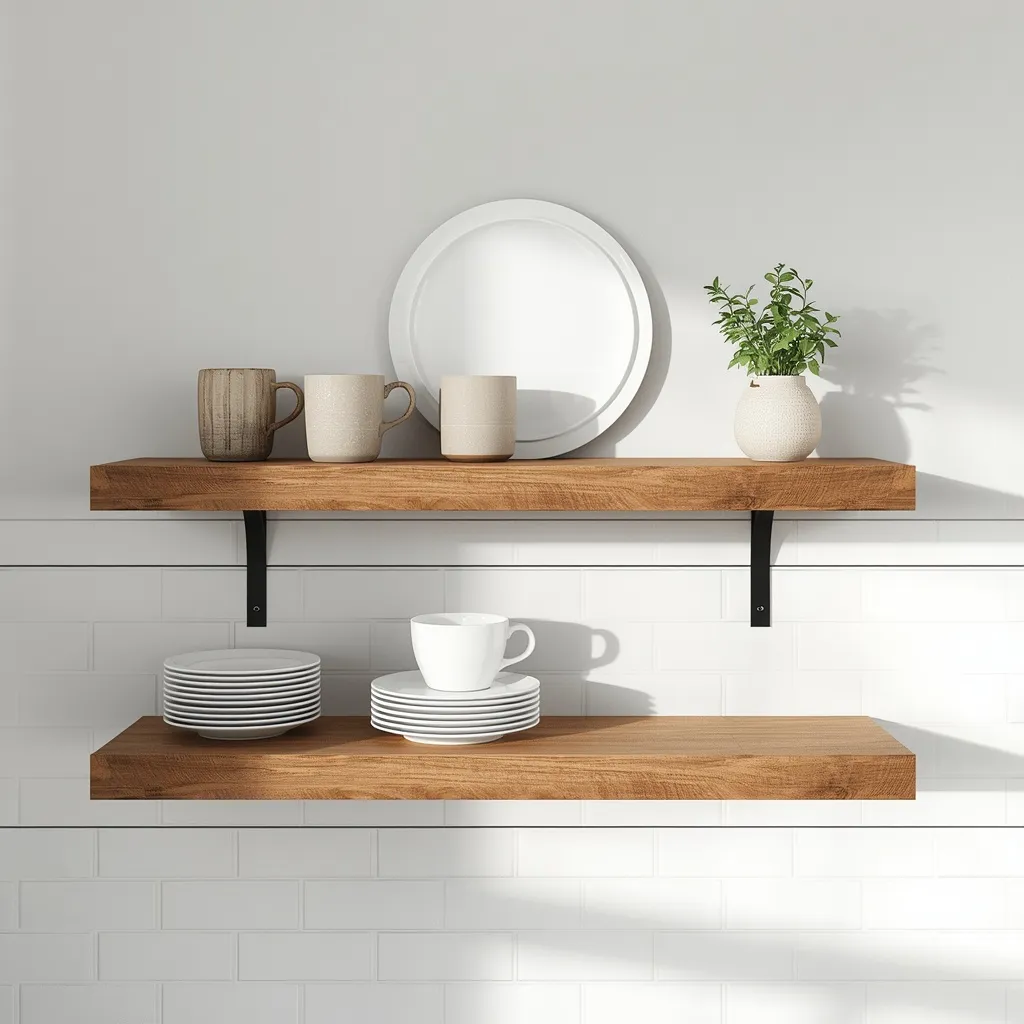
Open floating shelves replace upper cabinets to make a kitchen feel lighter and more personal. Two chunky oak ledges above the countertop, stacked with everyday plates, stoneware mugs, and a small potted herb, bring a relaxed, lived-in warmth that closed cabinetry rarely achieves.
Position the lowest shelf about 45–50 cm (18–20 in) above the counter so appliances fit beneath. Reserve open shelving for items you use often, daily dishes and glassware stay dust-free through regular rotation, while rarely-used gadgets are better hidden in drawers. Because kitchen shelves carry real weight, mount them into studs and choose brackets rated for at least 15 kg (33 lb) per shelf. Keep a tight, cohesive palette, white, wood, and one accent, so the display looks curated rather than chaotic. Avoid placing shelves directly beside the hob, where grease and heat collect.
- Why it works: Opens up sightlines and shows off attractive everyday tableware.
- When to use it: Small kitchens, galley layouts, or farmhouse and modern-rustic schemes.
- Solves: Boxy, cabinet-heavy walls and awkward dead space above counters.
4. Bathroom Storage Trio
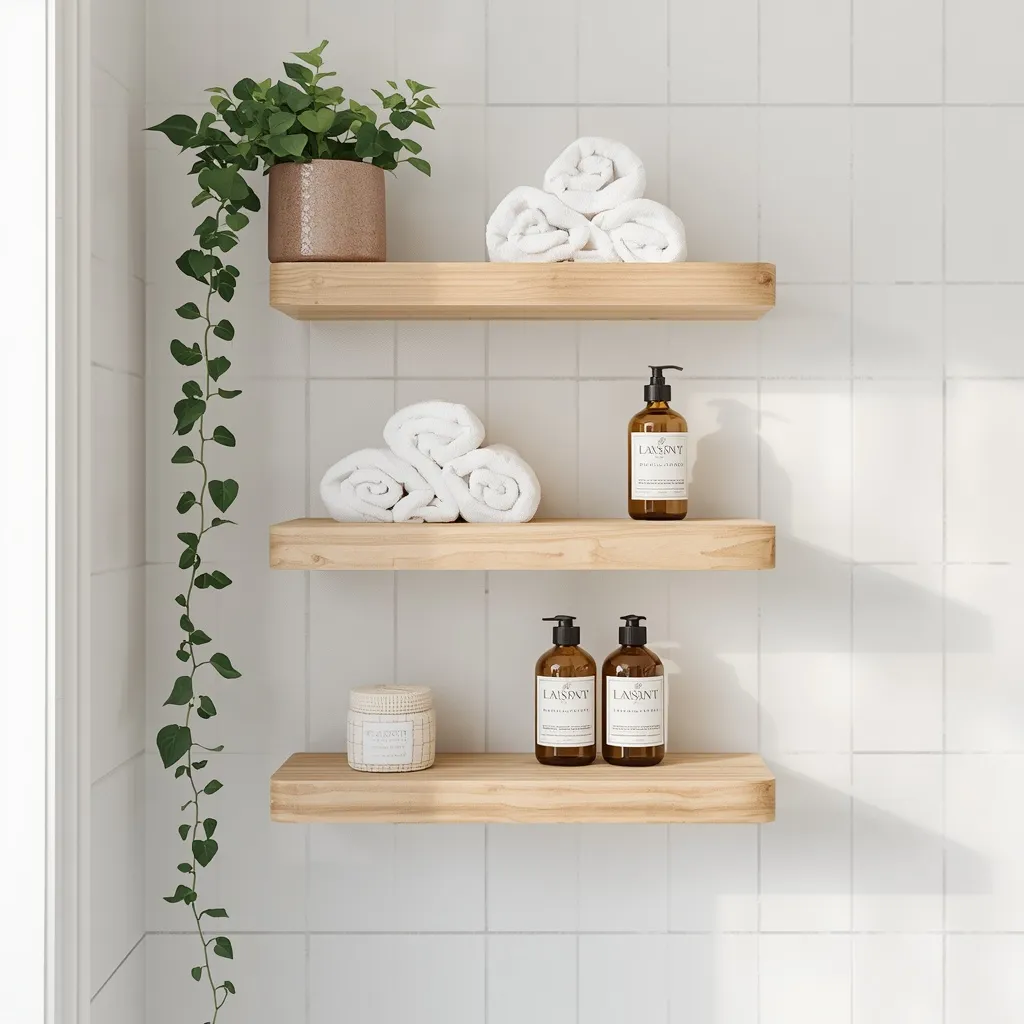
Three staggered floating shelves turn a bare bathroom wall into tidy, spa-like storage. Imagine pale timber-effect ledges holding rolled towels, a small trailing plant that loves humidity, and a few amber apothecary bottles, practical storage that looks like styling.
In a bathroom, moisture is the enemy, so choose sealed hardwood, powder-coated metal, or moisture-resistant MDF with a waterproof finish; raw particleboard will swell and sag. Mount shelves where splashes won’t hit them directly, and if you’re drilling into tile, use a tile bit and appropriate anchors to avoid cracking. A single shelf above the toilet or beside the vanity keeps daily items within reach and clears the countertop. Ferns, pothos, and air plants thrive in the steamy microclimate, softening hard tile surfaces.
- Why it works: Adds storage to small bathrooms without a bulky cabinet.
- When to use it: Compact bathrooms, powder rooms, and rentals where a vanity swap isn’t possible.
- Solves: Cluttered countertops and unused vertical wall space.
5. Floating Desk Shelf for a Home Office
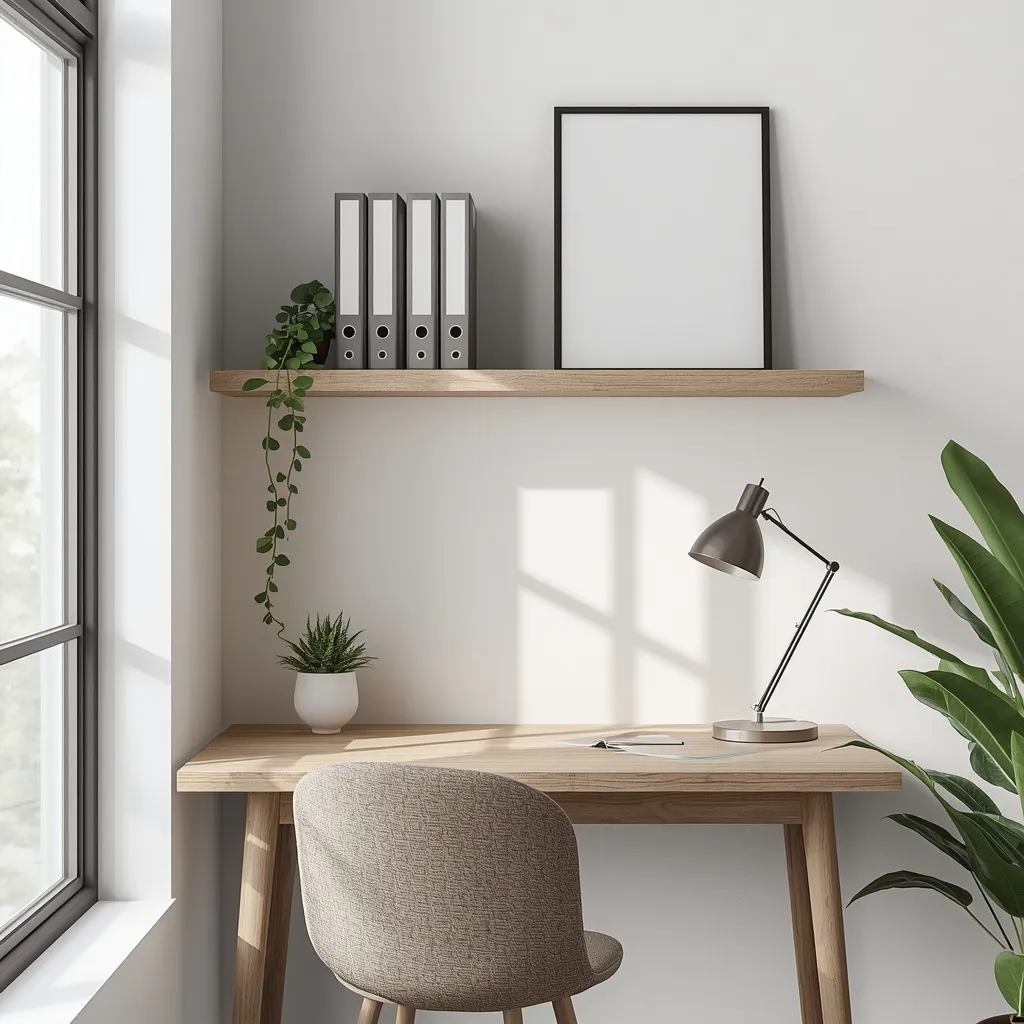
A floating shelf mounted above a desk keeps your work surface clear while putting reference books, a small plant, and a task lamp within arm’s reach. In a home office, this vertical storage is the difference between a tidy setup and a paper avalanche.
Fix the shelf 40–50 cm (16–20 in) above the desktop so there’s headroom for a monitor. Keep the styling functional but pleasant, a couple of upright files, a framed print, and a trailing plant to soften screen fatigue. For a genuinely productive floating shelf design for an office, add a second, deeper shelf below the first for a printer or a small basket of supplies. Route charging cables to a discreet power strip to avoid a tangle. A cork or pegboard strip beneath the shelf turns the underside into a note-and-planner zone.
- Why it works: Reclaims desk space and keeps essentials visible and reachable.
- When to use it: Small home offices, desk nooks, and shared work-from-home corners.
- Solves: Cluttered desks and no room for reference materials.
6. Narrow Hallway Ledges
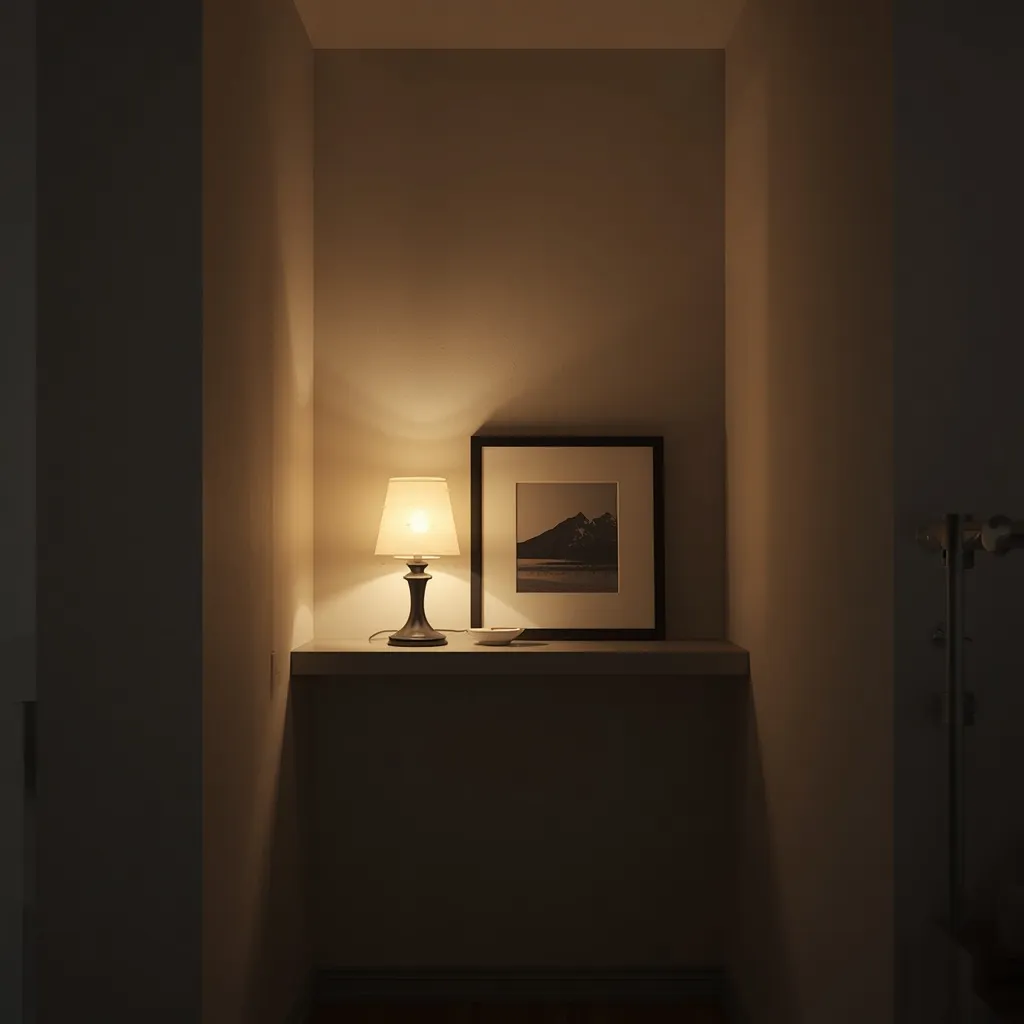
Hallways are usually the most under-used walls in the house. A slim floating ledge, just 12–15 cm (5–6 in) deep, runs along a narrow corridor without snagging shoulders, holding a small lamp, a framed photo, or a catch-all dish for keys.
The trick in tight passages is depth discipline: anything deeper than about 15 cm (6 in) becomes a bruise hazard. Keep styling low-profile and secured, since a busy hallway sees knocks and passing bags. A single long ledge reads as architectural rather than fussy, and a picture rail styled with leaning frames adds gallery character to floating shelf ideas for narrow hallways. If the corridor is dim, a battery puck light or a low-wattage plug-in lamp on the ledge doubles as gentle wayfinding at night.
- Why it works: Activates dead corridor walls without narrowing the walkway.
- When to use it: Narrow hallways, landings, and awkward transition spaces.
- Solves: Long blank walls and nowhere to drop keys near the door.
7. Corner Floating Shelves
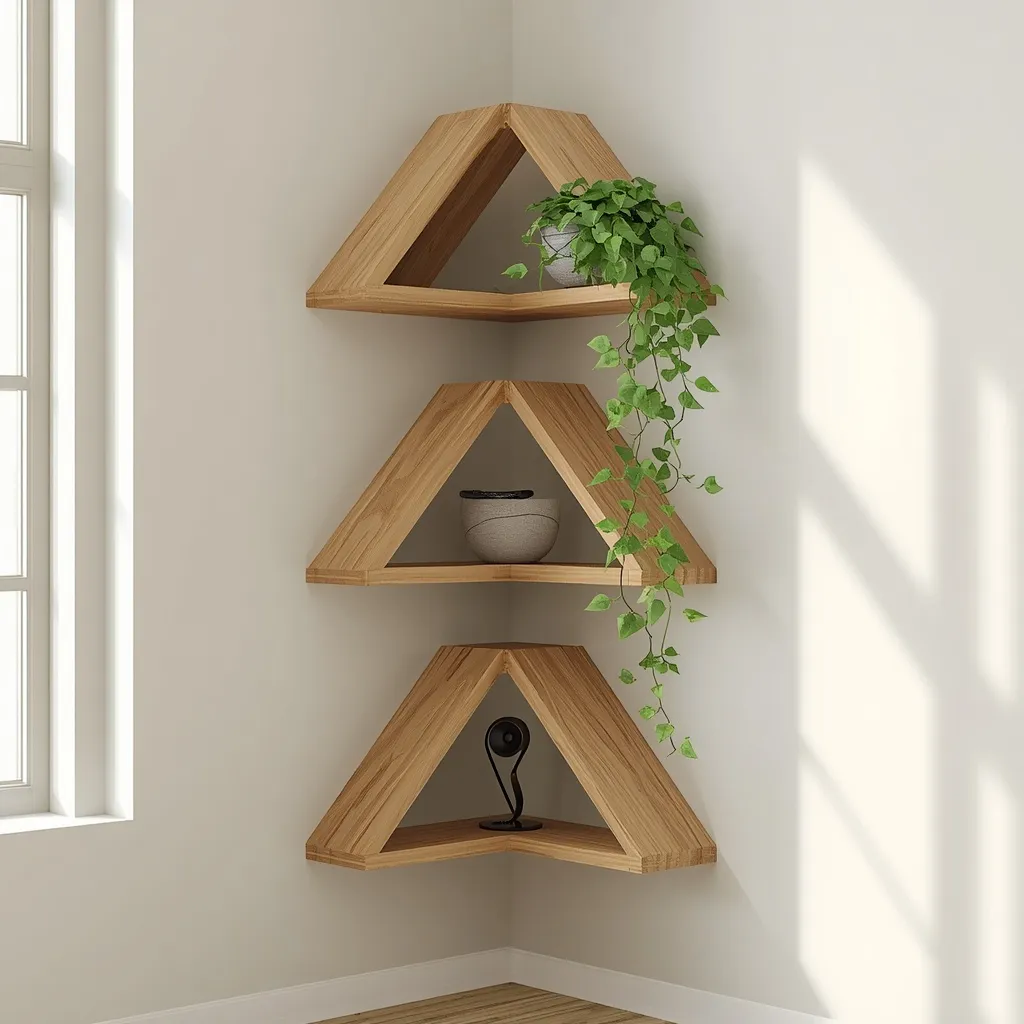
Corners are prime real estate that most rooms ignore. An L-shaped or triangular floating shelf wraps a corner to hold plants, a speaker, or a small collection, using space that furniture can’t reach.
Corner shelves shine in bedrooms and living rooms where floor corners collect dust rather than function. Mount into the studs of both walls for a rock-solid hold, since a corner shelf’s leverage puts extra strain on fixings. A stack of three corner shelves creates a vertical plant tower, ideal for trailing ivy or a snake plant near a window. Keep objects varied in height so the corner feels dynamic, not stacked. This is a smart move for small spaces because it adds storage in the one spot nothing else uses.
- Why it works: Turns wasted corners into display or storage.
- When to use it: Small rooms, reading nooks, and plant corners.
- Solves: Dead corner space and cramped floor plans.
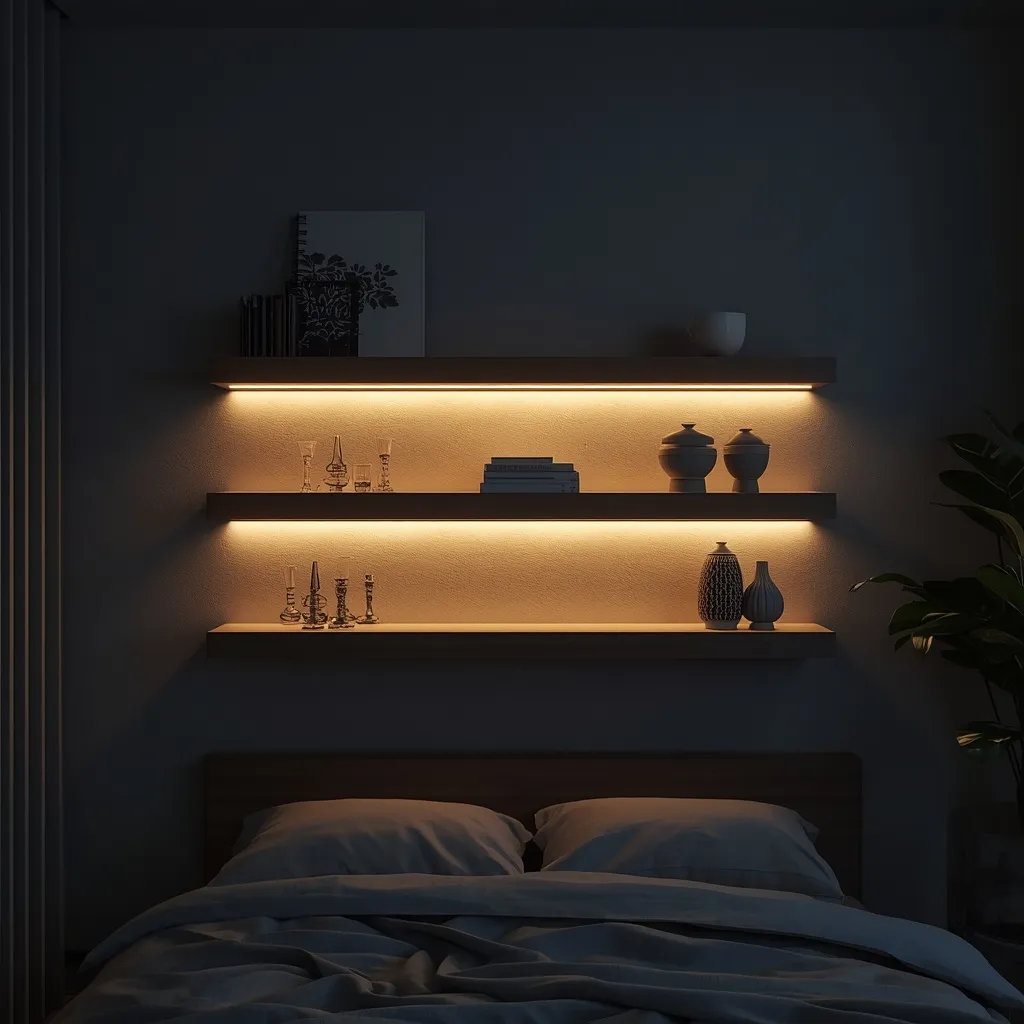
8. Backlit LED Shelves
Concealed LED strips beneath floating shelves cast a soft halo of light that makes objects glow and turns a plain wall into an evening feature. Behind a bed, above a media unit, or along a bar area, backlit shelves add warmth and a hint of drama.
Use warm-white LED tape (around 2700–3000K) tucked into a channel on the shelf’s underside or back edge for a diffused, hidden-source glow, visible strips look harsh. Most LED tape is low-voltage and safe, but keep the transformer accessible and never trap wiring inside a sealed shelf. This works best where you want ambient light without a lamp taking up surface space. Dimmable strips let you shift from task light to mood light. Pair with a few reflective objects, glass, ceramic, metal, to bounce the glow.
- Why it works: Adds layered, atmospheric lighting and highlights displayed pieces.
- When to use it: Bedrooms, media walls, home bars, and evening-focused rooms.
- Solves: Flat overhead lighting and dull, unlit display walls.
9. Floating Glass Shelves
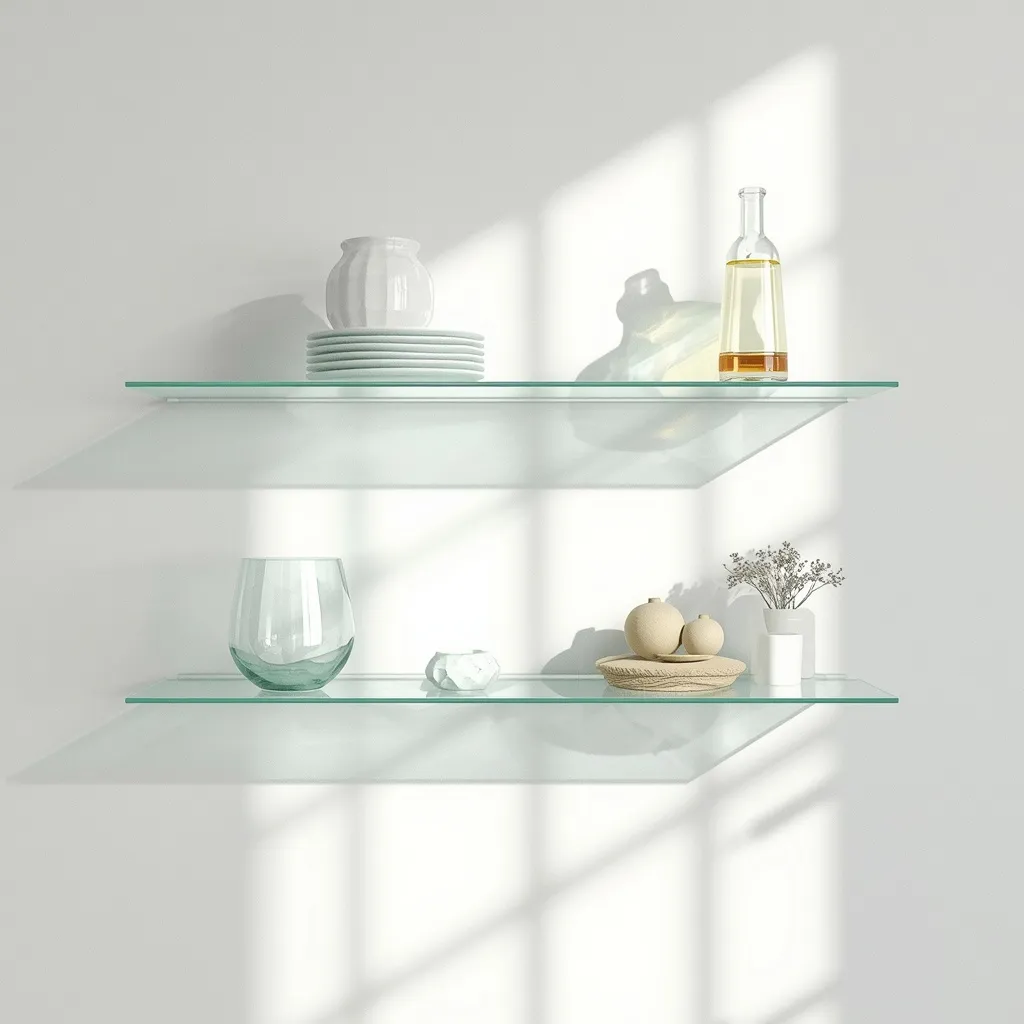
Clear glass floating shelves almost disappear against the wall, making them perfect where you want display without visual weight. In a small bathroom or a bright living room, a glass shelf holds objects while letting light and wall colour show through.
Always use toughened (tempered) safety glass at least 8 mm (about 5/16 in) thick, ordinary glass can crack under load and shatter dangerously. Glass floating shelf designs suit modern and glam interiors and are ideal above a vanity for perfume bottles or in a display niche for glassware. Keep the styling light; a few well-spaced pieces read as intentional, while a crowded glass shelf looks cluttered and strained. Wipe regularly, as glass shows dust and fingerprints. Frosted or smoked glass offers the same airy effect with a little more privacy.
- Why it works: Provides display space that visually recedes and keeps rooms feeling open.
- When to use it: Small or bright rooms, bathrooms, and modern/glam schemes.
- Solves: Visual crowding in tight spaces where a solid shelf would dominate.
10. Staggered Asymmetric Arrangement
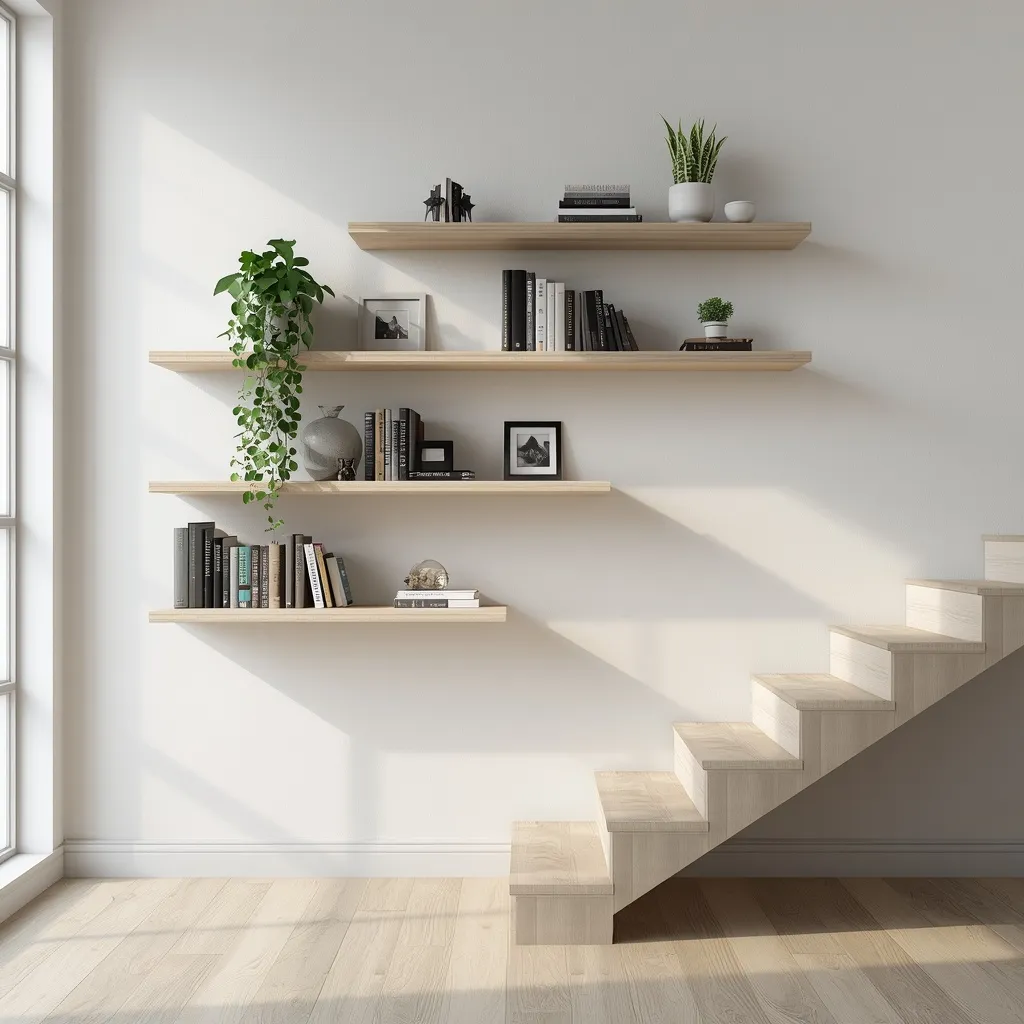
Instead of a neat stack, mount several floating shelves in a deliberately offset, staircase pattern for a modern, gallery-like look. The irregular rhythm feels contemporary and draws the eye across the whole wall rather than fixing it on one point.
Sketch the layout on paper first, or cut newspaper templates and tape them up before drilling, asymmetry only works when it’s planned. Keep a consistent visual thread (same material or finish) so the arrangement reads as one composition, not random boards. This style suits living rooms, stairwell walls, and creative studios. Balance is about visual weight, not symmetry: a large object on a lower-left shelf can be offset by a cluster of smaller pieces upper-right. Leave generous negative space so the staggered effect stays crisp.
- Why it works: Creates dynamic, modern movement across a large wall.
- When to use it: Feature walls, stairwells, and contemporary interiors.
- Solves: Static, predictable shelf grids that feel flat.
11. Reclaimed Rustic Wood
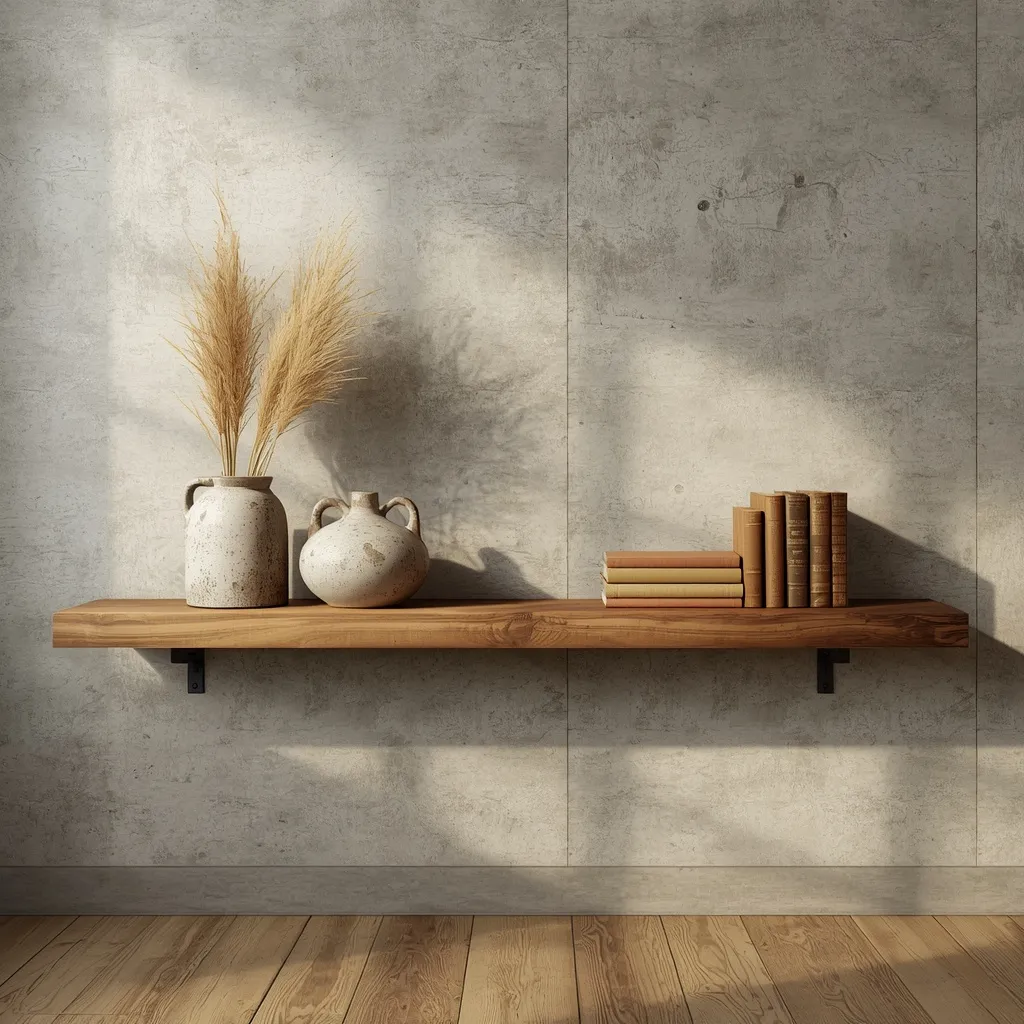
A thick slab of reclaimed timber, complete with knots, saw marks, and a weathered grain, brings instant warmth and story to a wall. Against a neutral or industrial backdrop, a rustic floating shelf feels grounded and characterful.
Seal reclaimed wood with a matte oil or wax to stabilise it and prevent splintering, and check for old nails or woodworm before mounting. Because these slabs are heavy, often 5–8 kg (11–18 lb) before you add anything, use concealed steel rod brackets set into studs, not lightweight fixings. Rustic shelves anchor farmhouse, industrial, and boho rooms beautifully; style them with stoneware, dried grasses, and warm-toned books. The natural variation means no two look alike, which is part of the appeal. Avoid over-polishing; the rough character is the point.
- Why it works: Adds organic texture and warmth that mass-produced shelves lack.
- When to use it: Farmhouse, industrial, and boho interiors.
- Solves: Cold, flat walls that feel impersonal.
12. The Single Minimalist Ledge
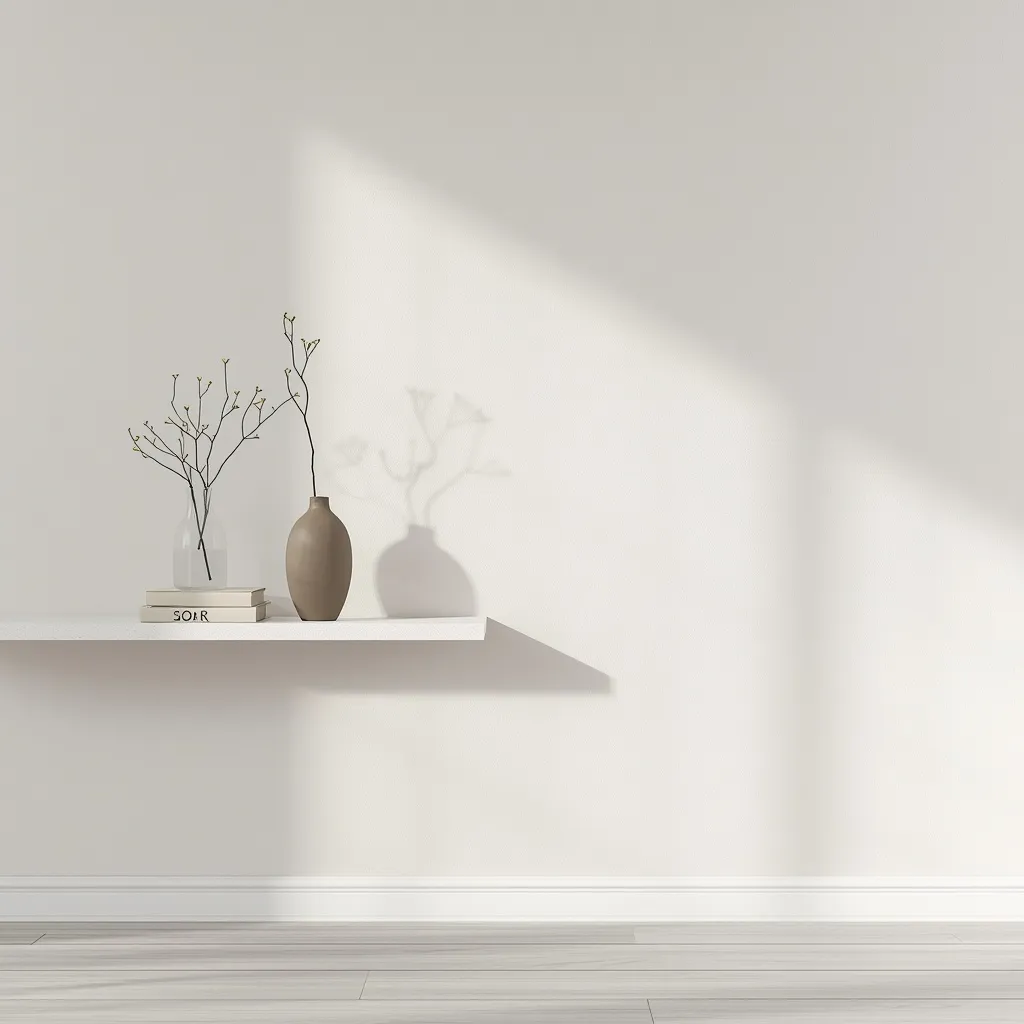
Sometimes one perfectly placed shelf says more than a wall full of them. A single slim floating ledge, styled with two or three objects and a lot of breathing room, is the essence of minimalist design.
Restraint is the whole technique here: choose objects with contrast in shape and texture, say, a matte vase, a small stack of books, and a single stem, and resist adding more. Centre the shelf thoughtfully within the wall, treating the empty space around it as part of the composition. This approach suits Scandinavian, Japandi, and modern interiors, and it’s forgiving for beginners because there’s little to get wrong. In a small room, a single ledge adds function without visual clutter. Quality shows at this scale, so pick one beautiful shelf over several cheap ones.
- Why it works: Maximum impact from minimum clutter; calm and intentional.
- When to use it: Minimalist, Scandi, and Japandi rooms, or any small space.
- Solves: Over-decorated walls and decision fatigue.
13. Picture Ledge Gallery
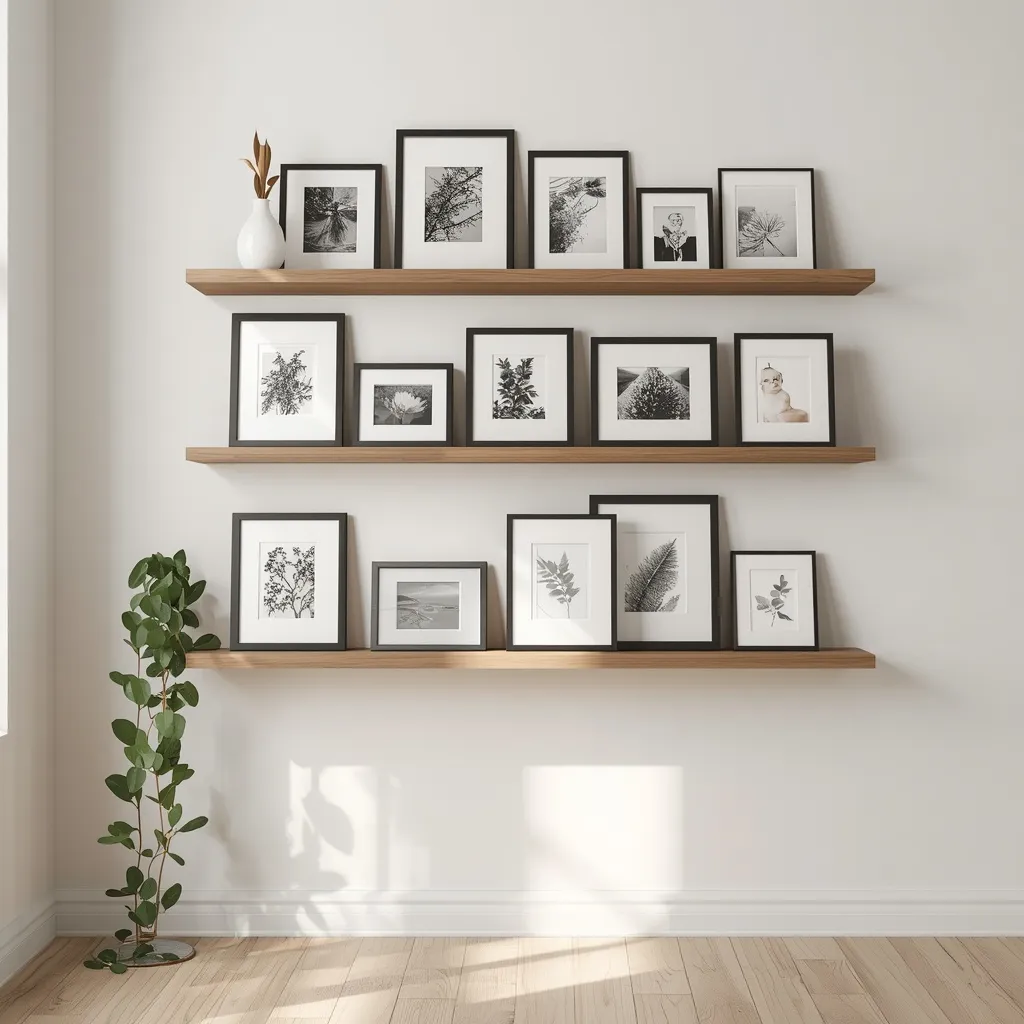
A picture ledge is a shallow floating shelf with a lip that lets you lean and layer framed art rather than hanging it. The beauty is flexibility, swap prints, overlap frames, and restyle in seconds without drilling new holes.
Mount ledges in a stacked run so you can layer larger frames behind smaller ones, mixing art, photos, and small objects. Keep frames varied but tie them together with a shared palette or matching mounts for cohesion. This is ideal for renters and the indecisive, since nothing is permanently fixed. A picture ledge works in living rooms, bedrooms, hallways, and above a desk. Leave a small object or a trailing plant at one end to break the grid. The lip depth only needs to be a centimetre or so to hold frames securely.
- Why it works: Rearrangeable gallery wall with no repeated nail holes.
- When to use it: Renters, gallery walls, and anyone who likes to restyle often.
- Solves: Commitment-heavy, hard-to-change hung art arrangements.
14. Trailing Plant Shelves
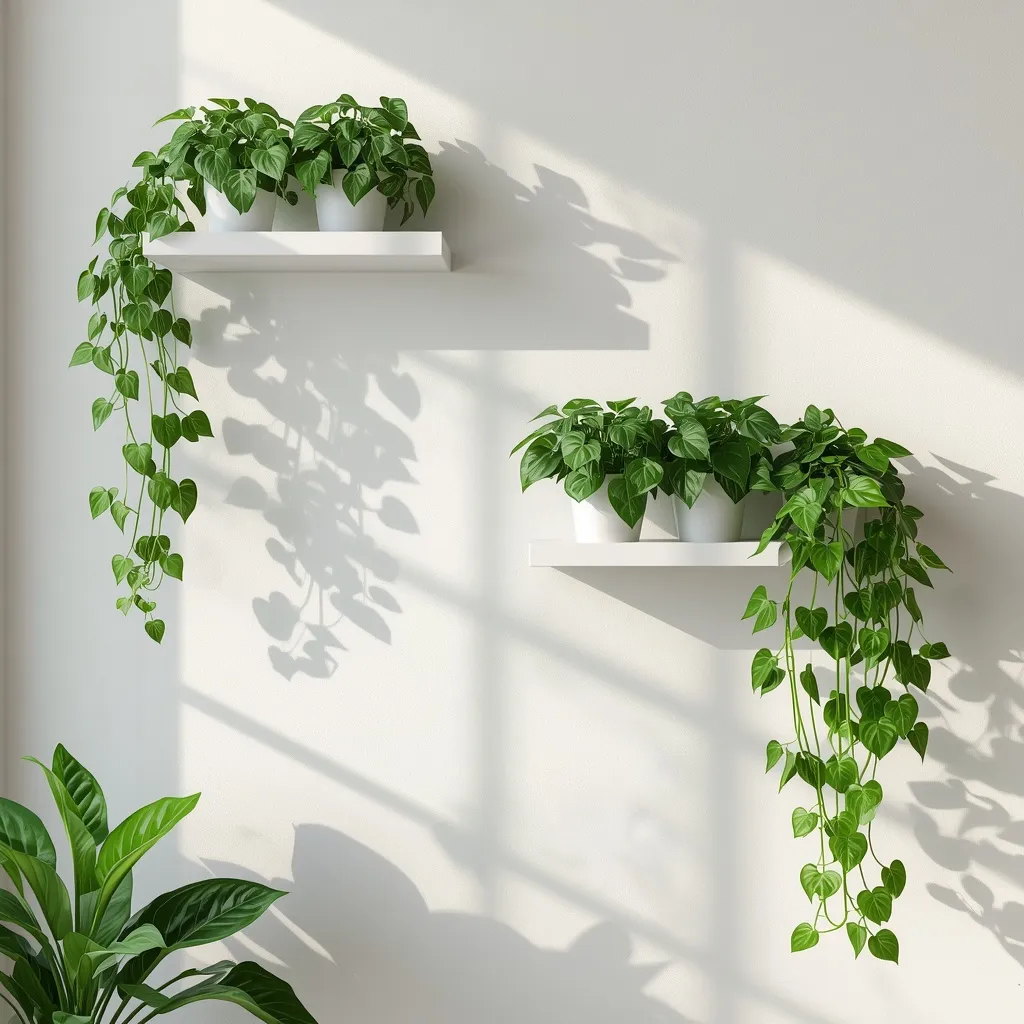
Floating shelves are a natural home for greenery, especially trailing plants that spill over the edge and soften the whole wall. A row of ledges with pothos, string of hearts, and ivy creates a living, cascading display that changes as the plants grow.
Match plants to the light the wall actually gets: pothos, philodendron, and spider plants tolerate lower light, while succulents need a bright, south-facing spot. Use pots with drainage and a saucer, or line decorative pots, to protect the shelf and wall from water damage, and seal wooden shelves against moisture. Safety note: several popular trailing plants, including pothos and philodendron, are toxic to cats and dogs, so mount plant shelves high and out of a pet’s reach, and check the ASPCA’s toxic-plant list before choosing. Rotate pots occasionally so growth stays even.
- Why it works: Brings life and softness to hard walls; greenery cascades beautifully.
- When to use it: Indoor plant styling, bright corners, and biophilic interiors.
- Solves: Cold, lifeless walls and limited floor space for plants.
15. Floating Bookshelf Wall
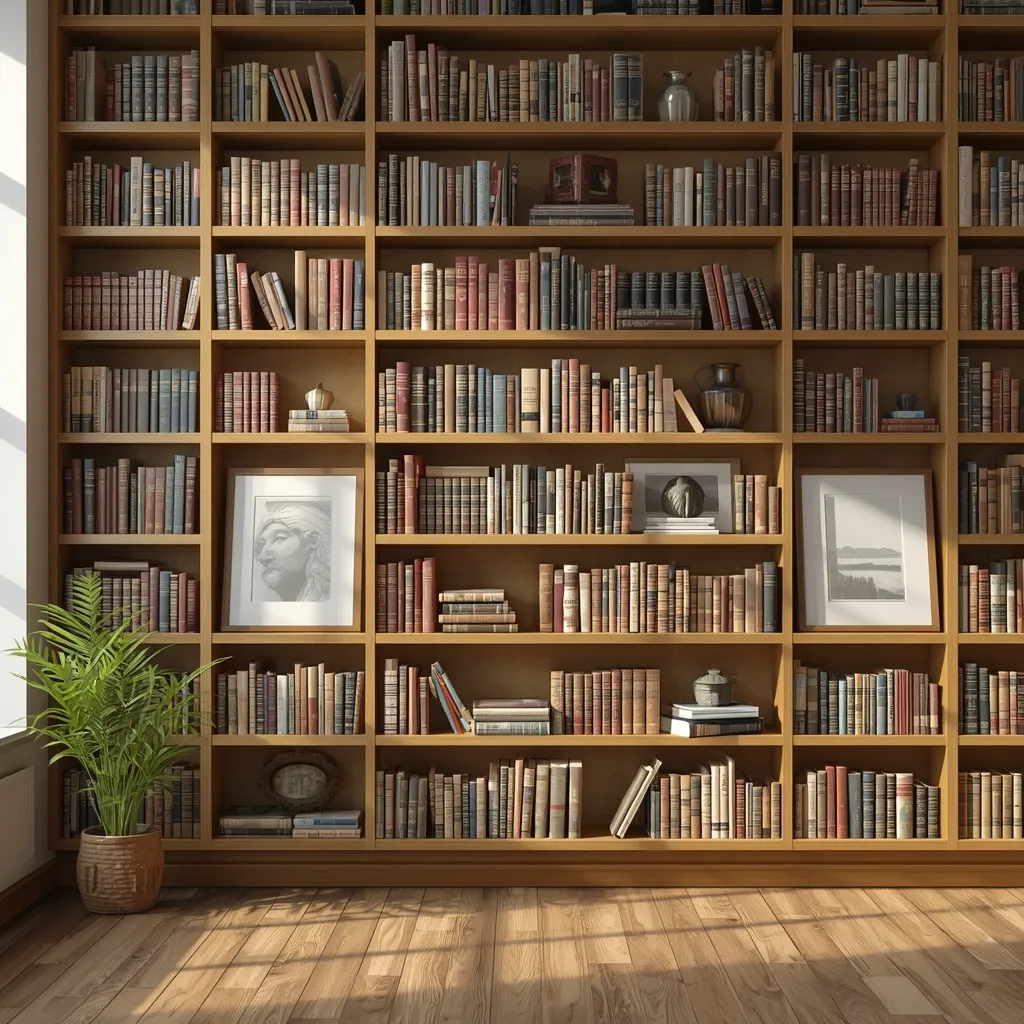
A full wall of floating shelves creates a home library that feels architectural rather than boxy. Floor-to-near-ceiling ledges packed with books turn reading material into the room’s main decoration.
Mix horizontal stacks with upright rows to create rhythm, and slot in the occasional object or bookend to break long runs of spines. Because a wall of books is genuinely heavy, every shelf must hit studs and use brackets rated for the load, a metre (3 ft) of packed hardbacks can weigh 20 kg (44 lb) or more, so under-speccing fixings here is a real hazard. Organise by colour for a calm, styled look or by subject for practicality. Leave the top shelf lighter with a plant or framed art. This suits studies, living rooms, and reading nooks.
- Why it works: Turns a book collection into a striking, space-smart feature.
- When to use it: Studies, living rooms, and homes with lots of books.
- Solves: Overflowing bookcases and cluttered floor-standing units.
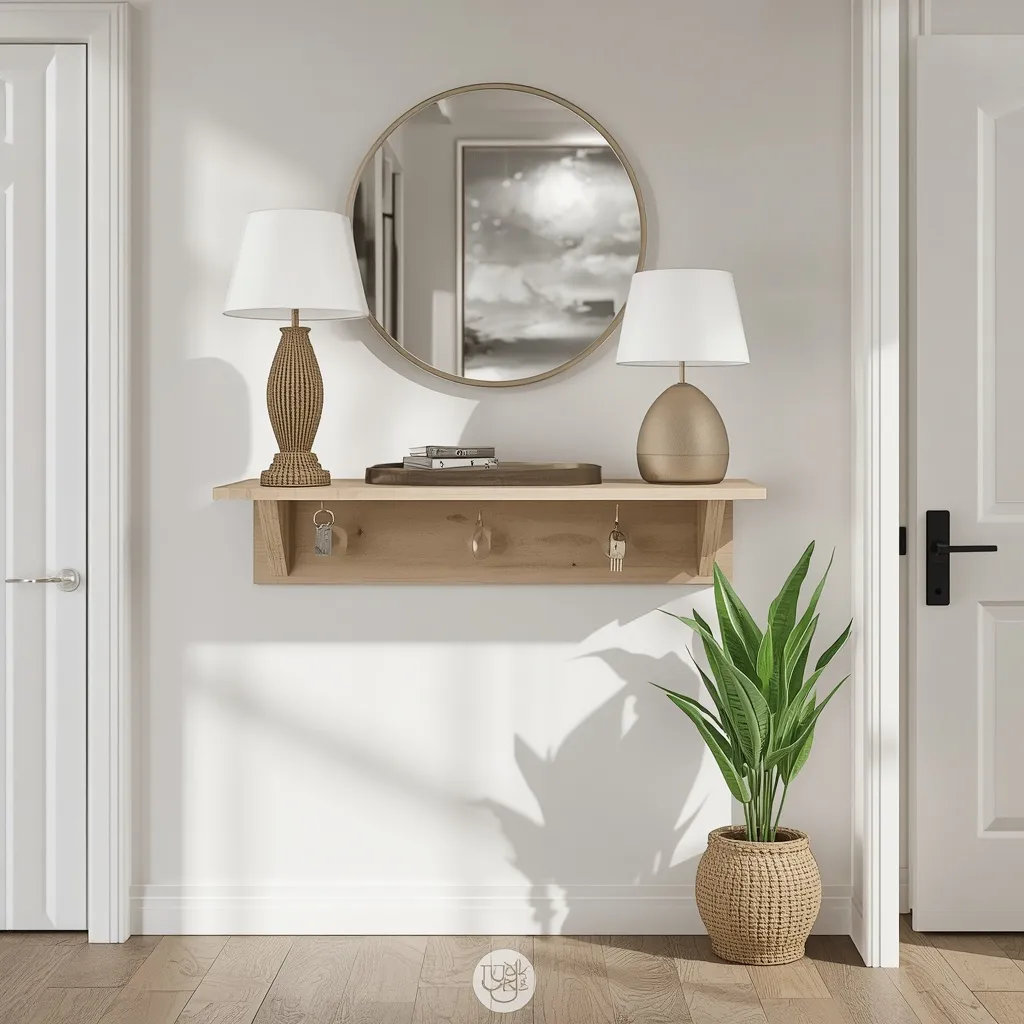
16. Entryway Drop-Zone Shelf
The area just inside the front door needs a home for keys, post, sunglasses, and the daily drop of pocket contents. A single floating shelf with a small tray or hooks beneath creates an instant, floor-free drop zone.
Mount the shelf at about chest height, 120–140 cm (47–55 in) from the floor, so it’s easy to reach on the way in and out. Add a small dish for keys, a slim tray for post, and a mirror or hooks nearby to complete the landing strip. Keep the surface deliberately sparse, a plant, a lamp, and the essentials, so it stays functional rather than becoming a clutter magnet. This is one of the most practical floating shelf ideas because it solves a daily friction point. In rentals, this replaces a bulky console entirely.
- Why it works: Creates an organised landing spot without a floor console.
- When to use it: Small entryways, apartment doors, and tight hallways.
- Solves: Lost keys, scattered post, and no room for entryway furniture.
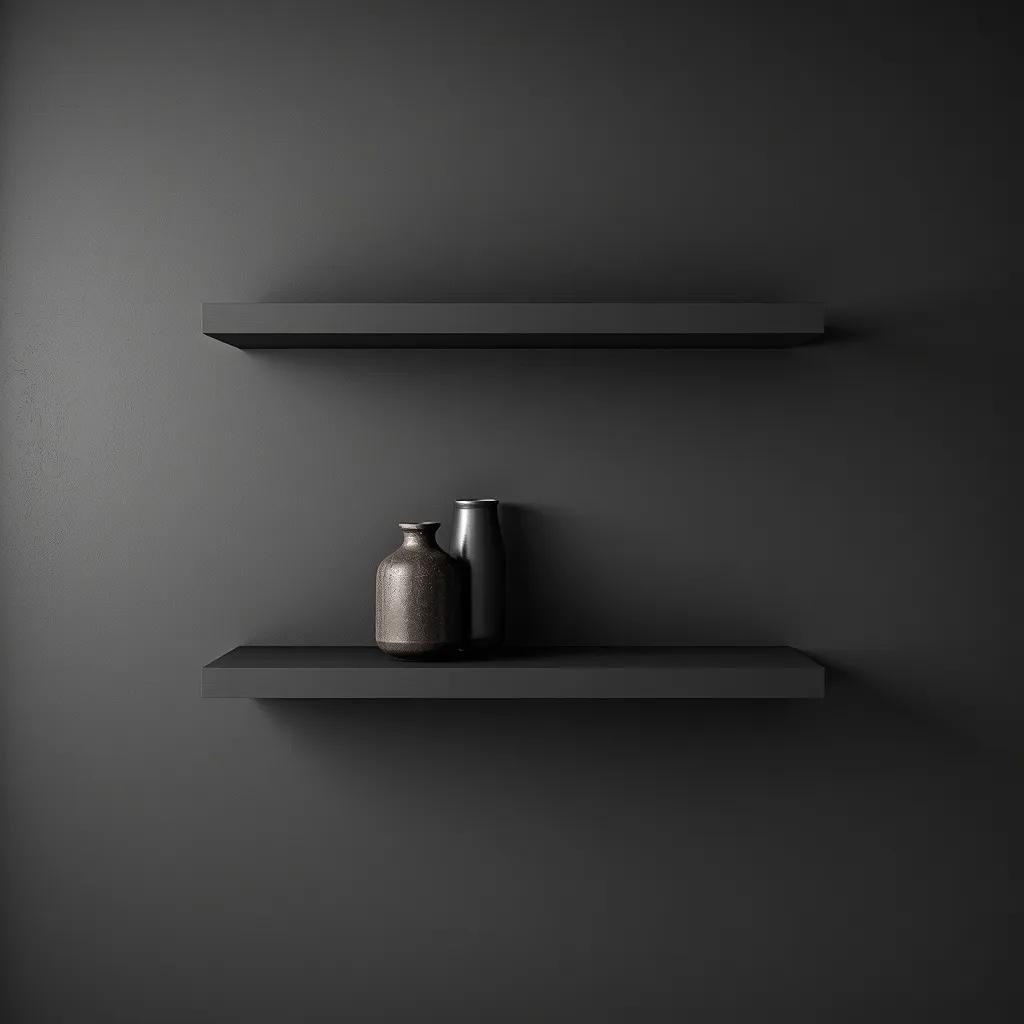
17. Monochrome Matched Shelves
Painting or finishing floating shelves the exact same colour as the wall makes them read as sculptural, built-in architecture. Whether crisp white or a moody charcoal, the tonal match feels intentional and high-end.
The technique is simple but precise: finish the shelves in the same paint colour and sheen as the wall so brackets and edges disappear. Then let styling do the talking with objects that either contrast (for pop) or continue the tonal story (for calm). This works in modern, minimalist, and elegant interiors, and it’s a clever way to add shelving to a small room without visually breaking up the wall. Deep, saturated colours make the effect especially dramatic behind a bed or in a study. Matte finishes hide fingerprints and imperfections better than gloss.
- Why it works: Shelves look built-in and architectural, not added-on.
- When to use it: Modern, minimalist, and colour-drenched rooms.
- Solves: Shelves that look like an afterthought stuck on the wall.
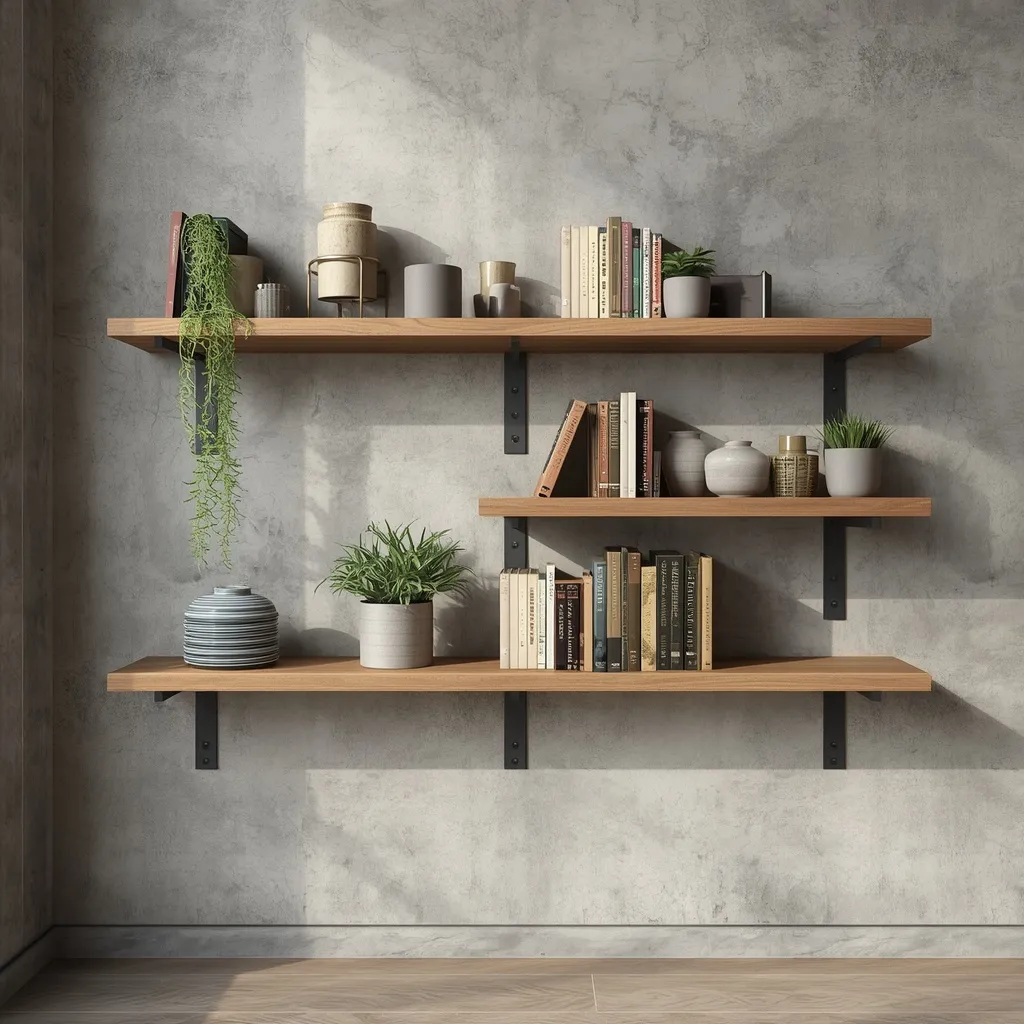
18. Mixed-Material Wood and Metal
Pairing a warm timber shelf with an exposed black metal bracket delivers that popular industrial-modern look. The contrast of natural wood and hard steel feels grounded and current, working in kitchens, living rooms, and offices alike.
Choose brackets that are part of the design rather than hidden, L-shaped or angled black steel supports become a deliberate detail. Match metal finishes to other hardware in the room (taps, handles, light fittings) for a pulled-together scheme. This style handles weight well because the visible bracket does real structural work, making it a sensible choice for heavier displays. Reclaimed or live-edge timber tops amplify the character. Keep styling relaxed, greenery, ceramics, and a few books suit the honest, unfussy aesthetic. It’s forgiving to install since the bracket placement is visible and easy to level.
- Why it works: Combines warmth and structure for an on-trend industrial feel.
- When to use it: Industrial, modern-rustic, and loft-style spaces.
- Solves: The need for both real load capacity and design character.
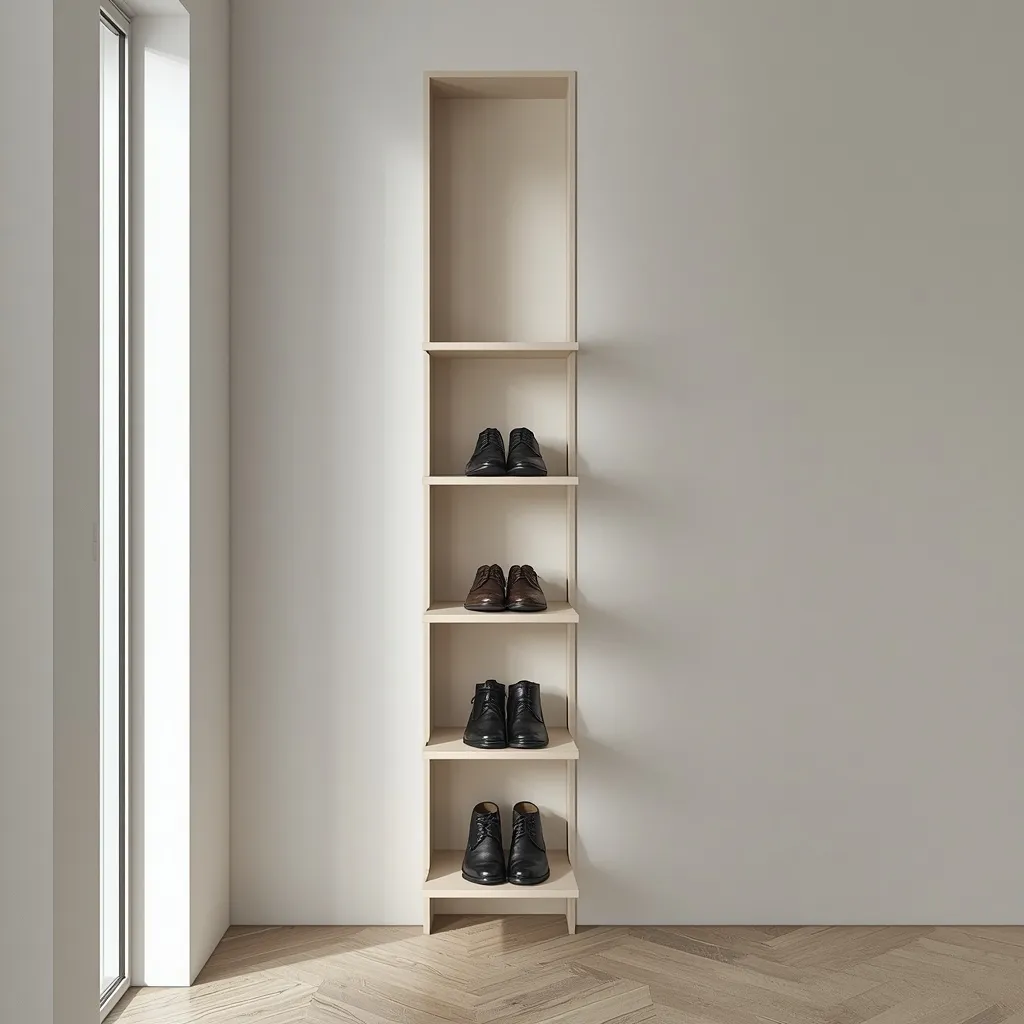
19. Minimalist Floating Shoe Shelf
Angled floating shelves mounted in a slim vertical run store and display shoes off the floor, keeping an entryway or wardrobe tidy. Each pair sits on its own ledge, turning footwear into a neat, gallery-like line.
Angle the shelves slightly upward, about 10–15 degrees, with a small front lip so shoes stay put and are easy to see. Space them by shoe type: 15 cm (6 in) between shelves suits flats, while boots need more clearance. This is a genuinely space-smart move for small entryways and narrow wardrobes, lifting shoes off the floor so cleaning is easier and pairs stay findable. Mount into studs, as loaded shoe shelves carry more weight than they look. Keep the palette simple so the shoes themselves provide the visual interest.
- Why it works: Clears floor clutter and makes shoes easy to find and grab.
- When to use it: Entryways, wardrobes, and small-space shoe storage.
- Solves: Piled-up shoes by the door and cramped closet floors.
20. Above-the-Toilet Storage
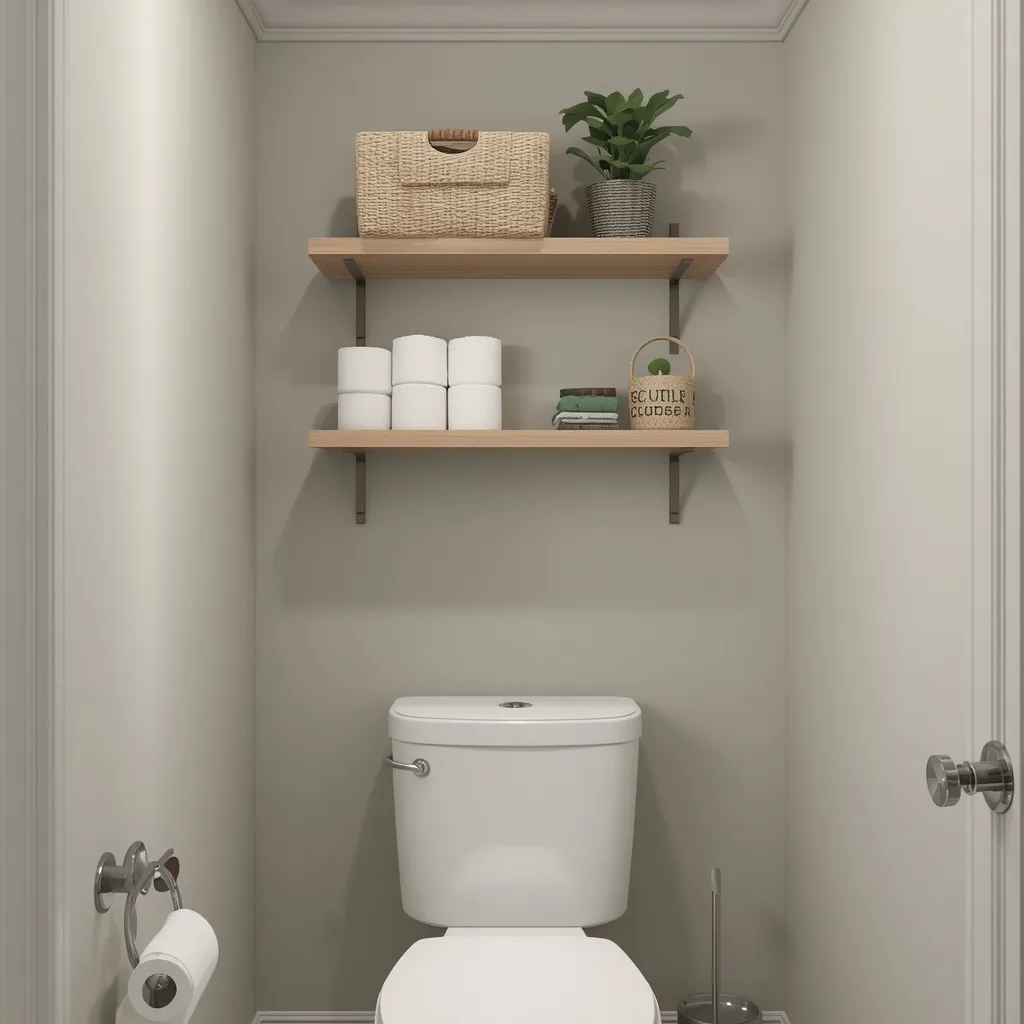
The wall above a toilet is almost always empty, yet it’s ideal for one or two floating shelves that hold spare rolls, folded towels, and a small plant. It’s the classic small-bathroom fix, storage that uses forgotten vertical space.
Mount the lowest shelf about 60 cm (24 in) above the cistern so there’s clearance to lift the lid, and keep depth modest so nobody knocks their head. Choose moisture-resistant, sealed materials given the humid setting, and use woven baskets to corral small items neatly. Style with a mix of practical and pretty, a plant, a candle, rolled towels, so it earns its place. This idea is a staple of floating shelf ideas for small bathrooms because it adds real storage without a single centimetre of floor space. Secure fixings well, since bathroom walls are often tiled or plasterboard.
- Why it works: Converts dead overhead space into practical bathroom storage.
- When to use it: Small bathrooms, en-suites, and powder rooms.
- Solves: Nowhere to store spare rolls and towels in a compact bathroom.
21. Low Shelves for a Kids’ Room
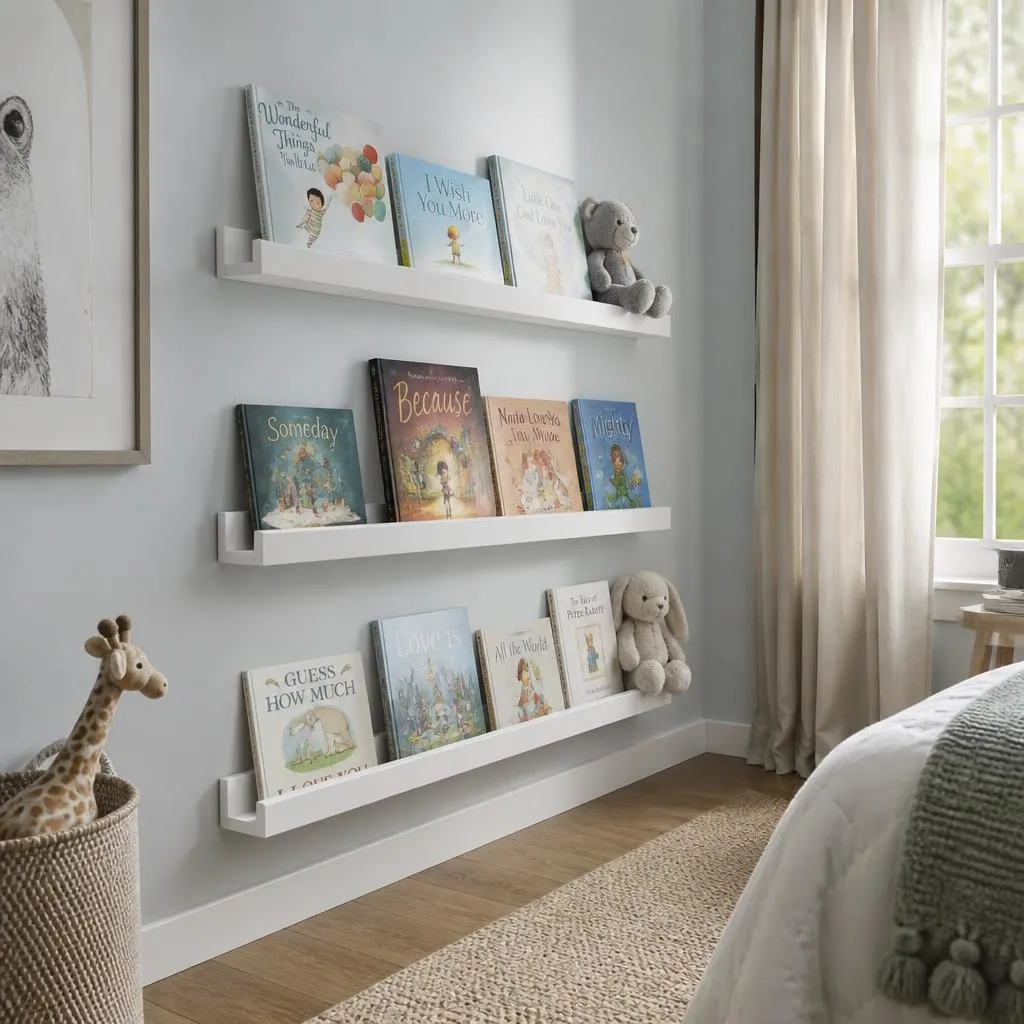
Floating shelves mounted at a child’s height turn a bedroom wall into an accessible display for books, toys, and treasures, encouraging little ones to reach and tidy independently. Forward-facing picture-ledge shelves show book covers, which draws children to read.
Keep shelves low enough for small hands, and, crucially, mount them securely into studs or with heavy-duty anchors, because children pull, climb, and lean. Safety note: avoid placing shelves directly above a bed or cot where objects could fall, keep breakable or heavy items on higher, adult-only shelves, and never let a low shelf become a climbing ladder toward taller furniture, which should itself be anti-tip anchored to the wall. Rounded-edge shelves reduce bump injuries. Rotate the displayed toys and books periodically to keep the space engaging.
- Why it works: Builds independence and keeps favourite books and toys reachable.
- When to use it: Nurseries, kids’ bedrooms, and playrooms.
- Solves: Toys on the floor and books stored out of a child’s reach.
Bringing It All Together
Great shelving is really about editing, choosing the right idea for the room, mounting it safely, and styling with restraint. If you’re layering shelves into a wider decluttering project, our guide to clever storage ideas pairs naturally with these displays, and you’ll find more layout inspiration across the wider Sunday Abode home and garden collection. Start with one wall, get the fixings right, and build from there.
Conclusion
The best floating shelf ideas do two jobs at once: they add storage and they add personality, all without stealing a scrap of floor space. Whether you’re mounting a single minimalist ledge in a quiet bedroom, wrapping a corner with trailing plants, or lining a small bathroom wall above the toilet, the principles stay the same, level it carefully, fix it into something solid, and style with a little breathing room. Pick two or three ideas that suit your rooms and skill level, and treat the first wall as your test run. For more layout and display inspiration, explore our Furniture and Layout collection, and save the shelves that fit your space so you’re ready when the drill comes out.
FAQs
How much weight can a floating shelf hold?
It depends on the shelf, the brackets, and, most of all, what you fix it into. A shelf screwed into wall studs with heavy-duty brackets can typically hold 10–20 kg (22–44 lb), while one fixed only into drywall with basic anchors may safely carry just a few kilograms. Always check the bracket’s rating and mount into studs for anything heavy like books.
Do floating shelves need to be screwed into studs?
For heavy loads, yes, studs give the strongest, safest hold. For lighter decorative items you can use quality toggle or molly anchors rated above your intended weight, but for kitchen dishes, books, or a kids’ room shelf, always locate and screw into the studs (usually spaced 40–60 cm / 16–24 in apart).
How do I style a floating shelf without it looking cluttered?
Group objects in odd numbers, vary their heights, and leave about a third of each shelf empty so the eye can rest. Mix a few textures, a book stack, a plant, a ceramic piece, rather than lining up similar items, and edit ruthlessly. Negative space is what makes a shelf look styled rather than crammed.
What’s the best floating shelf material for a bathroom?
Choose sealed hardwood, powder-coated metal, tempered glass, or moisture-resistant MDF with a waterproof finish. Raw particleboard swells and sags in humidity, so avoid it. Position shelves away from direct splash zones, and if you’re drilling into tile, use a tile bit and proper anchors to prevent cracking.
Are floating shelves safe in a kids’ room?
They can be, with care. Mount low shelves securely into studs or heavy-duty anchors, keep heavy or breakable items on higher adult-only shelves, avoid placing shelves directly above a bed, and choose rounded edges. Make sure a low shelf can’t be used as a climbing step toward taller furniture, and anchor tall furniture to the wall separately.
How far apart should floating shelves be spaced?
For a stacked display, 30–40 cm (12–16 in) between shelves suits most décor and books. Increase the gap for tall items or plants, and reduce it for shallow picture ledges. Above a kitchen counter, leave 45–50 cm (18–20 in) of clearance; above a desk, 40–50 cm (16–20 in) for monitor headroom.
Can I put floating shelves in a rented home?
Yes, though they do require drilling, so check your tenancy agreement first, many landlords allow small, well-filled holes. If drilling isn’t permitted, adhesive-mounted shelves rated for light loads are an alternative for a few small objects. Picture ledges are especially renter-friendly because you can restyle without making new holes.