
Introduction
Every home has hidden square footage waiting to be claimed, under the bed, behind the door, up the wall, inside dead corners. The best storage ideas don’t require a renovation; they simply put forgotten space to work so your rooms feel calmer and roomier overnight. Whether you’re organizing a compact apartment, a family kitchen, or a bedroom that never has enough closet space, this guide gathers 25 genuinely clever, doable solutions across every room. You’ll find renter-friendly options that leave no marks, hidden storage that keeps clutter out of sight, and vertical tricks that free up precious floor space. Consider it a room-by-room toolkit for making your abode work harder, with practical measurements, safety notes, and styling logic, not just pretty pictures.
1. Under-Bed Rolling Boxes
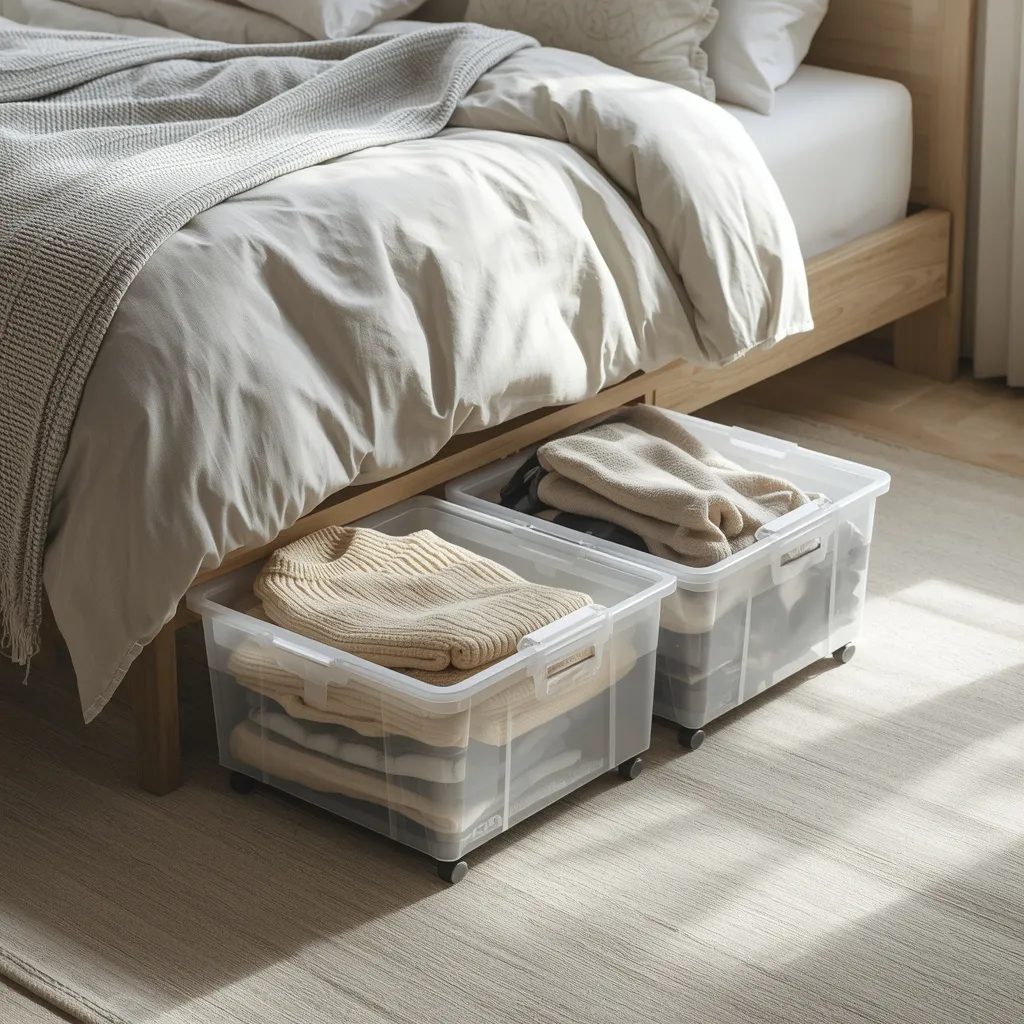
The space beneath your bed is one of the largest untapped storage zones in any bedroom, often enough to swallow an entire off-season wardrobe. Low-profile boxes on castors glide out like drawers, holding shoes, spare bedding, or bulky knitwear behind a valance where nobody sees them.
Choose boxes no taller than your bed’s clearance; most divans and framed beds allow 15–25 cm (6–10 in). Clear or labelled containers save you from crawling around guessing what’s inside, and lids keep dust off fabrics. If your bed sits low, sturdy bed risers can lift it another 8–13 cm (3–5 in) to create room, just check the frame’s weight rating first and use risers designed for the leg type. This is a top storage idea for small spaces because it needs zero wall or floor footprint. Rotate contents seasonally so nothing gets forgotten at the back.
- Why it works: Uses completely dead space with no visual footprint.
- When to use it: Small bedrooms, rentals, and homes short on closet space.
- Solves: Overflowing wardrobes and nowhere to store seasonal items.
2. Hidden-Storage Ottoman
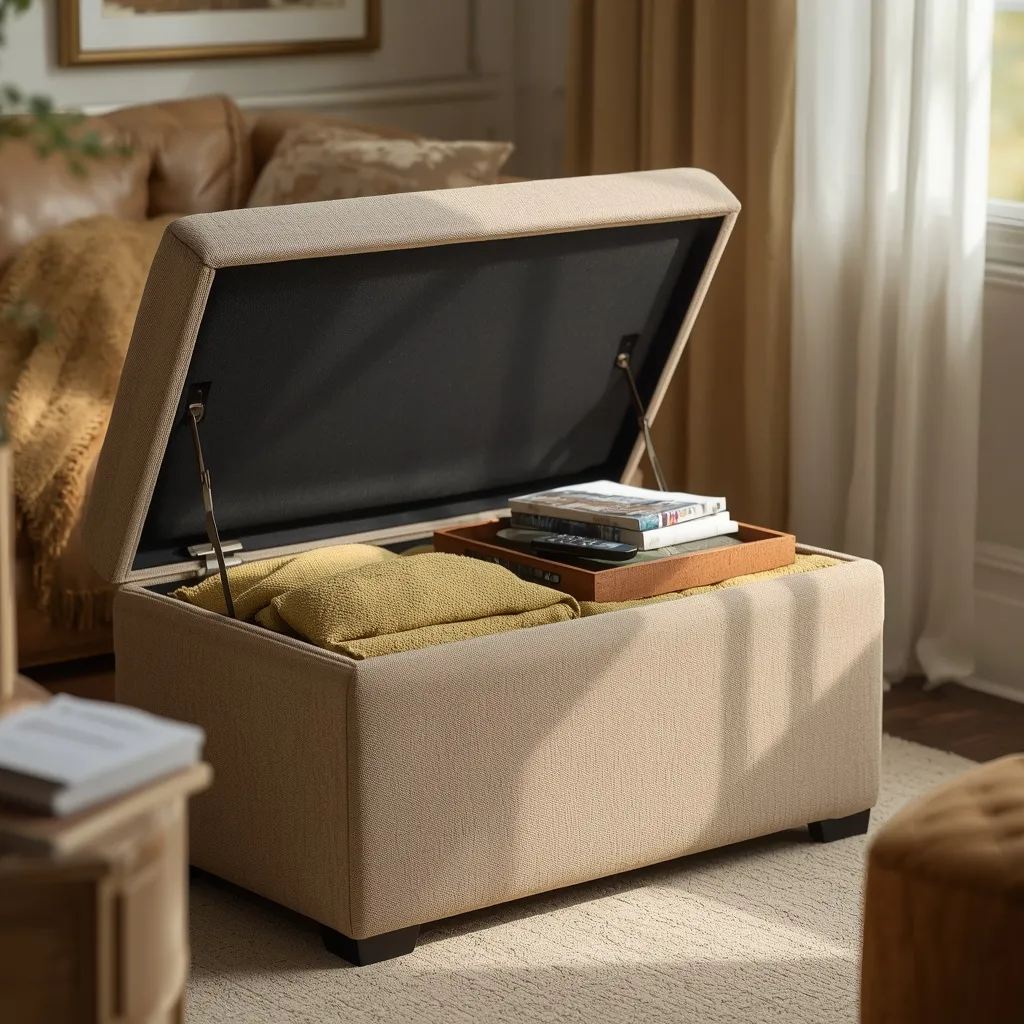
A storage ottoman is the hardest-working piece of furniture in a small living room, a footrest, extra seat, coffee table, and hidden chest all in one. Lift the padded lid and stash blankets, remotes, board games, or kids’ toys inside, keeping the room clear in seconds.
Look for a hinged lid with a slow-close or safety hinge, especially in homes with children, so fingers aren’t caught, a genuine safety point that’s easy to overlook. Firm-topped ottomans double as a coffee table with a tray on top; softer ones work purely as seating. Measure your seating gap so the ottoman leaves comfortable walking room, usually 40–45 cm (16–18 in) of clearance. This is one of the smartest storage ideas for living rooms because it hides clutter inside furniture you’d want anyway. Pick a fabric that wipes clean if it doubles as a footrest.
- Why it works: Combines seating, surface, and concealed storage in one footprint.
- When to use it: Living rooms, apartments, and multipurpose spaces.
- Solves: Blanket and toy clutter with no dedicated storage furniture.
3. Vertical Wall Shelving
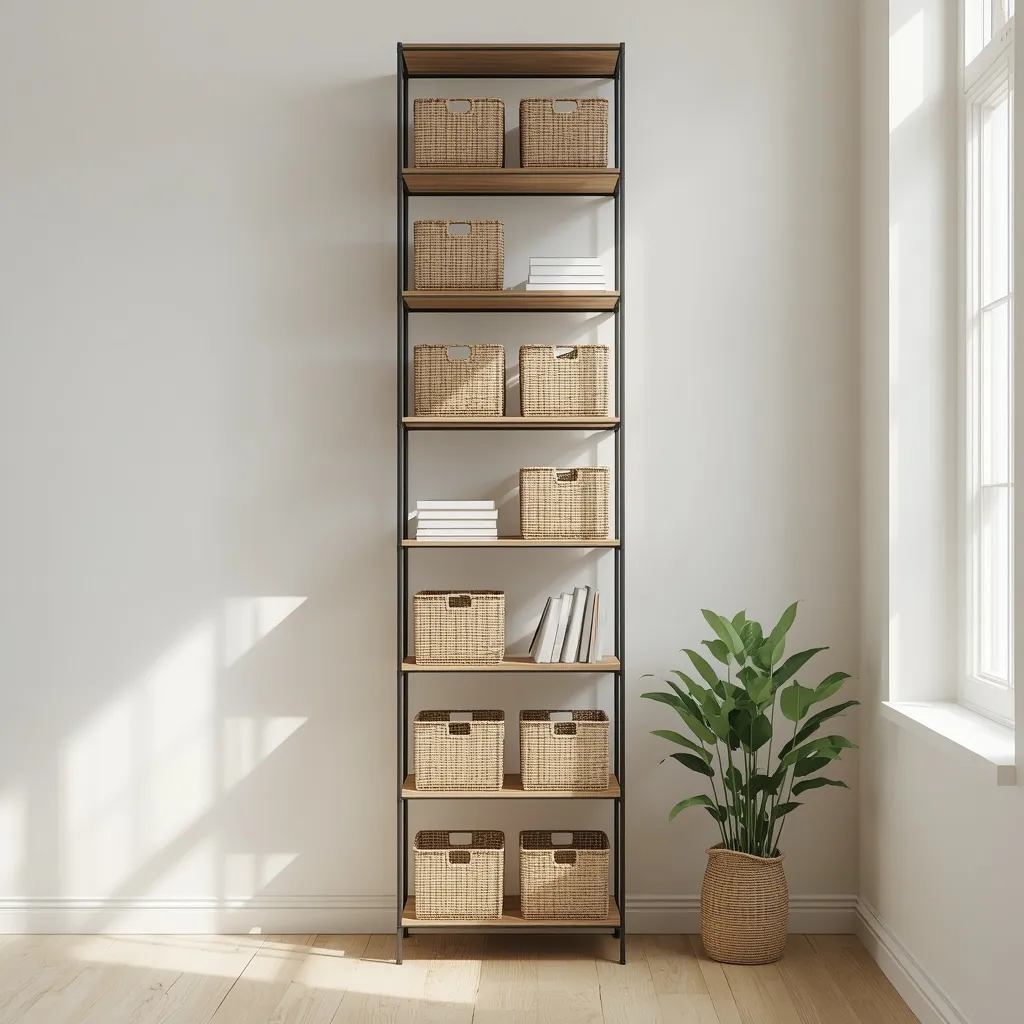
When the floor is full, the answer is almost always up. Tall, narrow shelving that climbs toward the ceiling turns a slim strip of wall into serious storage, drawing the eye upward and making the whole room feel taller.
Reserve the highest shelves for lightweight, rarely-used items and keep everyday things at arm’s reach. Safety note: any tall, freestanding shelving unit must be anchored to the wall with an anti-tip bracket or strap, furniture tip-overs cause serious injuries, especially to children, so this is non-negotiable in family homes. Mount fixed shelves into studs (usually 40–60 cm / 16–24 in apart) for real load capacity. Vertical storage suits narrow gaps beside doorways, above desks, and in awkward alcoves. Keep a consistent basket or box system across shelves so the tall stack looks tidy rather than chaotic.
- Why it works: Multiplies storage without using more floor space.
- When to use it: Small rooms, alcoves, and apartments with high ceilings.
- Solves: Full floors and cramped layouts with unused wall height.
4. Over-the-Door Organizers
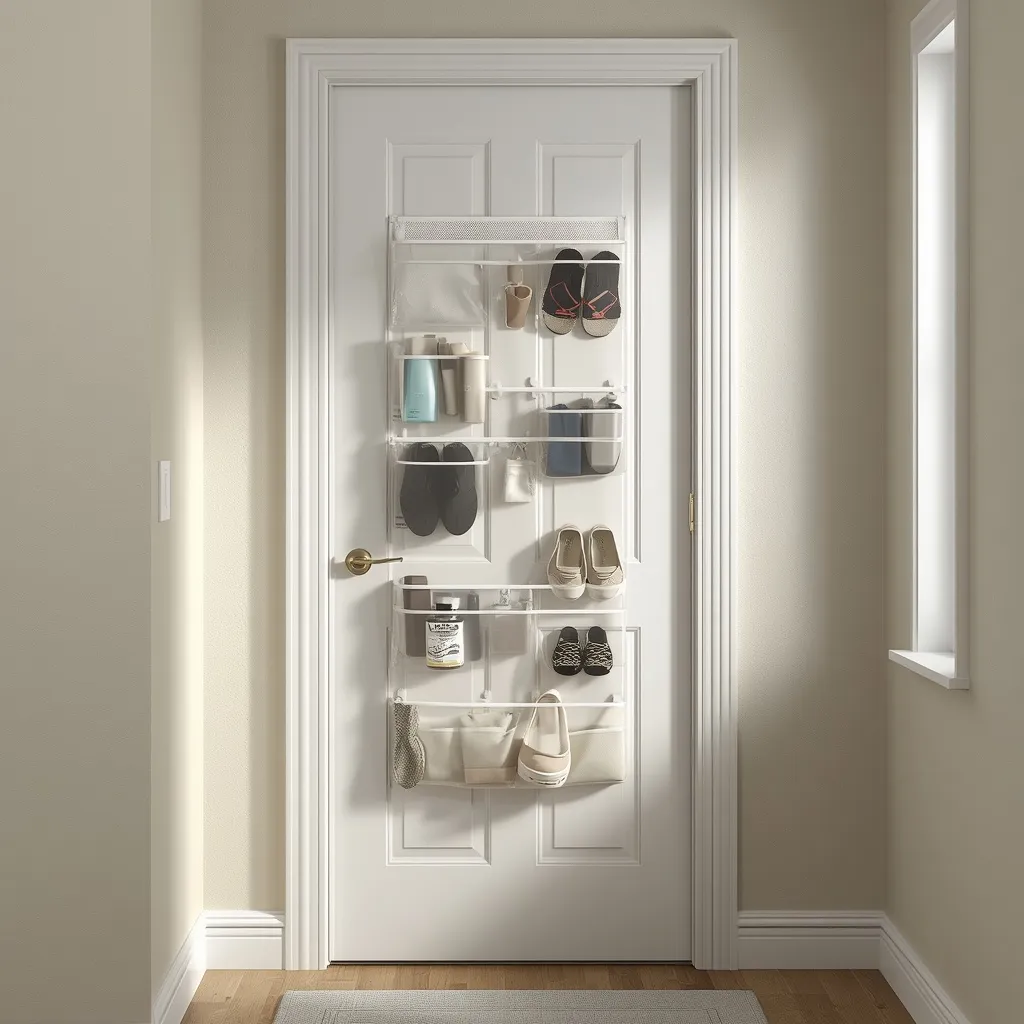
The back of a door is prime, invisible storage that most people never use. A hanging over-the-door organizer with clear pockets holds shoes, cleaning supplies, toiletries, craft bits, or pantry packets, all off the floor and out of sight when the door is open.
These hook straight over the top of a standard door with no drilling, making them perfect for renters. Match the organizer to the room: mesh or fabric pockets for a wardrobe or bathroom, sturdier hooks for coats and bags on a bedroom door, and slim tiered racks inside a pantry door for spices and wraps. Check that the door still closes freely and that the hooks won’t scuff paint if that matters in a rental. It’s one of the cheapest, fastest storage ideas for apartments and small rooms.
- Why it works: Unlocks hidden vertical space with zero installation.
- When to use it: Rentals, small bathrooms, pantries, and wardrobes.
- Solves: Scattered toiletries, shoes, and cleaning supplies.
5. Under-Stair Drawers
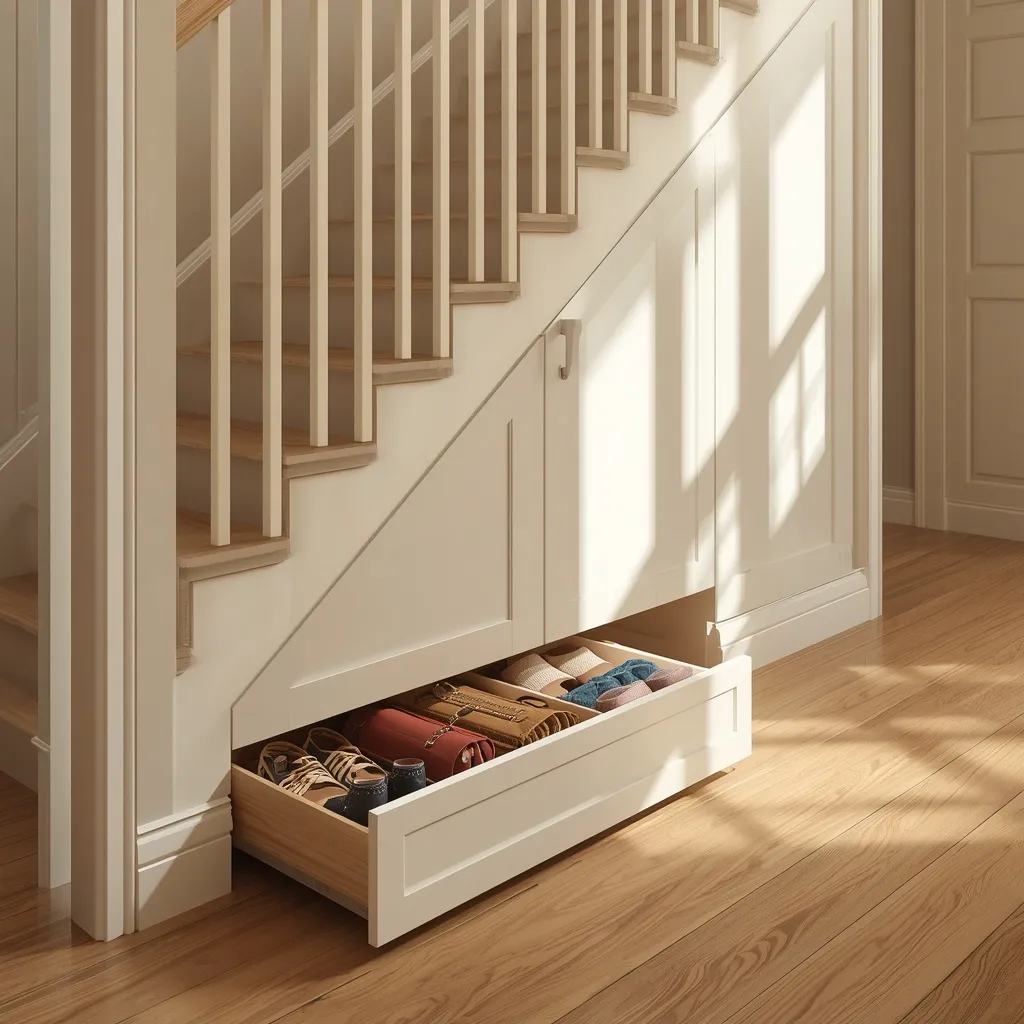
The triangular void beneath a staircase is often left as a dusty cupboard or wasted entirely, yet it can become some of the most generous storage in the house. Built-in drawers or pull-out units slide out from the stair treads and risers, swallowing shoes, coats, cleaning gear, or a whole home library.
Deep pull-outs on runners beat a single dark cupboard because you can reach items at the very back without crawling in. If the staircase is structural, leave any cutting or framing to a qualified carpenter, the stairs must stay sound. For much more inspiration on maximising this awkward space, our guide to under stair storage ideas walks through drawers, seating, and display options in detail. Add soft-close runners so heavy drawers don’t slam. This is a standout among storage ideas for small spaces and family homes.
- Why it works: Converts a large, ignored void into deep, accessible storage.
- When to use it: Homes with a staircase over a hallway or living space.
- Solves: Cluttered entryways and wasted structural dead space.
6. Toe-Kick Kitchen Drawers
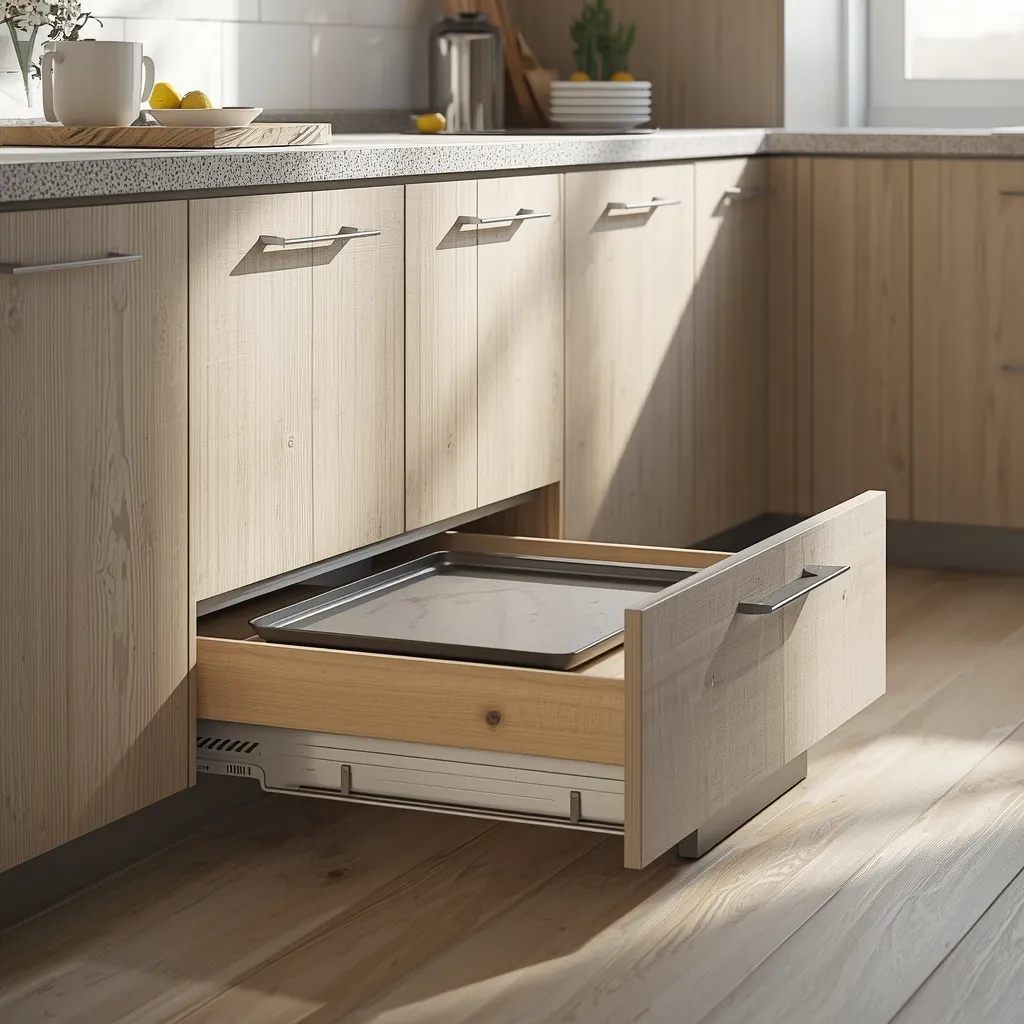
The recessed strip beneath your base kitchen cabinets, the toe-kick, is usually empty air. Shallow toe-kick drawers slide out at floor level to store flat items like baking trays, placemats, pet bowls, or a step stool, reclaiming space you didn’t know you had.
These drawers are shallow, around 8–10 cm (3–4 in) tall, so they suit flat or low items rather than tall jars. They’re ideal in small kitchens where every centimetre counts, and retrofit kits exist for existing cabinets. If you’re fitting them yourself, take care with power tools and follow the kit’s instructions; hire a joiner for a seamless factory finish. Pair with a full-extension runner so you can reach the back easily. It’s a quietly brilliant storage idea for kitchens that adds capacity without changing the room’s footprint.
- Why it works: Reclaims dead space at floor level for flat items.
- When to use it: Small kitchens and homes needing extra tray or linen storage.
- Solves: Nowhere to store baking sheets, mats, and step stools.
7. Slim Pull-Out Pantry
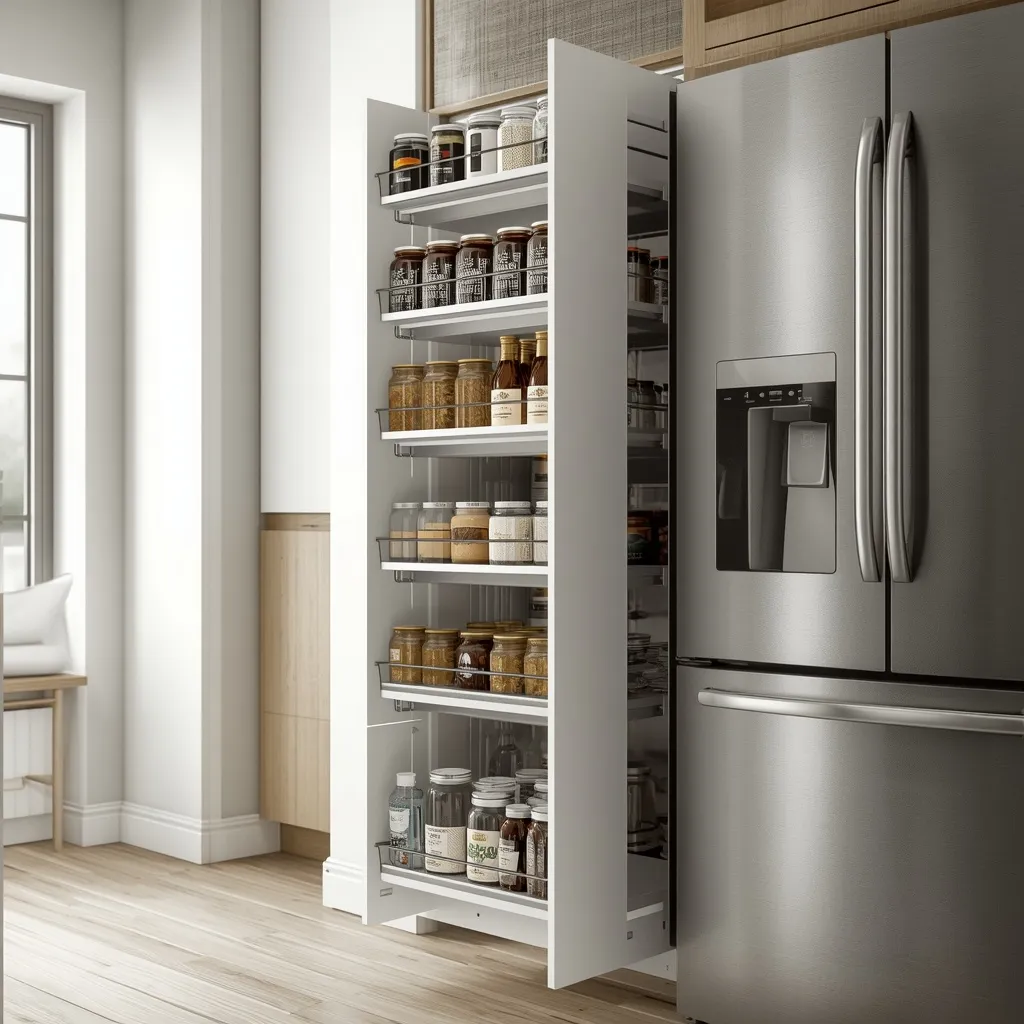
That narrow gap beside the fridge or between cabinets, often just 15–30 cm (6–12 in) wide, is perfect for a slim pull-out pantry. On smooth castors, a tall, shallow rack rolls out to reveal tiered shelves stacked with jars, cans, and spices, then tucks completely out of sight.
Because everything faces you as the unit pulls out, nothing gets lost behind other items, the classic frustration of deep cupboards. Measure the gap’s width, depth, and height precisely before buying or building, and allow clearance for the rolling mechanism. Keep heavier items low for stability so the tall unit doesn’t feel top-heavy as it moves. This is one of the smartest storage ideas for kitchens with awkward narrow gaps, and it dramatically increases usable pantry space without new cabinetry.
- Why it works: Turns a useless narrow gap into full-height pantry storage.
- When to use it: Kitchens with a slim gap beside the fridge or units.
- Solves: Lost cans and spices, and cramped cupboard capacity.
8. Corner Lazy Susan
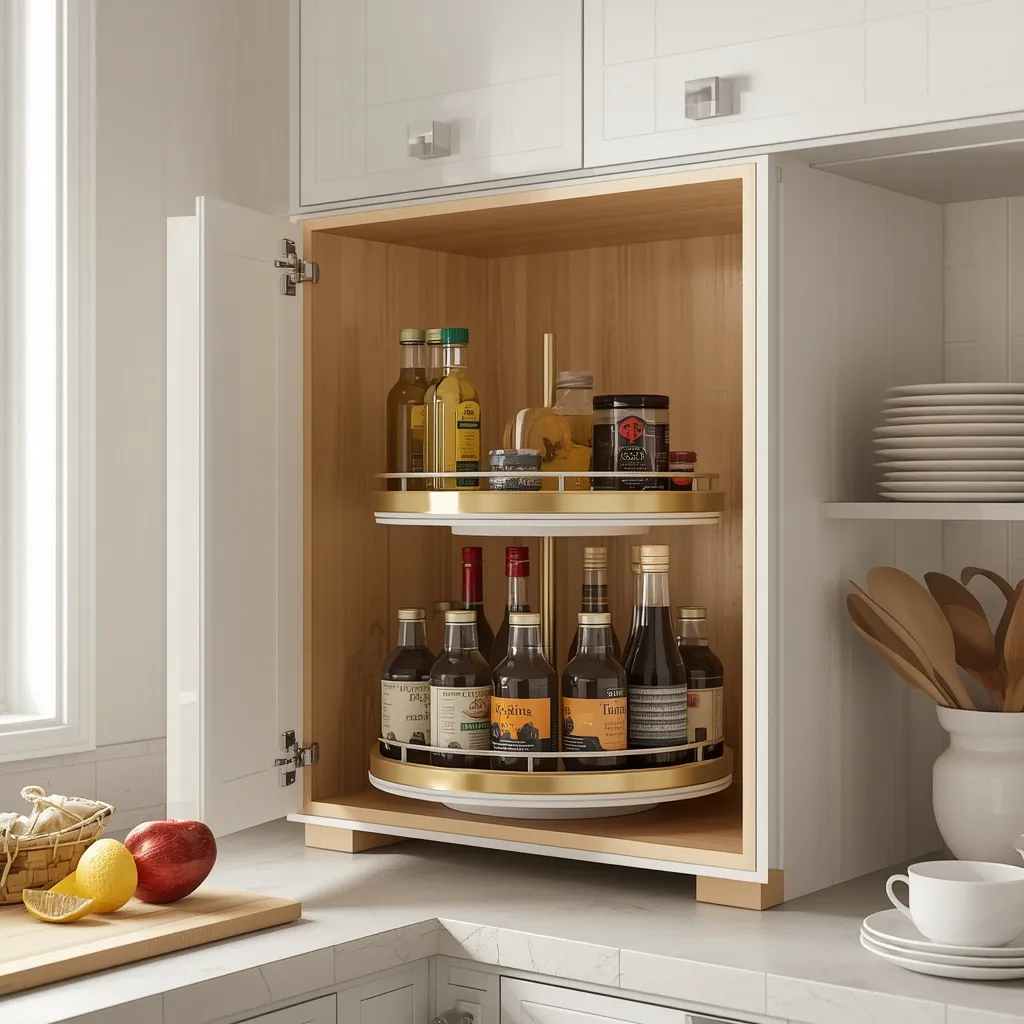
Corner cabinets are notorious black holes where jars vanish into unreachable depths. A rotating lazy Susan turntable fixes this instantly, spin it and everything comes to the front, so that bottle of vinegar from last winter finally reappears.
Use a two-tier turntable in deep corner cupboards, or a smaller one on a countertop or in the fridge for oils, sauces, and condiments. Choose a diameter that clears the cabinet opening as it turns, and a raised lip stops bottles sliding off. This works anywhere round-the-back items get forgotten: kitchen corners, bathroom cabinets, even craft cupboards. It’s a low-cost, no-installation storage idea that immediately makes an existing cabinet far more usable. Wipe the tray occasionally, since drips can make it sticky and slow to spin.
- Why it works: Makes deep corner contents visible and reachable with a spin.
- When to use it: Corner cabinets, pantries, and cluttered condiment shelves.
- Solves: Unreachable items lost at the back of deep cupboards.
9. Storage Headboard
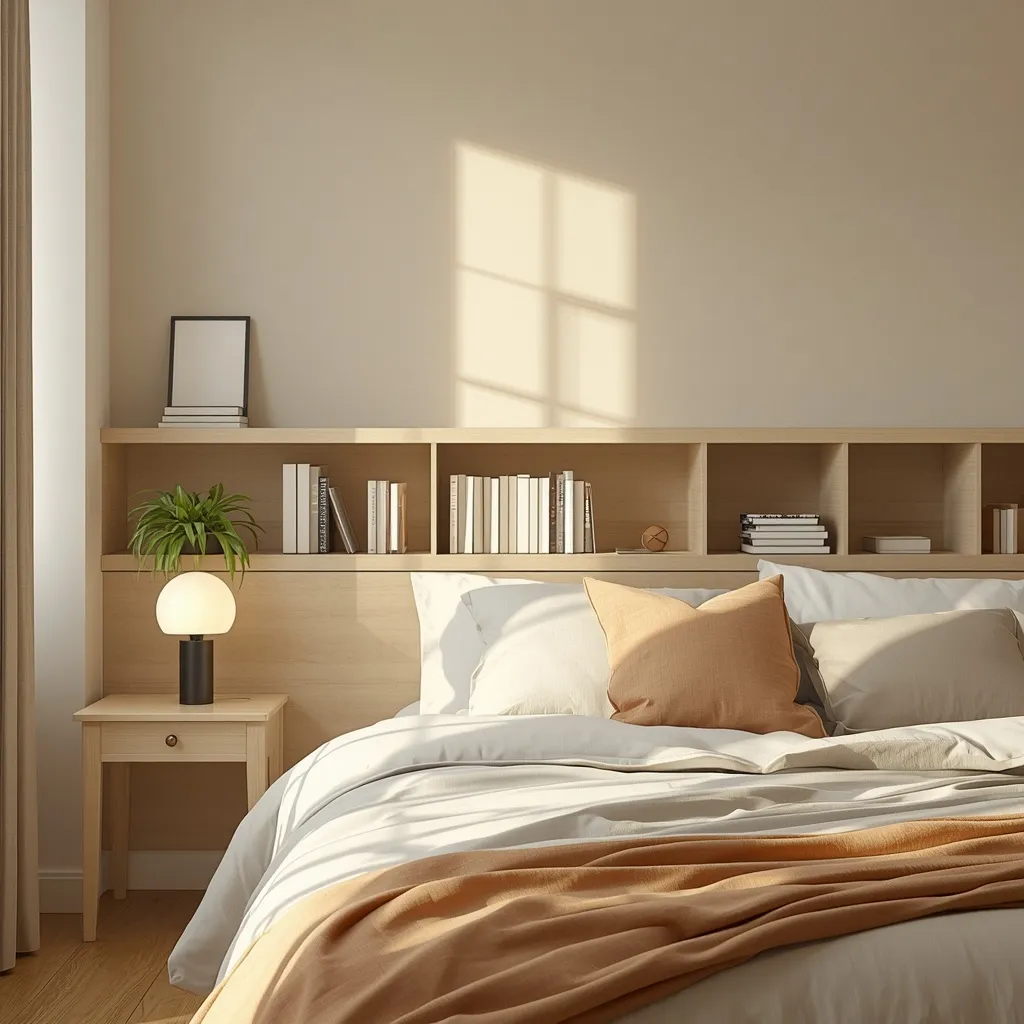
A hollow or shelved headboard adds a whole layer of bedside storage without a single extra piece of furniture. Slim compartments and open cubbies hold books, a phone, a glass of water, and reading glasses, keeping the surface of a small bedroom clutter-free.
Some designs feature sliding panels or a lift-up top for hidden storage, while open-shelf versions display books and a small plant. In a small bedroom, this can replace bulky nightstands entirely, freeing floor space on both sides. Keep anything breakable away from the very edge so it can’t be knocked in the night. Bookcase-style headboards suit renters because they’re freestanding, no wall fixing required. It’s an elegant storage idea for bedrooms that turns a purely decorative element into a functional one.
- Why it works: Adds bedside storage with no extra floor furniture.
- When to use it: Small bedrooms and rooms where nightstands don’t fit.
- Solves: Cluttered bedside surfaces and cramped floor space.
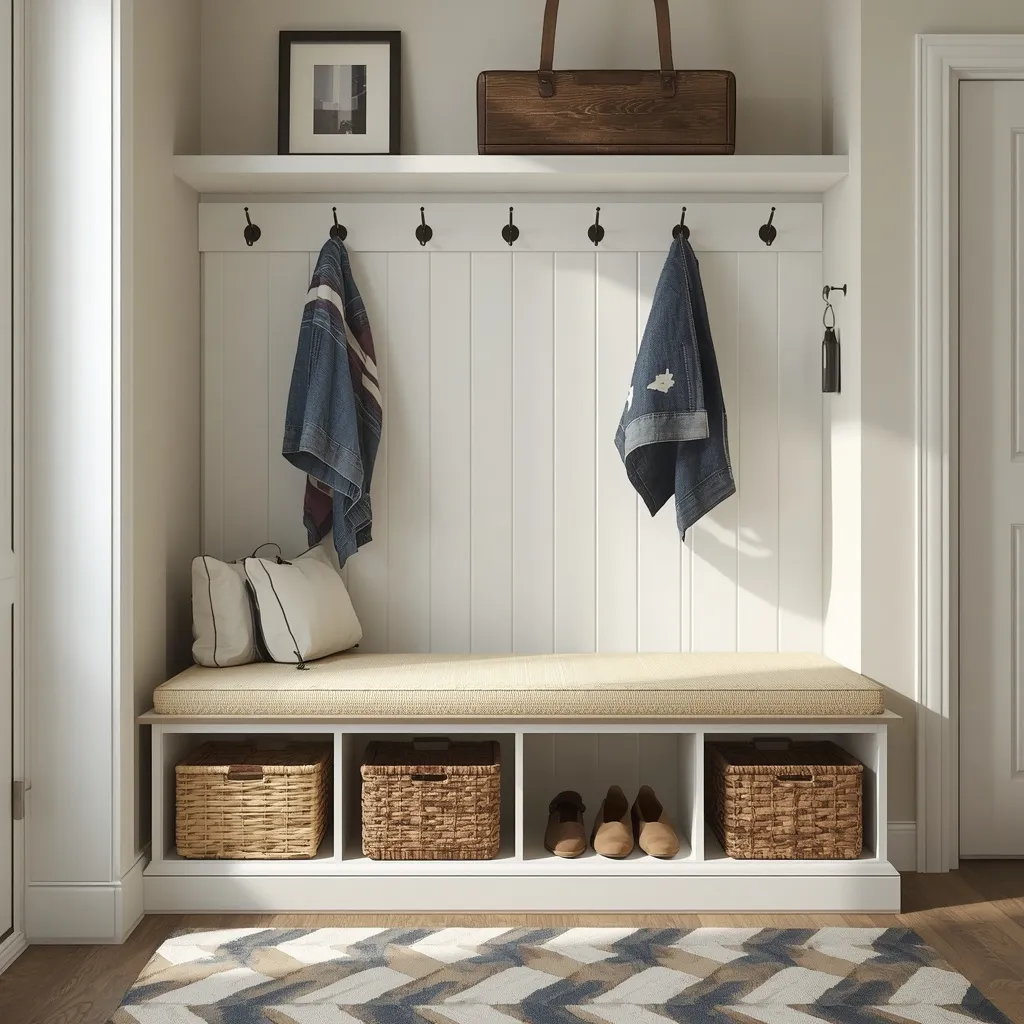
10. Entryway Storage Bench
A bench with storage inside or beneath it turns a chaotic entryway into an organised landing strip. Sit to pull on shoes while the cushioned lid or lower cubbies swallow footwear, bags, hats, and gloves, so the hallway floor stays clear.
Cubby-style benches with baskets suit families, one basket per person keeps clutter accountable. Lidded designs hide everything but need a safety hinge if children use them, to prevent pinched fingers. Add wall hooks above the bench for coats and a small tray for keys to create a complete drop zone. Measure the entry width so the bench doesn’t block the door swing. This is one of the most practical storage ideas for apartments and busy family homes because it tackles the daily pile-up right where it starts.
- Why it works: Combines seating, shoe storage, and a drop zone in one.
- When to use it: Entryways, mudrooms, and apartment hallways.
- Solves: Shoe piles and scattered bags by the front door.
11. Behind-Door Hooks
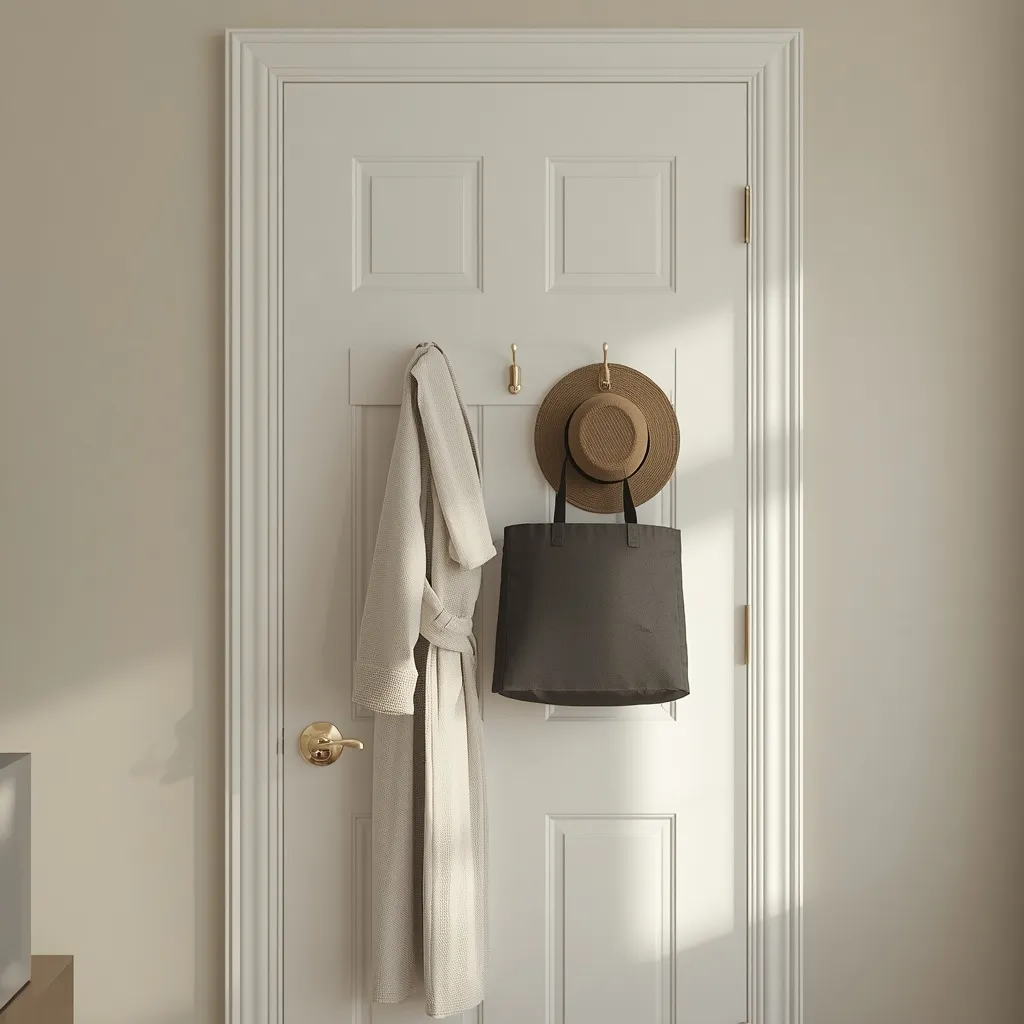
A simple row of hooks on the back of a door is the fastest storage upgrade in any home. Robes, bags, towels, or hats hang neatly out of sight, freeing up hooks, rails, and floor space elsewhere.
Adhesive hooks are the renter’s best friend, no drilling, no marks, but check the packaging’s weight rating and clean the door surface first so they hold. For heavier loads like coats, screw-in hooks or an over-door rack are more secure. Stagger hooks at different heights so items don’t overlap and crush each other. Bathrooms, bedrooms, and the back of a wardrobe door all benefit. It’s a tiny, low-cost storage idea, but multiplied across several doors it clears a surprising amount of everyday clutter.
- Why it works: Instant vertical storage on an unused surface, no tools needed.
- When to use it: Rentals, bathrooms, and behind bedroom or wardrobe doors.
- Solves: Robes, towels, and bags with nowhere to hang.
12. Stackable Clear Bins
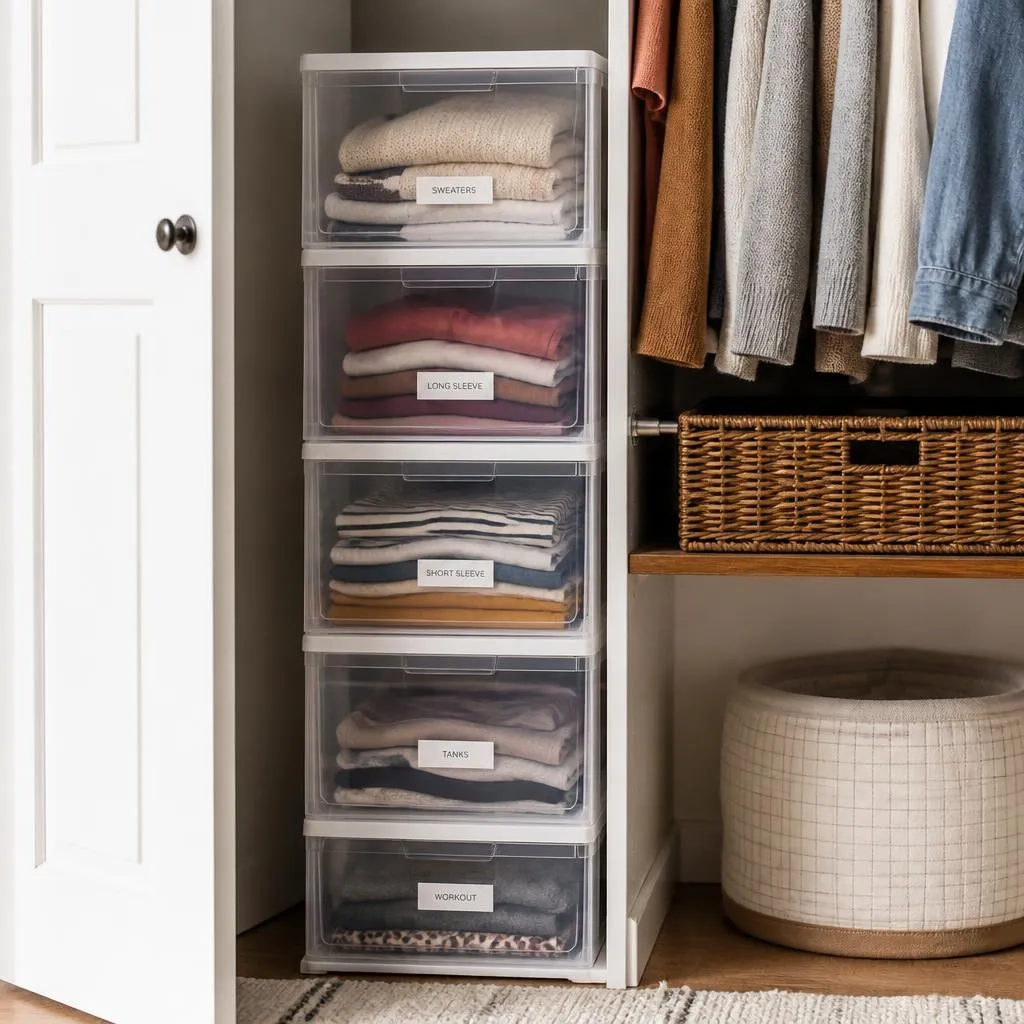
Matching stackable bins bring instant order to closets, garages, and cupboards, and because they’re clear you can see contents at a glance. Stacked in a column, they use vertical space efficiently while keeping seasonal clothes, craft supplies, or paperwork contained and dust-free.
The trick is choosing bins with front-opening flaps or drawers, so you can reach the bottom box without unstacking the whole tower, the classic frustration of plain lidded boxes. Label each one clearly, even if clear, for fast retrieval. Keep the same size and brand so they stack squarely and don’t topple. Heavier items belong in lower bins for stability. This is a foundational storage idea for small spaces and apartments, bringing structure to closets that otherwise become a jumble.
- Why it works: Contains clutter, uses vertical space, and keeps contents visible.
- When to use it: Closets, garages, and under-shelf cupboard space.
- Solves: Jumbled, hard-to-see storage in wardrobes and cupboards.
13. Drawer Dividers
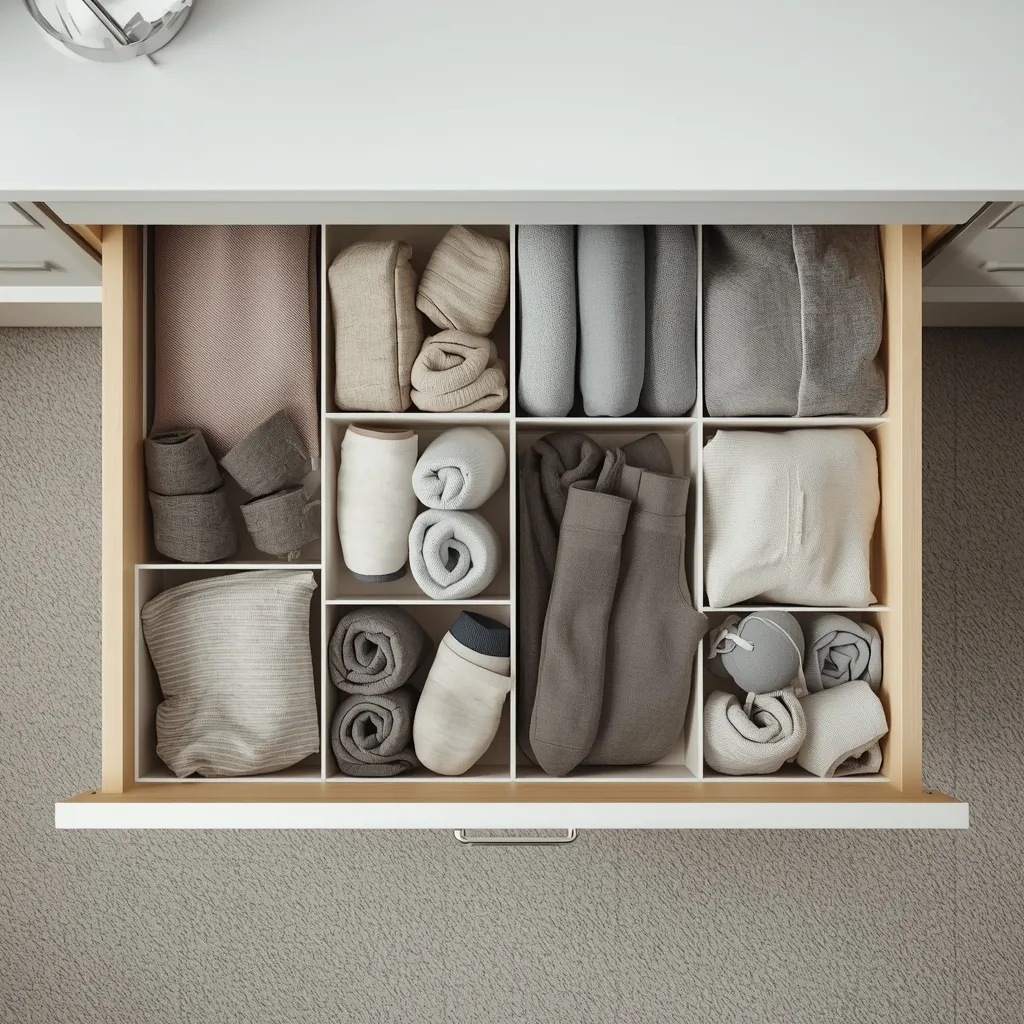
An organised drawer holds far more than a chaotic one, and dividers are the secret. Adjustable inserts split a drawer into tidy compartments for socks, utensils, stationery, or makeup, so everything has a place and nothing slides into a heap.
Spring-loaded or expandable dividers fit most drawers without tools and adjust to the exact width, ideal for renters and awkward sizes. In the kitchen, angled cutlery trays and peg systems stop utensils tangling; in a bedroom, small fabric cubes keep socks and underwear separated. Fold clothes upright, file-style, so you see every item at once and use the full depth. It’s a small, low-cost storage idea, but it dramatically increases how much a single drawer can hold neatly, across bedrooms, kitchens, and desks alike.
- Why it works: Multiplies usable drawer capacity and ends the daily rummage.
- When to use it: Kitchen, bedroom, bathroom, and desk drawers.
- Solves: Tangled, overstuffed drawers where items get lost.
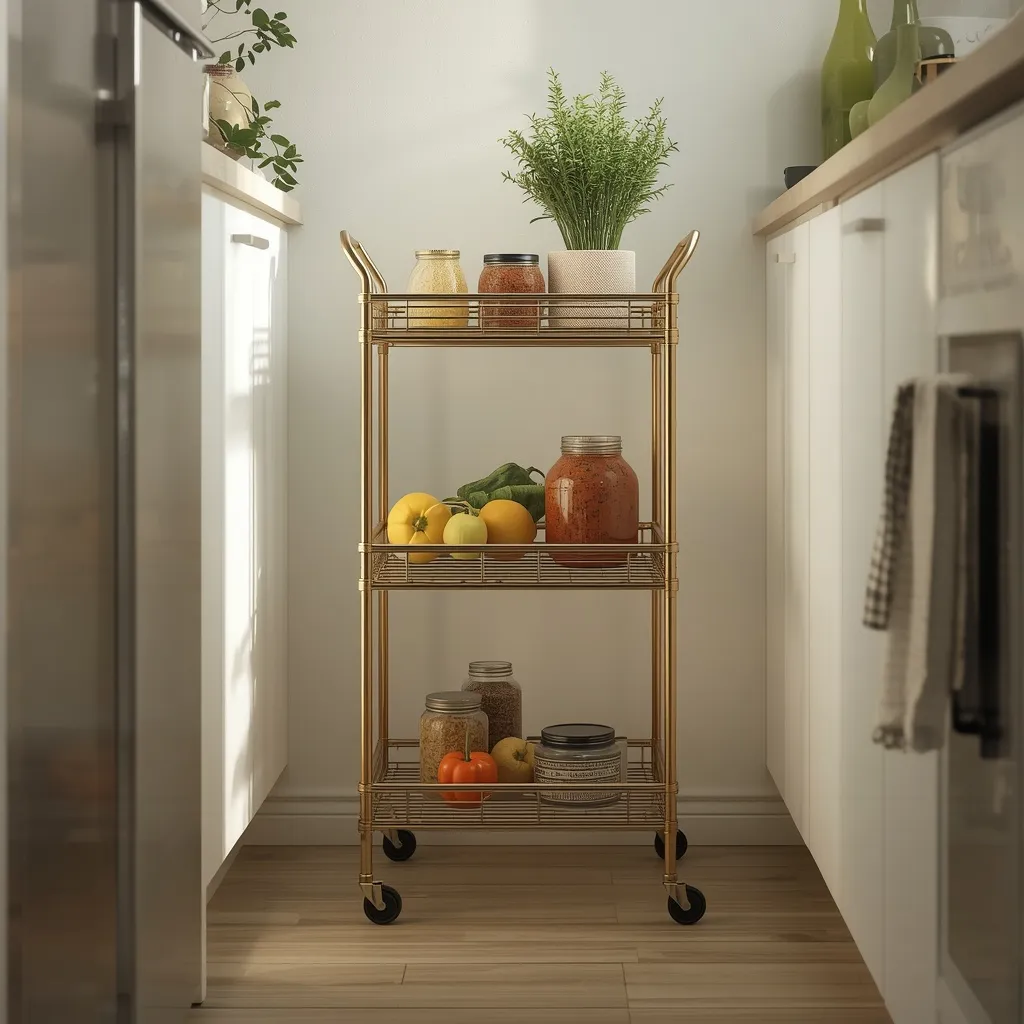
14. Rolling Utility Cart
A slim rolling cart is a mobile storage unit that squeezes into gaps and rolls out when needed. In a kitchen it holds produce and small appliances; in a bathroom, towels and toiletries; beside a desk, craft supplies or files, then tucks away against the wall.
Three-tier metal carts fit narrow gaps as slim as 30 cm (12 in) and move on castors, making them perfect for small, flexible spaces. Keep the heaviest items on the bottom tier for stability while rolling, and add small cups or liners to stop little items rolling around. Because it’s freestanding and needs no fixing, it’s a renter-friendly storage idea that adapts as your needs change. Use it as an overflow pantry, a bar cart, a craft station, or a bedside catch-all.
- Why it works: Adds flexible, mobile storage that fits narrow gaps.
- When to use it: Kitchens, bathrooms, home offices, and rentals.
- Solves: Overflow storage needs in tight or changing spaces.
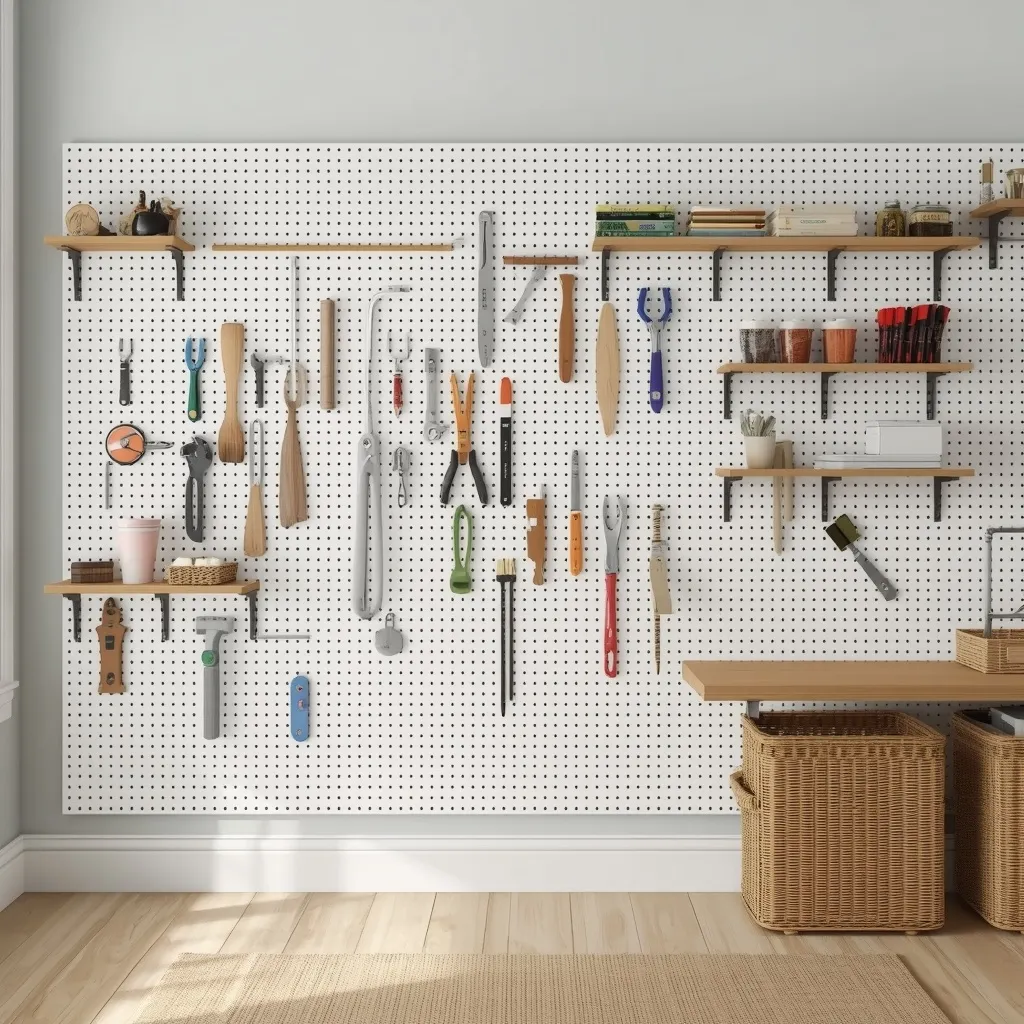
15. Pegboard Wall System
A pegboard turns a blank wall into a fully customisable storage grid. Hooks, shelves, and baskets rearrange in seconds to hold tools, craft supplies, kitchen utensils, or office bits, keeping everything visible and off the counter.
Mount the board on spacers a couple of centimetres off the wall so hooks can seat properly, and fix into studs for a board that will carry weight. Outline tools with a marker so you always know what goes where and can spot what’s missing, a trick borrowed from workshops. Pegboards suit garages, home offices, craft rooms, and kitchens, and painted versions look smart enough for living spaces. It’s an endlessly adaptable storage idea because you can reconfigure the layout whenever your needs shift, without new holes.
- Why it works: Fully reconfigurable wall storage that keeps items visible.
- When to use it: Craft rooms, garages, home offices, and kitchens.
- Solves: Cluttered counters and tools with no fixed home.
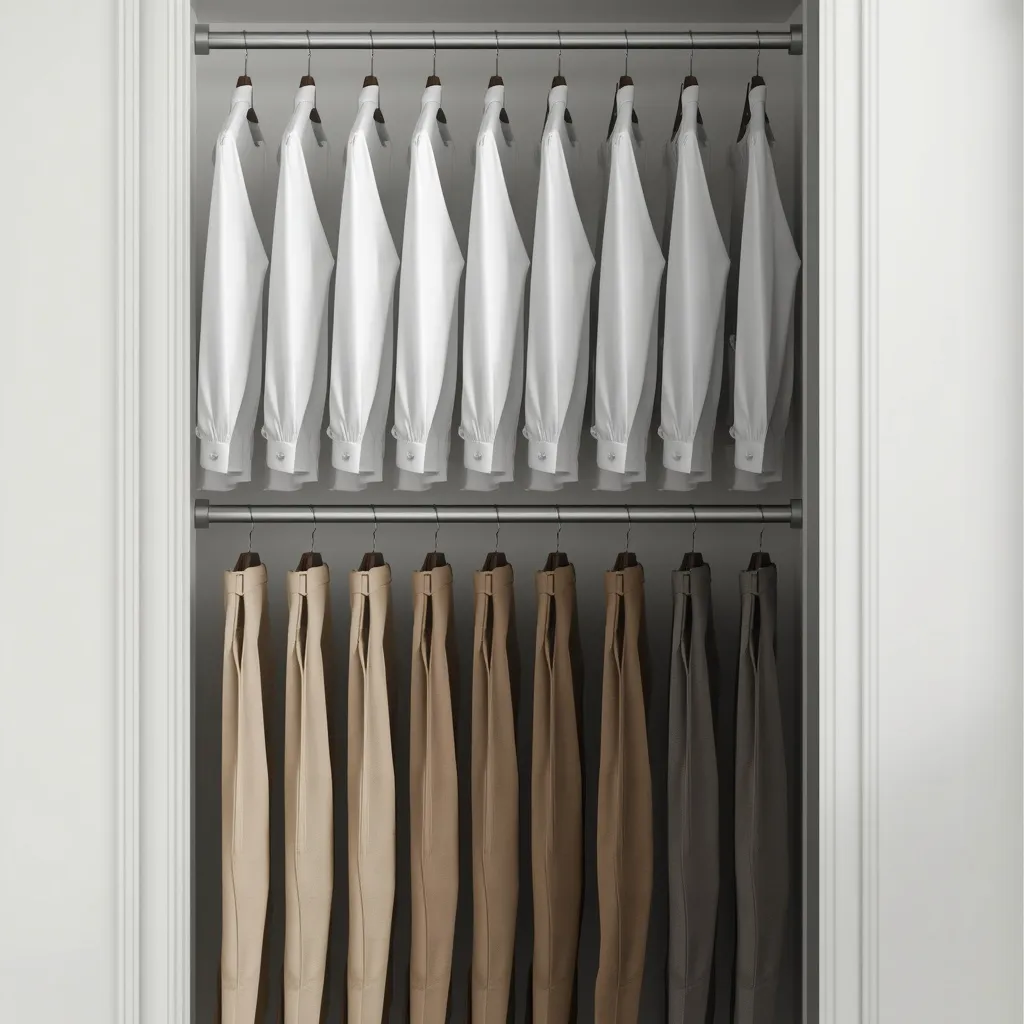
16. Double-Hang Closet Rod
Most wardrobes waste huge amounts of vertical space beneath hanging shirts. Adding a second rod below the first doubles your hanging capacity for shorter items like tops, skirts, and folded trousers, transforming a half-empty closet.
Hang the upper rod high enough to clear the garments below, around 100 cm (40 in) of drop for shirts on top and the same beneath usually works. A hanging rod extender simply clips over the existing rail with no tools, which is perfect for renters. Reserve full-length hanging elsewhere for dresses and coats. Pair with slim velvet hangers to fit more garments in the same width without slipping. This is one of the most effective storage ideas for bedrooms with limited closet space, and it costs very little to set up.
- Why it works: Doubles hanging capacity using existing closet height.
- When to use it: Wardrobes full of shirts, tops, and shorter garments.
- Solves: Wasted vertical space and cramped hanging rails.
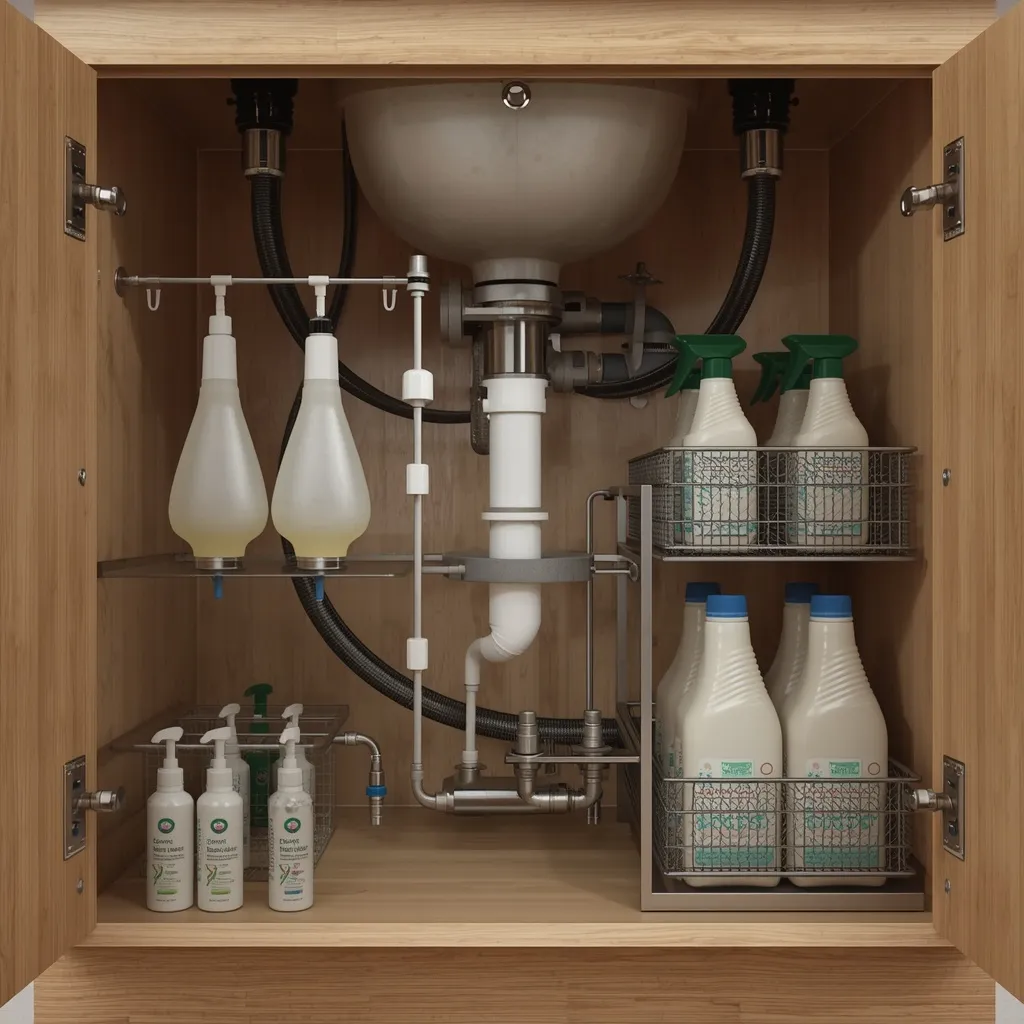
17. Under-Sink Tension & Stacking
The cabinet under a sink is awkward, pipes get in the way and everything piles into a dark heap. A tension rod hung across the space lets spray bottles hang by their triggers, while stacking shelves and pull-out bins organise the floor around the plumbing.
A spring-loaded tension rod needs no tools and instantly creates a hanging rail for cleaning bottles, freeing the floor of the cabinet. Add a small pull-out drawer or bin so you can reach items behind the pipes without emptying everything. Keep cleaning products in a caddy you can lift out in one go, and store them up high or locked away if young children are around, a real safety consideration. This clever storage idea works equally well under kitchen and bathroom sinks.
- Why it works: Organises around plumbing and uses vertical cabinet space.
- When to use it: Under kitchen and bathroom sinks.
- Solves: Chaotic, pipe-obstructed cabinets and buried cleaning supplies.
18. Leaning Ladder Shelf
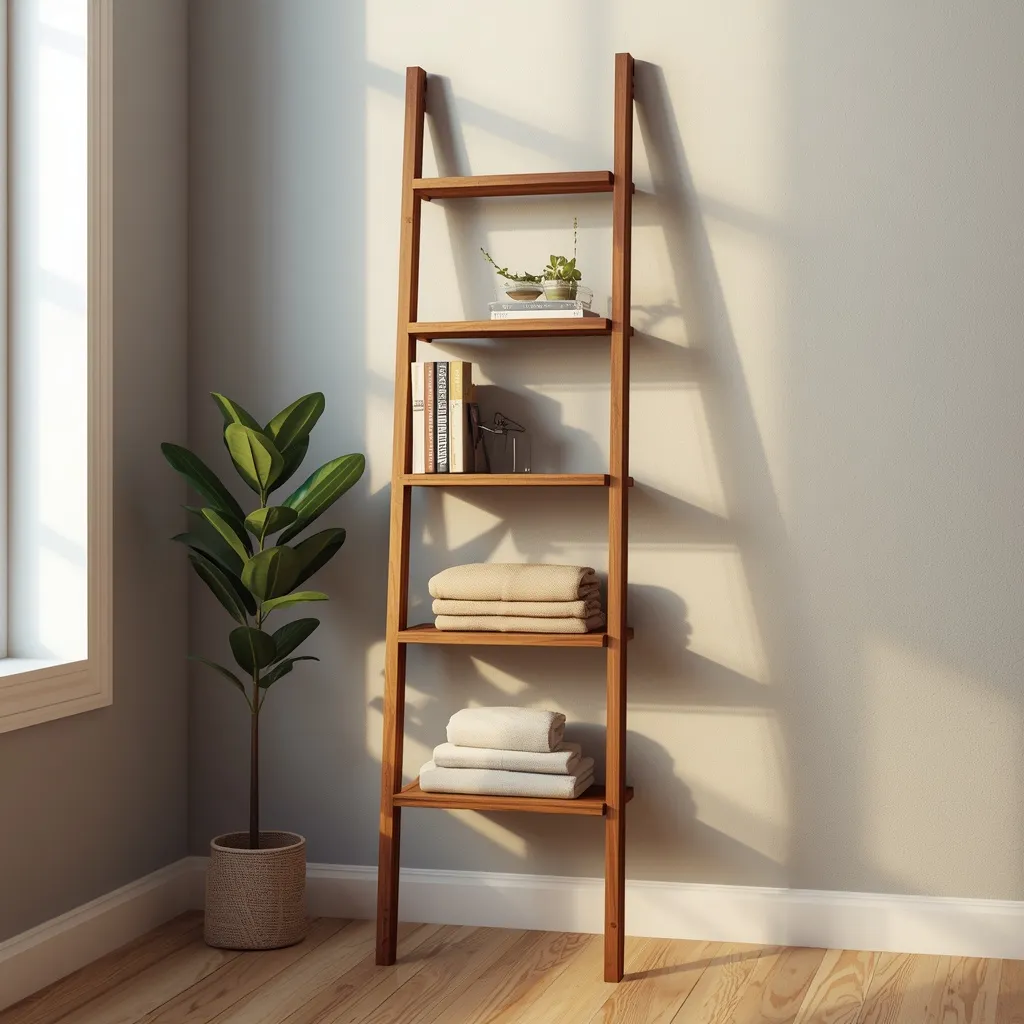
A ladder shelf leans against the wall to provide airy, tiered storage with a small floor footprint, wider at the bottom, narrower at the top. It holds books, plants, folded towels, or decorative baskets while keeping the room feeling open.
Because the tiers step back as they rise, a ladder shelf feels lighter than a boxy bookcase, ideal for small living rooms and bathrooms. Safety note: even leaning units should be anchored to the wall with a strap or bracket so they can’t be pulled over, particularly where children might climb. Keep heavier items on the wide lower shelves for stability. Freestanding designs suit renters since many need only a light anchor rather than full mounting. It’s a stylish, space-conscious storage idea that doubles as display.
- Why it works: Offers tiered storage and display with a small footprint.
- When to use it: Small living rooms, bathrooms, and rental spaces.
- Solves: The need for open storage that doesn’t overwhelm a room.
19. Fold-Down Wall Desk
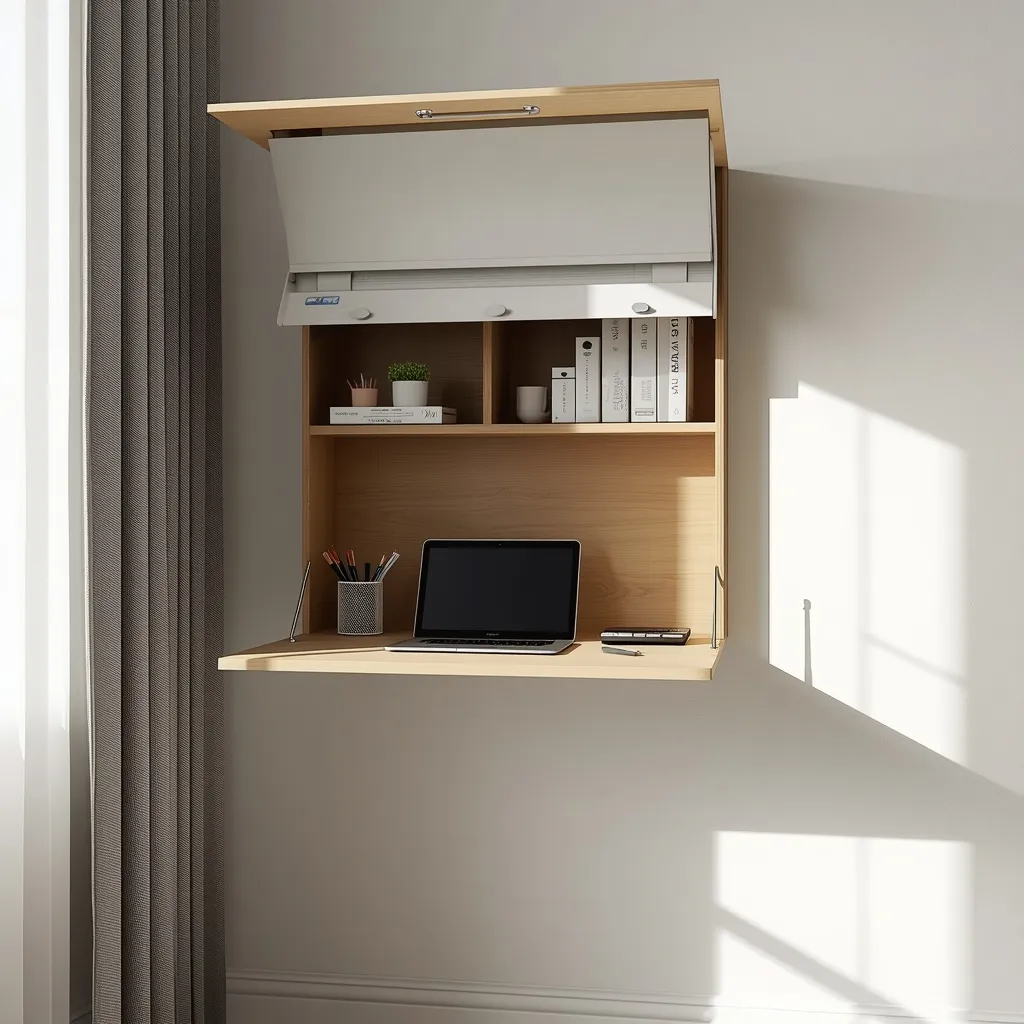
A wall-mounted desk that folds flat when not in use gives you a workspace and storage in the footprint of a picture frame. Fold it down to work; fold it up and the interior shelves keep stationery, a laptop, and papers tidily contained behind a clean panel.
This is a game-changer for apartments and multipurpose rooms where a permanent desk won’t fit. Mount the unit firmly into studs, as the folding mechanism and a laptop’s weight put real leverage on the fixings, under-speccing here risks the whole thing pulling loose. Add a slim shelf or magnetic strip inside for pens and cables, and route a power lead to a nearby socket safely rather than trailing it across a walkway. It’s a brilliant storage idea for small home offices carved out of a corner.
- Why it works: Provides a desk and hidden storage that disappears when closed.
- When to use it: Apartments, small home offices, and shared rooms.
- Solves: No room for a permanent desk plus its clutter.
20. Vacuum-Seal Seasonal Bags
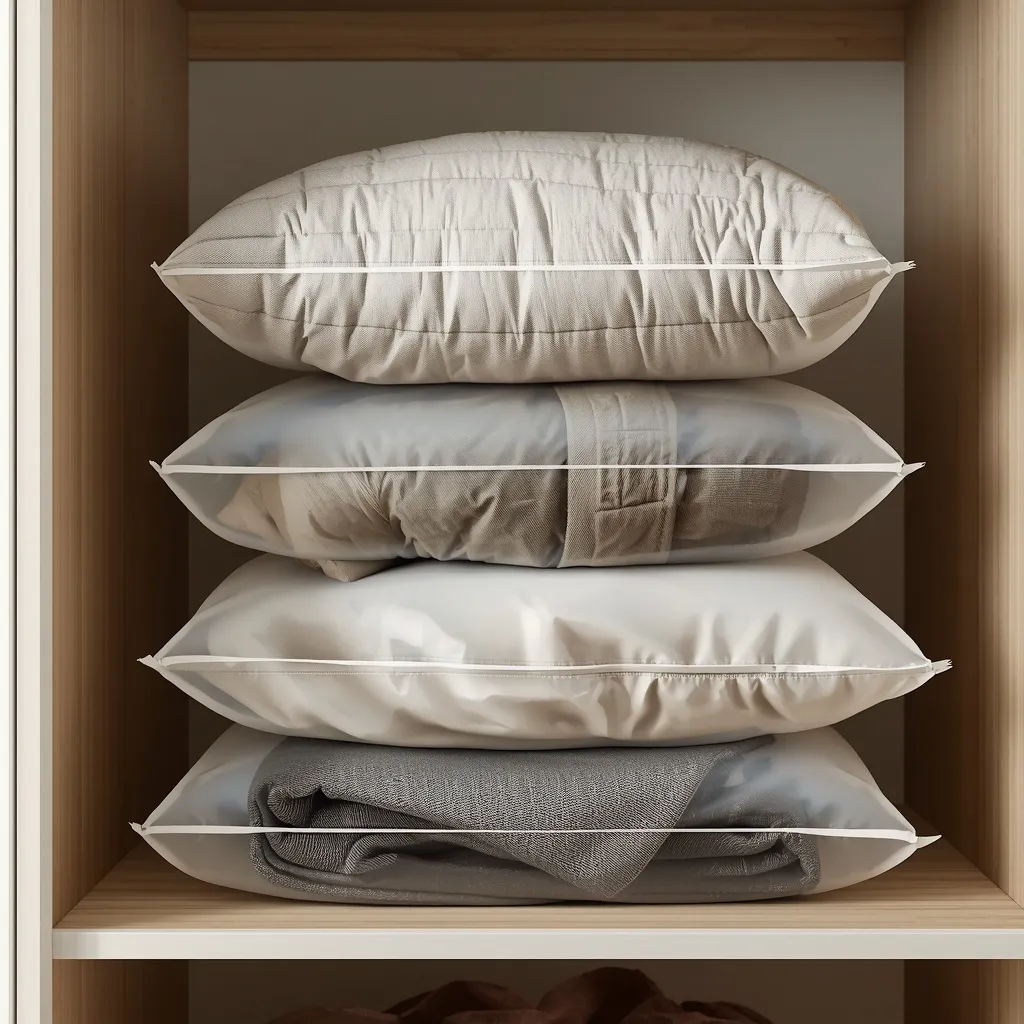
Bulky duvets, winter coats, and thick knitwear eat closet space for half the year. Vacuum-seal bags compress them to a fraction of their size, so an entire season’s bedding shrinks to a slim, stackable pack that slides under the bed or onto a top shelf.
Suck the air out with a vacuum cleaner and the contents shrink dramatically, protected from dust, damp, and moths. A useful caveat: avoid long-term compression of down, feather, and leather items, as prolonged squashing can damage their loft and structure, store those loosely instead. Label each bag by season so swaps are quick. This is one of the highest-impact storage ideas for small spaces because it multiplies existing closet and under-bed capacity without any new furniture. Refresh and re-seal at each seasonal changeover.
- Why it works: Shrinks bulky textiles to free up major closet space.
- When to use it: Seasonal clothing and bedding rotation in small homes.
- Solves: Bulky duvets and coats overwhelming limited storage.
21. Cube Storage for Toys
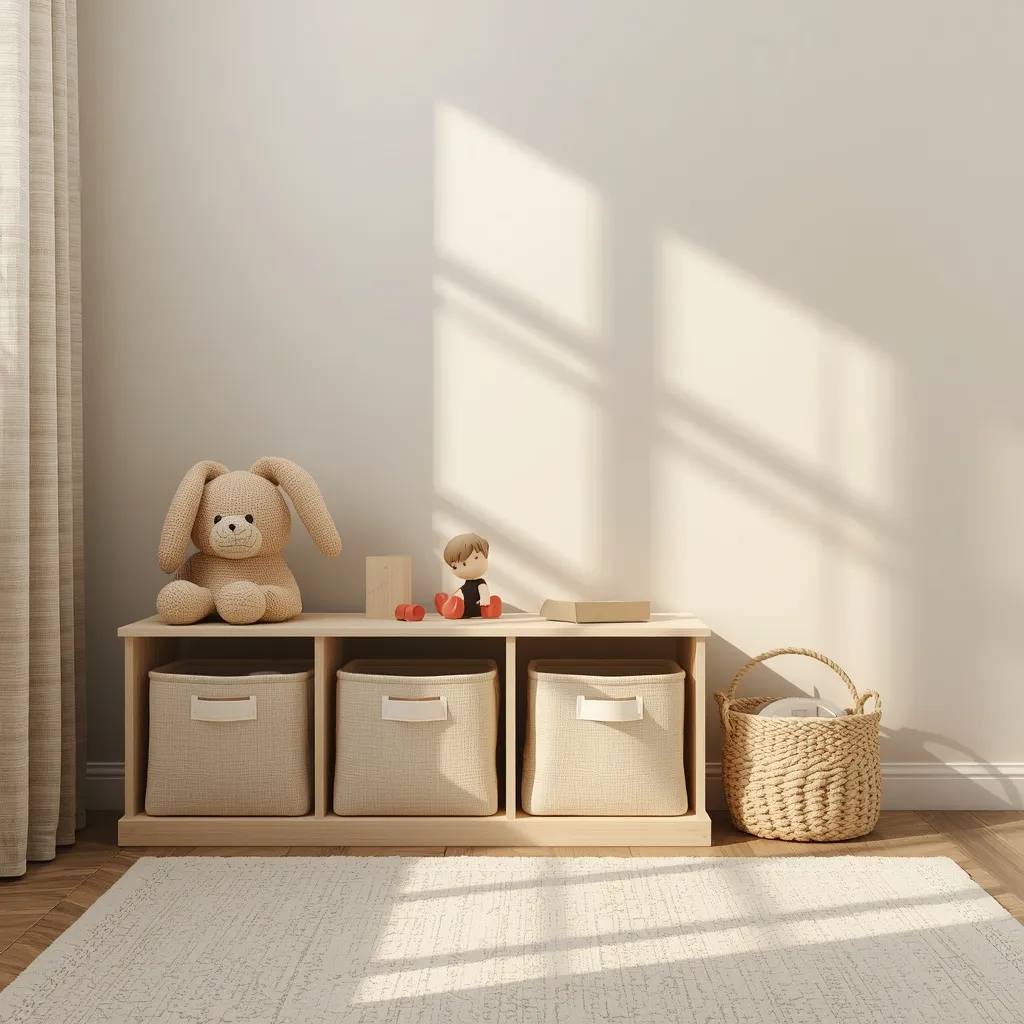
Open cube shelving with fabric drop-in bins is the gold standard for taming toys, turning a chaotic playroom or living-room corner into a system a child can actually manage. Each bin holds a category, blocks, cars, art supplies, so tidying becomes a quick sort.
Keep it low and accessible so children can reach and return things themselves, which builds independent tidying. Safety note: cube units are lightweight and tip easily when climbed, so anchor every unit to the wall with an anti-tip strap, a critical precaution in kids’ rooms. Picture labels on each bin help pre-readers know where things belong. The open cubes double as display for books and soft toys. It’s a flexible storage idea that grows with the child, later holding games, gear, or craft supplies.
- Why it works: Creates a child-friendly system that makes tidying simple.
- When to use it: Kids’ rooms, playrooms, and family living areas.
- Solves: Toy chaos and hard-to-manage children’s clutter.
22. Over-Toilet Shelving
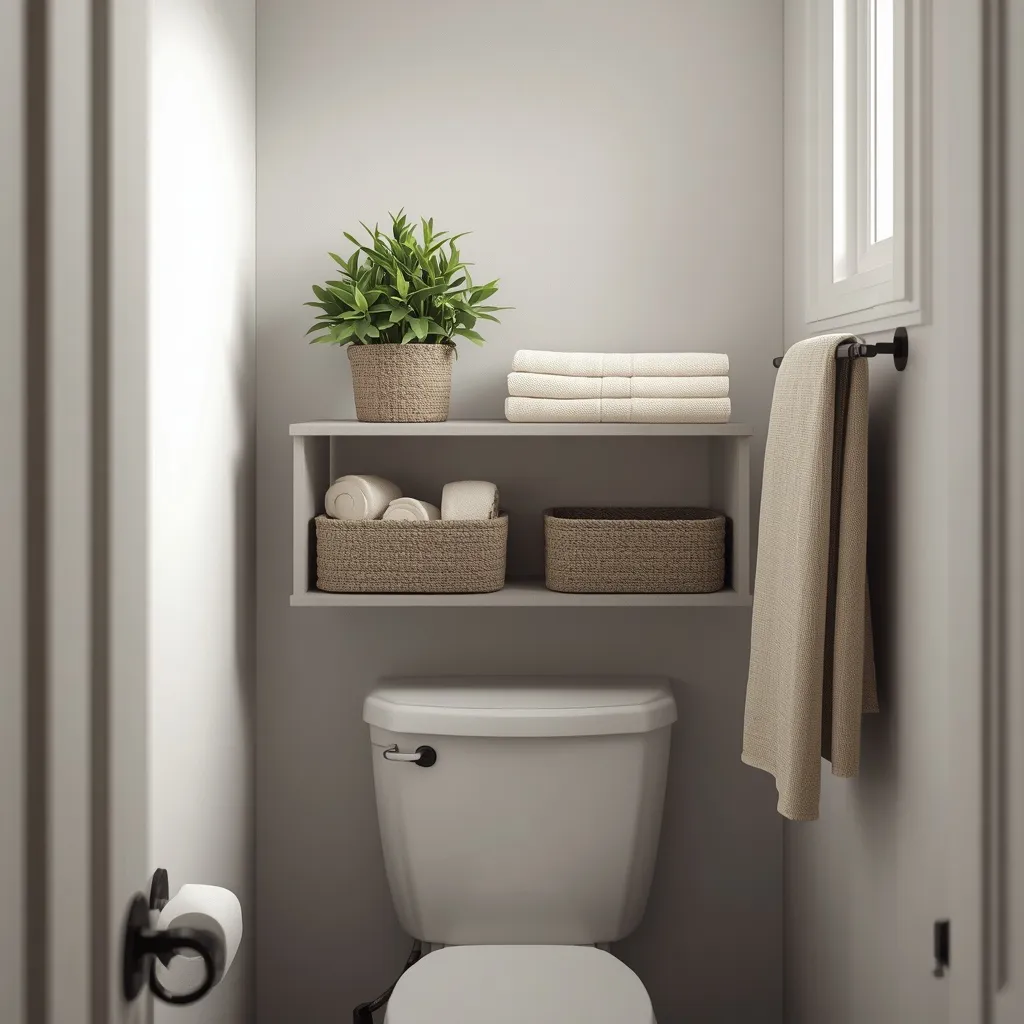
The wall above a toilet is almost always empty, yet it’s ideal for storing the bulky essentials a small bathroom struggles to house. An over-toilet shelf unit or floating shelves hold spare rolls, folded towels, and toiletries in baskets, all within easy reach.
Freestanding over-toilet étagères straddle the cistern with no drilling, perfect for renters, while wall-mounted shelves suit a more built-in look. Leave clearance above the cistern, about 60 cm (24 in), so you can lift the lid, and fix wall units into studs or with proper anchors, since bathroom walls are often tiled or plasterboard. Use closed baskets to hide small clutter and keep the display tidy. It’s a classic storage idea for small bathrooms because it uses forgotten vertical space without sacrificing a single centimetre of floor.
- Why it works: Turns dead overhead wall space into practical bathroom storage.
- When to use it: Small bathrooms, en-suites, and rentals.
- Solves: Nowhere to store spare rolls, towels, and toiletries.
23. Lift-Top Coffee Table
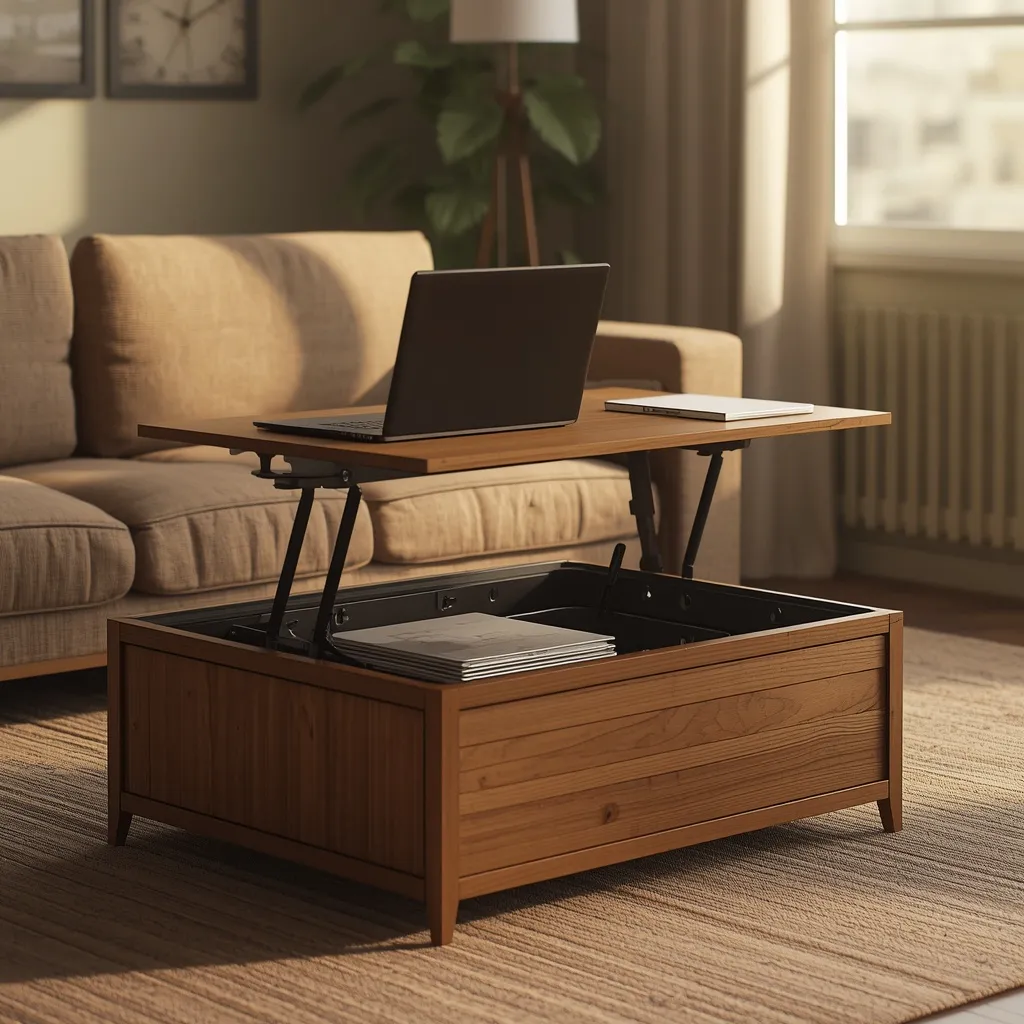
A lift-top coffee table hides deep storage beneath its surface, and its top rises and slides toward you to become a desk or dining tray. It’s a triple-duty centrepiece for a small living room: surface, workspace, and concealed storage in one.
Inside, stash remotes, magazines, chargers, and throws, keeping the living area clear. The raised top is genuinely useful for working or eating from the sofa, which matters in studio apartments where the coffee table doubles as a desk. Check the lifting mechanism feels smooth and locks securely in the raised position before buying. Measure so the table leaves comfortable legroom, ideally 40–45 cm (16–18 in) from the sofa. This is one of the most versatile storage ideas for living rooms and small apartments, replacing several pieces at once.
- Why it works: Hides storage and converts into a desk or dining surface.
- When to use it: Studio apartments and small, multipurpose living rooms.
- Solves: Living-room clutter and no room for a separate desk.
24. Vintage Trunk Storage
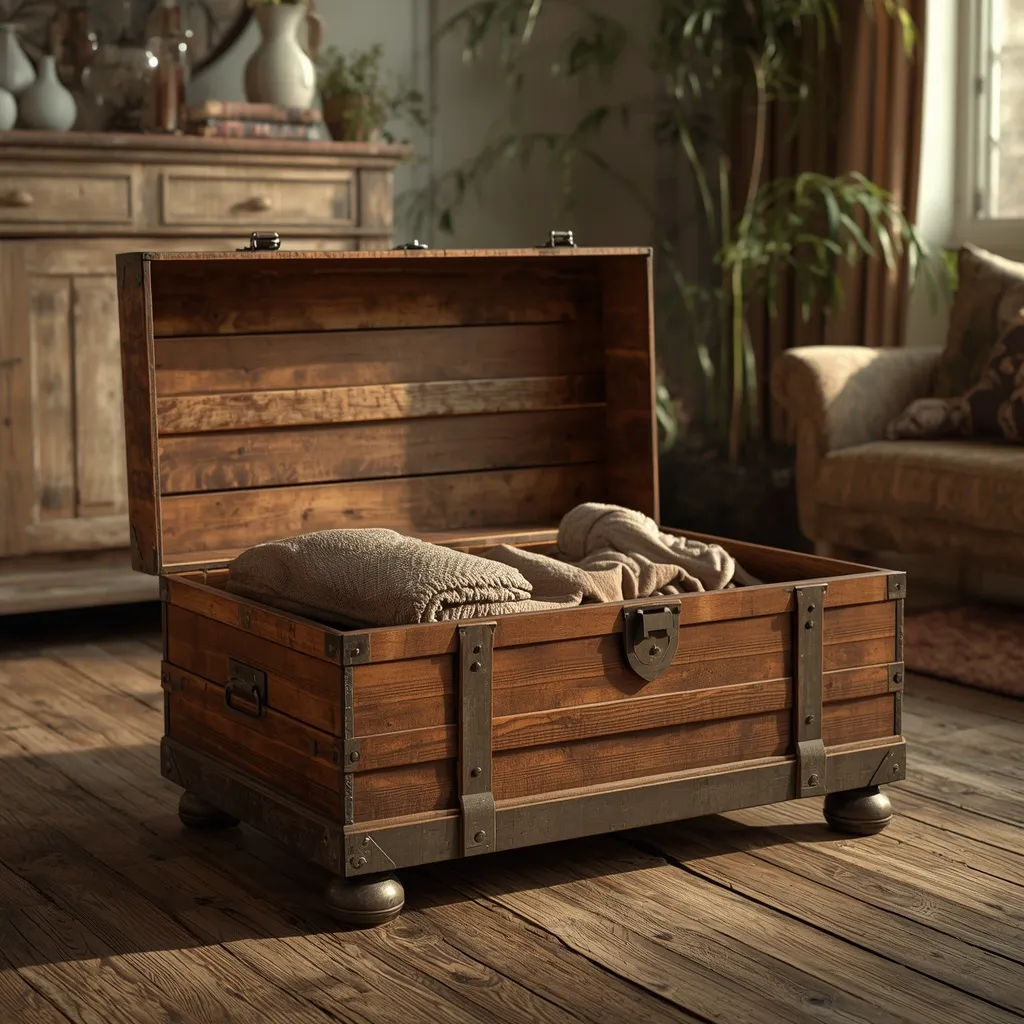
An old trunk, suitcase, or wooden chest brings character and generous hidden storage in a single piece. Used as a coffee table, blanket box, or bedroom bench, it stores bulky items like spare bedding or seasonal clothes while adding warmth and story to a room.
Flea-market trunks and stacked vintage suitcases suit boho, eclectic, and traditional interiors, and each has a patina you can’t buy new. Line the inside with fabric to protect textiles from rough or musty timber, and add felt pads underneath to protect floors. If the lid is heavy, take care it can’t slam on small fingers, and never let an airtight trunk become a hiding spot for young children, a real safety point with old chests. It’s a sustainable, budget-friendly storage idea that turns a find into a feature.
- Why it works: Delivers hidden storage plus character in one statement piece.
- When to use it: Boho, vintage, and eclectic living rooms and bedrooms.
- Solves: The need for bulky storage that also looks intentional.
25. In-Cabinet Tiered Risers
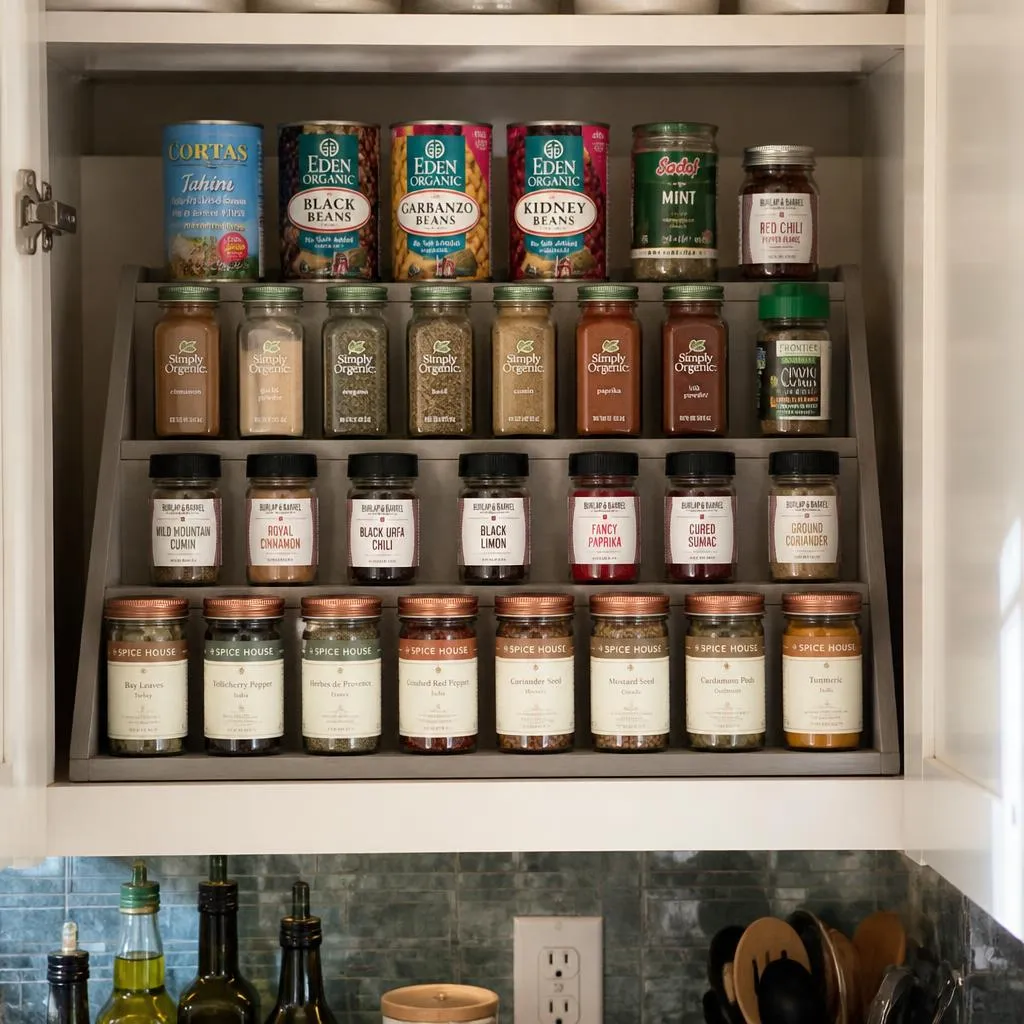
Deep cabinet shelves hide their contents in shadow, and back rows get forgotten. Stepped tiered risers lift each row higher than the one in front, so every jar, tin, or spice bottle is visible and reachable at a glance, no more buying duplicates of things you already own.
Use tiered shelf inserts for spices and canned goods, and expandable stair-step racks in deeper cupboards. They need no installation and simply sit on the existing shelf, which makes them ideal for renters. Group by category, baking, breakfast, tins, so restocking is quick. Pair with clear stackable shelf inserts to double up in tall cupboards with wasted headroom. It’s a small, low-cost storage idea for kitchens that dramatically improves how much of a cabinet you actually use, cutting waste and clutter at once.
- Why it works: Makes deep-cabinet contents visible and stops duplicate buying.
- When to use it: Spice cupboards, pantries, and deep kitchen cabinets.
- Solves: Forgotten back-row items and wasted cabinet depth.
Making It All Work Together
Before adding a single container, declutter first, storage solutions organise what you keep, they don’t excuse keeping everything. Start with the room that frustrates you most, pick two or three ideas that suit your space and whether you own or rent, and build from there. You’ll find more room-by-room inspiration across the wider Sunday Abode home and living collection, and plenty of practical guidance in our home organization ideas section. Good storage isn’t about owning more bins; it’s about giving everything you love a proper, easy-to-reach home.
Conclusion
The most effective storage ideas share one thing: they find capacity that already exists in your home and simply put it to work, under the bed, up the wall, behind the door, inside the furniture you already own. Whether you rent a compact studio or share a busy family house, a handful of these 25 solutions can quietly reclaim floor space, calm the clutter, and make daily life run smoother. Choose the ones that fit your rooms and budget, anchor anything tall for safety, and remember to declutter before you organise. For more room-by-room inspiration, browse our Home Organization collection, and save the ideas you want to tackle first this weekend.
FAQs
What are the best storage ideas for small spaces?
The most effective small-space storage ideas use overlooked areas: under the bed, up the wall, and behind doors. Vertical shelving, under-bed rolling boxes, over-the-door organizers, and multipurpose furniture like storage ottomans add capacity without eating floor space, which is exactly what tight rooms and apartments need.
How do I add storage without permanent fixtures if I rent?
Focus on freestanding and no-drill solutions: rolling carts, tension rods, over-the-door organizers, adhesive hooks, stackable bins, and freestanding shelving. Clip-on rod extenders double closet hanging space with no tools, and adhesive hooks lift without marking walls, so you can take everything with you when you move.
Should I declutter before buying storage solutions?
Yes, always declutter first. Storage organises what you genuinely use and keep, buying containers to hold things you don’t need just relocates the clutter. Sort and remove first, then choose storage sized to what remains, and you’ll need far fewer bins than you think.
How do I stop tall shelves and cube units from tipping over?
Anchor them to the wall with anti-tip brackets or straps, especially in kids’ rooms. Furniture tip-overs cause serious injuries, so any tall or climbable unit should be secured, with heavier items placed on lower shelves to keep the centre of gravity low.
What are good storage ideas for a small kitchen?
Reclaim hidden kitchen space with toe-kick drawers beneath cabinets, a slim pull-out pantry in the gap beside the fridge, lazy Susans in corner cupboards, and tiered risers so back-row items stay visible. A rolling cart adds flexible overflow storage that tucks away when not needed.
How can I store bulky bedding and seasonal clothes?
Vacuum-seal bags compress duvets, coats, and knitwear to a fraction of their size, freeing major closet and under-bed space. Avoid long-term compression of down, feather, and leather items, which can lose their loft, and label each bag by season so swaps at changeover are quick.
Which storage ideas work best in a living room?
Choose furniture that hides storage inside itself: a lift-top coffee table, a storage ottoman, or a vintage trunk keeps remotes, blankets, and clutter out of sight while doubling as a surface or seat. A leaning ladder shelf adds open storage without crowding the room.