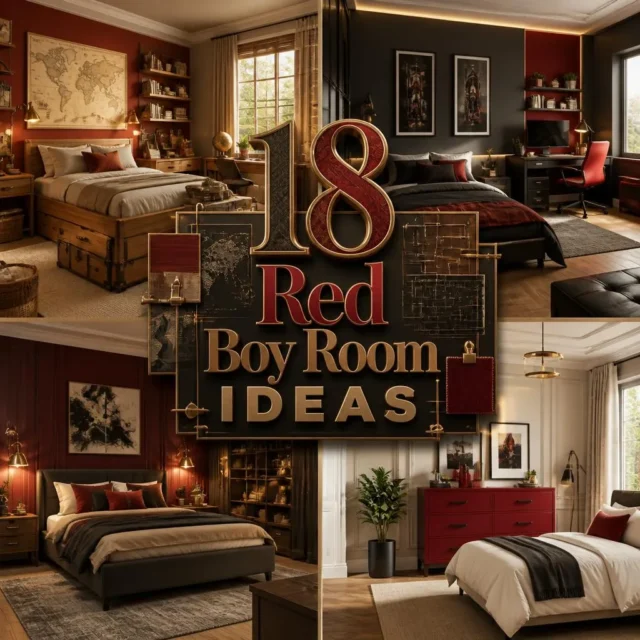

Red is the color children reach for first and adults hesitate over longest. Red boy room ideas can go two ways: a bold, energetic room that a child genuinely loves, or a wall so saturated that nobody can wind down in it. The difference is almost never the color itself, it’s how much of it there is, where it sits, and which red you actually chose. At Sunday Abode, we like a color that has an opinion, as long as it still works at bedtime. These 18 ideas span every age from nursery to dorm room, with the two practical realities of red that nobody mentions.
Key Takeaways
- Red is a stimulating color. Use it as an accent, roughly 10–20% of the room, rather than painting every wall, especially for a child who struggles to settle.
- Keep red off the wall the child faces from their pillow; put it behind the bed instead.
- Red is genuinely difficult to paint. It has poor opacity, so use a tinted grey or pink primer and expect three to four coats.
- Themed red, fire trucks, superheroes, dates within a couple of years. Keep red in textiles you can swap, not on permanent furniture.
- Anchor all furniture, fit cordless blinds, and use low-VOC paint, the same non-negotiables as any child’s room.
How Much Red Is Too Much?
Use red as an accent rather than a whole-room color. Roughly 10–20% of the room, one wall, the bedding, a rug, a chair, gives you all the energy of red without the intensity that makes a bedroom hard to settle in.
Red is the most stimulating color on the wheel, which is exactly why children love it and why designers generally advise restraint with it in bedrooms. A room drenched in bright red can feel exciting at four in the afternoon and relentless at half past seven. If your child is a poor sleeper, this matters more than any styling decision you’ll make.
There’s a simple placement trick that solves most of it: put the red behind the bed, not opposite it. A child lying in bed stares at the wall facing them, so a red feature wall behind the headboard delivers the drama when they walk in and disappears entirely when they lie down. Keep the wall they actually look at calm.
Which Red Should You Choose?
Red is not one color, and the shade you pick changes everything about how the room feels and how long it lasts.
| Shade | How it feels | Best for |
| Bright primary red | Energetic, playful, loud | Toddlers and little boys; accents only |
| Deep crimson / burgundy | Grown-up, moody, rich | Teens; feature walls; dark schemes |
| Rust / terracotta | Warm, earthy, calm | Every age; the longest-lasting red |
| Red as accent only | Punchy but restful | Poor sleepers; nurseries; small rooms |
| Red + black | Bold, graphic, dramatic | Teens, gaming, dorm rooms |
Rust and terracotta are the quiet winners here: they read as red, they suit a four-year-old and a fourteen-year-old equally, and they never look like a fire station.
1. Red Accent Nursery
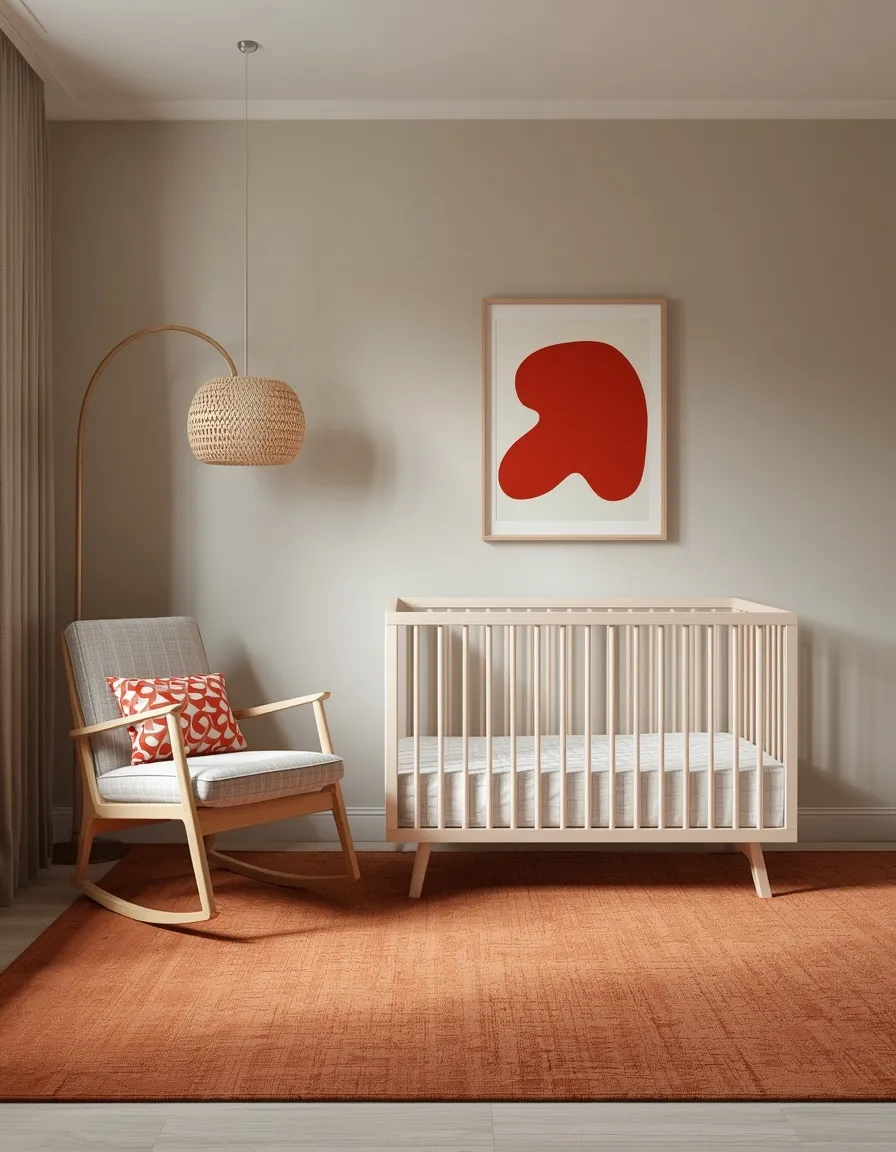
Red in a nursery works best in the smallest possible dose. Soft white or greige walls, a warm rust rug, a red-and-white patterned cushion on the chair, and one bold print give the room warmth and punch without overwhelming it.
Keep the walls neutral and let red live entirely in the textiles and art, which is both calmer for a baby and far easier to change when tastes shift. Choose a warm rust or brick red rather than a bright primary, which reads gentler and ages better. Safety comes before styling: the crib must hold a firm, flat mattress and a fitted sheet and nothing else, all furniture must be anchored to the wall, and any blinds must be cordless. This suits parents who want warmth rather than a themed nursery.
- Best for: nurseries; warmth and character without overwhelming a baby.
- Watch out: bare crib, anchored furniture, cordless blinds, always.
- Key elements: neutral walls, rust rug, red textiles, one bold print.
2. Playful Toddler Red Room
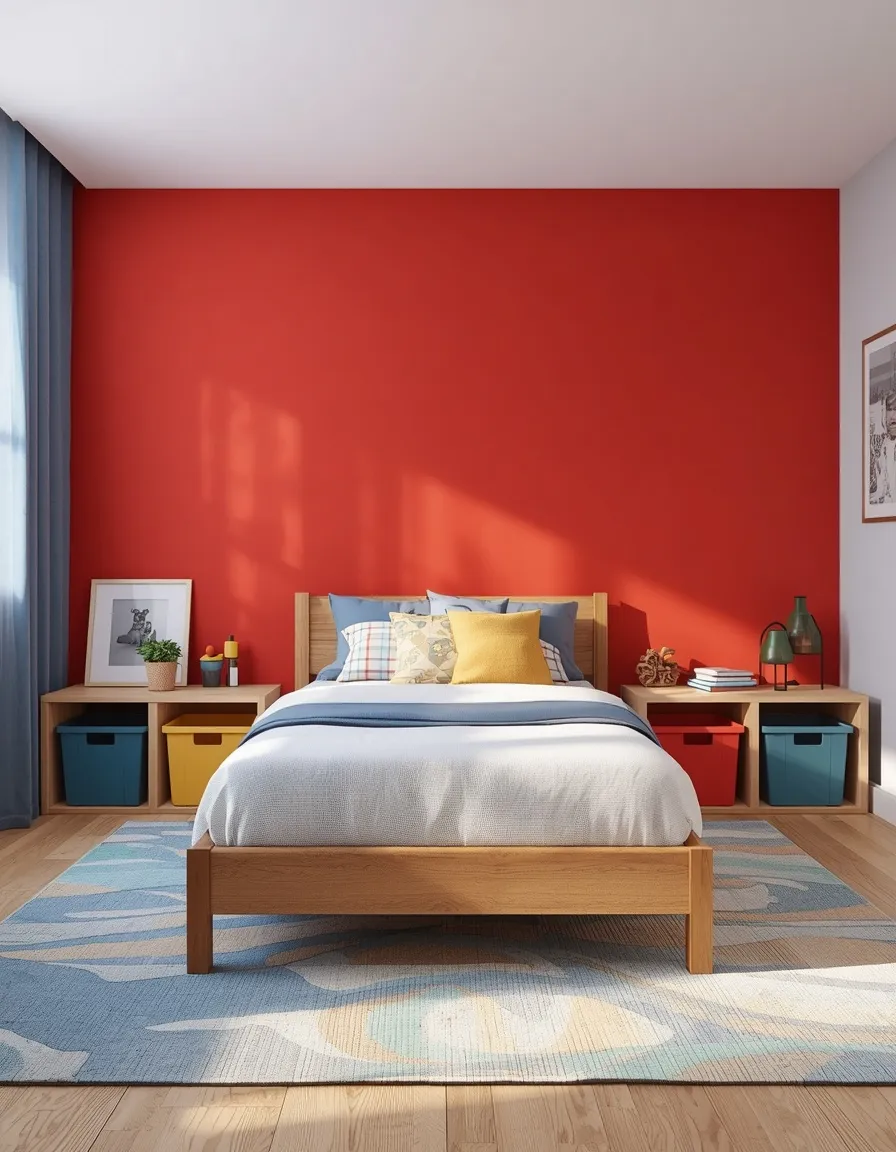
A toddler’s red room should be cheerful and washable. A single red feature wall behind the bed, primary-colored storage bins, a soft rug, and low open shelves make a room built for play and easy tidying.
Put the red behind the bed rather than opposite it, so the room feels lively when he walks in and calm when he’s lying down. Use a scrubbable satin paint, since a toddler’s walls meet crayons, sticky hands, and enthusiasm. Deep bins beat neat drawers at this age, they’re the only storage a three-year-old will actually use. Anchor every bookshelf and dresser to the wall, since toddlers climb. This suits ages two to five and parents who want energy without chaos.
- Best for: ages two to five; energy that’s still easy to live with.
- Watch out: scrubbable satin paint, deep bins over drawers, everything anchored.
- Key elements: red wall behind the bed, primary bins, low shelves, washable rug.
3. Little Boy Adventure Room
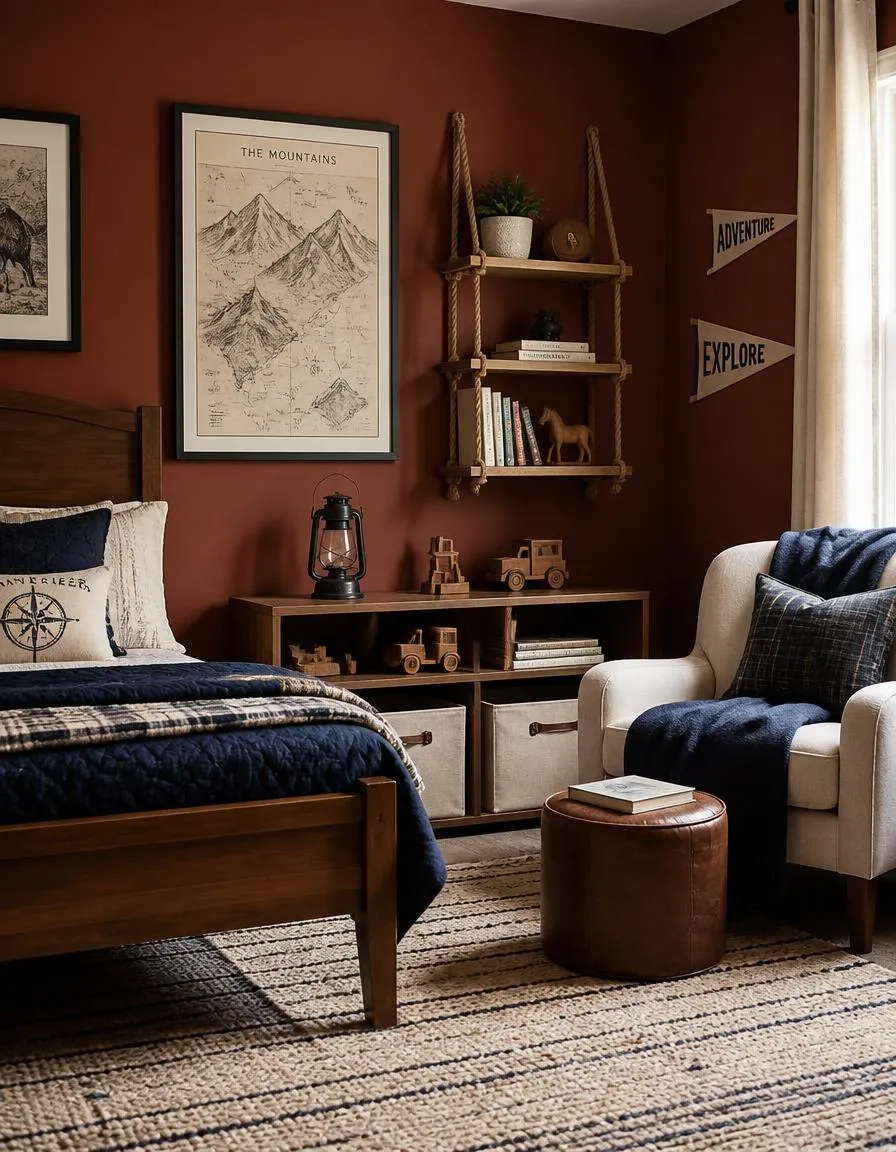
For a boy of five to eight, red works beautifully in an adventure scheme. Rust-red walls, a map or mountain print, a teepee or reading corner, wooden toys, and a rope shelf create a room that’s bold but not cartoonish.
Choose rust or brick red over bright primary, which is what keeps the room from looking like a nursery he’s outgrown. Pair it with navy, cream, and natural wood for a palette that stays handsome for years. Build the adventure in through the art and objects, maps, compasses, a rope shelf, rather than through licensed character decals, which he will be embarrassed by within two years. This suits ages five to eight and parents who want a room with imagination rather than merchandise.
- Best for: ages five to eight; imagination over licensed merchandise.
- Why it works: rust red with navy and wood ages far better than primary red.
- Key elements: rust walls, map or mountain art, rope shelf, reading corner.
4. Red and Black Bold Scheme
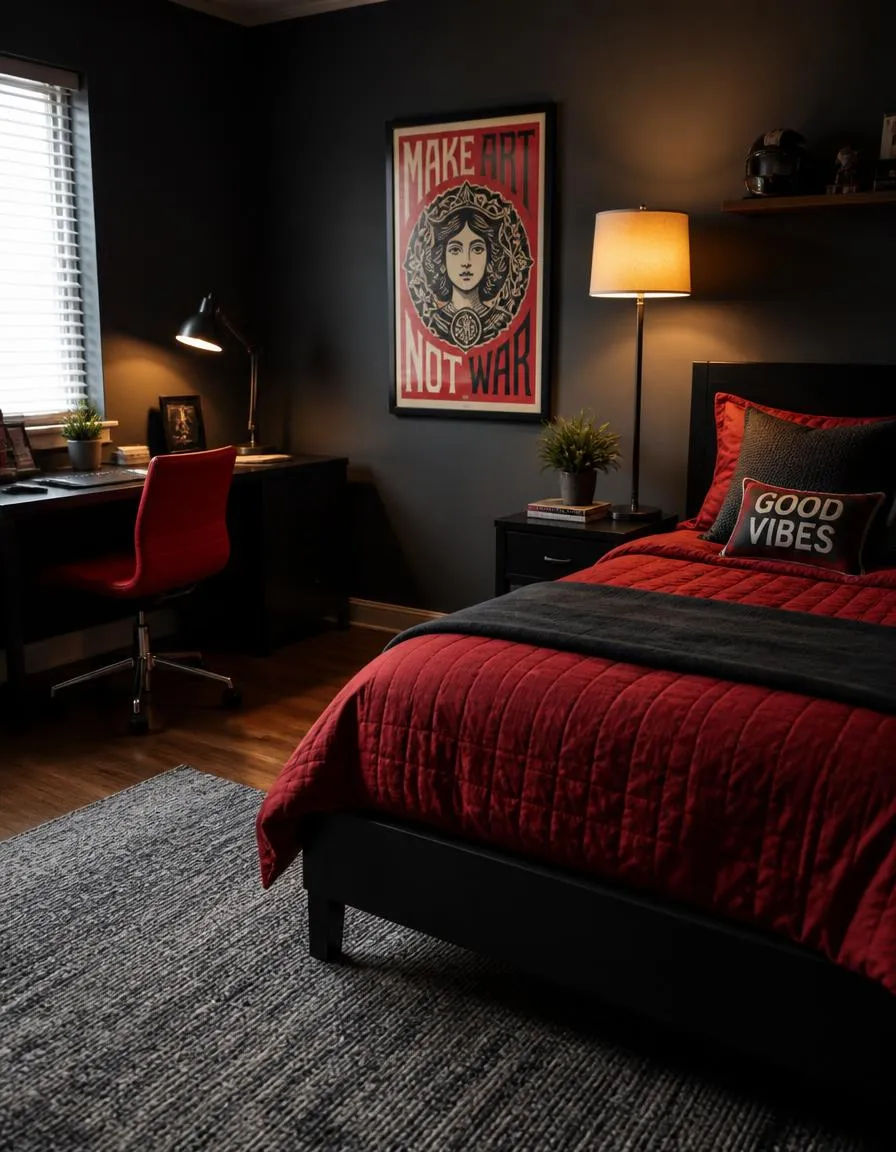
Red and black is the combination boys ask for by name. Charcoal or black walls with red accents in the bedding, a graphic poster, and a red desk chair create a room with real graphic punch.
Get the ratio right and this looks sharp rather than oppressive: use black or charcoal as the dominant tone with red at around 20 percent, not the other way round, because a room that’s half red and half black is exhausting. Use matte black rather than gloss, which shows every fingerprint. Dark walls swallow light, so this scheme genuinely needs good layered lighting, a ceiling light alone will leave it gloomy. This suits older boys, teens, and gamers.
- Best for: older boys and teens; the combination they actually ask for.
- Watch out: black dominant, red at ~20%, reverse it and the room is exhausting.
- Key elements: matte charcoal walls, red bedding and chair, layered lighting.
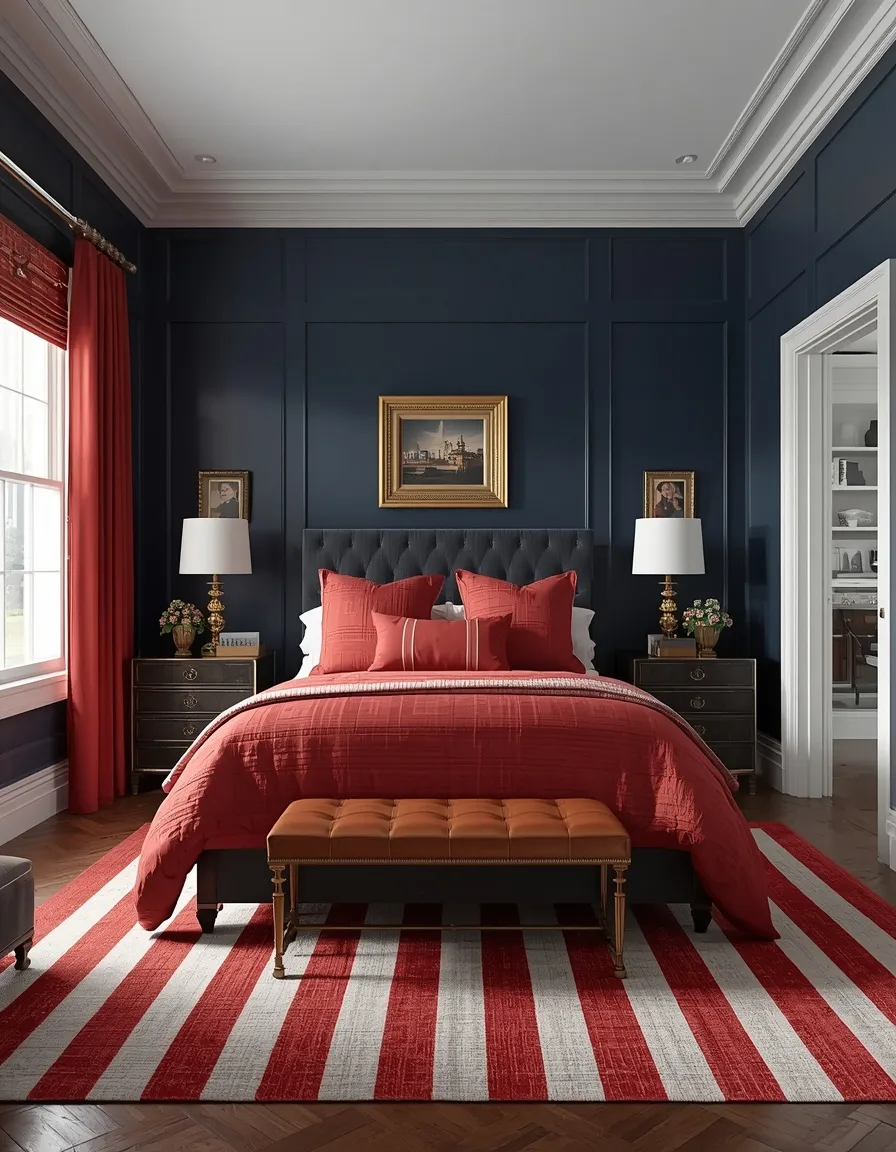
5. Red, White and Navy Classic
Red with navy and white is the most timeless version of this color. Navy walls, white trim, red bedding, and a red-and-white striped rug create a room that looks smart, nautical, and grown-up enough to last.
This palette is the reason red survives in adult interiors, and it works exactly the same way in a child’s room, navy grounds it, white lifts it, and red supplies the energy without carrying the whole scheme. Keep red to the textiles and one or two accessories so it can be dialed up or down as he grows. Add brass or leather details for warmth. This suits any age from five upward, and it’s the safest choice if you want to decorate once.
- Best for: any age from five up; the safest scheme if you decorate once.
- Why it works: navy grounds red so it energizes rather than dominates.
- Key elements: navy walls, white trim, red textiles, striped rug, brass details.
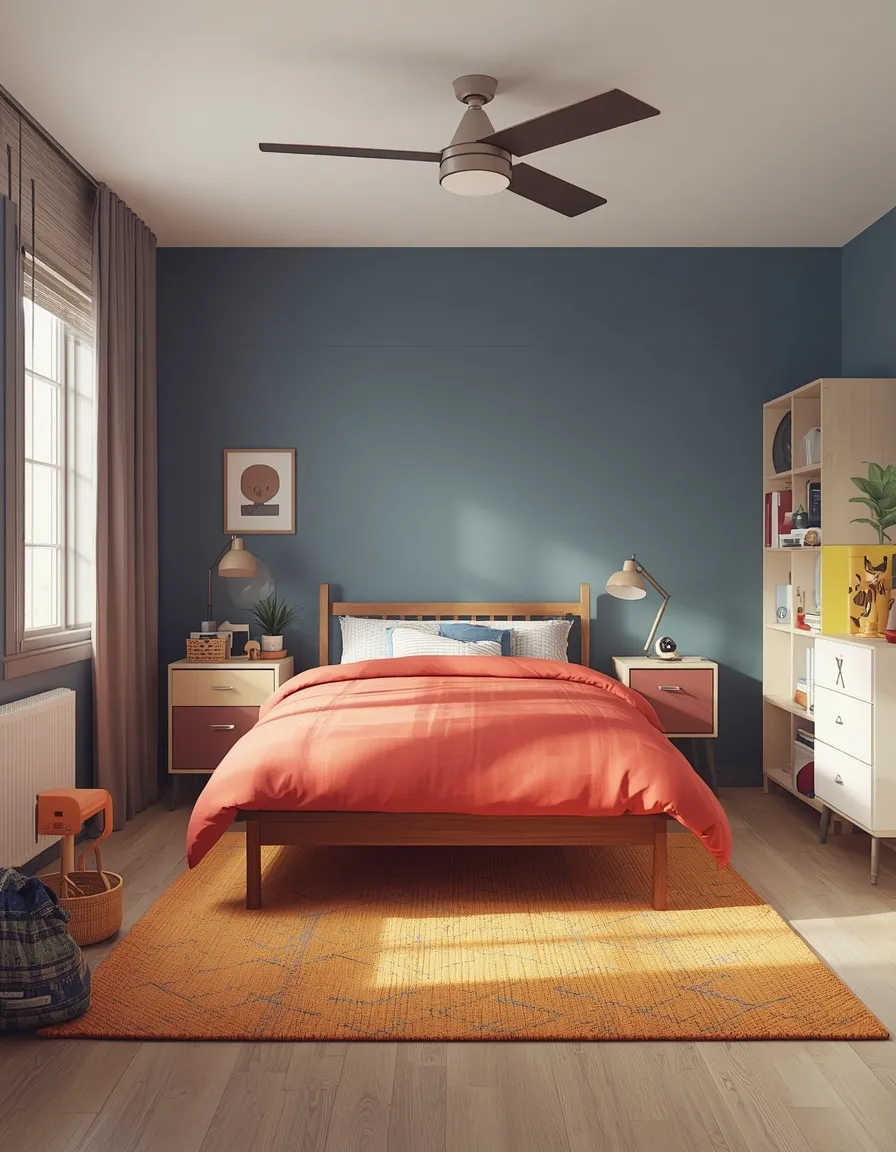
6. Red and Blue Primary Room
Red and blue together is pure childhood confidence. A blue wall, red bedding, a bright rug, and primary-colored storage make a room that feels energetic and cheerful without tipping into chaos.
The trick is to let blue take the walls and red take the objects, which stops two strong primaries from fighting each other for attention. Choose a slightly muted blue, denim, petrol, or airforce, rather than a bright primary, since two full-strength primaries in one room is genuinely a lot. Add white and pale wood to give the eye somewhere to rest. This suits ages four to ten, and it’s the classic combination most boys gravitate to on their own.
- Best for: ages four to ten; the combination most boys pick themselves.
- Watch out: muted blue on the walls, red on the objects, never two full primaries.
- Key elements: denim or petrol blue walls, red bedding, white and pale wood.
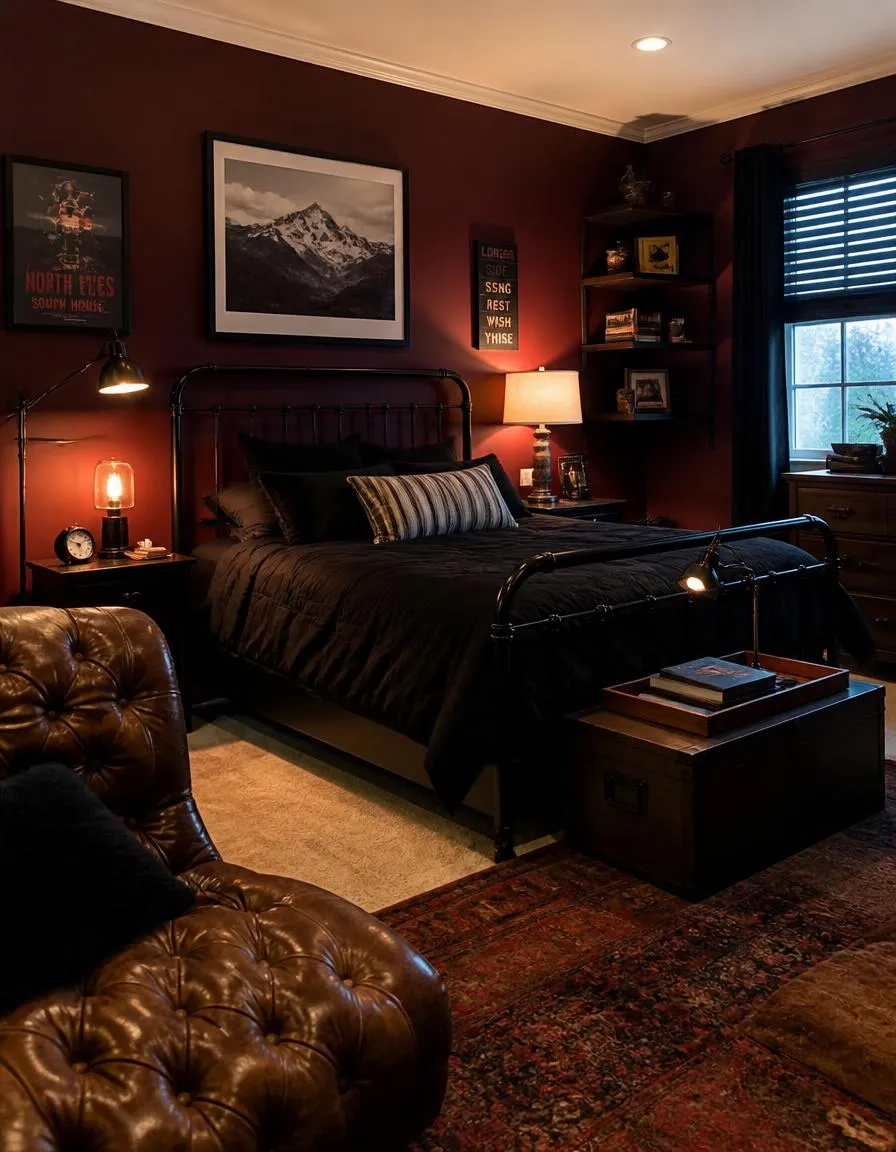
7. Dark Red Teen Room
A deep crimson or burgundy room feels genuinely grown-up. Dark red walls, black metal furniture, a leather chair, moody posters, and warm lamplight create a teenage room with real atmosphere.
Dark red is where this color finally becomes sophisticated, and it’s a completely different animal from primary red, richer, calmer, and far more flattering under lamplight. Because deep colors absorb light, layer it properly with a desk lamp, a floor lamp, and warm bulbs rather than relying on an overhead. Test a large patch before committing, since dark red can read purple or brown depending on the light in the room. This suits teenagers and anyone who wants red to feel like a design choice rather than a childhood leftover.
- Best for: teenagers; red that reads as sophisticated, not childish.
- Watch out: dark red shifts toward purple or brown, test a large patch first.
- Key elements: burgundy walls, black metal furniture, leather, layered lamplight.
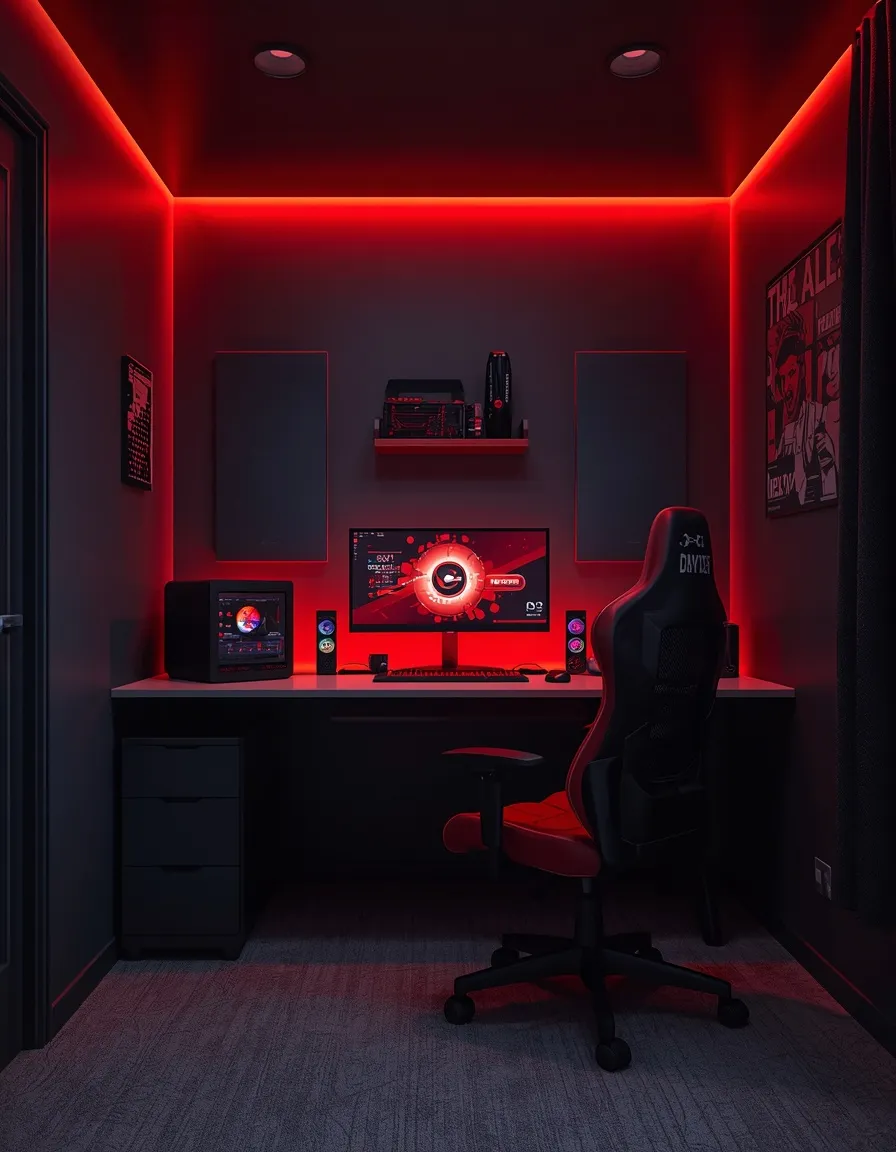
8. Red Gaming Setup
A gaming room is where red genuinely belongs. Dark grey walls, a red-and-black desk setup, RGB lighting, an acoustic panel or two, and a good chair create a den built for long sessions.
Keep the walls dark and matte so screen glare and reflections stay low, and let the red come from the lighting, the chair, and the peripherals rather than the paint, that way the whole mood changes with a setting rather than a repaint. Two practical points that matter: cable-manage properly, and never daisy-chain extension leads to run a gaming setup, which is a genuine fire risk. Use a properly rated power strip. This suits teens, and it’s the setup most of them are actually asking for.
- Best for: teenage gamers; the setup they’re actually asking for.
- Watch out: never daisy-chain extension leads, use one properly rated strip.
- Key elements: dark matte walls, red RGB lighting, acoustic panels, good chair.
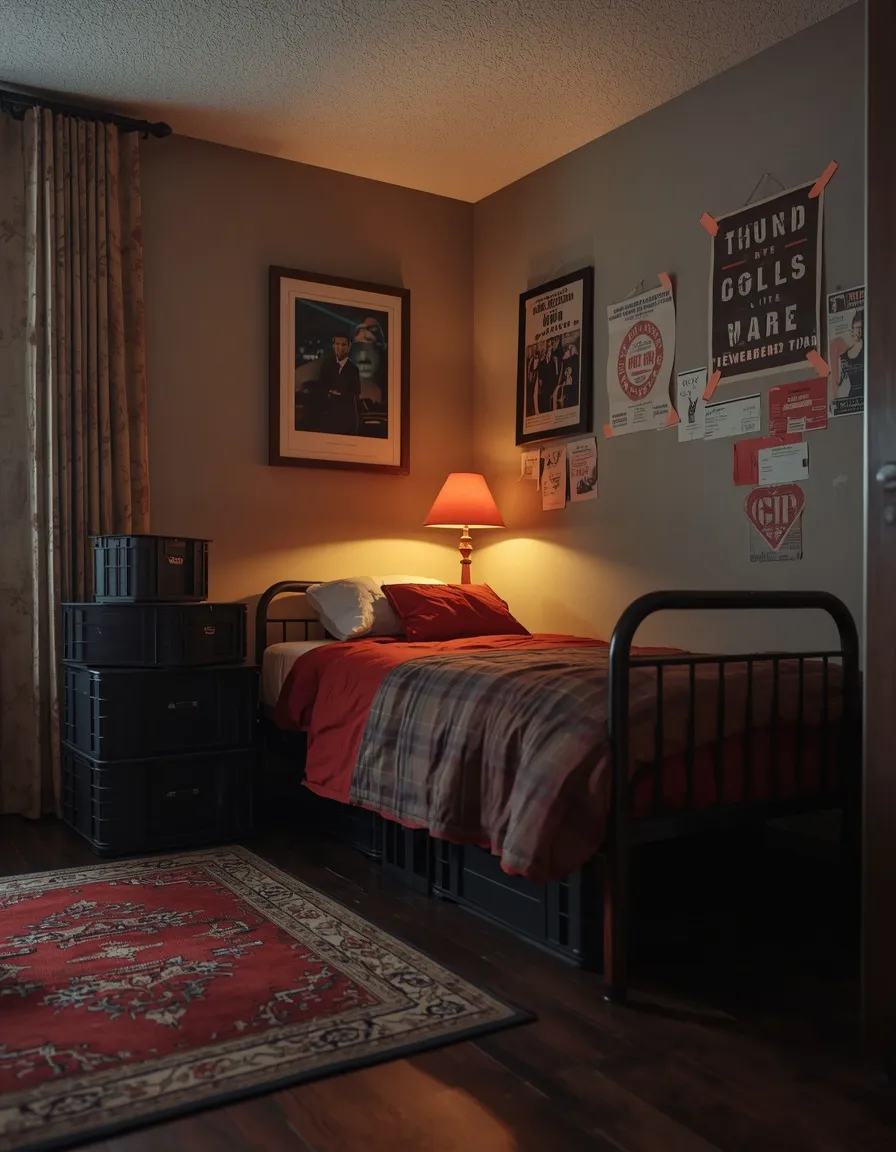
9. Red and Black Dorm Room
A dorm room in red and black is bold, cheap, and completely reversible. A red comforter, black storage crates, a red desk lamp, string lights, and a couple of posters transform a beige box in an afternoon.
Everything in a dorm has to come off the wall in June, so build the scheme entirely from textiles and free-standing objects, a comforter, a rug, a lamp, removable adhesive strips for posters. Check the fire rules before you decorate, since most halls of residence ban candles, and many restrict tapestries, string lights, and anything covering a large area of wall. Use a rated power strip rather than daisy-chained extensions. This suits students and anyone decorating a room they don’t own.
- Best for: students; a total transformation that comes down in an afternoon.
- Watch out: check hall fire rules, candles, tapestries, and string lights are often banned.
- Key elements: red comforter, black crates, red lamp, removable adhesive strips.
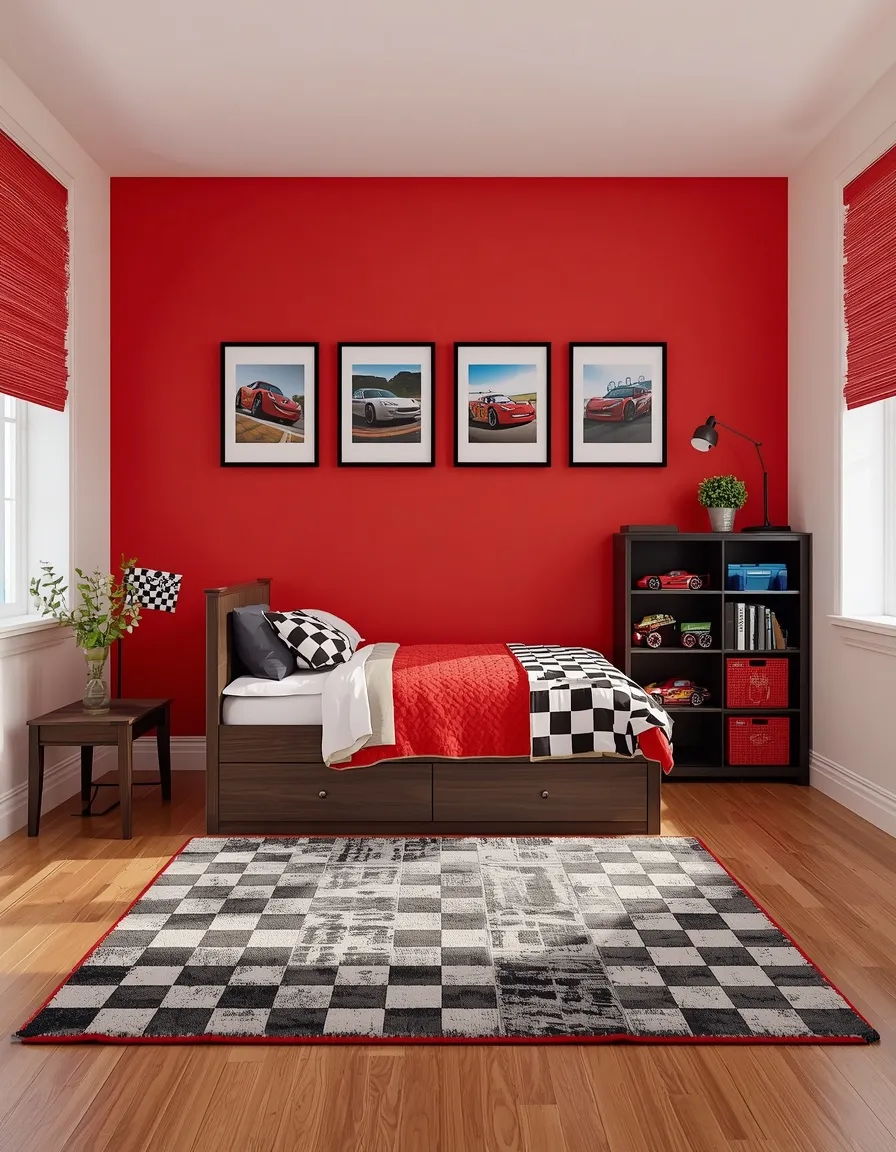
10. Racing and Cars Room
A racing-themed red room is a childhood classic. A red feature wall, a checkered-flag rug, framed car prints, and a shelf of models create a room that’s fast without being a theme park.
Keep the theme in the art, the rug, and the objects rather than in the furniture, a bed shaped like a car is the fastest-dating purchase in a child’s bedroom, and it’ll be an embarrassment by nine. Framed car prints and a model shelf deliver the same enthusiasm and can be quietly removed later. Anchor any tall display shelving. This suits ages four to nine, and it’s the version of the theme that survives him growing out of it.
- Best for: ages four to nine who love cars.
- Watch out: never buy a car-shaped bed, it’s the fastest-dating purchase there is.
- Key elements: red wall, checkered rug, framed prints, model shelf.
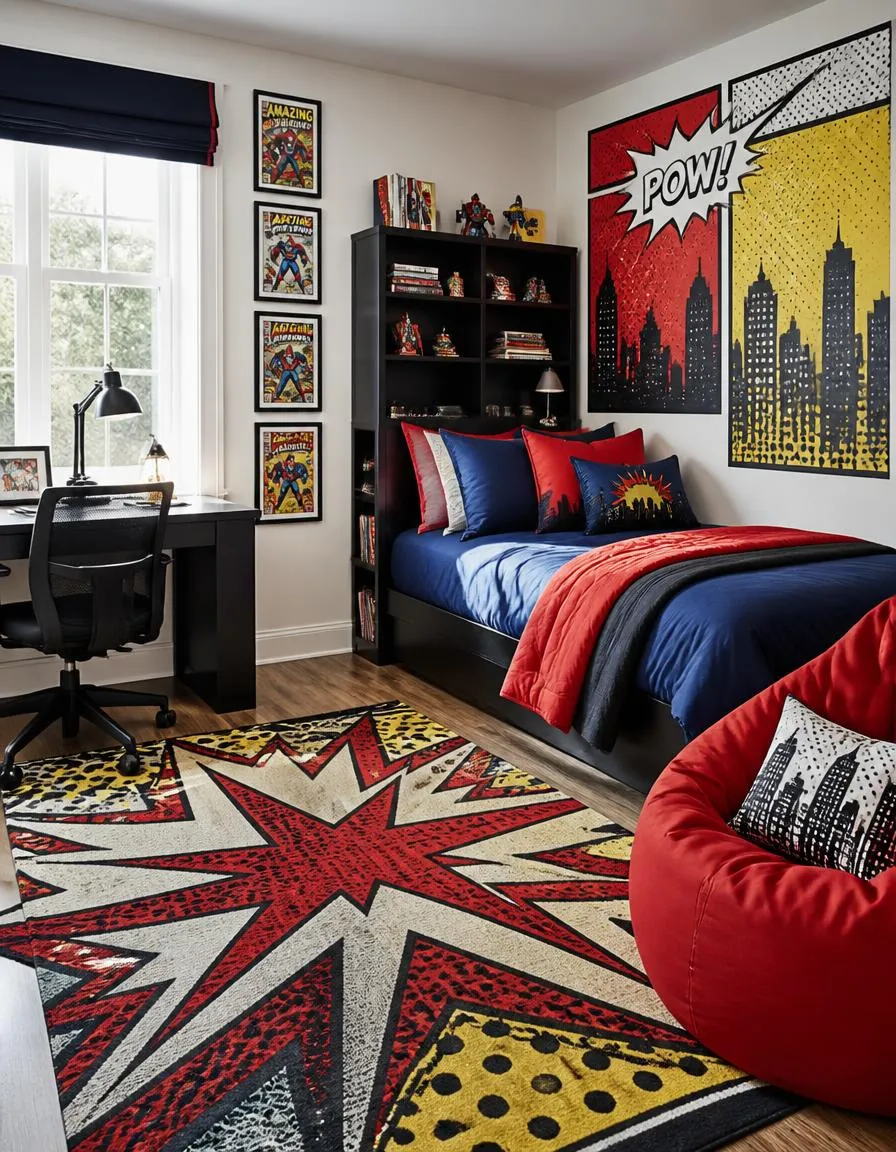
11. Superhero Red Room
Red is the superhero color, and a well-judged superhero room leans on the palette rather than the licensing. Red and navy walls, comic-strip-style art, a bold graphic rug, and a red beanbag capture the spirit without a single character decal.
Use the comic-book palette, red, navy, yellow, black, and a graphic, halftone-style aesthetic instead of licensed character stickers, which date badly, cost more, and are often the first thing a child asks to remove. Framed comic covers or abstract cityscape prints do the job and look considerably better. Keep frames light and hang nothing heavy above the bed. This suits ages five to ten and parents who want the fun without the merchandise.
- Best for: ages five to ten; the fun without the licensed merchandise.
- Why it works: the comic palette outlives the characters by about a decade.
- Watch out: light frames only, and hang nothing heavy above the bed.
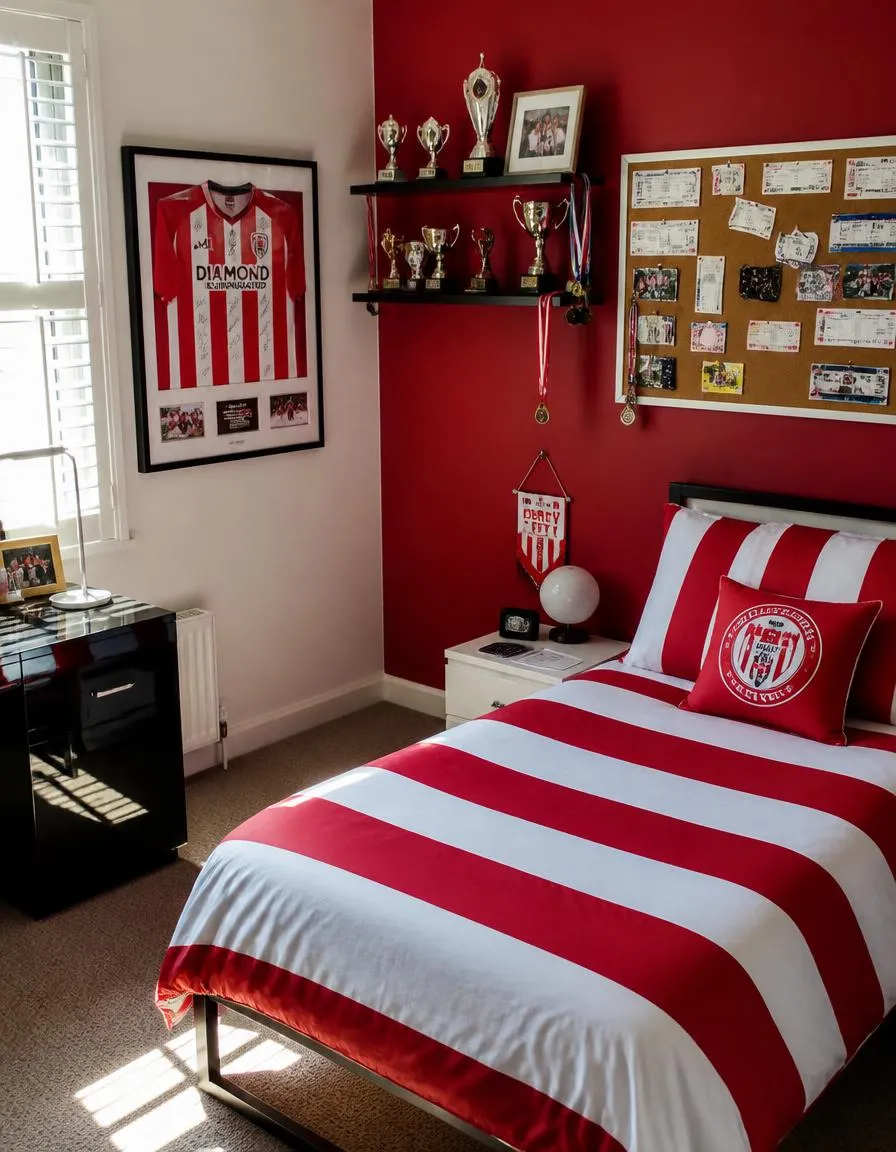
12. Sports Fan Red Room
For a boy who lives for his team, red does a lot of the work already. Red and white walls, framed shirts, a pinboard of tickets and photos, and a shelf of trophies make a room that’s genuinely personal.
Use the team’s colors as the palette rather than covering the walls in branded merchandise, which looks cluttered and cheap. A single framed shirt is far more striking than six posters. Give him a proper pinboard for tickets, photos, and medals, it’s the part that will actually mean something to him in ten years, and it changes as he does. Anchor any trophy shelving. This suits ages seven upward and boys with a genuine, lasting obsession.
- Best for: ages seven up; genuine, lasting sporting obsessions.
- Why it works: one framed shirt beats six posters; the pinboard is what he’ll keep.
- Key elements: team-color palette, framed shirt, pinboard, anchored trophy shelf.
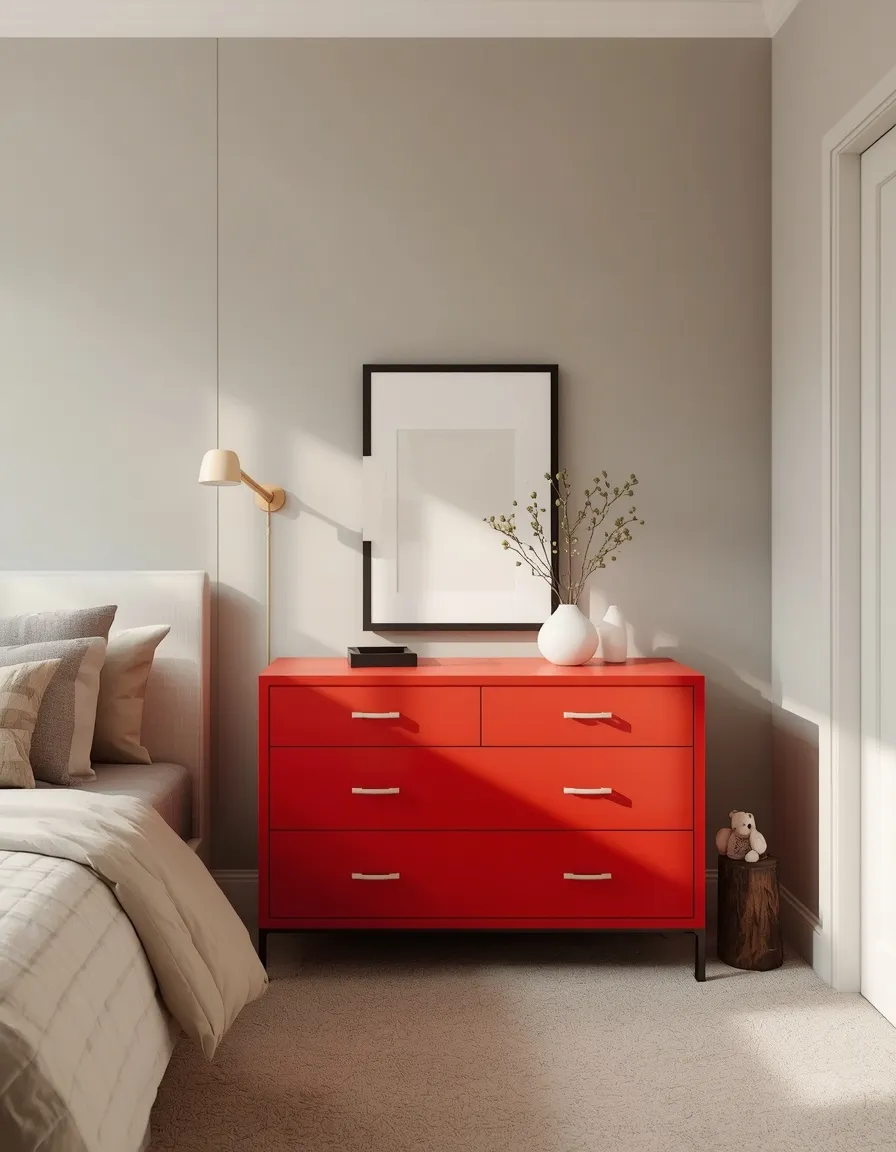
13. Red Dresser, Neutral Walls
Sometimes the smartest place for red is the furniture. A bright red dresser or wardrobe against soft white or greige walls delivers all the color a room needs, and the walls stay calm.
This inverts the usual approach and works brilliantly: the red is bold and unmissable, but it’s on an object you can repaint in a weekend or sell on, rather than four walls you’ll be rollering for two days. A vintage dresser painted in a rich red is a genuinely striking centerpiece. Use a durable satin or eggshell furniture paint. Anchor the dresser to the wall, which is essential in any child’s room. This suits renters, cautious decorators, and small rooms.
- Best for: renters and cautious decorators; small rooms that can’t take red walls.
- Why it works: a repaintable dresser is far less commitment than four red walls.
- Watch out: anchor it, a dresser is the classic tip-over hazard.
14. Rust and Terracotta Room
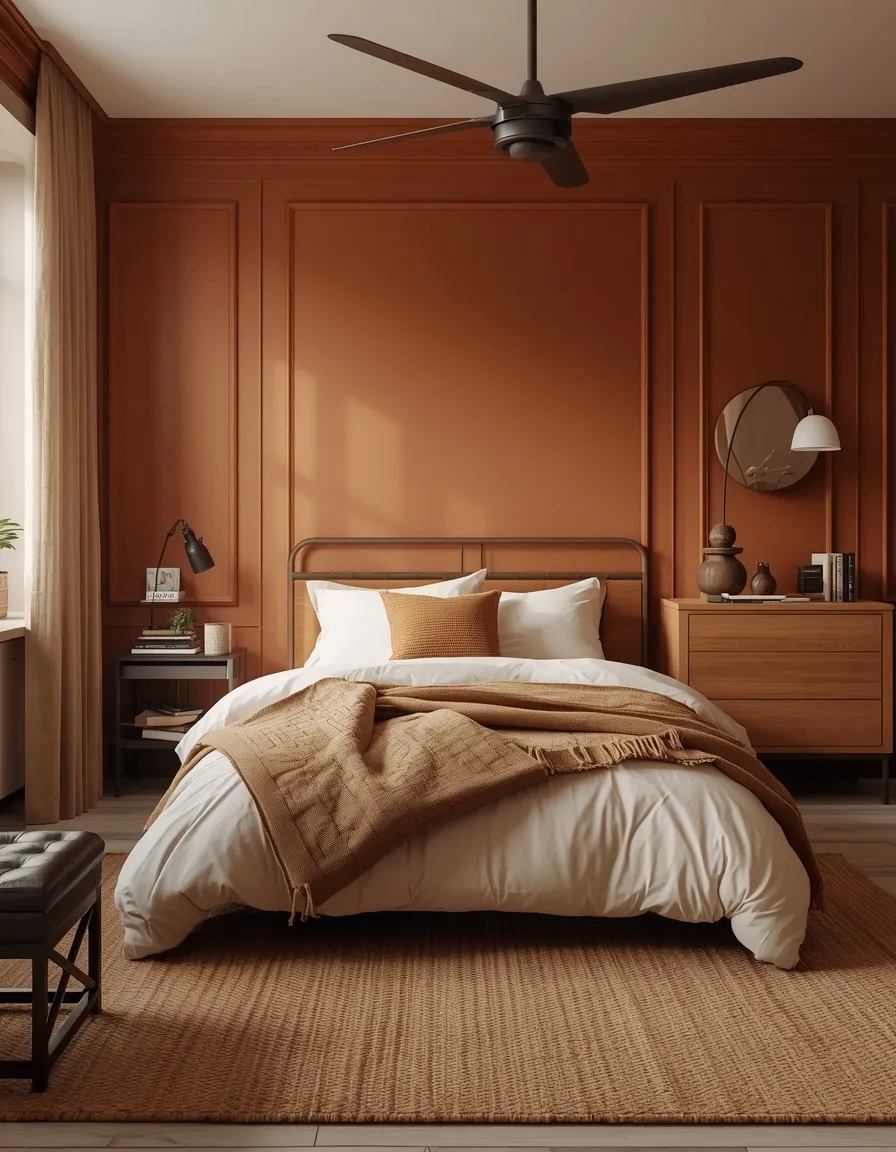
Rust is red for people who’ve thought about it. Warm terracotta walls, cream bedding, oak furniture, and a jute rug create a room that’s unmistakably red-toned but calm, earthy, and quietly sophisticated.
Terracotta and rust are the longest-lasting reds you can choose, because they suit a four-year-old and a fourteen-year-old equally and never look like a theme. They also warm a north-facing room that a cooler color would leave feeling bleak. Pair with cream, oak, and black for a palette that grows up gracefully. This is the shade to pick if you want to decorate once and not think about it again for a decade. It suits any age and any parent tired of redecorating.
- Best for: any age; the red to choose if you want to decorate only once.
- Why it works: rust suits a four-year-old and a fourteen-year-old equally.
- Key elements: terracotta walls, cream bedding, oak furniture, jute rug.
15. Red Accent Wall Behind the Bed
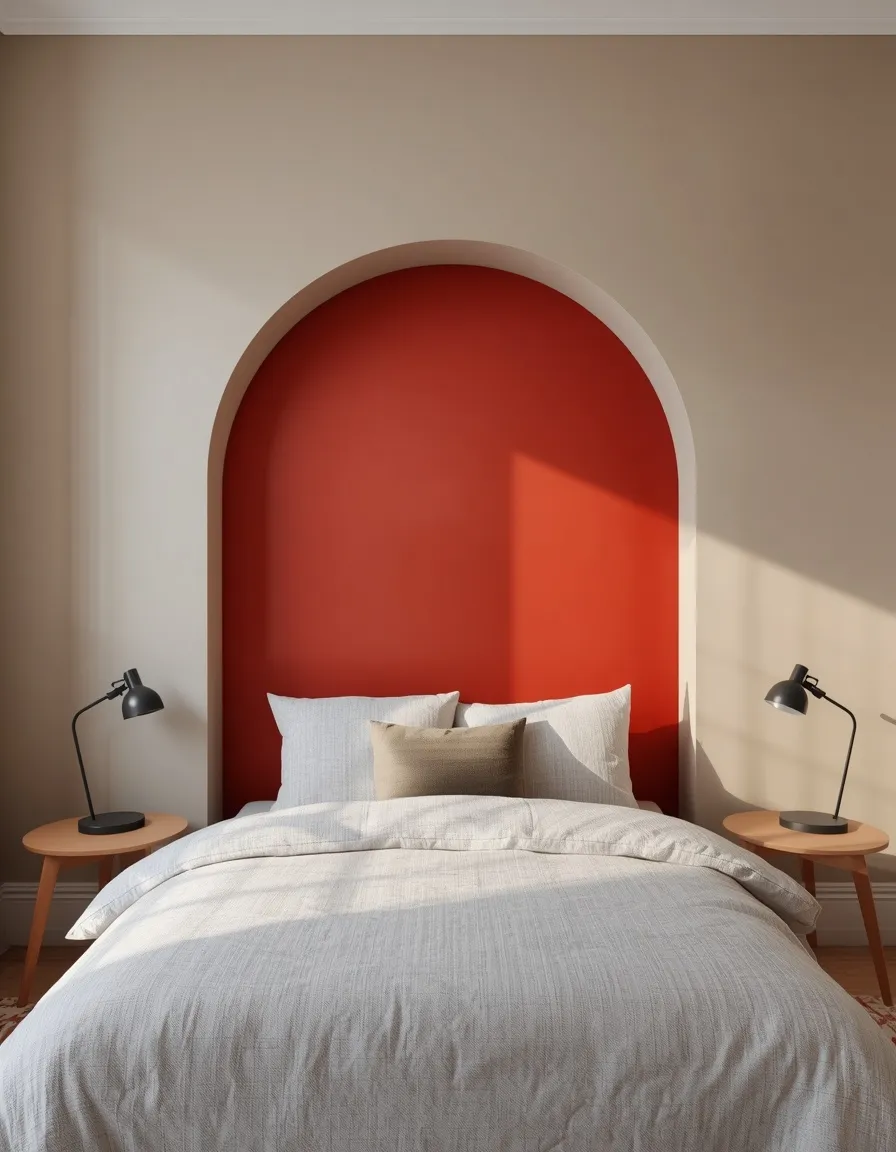
One red wall, in exactly the right place, is often all a room needs. A bold red wall behind the headboard with three calm neutral walls around it gives the room drama on arrival and quiet at bedtime.
Placement is the whole idea. A child lying in bed looks at the wall opposite, so putting the red behind the headboard means the color energizes the room without staring back at him while he’s trying to fall asleep. Paint a rectangle or arch behind the bed rather than the full wall for an even softer effect, extending 20–30 cm (8–12 in) beyond the bed on each side. This suits every age, and it’s the single best compromise between a child who wants red and a parent who doesn’t.
- Best for: every age; the best compromise between his taste and yours.
- Why it works: red behind the headboard is invisible from the pillow.
- Key elements: single red wall or painted arch, 20–30 cm wider than the bed.
16. Red and Grey Modern Room
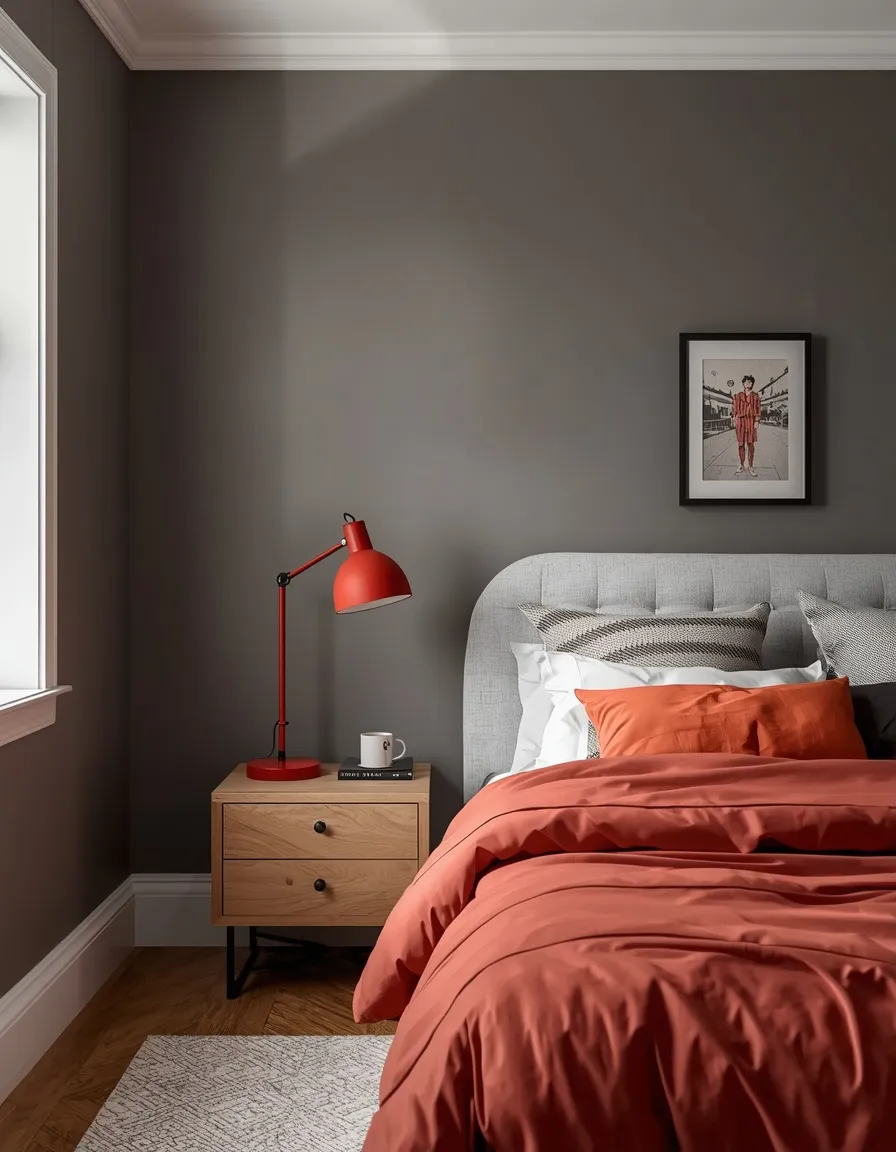
Grey and red is the sharp, modern middle ground. Soft grey walls, white trim, and red used through the bedding, a floor lamp, and a graphic print create a room that’s contemporary and easy to live with.
Grey is the most forgiving partner red has: it cools the intensity, it doesn’t compete, and it means the red can be swapped for another color in five years without repainting a thing. Choose a warm grey rather than a cold blue-grey, which can leave the room feeling bleak, especially in a north-facing room. Add wood and black metal for definition. This suits ages eight upward and parents who want a room that can quietly evolve.
- Best for: ages eight up; a room that can evolve without repainting.
- Watch out: choose a warm grey; a cold blue-grey reads bleak in a north-facing room.
- Key elements: warm grey walls, white trim, red textiles, wood and black metal.
17. Small Red Boy’s Room
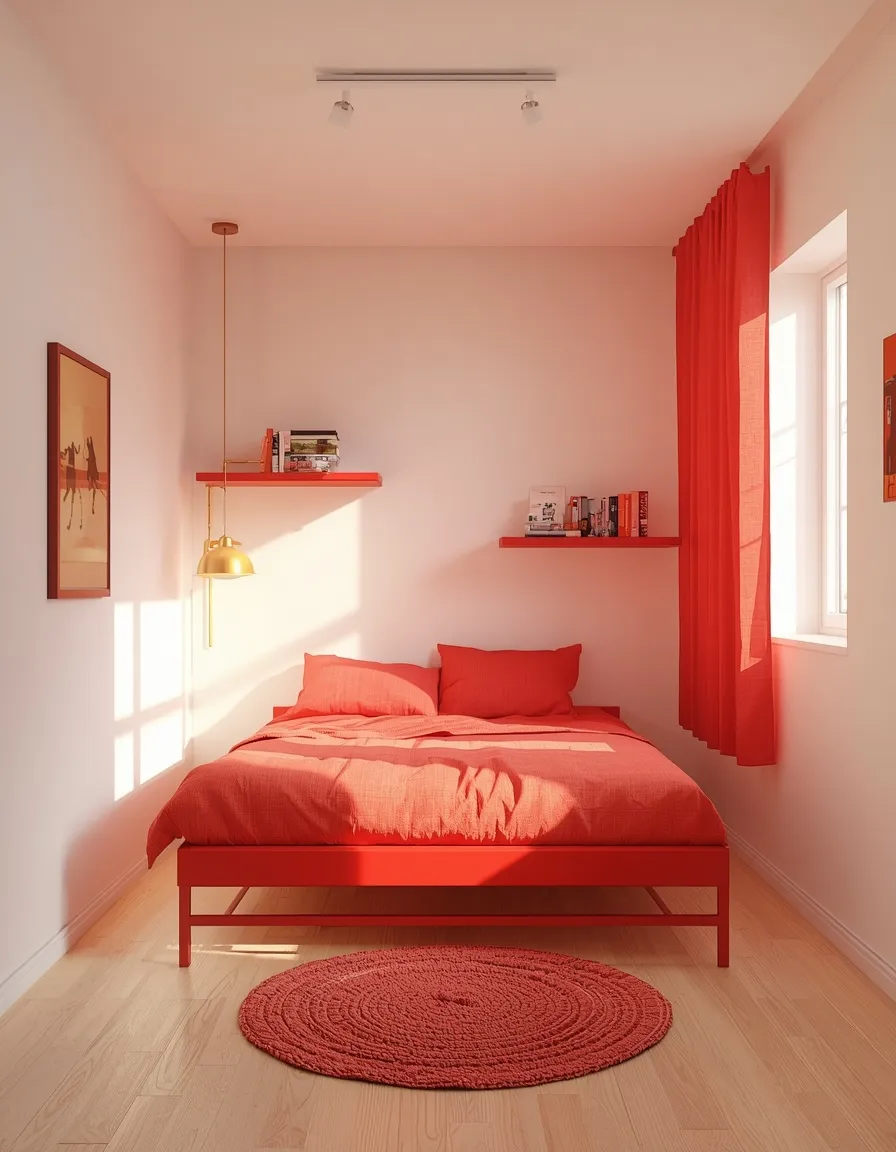
In a box room, red has to be handled carefully. Pale walls, a red bunk or bed frame, red bedding, and wall-mounted storage keep the space feeling bright while still delivering the color he wants.
Strong color on all four walls will genuinely shrink a small room, so keep the walls pale and put the red on the furniture and textiles instead. Get everything off the floor, wall-mounted lights, floating shelves, hooks instead of a wardrobe, drawers built into the bed. Use one rug, not two. If there’s a bunk, remember no child under six on the top bunk, with guardrails on both sides. This suits box rooms, apartments, and small city bedrooms.
- Best for: box rooms and small city bedrooms.
- Watch out: four red walls will shrink a small room, keep the color on the furniture.
- Key elements: pale walls, red bed frame and bedding, wall-mounted storage.
18. Grow-With-Me Red Room
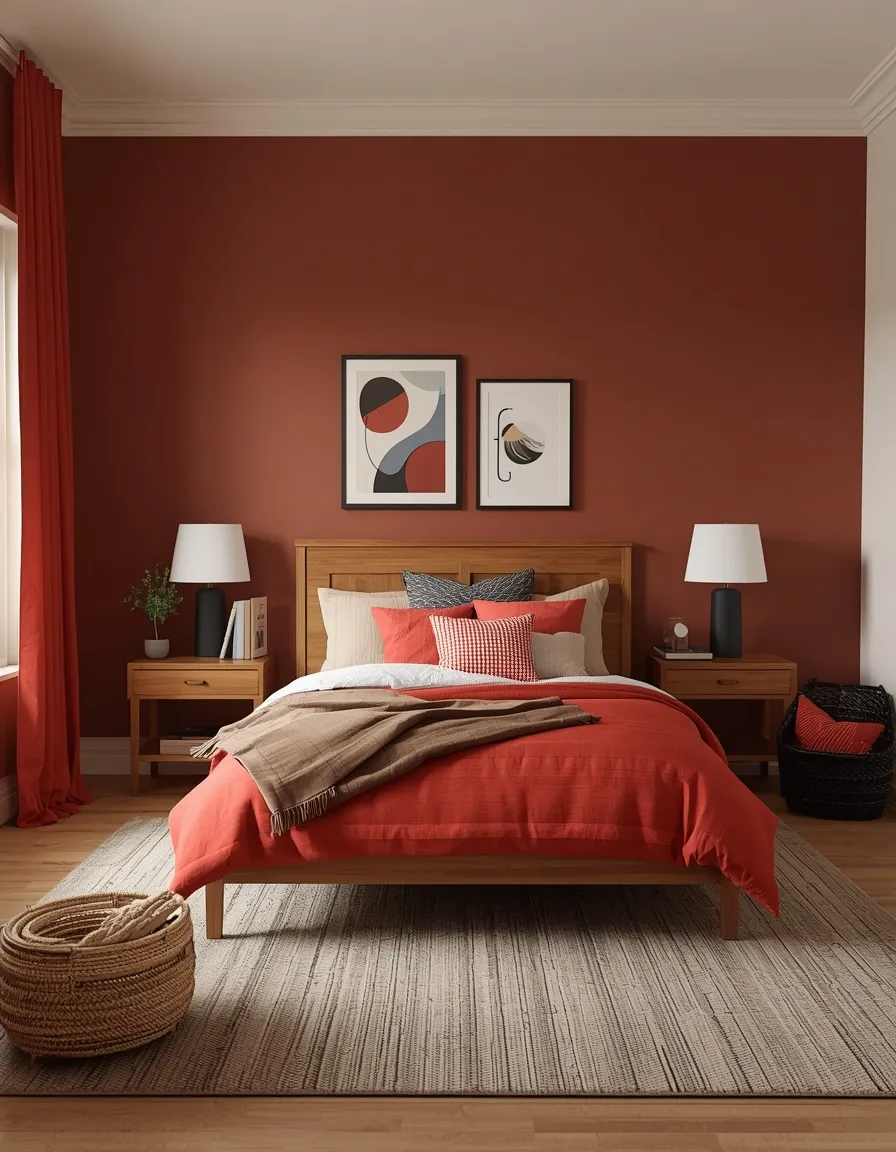
The cleverest red room is the one you won’t have to redo. Neutral or rust walls, solid wood furniture, and all the red concentrated in bedding, a rug, cushions, and art means the whole room can change in an afternoon.
Buy the permanent things neutral and the temporary things red, which is the entire strategy: the bed, the dresser, and the walls stay, and the personality lives in things that cost little and swap easily. When he tires of red at eleven, you change a duvet cover and three prints rather than repainting and rebuying. Avoid themed wallpaper and character furniture, which are the fastest things in any child’s room to date. This suits anyone thinking beyond the next two years.
- Best for: parents planning further ahead than the next two years.
- Why it works: swap a duvet and three prints instead of repainting a whole room.
- Watch out: themed wallpaper and character furniture date fastest of anything.
Painting Red Is Harder Than You Think
Red is the most difficult color in the paint shop to apply well. Red pigments have poor opacity, which means a red wall painted straight over white will look patchy and streaky no matter how carefully you roll it.
The fix is a tinted primer. Use a grey or pink-tinted undercoat rather than a standard white one, which gives the red something to sit on and dramatically reduces the number of topcoats you’ll need. Even then, expect three to four coats for an even, saturated finish, and buy more paint than you think, running out halfway through a red wall is a genuinely miserable experience.
Choose a scrubbable satin or eggshell finish for a child’s room, since flat matte marks instantly and cannot be washed. Use a low-VOC paint and ventilate the room well while it dries. And test a large patch first: red shifts dramatically depending on the light, and the same tin can read scarlet in one room and brick in another.
A themed room is a different discipline again, and it’s worth doing carefully so it doesn’t date. Our guide to designing a Star Wars nursery shows how to handle a theme with restraint, and you’ll find plenty more across our kids’ room ideas.
Conclusion
The red boy room ideas that actually work all show the same restraint. Choose your shade deliberately, rust to last, burgundy to feel grown-up, bright red for accents only, keep it to roughly a fifth of the room, and put it behind the bed rather than opposite it. Prime with grey before you paint, expect several coats, and keep the red in things you can swap rather than things you’d have to replace. Do that and you’ll get a room he genuinely loves that you won’t resent in three years. For more, browse our kids’ room ideas.
Frequently Asked Questions
Q: Is red a good color for a boy’s bedroom?
Red works well as an accent but is best used sparingly on walls. It’s the most stimulating color on the wheel, which is why children love it and why designers generally advise restraint with it in bedrooms. Keep red to roughly 10–20% of the room, bedding, a rug, one wall, a chair, and it delivers all the energy without making the room hard to settle in.
Q: Where should the red wall go in a bedroom?
Behind the bed, not opposite it. A child lying down looks at the wall facing them, so a red feature wall behind the headboard gives the room impact when you walk in and disappears completely from view at bedtime. Painting a rectangle or arch behind the bed, extending 20–30 cm (8–12 in) wider than the bed on each side, is softer still.
Q: What colors go with red in a boy’s room?
Navy and white make the most timeless combination, black and charcoal give a bold, graphic look that teens tend to want, and warm grey is the most forgiving and easiest to evolve. Blue works for younger boys if you keep the blue muted and let red live on the objects. Cream, oak, and black all pair beautifully with rust and terracotta.
Q: Why does red paint look patchy?
Red pigments have poor opacity, so red paint applied straight over white primer will almost always look streaky. Use a grey or pink-tinted primer instead, which gives the color a base to sit on, and expect three to four topcoats for an even, saturated finish. Buy more paint than you think you need.
Q: What’s the best red for a room that will last?
Rust or terracotta. These warm, earthy reds suit a four-year-old and a fourteen-year-old equally, never look like a theme, and warm up a north-facing room that a cooler color would leave feeling bleak. Bright primary red dates fastest, and deep burgundy reads as distinctly teenage.
Q: How do you decorate a red room for a teenager?
Go dark and grown-up. Deep crimson or burgundy walls with black metal furniture, leather, and layered lamplight feel sophisticated rather than childish, and red-and-black is the combination most teens ask for by name. Keep black or charcoal dominant with red at around 20%, and light it properly, dark walls need a desk lamp and a floor lamp, not just a ceiling light.