
| Key Takeaways
● Match the shed’s footprint to actual use, most single-desk offices work well starting around 2.4 x 3 m (8 x 10 ft). ● Choose a material (wood, metal, insulated panel, or container) based on climate and maintenance tolerance, not looks alone. ● Place the main window to the side of the desk, not directly behind or facing it, to avoid video-call glare and backlighting. ● A covered, all-weather path between house and shed makes a shed office far more likely to get used daily. ● Check local setback and permit rules before finalizing footprint or adding electrical wiring, requirements vary by city and country. |
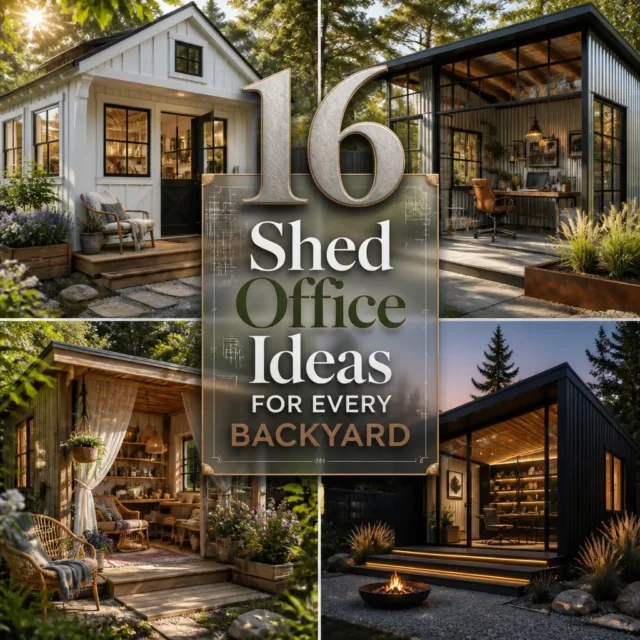
A shed at the back of the yard can be storage for old paint cans and a lawnmower, or, with the right shed office ideas, it can be the best square meters (or square feet) on the whole property. The exterior needs to read well from the kitchen window, the light has to fall right for video calls, and the walk between house and desk has to hold up in bad weather. This guide walks through 16 complete shed office design directions, from a colorful boho retreat to a glass-walled studio, plus the planning details, size, material, window placement, that turn a nice photo into a workspace you’ll actually use every day, the kind of considered, doable inspiration Sunday Abode is built around.
What to Plan Before You Design Your Shed Office
A shed office works best when three decisions get made before any paint color: the footprint, the material, and where natural light falls across the desk. Nail those and almost any style on this list will function well long after the newness wears off.
Choosing a Shed Size and Footprint
A single-desk shed office comfortably fits in about 2.4 by 3 m (8 by 10 ft), enough for a desk, a chair, and a small bookshelf or storage unit without feeling cramped. Add roughly 1.2 m (4 ft) of width for a small seating area if the shed needs to host calls or client meetings, and plan closer to 3.6 by 4.8 m (12 by 16 ft) if it needs to double as a guest space. Check local setback rules before finalizing a footprint, most municipalities require a minimum distance from the property line that varies by structure size, so it’s worth confirming with the local planning office before ordering materials.
Picking a Material: Wood, Metal, or Insulated Panel
The shell material shapes both the look and the year-round comfort of a shed office. Wood-frame sheds, finished in cedar shiplap or board-and-batten siding, offer the widest range of paint and stain options and are the easiest to insulate using standard batt or rigid foam insulation. Metal or tin-roofed sheds cost less upfront and shed rain and snow efficiently, but need added insulation to avoid becoming an echo chamber for both sound and temperature swings. Insulated panel (SIP) sheds arrive with insulation built into the wall structure and go up faster, which suits climates with hot summers or cold winters.
| Material | Look & Feel | Maintenance | Best For |
| Wood-Frame | Warm, classic, paintable | Re-stain or repaint every 3–5 years | Traditional, farmhouse, or coastal styles |
| Metal / Tin Roof | Industrial, modern, low-fuss | Occasional rust check on cut edges | Industrial or modern minimalist styles |
| Insulated Panel (SIP) | Clean, boxy, contemporary | Minimal, factory-sealed panels | Extreme climates, fast installs |
| Container Conversion | Bold, industrial | Rust prevention on exterior steel | Small lots, urban backyards |
Where Should Windows Go for the Best Light?
Position the primary window to the side of the desk rather than directly behind or facing the screen. A window behind you leaves your face underexposed and dark on video calls, while a window directly facing the desk creates glare and forces the camera to fight bright backlight. A side window, ideally facing north or south depending on hemisphere and sun path, gives even, diffused light across the whole workday. A skylight adds useful daytime brightness without adding a wall-mounted glare source, which is why several styles below lean on one.
Designing the Path From House to Shed
The walk between the back door and the shed determines how often the office actually gets used, especially somewhere with real winters or a rainy season. A covered walkway, even a simple 1 m (3 ft) wide gravel or paver path with an overhead pergola section, keeps the commute from becoming a reason to work from the kitchen table instead. Solar path lights along the route handle early mornings and late evenings without adding a wiring project, and a small covered landing outside the shed door gives a spot to shake off an umbrella before stepping in.
With the size, material, and light sorted, the fun part is choosing how the shell and the inside actually look together. Every idea below pairs a specific exterior style with an interior palette, but if none of the sixteen combinations quite fit, Sunday Abode’s interior color scheme trends roundup is a good place to pull additional palette inspiration for the interior half of the plan.
16 Shed Office Ideas Worth Building
Each idea below is a complete pairing of exterior style and interior palette, not just a paint color. Every one includes a realistic execution note and at least one honest caveat about where it does and doesn’t work.
1. Modern Farmhouse She Shed Office
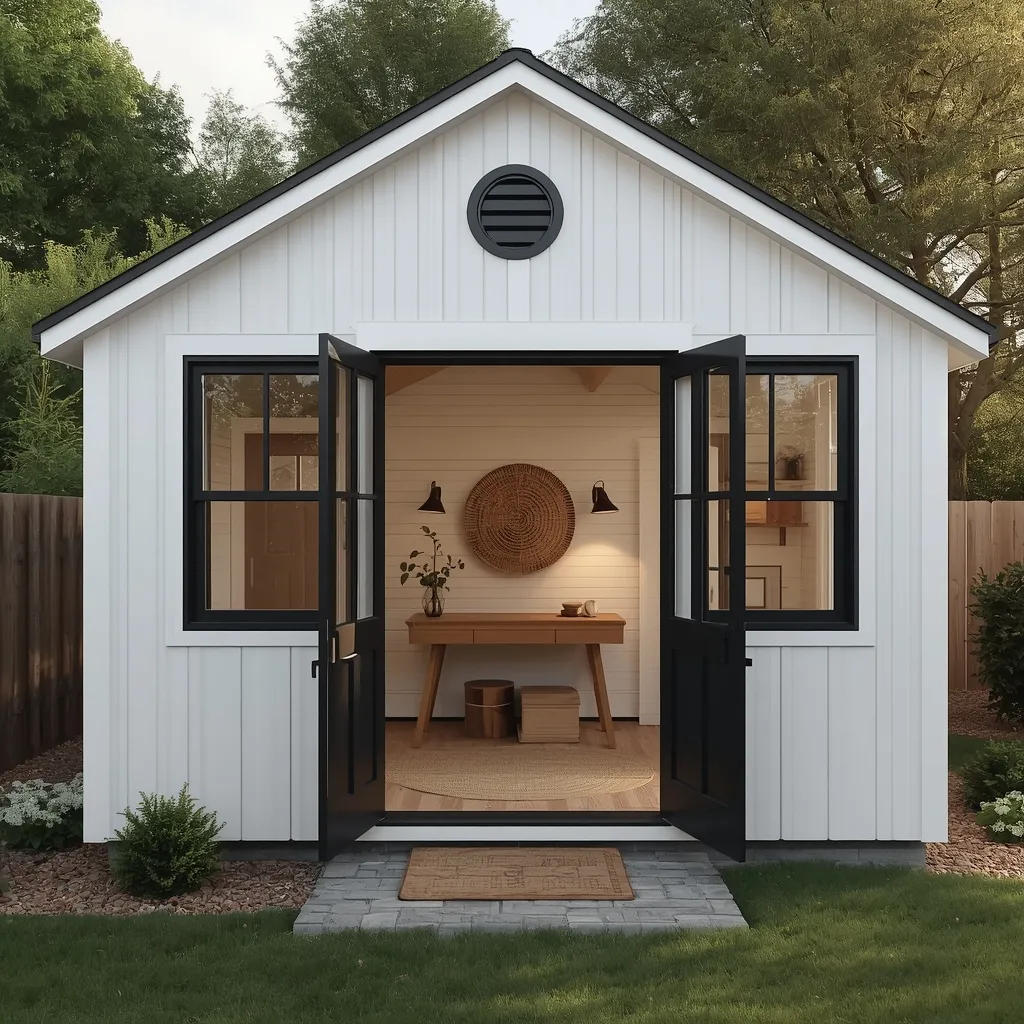
White board-and-batten siding, black window frames, a simple gable roof, and a stable-style Dutch door make this exterior read like a mini farmhouse before you even reach the desk, and shiplap walls and warm wood shelving carry that same story inside.
Keep the exterior palette to two colors at most, white siding and black trim, so the shed doesn’t visually compete with the main house. Inside, pair a white or cream desk with a wood floor and one leather chair, then finish with a woven jute rug and a vintage-style pendant light. This works best on a property where the main house already reads farmhouse or cottage-adjacent, so the shed feels like an intentional match rather than a mismatched add-on.
- Best for: homeowners whose main house is already farmhouse or cottage-style
- Why it works: black-framed windows and a Dutch door give it real curb presence, even glimpsed from indoors
- Common mistake: painting the shed a completely different color family than the house, which reads as an afterthought
2. Industrial Loft Shed Office
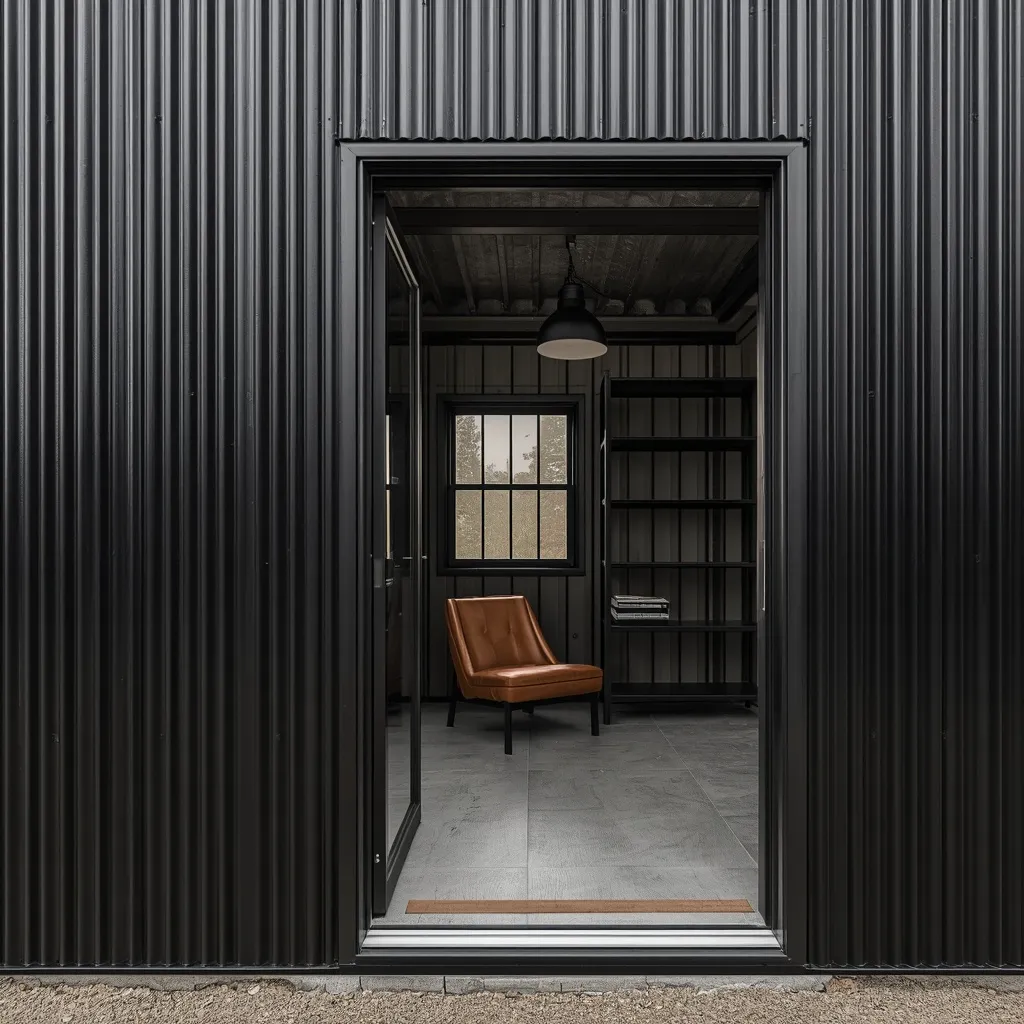
A corrugated black metal exterior, black-framed windows, and a steel entry door set the tone outside, while exposed trusses, concrete-look flooring, and a factory-style pendant light build a compact industrial loft inside.
Keep interior walls a raw concrete-gray or unfinished plywood, then let one leather or canvas accent chair add warmth against all the hard surfaces. Open metal shelving, rather than closed cabinetry, keeps the aesthetic honest rather than decorative. This works especially well if the property already has a metal or tin-roofed shed, since the style leans into that material instead of trying to disguise it.
- Best for: creative professionals who want a workspace with edge rather than coziness
- Material tip: corrugated metal siding needs minimal upkeep beyond an occasional rust check at cut edges
- Common mistake: adding too much soft furnishing, which fights the intentionally raw, unfinished character
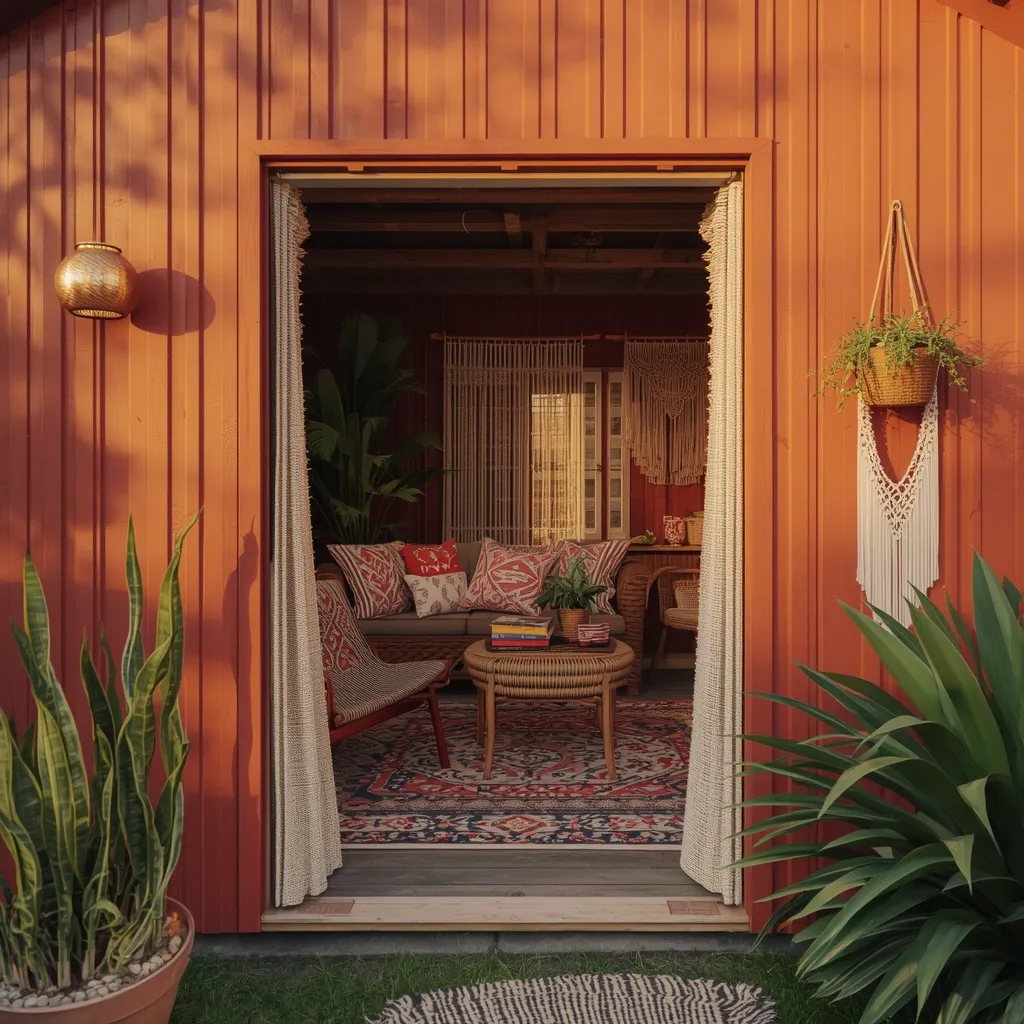
3. Colorful Boho She Shed Office
A saturated exterior color, think terracotta, dusty teal, or ochre, paired with a beaded curtain doorway, layered rugs, rattan furniture, and a wall of hanging plants inside turns this shed into a personal retreat rather than a corporate outpost.
Choose one bold exterior color and repeat it in a single interior element, a door or a shelf, rather than using unrelated colors inside and out. Layer at least two patterned textiles, a rug plus cushions, and mix in real or faux plants for texture. This style suits a solo, personality-forward office better than a client-facing space, since the pattern mixing reads more personal than professional.
- Best for: solo creatives, writers, or anyone wanting a workspace that feels like an escape
- Elements that combine: bold exterior paint, rattan furniture, layered textiles, and hanging greenery
- Common mistake: mixing more than two or three dominant patterns, which can tip eclectic into visually chaotic
4. Classic Tin Roof Shed Office
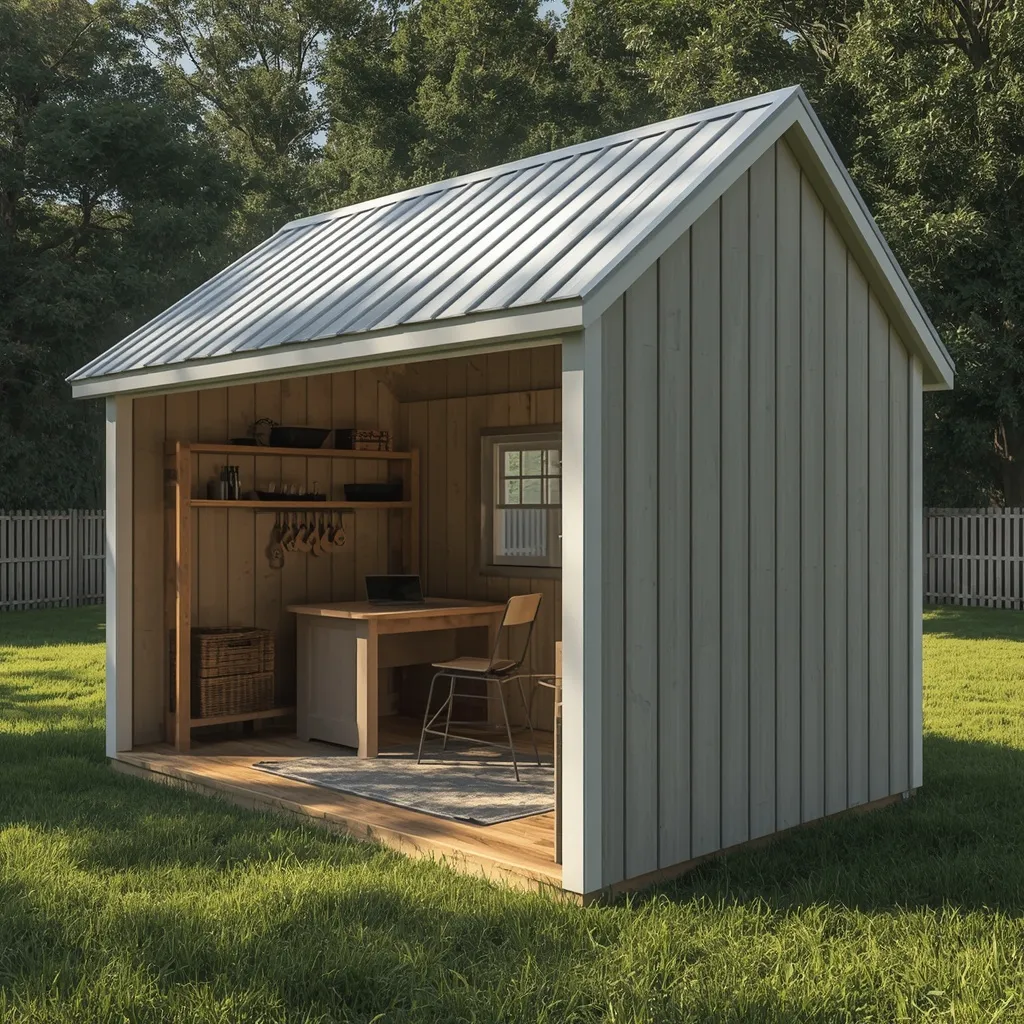
A traditional gable-roofed shed with a corrugated tin roof, timber board siding, and simple trim, styled inside with a plain desk, open shelving, and minimal decor, brings back the classic, unfussy backyard workshop as a genuine office.
A tin roof is genuinely practical in wet climates, since it sheds rain fast and needs little upkeep beyond an occasional check for rust at the seams. It also amplifies sound during heavy rain, so add a rug and soft furnishings inside if a downpour would otherwise drown out a call. Keep the exterior trim a single contrasting color, white or black, against the tin for visual definition without added cost.
- Best for: rural or semi-rural properties, or anyone prioritizing a low-maintenance roof
- Practical note: a tin roof needs interior sound-dampening if it’s going to be used during heavy rain
- Common mistake: skipping gutters on a tin roof shed, which sends runoff straight against the foundation
5. Small Minimalist Shed Office
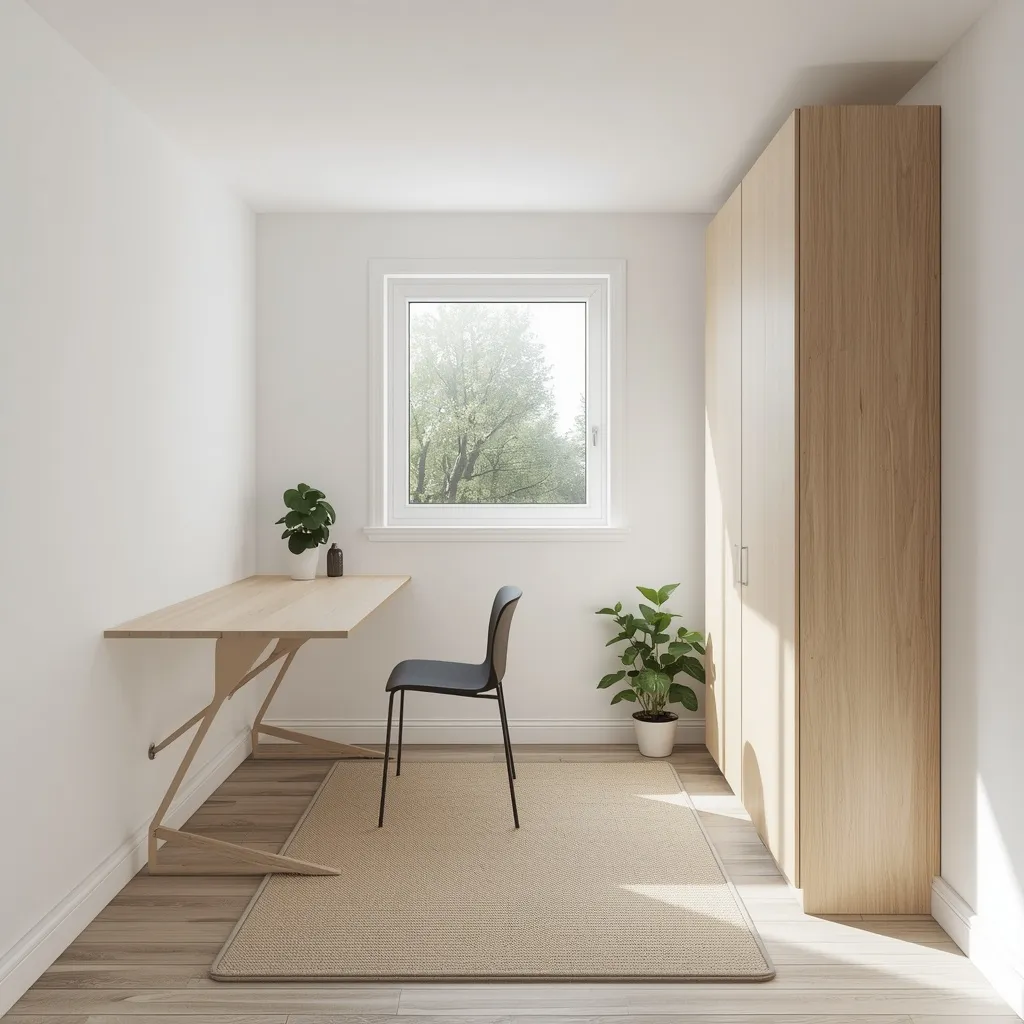
A compact, single-window shed with white or light-gray walls, a fold-down or wall-mounted desk, and closed storage that keeps every surface clear proves a workable office doesn’t need more than about 2.4 by 2.4 m (8 by 8 ft).
In a small footprint, a wall-mounted or fold-down desk recovers real floor space, and closed cabinetry, rather than open shelving, keeps a tiny room from feeling cluttered. One larger window, rather than several small ones, maximizes light without eating the wall space needed for storage. This is the most budget-friendly build on this list, since a smaller footprint means less material and often no need for a full climate-control run.
- Best for: small yards, urban lots, or a first shed-office build on a tight budget
- Space-saving tip: a fold-down desk against one wall keeps the center of the room fully open
- Common mistake: adding too much furniture at once, a small shed can only really support one seating piece and one storage piece
6. Guest House Dual-Purpose Shed Office
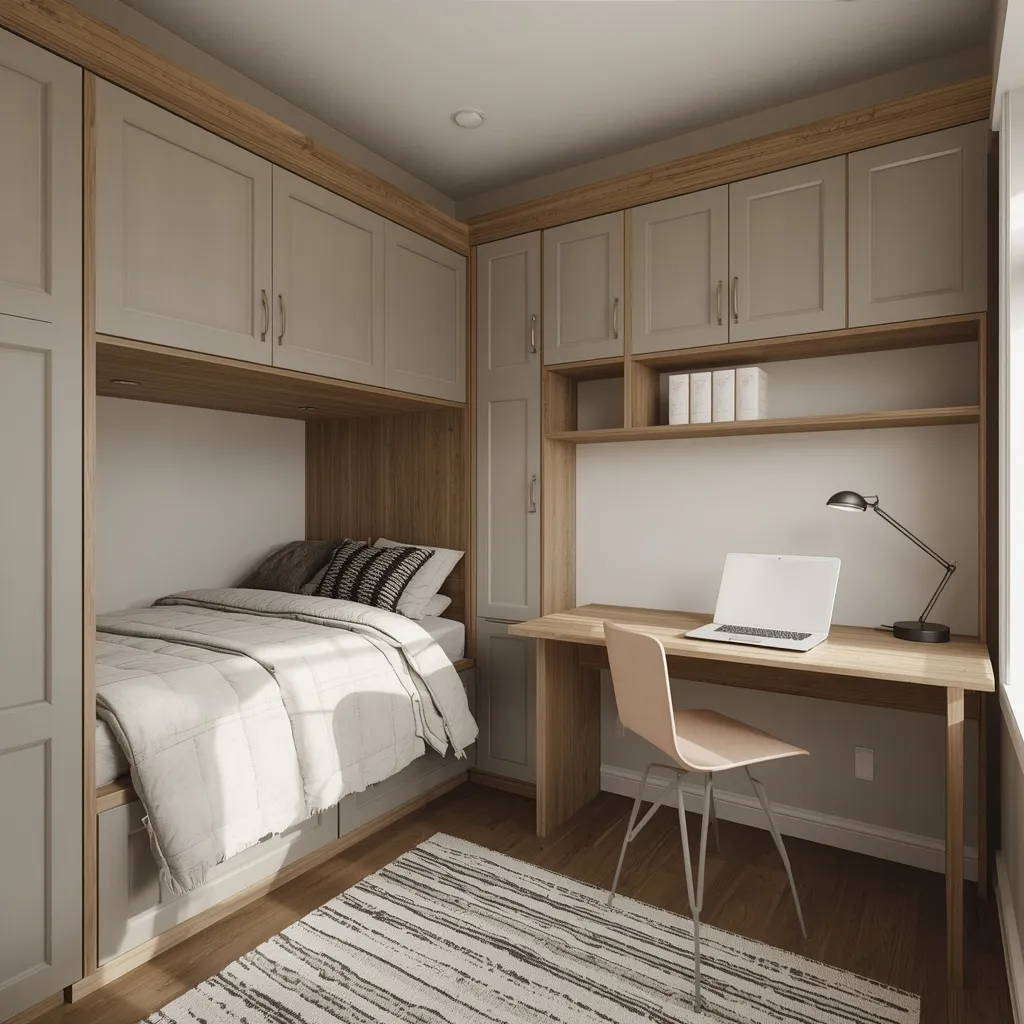
Built around a fold-out or Murphy bed, a proper desk setup, and a small kitchenette counter, this slightly larger shed works as a daily office and switches to a guest suite in an afternoon.
A Murphy bed or daybed with storage underneath is the single feature that makes dual-purpose work, since it hides the guest-room identity during work hours. Keep the desk on a wall perpendicular to the bed, rather than facing it, so neither function visually dominates. Budget for a small mini-split or window unit if the shed will host overnight guests, since comfortable sleeping temperatures need more consistent climate control than a few work hours a day.
- Best for: households that host overnight guests a few times a year and want the shed to earn its keep
- Key combination: a Murphy bed or daybed, a proper desk, and closed storage for guest linens
- Common mistake: positioning the desk facing the bed, which makes the room feel like a bedroom with a desk crammed in
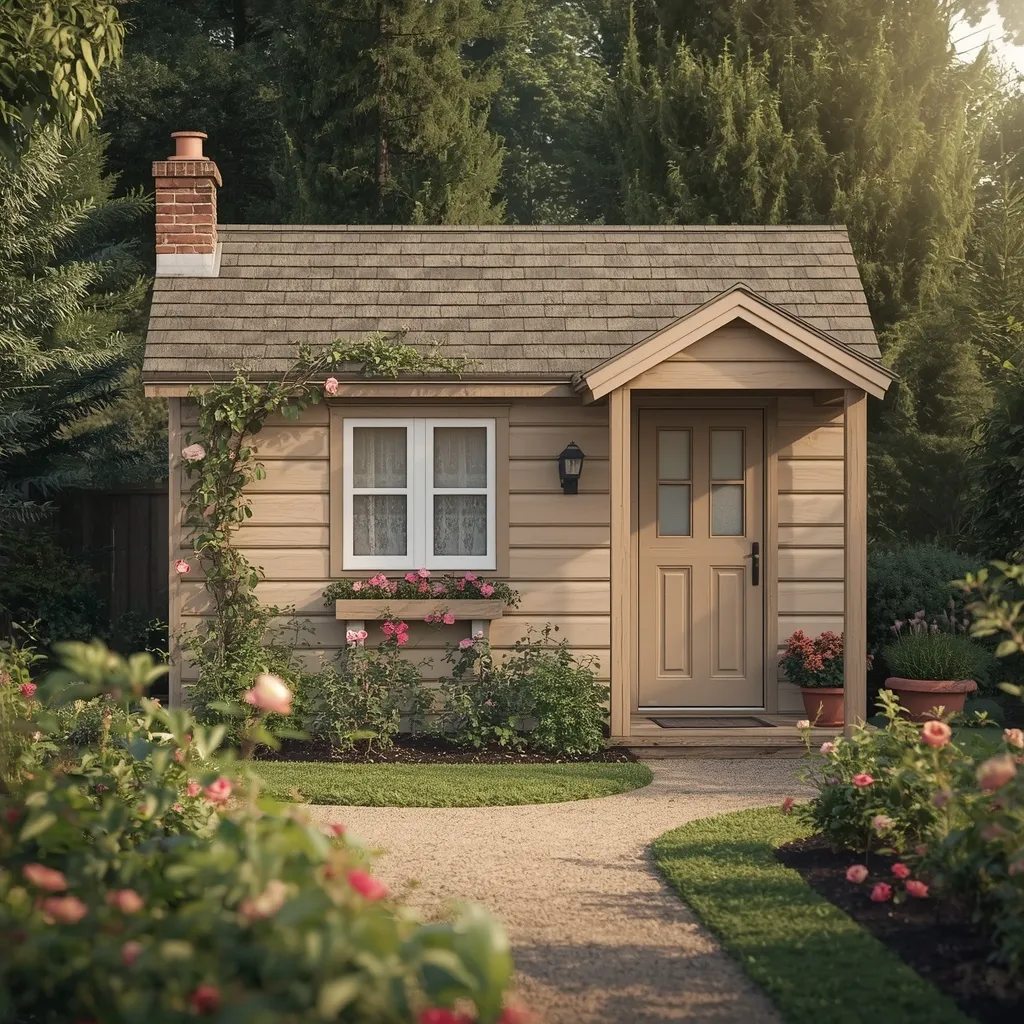
7. Garden Cottage Shed Office
Tucked into planting beds, with a climbing vine or espaliered fruit trained along one wall, a small covered porch, and cottage-style windows with flower boxes, this shed and the garden around it read as one continuous scene from the house.
Choose a climbing plant suited to the local hardiness zone and the wall’s sun exposure, a rambling rose or clematis for full sun, an ivy or climbing hydrangea for shade, and give it a trellis rather than letting it grow directly on the siding, which traps moisture against wood. A gravel or stepping-stone path through the beds to the door doubles as landscaping and as an all-weather walkway. This works best when the shed sits within view of a kitchen or living room window, since the landscaping becomes part of the daily view, not just the commute.
- Best for: gardeners who want the shed to feel like an extension of the yard, not a separate structure
- Elements that combine: trained climbing plants, a covered porch, flower boxes, and a garden path
- Common mistake: letting a vine grow directly against wood siding, which holds moisture and can accelerate rot
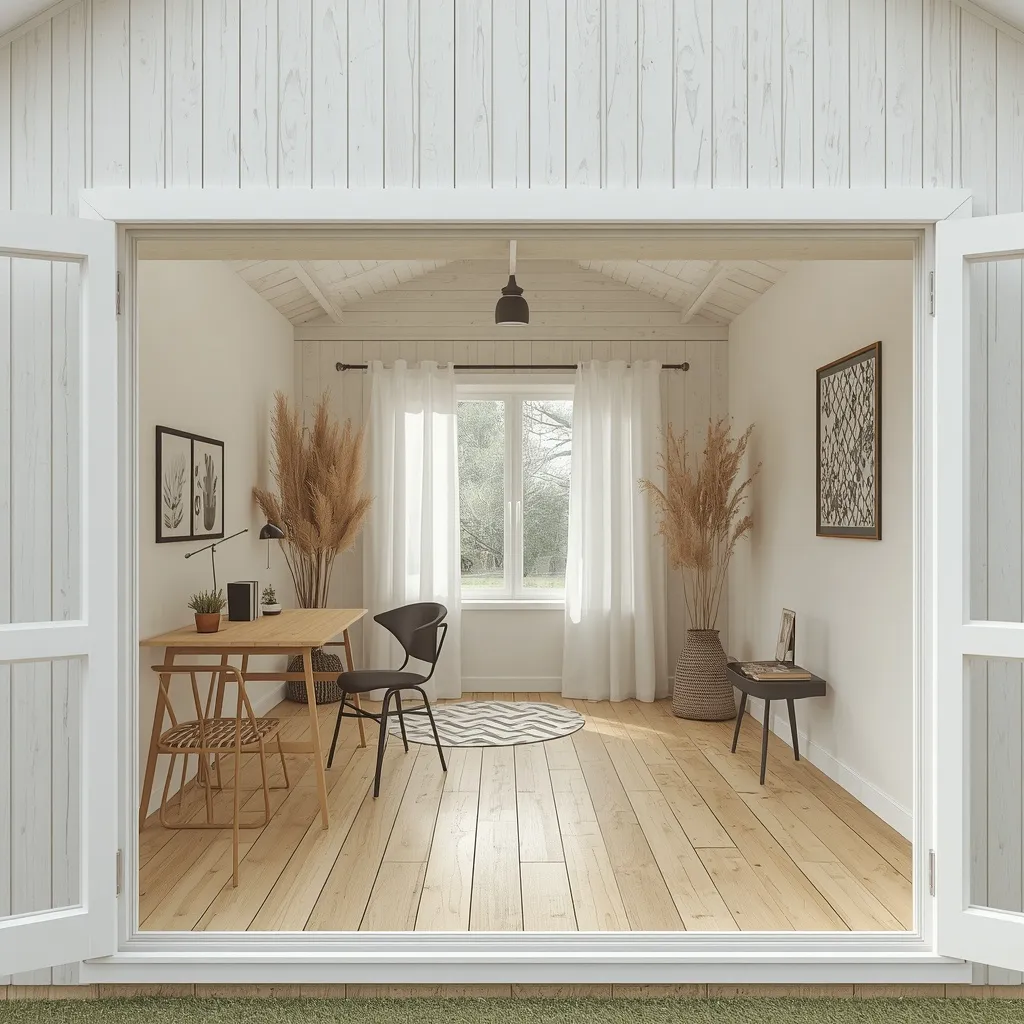
8. Scandinavian Light-Wood Shed Office
Pale, lightly whitewashed wood cladding outside, and blond wood floors, white walls, and simple black-metal furniture inside, build an airy, uncluttered Scandinavian-style retreat.
Choose a light oak or pine finish inside and keep it consistent from floor to shelving, since mixing several different wood tones undercuts the calm, unified feel this style depends on. Add exactly one or two black-metal accents, a desk lamp, chair legs, rather than scattering black throughout the room. A large single window with sheer white curtains keeps the light soft rather than harsh, which suits this palette better than an uncovered, glare-heavy window.
- Best for: anyone wanting a calm, distraction-free workspace with a light, airy feel
- Why it works: one consistent wood tone plus a mostly white palette reads cohesive rather than sparse
- Common mistake: mixing warm oak and cool gray-toned wood in the same room, which reads mismatched
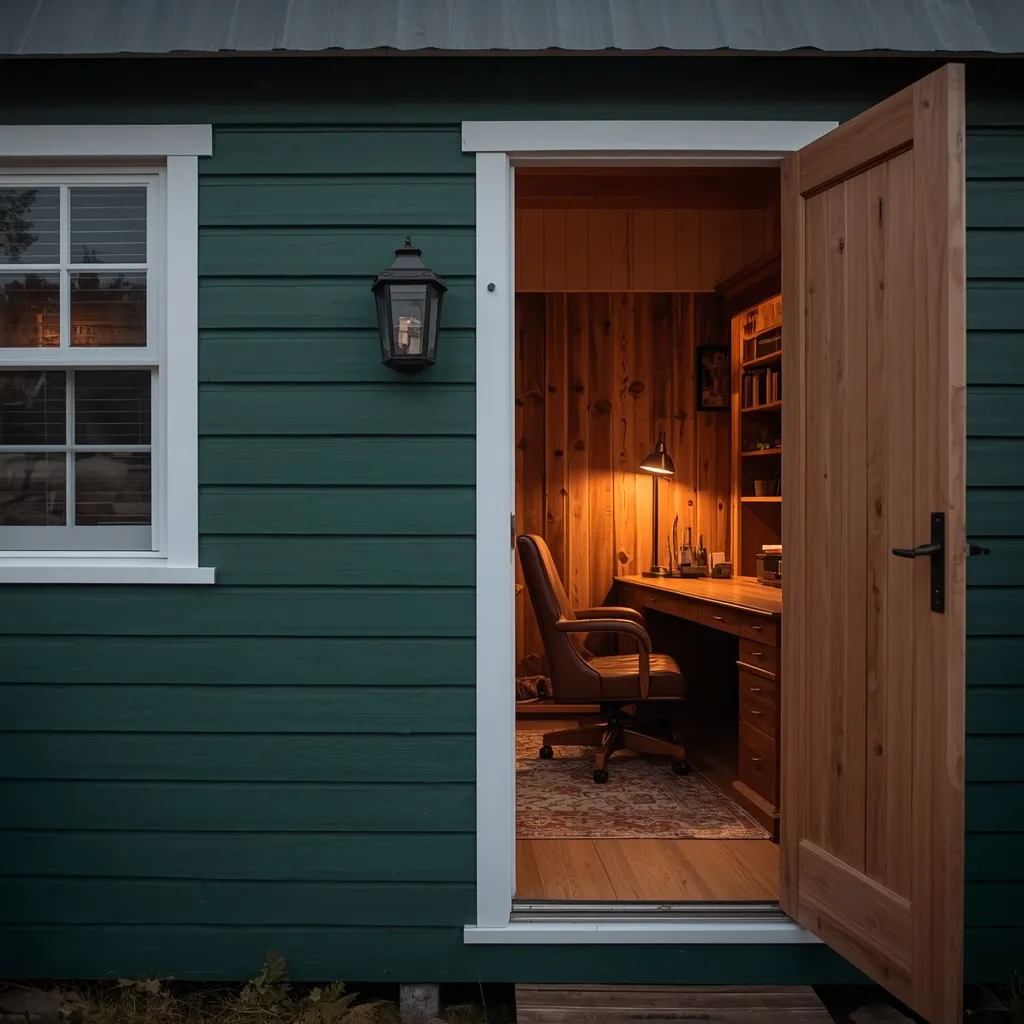
9. Traditional He Shed Office
Dark green or navy exterior paint and a solid wood door lead into a study-style interior with a leather chair, a wood desk, built-in shelving, and warm brass task lighting, a traditional, den-like office built for focus.
Keep the exterior a single deep, matte color, hunter green, navy, or charcoal, with white or cream trim for definition, then carry that same depth of color inside through the desk or shelving stain rather than the walls, so the room doesn’t feel like a cave. Built-in or modular shelving along one wall adds storage without eating floor space, and a small area rug under the desk anchors the room the way it would in a formal study inside the main house.
- Best for: anyone wanting a quiet, traditional retreat for focused work or reading
- Elements that combine: deep exterior color, wood built-ins, leather seating, and warm task lighting
- Common mistake: painting both the exterior and every interior wall the same dark color, which can feel closed-in without enough light-reflecting surfaces
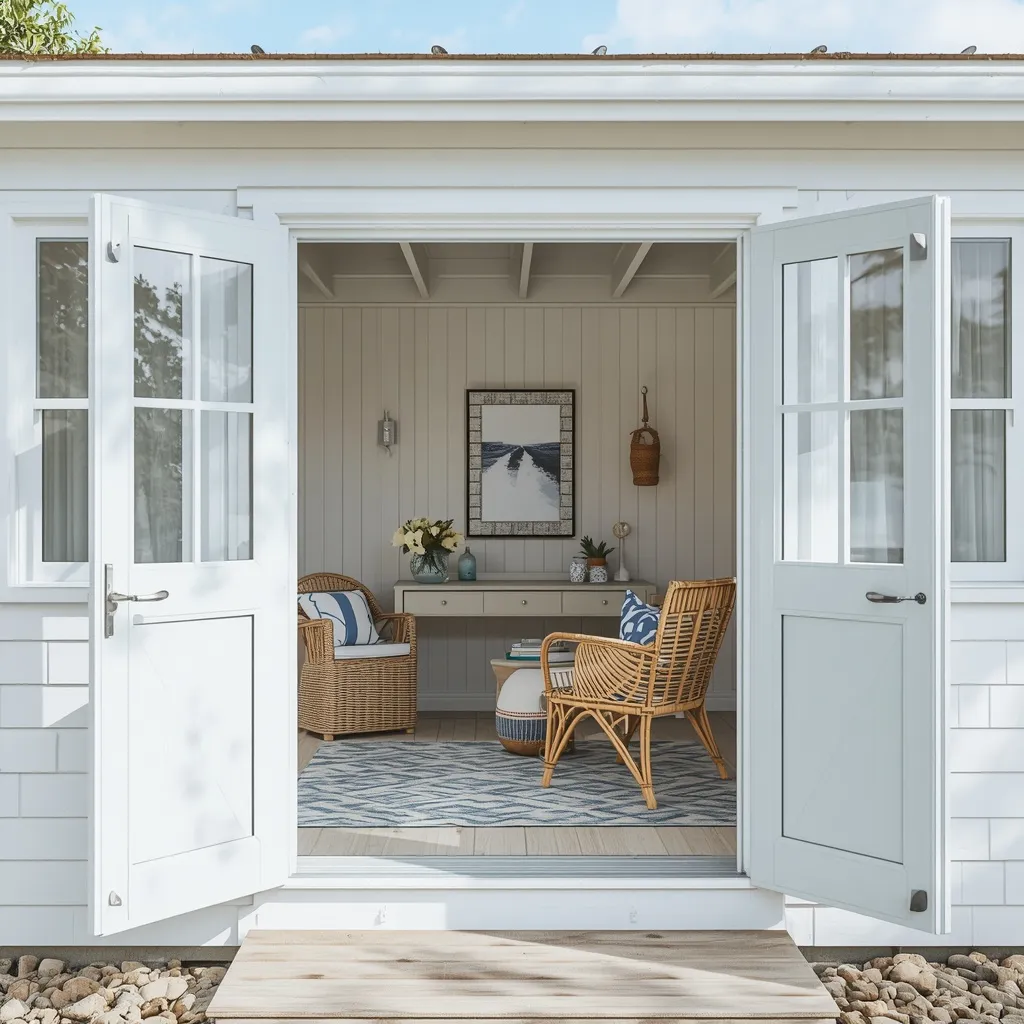
10. Coastal Blue & White Shed Office
Crisp white siding, a soft blue door, and simple trim outside, with woven textures, a light desk, and blue-and-white textiles inside, build a relaxed coastal palette that works whether or not the property is anywhere near actual water.
Keep the blue muted rather than saturated, since a dusty or grayed blue reads coastal while a bright royal blue reads more nautical-costume than calm coastal, and repeat it in just two spots, the door outside and one textile inside, so it doesn’t overwhelm the mostly white palette. Rope or woven-rattan light fixtures and a jute rug round out the texture without adding more color.
- Best for: anyone wanting a light, relaxed style that photographs well and rarely feels dated
- Why it works: a mostly white base with one repeated accent color reads cohesive rather than themed
- Common mistake: adding beach-specific decor like anchors or shells on top of the palette, which can tip coastal into costume-y
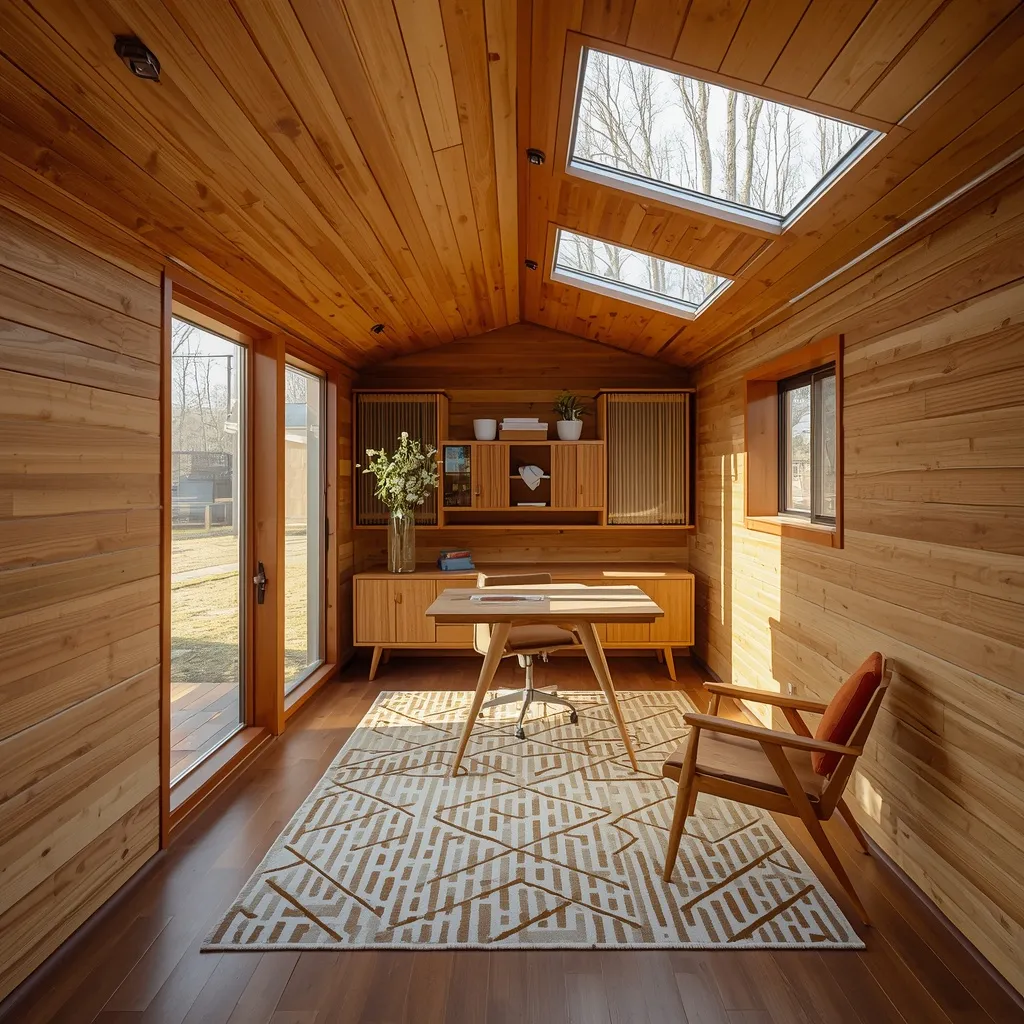
11. Mid-Century Modern Shed Office
A flat or low-slope roof, horizontal wood siding, and a wall of clerestory windows outside, paired with warm walnut furniture, a tapered-leg desk, and a graphic textile or two inside, build a compact homage to mid-century architecture.
The flat or low-slope roofline is what reads mid-century from the outside, so if the existing shed has a steep gable roof, this style is harder to achieve without a rebuild; focus the mid-century cues indoors instead, through furniture silhouette, tapered wood legs, low profiles, and one graphic-patterned rug or cushion. Walnut or teak-toned wood paired with brass or black hardware keeps the palette warm rather than sterile.
- Best for: design-forward homeowners with a flat-roofed or low-slope shed already in place
- Interior focus: tapered-leg wood furniture, warm walnut tones, and one graphic textile
- Common mistake: forcing this style onto a steep-gabled shed exterior, where the roofline works against the aesthetic
12. Black Modern Cabin Shed Office
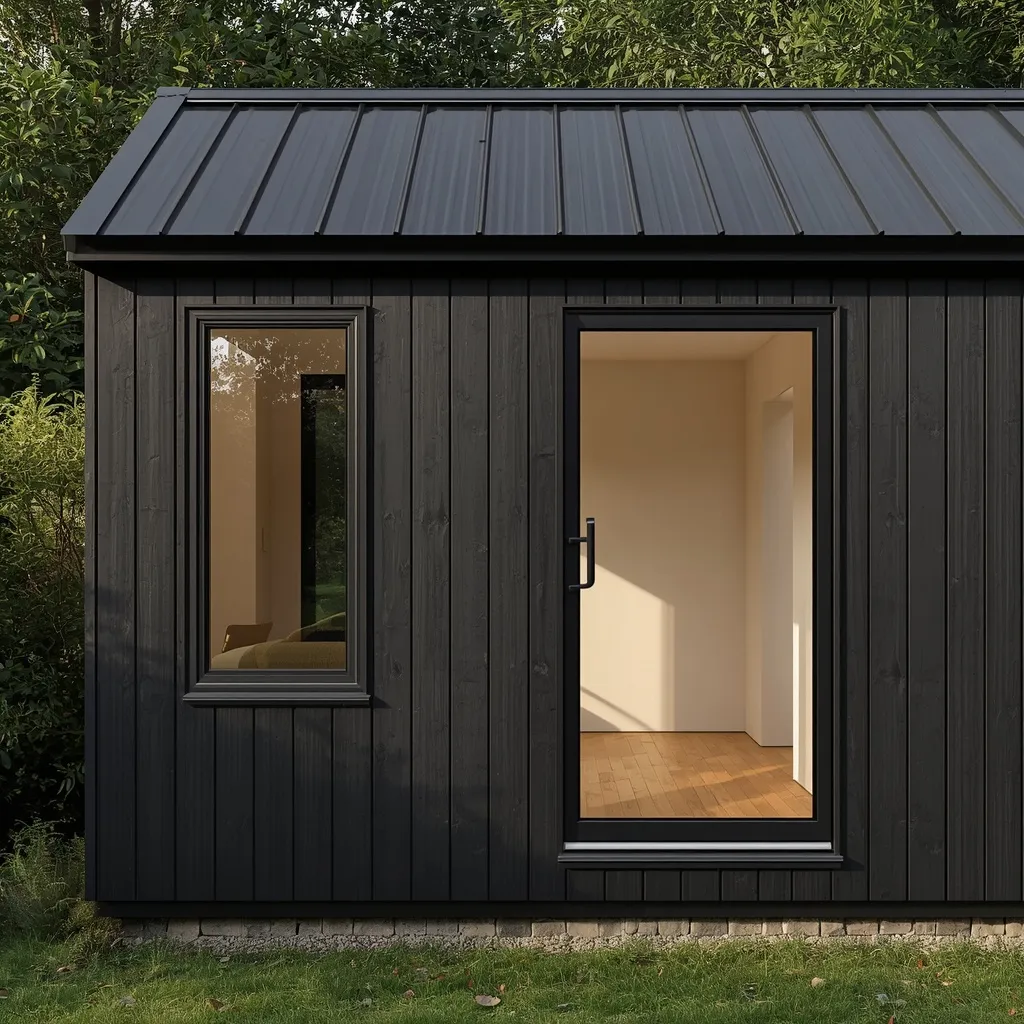
Charred or dark-stained wood siding, a shou sugi ban–inspired finish, black window frames, and a black metal roof outside, balanced by warm wood tones and a plaster-white ceiling inside, keep this black shell from feeling heavy.
An all-black or near-black exterior needs a lighter interior to balance it, so keep interior walls white or a pale plaster tone and let warm wood flooring or furniture do the grounding instead. Because dark exteriors absorb significant heat in direct sun, this style works best with at least partial afternoon shade or added roof ventilation in hot climates. A single black-framed window or door keeps the exterior-to-interior transition visually connected.
- Best for: modern, design-conscious homeowners in temperate or partly shaded yards
- When it doesn’t work well: a black exterior in full, unshaded afternoon sun in a hot climate, where it can overheat
- Common mistake: pairing the black shell with an equally dark interior, which removes the contrast that makes the style feel intentional
13. Japandi Shed Office
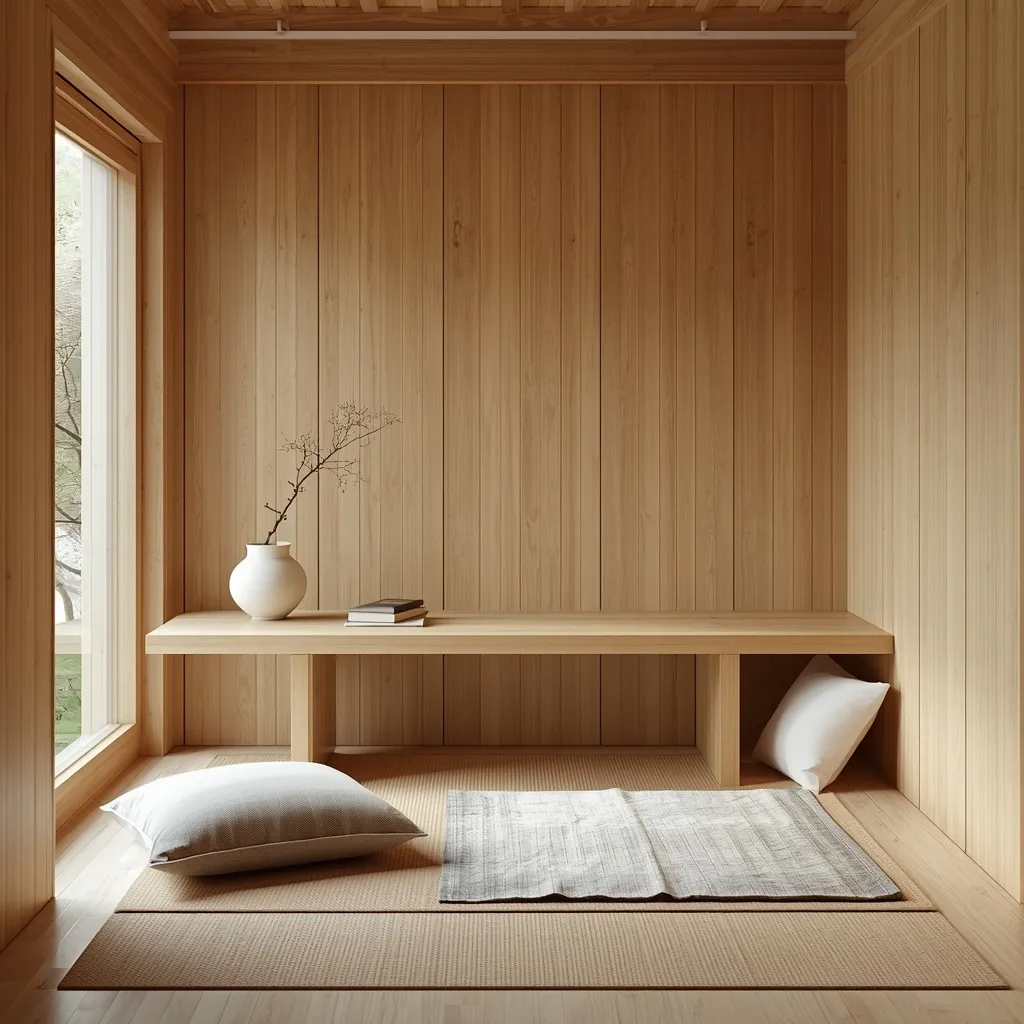
Natural wood siding left to weather or lightly oiled, a low-profile roofline, and minimal ornamentation outside, paired with a low wood desk, a floor cushion, linen textiles, and one piece of pottery inside, blend Japanese minimalism with Scandinavian warmth.
Keep visible storage to almost nothing, closed cabinetry or a single low shelf, so the room’s calm comes from what’s absent as much as what’s chosen. Natural, unbleached materials, linen, raw wood, stoneware, throughout reinforce the pared-back mood better than any single statement piece would. A shoji-style sliding door or screen, even a simplified interpretation, reinforces the aesthetic without needing an authentic import.
- Best for: anyone wanting a genuinely calm, low-stimulation workspace
- Elements that combine: natural wood, linen textiles, low-profile furniture, and minimal visible storage
- Common mistake: adding too many small decorative objects, which undercuts the intentional emptiness this style depends on
14. Artist Studio Glass-Wall Shed Office
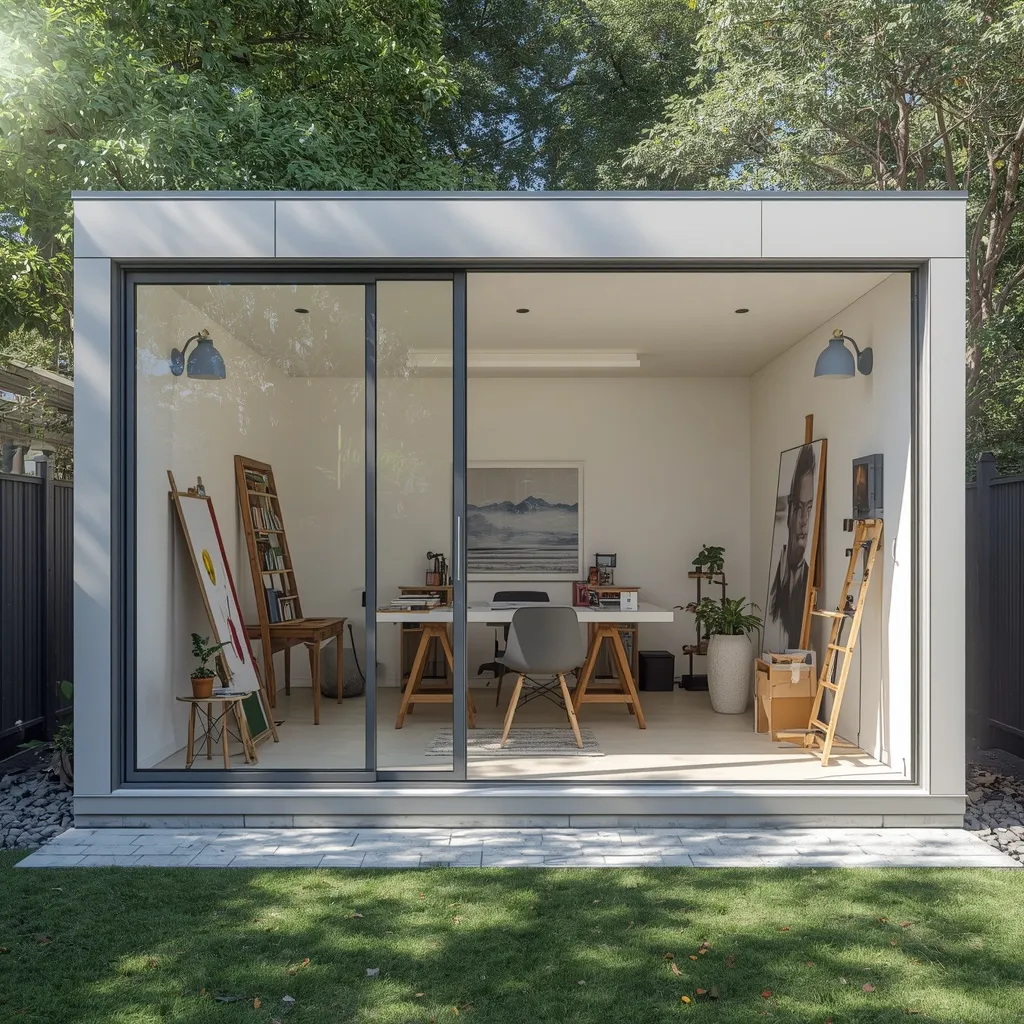
A full glass wall or a bank of large windows on the north-facing side (south-facing in the Southern Hemisphere), paired with white walls, a large work surface, and minimal furniture, builds a studio around light rather than around a view.
A north-facing glass wall (or south-facing below the equator) gives consistent, diffused light throughout the day without the harsh direct sun and heat gain of an east- or west-facing glass wall, which matters both for comfort and for anyone doing color-sensitive work like painting or photo editing. Use tempered safety glass for any large glazed panel, and add exterior shading, an overhang, a pergola, or deciduous planting, on any side that does get direct afternoon sun, since a fully glazed shed can overheat quickly without it.
- Best for: artists, photographers, or anyone whose work depends on consistent natural light
- Safety note: use tempered safety glass for large window walls, and confirm whether local code requires it
- Common mistake: glazing the west-facing wall without shading, which turns the room into a greenhouse by late afternoon
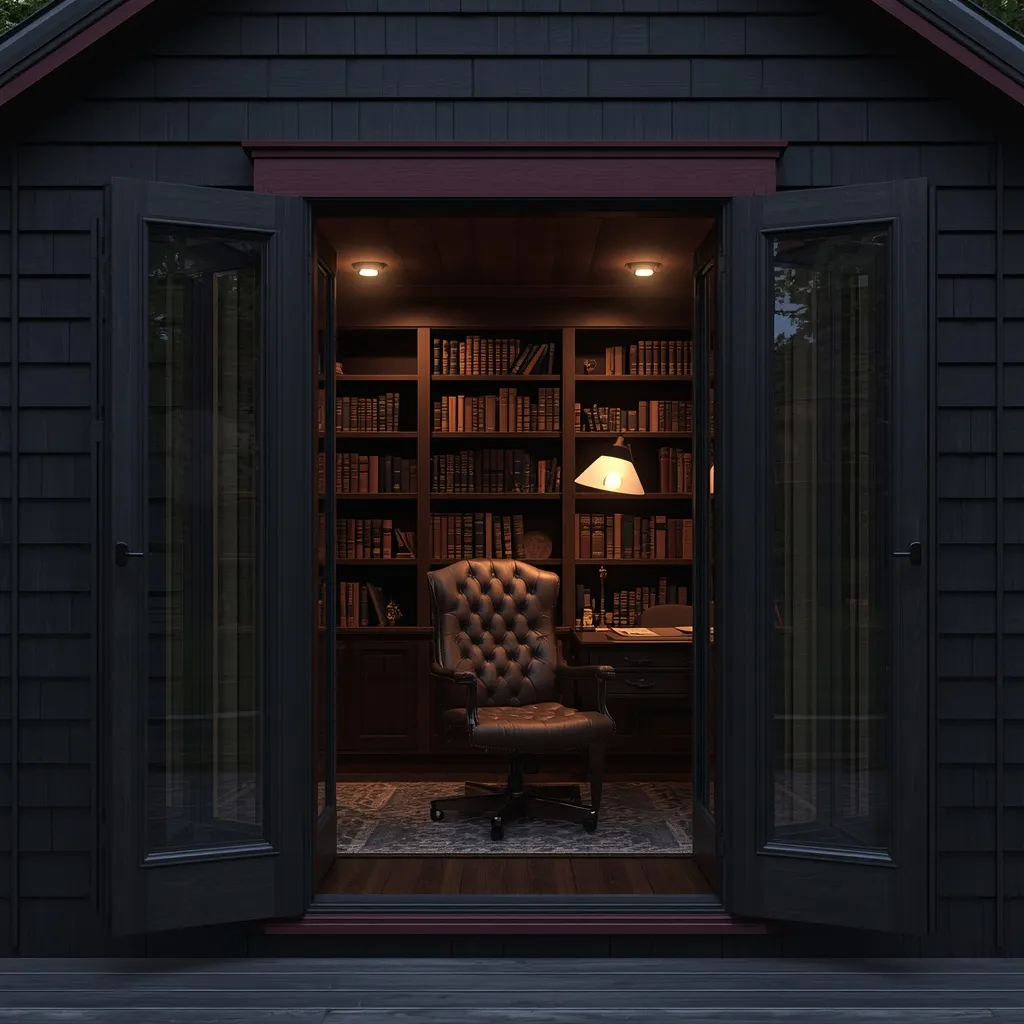
15.Dark Academia Library Shed Office
Deep burgundy or forest-green exterior trim against dark wood siding leads into floor-to-ceiling bookshelves, a leather chair, brass library-style lighting, and a large wood desk, an office built to feel like a private study.
This style depends on the volume of books and objects rather than empty space, so plan the shelving first and build the rest of the layout around it, leaving the desk near the window for daylight rather than deep in the room where the bookshelves would leave it dim. Warm-toned lighting, 2700 to 3000 Kelvin bulbs, matters more here than in almost any other style on this list, since cool white light flattens the moody warmth the palette is going for.
- Best for: readers, writers, and researchers who want a workspace that doubles as a personal library
- Elements that combine: dark wood, dense shelving, leather seating, and warm brass lighting
- Common mistake: installing cool-white LED bulbs, which clash badly with the warm wood and leather palette
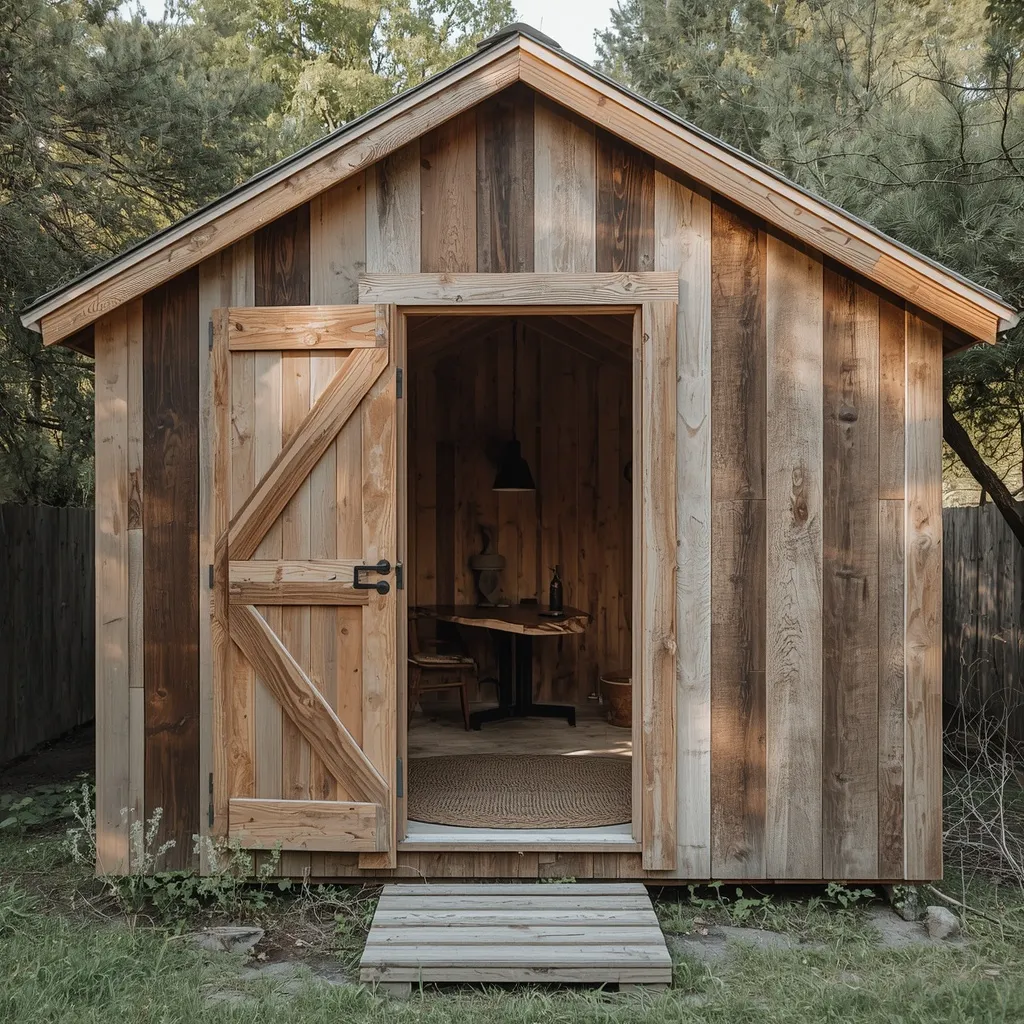
16. Reclaimed Wood Rustic Shed Office
Mismatched reclaimed barn wood siding, a simple shed roof, and a rustic wood door outside, with a live-edge wood desk, a woven rug, and vintage-style hardware inside, build a shed office that looks like it’s always been there.
Reclaimed wood siding varies in tone and grain by nature, so plan for that variation rather than trying to match boards perfectly, it’s part of the character rather than a flaw to correct. Seal reclaimed exterior wood with an exterior-grade sealant even if it already looks weathered, since old wood still needs moisture protection once it’s back outside as siding. A live-edge desk slab and simple black iron hardware tie the rustic materials together without adding a full decorating budget.
- Best for: homeowners with access to reclaimed or salvaged wood, or a rural property where the style fits the setting
- Budget note: reclaimed material can cost less than new lumber, but factor in extra time for sourcing and prepping it
- Common mistake: leaving reclaimed exterior siding unsealed, since weathered wood still absorbs moisture without a protective finish
Common Shed Office Design Mistakes to Avoid
Most disappointing shed offices trace back to four avoidable choices: skipping the size-to-use math, ignoring window placement, mismatching the shed’s style to the main house, and underestimating what a covered path actually does for daily use.
- Building smaller than the actual workflow needs: a desk-only footprint feels tight fast once a bookshelf, filing storage, or a client chair gets added later, plan for those from the start rather than retrofitting a small shed.
- Placing the desk facing a window: this creates glare on calls and forces the eyes to adjust between a bright window and a dim screen all day; a side-facing desk is more comfortable for extended use.
- Ignoring the main house’s style entirely: a shed office doesn’t need to match the house exactly, but a jarring clash, a black modern cabin behind a pastel Victorian, for instance, can undercut curb appeal and resale value more than most homeowners expect.
- Skipping the path: an uncovered, unlit route between house and shed is the single biggest reason a shed office quietly stops getting used once the weather turns.
Budget-Friendly Ways to Style a Shed Office
A shed office doesn’t need a full custom build to feel intentional. Several of the styles above scale down easily with a few targeted choices.
- Convert an existing shed rather than building new: a coat of exterior paint, new door hardware, and interior insulation-and-drywall over an existing structure costs meaningfully less than a ground-up build.
- Choose one exterior accent instead of a full repaint: a new door color, window trim, or house numbers can shift a plain shed toward a specific style, farmhouse, coastal, traditional, without repainting the whole exterior.
- Prioritize the window before the furniture: good natural light does more for a workspace’s daily comfort than any single piece of furniture, and it’s a one-time cost rather than an ongoing one.
- Source secondhand or reclaimed materials for shelving and desks, which suits the industrial, rustic, and Japandi styles above particularly well without looking like a compromise.
Frequently Asked Questions
How big should a shed office be?
A single-desk shed office works well starting around 2.4 by 3 m (8 by 10 ft), which fits a desk, seating, and basic storage without feeling cramped. Add more width for a client seating area, or move toward 3.6 by 4.8 m (12 by 16 ft) if the shed also needs to function as a guest space.
Do I need a permit to build a shed office?
In many places, a small, unheated storage shed doesn’t need a permit, but adding electrical wiring, plumbing, or converting it into a habitable workspace usually does trigger local building code requirements. Rules vary significantly by city and country, so check with the local planning or building department before finalizing a design.
What’s the best material for a shed office in a rainy or cold climate?
An insulated panel (SIP) shed or a well-insulated wood-frame shed handles cold and wet climates best, since both hold heat more consistently than an uninsulated metal structure. A tin or metal roof still works well in rain, since it sheds water efficiently, but pair it with proper gutters and interior insulation to manage both moisture and noise.
Can a shed office double as a guest room too?
Yes, a shed built with a fold-out or Murphy bed, a small kitchenette counter, and enough climate control for overnight comfort can genuinely double as a guest suite. Keep the desk and sleeping area on separate walls so neither function crowds the other, and budget for a mini-split or window unit if the shed will host guests overnight.
How do I make a small shed office feel bigger?
Choose a single larger window instead of several small ones, keep the color palette light and consistent from floor to ceiling, and use wall-mounted or fold-down furniture to keep the floor visually open. A large mirror positioned to reflect the main window can also make a small shed office feel noticeably more spacious.
What if I don’t have a yard for a shed office?
If a standalone shed isn’t possible, the same style principles, a considered color palette, good window placement, and one or two well-chosen furniture pieces, apply just as well to a spare room or a converted closet indoors. The exterior-specific ideas here won’t apply, but every interior pairing translates directly to a room inside the house.
Should the desk face the window in a shed office?
Generally no. A desk facing the window creates glare on video calls and forces your eyes to adjust between a bright window and a dim screen all day, while a desk with its back to the window leaves your face underexposed on camera. A side-facing desk position gives the most even, comfortable light for extended work.
Bringing Your Shed Office Vision to Life
A shed office earns its square meters when the exterior style, the interior palette, and the daily walk from the back door all work together, not just when the desk itself looks good in a photo. Whether that means a colorful boho retreat, a black modern cabin, or a small, budget-conscious build with one great window, these shed office ideas can flex to fit an existing structure or a from-scratch build. For more ways to shape a workspace that actually gets used, browse Sunday Abode’s home office ideas across every room of the house. Pick the style that matches your yard, your climate, and how you actually work, then let the shed earn its keep.