
Introduction
A room full of thriving plants feels alive in a way no other decor can match, softer, calmer, and quietly luxurious. The best plant room decor ideas aren’t about scattering pots around; they’re about composing greenery like a stylist, layering heights, textures, and leaf shapes so a space feels designed rather than cluttered. Whether you want a lush jungle corner, a single sculptural monstera, or a macrame-hung boho nook, plants bring instant life to a living room, bedroom, or even a powder room. At Sunday Abode, we believe greenery is the easiest way to make a house feel like home, and these 16 ideas show how to style it beautifully, with the light and pet-safety notes that keep your green room genuinely thriving.
Key Takeaways
- Style plants like a designer: vary heights, group in odd numbers, repeat a leaf shape or pot color, and let one large plant anchor each grouping.
- Match plants to the room’s real light, a styled corner only stays alive if the plants suit the spot; use quality artificial plants for genuinely dark areas.
- Layer greenery at every level: floor plants, raised stands, shelves, hanging planters, and trailing vines create a full, gathered look.
- Many favorites (monstera, pothos, money plant) are toxic to pets, so style them up high or choose pet-safe plants in animal homes.
- Most looks are renter-friendly and budget-flexible, using no-drill hangers, thrifted pots, and easy propagation to grow a collection cheaply.
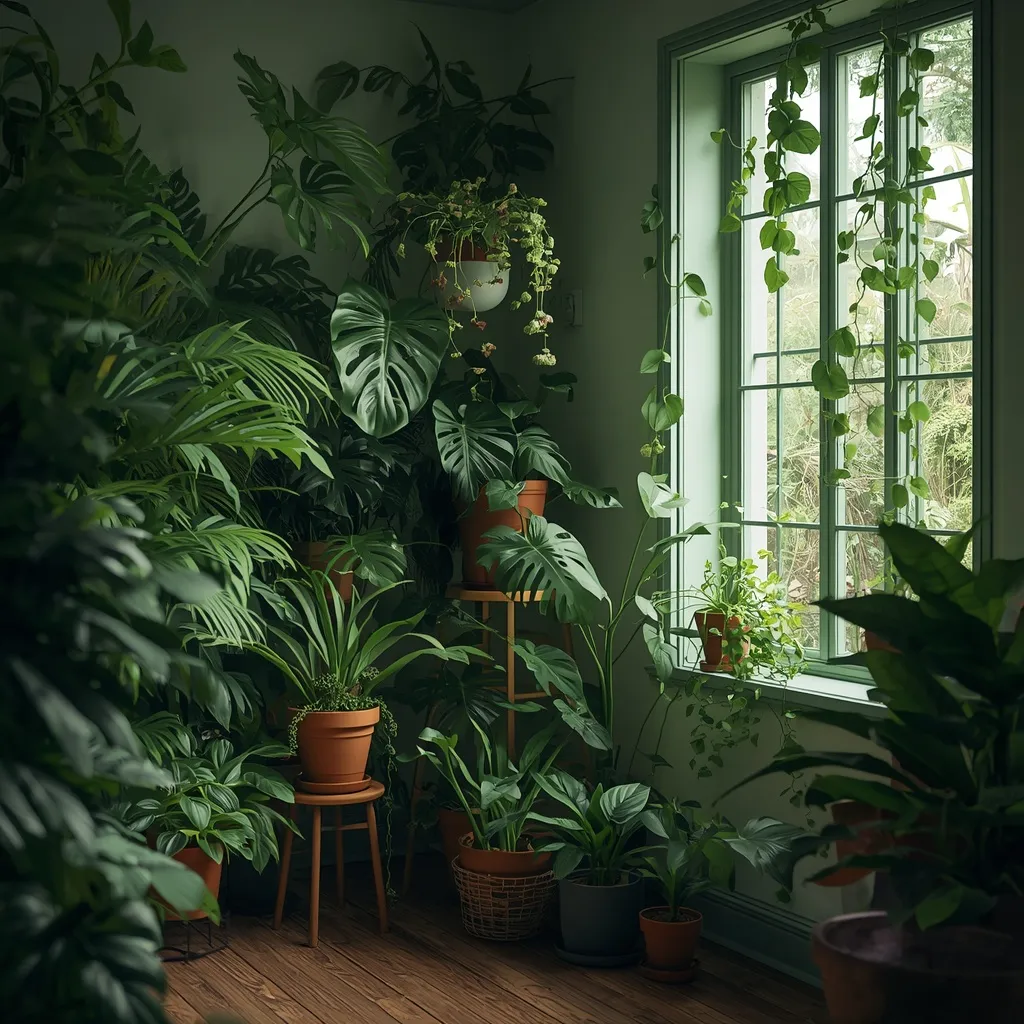
1. Lush Jungle Corner
A dense cluster of plants in a bright corner turns dead space into a lush indoor jungle. Floor plants, raised pots, and trailing vines layer together at every height, wrapping the corner in green and giving a room an instant focal point.
Build the jungle around one tall anchor plant like a monster or bird of paradise, then layer medium and small plants at descending heights using stands and stacked books, finishing with a trailing pothos up top. Group in odd numbers and repeat two or three leaf shapes for cohesion rather than chaos. Choose plants that share the corner’s light needs, and cluster them close to raise humidity. This works best in a bright corner near a window and is the definitive plant-room look.
- Best for: a bright corner needing a lush, high-impact focal point.
- Why it works: layering heights and repeating leaf shapes reads designed, not cluttered.
- Key elements: tall anchor plant, mid and low layers, trailing vine, plant stands.
2. Statement Monstera Living Room
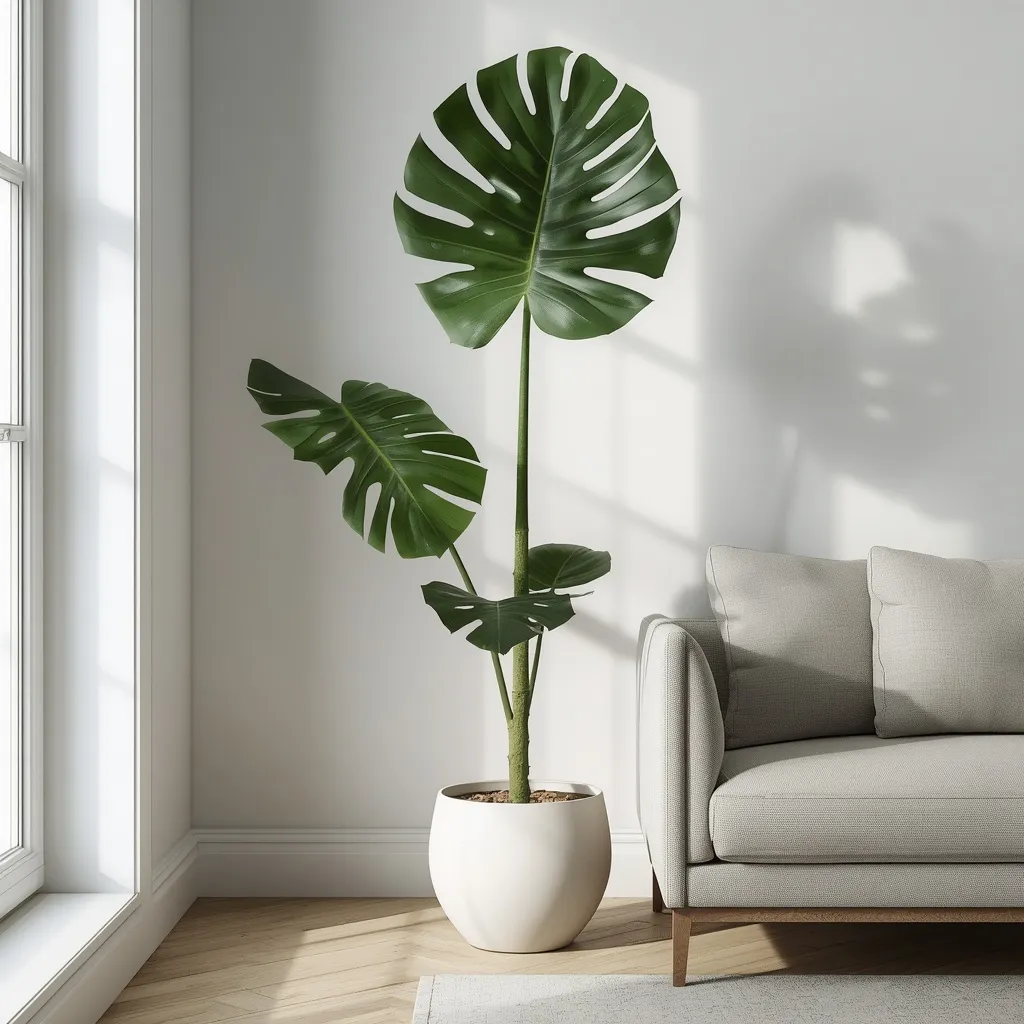
A single large monstera can carry a whole living room. Its big, split, glossy leaves make a bold sculptural statement in a corner or beside a sofa, bringing that instantly recognizable tropical look with just one plant.
Give a monstera (Monstera deliciosa) a floor spot with bright, indirect light and room to spread, since mature leaves can reach 30–60 cm (12–24 in) across. Set it in a simple large pot so the foliage stays the star, and add a moss pole to support upward growth and bigger, more fenestrated leaves. Wipe the leaves monthly so they stay glossy. Note that monstera is toxic to cats and dogs if chewed. This bold, low-plant-count look suits modern and boho living rooms alike.
- Best for: a bold tropical statement with just one easy plant.
- Watch out: toxic to pets; give it space and bright indirect light.
- Key elements: large monstera, simple big pot, moss pole, bright corner.
3. Macrame Hanging Garden
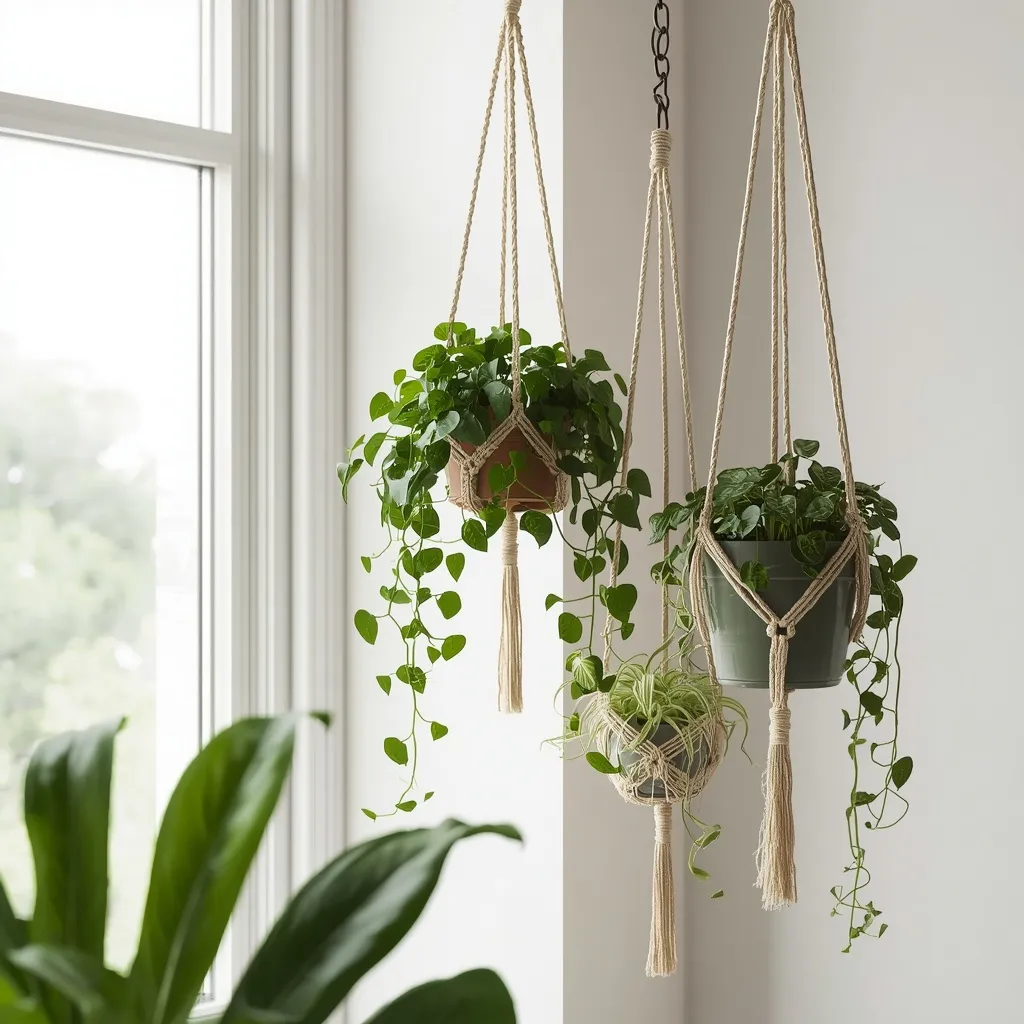
Plants suspended in macrame hangers turn empty air into a boho green display. Knotted cotton hangers holding trailing plants at different heights draw the eye upward and free every surface below, perfect where floor and shelf space is tight.
Hang macrame planters from sturdy ceiling hooks or a wall bracket, staggering two or three at different lengths near a window for a layered look. Fill them with trailing plants like pothos, string of hearts, or spider plant that spill beautifully over the sides. Use a ceiling anchor rated for the planter’s watered weight, and take plants down or use a drip-catching inner pot when watering. This renter-friendly, space-saving look suits boho and small living rooms and makes gorgeous use of vertical space.
- Best for: small rooms and boho spaces short on floor space.
- Watch out: use a weight-rated ceiling anchor; catch drips when watering.
- Key elements: macrame hangers, trailing plants, staggered heights, window light.
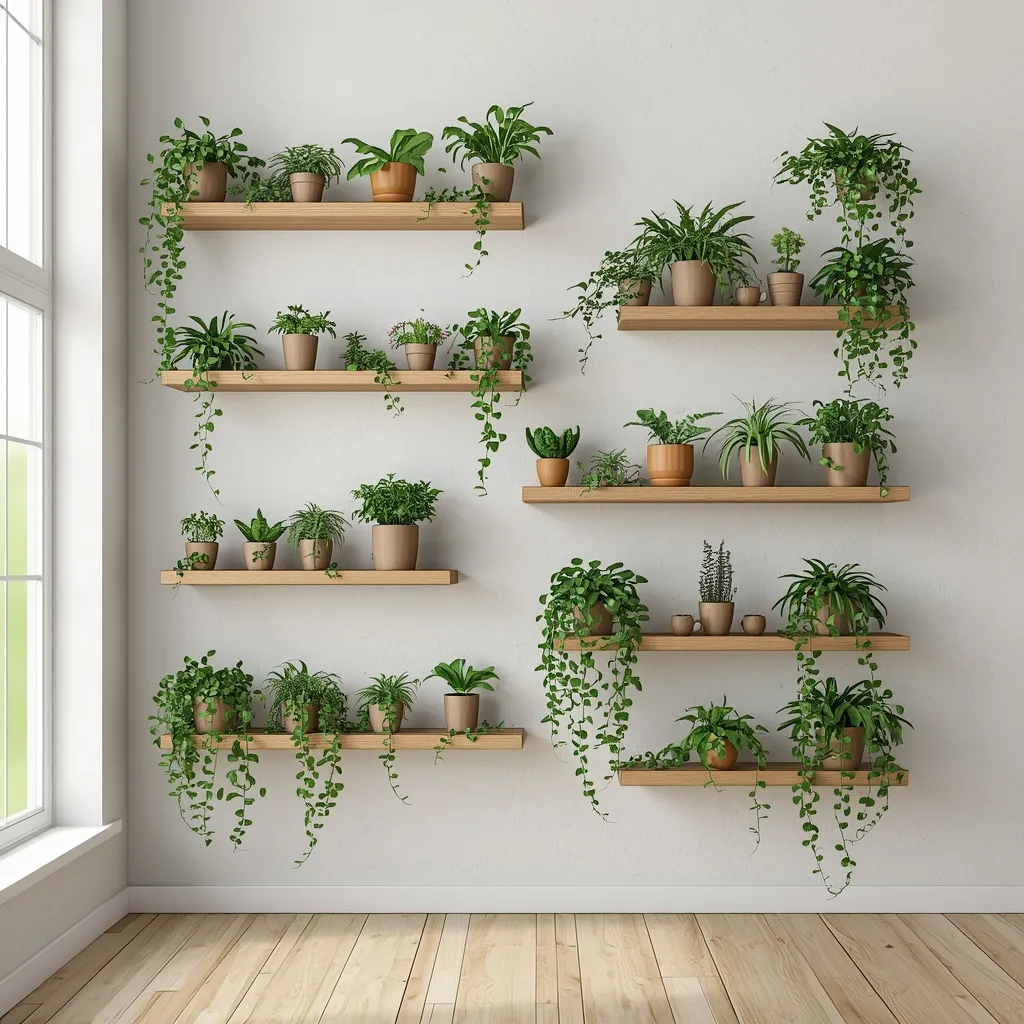
4. Floating Shelf Plant Wall
A wall of floating shelves lined with plants creates a living green feature. Small and trailing plants staggered across simple wooden shelves turn a blank wall into a lush vertical garden without using an inch of floor space.
Mount floating shelves at varying heights near a window, then style them with small potted plants and trailing vines that drape down between books and ceramics. Vary pot heights and let some greenery spill over shelf edges to soften the lines. Make sure each shelf gets enough light and use pots with drainage plus saucers to protect the wall. For rentals, use damage-free shelf brackets. This suits living rooms, home offices, and small spaces, and is one of the best ways to add lots of plants vertically.
- Best for: blank walls and small spaces; renters (damage-free brackets).
- Why it works: shelves add many plants vertically without using floor space.
- Key elements: floating shelves, small and trailing plants, varied heights.
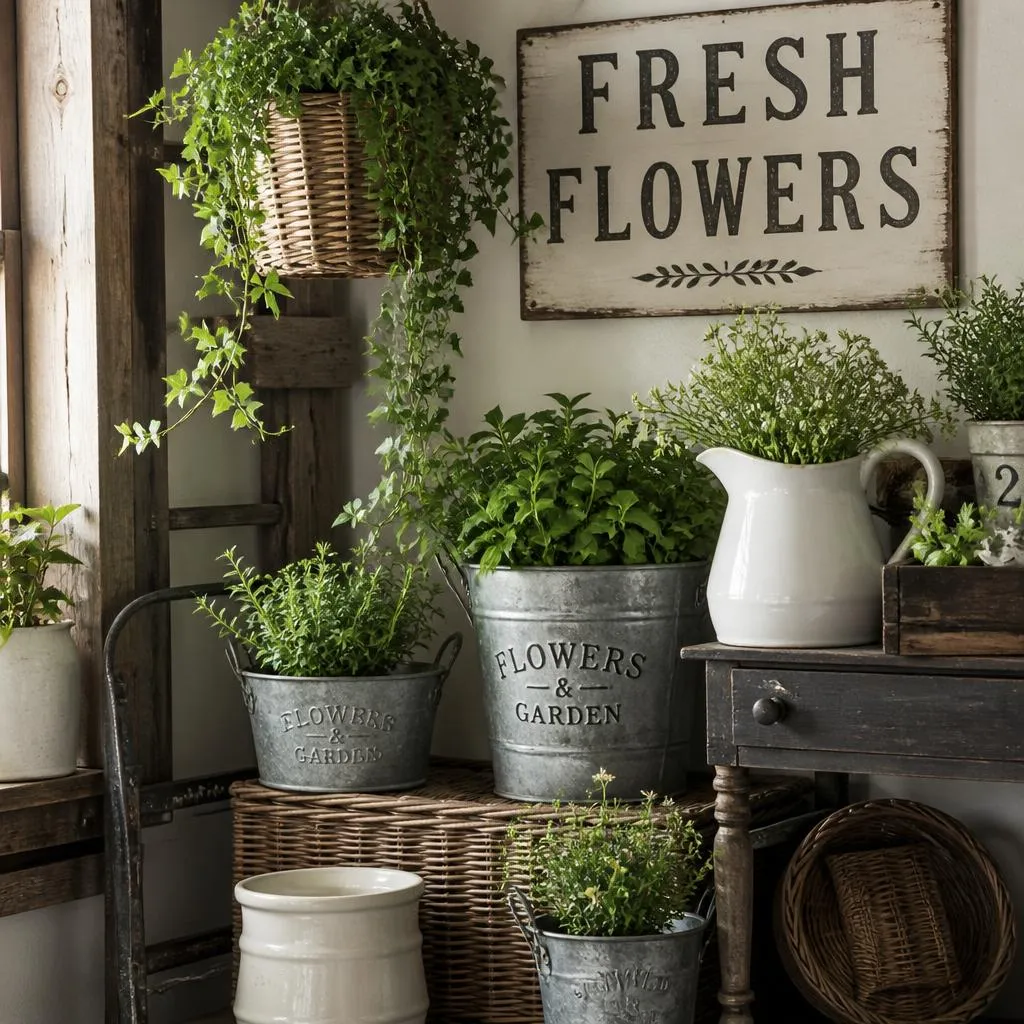
5. Cozy Farmhouse Plant Nook
Plants styled with farmhouse touches feel warm, homey, and gathered. Greenery in galvanized buckets, woven baskets, and ironstone pitchers, set among reclaimed wood, brings a soft, rustic charm to a living room or kitchen nook.
Pot or slip plants into farmhouse containers, galvanized metal, woven seagrass, enamelware, or a wooden crate, and cluster them with a vintage sign or a stack of old books. Trailing ivy or a pothos in a hanging basket adds the classic farmhouse spill of green. Line any porous or metal container with a plastic pot to prevent leaks and rust. This warm look suits farmhouse and cottage interiors and pairs beautifully with natural textiles like linen and jute. It’s especially lovely in a kitchen or living-room corner.
- Best for: farmhouse and cottage rooms wanting warm, rustic greenery.
- Key elements: galvanized and woven containers, trailing ivy, reclaimed wood.
- Watch out: line metal or porous pots with plastic to prevent leaks and rust.
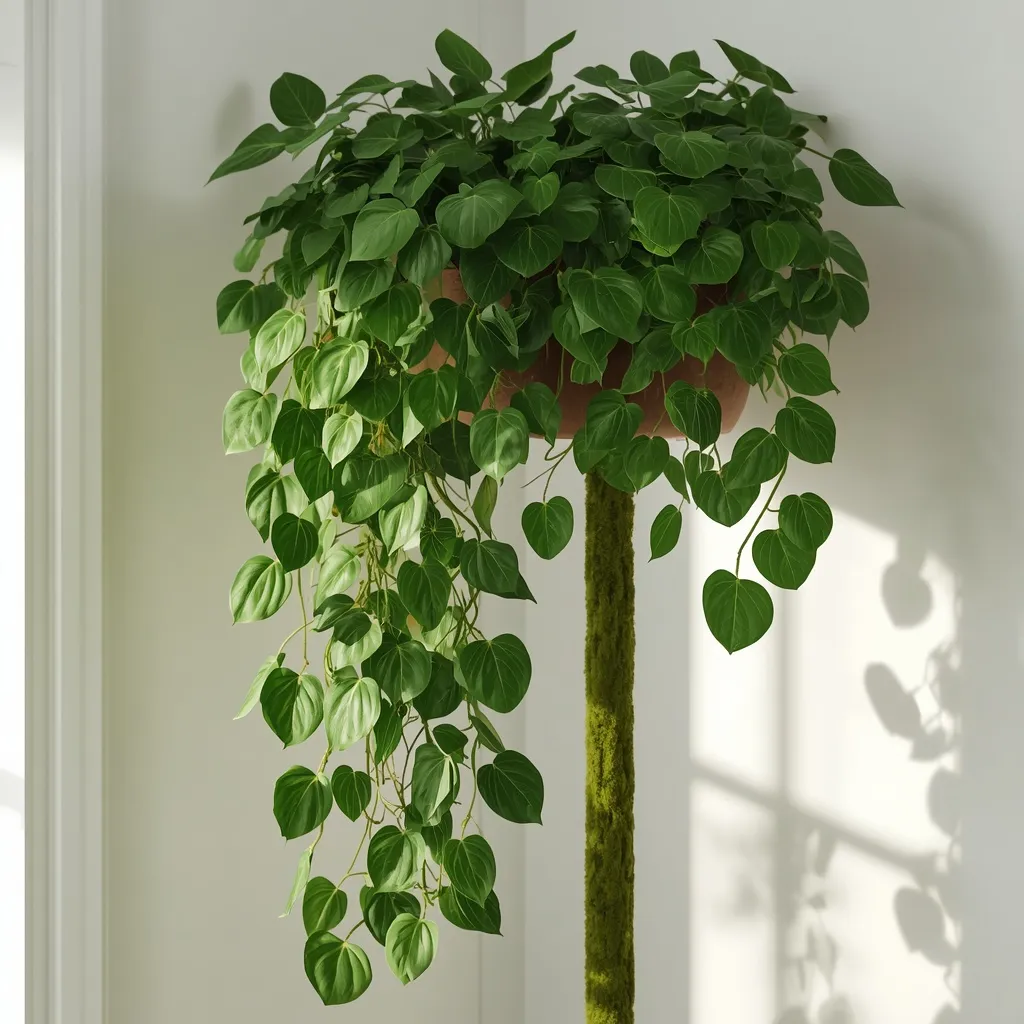
6. Money Plant Prosperity Corner
A cascading money plant makes a lush, meaningful corner display. The heart-shaped leaves of the money plant (a pothos, Epipremnum aureum) trail generously from a shelf, hanging pot, or trained trellis, filling a corner with easy, abundant green.
Train a money plant up a moss pole for a fuller, upright look, or let it trail from a high shelf for a waterfall of leaves. It grows in low to bright indirect light and roots easily in water, so one plant quickly becomes several free cuttings to build the display. In many cultures the money plant symbolizes prosperity, which adds to its appeal in a living room or entryway. Note that it is toxic to pets if chewed. This easy, fast-growing look suits beginners and any bright or medium-light corner.
- Best for: beginners wanting fast, abundant green in any light.
- Watch out: toxic to pets; keep trailing vines out of reach.
- Key elements: money plant (pothos), moss pole or high shelf, free cuttings.
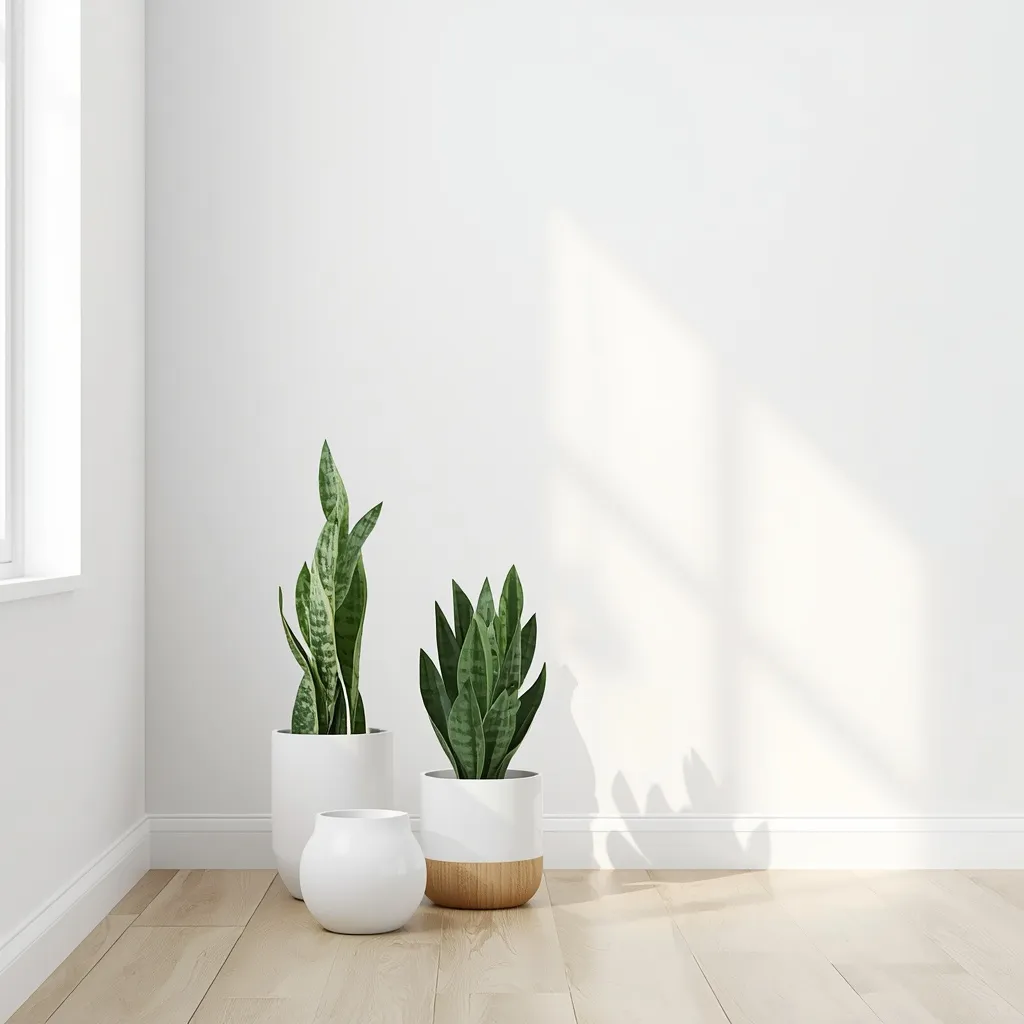
7. Minimalist Scandi Greenery
A few carefully chosen plants in a pared-back room bring calm, Scandi-style green. Clean-lined pots holding sculptural plants against white walls and pale wood create a serene, uncluttered look where every plant earns its place.
For a minimalist scheme, choose two or three sculptural plants, a snake plant, a rubber plant, a single olive tree, in simple ceramic or matte pots in white, black, or natural tones. Keep groupings small and surfaces clear so the plants read as intentional. Repeat one pot color throughout the room for cohesion. This restraint suits Scandinavian, Japandi, and modern interiors and is ideal for anyone who finds a full jungle too busy. It proves a plant room can feel airy and calm rather than crowded.
- Best for: minimalist, Scandi, and Japandi rooms; clutter-averse stylers.
- Why it works: a few sculptural plants in matching pots read calm and intentional.
- Key elements: snake plant or rubber plant, simple pots, one repeated pot color.
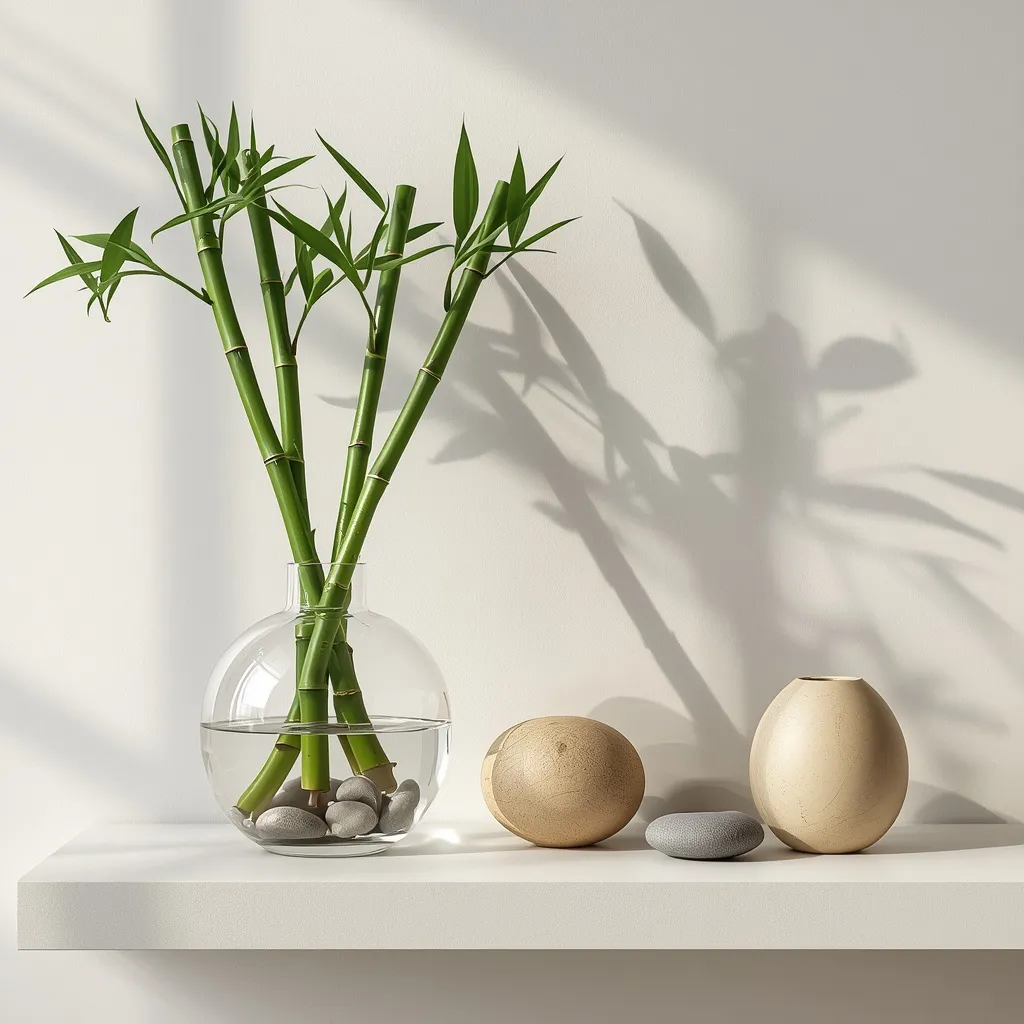
8. Bamboo Zen Accent
Lucky bamboo or a potted bamboo palm brings a calm, zen-like feel to a room. The slim upright stalks and fine leaves add vertical, meditative greenery to a shelf, desk, or corner, evoking a peaceful spa retreat.
Grow lucky bamboo (Dracaena sanderiana) in a vessel of pebbles and water on a desk or shelf, keeping the roots covered with 2–3 cm (1 in) of water and refreshing it weekly. For a larger statement, a bamboo palm (Chamaedorea) in a floor pot adds height and is pet-safe. Lucky bamboo, despite the name, is toxic to pets, so place it out of reach. Pair either with smooth stones and simple ceramics for a zen look. This suits minimalist, Asian-inspired, and calming spaces like a bedroom or home office.
- Best for: calm, zen-style bedrooms, desks, and home offices.
- Watch out: lucky bamboo is toxic to pets; the bamboo palm is pet-safe.
- Key elements: lucky bamboo in water or bamboo palm, pebbles, smooth stones.
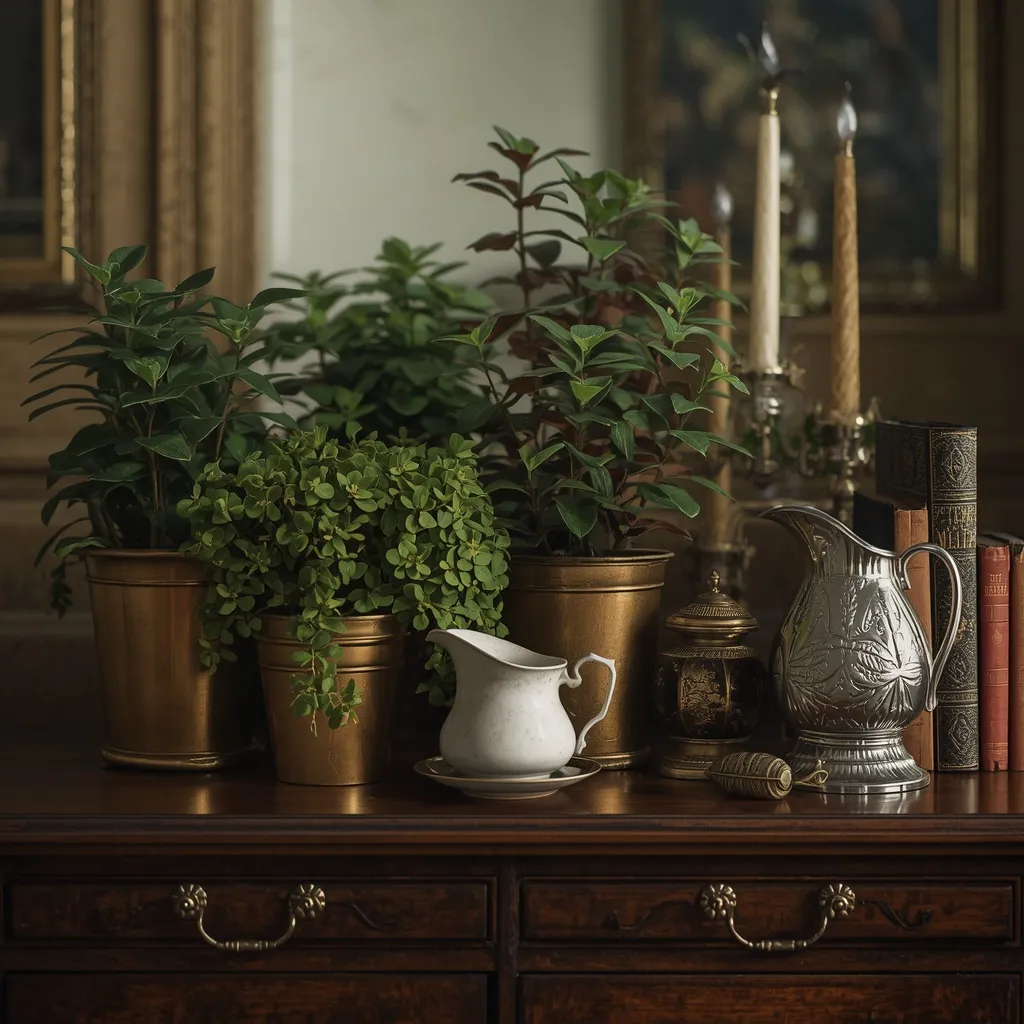
9. Vintage Eclectic Plant Display
Plants mixed with vintage finds create a characterful, collected display. Greenery in thrifted brass pots, old teacups, and patinated containers, set among antique books and curios, gives a room a lived-in, storied charm.
Gather plants in an eclectic mix of vintage vessels, a brass planter, a ceramic pitcher, an enamel pot, and cluster them with old books, framed prints, and curios on a sideboard or shelf. Vary heights and let the mismatched containers unify around a color or metal tone. Thrift stores and flea markets are the perfect hunting ground, making this a budget-friendly, sustainable look. Add a plastic liner to any non-waterproof vintage vessel. This suits vintage, maximalist, and eclectic interiors and rewards a collector’s eye.
- Best for: vintage, eclectic, and maximalist rooms; thrift lovers.
- Why it works: mismatched vintage vessels unified by one tone look collected, not messy.
- Watch out: line non-waterproof vintage containers with plastic.
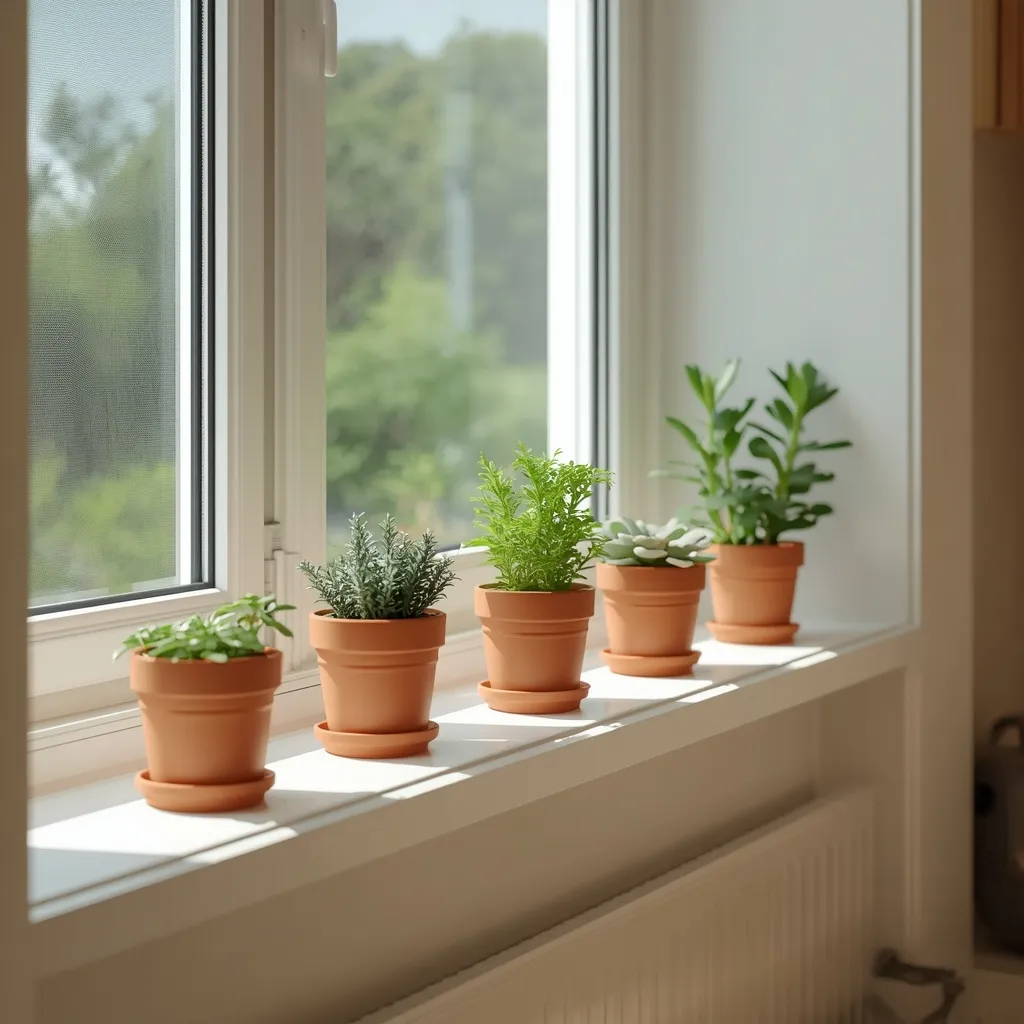
10. Small-Space Windowsill Garden
A sunny windowsill lined with small plants brings green to the tightest space. A neat row of little pots, herbs, succulents, or small foliage plants, turns an unused sill into a productive, pretty mini-garden.
Line a windowsill with small matching or coordinated pots, choosing plants suited to that window’s light: succulents and herbs for a sunny south-facing sill, leafy plants for a gentler east or north one. Keep pots to a similar size for a tidy look, and use a windowsill tray to catch drips. This is the perfect plant display for apartments, studios, and renters with no floor space to spare. It also puts fresh herbs within reach in a kitchen. This suits any bright windowsill in a small home.
- Best for: apartments and studios with no floor space; small-space renters.
- Key elements: small coordinated pots, light-matched plants, windowsill tray.
- Watch out: match plants to the window’s direction and light level.
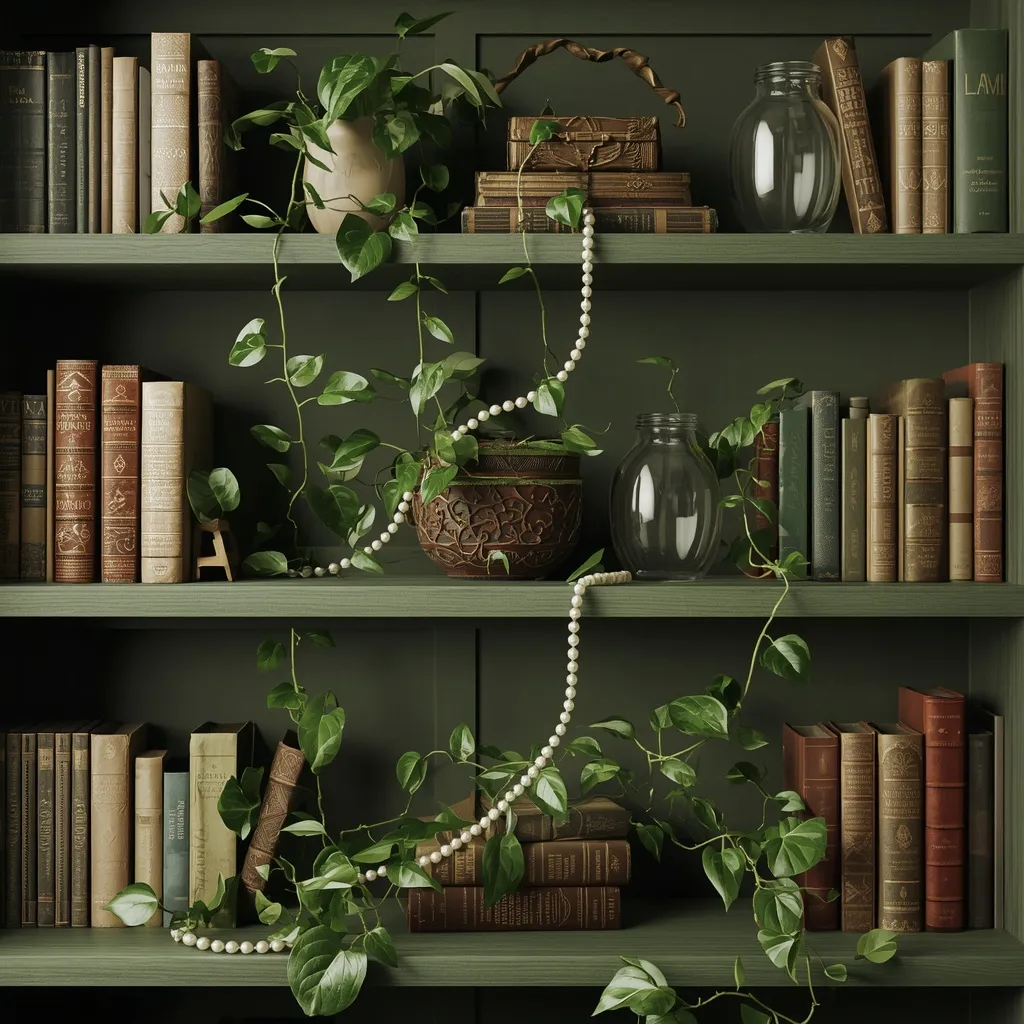
11. Trailing Bookshelf Styling
Plants woven into a styled bookshelf bring living green to a wall of books. Trailing vines spilling from shelves among books, art, and objects soften straight lines and add a natural, collected feel to a whole bookcase.
Tuck small trailing plants like pothos, string of pearls, or philodendron onto several shelves, letting the vines cascade down over the books and shelf edges. Balance them with books stacked both upright and flat, plus a few objects at varying heights, leaving breathing space so it looks curated. Position trailing plants on shelves that get some indirect light and use pots with saucers to protect books. This suits living rooms, home offices, and reading nooks, and turns a functional bookcase into a green feature.
- Best for: living rooms and offices with a bookcase to bring to life.
- Why it works: trailing vines soften straight shelves and unify a bookcase display.
- Key elements: trailing pothos or string of pearls, styled books, saucers.
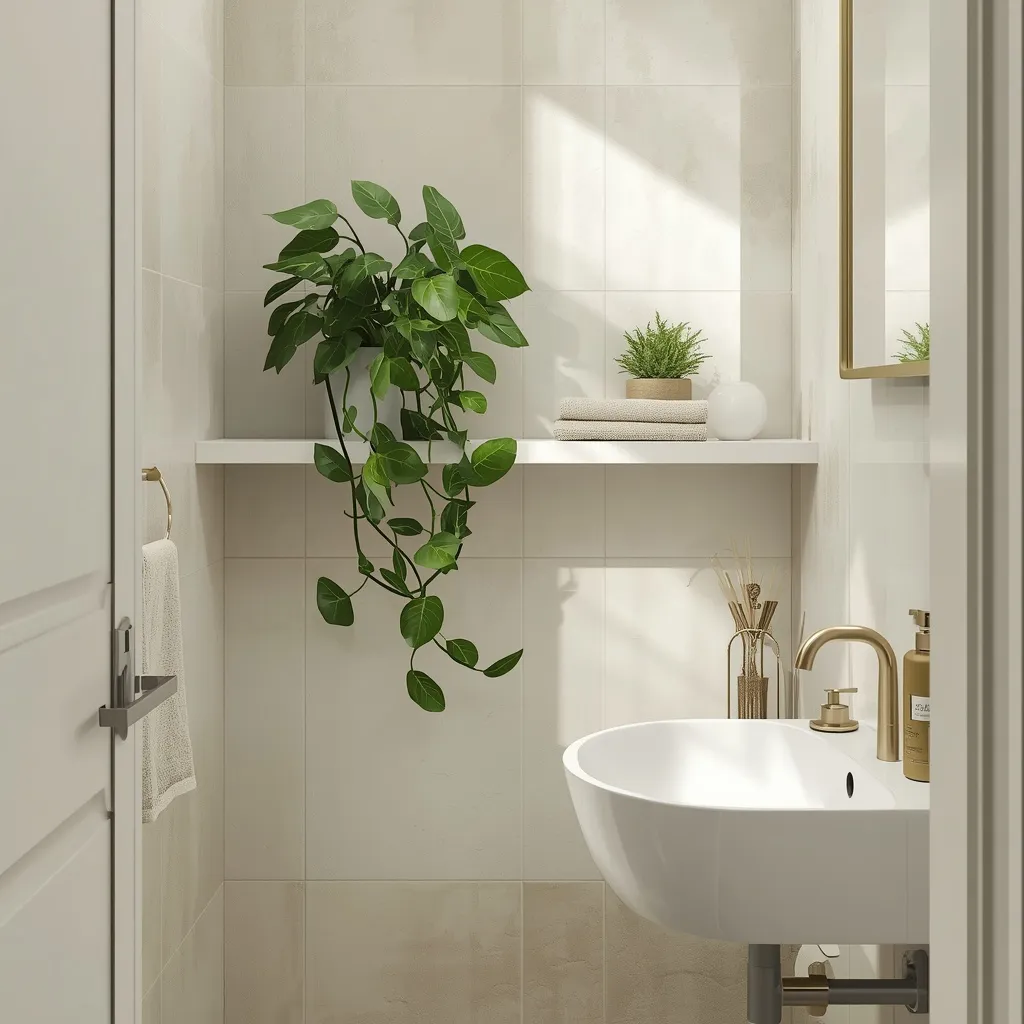
12. Powder Room Green Retreat
A few well-chosen plants turn a small powder room into a fresh, spa-like retreat. Greenery on the vanity, a floating shelf, or hung by the mirror softens hard surfaces and makes even a windowless half-bath feel alive.
Choose plants that tolerate low light and humidity for a powder room, a pothos, a ZZ plant, or a fern all work, or use a quality artificial plant where there’s no natural light at all. Keep the scale small to suit the compact space: one trailing plant on a shelf plus a small pot by the sink is plenty. Pair with natural materials and soft towels for a spa feel. If real plants struggle in a windowless powder room, rotate them out or go faux. This suits small bathrooms and powder rooms of any light level.
- Best for: small or windowless powder rooms and half-baths.
- Watch out: in no-light powder rooms, rotate plants out or use quality faux.
- Key elements: low-light plant or quality faux, small scale, natural materials.
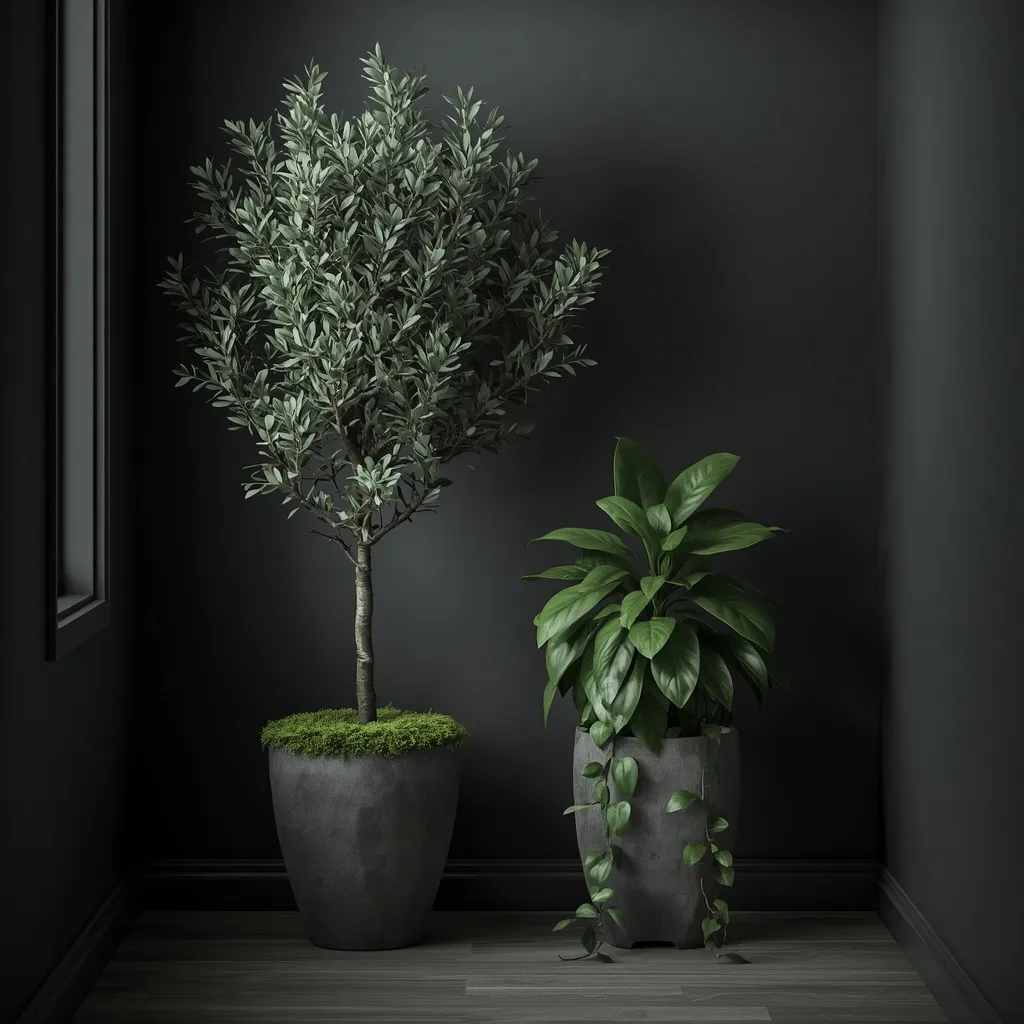
13. Faux Plant Low-Light Solution
High-quality artificial plants bring green to spots where nothing living would survive. A realistic faux monstera, olive tree, or trailing money plant fills a dark corner, a high shelf, or a windowless room with lush greenery and zero care.
Use good artificial plants for genuinely dark spots, a north-facing hallway, a windowless bathroom, a high shelf out of reach, where real plants would slowly die. Choose faux plants with realistic, matte (not shiny plastic) leaves and pot them in a real planter with a little florist moss on top to sell the effect. Dust them every few weeks so they stay convincing. Mixing one or two faux plants among real ones in a dark area is a smart, honest solution. This suits any low-light or hard-to-reach spot.
- Best for: genuinely dark corners, high shelves, and windowless rooms.
- Why it works: quality faux fills spots where real plants can’t survive.
- Watch out: choose matte realistic leaves and dust regularly to stay convincing.
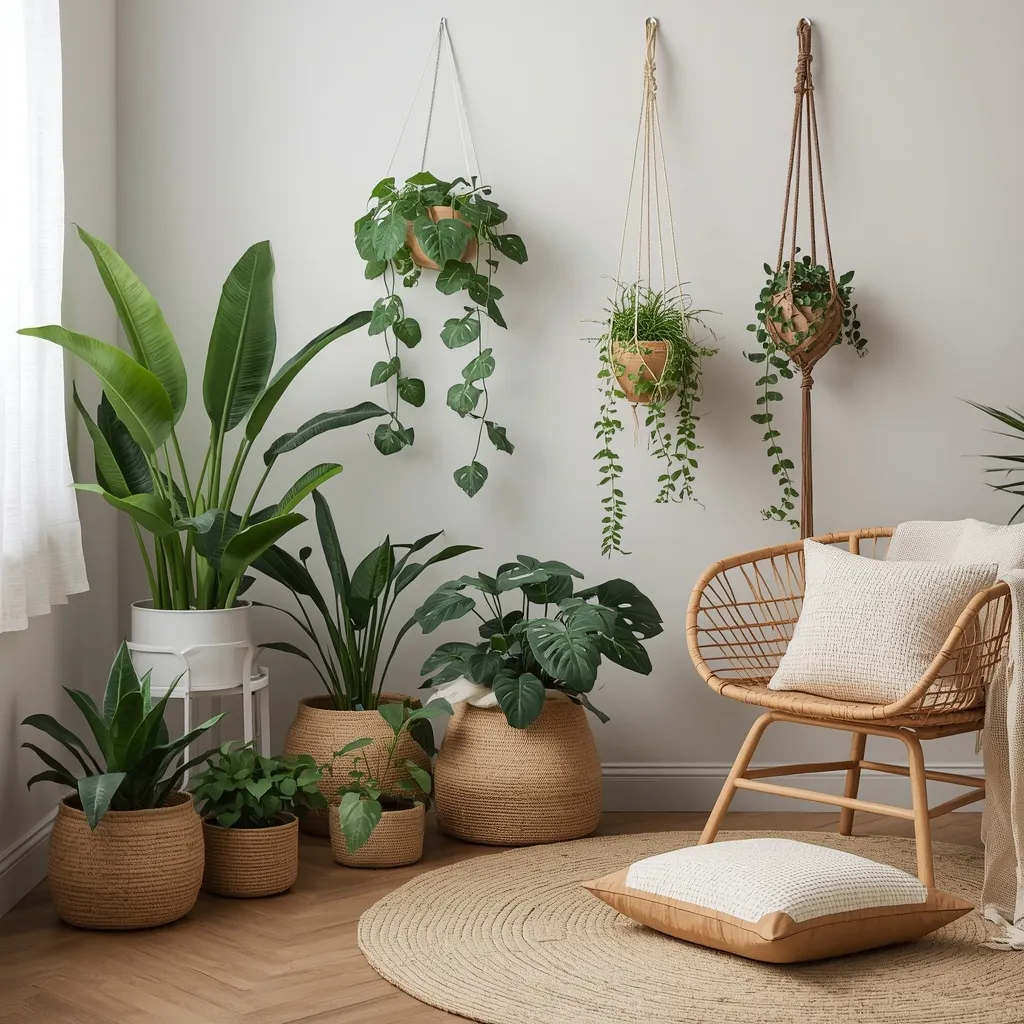
14. Boho Plant Lounge
Layered plants, textiles, and natural materials create a relaxed boho plant lounge. Greenery mixed with rattan furniture, macrame, woven baskets, and patterned cushions builds a warm, gathered space that feels like a green sanctuary.
Combine plants at every level, floor plants in seagrass baskets, trailing plants in macrame hangers, small pots on rattan shelves, with layered textiles and warm, earthy tones. Mix leaf shapes and pot textures freely, since boho thrives on abundant, collected variety. Add a jute rug and floor cushions to complete the lounge feel. Keep taller plants in sturdy baskets so they don’t topple. This maximalist, cozy look suits boho and eclectic living rooms and bedrooms, and is ideal for plant lovers who want lots of greenery.
- Best for: boho and eclectic rooms; plant lovers wanting abundance.
- Why it works: layered plants, textiles, and rattan build a warm green sanctuary.
- Key elements: floor and hanging plants, macrame, rattan, jute, warm textiles.
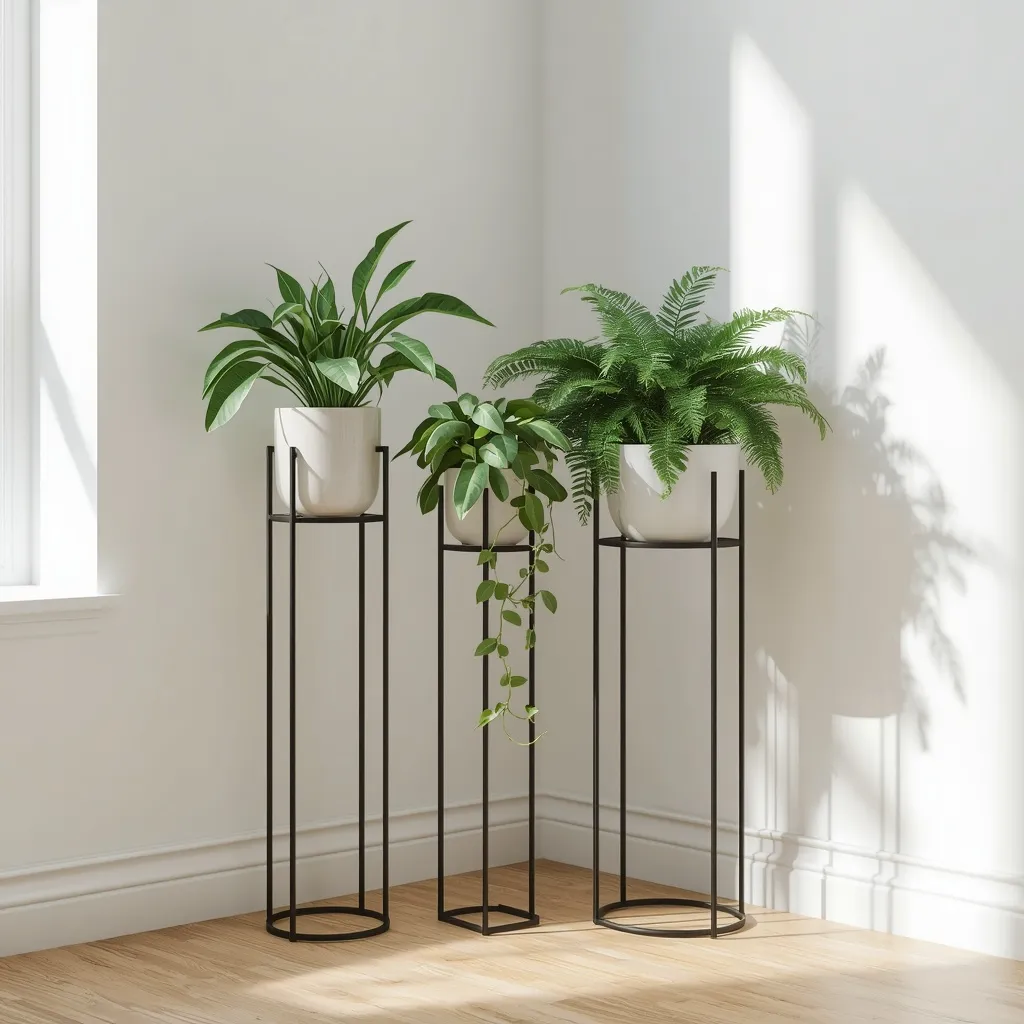
15. Plant Stand Trio Grouping
A trio of plant stands at different heights makes an instant styled grouping. Three plants raised on staggered stands create rhythm and structure in a corner or beside a sofa, lifting greenery into view like a living sculpture.
Use three plant stands of varying heights, say 20, 40, and 60 cm (8, 16, and 24 in), and top each with a plant of contrasting shape, such as a snake plant, a trailing pothos, and a bushy fern. The staggered heights create a pleasing triangle that reads as intentional design. Mid-century wooden or slim metal stands suit most decor, and raising plants improves airflow around them. This tidy, structured look suits modern, mid-century, and small living rooms, and fills a corner without a sprawling jungle.
- Best for: modern and small living rooms wanting structured greenery.
- Why it works: three staggered heights form a triangle that reads as designed.
- Key elements: three plant stands, contrasting plant shapes, varied heights.
16. DIY Propagation Station
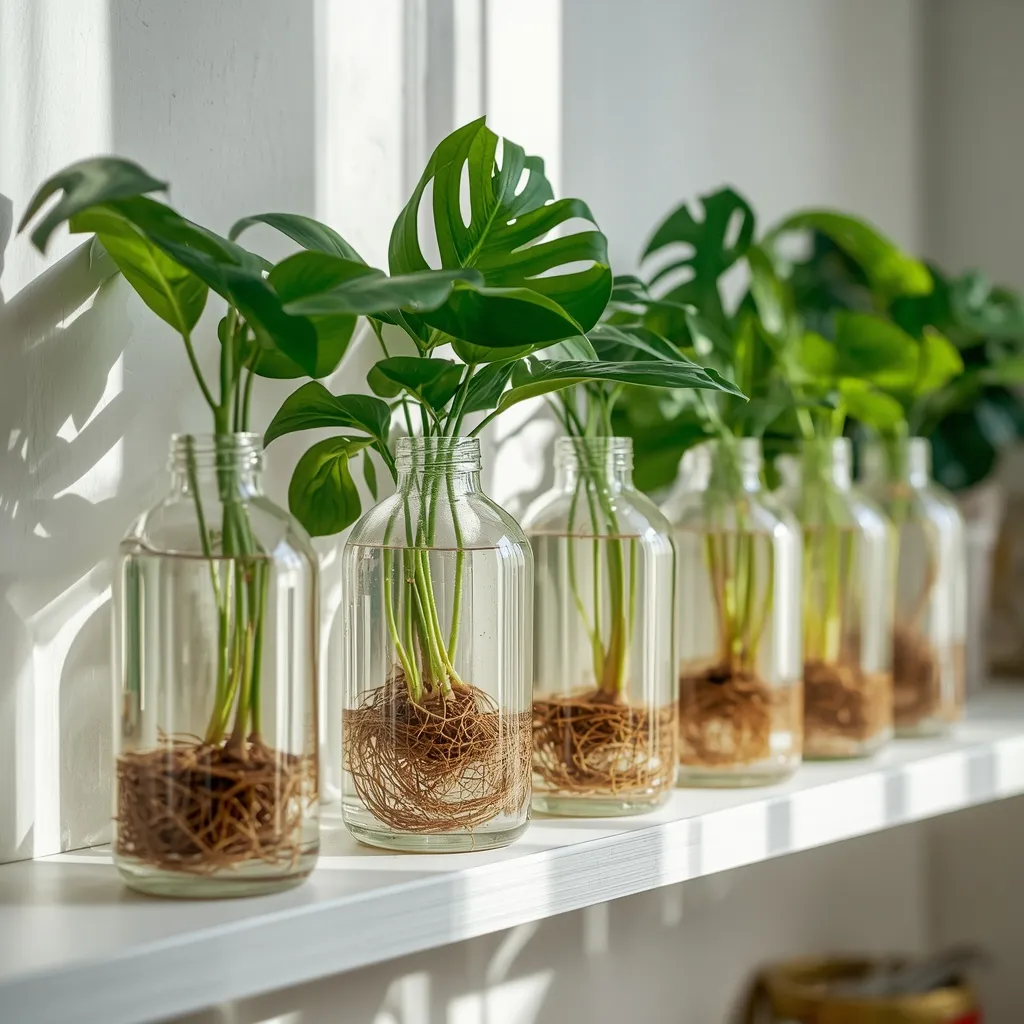
A row of cuttings rooting in glass makes a charming, ever-changing plant display. Clear vessels holding trailing cuttings with roots on show turn propagation into decor, lining a shelf or wall-mounted rack with living science.
Root cuttings of pothos, monstera, or philodendron in clear glass bottles, test tubes, or a wall-mounted propagation station, keeping only the nodes and roots submerged. Change the water weekly to keep it clear and oxygenated. Beyond looking lovely, this grows your collection for free, and rooted cuttings can later be potted or gifted. Group vessels of varying heights for the best look. Keep cuttings out of reach of pets, as many common houseplants are toxic. This budget, DIY look suits kitchens, home offices, and any bright shelf or wall.
- Best for: budget and DIY plant lovers growing a collection for free.
- Why it works: rooting cuttings in glass doubles as decor and free new plants.
- Watch out: change water weekly; keep toxic cuttings out of pets’ reach.
How Do You Decorate a Room With Plants Like a Designer?
Decorate with plants by composing them, not just placing them: vary heights, group in odd numbers, repeat a leaf shape or pot color, and let one large plant anchor each grouping. These few principles are what separate a styled plant room from a cluttered one.
Start with a tall anchor plant, then build down through medium and small plants using stands, shelves, and hanging planters so greenery fills every level. Group plants in threes and fives rather than pairs, and repeat two or three pot colors or leaf shapes across the room for cohesion. Leave some breathing space so each plant reads clearly. Above all, match every plant to the light it will actually receive, since the most beautiful arrangement fails if the plants slowly die in it.
This layered, considered approach runs through all our indoor plant styling ideas at Sunday Abode. Once you’ve set the scene, individual plants can become features in their own right, our guide to styling a peace lily at home shows how one elegant plant can anchor a corner of your green room.
Choosing Plants That Will Actually Thrive
The secret to a plant room that stays beautiful is matching each plant to your room’s real light and your household. A stunning arrangement is only as good as the plants’ ability to survive in it.
Read your light honestly: bright, indirect light suits most popular plants, while genuinely low-light spots need tough choices like pothos, ZZ plant, or snake plant, and truly dark corners are better filled with quality artificial plants than with a plant that will slowly decline. If pets share your home, remember that many favorites, including monstera, pothos, money plant, and lucky bamboo, are toxic to cats and dogs, so style those up high or choose pet-safe options like parlor palm, calathea, or spider plant. When unsure about a plant’s toxicity, the ASPCA’s plant database is a reliable reference.
Best Plants for Each Room Condition
Matching the plant to the room’s light and your household makes any of these looks last. This quick reference pairs common conditions with plants that genuinely suit them.
| Room / condition | Good plant choices | Pet-safe? |
| Bright living room | Monstera, fiddle-leaf fig, olive | No / No / Yes |
| Low-light corner | Pothos, ZZ, snake plant | No |
| Small space / shelf | Pothos, small snake plant | No |
| Humid bathroom | Fern, calathea, pothos | Yes / Yes / No |
| Pet-friendly home | Parlor palm, calathea, spider plant | Yes |
| Windowless / dark | Quality artificial plants | Yes |
| Sunny windowsill | Succulents, herbs, aloe | Mixed |
Pet-safety note: where several plants are listed, the “pet-safe?” answers follow the same order as the plants. Always confirm a specific plant before buying if you have pets.
Conclusion
The best plant room decor ideas turn a handful of plants into a space that feels alive: layer heights, group in odd numbers, repeat a shape or color, and let greenery climb from floor to shelf to ceiling. Whether you choose a lush jungle corner, a single statement monstera, or a macrame-hung boho lounge, the trick is composing plants like a stylist while matching each one to its light. Do that, and your green room will stay beautiful and thriving, not just for a photo but for years. For more ways to bring the outdoors in, explore our indoor plant styling ideas and start with the one corner your home is waiting to fill with green.
Frequently Asked Questions
Q: How do I decorate a room with plants without it looking cluttered?
Compose plants rather than scattering them: choose one tall anchor plant, then layer medium and small plants at different heights using stands and shelves. Group in odd numbers, repeat two or three pot colors or leaf shapes for cohesion, and leave breathing space so each plant reads clearly. This layered, intentional approach looks styled rather than crowded.
Q: What are the best plants for a room with low light?
Pothos, ZZ plant, and snake plant are the toughest low-light choices, tolerating dim corners and irregular watering. For a genuinely dark or windowless spot where even these would decline, a high-quality artificial plant is the honest solution. Remember that low light still means some daylight, no living plant thrives in complete darkness.
Q: How can I decorate with plants in a small space?
Go vertical: use floating shelves, macrame hangers, wall-mounted planters, and a windowsill row to add greenery without using floor space. Trailing plants like pothos are ideal since they spill downward and draw the eye up. A single statement plant in a corner can also give a small room impact without crowding it.
Q: Are popular decorative plants safe for pets?
Many aren’t. Monstera, pothos, money plant, and lucky bamboo are all toxic to cats and dogs if chewed. Style these up high on shelves or hangers, or choose genuinely pet-safe plants like the parlor palm, calathea, spider plant, or Boston fern for floor level. Check the ASPCA database if you’re unsure about a specific plant.
Q: Can I use artificial plants in my decor?
Yes, especially for dark corners, high shelves, and windowless rooms where real plants would slowly die. Choose faux plants with realistic matte leaves, pot them in a real planter with a little moss on top, and dust them regularly. Mixing one or two quality faux plants among real ones in a low-light area is a smart, practical solution.
Q: What plants work best for a boho or farmhouse plant room?
For boho, layer trailing plants in macrame hangers with floor plants in seagrass baskets and plenty of rattan and textiles. For the farmhouse, pot greenery in galvanized buckets, woven baskets, and ironstone, and add trailing ivy or pothos. Both styles favor abundant, mixed greenery in natural-material containers over sleek matching pots.