

Key Takeaways
- Jade (Crassula ovata) is semi-dormant in winter and low light, so slow or stalled growth then is normal, not a problem to fix with more water.
- Water only when the soil is fully dry: wrinkled leaves mean underwatered, while soft mushy leaves and black stems mean overwatered.
- Propagate from a leaf or stem cutting in gritty soil; water propagation works but is the weakest, most rot-prone method for a succulent.
- Give jade at least 4–6 hours of bright light a day, or it grows leggy and stretched reaching for the window.
- Jade is toxic to cats and dogs, so place it out of reach of pets that chew plants.
Introduction
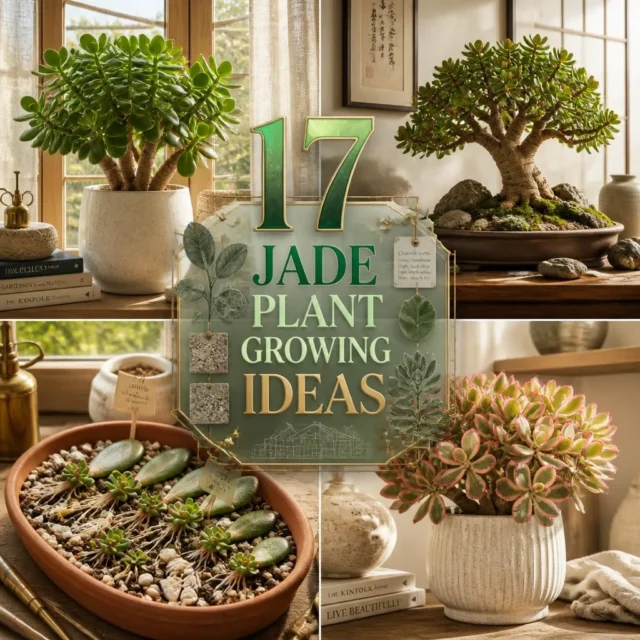
A jade plant can outlive the person who owns it, passing down through a family as a thick-trunked little tree. These jade plant growing ideas cover 17 ways to grow, shape, propagate, and display Crassula ovata, from leaf and cutting propagation to bonsai forms, trailing varieties, outdoor summer setups, and the windowsill positions where it genuinely thrives.
You’ll also find the answers competitors skip: why a healthy jade sometimes stops growing for months, why leaves wrinkle or turn to mush, and why the water-propagation trick you’ve seen online is the weakest way to grow this particular plant. Whether you’re rooting your first cutting or reshaping a decades-old specimen, the growing logic here keeps the plant alive first and beautiful second. Consider it a guide to a houseplant your abode can keep for generations.
The one thing to understand first: Jade is a succulent, which means it stores water in its leaves and would rather be too dry than too wet. Almost every jade problem, mushy leaves, black stems, sudden collapse, traces back to overwatering. Water only when the soil has dried out completely, plant in gritty free-draining soil, and give it bright light. Get those three right and jade is one of the hardest houseplants to kill; get watering wrong and it’s one of the easiest.
17 Jade Plant Growing Ideas
1. Leaf Propagation Tray
Jade multiplies from a single leaf: whole leaves laid on gritty compost in a shallow tray, each growing tiny roots and a miniature plantlet from its base over a few weeks. Slow and quietly magical, leaf propagation turns one plant into many for free. Patient, simple, and rewarding.
Twist whole, healthy leaves off cleanly so none of the leaf tears, a partial leaf usually rots rather than roots, and let them callus in open air for one to three days before laying them on gritty cactus compost. Don’t bury them; just rest them on the surface. Mist lightly every few days rather than watering, since sitting moisture rots them. Roots and a tiny plantlet appear in roughly two to four weeks, though the parent leaf can take months to be absorbed. This suits patient beginners and anyone wanting many plants cheaply.
- Why it works: A callused clean-pulled leaf resists the rot that partial or fresh-cut leaves fall to.
- Best for: Patient beginners; multiplying a plant for free; gifts.
- Key elements: whole clean-twisted leaves, 1–3 day callus, rested on gritty compost, misted not watered, roots in 2–4 weeks.
2. Stem Cutting Start
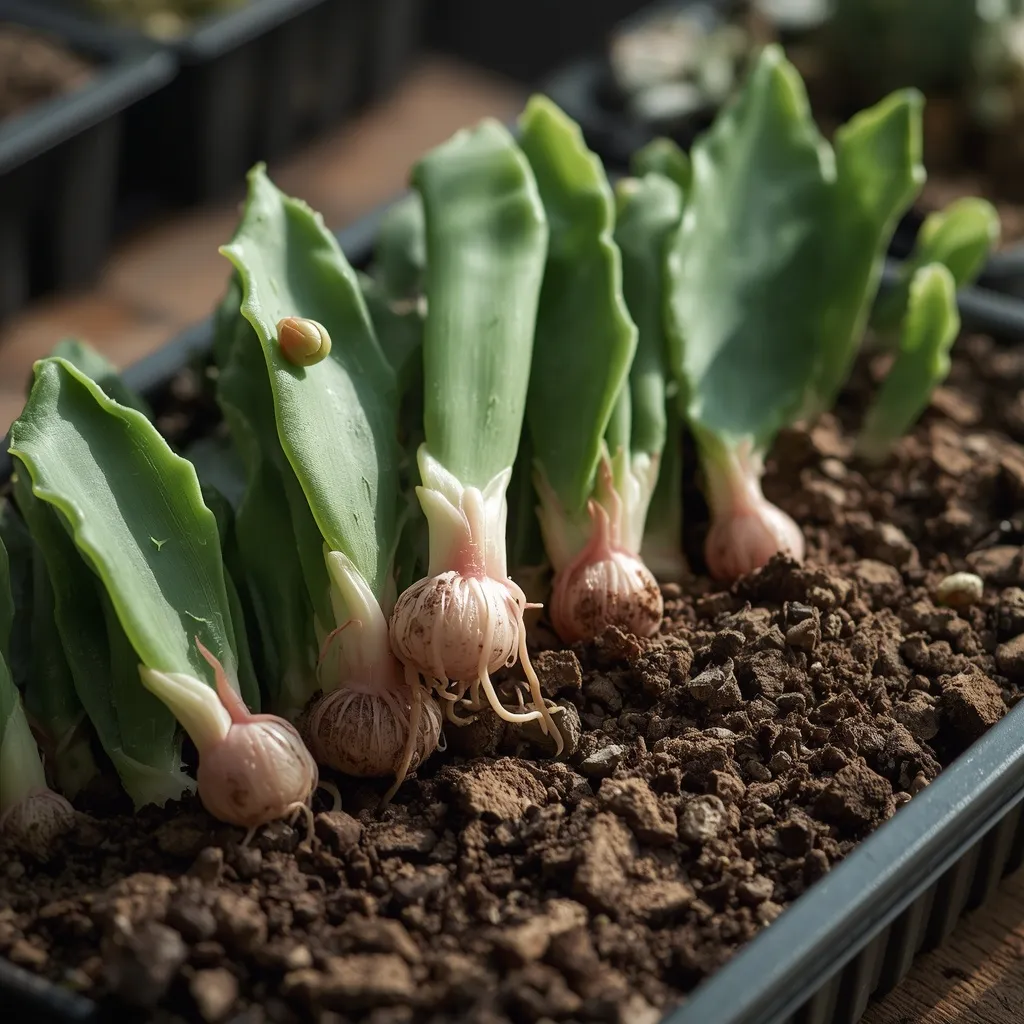
A stem cutting is the faster route to a real plant: a section of stem taken from a healthy jade, callused and rooted directly in soil, growing into a sturdy plant far quicker than a leaf. Reliable and quick, cuttings are how most people should propagate jade. Fast, sturdy, and dependable.
Cut a stem section 8–10 cm (3–4 in) long with clean, sharp secateurs, remove the lower leaves, and let the cut end callus for three to seven days until it’s dry and sealed, planting a fresh wet cut is the fastest way to rot it. Push the callused end into gritty compost, water once, then wait a week before watering again. Roots form in two to three weeks. This suits beginners wanting quicker results and reshaping a leggy plant while propagating the removed top.
- Why it works: A callused cut end seals against rot, which is the single biggest cause of cutting failure.
- Best for: Quicker propagation; reshaping leggy plants; beginners.
- Key elements: 8–10 cm cutting, lower leaves removed, 3–7 day callus, gritty soil, watered once then left a week.
3. Water-Rooting Experiment
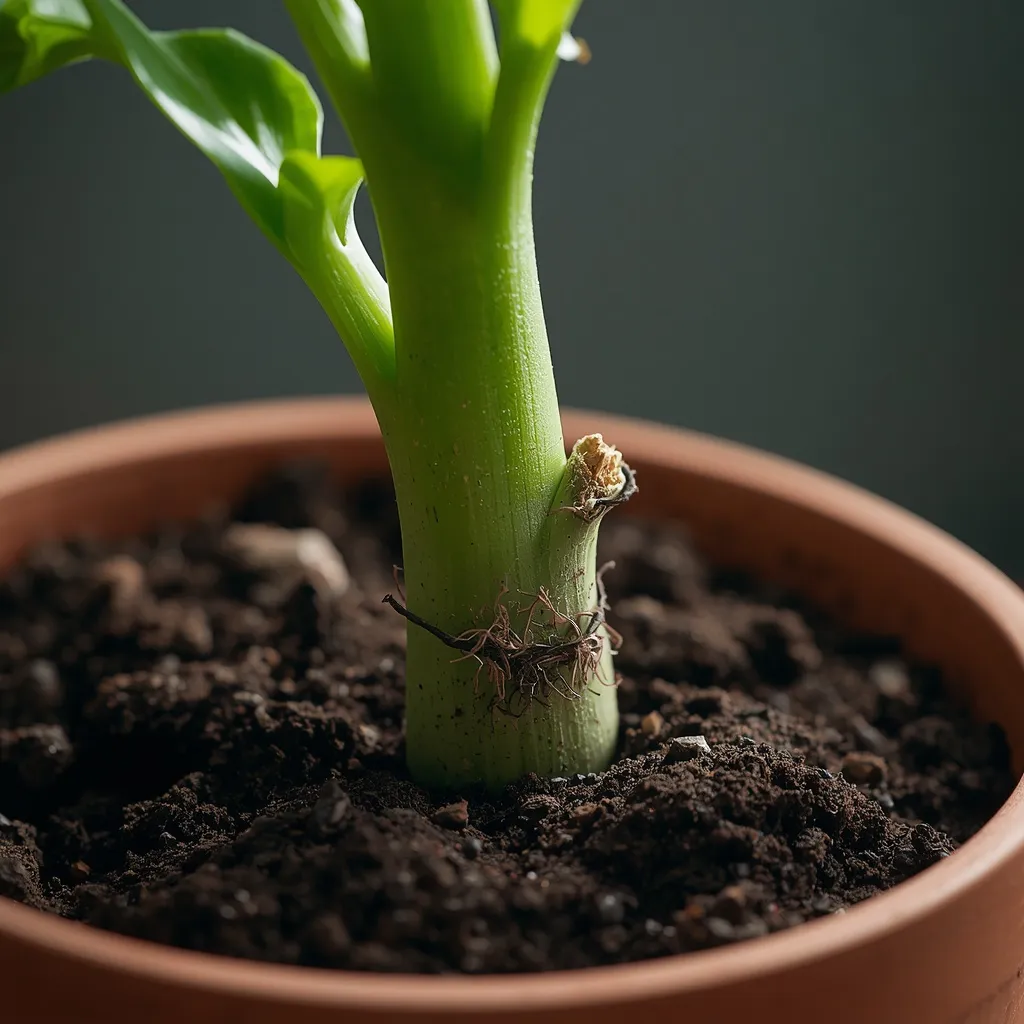
Rooting jade in water is the method everyone tries first: a cutting suspended so its base sits in water, growing pale roots you can watch develop through the glass. Visible and satisfying, water rooting is fun, but it’s the weakest option for a succulent. Transparent, tempting, and flawed.
Be honest about the trade-off. Jade will grow roots in water, but as a succulent it rots in standing water far more readily than plants adapted to it, and water roots are thin and fragile compared with soil roots, often struggling when moved to soil later. If you try it, suspend the cutting so only the very base touches the water, change the water every few days to limit bacteria, and move it to gritty soil as soon as roots reach 2–3 cm (1 in). For reliable results, soil propagation genuinely beats water for jade. This suits curious growers and teaching children how roots form.
- Why it works: Moving to soil early, before water roots grow long, avoids the difficult water-to-soil transition.
- Best for: Curious experimenters; teaching children; short-term display.
- Key elements: base only in water, water changed every few days, moved to soil at 2–3 cm roots, soil preferred overall.
4. Bright Windowsill Specimen
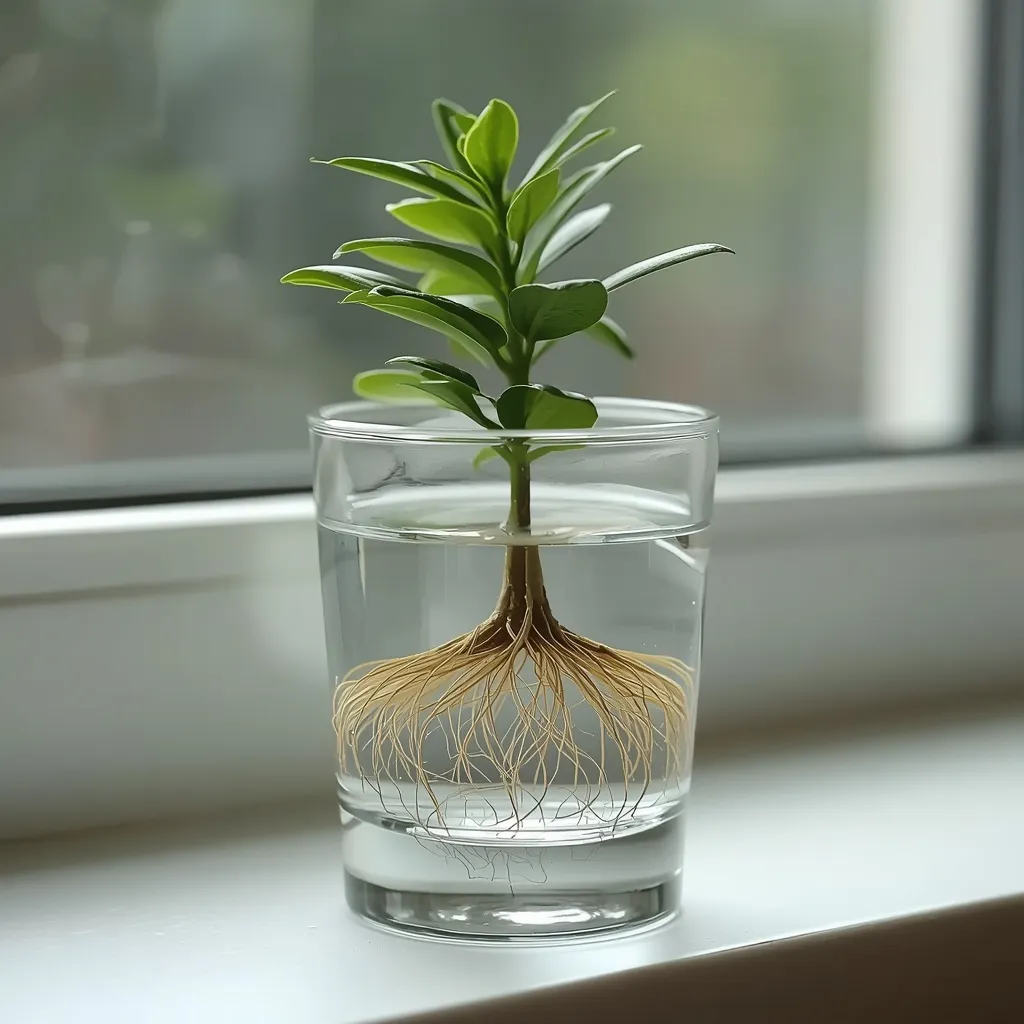
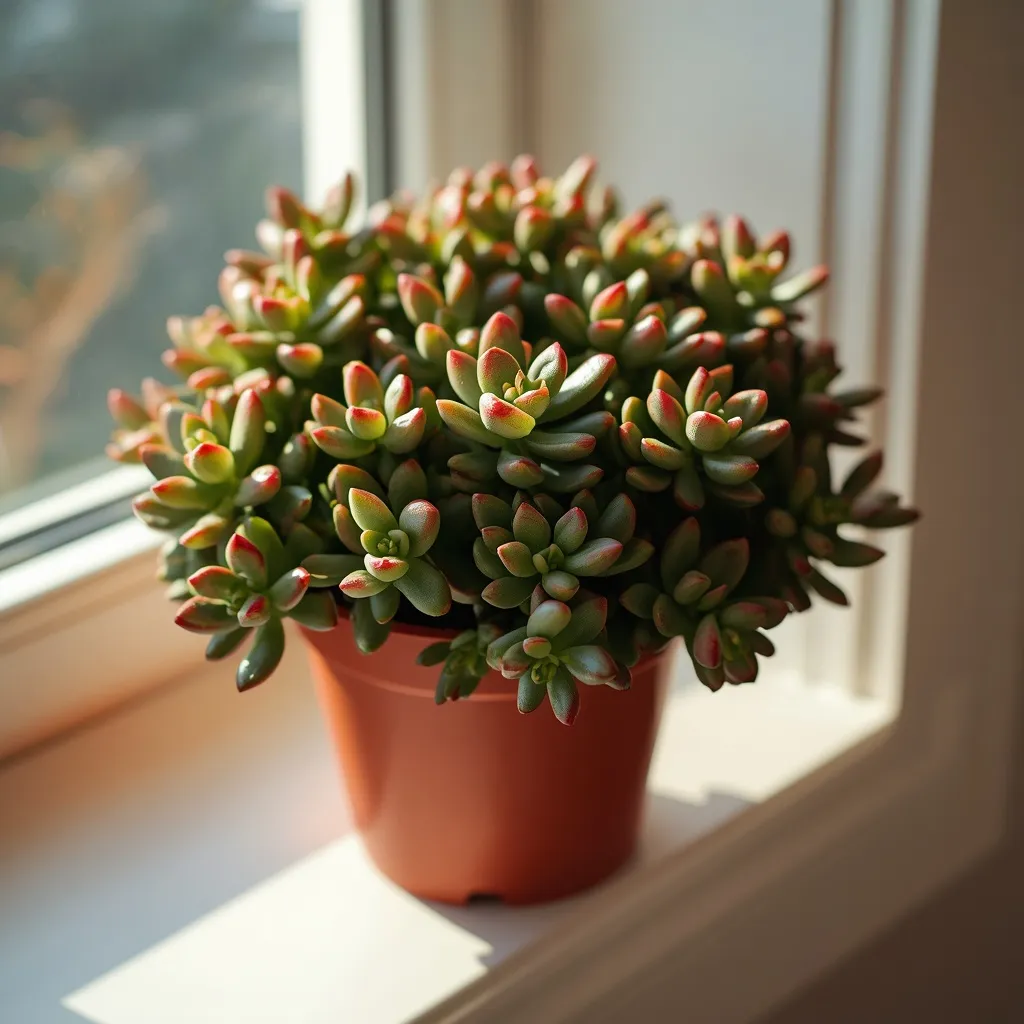
A jade on a bright windowsill is the plant at its healthiest: compact, plump-leaved, often edged in red where strong light touches it, growing slowly into a dense little bush. Classic and thriving, the right window is where jade wants to live. Compact, glossy, and content.
Give jade the brightest spot you have, at least four to six hours of direct or very bright light daily, ideally a south or west window in the northern hemisphere. Strong light keeps growth compact and can bring out red leaf margins, while too little light causes leggy, stretched growth reaching toward the glass. Turn the pot a quarter every week or two so it grows evenly rather than leaning. This suits sunny windows, beginners, and anyone wanting the healthiest possible plant.
- Why it works: Four to six hours of bright light keeps jade compact, where low light stretches it leggy.
- Best for: Sunny south or west windows; beginners; healthiest growth.
- Key elements: 4–6 hours bright light, south or west aspect, red margins in strong light, pot turned to grow evenly.
5. Miniature Jade Bonsai
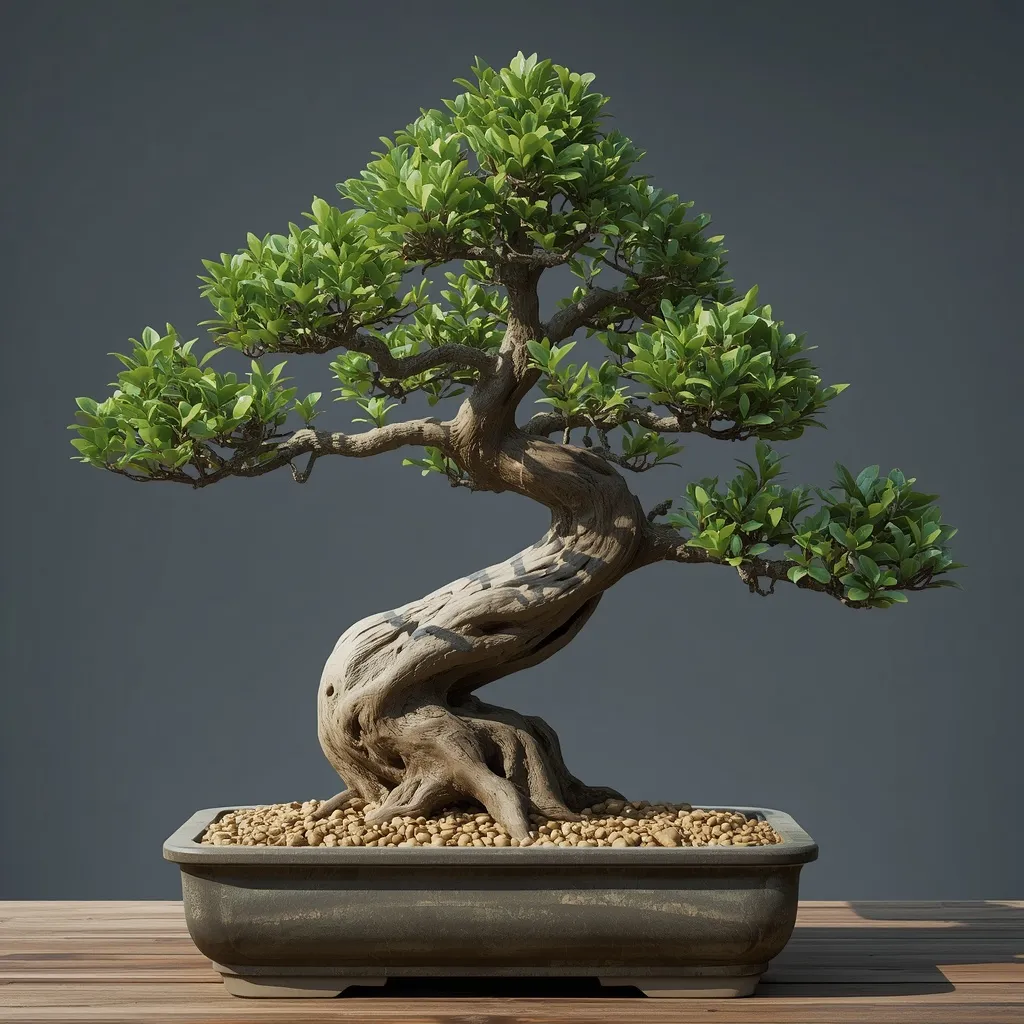
A jade bonsai is a tiny ancient-looking tree: a thick-trunked specimen in a shallow bonsai pot, pruned into a branching canopy that mimics a full-sized tree in miniature. Sculptural and long-lived, jade takes to bonsai more forgivingly than most species. Gnarled, characterful, and enduring.
Jade suits beginners to bonsai because its thick trunk and forgiving nature tolerate mistakes that would kill a traditional bonsai tree. Prune above a leaf pair to encourage branching, and let the plant grow freely for a season between shaping sessions so it stays vigorous. Jade stores so much water that wiring can cut into soft branches, so shape mainly through pruning rather than heavy wiring. Repot into a shallow bonsai pot only once the plant is established. This suits patient stylers and bonsai beginners.
- Why it works: Jade’s thick water-storing trunk forgives the pruning mistakes that would kill a traditional bonsai.
- Best for: Bonsai beginners; sculptural long-term projects; patient growers.
- Key elements: pruned above leaf pairs, free growth between shaping, pruning over wiring, shallow pot when established.
6. Trained Standard Tree
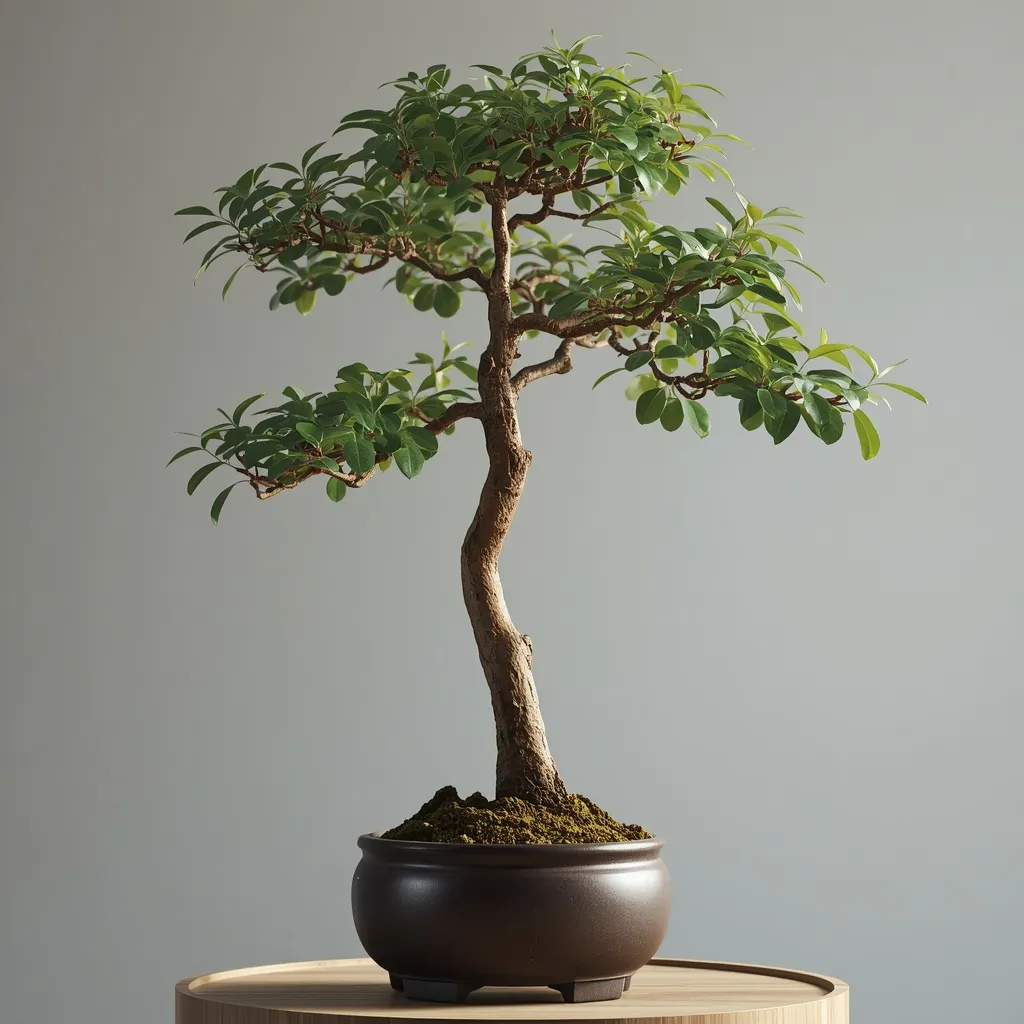
A standard jade is grown as a lollipop tree: a single bare trunk rising to a rounded canopy of leaves, like a miniature landscape tree on a tabletop. Elegant and architectural, training a standard shows off jade’s tree-like nature. Upright, balanced, and refined.
Choose one strong vertical stem as the trunk and remove the lower leaves and side shoots progressively as it grows, letting the canopy develop only at the top. Support the young trunk with a thin stake until it thickens enough to stand alone, which takes a year or more. Don’t strip the lower growth all at once, since the plant needs leaves to fuel trunk thickening, remove them gradually over months. This suits patient growers and anyone wanting a formal, sculptural specimen.
- Why it works: Removing lower growth gradually lets the plant keep fuelling trunk growth while the form develops.
- Best for: Formal sculptural display; patient growers; tabletop trees.
- Key elements: one vertical trunk, lower shoots removed gradually, staked until thick, canopy only at the top.
7. Trailing Jade Variety
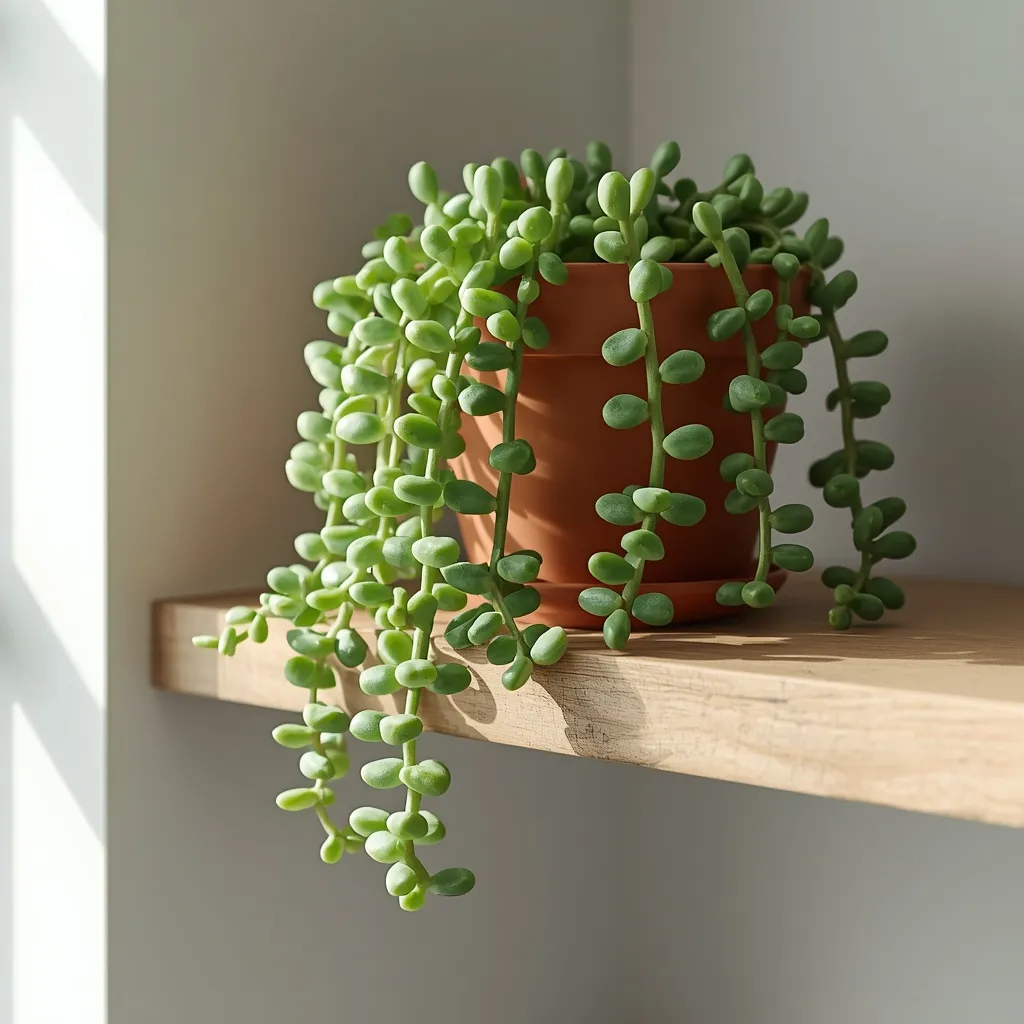
Some jades cascade rather than stand: trailing types like Crassula ‘Hobbit’ or the ropey Crassula ovata ‘Gollum’ spilling over a pot edge or shelf, tubular leaves catching the light. Unusual and relaxed, trailing jades break the upright mould. Cascading, quirky, and eye-catching.
Grow trailing and curled-leaf jade varieties in a raised or hanging position so the stems can spill downward, and give them the same bright light and dry-out watering as upright jade, since the care is identical. ‘Gollum’ and ‘Hobbit’ have distinctive tubular, suckered leaves that read as sculptural rather than typical jade. As with all jade, the stems are heavy with stored water, so make sure a hanging pot’s fixing is rated well above the filled weight. This suits shelves, plant stands, and collectors wanting variety.
- Why it works: A raised position lets trailing varieties cascade, showing off tubular leaves an upright pot hides.
- Best for: Shelves and plant stands; collectors; unusual foliage.
- Key elements: ‘Gollum’ or ‘Hobbit’, raised or hanging position, same bright-light dry-out care, fixing rated for filled weight.
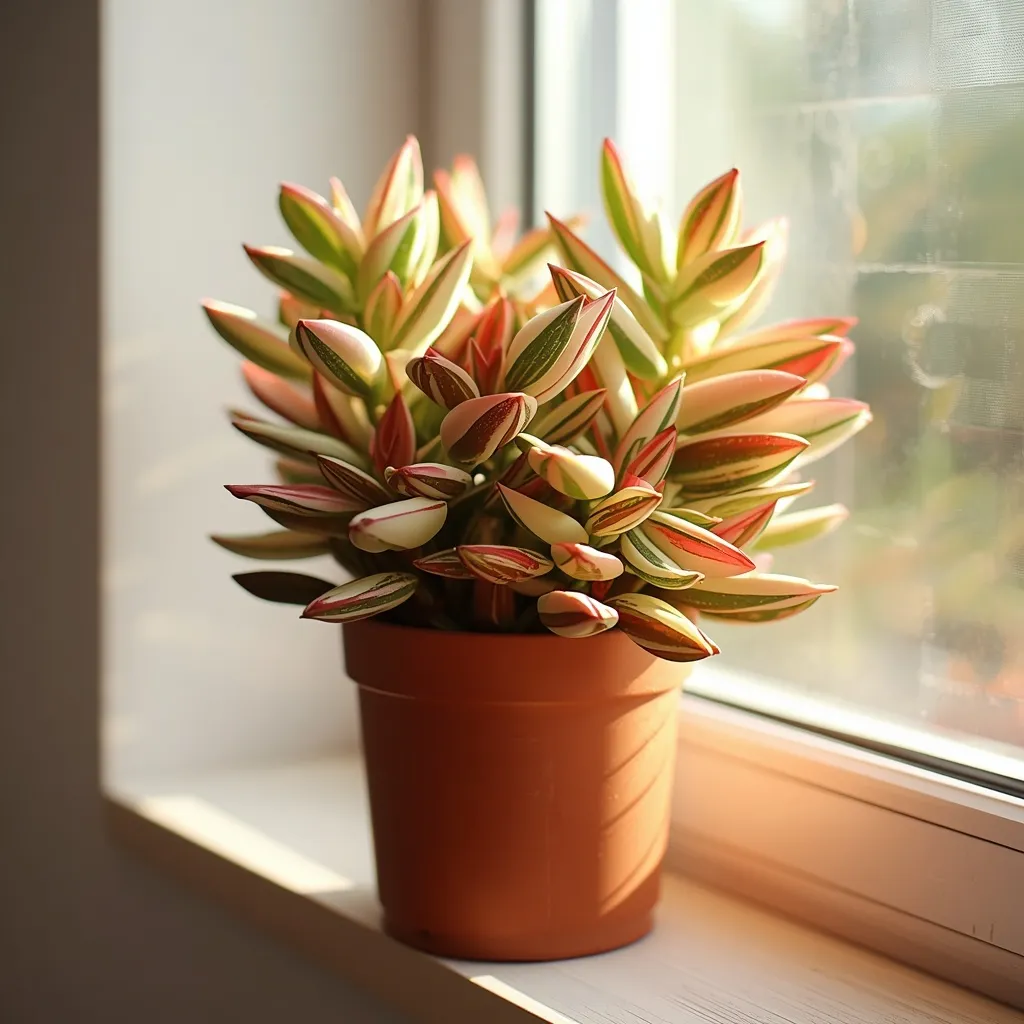
8. Variegated Jade Feature
A variegated jade brings color to the windowsill: cultivars like ‘Tricolor’ streaked cream, green, and pink, or ‘Hummel’s Sunset’ flushing gold and red in strong light. Colorful and prized, variegated jade earns its place as a feature. Streaked, warm-toned, and striking.
Give variegated jade even brighter light than plain green types, since the cream and yellow areas contain less chlorophyll and the whole plant needs more light to compensate, in low light, variegated jade grows weak and may revert to plain green. ‘Hummel’s Sunset’ develops its gold and red tones only in strong light, staying plain green in shade. Variegated types grow more slowly than green jade, so be patient. This suits bright windows and collectors wanting color.
- Why it works: Extra-bright light compensates for the reduced chlorophyll in cream and yellow variegated areas.
- Best for: Bright windows; collectors; color on the windowsill.
- Key elements: brighter light than green jade, ‘Tricolor’ or ‘Hummel’s Sunset’, color needs strong light, slower growth.
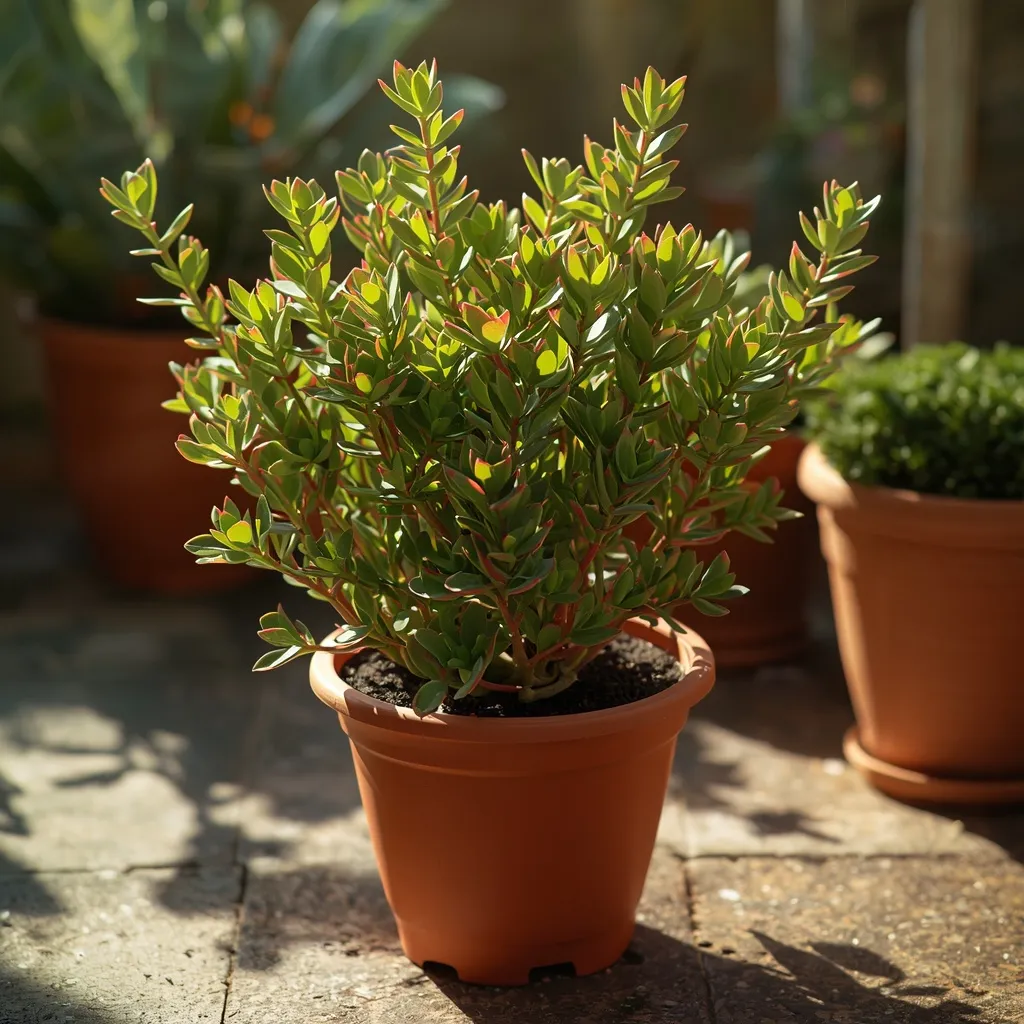
9. Outdoor Summer Patio Jade
Jade thrives outdoors in summer: moved to a bright patio or doorstep after the frosts, it colors up, thickens, and often flowers far more readily than indoors. Sturdy and sun-loving, a summer outside transforms an indoor jade. Robust, tinted, and vigorous.
Move jade outdoors only once night temperatures stay reliably above about 10°C (50°F), and acclimatize it gradually over a week or two, starting in shade, a jade moved straight from a windowsill into full sun scorches, developing white or brown sunburn patches that don’t recover. Bring it back indoors well before the first autumn frost, since jade is not frost-hardy and freezing turns the water-filled leaves to mush. Outdoor rain may mean it needs no extra watering. This suits frost-free summers and anyone wanting stronger color and flowering.
- Why it works: Gradual acclimatization over two weeks prevents the sunburn a sudden move to full sun causes.
- Best for: Frost-free summers; stronger color and flowering; patio growers.
- Key elements: out above 10°C nights, acclimatized over 1–2 weeks from shade, back in before frost, not frost-hardy.
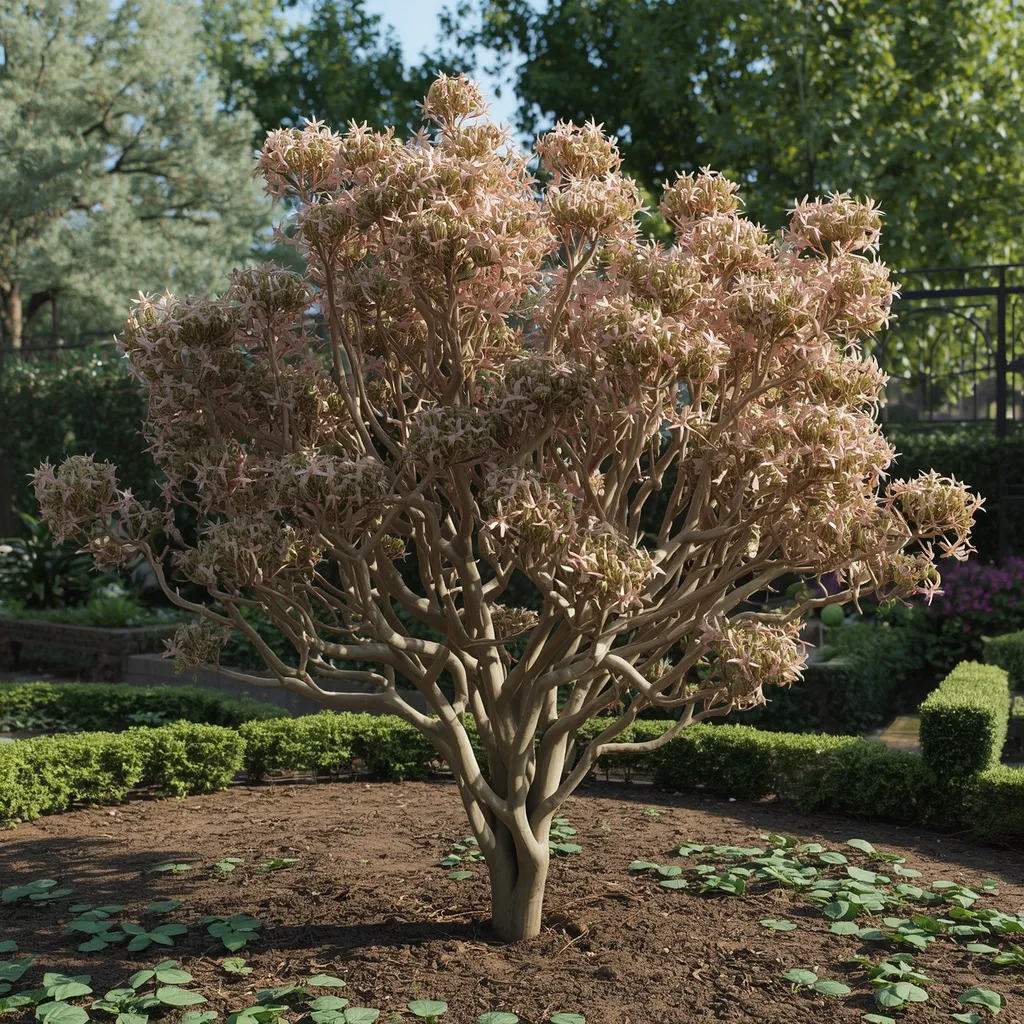
10. Year-Round Outdoor Ground Jade
In frost-free climates jade lives outside permanently: planted in the ground or a large pot, it grows into a substantial shrub over a meter tall, flowering in clusters of pale star-shaped blooms. Generous and established, outdoor jade becomes a real garden plant. Large, woody, and free-flowering.
Grow jade in the ground only in genuinely frost-free climates, roughly USDA zones 10–11, since even a light frost damages it and a hard freeze kills it outright. Plant in a sunny, sharply drained spot, jade rots in heavy wet soil far faster in the ground than in a pot. Mature outdoor jade can reach 1–2 m (3–6.5 ft) and flowers in late winter given cool, dry, bright conditions. Elsewhere, keep it potted so it can come indoors. This suits mild-climate gardens and Mediterranean-style planting.
- Why it works: Sharp drainage in a sunny spot prevents the ground-planted rot jade is especially prone to.
- Best for: Frost-free zone 10–11 gardens; Mediterranean-style planting.
- Key elements: frost-free climate only, sunny sharp-drained site, reaches 1–2 m, winter flowering, potted elsewhere.
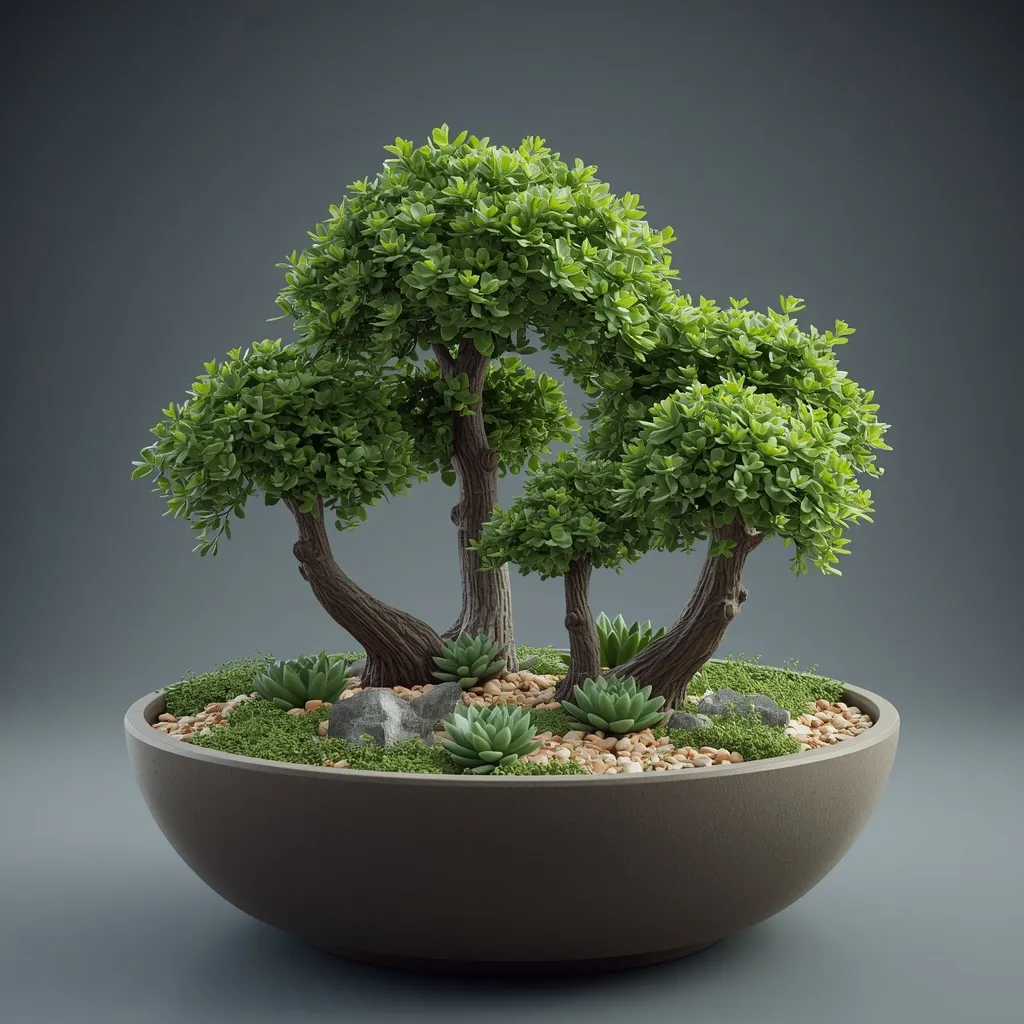
11. Grove-Style Multi-Plant Pot
A jade grove plants several together: three or five cuttings of varied heights in one wide shallow bowl, growing into a miniature forest of little trees. Naturalistic and full, a grove reads richer than a single stem. Clustered, layered, and green.
Plant in odd numbers, three or five, at genuinely different heights so the grove has a natural layered look rather than a matched row, and space them far enough apart that air moves between them, since crowded succulents trap humidity and rot. Use one wide, shallow, well-drained bowl with drainage holes. All plants in the grove share the same watering, so make sure they’re the same variety with matched needs. This suits wide containers, naturalistic styling, and using up spare cuttings.
- Why it works: Odd numbers at varied heights create a natural grove where a matched row looks artificial.
- Best for: Wide shallow bowls; naturalistic display; using spare cuttings.
- Key elements: 3 or 5 plants, varied heights, spaced for airflow, one drained bowl, matched variety.
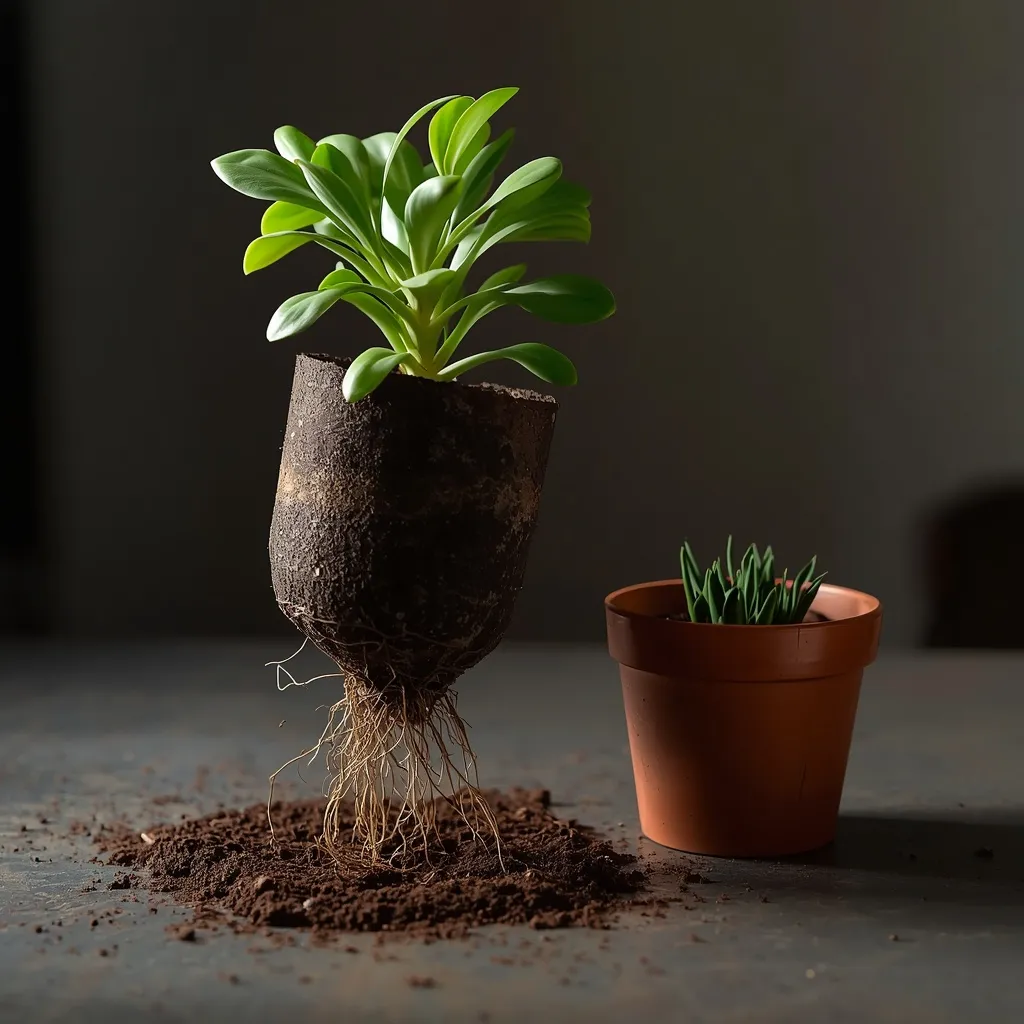
12. Repotting and Root Refresh
Repotting renews a tired jade: a rootbound plant lifted, its roots teased free, and settled into fresh gritty soil in a pot only slightly larger. Restorative and simple, an occasional repot keeps jade vigorous. Refreshing, grounding, and overdue for many plants.
Repot jade only every two to three years, and go just one pot size up, jade actively prefers being slightly rootbound, and an oversized pot holds too much wet soil around the roots and causes rot. Choose a heavy pot, since a mature jade is top-heavy and tips easily in plastic. Let the plant dry out for a few days before repotting and wait a week after before watering, so any damaged roots callus rather than rot. Terracotta suits jade because it breathes and dries the soil faster. This suits rootbound or toppling plants.
- Why it works: Going only one size up avoids the excess wet soil that an oversized pot holds around jade roots.
- Best for: Rootbound plants; top-heavy tippers; every 2–3 years.
- Key elements: repot every 2–3 years, one size up, heavy terracotta pot, dried before and watered a week after.
13. Gritty Soil and Drainage Setup
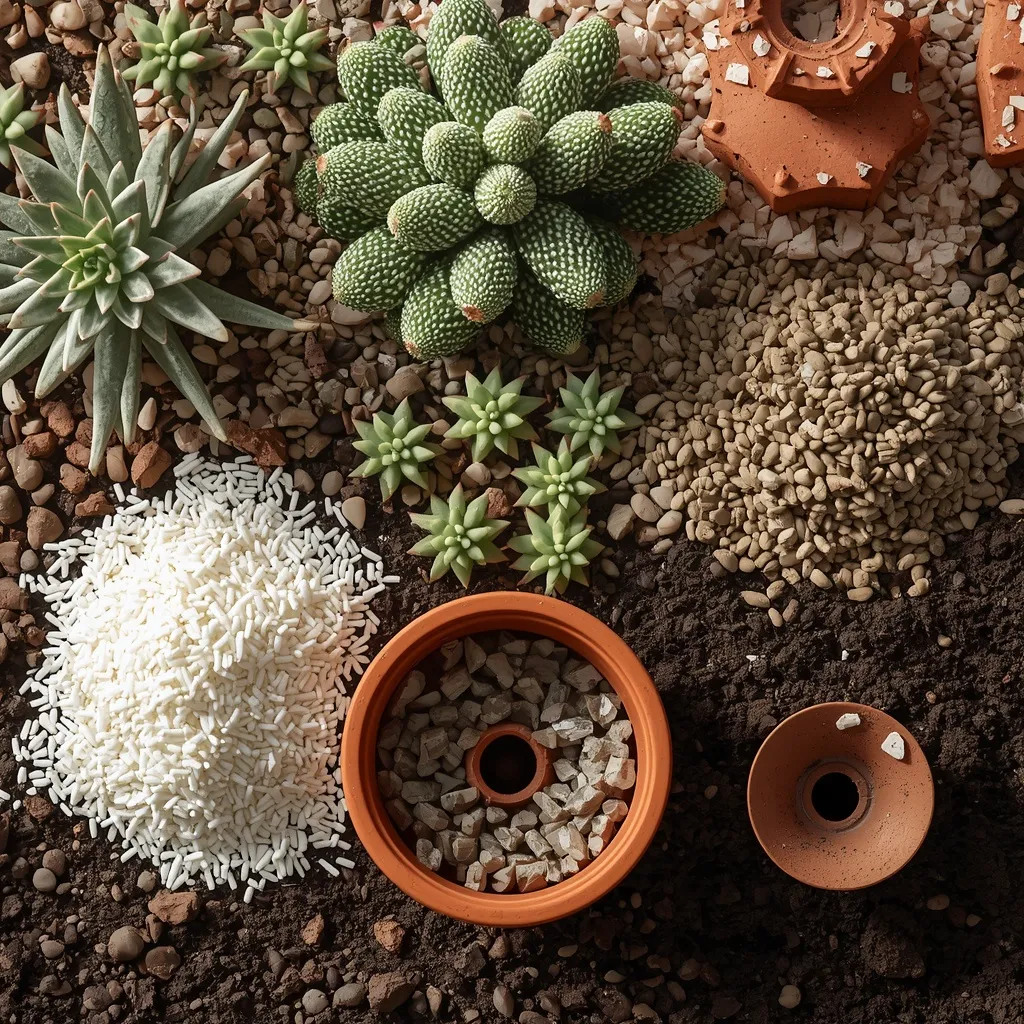
The right soil is invisible but decides everything: a fast-draining gritty mix in a pot with drainage holes, so water runs through rather than sitting around the roots. Fundamental and unglamorous, drainage is what keeps jade alive. Sharp, open, and life-saving.
Mix a proper succulent medium, roughly two parts cactus compost to one part coarse grit, perlite, or pumice, so water drains within seconds rather than pooling. A pot without drainage holes is the single most common jade killer, since water collects invisibly at the base and rots the roots, so always use a pot that drains, or drill one. Terracotta helps further by wicking moisture from the soil. If leaves go soft and translucent, drainage is usually the culprit. This suits every jade, and rescuing an overwatered one.
- Why it works: A gritty mix drains in seconds, preventing the standing water at the roots that rots jade.
- Best for: Every jade; rescuing overwatered plants; drainage-poor setups.
- Key elements: 2 parts cactus compost to 1 part grit, drainage holes essential, terracotta wicks moisture, drains in seconds.
14. Encouraging Jade to Flower
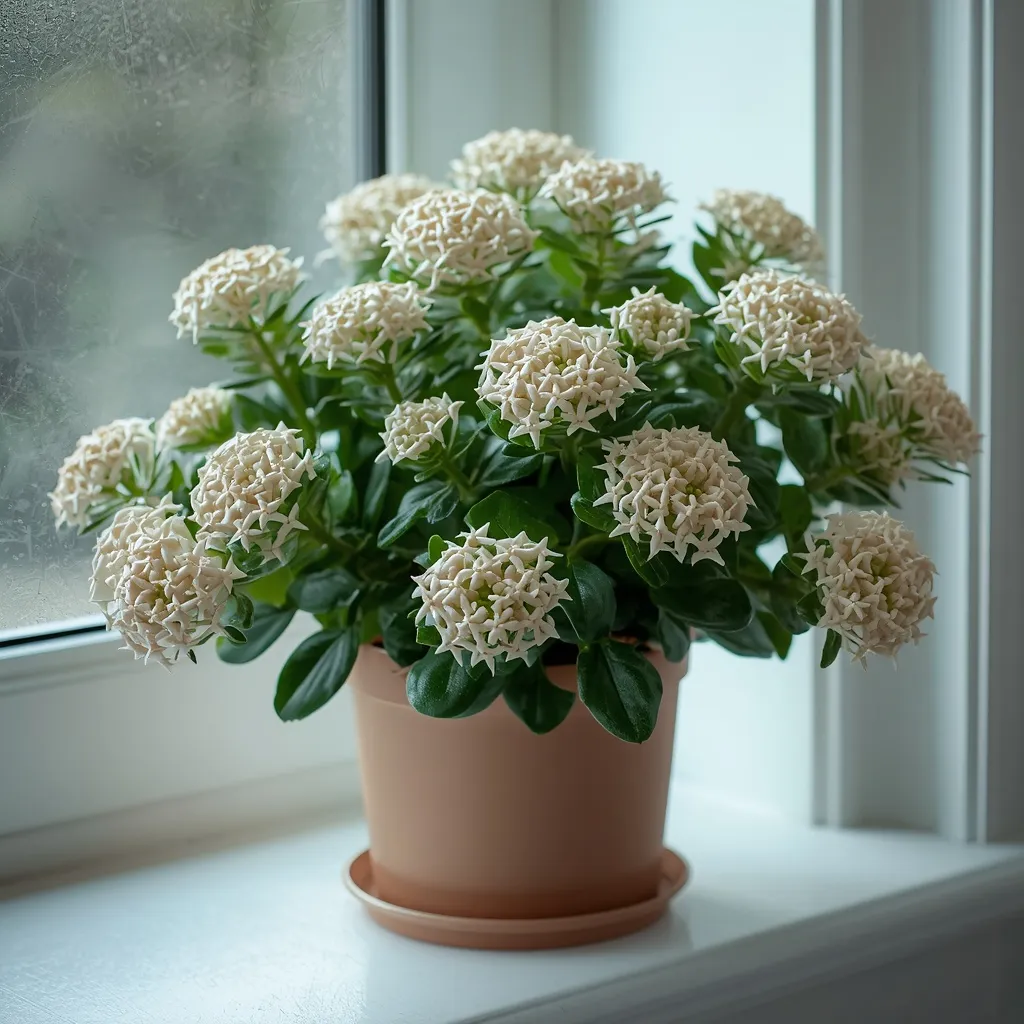
A flowering jade surprises most owners: clusters of small pale-pink star-shaped blooms covering a mature plant in late winter, a sight many jade owners never see. Uncommon and delightful, coaxing flowers is the advanced jade goal. Starry, pale, and seasonal.
Jade flowers only when mature, usually several years old, and only when given a specific autumn and winter trigger: cool nights around 10–13°C (50–55°F), bright light, and a dry, near-drought rest with minimal water for several weeks. This mimics its native South African winter and signals the plant to bloom. Warm, evenly watered indoor jade rarely flowers, which is why most owners never see it. Resume normal care once buds set. This suits mature plants and patient growers chasing the bloom.
- Why it works: Cool, dry, bright winter conditions mimic jade’s native climate and trigger the bloom warmth suppresses.
- Best for: Mature plants; patient growers; a rarely-seen display.
- Key elements: mature plant, cool 10–13°C nights, bright light, near-drought winter rest, native-climate trigger.
15. Reviving a Leggy Stretched Jade
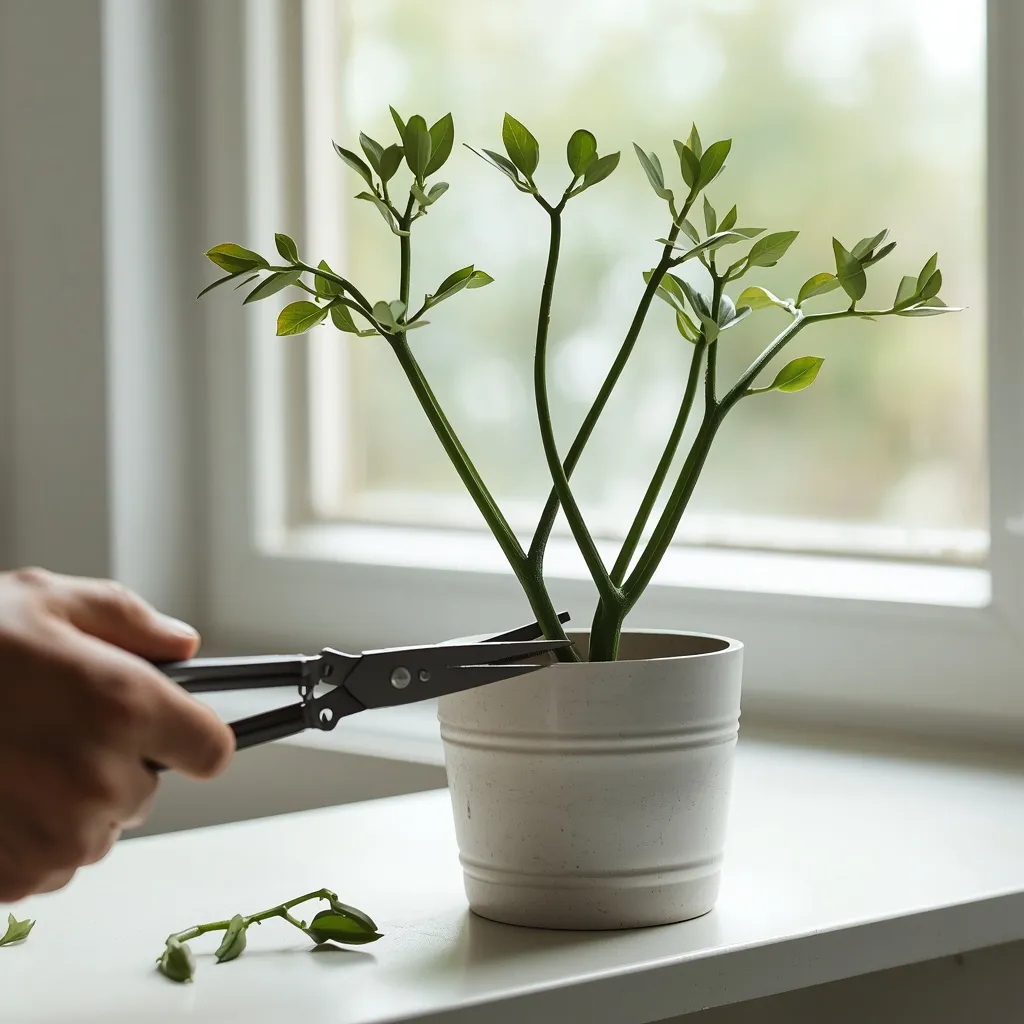
A stretched jade can be rebuilt: a leggy, pale plant with long gaps between leaves cut back hard, forced to branch, and grown into something dense and shapely again. Corrective and hopeful, few realize a spindly jade is fully recoverable. Restored, branching, and renewed.
Legginess, long bare stems and widely spaced leaves, is caused by too little light, so first move the plant somewhere much brighter or it will simply stretch again. Then prune the leggy stems back to a healthy leaf pair, which forces the plant to branch into a fuller shape, and root the removed tops as cuttings so nothing is wasted. New growth from the cut points takes a few weeks. This suits stretched, low-light-damaged plants and anyone reshaping an old jade.
- Why it works: Fixing the light first stops the plant simply re-stretching after it’s cut back.
- Best for: Leggy low-light plants; reshaping old jade; salvage projects.
- Key elements: brighter light first, cut back to a leaf pair to force branching, tops rooted as cuttings.
16. Decorative Pot and Top-Dressing
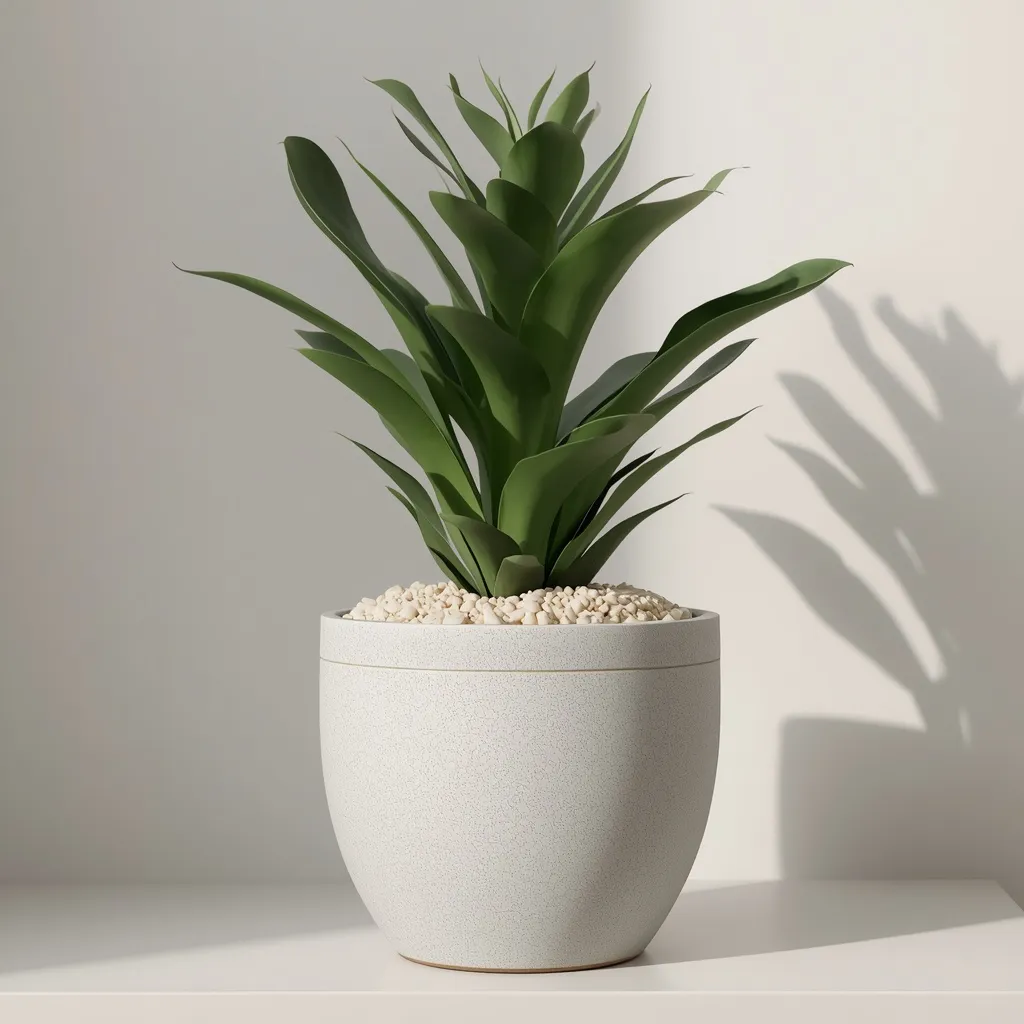
The right pot turns a jade into decor: a plain green plant lifted by a considered container and a top-dressing of gravel or fine stone that hides the soil and finishes the look. Styled and intentional, presentation is the difference between a plant and a feature. Polished, grounded, and cohesive.
Choose a pot that suits jade’s weight and needs, heavy terracotta or stoneware for stability and breathability, and keep it only slightly larger than the root ball. Top-dress with a thin layer of fine gravel, grit, or decorative stone, which looks finished, keeps leaves off wet soil, and reflects jade’s natural rocky habitat. Match the top-dressing tone to the pot rather than the plant for a cohesive result. Ensure any decorative pot still drains, using a hidden liner or drilling if needed. This suits styling a plant as a feature and gift plants.
- Why it works: Gravel top-dressing looks finished while keeping lower leaves off the damp soil that rots them.
- Best for: Styling jade as a feature; gifts; cohesive shelf display.
- Key elements: heavy breathable pot, slightly larger than root ball, fine gravel top-dressing toned to the pot, drainage kept.
17. The Watering and Health-Check Method
Keeping jade alive comes down to reading the plant and watering only when it asks: checking the soil, checking the leaves, and adjusting with the seasons rather than following a fixed schedule. Methodical and diagnostic, this routine prevents almost every jade problem. Observant, responsive, and essential.
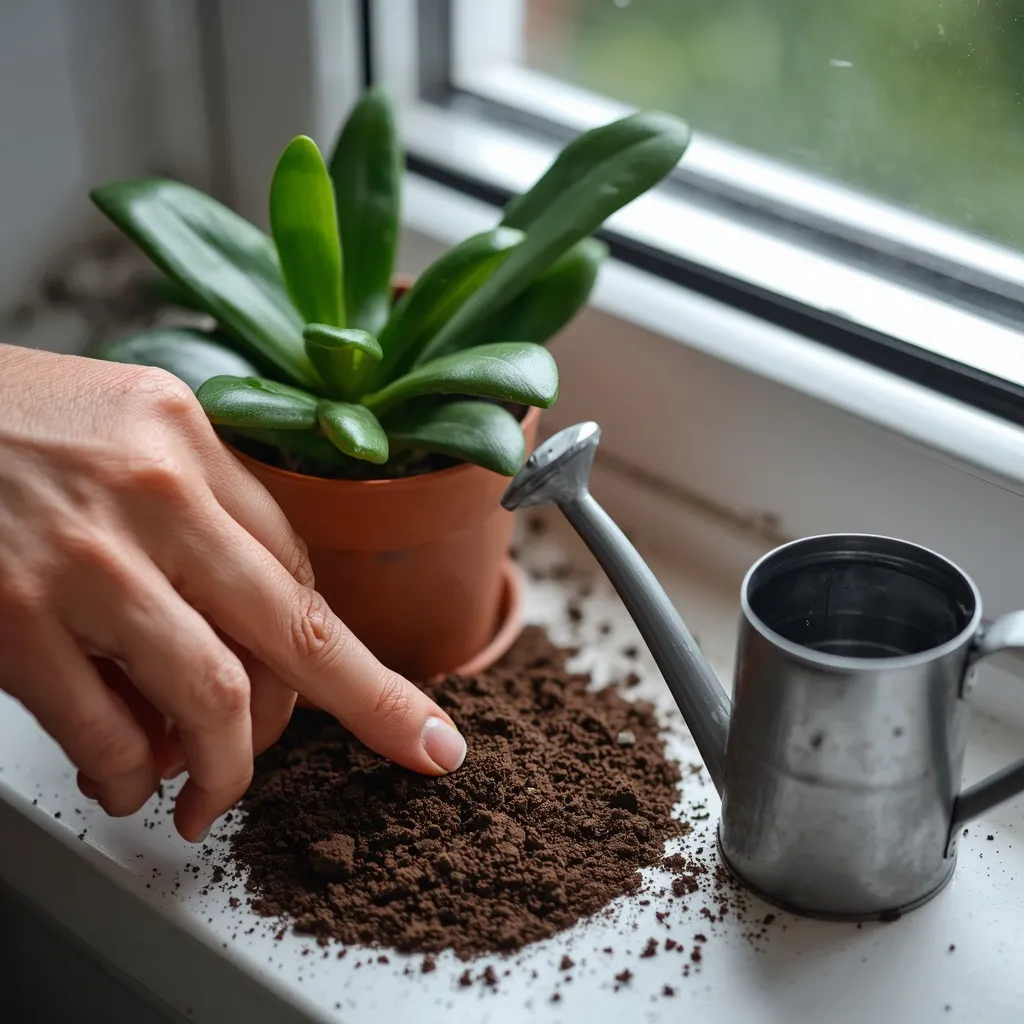
Water only when the soil is completely dry, which in practice means checking rather than scheduling. Push a finger 3–4 cm (1.5 in) into the soil; if any moisture remains, wait. Then water thoroughly until it runs from the drainage holes, and empty the saucer so the roots never sit in water. Read the leaves for diagnosis: firm plump leaves mean a happy plant, wrinkled or soft leaves mean underwatered, and mushy translucent leaves with blackening stems mean overwatered and rotting. Water far less in winter, often just once a month, because jade is semi-dormant in low light, and watering a dormant plant on a summer schedule is the most common way jade is killed. Jade is toxic to cats and dogs, so site it out of reach of pets that chew, and its sap can irritate sensitive skin, so wash your hands after pruning. This suits every jade owner.
- Why it works: Watering by soil dryness and leaf signs rather than a schedule prevents the overwatering that kills most jade.
- Best for: Every jade owner; diagnosing a struggling plant; preventing rot.
- Key elements: water only when fully dry, finger-check 3–4 cm, drain the saucer, read leaves for diagnosis, once-monthly in winter, toxic to pets.
Why Is My Jade Plant Not Growing?
A jade plant usually stops growing because it is semi-dormant, not because something is wrong. Jade grows actively in the warmth and bright light of spring and summer, then slows or pauses through autumn and winter when light levels drop. Slow winter growth is normal and healthy, and the plant needs far less water during it. If a jade also fails to grow in spring and summer, the cause is almost always too little light, too small a pot combined with exhausted soil, or root damage from overwatering.
Practical, plant-first houseplant advice runs through the whole Sunday Abode approach. If you enjoy growing things indoors, our guide to growing cucumbers at home applies the same read-the-plant thinking to an edible crop. For more indoor growing inspiration, browse the rest of our houseplant care guides.
Which Jade Propagation Method Should You Use?
Jade can be propagated several ways, and they differ sharply in speed, reliability, and how sturdy the resulting plant is. This compares the options before you start.
| Method | Speed | Reliability | Notes |
| Stem cutting in soil | Fast | High | Best all-round method; sturdy roots |
| Leaf in soil | Slow | Moderate | Free and plentiful; needs patience |
| Repotting a division | Instant | High | For plants with multiple stems |
| Cutting in water | Medium | Low | Rot-prone; weak roots; move to soil early |
| Leaf in water | Slow | Very low | Rarely works; not recommended |
Safety notes: jade plant (Crassula ovata) is toxic to cats and dogs, and the ASPCA lists it among plants that cause vomiting and lethargy if eaten, so place it out of reach of pets that chew foliage and keep it away from young children who might put leaves in their mouths. Jade sap can irritate sensitive skin, so wash your hands after taking cuttings or pruning, and avoid touching your eyes. Use clean, sharp secateurs and cut away from yourself. A mature jade is heavy and top-heavy, so use a stable, weighted pot and lift larger plants with care. When moving jade outdoors for summer, acclimatize it gradually to prevent sunburn, and bring it in before frost, since it is not frost-hardy and freezing destroys the water-filled leaves. Never leave a pot standing in collected water, since sitting water is the main cause of fatal root rot. If drilling drainage holes in a decorative pot, wear eye protection and follow the tool’s guidance for ceramic.
Frequently Asked Questions
Why is my jade plant not growing?
Most often because it is semi-dormant in autumn and winter, when lower light naturally slows growth, this is normal and the plant needs much less water during it. If a jade also fails to grow in spring and summer, the usual causes are too little light, a pot that has become rootbound with exhausted soil, or root damage from overwatering. Check the light first, since jade needs at least four to six hours of bright light to grow actively.
How do you propagate a jade plant?
The most reliable method is a stem cutting rooted in soil. Take an 8–10 cm (3–4 in) cutting, let the cut end callus for three to seven days until dry, then push it into gritty compost and water sparingly. Leaves also propagate if twisted off whole and rested on gritty soil, though they take longer. Both beat water propagation, which is rot-prone for succulents.
Can a jade plant grow in water?
It can root in water, but it’s the weakest method for jade. As a succulent, jade rots in standing water far more readily than plants adapted to it, and the thin water roots it forms often struggle when moved to soil. If you try it, keep only the base in water, change the water every few days, and move the cutting to gritty soil as soon as roots reach 2–3 cm (1 in). Soil propagation gives far sturdier plants.
Why are my jade plant’s leaves falling off or going mushy?
Soft, mushy, translucent leaves and blackening stems almost always mean overwatering, which rots the roots, the most common way jade is killed. Let the soil dry out completely, check the pot drains freely, and remove any rotted material. By contrast, wrinkled or shrivelled leaves mean the plant is underwatered and simply needs a thorough drink once the soil is dry.
How much light does a jade plant need?
At least four to six hours of bright light a day, ideally from a south or west-facing window in the northern hemisphere. In strong light jade stays compact and may develop attractive red leaf margins, while in low light it grows leggy and stretched, with long bare stems reaching toward the window. Variegated types need even more light to keep their coloring.
Is a jade plant safe around pets?
No. Jade plant is toxic to cats and dogs, and the ASPCA lists it as causing vomiting and lethargy if eaten. Place it well out of reach of pets that chew plants, ideally on a high shelf or in a room they don’t access, and keep it away from young children too. If a pet does eat any, contact your vet or a pet poison line.
How often should I water a jade plant?
Only when the soil has dried out completely, which you confirm by pushing a finger a few centimeters in rather than following a schedule. In spring and summer that might be every one to two weeks; in winter, when jade is semi-dormant, it can be as little as once a month. Always water thoroughly until it drains, then empty the saucer so the roots never sit in water.
Conclusion
The best jade plant growing ideas all rest on the same foundation: bright light, gritty soil that drains fast, and water only when the plant is bone dry. Get those right and everything else, propagating a whole tray from single leaves, training a bonsai, coaxing out the rare winter flowers, or simply keeping a windowsill plant plump and glossy, becomes genuinely achievable. Read the leaves, ease off in winter, and remember that a slow jade is usually just resting. For more indoor growing inspiration, explore the houseplant care collection on Sunday Abode and take a cutting from your jade this week.