
Introduction
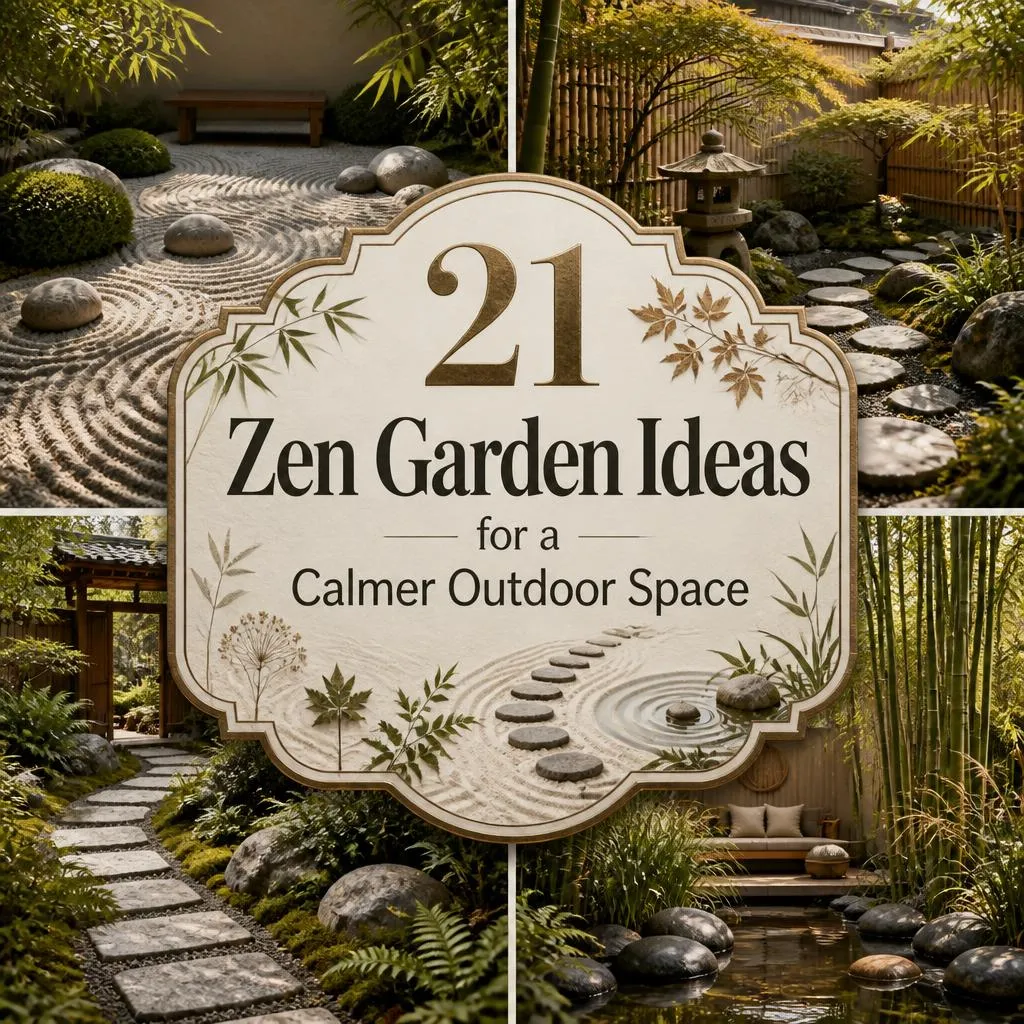
Zen garden ideas trace back to karesansui, the dry landscape gardens first developed at Japanese Zen Buddhist temples, where raked gravel stood in for water and a handful of carefully placed stones suggested mountains or islands. That same principle, restraint over abundance, negative space treated as deliberately as any planted bed, still defines the style today, whether it’s a full backyard transformation or a palm-sized tray on a desk. This list moves through the classic dry-garden elements, water features, planting choices suited to the aesthetic, and adaptations for a balcony, a front yard, or a kid’s first calming sensory project, along with the maintenance and safety realities most guides skip. Consider it the reference for building that same sense of quiet into your own outdoor Sunday Abode, at whatever scale actually fits the space available.
Dry Zen Garden Ideas (Karesansui Elements)
These are the signature moves of the style, the raked gravel, the placed stones, the patch of moss, that most people picture first when they hear the words zen garden.
1. Raked Gravel or Sand Bed
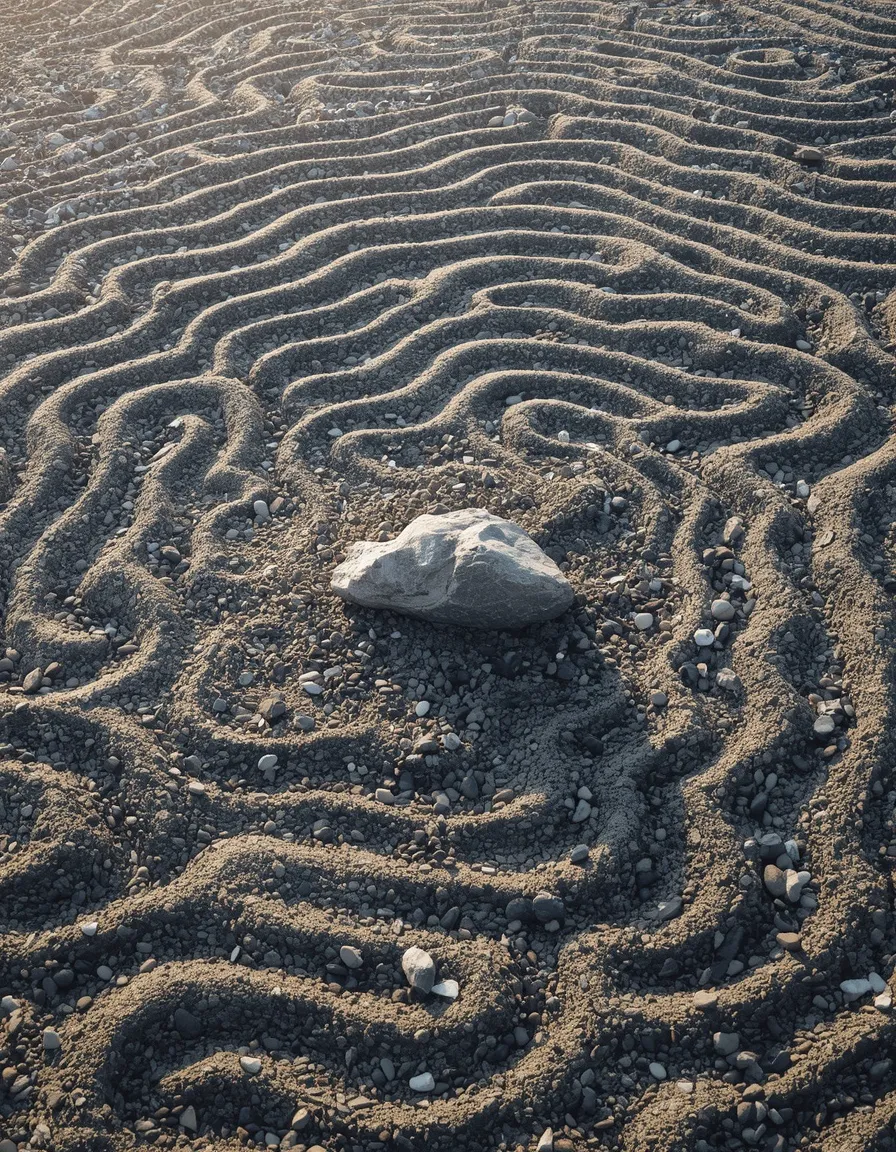
A bed of fine gravel raked into flowing, concentric lines around a rock grouping is the single most recognizable image associated with zen garden design, representing water without using a drop of it.
Use crushed decomposed granite or a coarser landscaping gravel rather than play sand or fine beach sand for outdoor raking, fine sand doesn’t hold a raked line in wind or rain nearly as well as angular, slightly larger material, roughly 3 to 6mm (0.1 to 0.25in) grain size works well. Lay a weed barrier fabric beneath the full bed before adding gravel, this single step prevents the persistent weeding that otherwise undoes the clean look within one growing season. A simple wooden rake with widely spaced teeth, roughly 5 to 8cm (2 to 3in) apart, creates the classic flowing line pattern; draw it in slow, deliberate passes around rocks and other fixed elements rather than in a rigid grid. Re-rake after rain or wind disturbs the pattern, in traditional practice this maintenance is itself part of the meditative value, not an inconvenience to avoid.
- Delivers the style’s single most recognizable visual signature
- Works as the foundational element most other zen garden ideas build around
- Solves the desire for a low-water, low-maintenance focal bed that still looks intentional
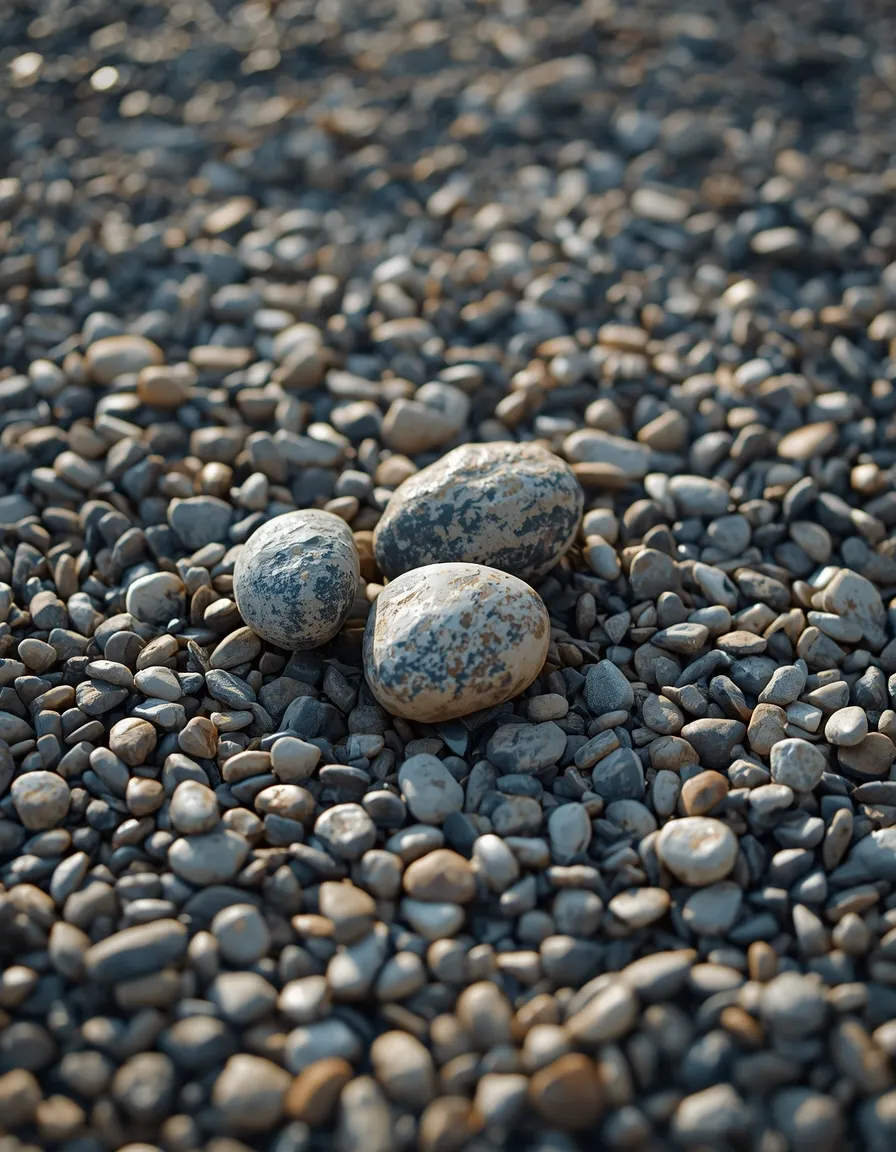
2. Rock Grouping in Odd-Numbered Clusters
A cluster of three or five stones, varied in size and set at different depths rather than lined up evenly, does the visual work of mountains or islands within a raked gravel bed.
Group stones in odd numbers specifically, traditional Japanese garden design treats groupings of three, five, or seven as more visually dynamic and less static than an even, symmetrical arrangement. Bury the base of each stone slightly into the ground or gravel bed rather than simply setting it on the surface, a partially buried stone reads as naturally emergent rather than placed, and it’s also considerably more stable. Vary height and size deliberately within the group, one clearly dominant stone with two or four smaller companion stones reads as more intentional than several similarly sized rocks. Large stones are genuinely heavy, anything over about 25kg (55lb) is worth moving with a dolly, a second person, or professional help rather than attempting to lift and place it alone, back injury from improperly lifting garden stone is a common and avoidable mistake.
- Creates the garden’s structural focal point using the traditional odd-numbered grouping principle
- Works as the centerpiece a raked gravel pattern is designed to draw the eye toward
- Solves the “gravel bed with nothing to anchor it” problem directly
3. Moss-Covered Ground Accent
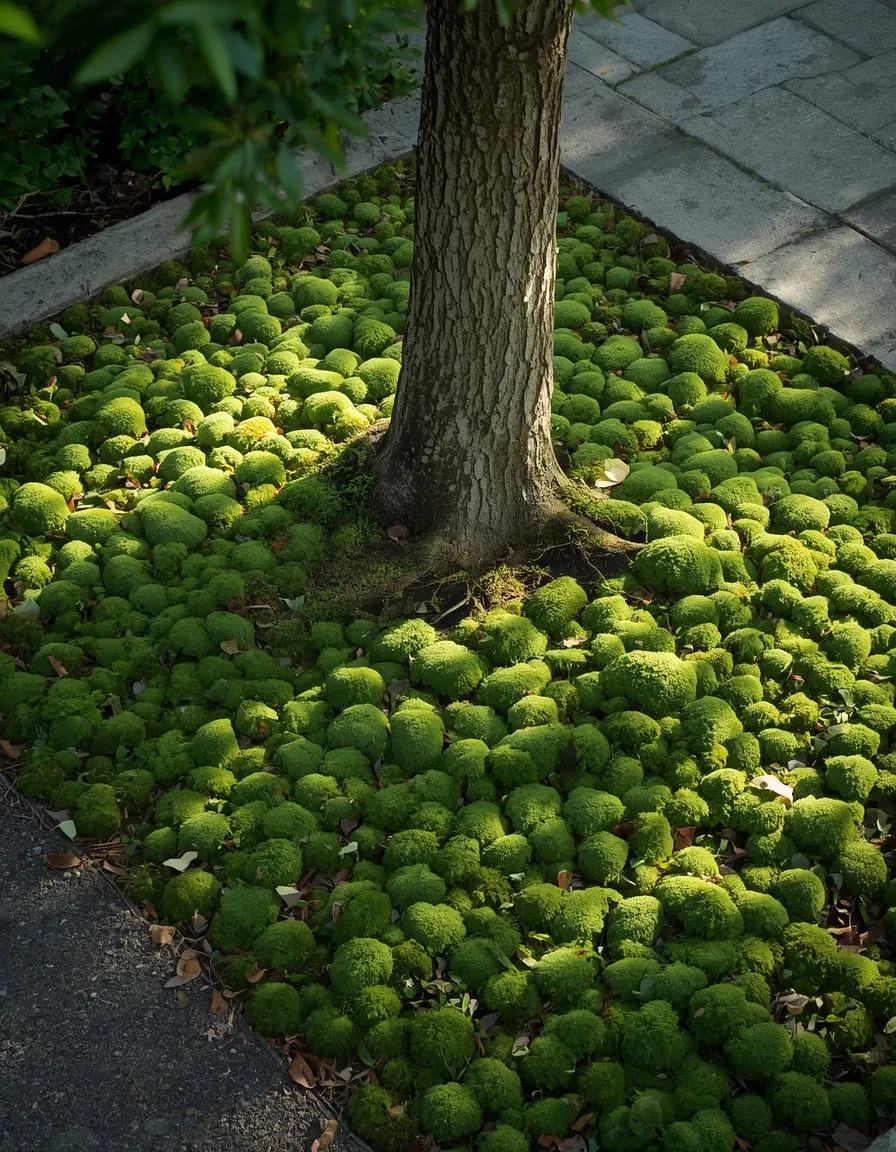
A patch of soft, dense moss covering ground beneath a specimen tree or along a shaded path edge brings the deep green, velvety texture that traditional Japanese gardens use to contrast against gravel and stone.
Moss genuinely needs consistent moisture and at least partial, ideally fairly deep, shade to establish and survive, this is not a plant-and-forget groundcover in a hot, sunny, or dry climate, and attempting it in full sun or an arid region typically fails within one season regardless of how it’s installed. Prepare the site by clearing existing weeds and grass completely and lightly roughing up the soil surface, then press moss sheets or fragments firmly into direct soil contact, moss has no true roots and needs that direct contact to establish rather than simply sitting on top of loose material. Mist consistently during establishment, daily in dry weather for the first several weeks, tapering off once it visibly takes hold. In climates genuinely unsuited to moss, a fine-textured groundcover like Irish moss or a similar low, dense alternative delivers a comparable visual effect with realistic maintenance.
- Adds soft, deep-green texture that contrasts naturally against gravel and stone
- Works best in consistently shaded, moist conditions rather than sun or dry climates
- Solves the desire for that classic soft-moss look, with an honest note on where it actually thrives
4. Stepping Stone Path Through Gravel
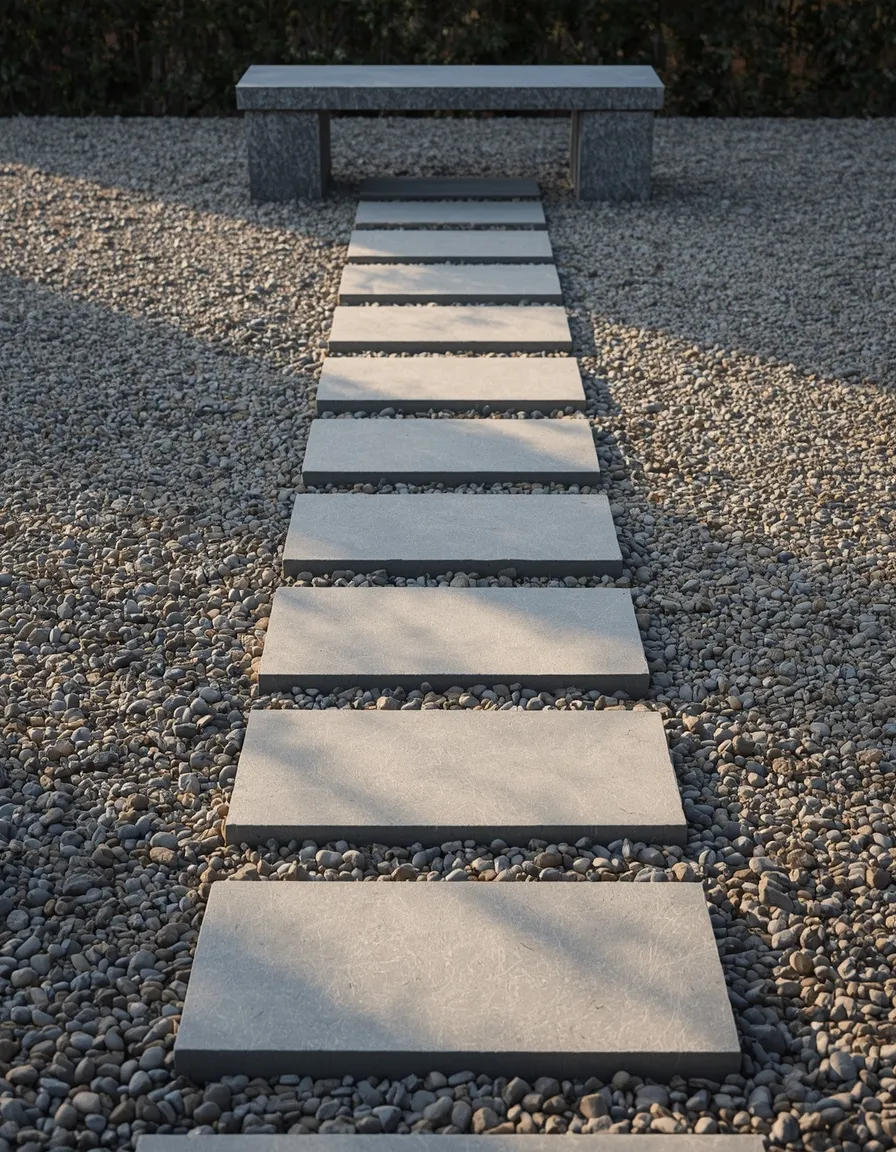
A line of flat stone slabs set into a raked gravel bed, spaced for a natural walking stride, invites someone to actually move through a zen garden rather than only view it from one fixed spot.
Space stones roughly 45 to 60cm (18 to 24in) center to center to match a natural, unhurried walking stride, tighter spacing feels rushed and works against the contemplative pace this style is meant to encourage. Set each stone on a compacted gravel or sand base so it sits stable and doesn’t rock underfoot, an unstable stepping stone is a genuine trip hazard regardless of how good the overall design looks. Choose flat-topped, irregularly shaped stone rather than uniform pavers for an authentic feel, and leave the gravel’s raked pattern interrupted cleanly around each stone rather than raking straight through it. This works especially well leading toward a specific destination, a meditation bench, a water basin, a garden gate, rather than as a path that goes nowhere in particular.
- Invites genuine movement through the garden rather than only viewing from a distance
- Works best leading toward a specific destination point within the space
- Solves the “beautiful but purely decorative, nobody can actually walk through it” problem
Zen Garden Water Feature Ideas
Water plays a specific, restrained role in this style, more about sound and reflection than the lush, full ponds common in broader Japanese garden design.
5. Bamboo Water Fountain (Shishi-Odoshi)
A bamboo deer scarer, a pivoting bamboo tube that fills with water, tips, empties, and knocks against a stone with a distinctive clack, adds intermittent sound and gentle motion without the visual weight of a full water feature.
This traditional device works on a simple counterweight principle, water flows into the raised end of a pivoting bamboo tube until it tips under the added weight, empties, and springs back to strike a stone with a sharp knock, originally designed to startle deer and boar away from gardens, now valued purely for its rhythmic sound. Position it where the sound carries to a seating or meditation area without being so close that the periodic knock feels startling rather than soothing, a few meters away generally strikes the right balance. It needs a small recirculating pump and a basin to catch and return the water, a self-contained kit is the simplest option for most home installations. Drain and store the bamboo components before winter in climates with hard freezes, bamboo splits when water freezes and expands inside it.
- Adds rhythmic sound and gentle motion without a large, visually dominant water feature
- Works well positioned near but not directly beside a seating or meditation spot
- Solves the desire for a genuine water element in a compact footprint
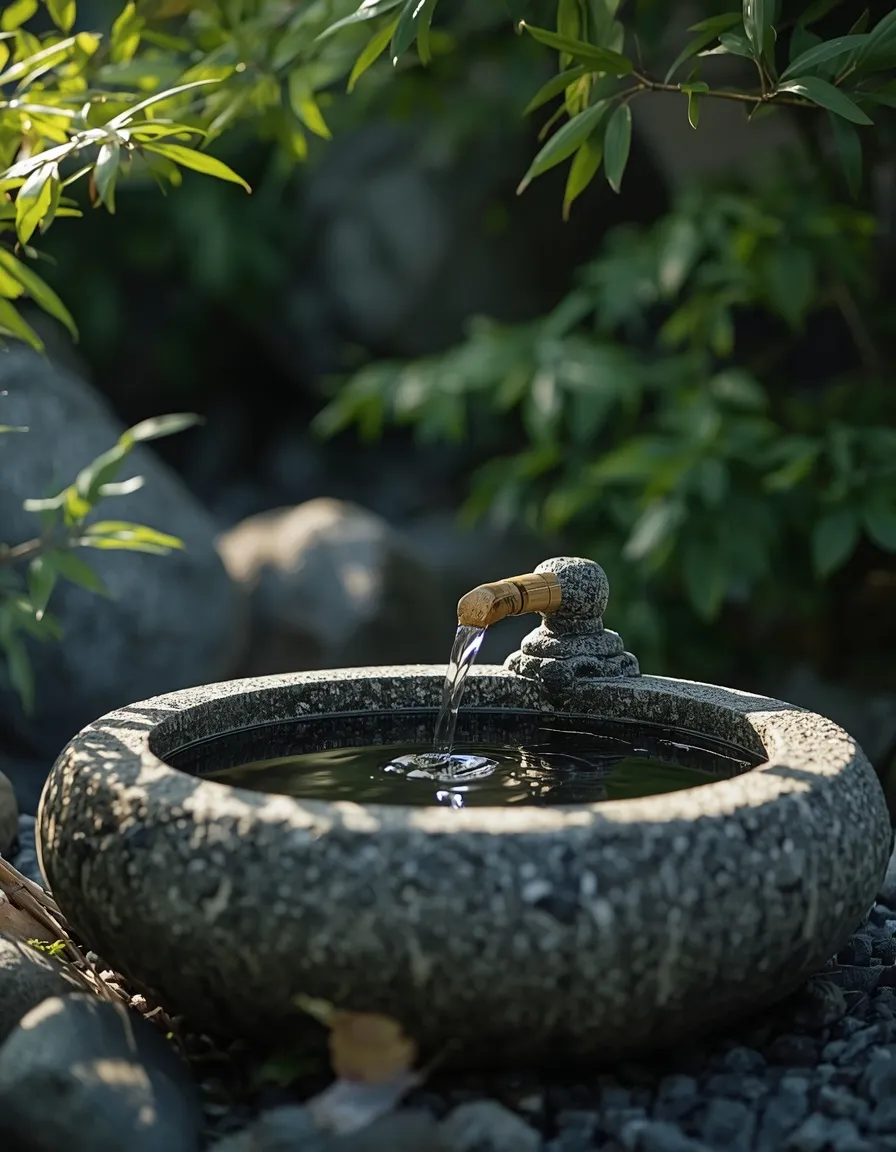
6. Stone Water Basin (Tsukubai)
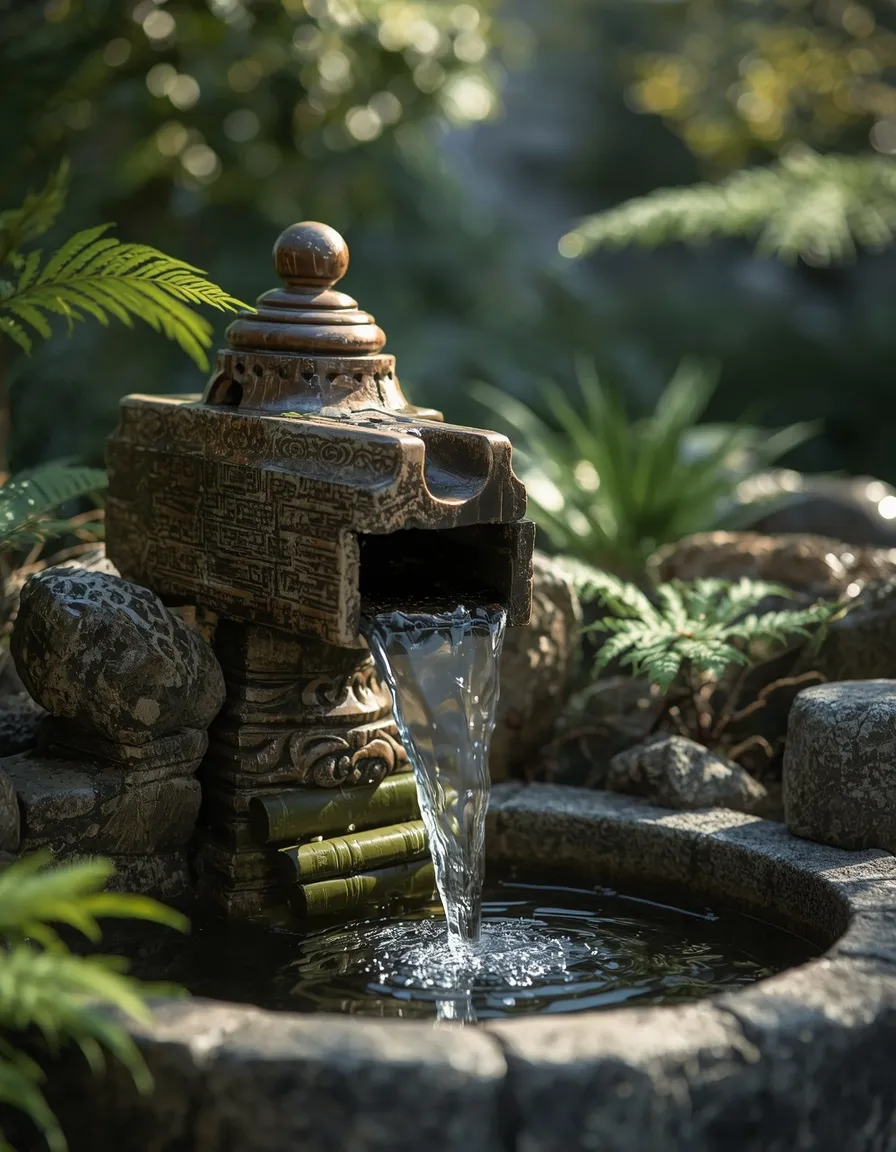
A low stone basin filled with still water, traditionally used for ritual hand-washing before tea ceremony, works purely as a quiet, reflective focal point in a home zen garden without needing that specific ceremonial context.
Choose a genuinely stone or concrete basin rather than lightweight resin for authentic weight and a naturally aging surface, and set it low, traditionally knee height or lower, which is part of what gives the gesture of approaching it a deliberate, unhurried quality. A small bamboo spout feeding the basin from above adds gentle sound and keeps the water moving enough to discourage mosquito breeding, which matters considerably more than it might seem, completely still standing water becomes a mosquito breeding site within about a week in warm weather. If young children have access to the garden, keep the basin’s water level shallow, a few centimeters at most, or supervise the area directly, even a small basin represents a genuine drowning risk for a very young child. Clean and refresh the water regularly rather than letting it sit stagnant for weeks at a time.
- Adds a quiet, still reflective element with genuine cultural grounding in the aesthetic
- Works best positioned as a deliberate stopping point rather than a passing feature
- Solves the desire for water in the garden with a lower-maintenance footprint than a pond
7. Small Reflecting Pool or Koi Pond
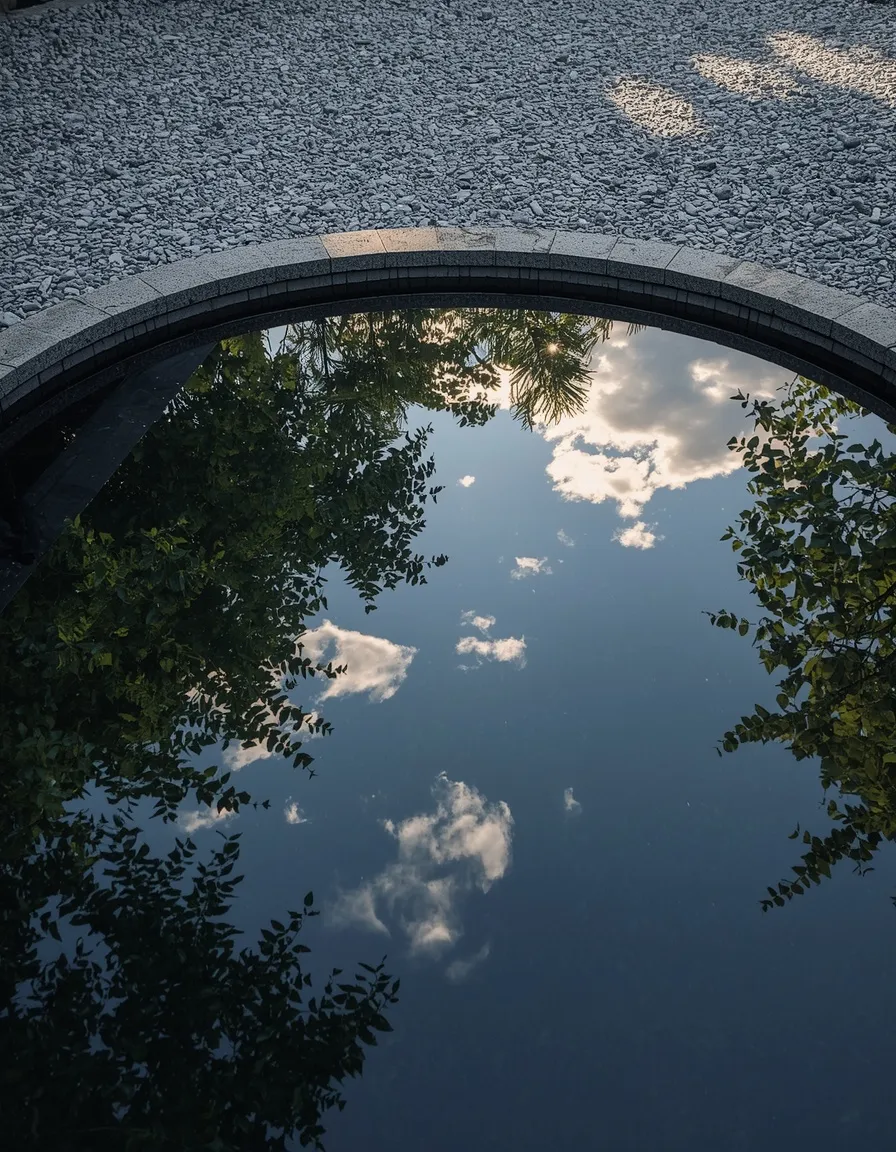
A shallow, still reflecting pool or a small koi pond brings genuine depth and movement to a zen garden, mirroring the sky and surrounding planting in a way no dry element can replicate.
Keep a purely reflective pool shallow and simple, a black or dark-lined basin as little as 15 to 20cm (6 to 8in) deep reflects sky and surroundings just as effectively as a much deeper pool while being considerably easier to maintain and safer around children. A true koi pond needs real depth for the fish, generally at least 90cm to 1.2m (3 to 4ft) in regions with cold winters so it doesn’t freeze solid, along with a filtration system and a genuine ongoing maintenance commitment that a purely reflective pool doesn’t require. Fence or otherwise secure any pond over about 30cm (12in) deep if young children have regular access to the garden, drowning risk from backyard water features is a genuine and well-documented hazard, not a remote one. This is one of the higher-investment ideas on this list and suits a garden that’s otherwise fairly established rather than a first project.
- Adds genuine reflective depth and movement that dry elements alone can’t replicate
- Works at very different scales, a shallow reflecting basin or a full koi pond, depending on budget
- Solves the desire for real water without necessarily committing to fish and filtration
Zen Garden Planting Ideas
Planting here follows the same restraint as everything else, a handful of well-chosen species doing quiet, deliberate work rather than a full, layered border.
8. Japanese Maple Focal Tree
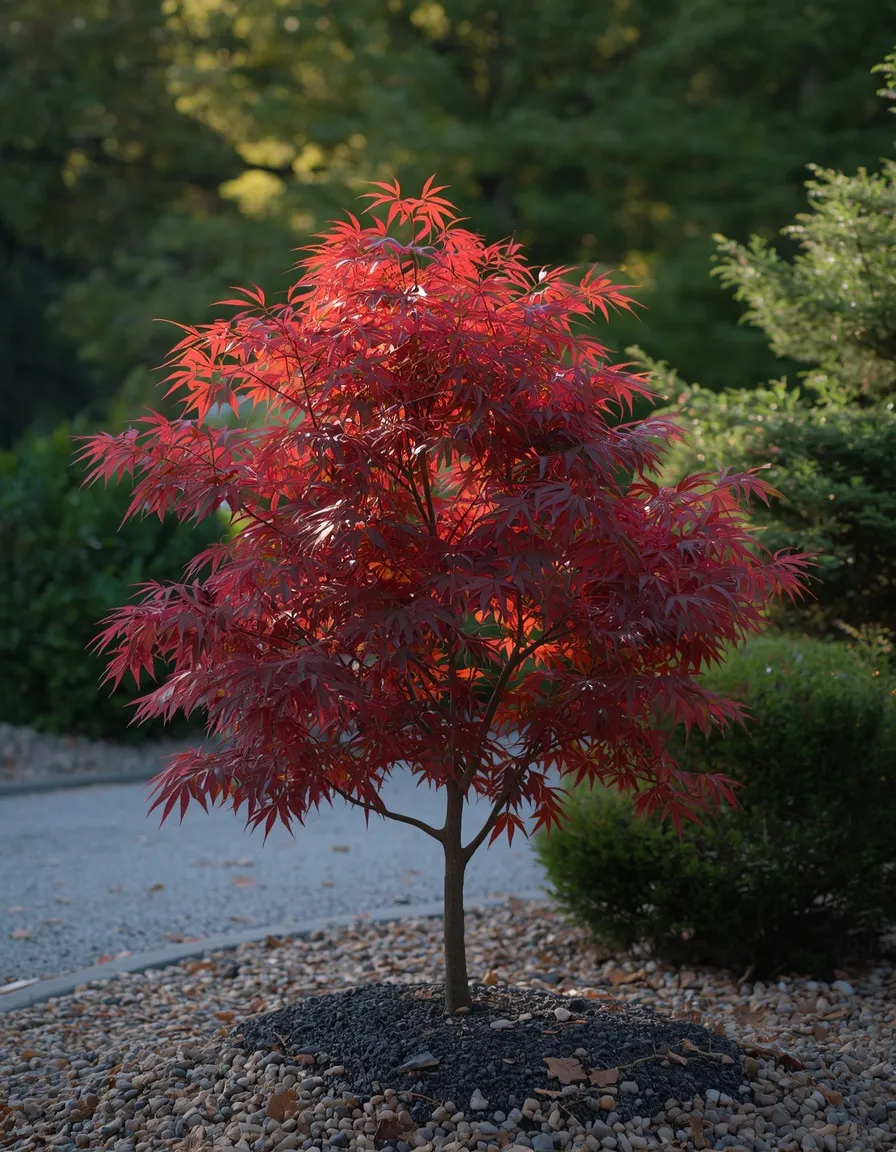
A single Japanese maple, its delicate, layered branching and seasonal color shift from spring red to summer green to autumn crimson, works as the one true focal tree a zen garden needs rather than a full canopy of planting.
Choose a variety suited to the available space and light, upright varieties work well as a taller anchor point, while cascading or weeping varieties suit a spot beside a water feature or stone grouping where their draping form can be fully appreciated. Site it with some protection from harsh afternoon sun and strong wind in hot climates, direct exposure through peak summer heat scorches leaf edges on most varieties, and choose a cultivar rated for the local hardiness zone rather than assuming all Japanese maples tolerate the same range. Plant just one as a genuine specimen tree rather than several, the entire point of this idea is a single, deliberately placed focal point, not a grove. Prune minimally and only to remove dead or crossing branches, heavy pruning disrupts the natural layered branching structure that makes the tree worth featuring in the first place.
- Delivers a genuine seasonal focal point that changes character through the year
- Works best planted alone as a specimen rather than grouped with other trees
- Solves the desire for a true centerpiece plant rather than a full planted border
9. Clipped Pine or Boxwood Niwaki Pruning
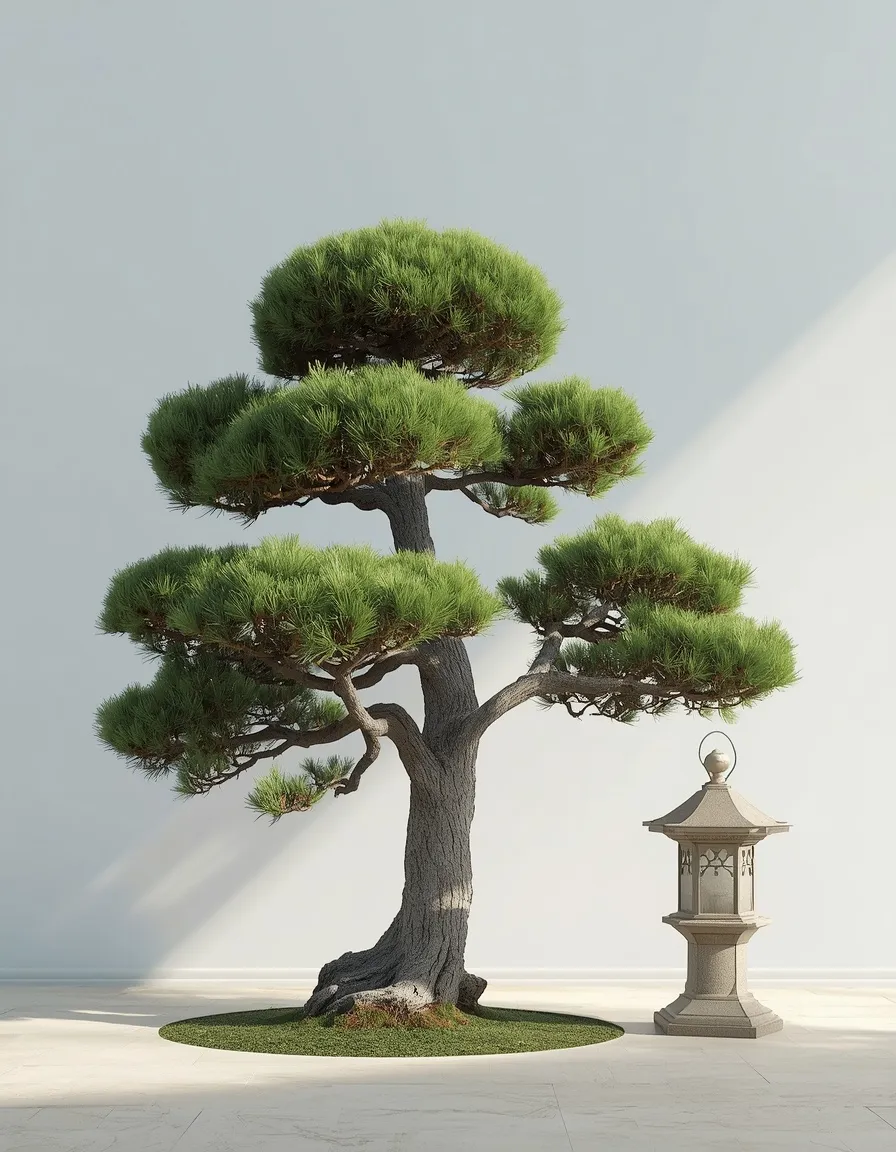
A pine or boxwood pruned into clean, cloud-like layered forms, a technique called niwaki in traditional Japanese garden practice, brings sculptural, deliberately shaped greenery that reads as considerably more intentional than an unpruned shrub.
Start with a genuinely young, flexible plant rather than attempting this on a large, already mature specimen, shaping niwaki-style layers is a gradual process best done over several years of light, repeated pruning rather than one dramatic cut. Remove interior growth and crossing branches to open up clear negative space between layered pads of foliage, the visible gaps between pads are as important to the finished look as the foliage itself. This technique suits slow-growing, needle or small-leaved evergreens specifically, dwarf pine varieties and boxwood both respond well, while fast-growing or large-leaved shrubs don’t hold the shape as cleanly. Budget real time for this idea, meaningful niwaki shaping takes several seasons to develop rather than being achievable in a single afternoon, and it suits a gardener genuinely interested in the ongoing process rather than a one-time project.
- Adds sculptural, deliberately shaped greenery unlike any unpruned shrub in the yard
- Works best started on a young plant and developed gradually over several seasons
- Solves the desire for the specific layered, cloud-pruned look associated with this style
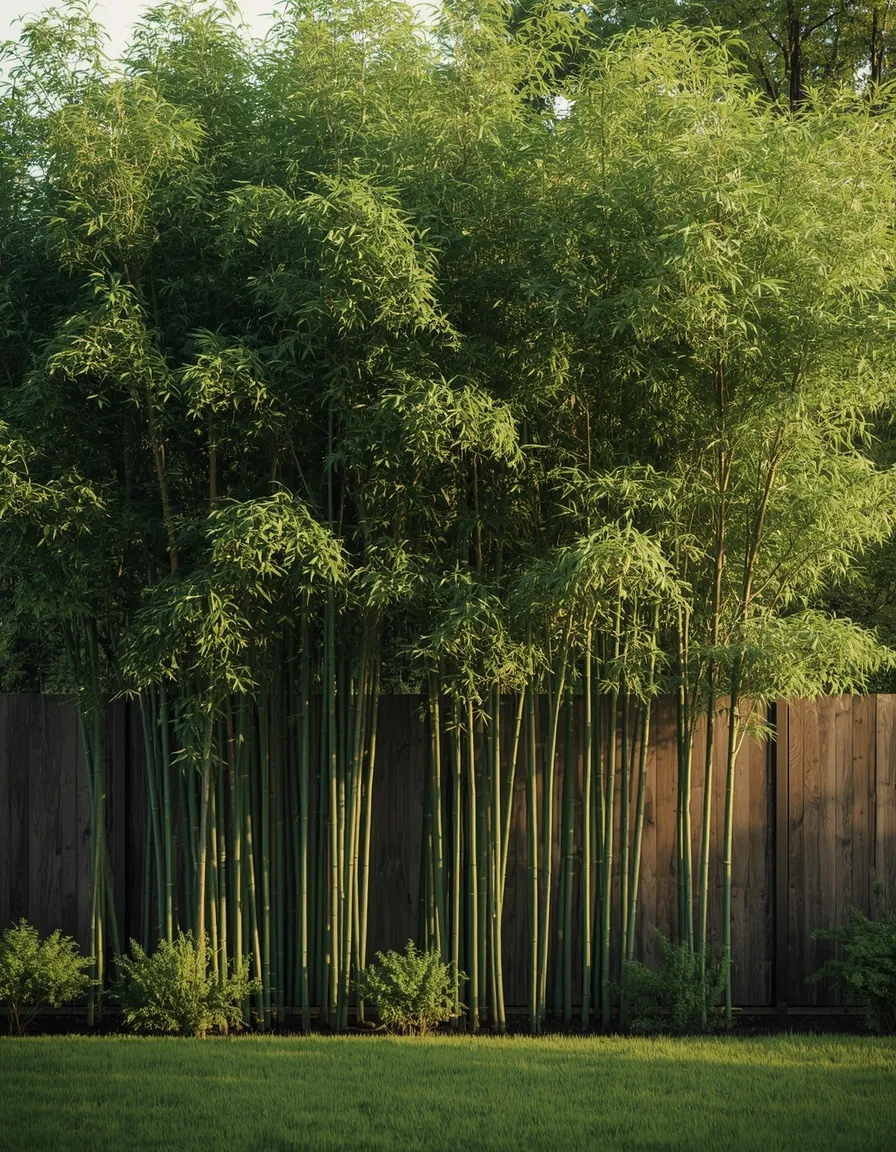
10. Bamboo Privacy Screen
A dense stand or panel of bamboo along a fence line brings natural, textural privacy screening while reinforcing the same material palette as the rest of a zen garden.
Choose a clumping bamboo species specifically, not a running variety, running bamboo spreads aggressively through underground rhizomes and can invade neighboring yards within a couple of seasons, a genuinely common and frustrating mistake in bamboo planting generally. If a specific running variety is preferred for its look, install a root barrier, a rigid below-ground barrier at least 60cm (24in) deep, around the planting area to physically contain spread. Space plants according to the specific variety’s mature width, and expect a full, dense screen to take two to four years to fill in from young plants rather than looking established immediately. For a lower-commitment alternative, pre-built bamboo fencing panels deliver the same visual material without any of the growth management considerations, at the cost of the living, textural movement real bamboo provides.
- Adds natural screening and privacy while reinforcing the style’s material palette
- Works well along a fence line or property boundary needing genuine screening
- Solves privacy needs without the harder, more institutional look of a solid fence
11. Minimalist Planting Palette
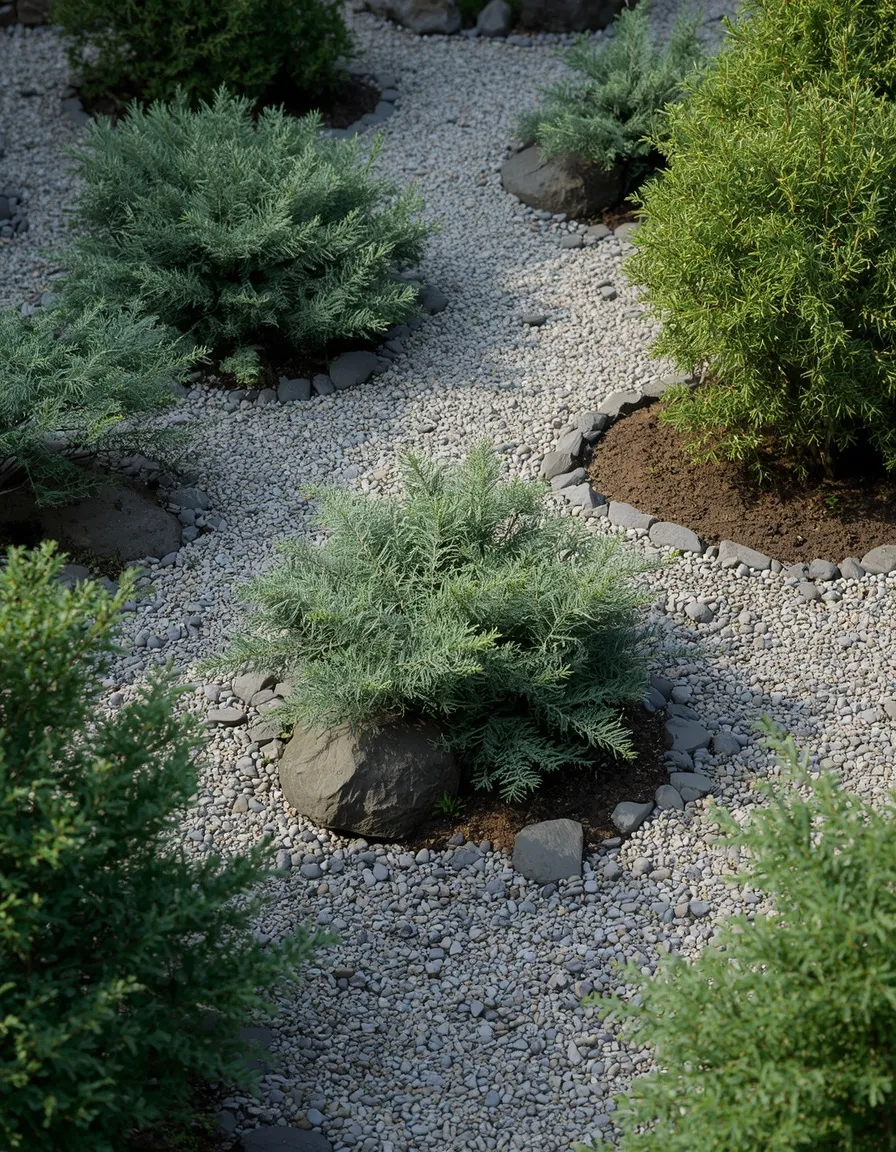
A deliberately limited plant palette, a handful of species repeated rather than a wide, varied border, is what actually separates a genuine zen garden from a Japanese-inspired garden that’s simply added a few bamboo stalks to existing planting.
Choose three to five plant species maximum for the entire space and repeat them in different spots rather than introducing something new in every bed, this restraint is a genuine design principle in the tradition, not a limitation imposed by lack of options. Favor foliage texture and form over flower color as the primary interest, ferns, moss, clipped evergreens, and ornamental grasses all contribute considerably more to this aesthetic than a bed of colorful annuals would. Leave deliberate empty space, gravel, bare ground, or simple lawn, between planted elements rather than filling every available area, this negative space, called ma in Japanese design theory, is treated as an active design element rather than unused ground waiting to be planted. This principle applies across every idea on this list, the temptation to add “just one more” plant or object is worth resisting consistently.
- Defines the actual aesthetic difference between this style and general Japanese-inspired planting
- Works as a governing principle across the whole space rather than a single feature
- Solves the “garden has too many elements competing for attention” problem directly
Zen Garden Structures and Accents
A few well-placed structural pieces, stone, bamboo, wood, give the space definition without pulling attention away from its overall calm.
12. Stone Lantern Focal Point
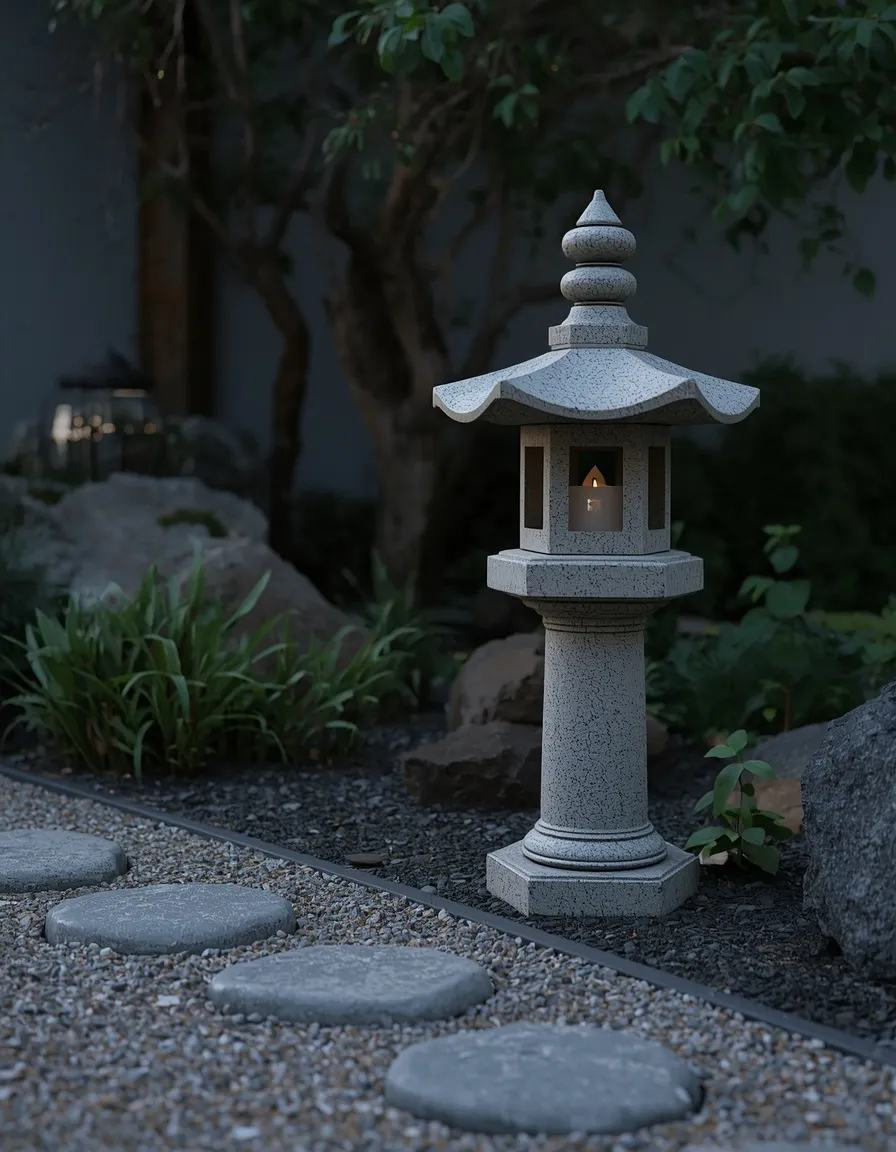
A carved stone lantern, tōrō in traditional terminology, positioned along a path or beside a water feature, brings a quiet architectural focal point with genuine roots in Japanese garden history.
Choose a genuinely solid stone or cast concrete lantern rather than a lightweight resin version for both authentic weight and long-term outdoor durability, and set it on a stable, level base, stone lanterns are considerably heavier than they look and an improperly seated one is a real tip-over risk, particularly in a yard with children who might climb on it. Position it at a natural pause point along a path or near a water feature rather than in the center of an open gravel bed, traditionally these mark a specific spot worth lingering at rather than serving as a purely decorative centerpiece. A single lantern reads as considerably more intentional than multiples scattered through the space, this is one idea where restraint matters more than almost anywhere else on this list. Battery LED candles inside work well for evening ambiance without the fire risk of real flame in an unattended outdoor fixture.
- Brings genuine architectural and historical character with real design lineage
- Works best positioned at a natural pause point rather than as a random centerpiece
- Solves the desire for an authentic focal object rather than generic garden decor
13. Bamboo Fence or Gate
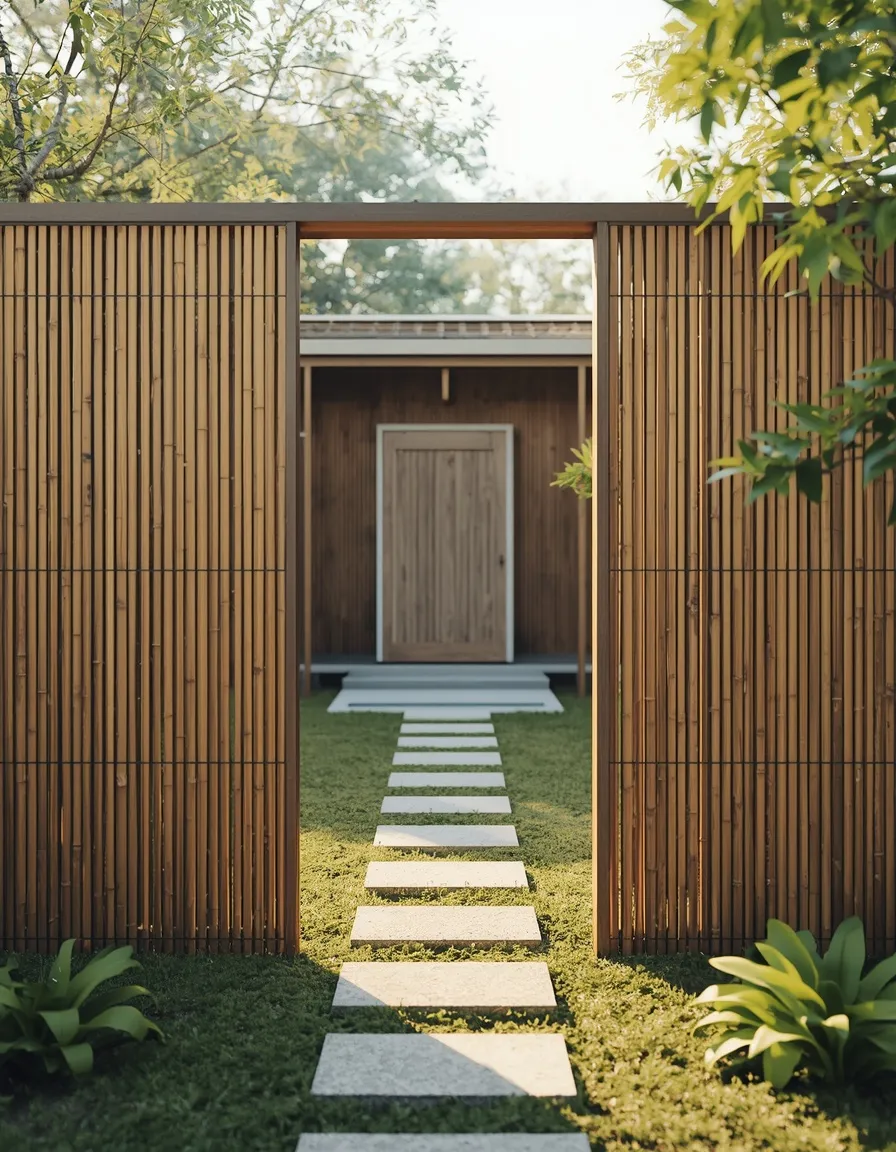
A woven or vertical bamboo fence panel, or a simple bamboo-framed gate marking an entrance, brings natural material and texture to a garden’s boundary in a way solid wood or metal fencing can’t quite replicate.
Choose pressure-treated or naturally rot-resistant bamboo poles for anything in ground contact, and mount panels into a separate wood or metal frame rather than setting bamboo poles directly into soil, direct ground contact considerably shortens bamboo’s outdoor lifespan regardless of species. A low version of this same treatment, a simple woven bamboo border roughly 30 to 45cm (12 to 18in) tall, works well purely for zone definition between a gravel bed and surrounding lawn or planting rather than as a full privacy fence, giving a lighter-touch option than the taller bamboo screening covered earlier in this list. Weather naturally rather than sealing bamboo with a glossy finish, the silvery-gray patina bamboo develops outdoors over a season or two is part of the material’s appeal in this aesthetic, not something to prevent. This works especially well as an entrance marker at the transition into a dedicated zen garden corner.
- Marks a boundary or entrance with natural material rather than solid wood or metal
- Works at multiple heights, from a low border to a full privacy panel, depending on the spot
- Solves the “entrance has no clear marker” problem for a dedicated garden section
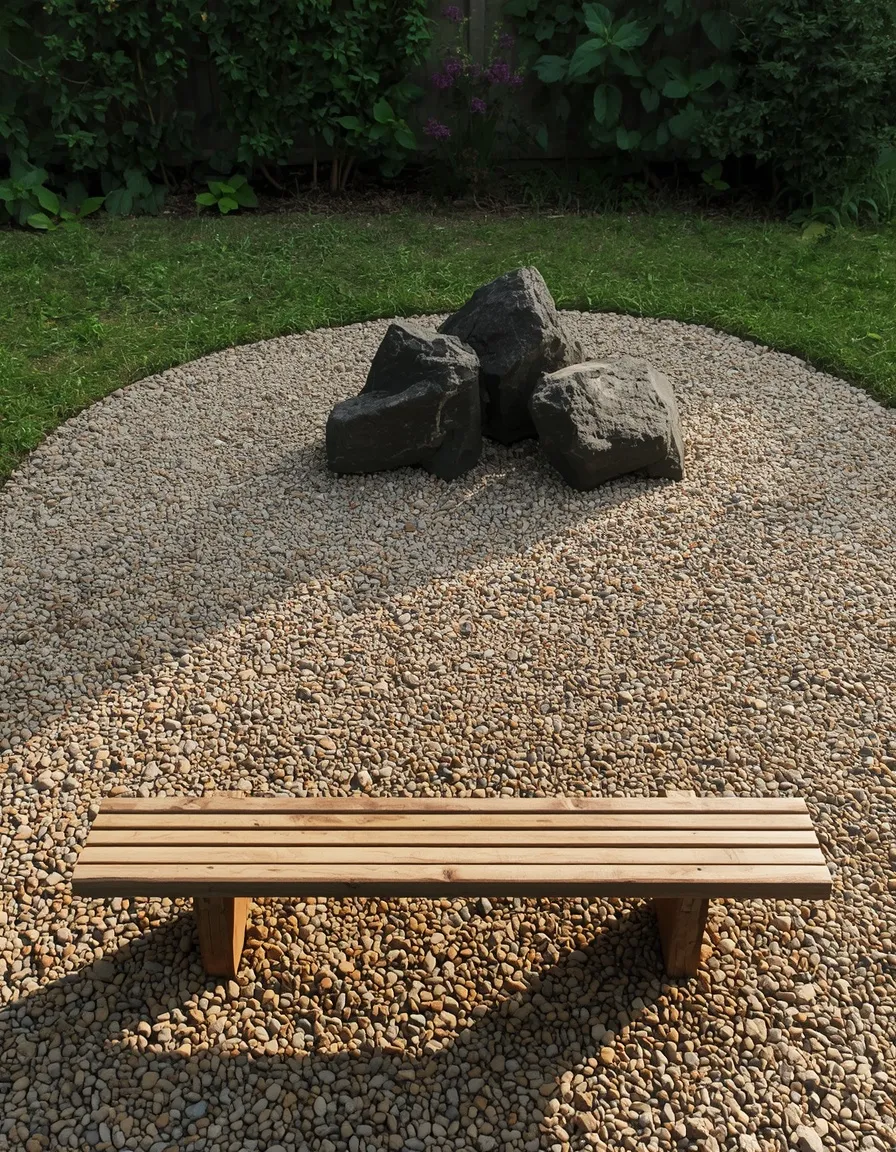
14. Meditation Bench Seating Corner
A simple, low wooden or stone bench positioned to face the garden’s main view, rather than tucked into a corner facing nothing in particular, gives a zen garden the genuinely functional purpose of somewhere to actually sit and look at it.
Position seating to face the rock grouping, water feature, or focal tree specifically, rather than placing it wherever happens to fit, the whole point of this idea is a considered viewing spot, not incidental seating. Choose a low, simple bench, backless or with a minimal low back, over anything ornate or cushioned, this matches the restrained material palette used throughout the rest of the space. A simple wood or stone material weathers naturally in place, cedar, teak, or plain fieldstone all suit this better than a painted or upholstered piece that needs protection from weather. Keep the immediate area around the bench genuinely clear and uncluttered, this is meant to be the calmest, most visually quiet spot in the entire garden, and surrounding it with too many nearby objects works against that purpose.
- Gives the garden a genuine functional purpose beyond being viewed from a distance
- Works best positioned to face a specific focal point rather than placed incidentally
- Solves the “beautiful garden with nowhere to actually sit and experience it” problem
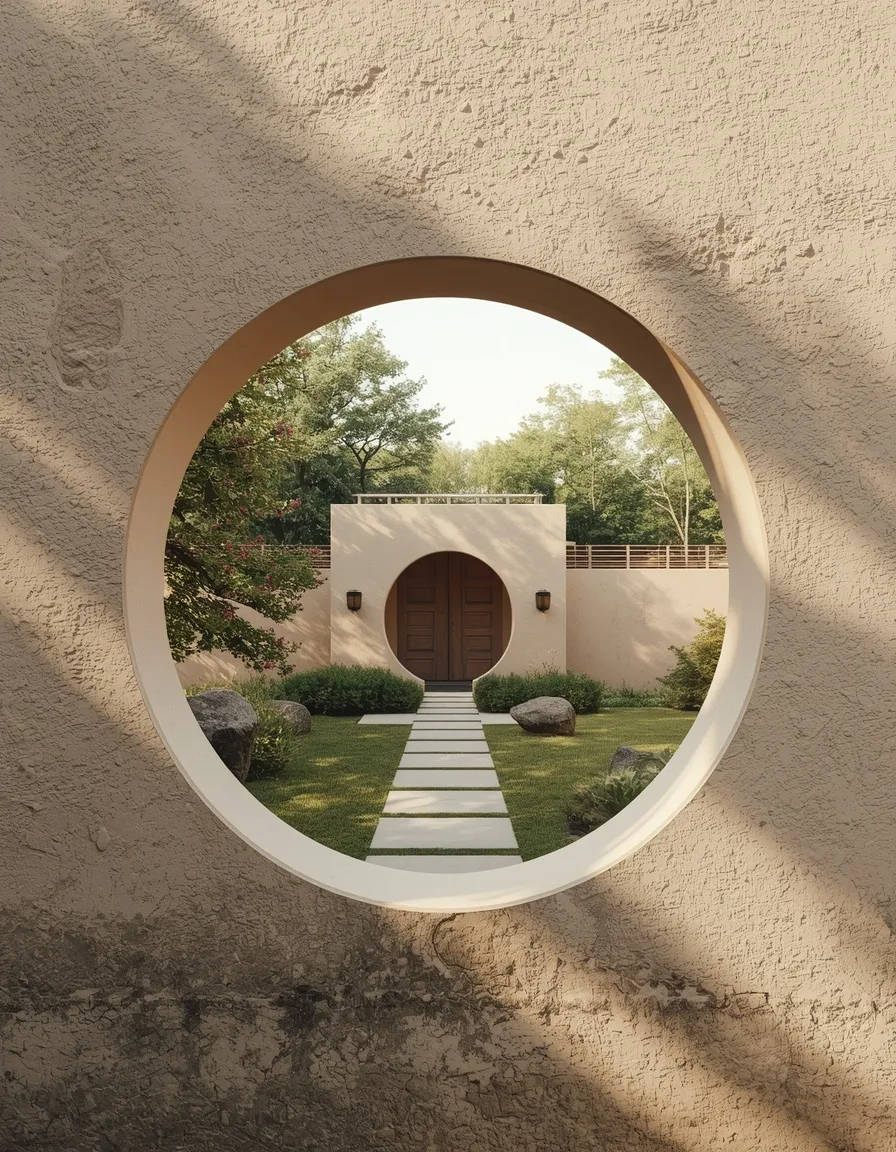
15. Circular Moon Gate Entrance
A circular opening set into a wall or hedge, framing the view through to the garden beyond, turns a simple entrance into a genuine architectural moment rather than just a gap in a fence.
Build the circular frame from stucco-finished masonry, painted wood, or a simple metal ring set into an existing wall or dense hedge, sizing the opening generously enough for comfortable passage, roughly 1.8 to 2m (6 to 6.5ft) in diameter reads as an intentional architectural feature rather than a tight squeeze. Position it to frame a specific view deliberately, the rock grouping, a specimen tree, a water feature glimpsed through the circular opening, since the framing effect is the entire point rather than simply a shaped doorway. This works considerably better as a genuine wall or hedge feature than as a freestanding structure with nothing to actually divide, it needs two distinct spaces on either side to create the sense of transition it’s designed for. This is a higher-effort structural project compared to most ideas on this list and suits a more established garden with existing walls or mature hedging to build the opening into.
- Turns a simple entrance into a genuine framed architectural view
- Works best built into an existing wall or dense hedge rather than freestanding
- Solves a plain, unremarkable garden entrance with real visual drama
Zen Garden Ideas for Every Space
The style scales down further than most people expect, from a full backyard corner to a single tray on an office desk.
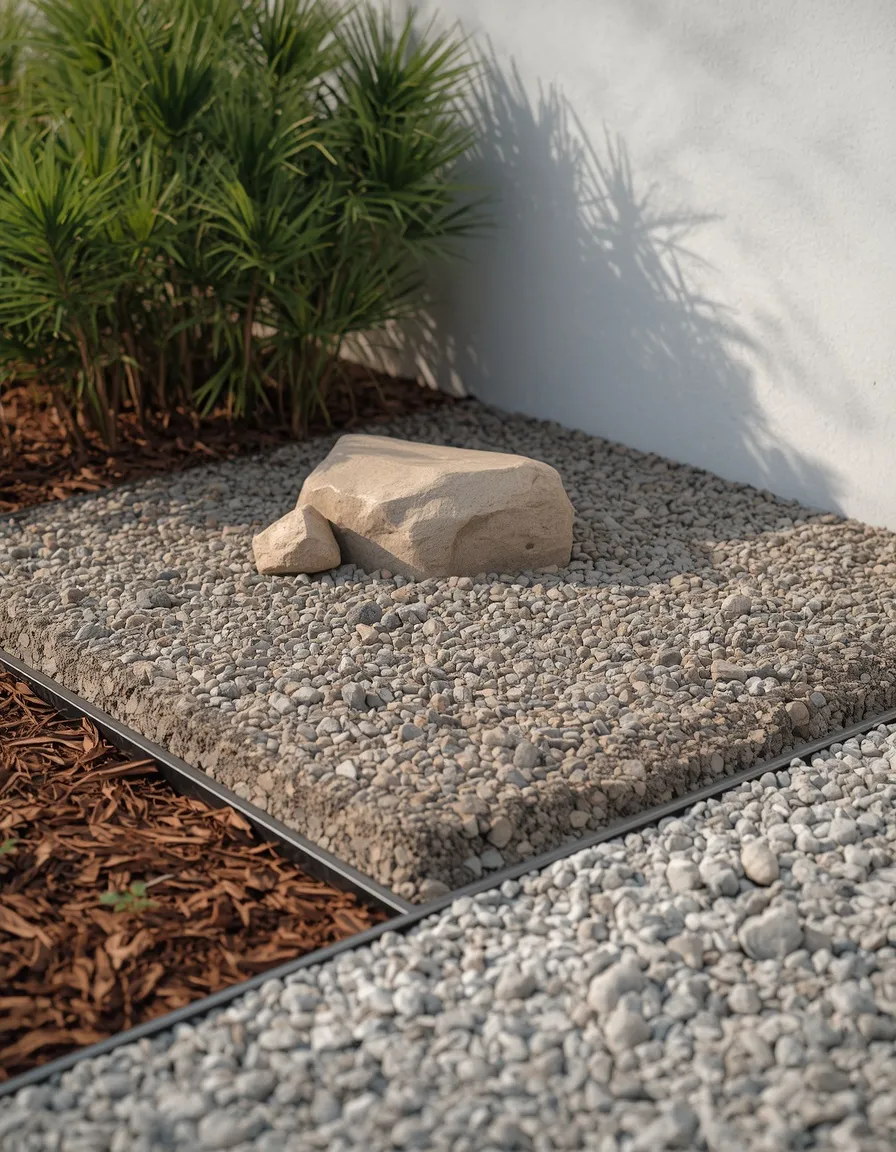
16. Small Corner Zen Garden
A single dedicated corner, roughly 1.5 to 2.5m (5 to 8ft) across, holding a small raked gravel bed, one modest rock grouping, and a single plant, delivers the full aesthetic without requiring the whole yard.
Define the corner’s boundary clearly with a low edging material, steel, timber, or a row of stone, so it reads as a deliberate zone rather than an unfinished patch within a larger, differently styled yard. Scale every element down proportionally, a single mid-sized rock or a small three-stone grouping, a modest raked area rather than a sweeping gravel bed, keeps the miniature version from feeling like an oversized idea awkwardly crammed into a small space. This idea works especially well as a deliberate contrast within a larger yard that serves other purposes; if the rest of the property is given over to a productive summer vegetable garden, reserving this one quiet corner as a dry zen garden creates a genuine, functional distinction between the working part of the yard and a space meant purely for rest. This is often the most realistic starting point on this entire list for a first zen garden project.
- Delivers the full aesthetic in a genuinely small, clearly defined footprint
- Works especially well as a deliberate calm contrast within a larger, more functional yard
- Solves the “want this style but don’t have room for a full garden transformation” problem
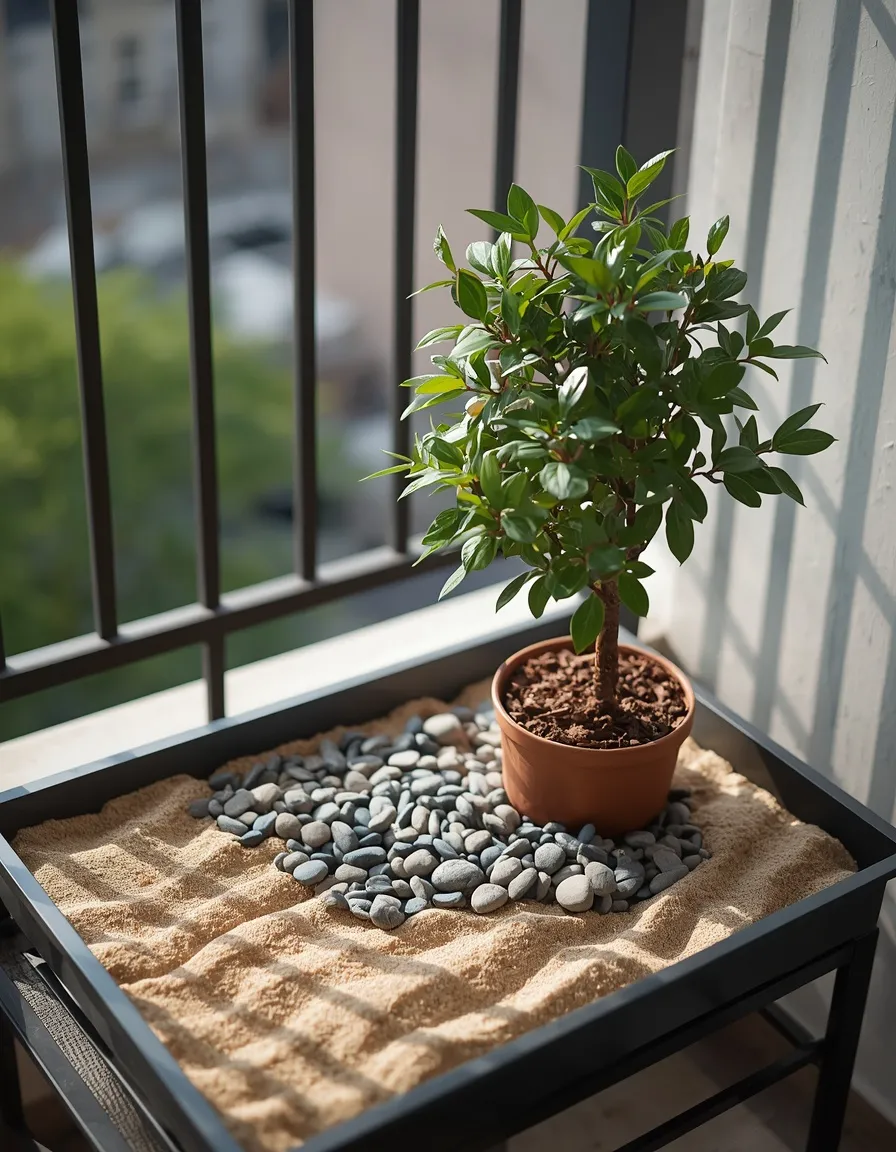
17. Balcony Zen Garden
A shallow tray of raked sand, a few small stones, and one or two containerized plants brings the same restrained aesthetic to an apartment balcony with zero permanent installation or digging required.
Use a wide, shallow container or a purpose-built tray, roughly 5 to 8cm (2 to 3in) deep is enough for a genuinely rakeable sand or fine gravel layer without adding excessive weight to a balcony’s load capacity. Check the balcony’s actual weight limit before adding filled containers, stone, and a water feature together, this matters considerably more on an upper-floor balcony than in a ground-level garden, and building codes typically list a maximum load per square meter or square foot for exactly this reason. Choose compact, genuinely balcony-appropriate plants, a small potted Japanese maple in dwarf form, a single clipped boxwood, or a groundcover-scale moss tray, rather than anything that needs the room a full landscape planting would. Secure any lightweight elements against wind specifically, an upper-floor balcony is considerably breezier than a ground-level yard, and a small rake or lightweight stone arrangement can genuinely blow around or off the edge if not weighted or contained.
- Delivers the full aesthetic with zero permanent installation, ideal for renters
- Works within a genuinely small footprint using containers and a shallow rake tray
- Solves the “want this style but only have a balcony” problem completely
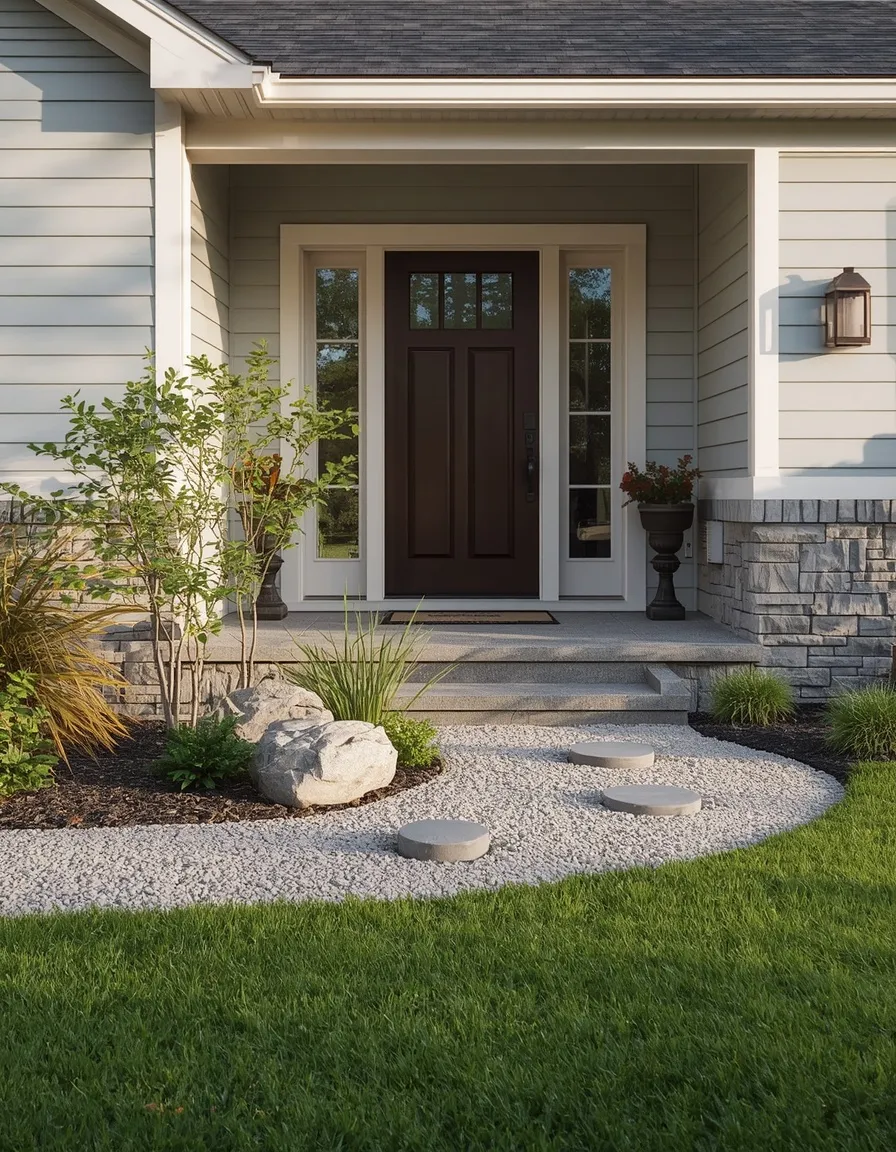
18. Front Yard Zen Garden
A restrained gravel and stone composition replacing a traditional front lawn brings genuine curb appeal along with meaningfully lower water use and maintenance than turf grass requires.
Keep the design considerably more restrained in a front yard than a private backyard installation might be, a front-facing space is viewed primarily from the street and in passing rather than lingered in, so a simpler composition, one rock grouping, a modest raked area, a single specimen tree, tends to read better than an elaborate, detailed layout. Check any homeowners association or municipal landscaping requirements before removing an existing lawn entirely, some jurisdictions and associations have specific rules about front yard groundcover and hardscape percentage that are worth confirming before starting. This approach genuinely reduces water use compared to a maintained lawn, which matters increasingly in regions facing water restrictions, while still presenting a clearly intentional, well-maintained appearance rather than reading as an untended yard. Keep sightlines to the front door and any house numbers clear when placing taller elements like stone lanterns or specimen trees, a genuine visibility and safety consideration a purely backyard installation doesn’t need to account for.
- Delivers real curb appeal with meaningfully lower water use than a maintained lawn
- Works best kept simpler and more restrained than a private backyard version
- Solves the “want to reduce lawn without the yard looking neglected” problem
19. Indoor Tabletop Zen Garden
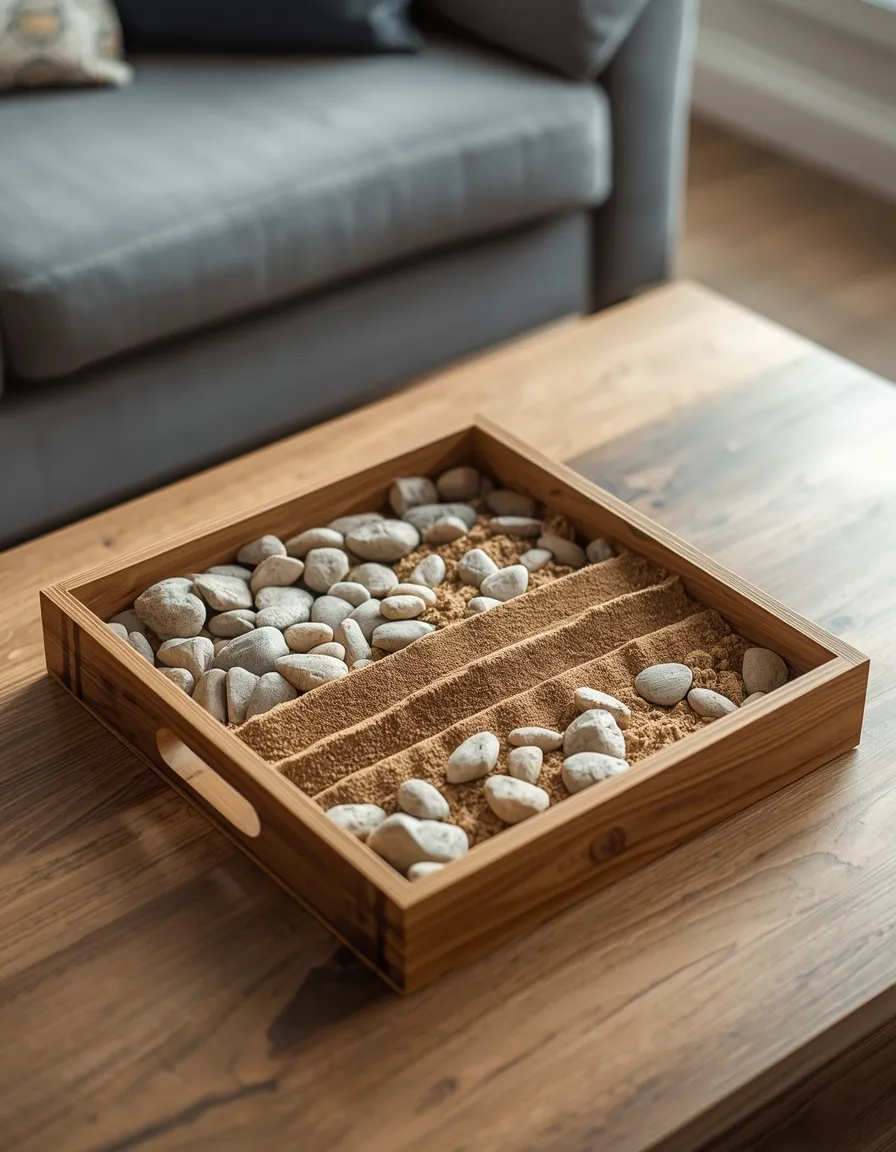
A shallow wooden or ceramic tray, roughly the size of a small coffee table or a large serving platter, filled with sand and a few small stones, brings the aesthetic indoors as a genuine piece of room decor rather than a small desk accessory.
Choose a tray with at least 3 to 4cm (1.25 to 1.5in) of depth for the sand or fine gravel layer, enough to actually hold a raked pattern without the rake scraping the tray’s bottom. Use clean, contained material specifically indoors, fine decorative sand rather than outdoor landscaping gravel, both for a finer, more refined raked line and because coarser material tracks and scatters considerably more indoors. Position it somewhere it can be viewed and occasionally reset without being in a high-traffic path, an entryway console, a living room coffee table, or a quiet reading corner all work well, a spot where it might be brushed against constantly undoes the raked pattern too quickly to be worth maintaining. This is a considerably larger, more substantial piece than a personal desk kit, positioned as genuine room decor rather than an individual fidget object, and works especially well as a deliberate calm counterpoint in an otherwise busy living space.
- Brings the aesthetic indoors as genuine room decor rather than a small personal object
- Works best in a low-traffic spot where the raked pattern can actually last
- Solves the desire for this style indoors at a scale suited to an entryway or living room
20. Mini Desktop Zen Garden Kit
A palm-sized tray with fine sand, a miniature rake, and one or two small stones, kept on an office desk, brings a brief, genuinely restorative pause within reach during a work day.
Choose a kit with genuinely fine, contained sand and a small wooden rake with closely spaced teeth, the scale here is entirely different from an outdoor or even indoor tabletop version, and a fine, dense sand holds crisp lines considerably better than a coarser material at this small size. Use it specifically as a short, deliberate break, a minute or two of slow raking between tasks, rather than leaving it as static desk decor that never actually gets touched, the entire value of this particular idea is the small physical act itself, not just the visual object sitting there. Keep it away from the edge of a desk or anywhere it could easily be knocked off, the sand inside spills readily if the tray tips. This is one of the lowest-cost, lowest-commitment ideas on this entire list and works as a genuinely approachable first introduction to the aesthetic for someone who isn’t ready for a garden-scale project.
- Brings a brief, genuinely restorative physical ritual into reach during a work day
- Works specifically when actually used, not just displayed as static desk decor
- Solves the desire for a low-cost, low-commitment first introduction to this aesthetic

21. Kids’ Sensory Zen Garden
A shallow tray of sand, smooth stones, and a small rake, sized for a child’s hands, turns the same raking and arranging ritual into a genuinely calming sensory activity rather than an adult-only garden feature.
Use larger-grain material specifically for younger children, coarse sand or small smooth pebbles rather than fine sand or tiny decorative stones, which present a genuine choking hazard for children under about three years old who still explore objects by mouth; supervise closely regardless of material choice with very young children. Choose a shallow, wide, stable tray that won’t tip easily, and keep the whole kit non-toxic, plain play sand and smooth, untreated stones rather than anything chemically treated or painted with a finish not rated safe for children’s contact. Frame this specifically as a calming, unstructured activity rather than a project with a “right” outcome, unlike the precise raking patterns covered earlier in this list, a kids’ version genuinely benefits from open-ended exploration without correction. This works well as a standalone activity tray or, for an older child, a genuinely scaled-down corner of an actual garden bed they help maintain themselves.
- Turns the same raking ritual into an age-appropriate sensory and calming activity
- Works best with larger, non-choking-hazard material and direct supervision for younger children
- Solves the desire to introduce this aesthetic and its calming quality to kids specifically
Conclusion
Zen garden ideas work at almost any scale, which is really the point of the whole tradition: restraint translates whether it’s a full backyard transformation or a palm-sized tray reset between meetings. Start with whichever element the space actually has room for, a single rock grouping, one corner of raked gravel, a shallow indoor tray, rather than trying to build everything at once. Pay attention to the practical realities covered throughout, moss needs real shade, running bamboo needs containing, water features need genuine safety consideration around children, since those details keep a zen garden functioning rather than just photographing well. For more layout inspiration, the Garden Design category has plenty more to explore.
Frequently Asked Questions
What is the difference between a zen garden and a Japanese garden?
A zen garden, more precisely called karesansui or a dry landscape garden, specifically uses raked gravel and stone to represent water and mountains without any actual planting or water feature, a tradition that developed at Japanese Zen Buddhist temples for contemplation. A broader Japanese garden typically includes live planting, ponds, and water features alongside or instead of these dry elements, so a zen garden is really one specific, more minimal style within that larger tradition.
What material should I use for raking a zen garden?
Crushed decomposed granite or a coarser landscaping gravel, roughly 3 to 6mm grain size, holds a raked line considerably better than fine sand, which shifts and loses its pattern quickly in wind or rain. A weed barrier fabric underneath the full bed also matters more than the raking material itself for keeping the space looking maintained over time.
Can I have a zen garden indoors?
Yes, both a larger tabletop tray positioned as genuine room decor and a much smaller personal desk kit deliver the same raked sand and stone aesthetic without any outdoor space at all. The main differences are scale and purpose, a tabletop version works as a deliberate living room or entryway feature, while a desktop kit is meant to actually be used and reset during short breaks.
How do I make a small zen garden if I don’t have much space?
A single defined corner, roughly 1.5 to 2.5m across, with one modest rock grouping and a small raked area delivers the full aesthetic without needing a full yard, and a balcony version using a shallow container tray works with zero permanent installation for renters. Scaling every element down proportionally, rather than cramming a full-sized rock grouping into a tiny space, is what keeps a small version from feeling awkward.
Is bamboo a good choice for a zen garden, and is it safe to plant?
Bamboo suits the aesthetic well for screening, fencing, and water features, but it’s worth choosing a clumping variety specifically rather than a running one, since running bamboo spreads aggressively through underground rhizomes and can invade neighboring yards within a couple of seasons. If a running variety is preferred, a rigid root barrier installed at least 60cm deep around the planting area contains the spread.
Are water features in a zen garden safe if I have young children?
They need real supervision and some adjustment rather than being avoided entirely, keep any basin’s water level shallow or fence off a deeper reflecting pool or koi pond, since even a small amount of standing water represents a genuine drowning risk for a very young child. Moving water features like a bamboo fountain also help by discouraging mosquito breeding, which becomes a real issue in any completely still standing water within about a week during warm weather.
What plants work best in a zen garden?
A deliberately limited palette works best, generally three to five species maximum, repeated rather than varied, with a Japanese maple or clipped pine as a specimen focal point and moss or a fine groundcover for texture where the climate genuinely supports it. Foliage form and texture matter more than flower color in this style, which is part of what keeps the overall look calm and restrained rather than busy.