
Introduction
Every home has a corner that is begging for a little green life, whether it is a bare wall, a shadowy hallway, or the awkward triangle of space under a staircase. These indoor garden ideas are built for exactly those spots, turning overlooked square footage into something worth walking past twice. This is not a single formula stretched thin; it is a working collection of layouts, plant choices, and small builds suited to apartments, family houses, and everything in betw17 Unique Indoor Garden Ideas for Every Home and Spaceeen. Some ideas need nothing but a shelf and an hour on a Saturday. Others call for a drill and a free weekend. What connects all seventeen is the same idea behind every room at Sunday Abode: a home should feel considered, not decorated for show. Pick the one that fits your space and your patience level, and start there.
Whether you gravitate toward bold, statement-making greenery or something quieter, there is a version of these ideas that will work in your space, no matter the climate, budget, or skill level you are starting from.
17 Unique Indoor Garden Ideas for Every Home
1. Under-the-Stairs Garden Nook
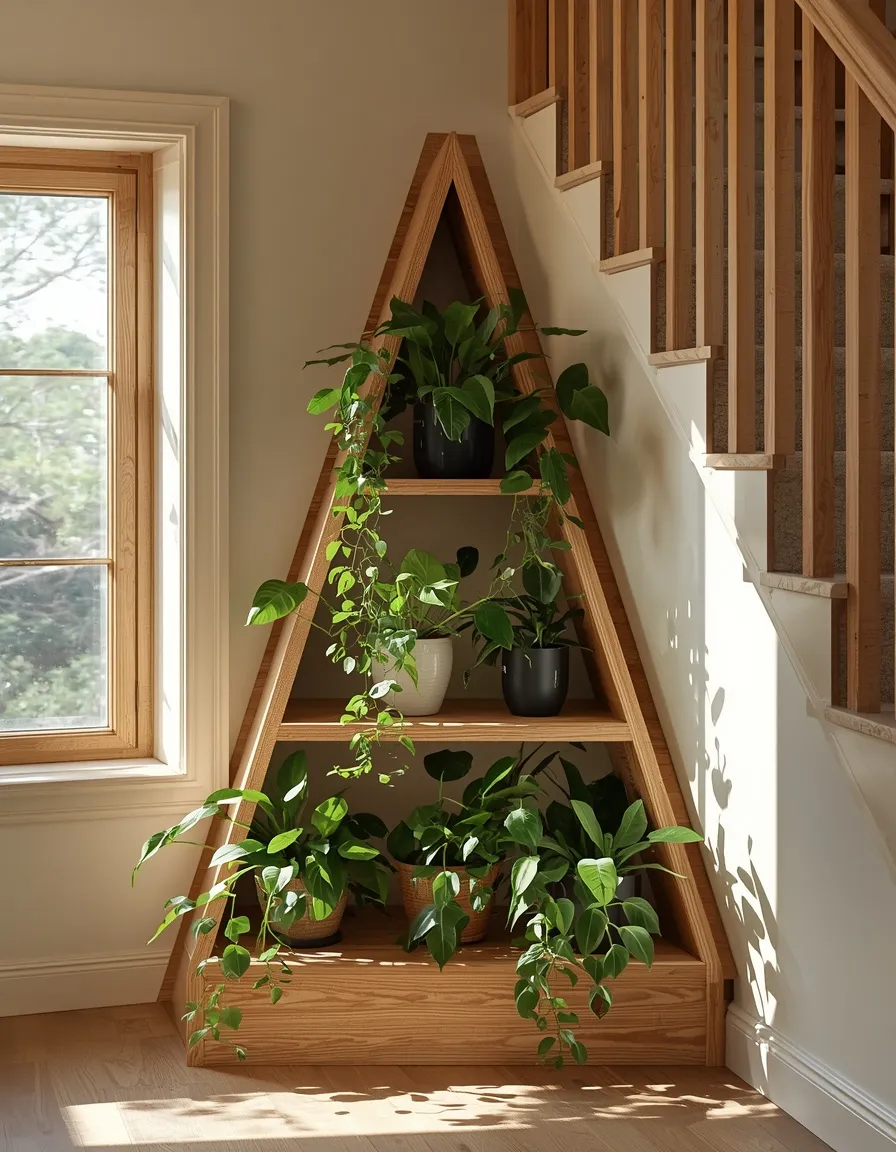
The triangular void beneath a staircase is one of the most wasted footprints in any house, yet it is deep enough, tall enough, and often shaded enough to become a genuinely lush planting nook. Line the slanted wall with tiered shelving and let trailing pothos or philodendron spill down the steps like a green waterfall frozen mid motion.
This works best in houses with a closed or half open staircase where the space gets indirect light from a nearby window or hallway. Build shelves at varying depths so taller plants sit toward the back and low, spreading varieties fill the front edge. A common mistake is choosing sun loving plants for what is usually a low light pocket; stick to shade tolerant species like pothos, ZZ plant, or cast iron plant instead. Keep the base of the nook clear of stored boxes or paper, since dense foliage near flammable clutter under a stairwell is a fire safety concern worth taking seriously in enclosed stair spaces.
- Turns unused square footage into a design feature instead of storage overflow
- Works in almost any home with a closed staircase, from studio flats to multi story houses
- Solves the empty corner problem without needing extra floor space elsewhere
2. Vertical Green Wall for Small Apartments
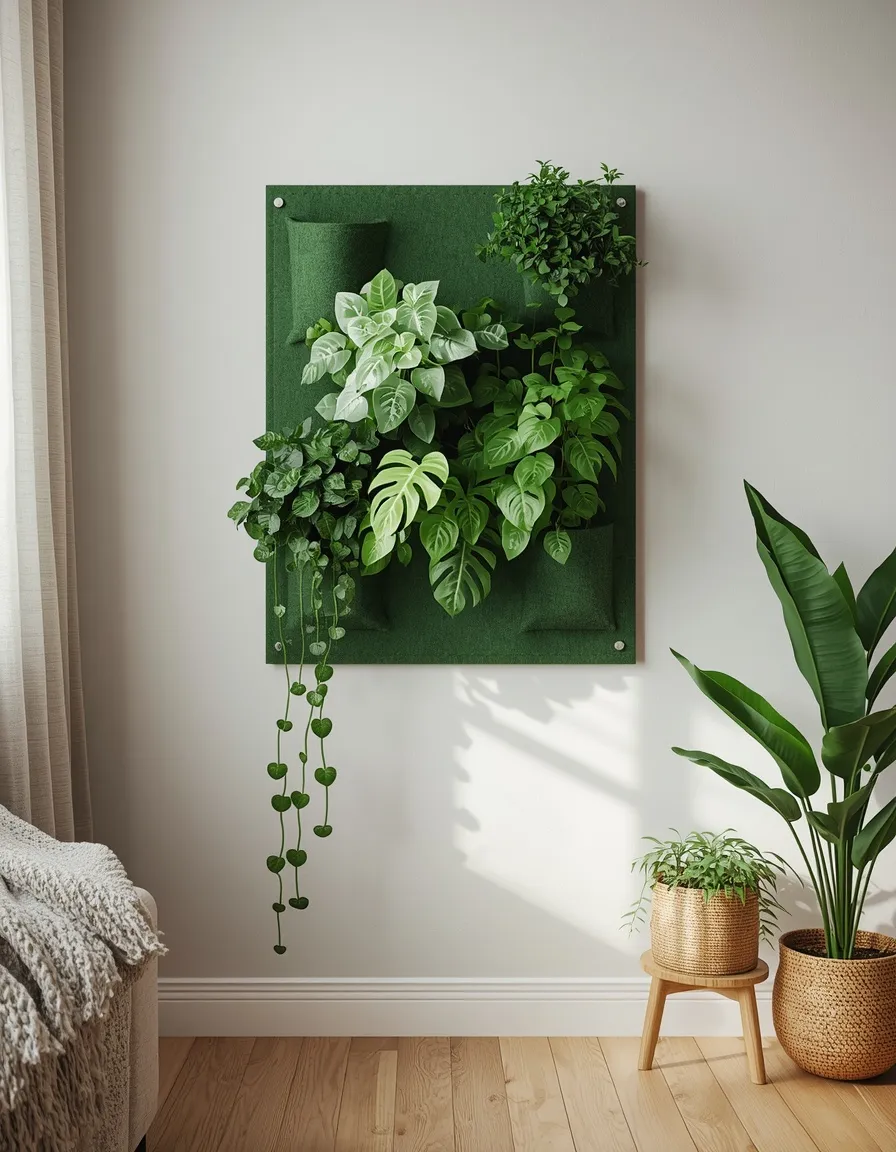
When floor space is the one thing an apartment does not have, the solution is to garden upward instead of outward. A felt pocket or modular panel system mounted to a single wall can hold a dozen plants in the footprint of a bookshelf, turning a blank rental wall into a living tapestry.
This idea is built for renters and small space dwellers who want serious greenery without sacrificing a single square foot of floor. Choose a lightweight modular system with a built in drip tray so water does not run down the wall, and group drought tolerant plants like pothos, philodendron, and succulents together so watering needs stay consistent across the panel. A frequent mistake is overplanting a small wall system, which crowds roots and makes individual plants harder to check for pests. Leave breathing room between pockets and rotate plants every few months so each one gets even light exposure.
- Maximizes greenery in apartments where floor space is limited
- Doubles as a statement wall, replacing the need for framed art
- Solves poor air circulation in small rooms by adding living, oxygenating surface area
3. Grow-Light Plant Shelving Station
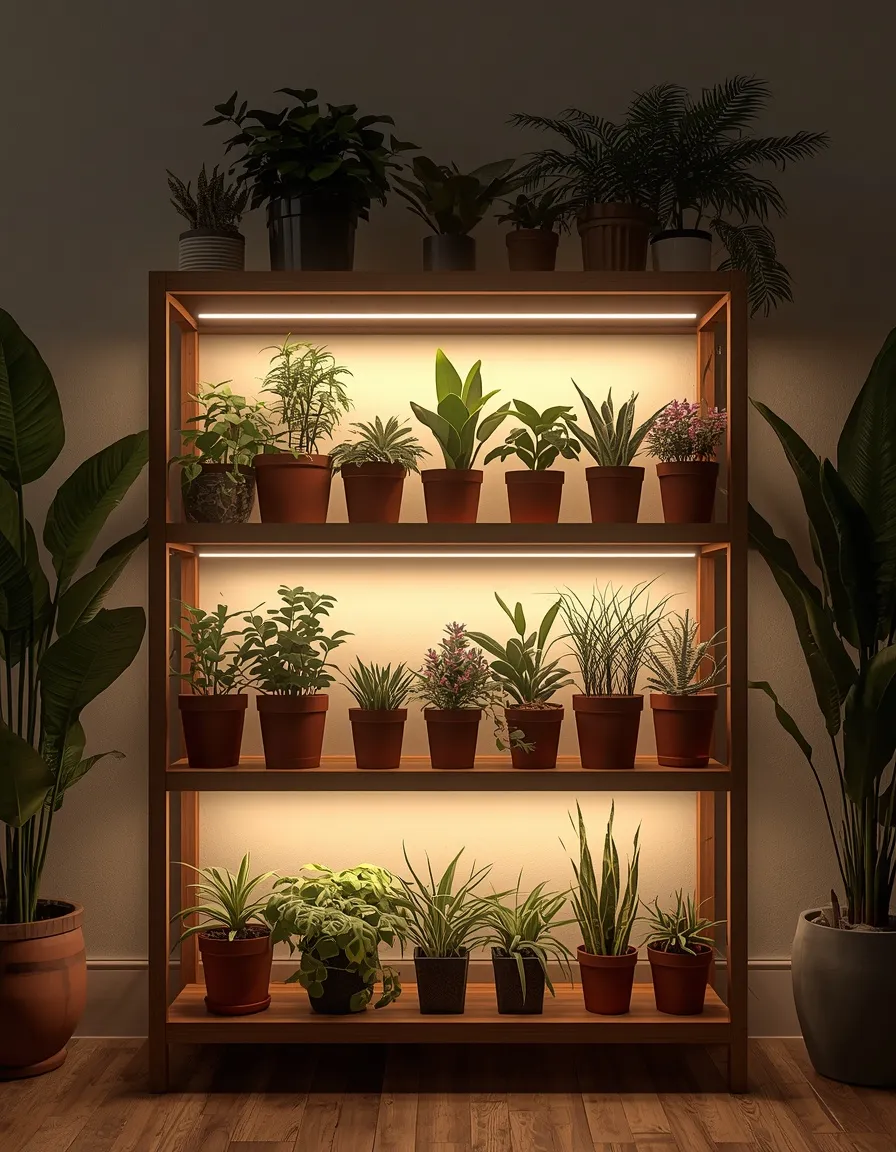
A north facing apartment or a windowless home office does not have to be a plant graveyard. A tiered wire or wood shelving unit fitted with slim LED grow light strips under each shelf turns even the darkest corner into a fully lit growing station, glowing softly enough to double as ambient lighting after dark.
This setup works anywhere natural light is the limiting factor, not the room itself. Choose full spectrum LED strips with a Color Rendering Index above 85 and a color temperature near 6500K, which mimics natural daylight more closely than warm toned bulbs; University of Minnesota Extension has detailed guidance on matching light type to plant needs. Run the lights on an outlet timer for twelve to sixteen hours a day rather than leaving them on constantly. Keep any cords and power strips away from watering cans and drip trays, and use a grounded, GFCI protected outlet if the shelf sits anywhere near a sink or window ledge.
- Makes indoor garden ideas with grow lights realistic for low-light apartments and basements
- Solves leggy, stretched growth caused by insufficient natural sunlight
- Doubles as functional storage and soft nighttime lighting in a home office or hallway
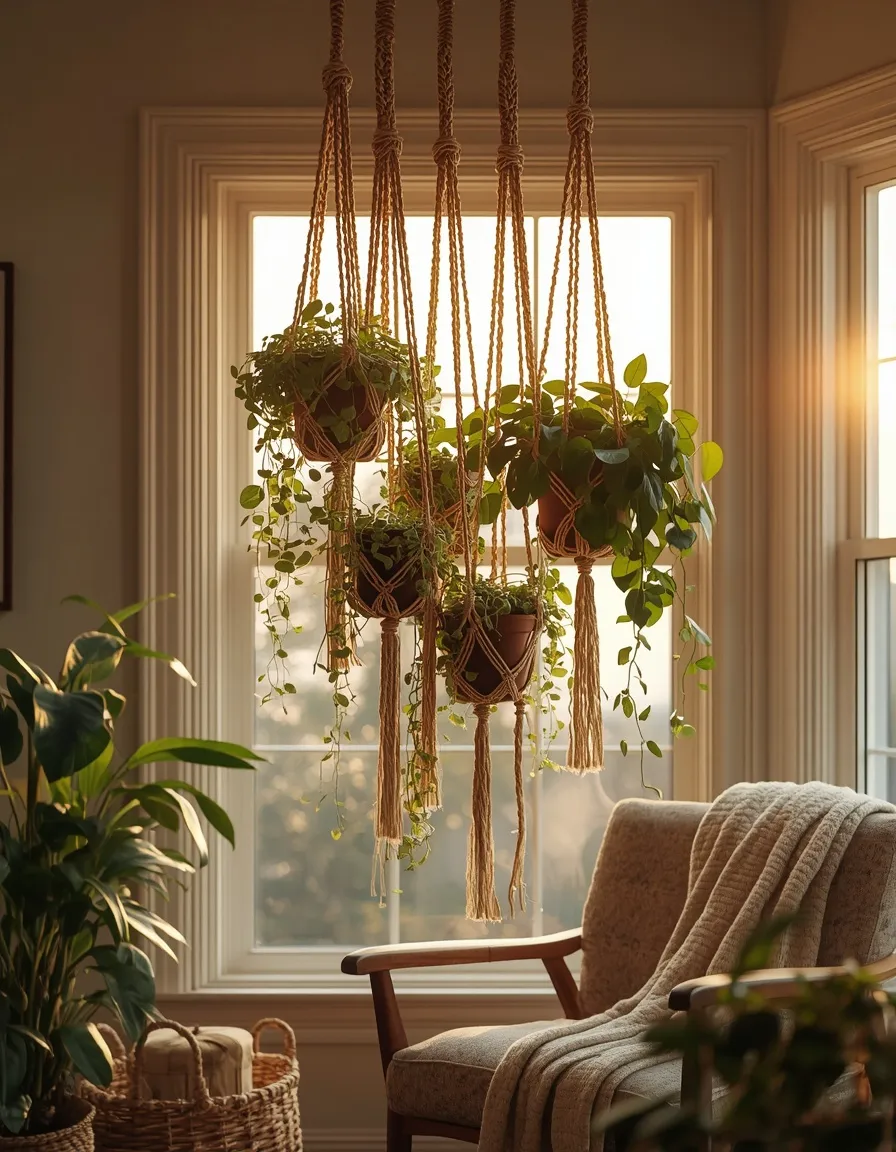
4. DIY Macrame Hanging Garden
Suspended plants change the way a room feels almost instantly, pulling the eye upward and softening hard ceiling lines. A cluster of macrame hung planters at staggered heights above a reading chair or in a bay window creates the kind of layered, textural look that a row of shelf plants cannot match.
This is a genuinely beginner friendly DIY project; a basic square knot and spiral knot pattern is all that is needed to hang a standard 15 to 20 centimeter (6 to 8 inch) pot. Use lightweight plants like pothos, string of pearls, or spider plant so the hanger is not bearing excessive weight, and always anchor into a ceiling joist or use a rated drywall toggle bolt rather than a standard hook, since a fully watered hanging planter can weigh several kilograms. Stagger three or four planters at different heights rather than lining them up evenly, which reads as far more intentional and less like a display shelf.
- Adds vertical interest without using any floor or shelf space
- Ideal for renters wanting a DIY indoor garden project with minimal tools
- Solves flat, one level plant displays by introducing genuine height variation
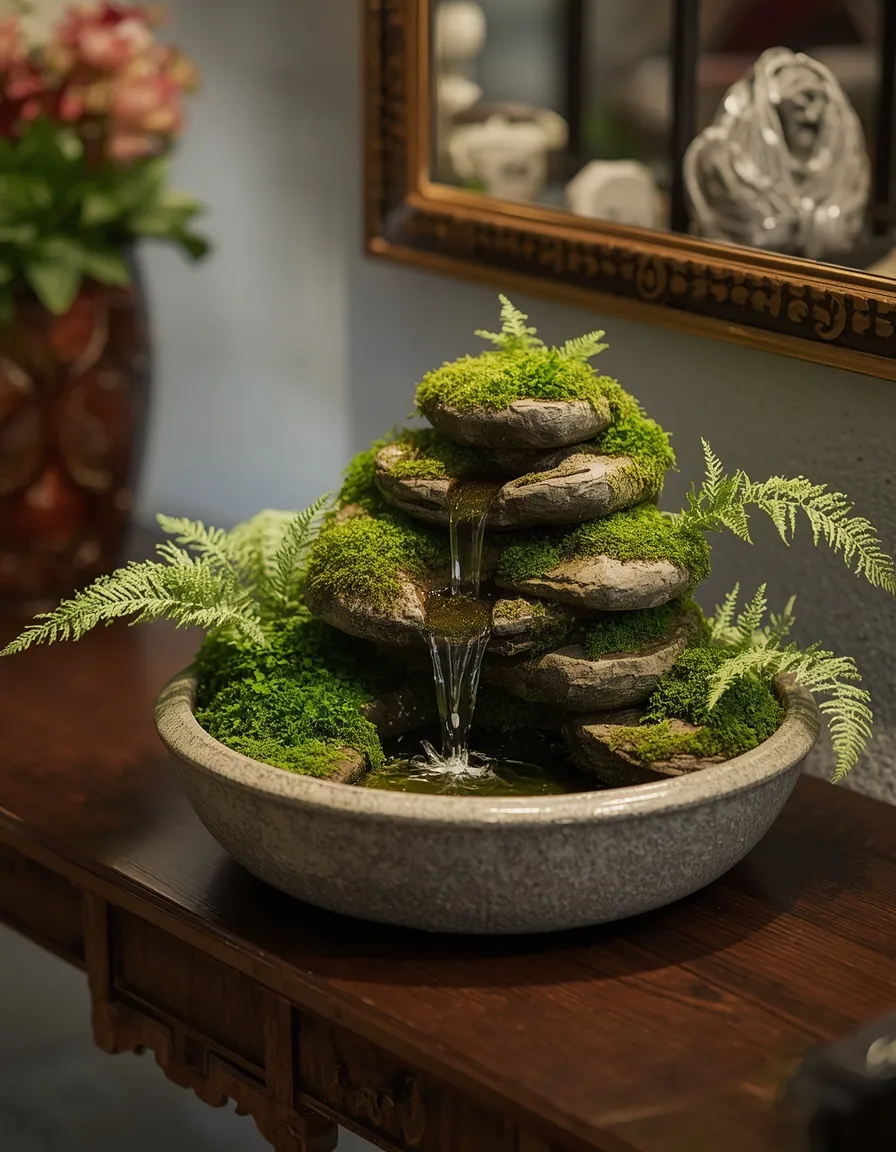
5. Indoor Tabletop Waterfall Garden
A small recirculating water feature tucked among ferns and moss brings a sound and stillness that plants alone cannot offer. Picture a tiered stone or ceramic waterfall on a console table, water trickling quietly over rock into a shallow basin ringed with maidenhair fern and creeping fig.
This indoor garden design with a waterfall works especially well in a living room, entryway, or reading nook where the trickling sound can actually be heard over daily noise. The moving water raises local humidity, which is exactly what humidity loving plants like ferns, moss, and orchids need to thrive indoors. Choose a self contained kit with a low voltage submersible pump, and always plug it into a GFCI protected outlet since electricity and standing water are being combined in one feature. Top off the water level weekly to prevent the pump from running dry, which is the most common cause of early pump failure.
- Introduces ambient sound and humidity that plant-only displays do not provide
- Works well as a focal point in an entryway or living room
- Solves dry indoor air that stresses humidity-loving ferns and orchids
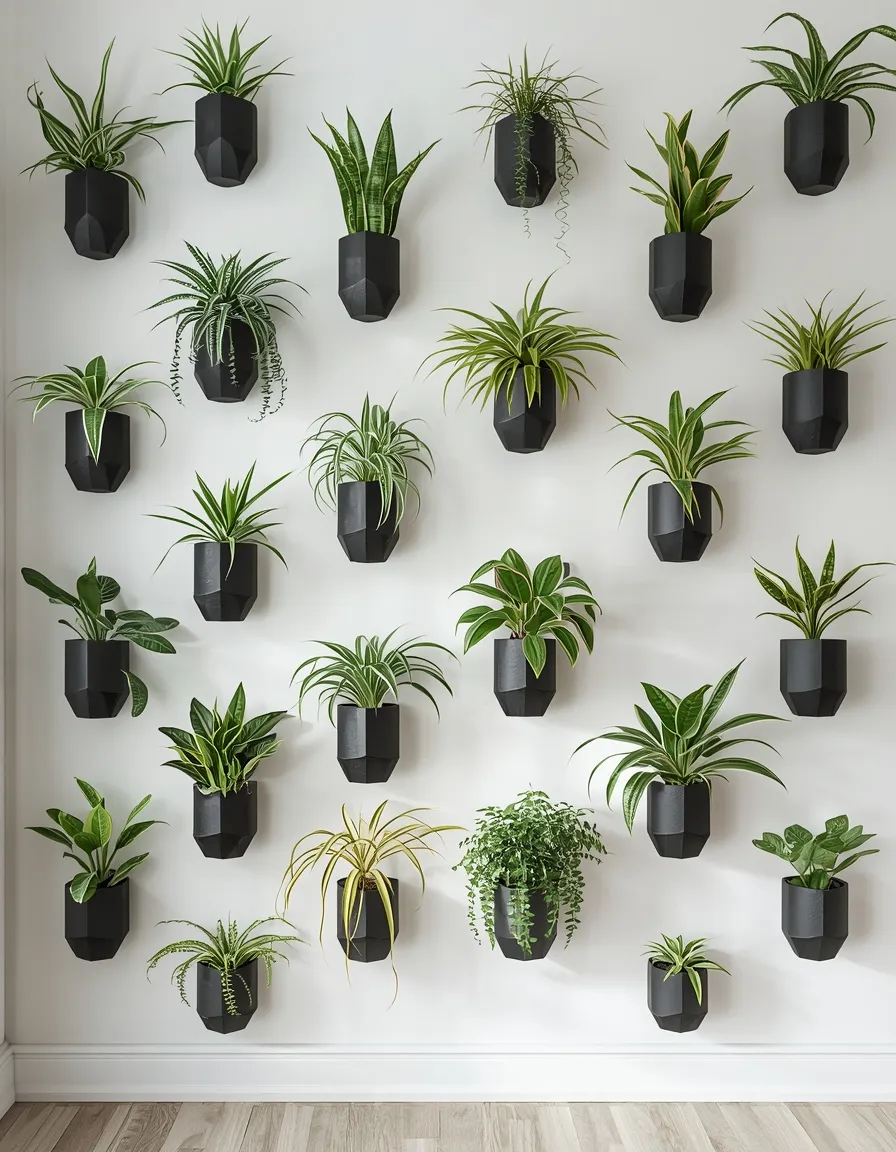
6. Modern Minimalist Planter Wall
For a home that leans toward clean lines and restraint, a grid of matte black or concrete toned geometric planters mounted in a single tight arrangement reads as architecture rather than decoration. Fill each one with a single sculptural plant, a snake plant, ZZ plant, or upright dracaena, rather than a mixed arrangement.
This modern indoor garden design idea depends on discipline: pick one planter material, one plant silhouette family, and stick to it across the whole wall rather than mixing textures. A tight, even grid on a plain wall, with equal spacing between each planter, creates the architectural effect; uneven spacing or mismatched pot sizes undoes the whole look. It works best in a living room, entryway, or home office with a plain wall and strong natural or LED accent light nearby. Choose plants with a naturally upright or architectural form so the arrangement stays graphic rather than blowsy over time.
- Suits a modern, minimalist, or Scandinavian-leaning interior style
- Uses single sculptural plants instead of dense arrangements for a graphic look
- Solves a bare feature wall without resorting to framed art or shelving
7. Kid-Friendly Sensory Garden Corner
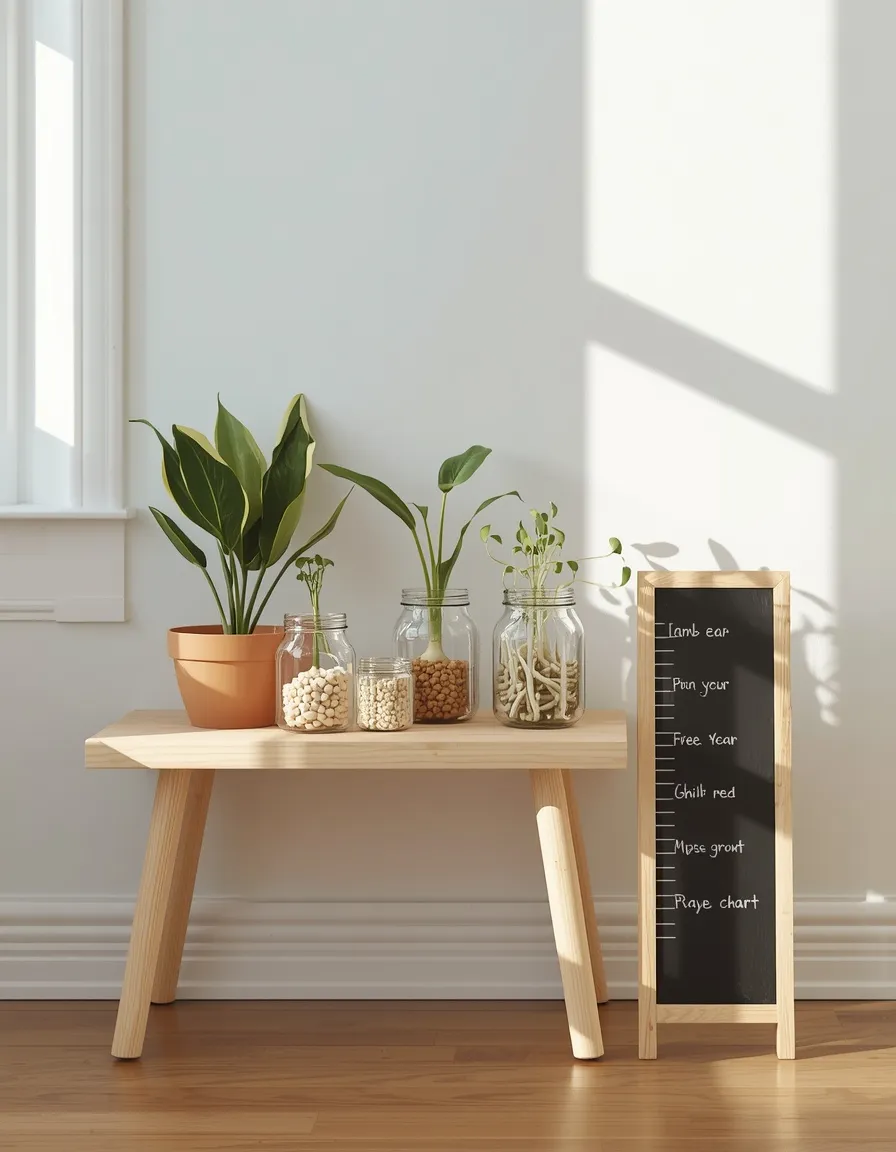
A low shelf or child height table planted with textured, safe to touch plants gives kids a hands on connection to growing things, something to water, check, and watch change week to week. Think velvety lamb’s ear, ruffled prayer plant, and a small pot of quick sprouting bean seeds in clear jars kids can watch root.
Keep this corner within a child’s easy reach, low enough that watering and checking leaves does not require adult help every time. Choose only non-toxic species for this setup, since young children and pets often explore with their hands and mouths; the ASPCA maintains a searchable database of toxic and non-toxic plants that is worth checking before adding anything new to a kid-accessible shelf. A useful variation is a small chalkboard growth chart beside the shelf where kids log how tall a bean sprout gets each week, turning the corner into a light science lesson rather than just decor.
- Gives kids ownership over a simple, low-stakes daily task
- Uses only non-toxic, touch-safe plants for genuine child safety
- Solves the challenge of introducing young kids to plant care without constant adult supervision
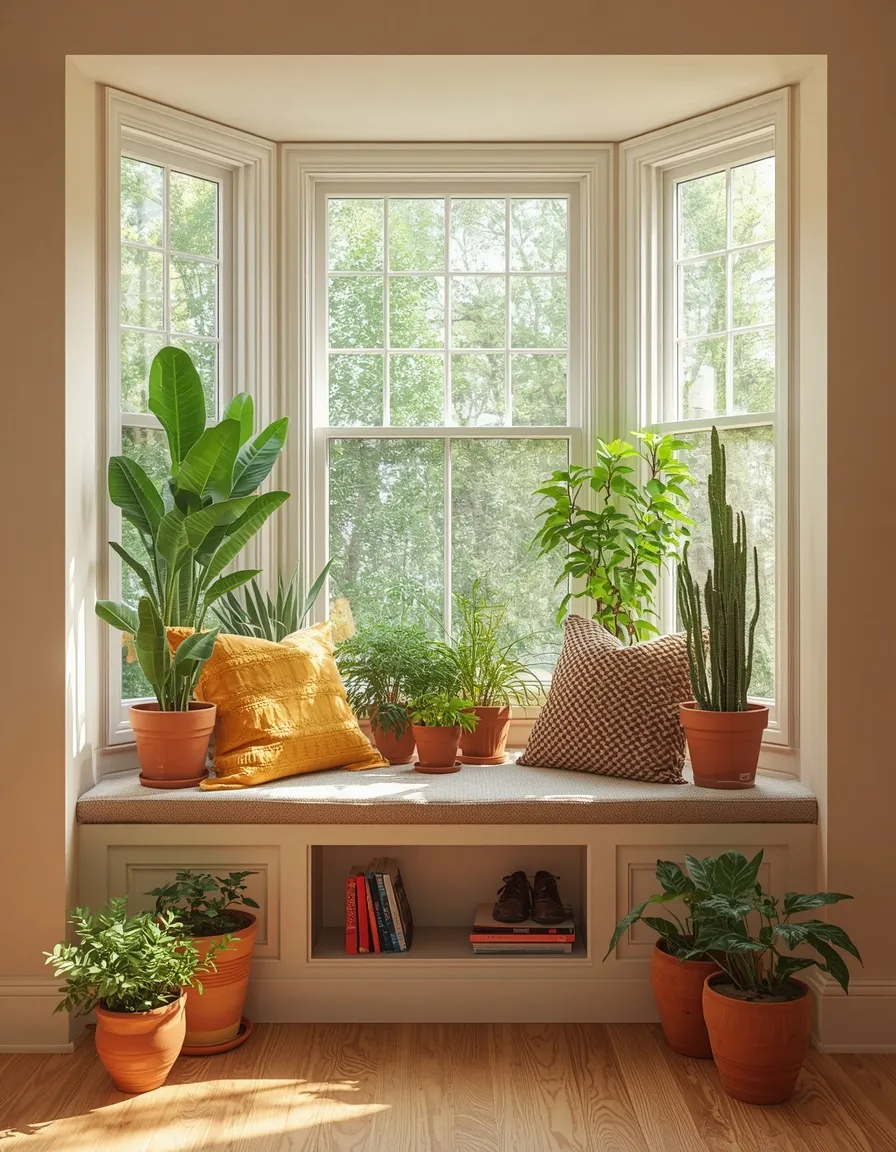
8. Bay Window Reading Nook Garden
A bay or bow window is already the brightest spot in most houses, and building a low garden bench into it turns wasted light into a genuine destination. Layer a built in or freestanding bench with a run of terracotta and ceramic pots along the sill and floor, framing a reading chair in greenery on three sides.
This works best in living rooms or bedrooms with a window that gets at least a few hours of direct or bright indirect light daily. Use a mix of trailing plants along the upper sill and taller upright plants on the floor to fill the vertical space without blocking the view outward. Rotate pots a quarter turn every week or two so growth stays even instead of leaning hard toward the glass. A good seasonal variation is swapping in flowering bulbs like paperwhites or amaryllis through the darker months for color when most foliage plants are resting.
- Turns the brightest spot in a room into usable, plant-filled seating
- Works especially well in living rooms with south or west-facing windows
- Solves uneven plant growth by making a natural rotation spot part of the design
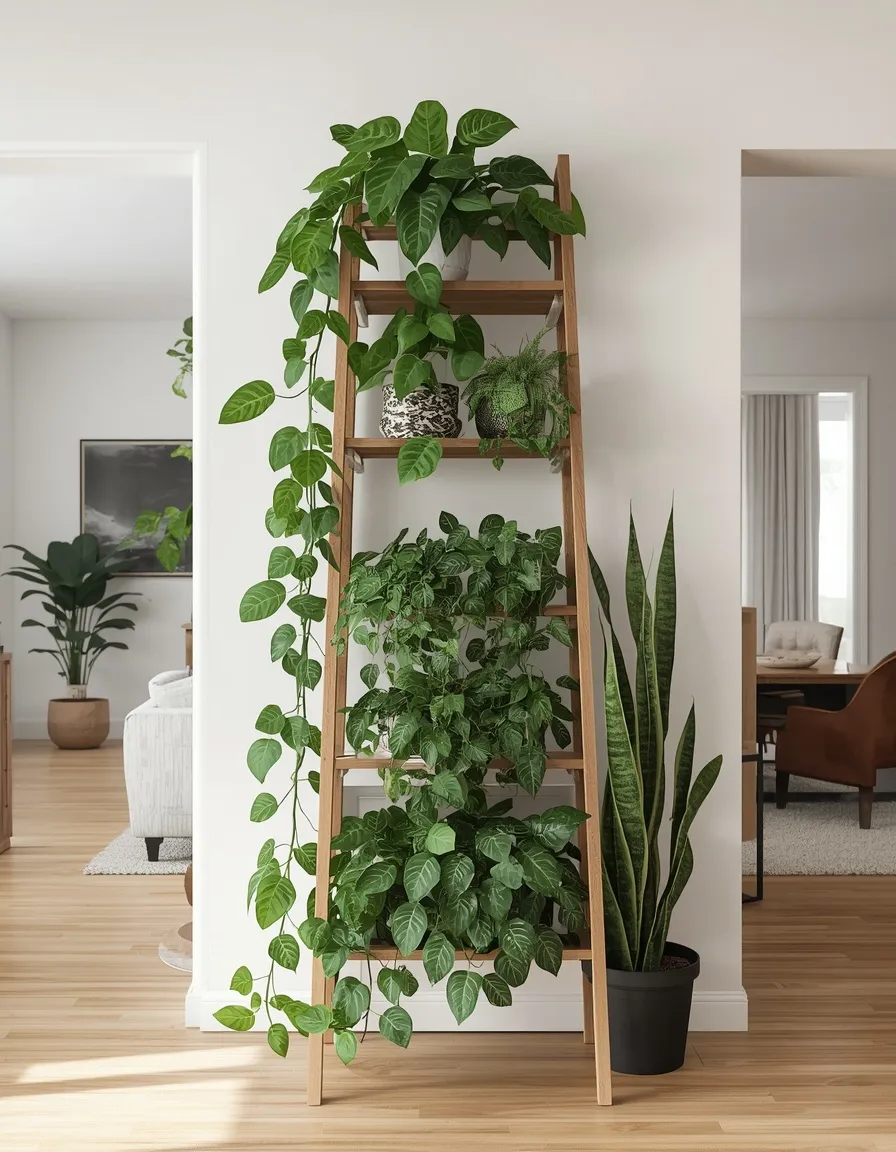
9. Botanical Room Divider Screen
In an open floor plan, a tall, narrow shelving unit dense with trailing plants can separate a living area from a dining space or home office without a single wall going up. Picture a slim ladder shelf packed with pothos, philodendron, and a tall snake plant, foliage spilling through the gaps to soften the line between zones.
This indoor garden layout idea works particularly well in studio apartments and open concept houses where a hard wall is not possible or desirable. Choose a narrow footprint shelving unit so it reads as furniture rather than a barrier, and lean toward plants with visual weight at eye level and trailing growth near the top and bottom. A common mistake is using a divider that is too solid or opaque, which can make a small open space feel more cramped rather than zoned; leave visible gaps between shelves so light and sightlines still pass through.
- Creates functional zoning in an open floor plan without permanent construction
- Suits renters who cannot add walls but want defined living and work areas
- Solves the one-big-room problem common in studios and open-concept layouts
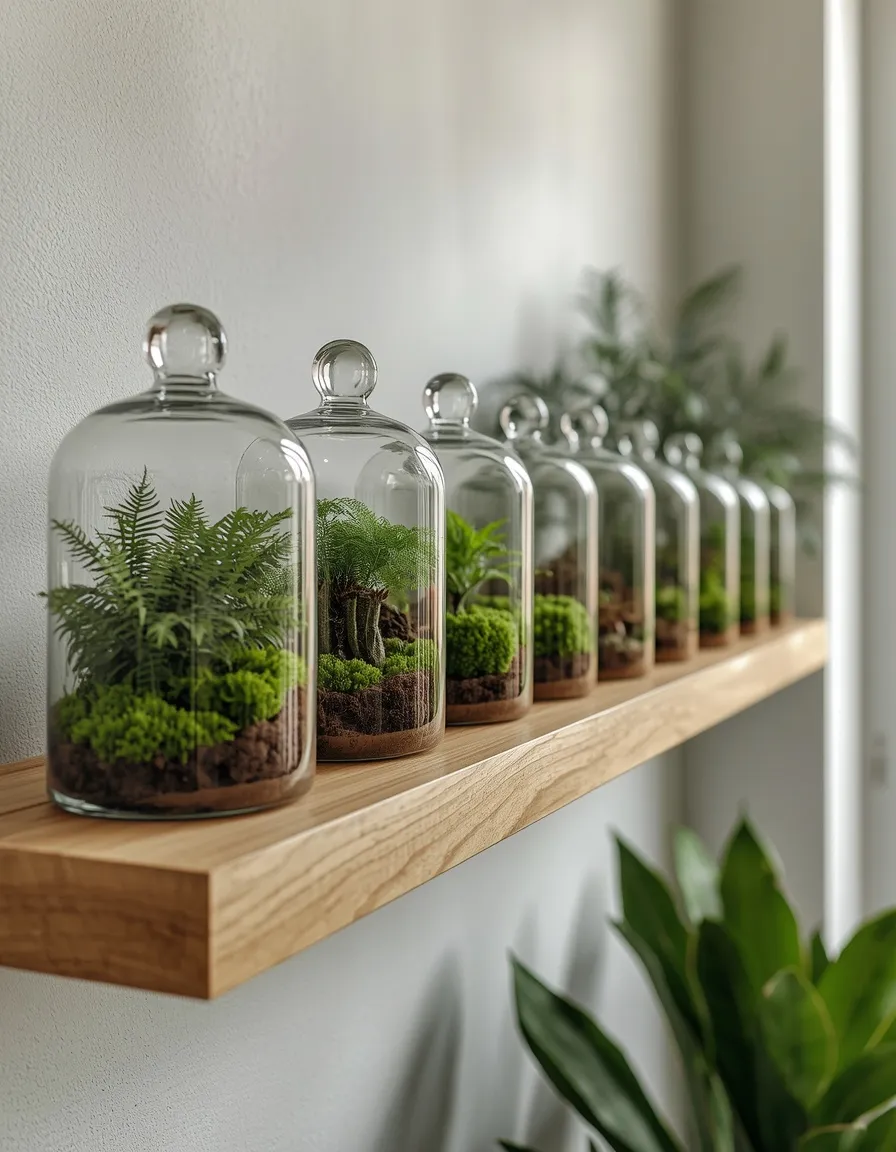
10. Curated Terrarium Display Shelf
A row of closed glass terrariums along a floating shelf or windowsill creates tiny, self contained worlds, moss, ferns, and small tropical plants sealed inside their own miniature humid climate. It is one of the most genuinely low maintenance indoor garden ideas on this list, since a well built closed terrarium can go weeks between watering.
Layer gravel, activated charcoal, and potting soil at the base before planting to prevent standing water and root rot inside the sealed container. Place terrariums in bright, indirect light rather than direct sun, which can quickly overheat a closed glass vessel and cook the plants inside. This idea suits apartment dwellers, desk setups, and anyone who travels often, since the enclosed ecosystem largely waters and humidifies itself once established. Vary jar shapes and heights along the shelf rather than lining up identical containers, which keeps the display visually interesting rather than uniform.
- Needs minimal watering once established, ideal for frequent travelers
- Works on a desk, shelf, or windowsill regardless of available floor space
- Solves the challenge of keeping humidity-loving plants alive in dry, heated rooms
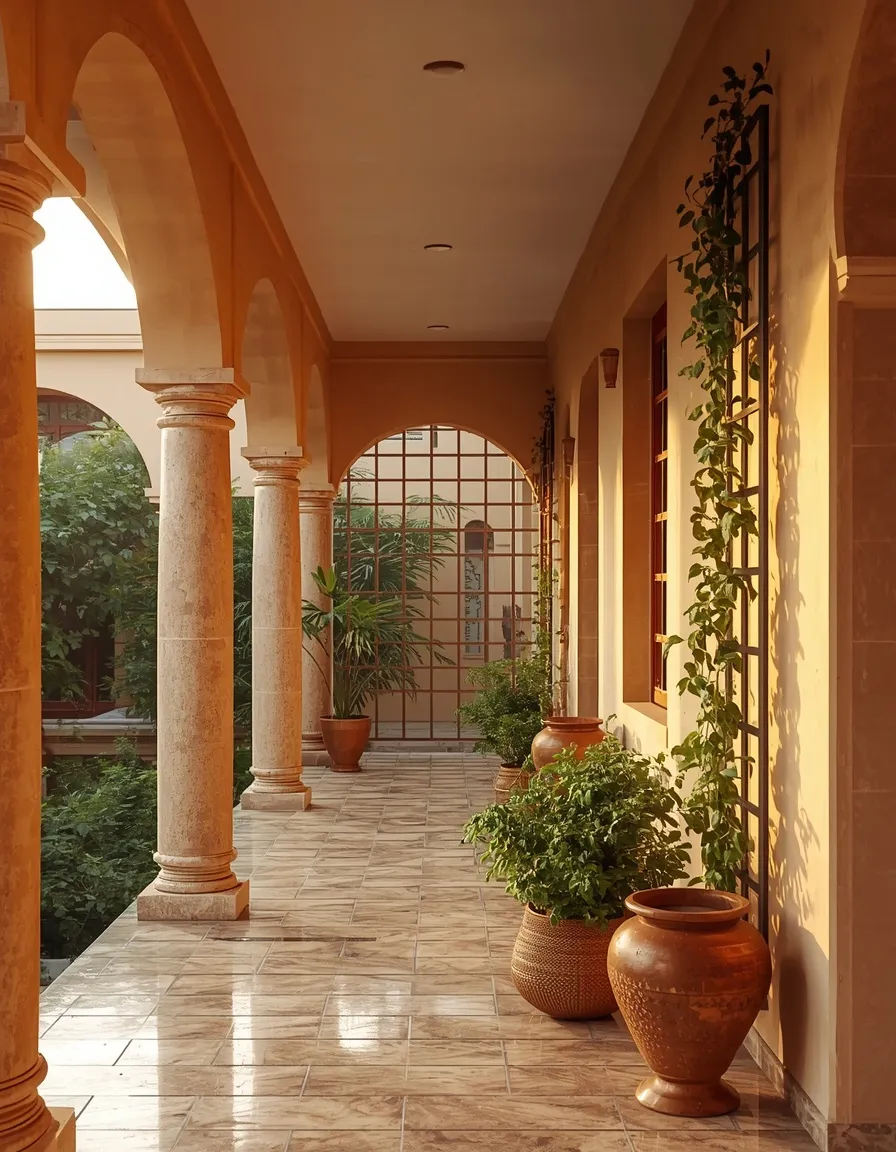
11. Courtyard-Inspired Indian Verandah Garden
Many Indian homes already have a natural anchor for an indoor garden in the verandah or entryway courtyard, a transitional space that is technically indoors but open to light and air. Group brass and terracotta planters at varying heights, anchor the arrangement with a tulsi (holy basil) plant in a raised pot, and let money plant trail along a nearby trellis or wall.
This layout draws on a long standing tradition of verandah gardens found across Indian homes, where the space bridges indoor and outdoor living rather than separating them sharply. During monsoon months, keep planters slightly raised off the floor on stands or bricks to protect roots from pooling water, and choose humidity tolerant plants like money plant, peace lily, and areca palm that handle the seasonal shift well. If this indoor courtyard opens onto an outdoor bed or boundary wall, pairing the planting with well chosen garden fence ideas helps frame the transition between the sheltered verandah and the garden beyond.
- Reflects a genuine regional design tradition rather than a generic global look
- Suits homes with a verandah, courtyard, or covered entryway space
- Solves monsoon-season plant stress with raised planters and humidity-tolerant species
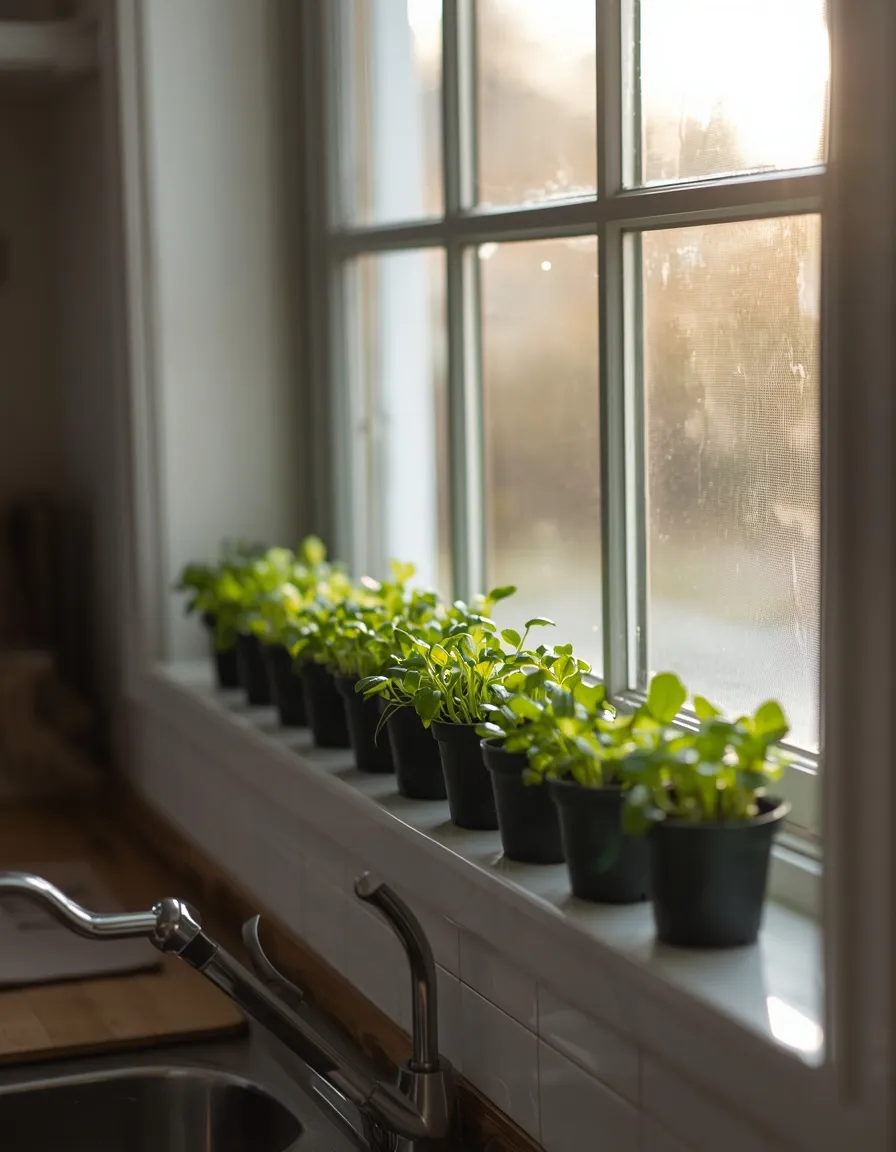
12. Kitchen Windowsill Micro-Garden
The strip of counter beneath a kitchen window is often left bare or cluttered with dish soap, when it could hold a tidy row of small pots growing microgreens, lettuce starts, or a few compact flowering plants for color. It is a small commitment that pays off daily, right at eye level while doing dishes.
Use shallow, well draining containers since windowsill space is usually limited in depth, and choose plants that tolerate the temperature swings common near kitchen windows, especially in winter. Microgreens are one of the fastest payoffs here, often ready to harvest within one to two weeks of sowing, which makes this idea especially satisfying for beginners who want quick results. Keep pots a few centimeters back from the glass in cold climates so leaves do not touch condensation or frost on the pane overnight.
- Delivers fast, visible results, ideal for first-time indoor gardeners
- Puts greenery somewhere it is seen and used daily, not just decorative
- Solves the empty windowsill problem common in rental kitchens
13. Steamy Bathroom Jungle Corner
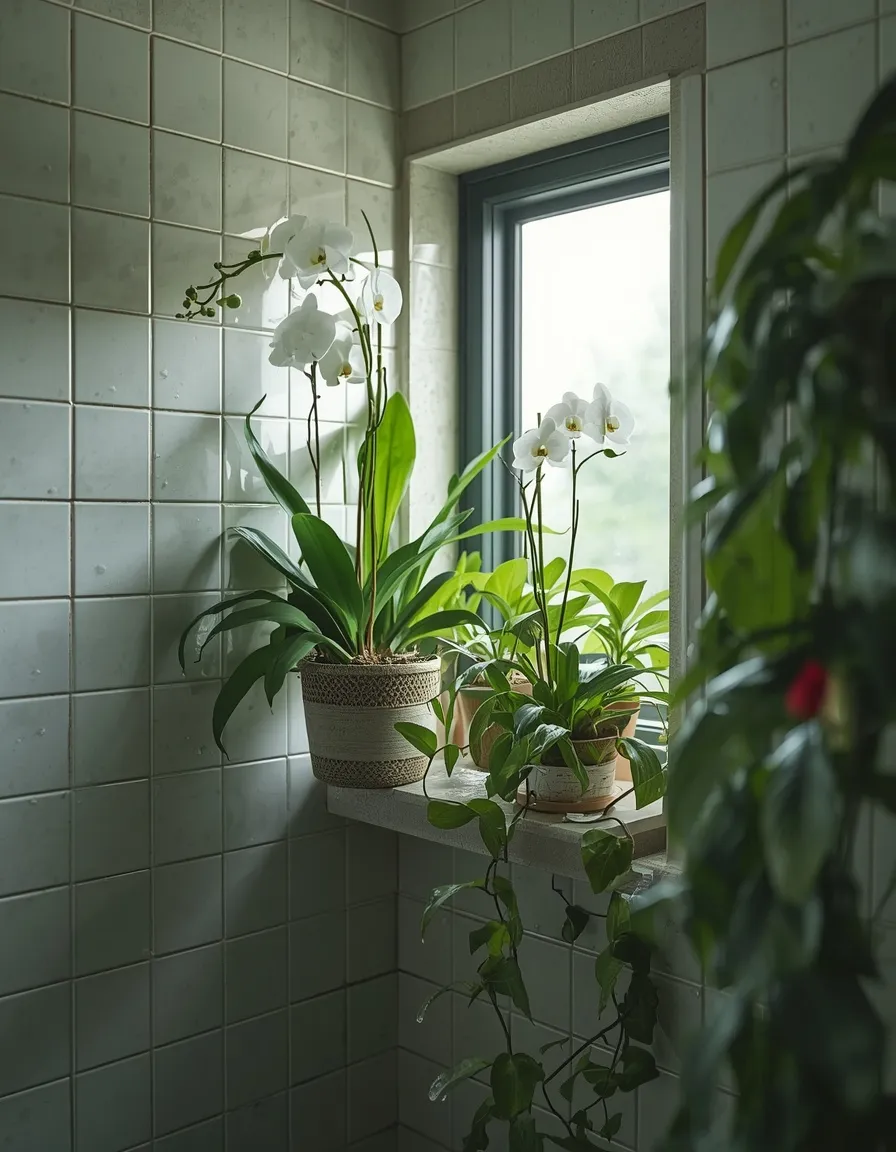
Bathrooms are usually the most overlooked room for plants, yet the natural humidity from daily showers is exactly what many tropical species crave. A cluster of Boston fern, orchids, and pothos on a shelf near, but not directly under, the shower spray can turn a plain bathroom corner into a genuine jungle nook.
This idea works best in bathrooms with at least a small window or a skylight, since even humidity loving plants still need some indirect light to photosynthesize. Windowless bathrooms can still support a rotation system, moving plants in for a week of humidity benefit and back out to a brighter room afterward. Keep plants clear of direct water spray and standing puddles on tile, which encourages root rot and mold at the base of the pot rather than healthy growth.
- Uses naturally occurring humidity instead of manual misting
- Suits Boston fern, orchids, and other humidity-loving species specifically
- Solves the common problem of ferns drying out in centrally heated homes
14. Modular Floor-to-Ceiling Garden System
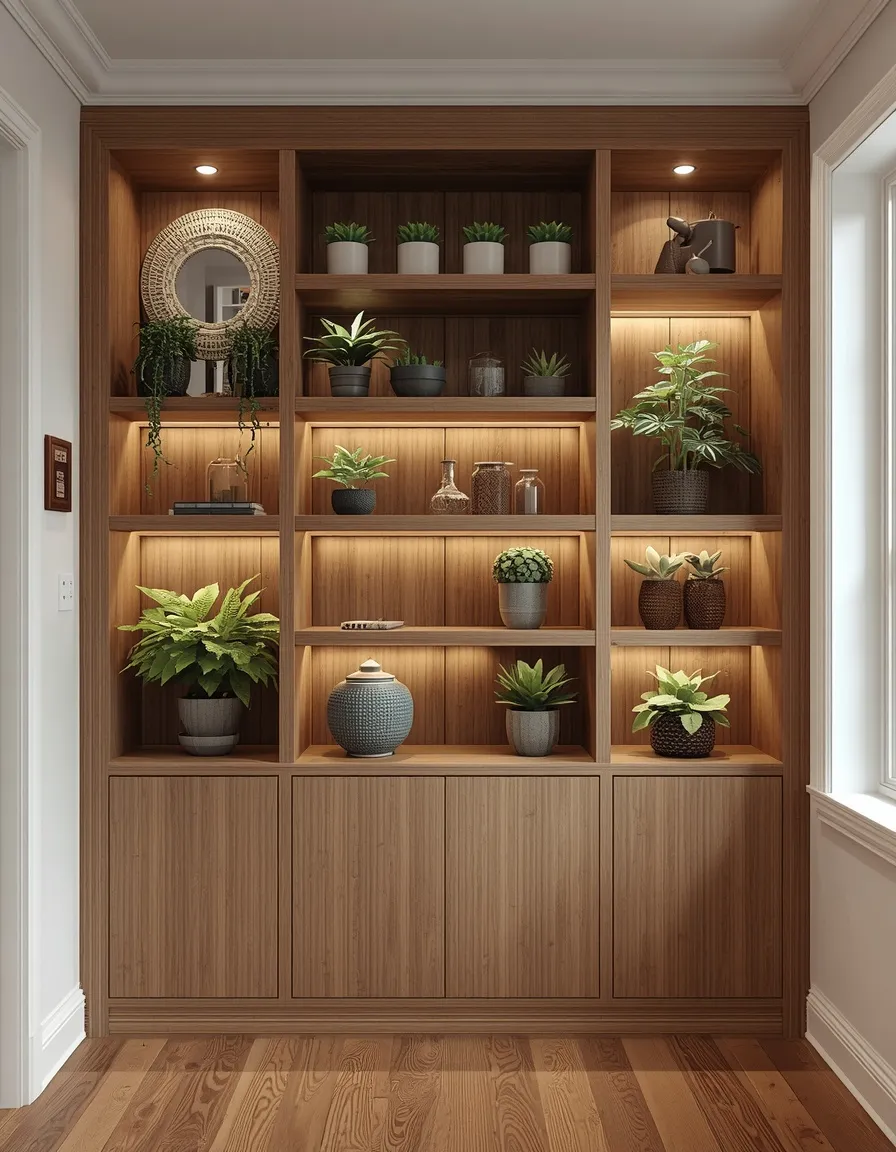
For a genuinely architectural approach, a built in shelving system that runs floor to ceiling along one wall, complete with integrated drip trays, hidden wiring for grow lights, and adjustable shelf heights, turns an entire wall into a dedicated garden zone rather than a scattered collection of pots.
This works as a planned feature during a renovation or built-in furniture project, ideally sketched into the floor plan early so plumbing for drainage and electrical for lighting can be routed before walls close up. Zone the shelving by light and water needs, low shelves for moisture loving ferns near floor level humidity, upper shelves for drought tolerant succulents closer to any overhead light source. This is a bigger investment than most ideas on this list, but it solves plant clutter permanently by giving every plant a designed, purpose built place rather than an improvised one.
- Best suited to a renovation or custom built-in furniture project
- Solves ongoing plant clutter with a permanent, zoned storage design
- Works as the architectural centerpiece of a dedicated garden room or hallway
15. Living Moss Wall Art
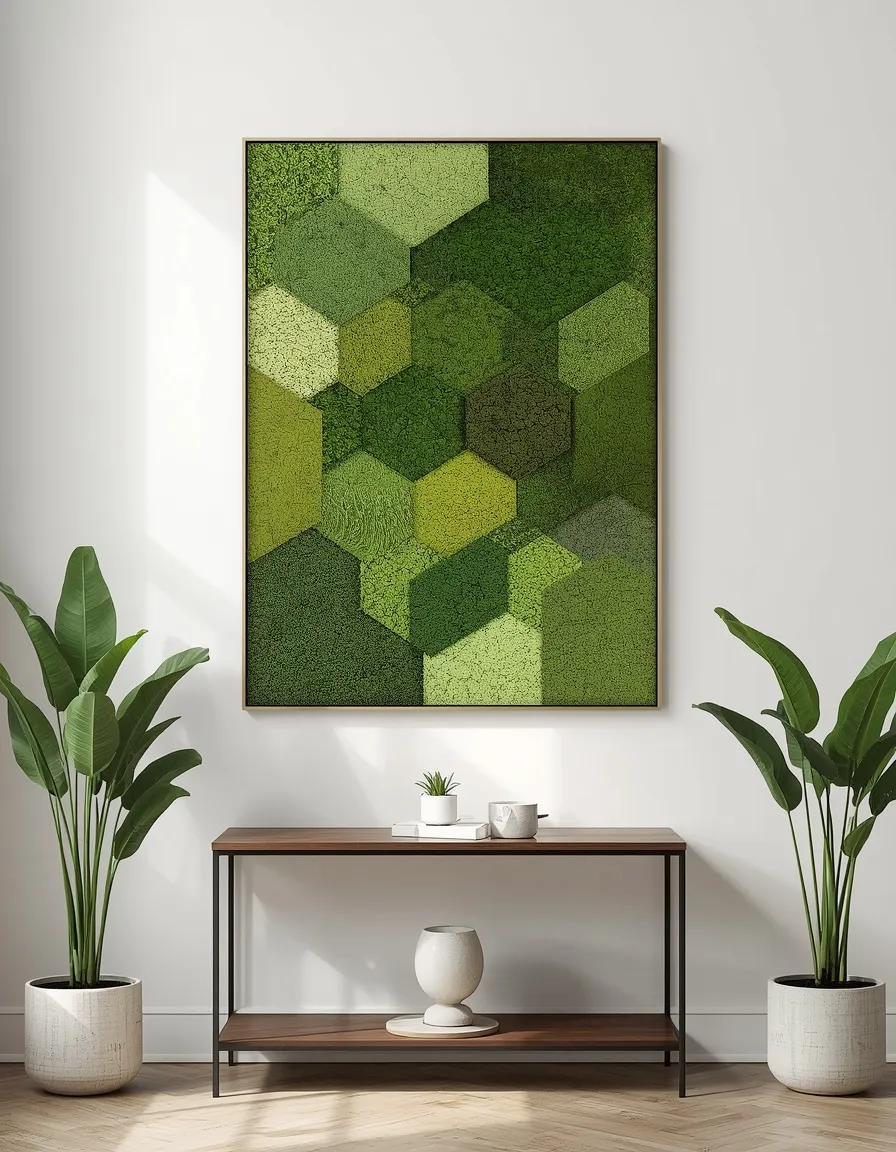
Preserved moss panels arranged into a geometric or organic pattern on a feature wall deliver texture and a genuine pop of green with zero watering required. Unlike living plants, preserved moss holds its color and shape for years with only occasional dusting.
This decor-forward idea suits homes that want the visual calm of greenery without any ongoing plant care commitment, since preserved moss is not a living plant and needs no light, water, or soil. Frame panels in wood or metal to echo other materials already in the room, and avoid placing them in direct sunlight or high humidity spots like an unventilated bathroom, since both can fade the color or encourage mold growth over time. A useful variation is combining a moss panel with two or three real potted plants nearby, blending zero-maintenance texture with living greenery.
- Requires no watering, making it ideal for low-maintenance decor
- Suits renters and busy households wanting greenery without ongoing plant care
- Solves the challenge of adding texture to a plain feature wall
16. Ladder Plant Stand Corner
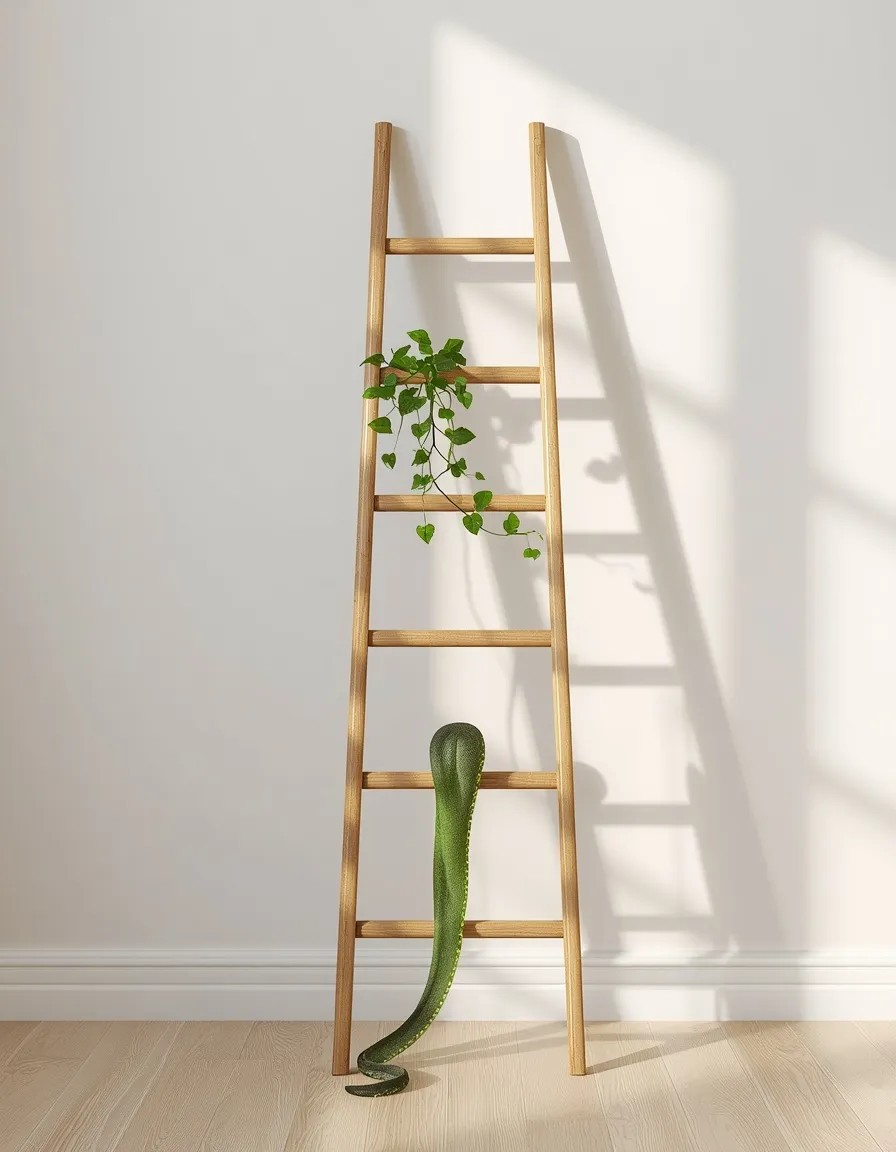
A simple wooden or bamboo ladder leaned against a corner wall, with pots nestled on each rung, is one of the fastest and most budget-friendly ways to build height and layering into a plant collection without buying a single shelf unit.
This is a genuinely renter-friendly idea since it requires no drilling and can be moved in minutes if furniture gets rearranged. Place trailing plants like pothos or string of hearts on the upper rungs so growth cascades downward, and reserve the lower rungs for sturdier upright plants like snake plant that can handle less light at floor level. A common mistake is overloading a single ladder with too many heavy pots, which can tip a lightweight ladder forward; anchor the top of the ladder lightly against the wall with a strap if pots are on the heavier side.
- Costs very little and needs zero tools or drilling
- Ideal DIY option for apartments and small spaces where furniture needs to stay flexible
- Solves flat, single-level plant arrangements with instant vertical layering
17. Countertop Hydroponic Garden Tower
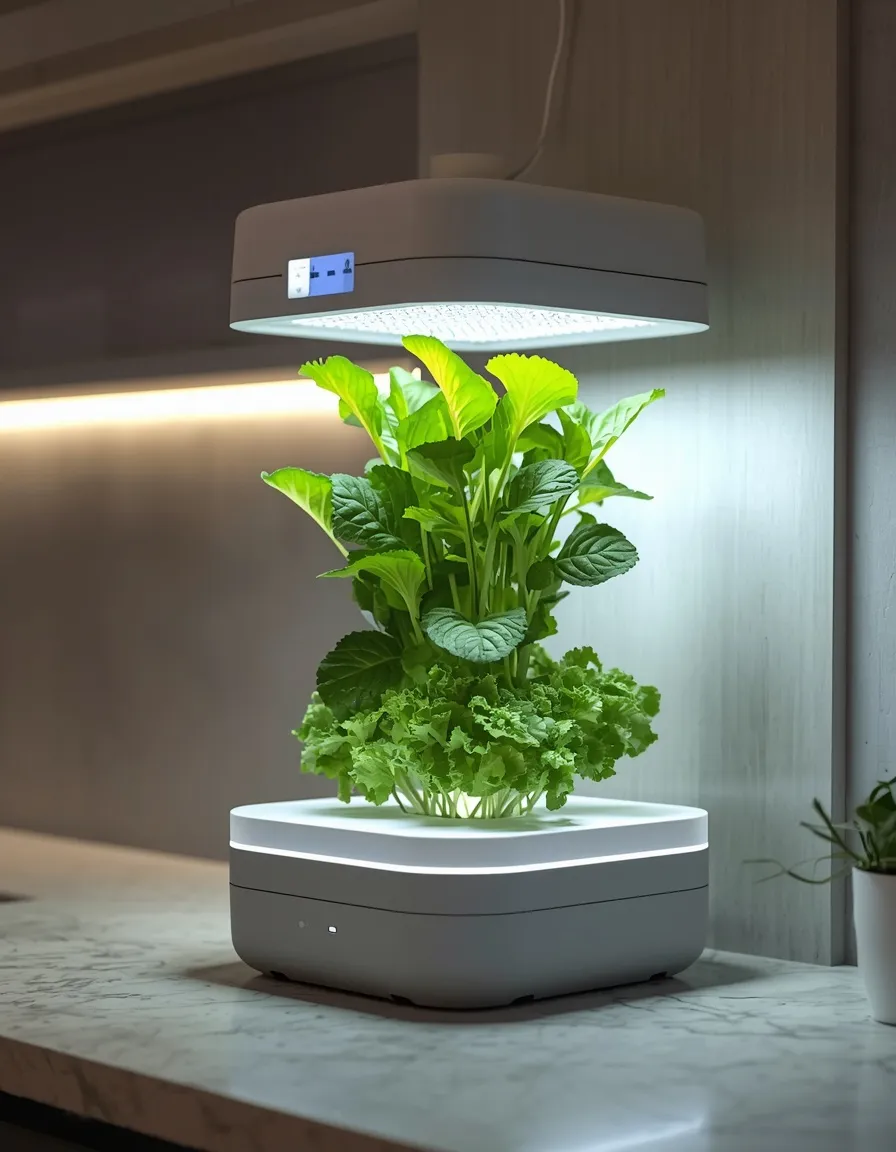
A compact hydroponic tower on a kitchen counter grows a rotating supply of leafy greens and lettuce year-round without soil, using a small water reservoir and integrated grow light instead. It is one of the more modern indoor garden ideas here, closer to a kitchen appliance than a traditional planter.
These systems suit anyone in an apartment with no outdoor growing space at all, since the entire setup, light, water, and nutrients, is self contained on a countertop. Most models need the nutrient reservoir refilled every one to two weeks and the water level checked more frequently in warmer rooms where evaporation speeds up. As with any setup combining water and electronics, keep the power cord and any connection points routed away from the water reservoir and spill zones, and use a grounded outlet.
- Grows fresh greens year-round with no soil and minimal daily effort
- Suits apartments and homes with no outdoor growing space
- Solves inconsistent harvests common with traditional soil-based kitchen gardens
Conclusion
Indoor garden ideas work best when they are chosen to fit the home you actually have, not the one in a photo. A rented studio calls for a ladder stand or hanging planters; a house with a staircase and a spare wall can support something more built-in, like a modular garden system or an under-stairs nook. Whichever direction feels right, start with just one idea rather than all seventeen at once, and let the space tell you what it needs next. For more inspiration on styling greenery indoors, our indoor plant styling category has further reading worth bookmarking. Pick a corner this weekend, plant it, and give it a season to prove itself.
Frequently Asked Questions
What is the easiest indoor garden idea to start with in a small apartment?
A ladder plant stand or a cluster of hanging macrame planters is usually the easiest starting point, since neither requires drilling or built-in shelving. Both can be set up in under an hour and moved easily if furniture gets rearranged later, which makes them especially practical for renters.
Do indoor gardens need direct sunlight, or can grow lights fully replace it?
Full-spectrum LED grow lights can replace natural sunlight for most common houseplants, provided they run for twelve to sixteen hours a day and sit close enough to deliver adequate intensity. Look for a Color Rendering Index above 85 and a color temperature near 6500K, which closely mimics daylight, as outlined in University of Minnesota Extension’s guide to indoor plant lighting.
Which indoor garden ideas are safe for homes with pets or young children?
A kid-friendly sensory garden corner built entirely from non-toxic species, like prayer plant, spider plant, and lamb’s ear, is one of the safer options for households with pets or young children. Before adding any new plant to a home with animals, it is worth checking the ASPCA’s toxic and non-toxic plant database, since several common houseplants like pothos and philodendron are toxic if ingested.
Can an indoor garden actually thrive in a low-light bathroom or windowless room?
Yes, with the right plant choices; Boston fern, pothos, and ZZ plant tolerate low light well, and bathrooms in particular benefit from the extra humidity that showers naturally provide. For a fully windowless room, a grow-light shelving station is a more reliable route than relying on ambient light alone.
How much does a basic DIY indoor garden setup typically cost?
A simple project like a ladder plant stand or a macrame hanging garden can be built for very little, often the cost of one or two plants plus basic hardware or rope, sometimes under 25 to 30 USD (roughly 20 to 25 GBP) total. Larger builds like a grow-light shelving station or a modular floor-to-ceiling system cost considerably more, since lighting, shelving materials, and drainage add up.
What indoor garden idea works best for renters who cannot drill into walls?
A ladder plant stand, a tiered rolling cart, or a cluster of freestanding floor planters all avoid drilling entirely while still building height and layering into a plant collection. Tension rods that wedge between floor and ceiling are another no-drill option for hanging trailing plants in a window or corner.
This article covers general indoor gardening ideas for informational and inspirational purposes and is not a substitute for professional horticultural, veterinary, or electrical safety advice.