
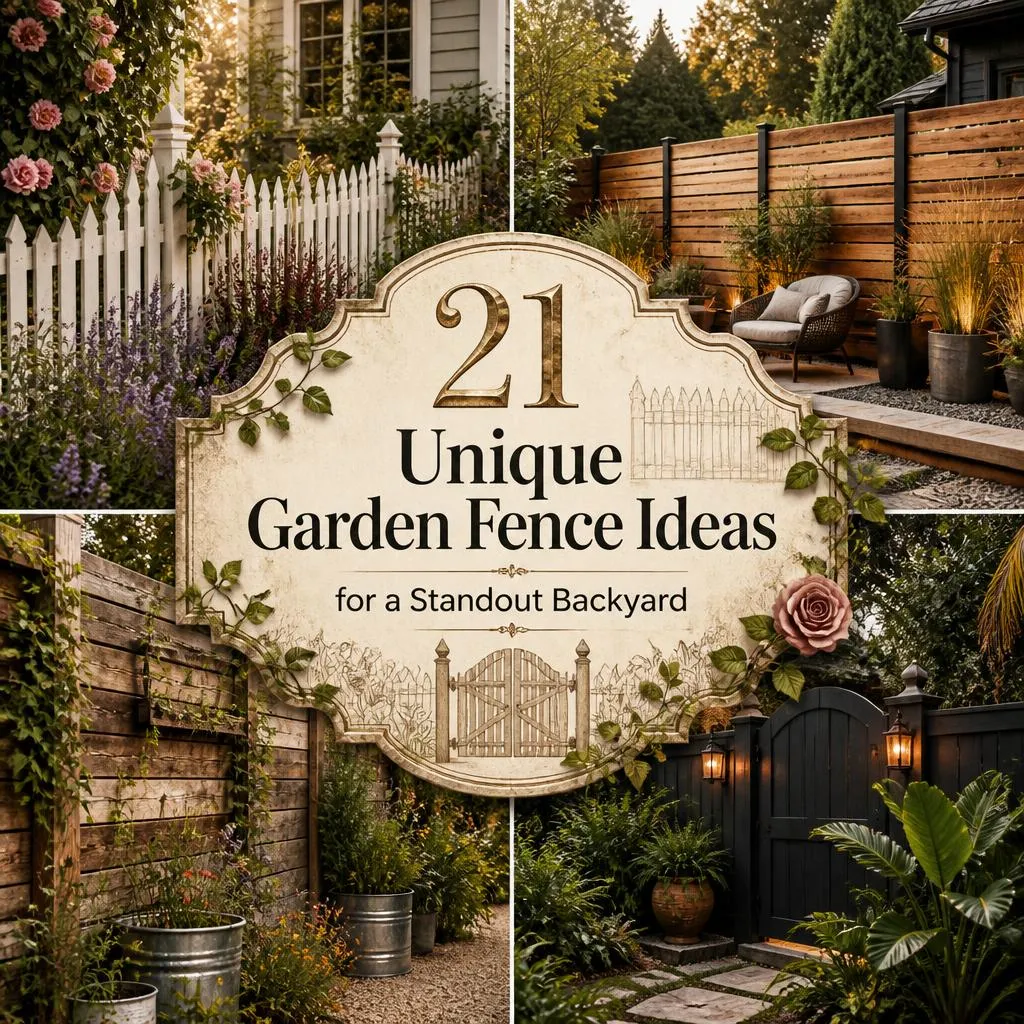
The best garden fence ideas do more than mark a boundary, they turn a plain run of pickets or panels into one of the prettiest parts of the garden. Look at the outdoor spaces people actually stop to photograph, and the fence is rarely an afterthought: painted in soft ombre stripes, woven from willow, laced with espaliered fruit branches, or dressed in trailing vines. This roundup gathers twenty one distinctive ways to give your garden boundary real personality, whether you are working with a compact rental patio, a suburban backyard, or a sprawling cottage garden. Each idea includes the practical detail, materials, timing, and upkeep, needed to actually pull it off, not just the inspiration photo. Consider it a starting point for making your own outdoor space feel distinctly yours, in keeping with the wider Sunday Abode approach to home and garden style.
21 Garden Fence Ideas Worth Copying
1. Ombre-Painted Picket Fence
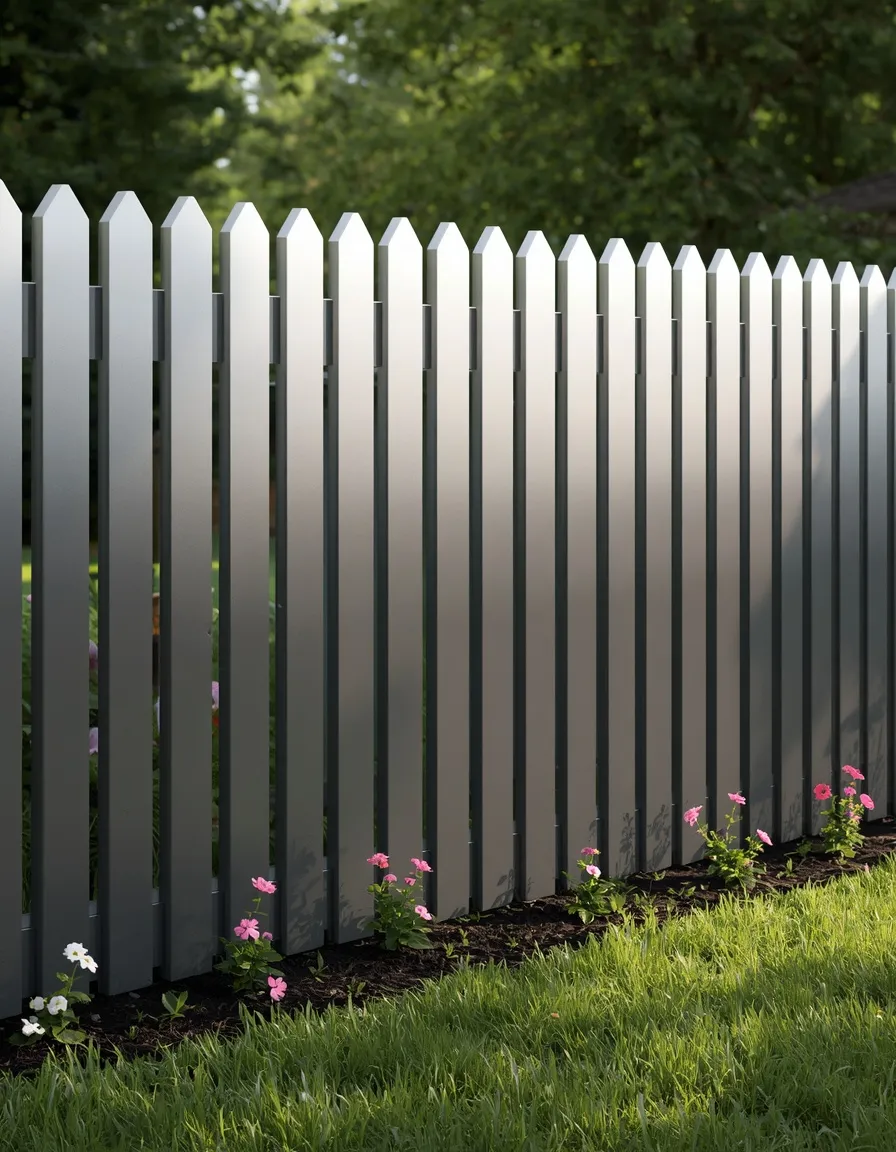
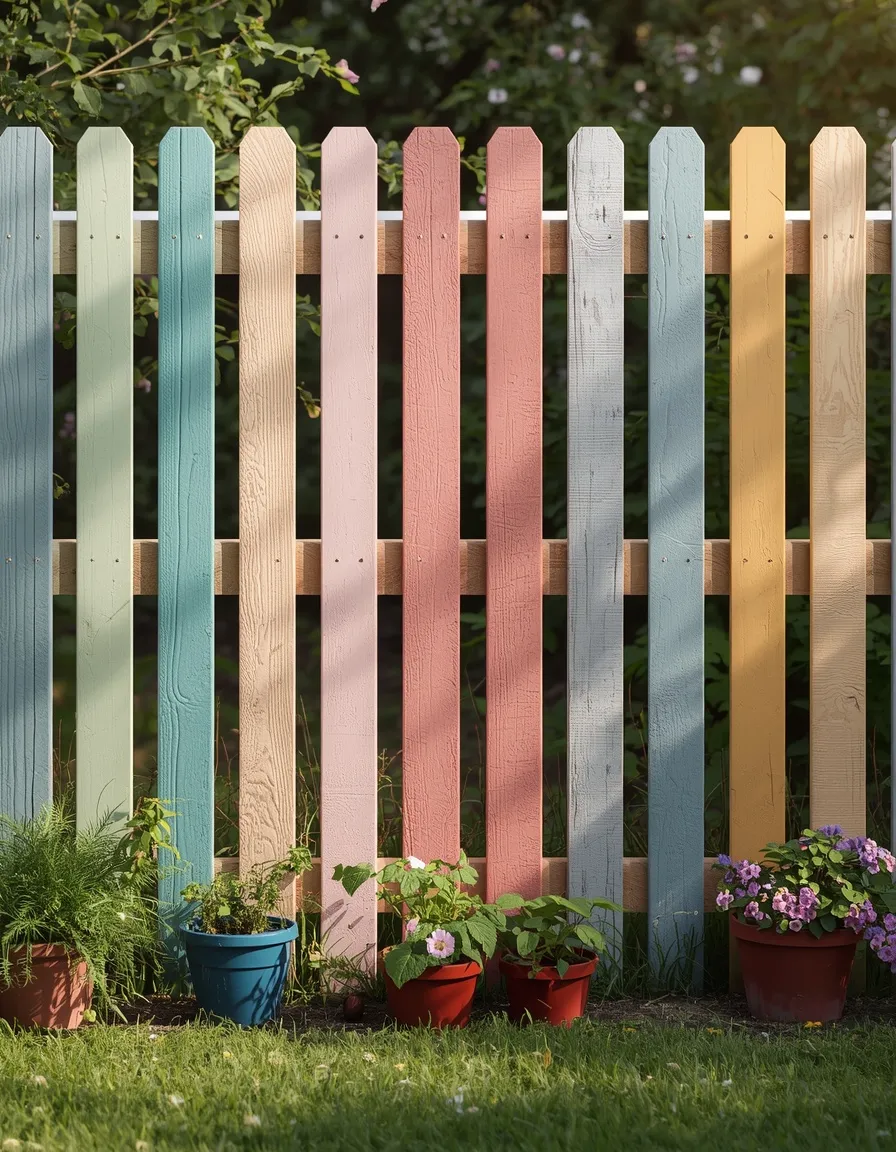
Picture a classic picket fence where the color shifts gradually from deep charcoal at the base to soft dove grey at the top, as if the fence itself is fading into the sky. It is one of the simplest ways to make a standard fence look custom without changing a single board.
To create the ombre effect, mix your base paint with white in four or five graduated batches, and blend each transition zone with a slightly damp brush before it dries. This works best on smooth, primed cedar or pine pickets, and holds up longest with an exterior acrylic paint rated for your climate zone. A common mistake is skipping the primer, which causes blotchy fading within a season, especially in humid or coastal climates. For a bolder variation, run the ombre horizontally across the panel instead of vertically.
- Works on any existing picket or panel fence without demolition
- Best for cottage, coastal, or modern minimalist garden styles
- Solves the problem of a plain, dated white picket fence cheaply
2. Woven Willow Wattle Fence
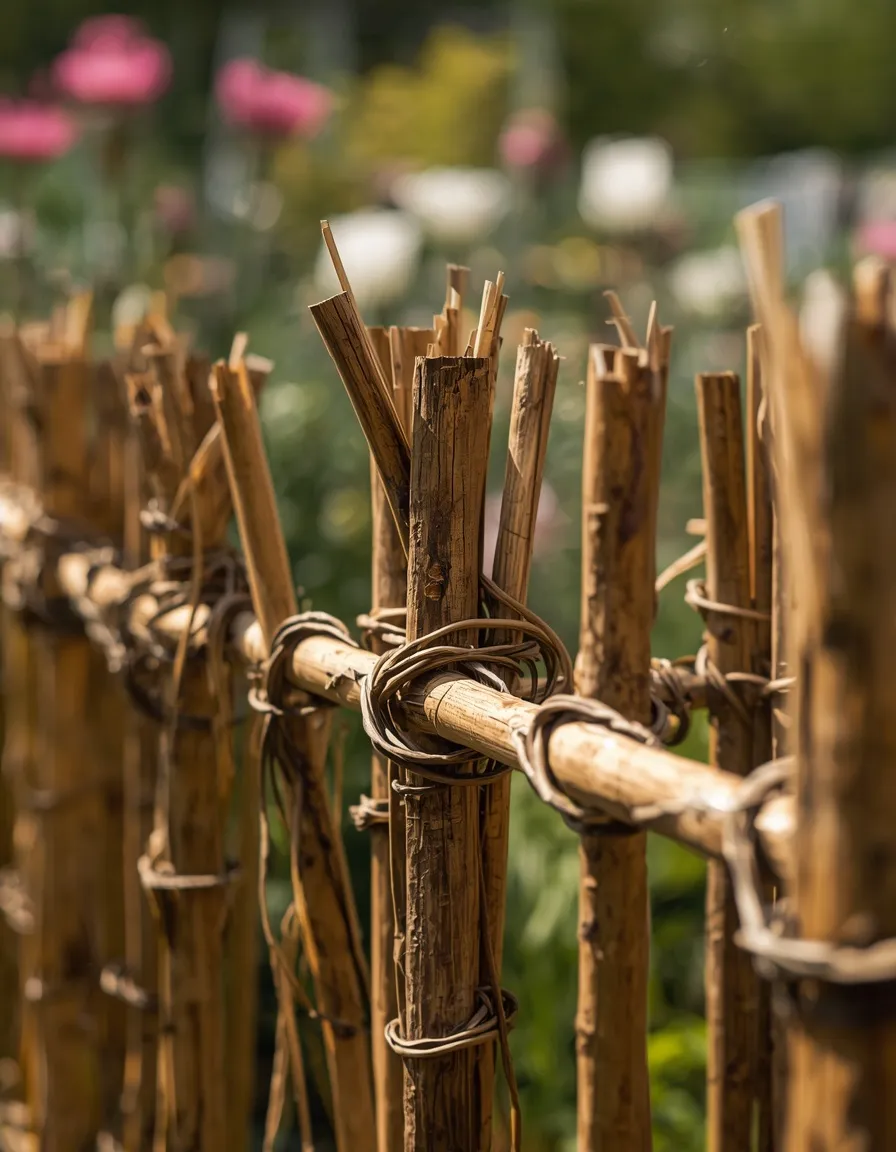
A wattle fence, woven from flexible willow or hazel rods threaded horizontally between upright stakes, has the warm, handmade texture of a basket turned into a garden boundary. It softens hard garden lines instantly and suits informal, cottage, or wildlife-friendly plots.
Hammer sturdy hazel or chestnut stakes into the ground roughly 12 to 18 inches (30 to 45 cm) apart, then weave freshly cut, pliable willow whips over and under the stakes in tight rows, tamping each row down before adding the next. Freshly harvested willow is far easier to bend than dried rods, so time this project for late winter when willow is dormant and flexible. The main upkeep issue is rot at ground level, so set stakes on gravel or a shallow footing rather than directly in damp soil. Left unpainted, wattle weathers to a soft silver grey within a year or two.
- Low-cost natural boundary for vegetable plots and cottage gardens
- Biodegradable, so it suits organic or low-impact gardens
- Solves the problem of a harsh, straight-edged fence line
3. Living Vertical Garden Wall Fence
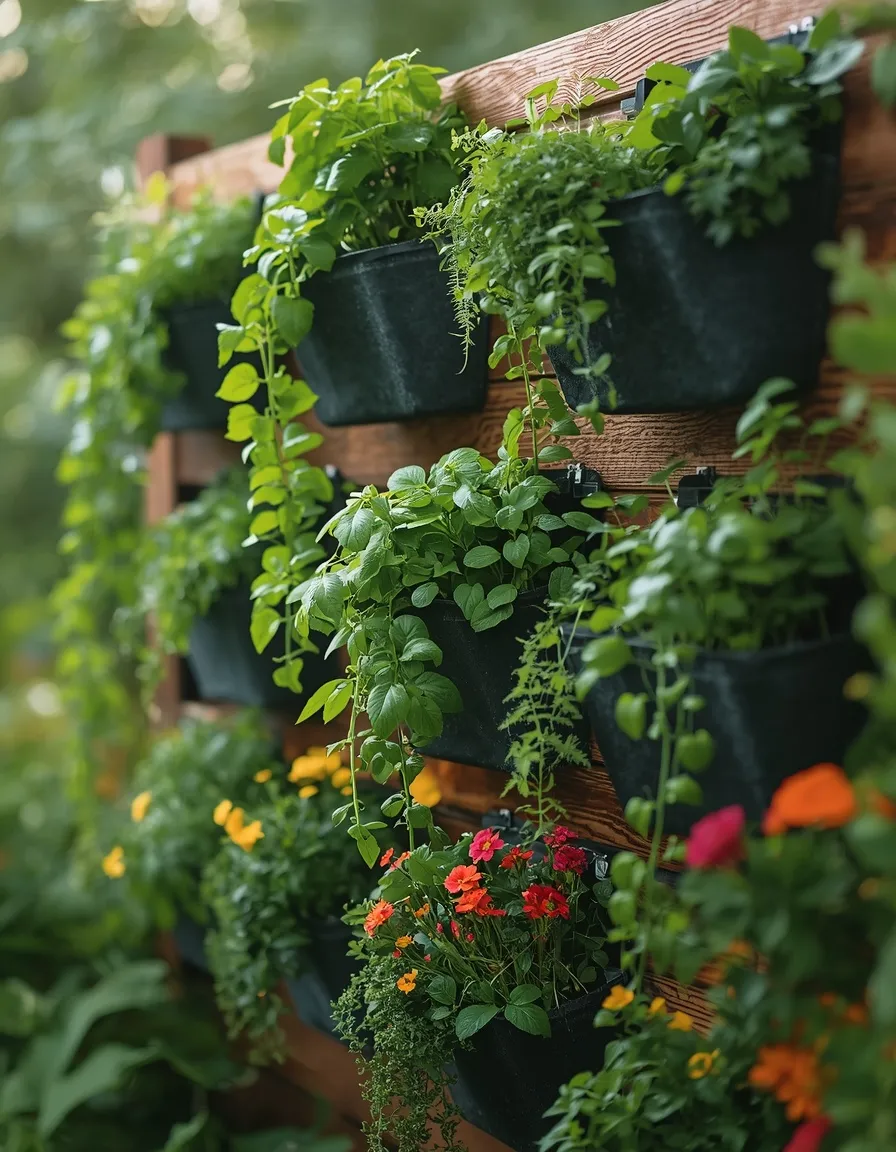
Instead of hiding a plain fence behind plants, this idea turns the fence itself into the planter, with a grid of pocket planters or a modular green wall system covering the surface in trailing herbs, ferns, and flowering annuals.
Mount a lightweight modular planting system, such as felt pocket panels or slotted wooden crates, directly onto the fence posts rather than the panels themselves, since the posts carry structural weight far more reliably. Choose shallow-rooted plants like strawberries, thyme, sedum, or trailing petunias, and run a simple drip irrigation line along the top row so water reaches every pocket evenly rather than pooling at the bottom. In hot climates, a west-facing living wall fence dries out fast, so check soil moisture every other day during summer. This is one of the most useful garden fence decoration ideas for gardeners with very little ground space to plant in.
- Turns a narrow side yard or balcony fence into real growing space
- Best for full sun to part shade with reliable watering access
- Solves the problem of limited planting area in small gardens
4. Reclaimed Wood Board Fence
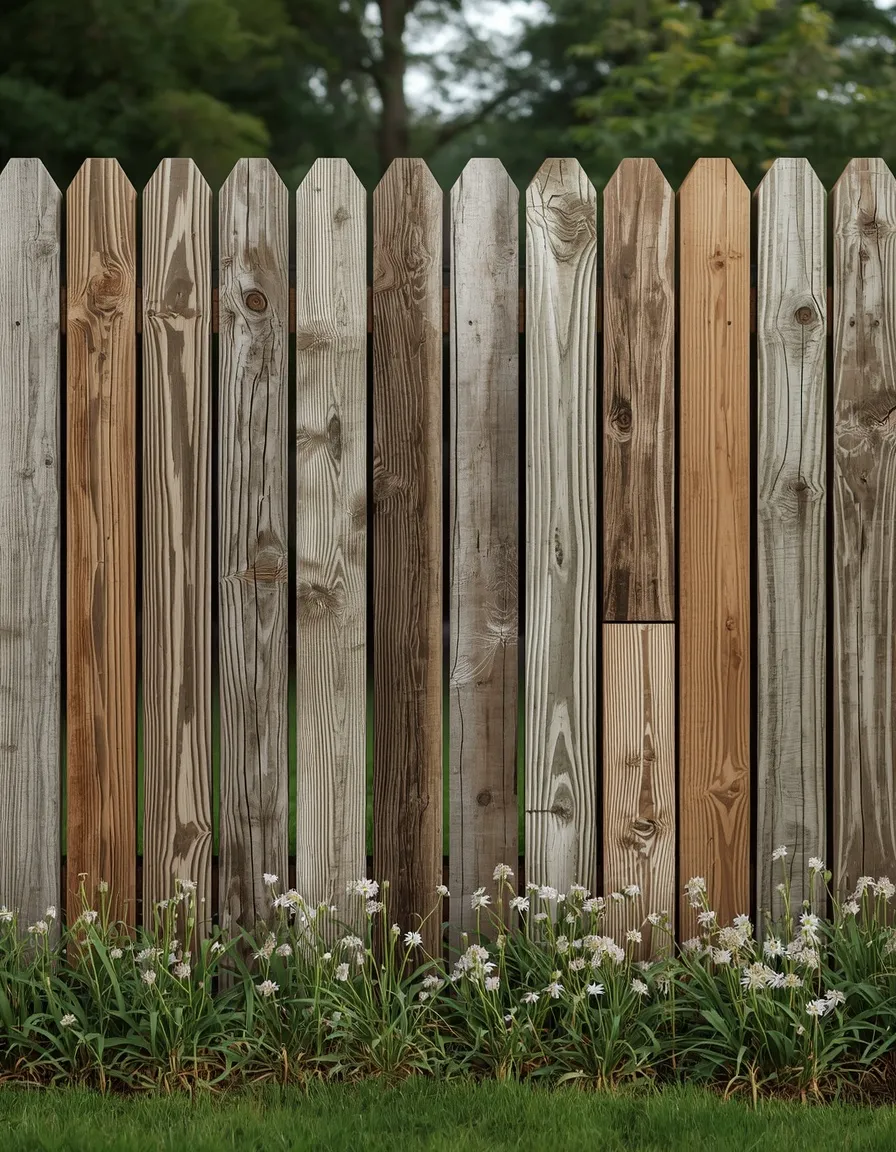
A fence built from mismatched reclaimed boards, old barn siding, weathered posts, salvaged shiplap, has a lived in, collected character that a brand new fence simply cannot fake.
Source reclaimed boards from architectural salvage yards or demolition sites, and sort them by thickness before building, since mixing wildly different board depths onto the same rail creates a wobbly, gappy fence. Sand down any protruding nails or splinters and treat the wood with a clear exterior sealant to slow further weathering while keeping the aged look. Check reclaimed wood for old lead paint before sanding, particularly on boards salvaged from structures built before 1978, and wear a mask when sanding regardless. This look pairs especially well with a wildflower border or a vegetable garden with a relaxed, farmhouse feel.
- Gives a new build garden instant character and history
- Best for rustic, farmhouse, or cottage style outdoor spaces
- Solves the too new, too sterile look of fresh lumber
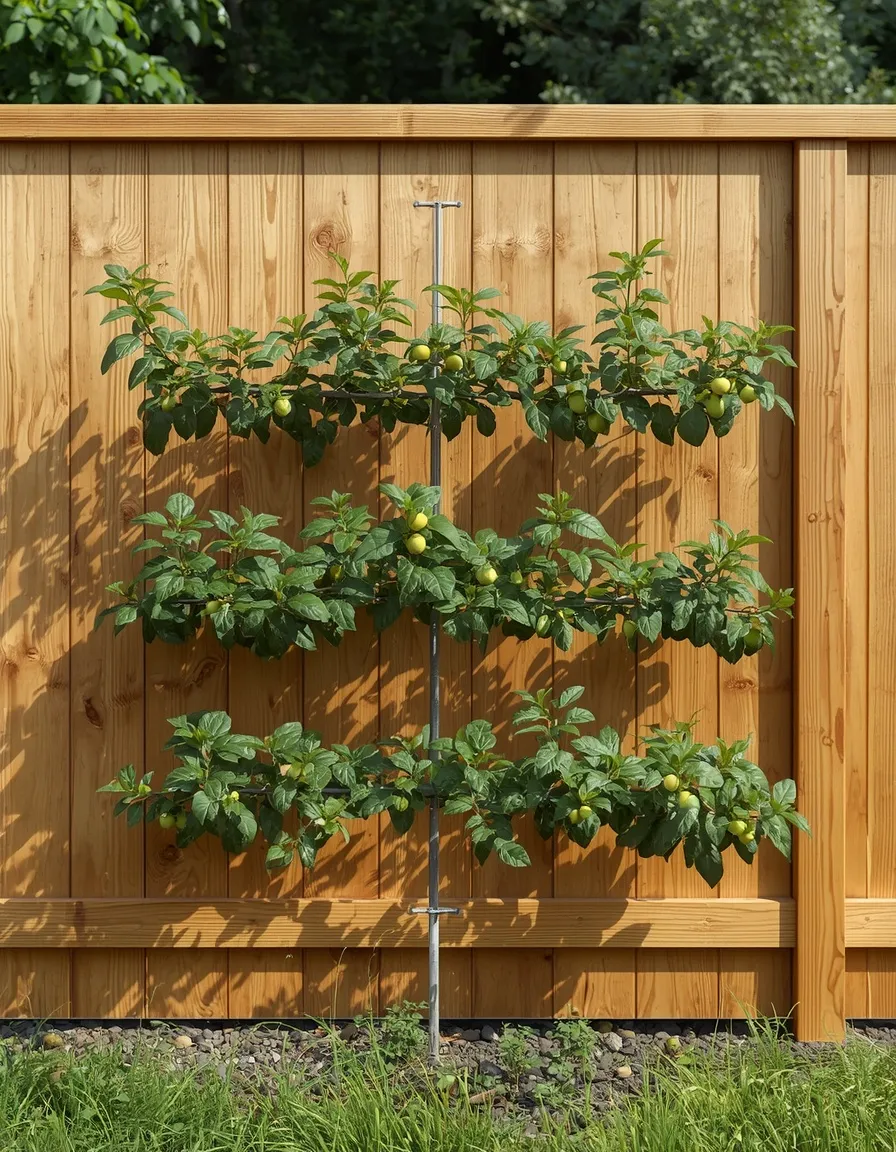
5. Espaliered Fruit Tree Fence Line
Espalier training turns fruit trees, apple, pear, or fig, into a flat, living screen trained directly against or along a fence, with branches pruned into neat horizontal tiers that look almost architectural by midsummer.
Plant young, bare root fruit trees roughly 6 to 10 feet (1.8 to 3 meters) apart along a sunny fence line, then train the main branches along horizontal wires spaced about 15 inches (38 cm) apart, tying new growth in as it extends and pruning outward facing shoots each winter. This is one of the more rewarding garden fence ideas with trees, because it turns a boundary into a productive, edible feature rather than a purely decorative one. Espalier needs a full sun fence face and takes two to three years to fill in fully, so treat it as a long term project rather than an instant fix. Choose disciplined, spur bearing varieties, most apple and pear cultivars work well, over vigorous types that resist training.
- Combines a privacy screen with an edible harvest
- Best along south or west facing fences with full sun
- Solves the problem of wanting fruit trees in a narrow garden
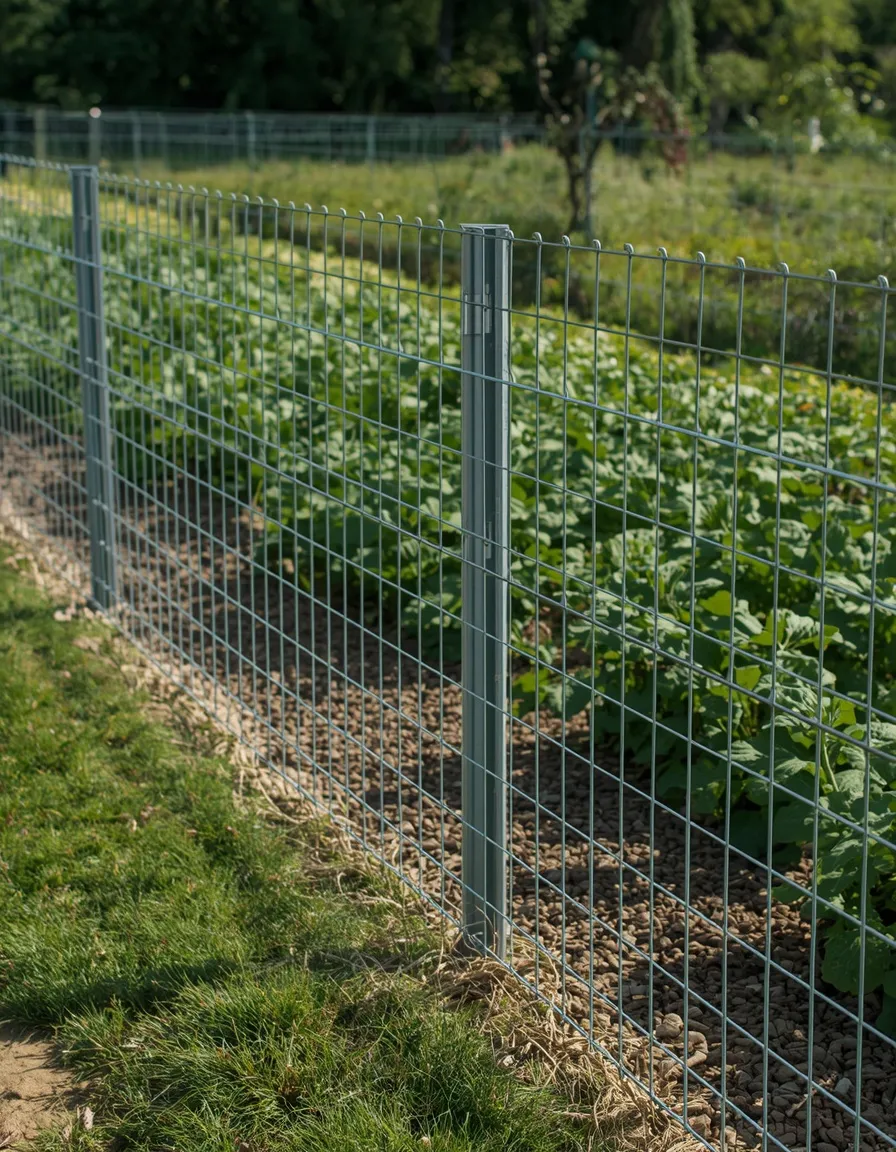
6. Double-Layer Deer-Proof Mesh Fence
Deer can clear a single fence up to 8 feet (2.4 meters) tall without much effort, so the most reliable deer-proof garden fence design is not taller, it is doubled: two lower fences set a few feet apart that deer struggle to judge for a single jump.
Install two parallel fences of woven wire or polypropylene deer mesh, each around 4 to 5 feet (1.2 to 1.5 meters) tall, spaced roughly 4 to 5 feet apart, since deer avoid jumping when they cannot see solid landing ground between two barriers. Agricultural extension services generally recommend this staggered double fence spacing as one of the more effective non-lethal deer deterrent designs for home gardens. Anchor mesh panels with metal T-posts driven at least 18 inches into the ground, and check the mesh regularly for gaps where smaller animals may squeeze through. This is a genuinely practical solution among garden fence ideas for deer, rather than a decorative one, so pair it with a prettier inner fence closer to the house if appearance matters.
- Best for rural or wooded properties with heavy deer pressure
- Solves crop and flower loss without chemical repellents
- Works well combined with deer-resistant planting near the outer mesh
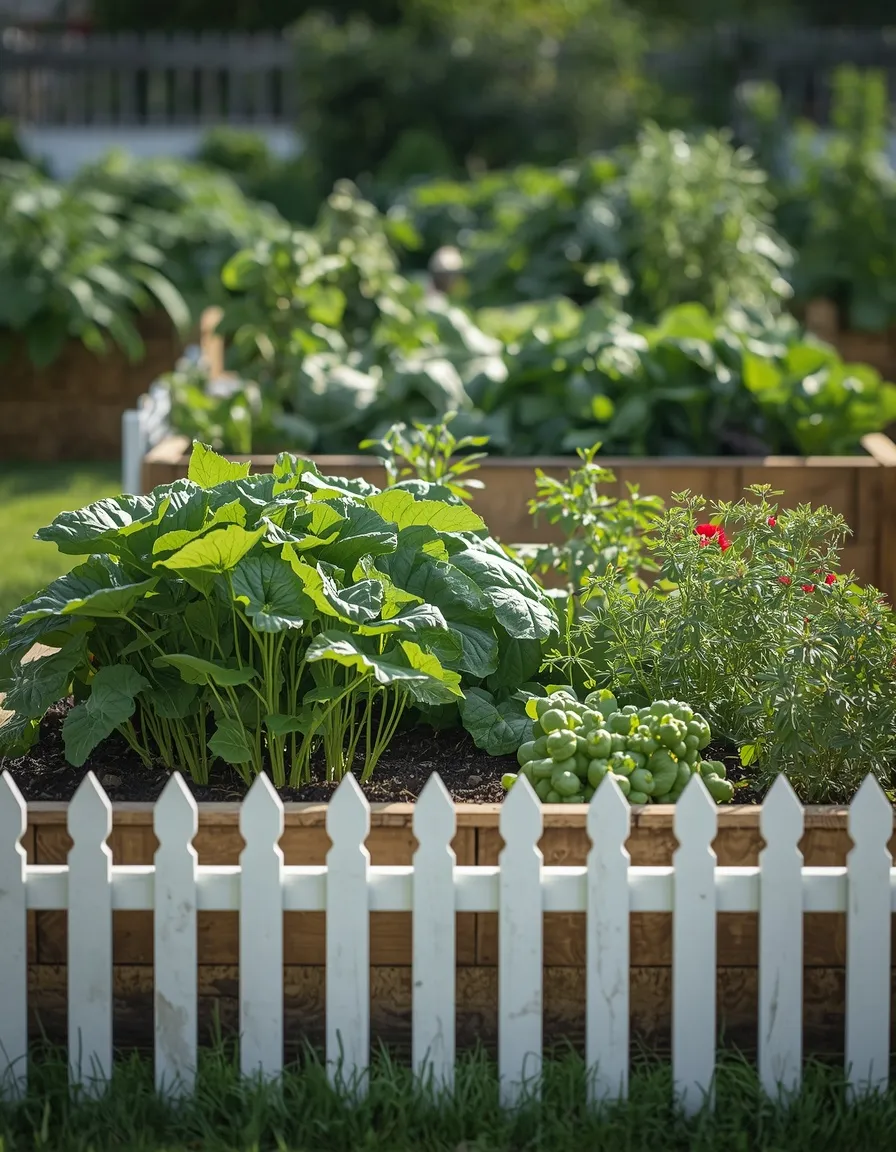
7. Picket Border for Raised Garden Beds
A low picket fence, usually 12 to 24 inches (30 to 60 cm) tall, wrapped around a cluster of raised garden beds gives a vegetable patch a tidy, cottage garden frame instead of leaving the beds looking like an unfinished construction zone.
Build the picket border from cedar or pressure-treated pine pickets spaced with small gaps for airflow, and set the posts on concrete footings if the border needs to double as a barrier against digging pets or rabbits. Keep pickets shorter than the raised beds themselves so sunlight still reaches low growing crops planted near the fence line, and paint or stain the pickets to match the raised bed frames for a cohesive look. This is one of the most requested garden fence ideas raised bed gardeners search for, since it solves both the unfinished look and light pest deterrence in one build. Avoid ground contact lumber that is not labeled safe for vegetable gardens directly against edible soil, since older pressure treatments contained arsenic compounds.
- Frames a vegetable or cutting garden without blocking sunlight
- Best for gardeners who want a light barrier against rabbits and pets
- Solves the unfinished construction site look of bare raised beds
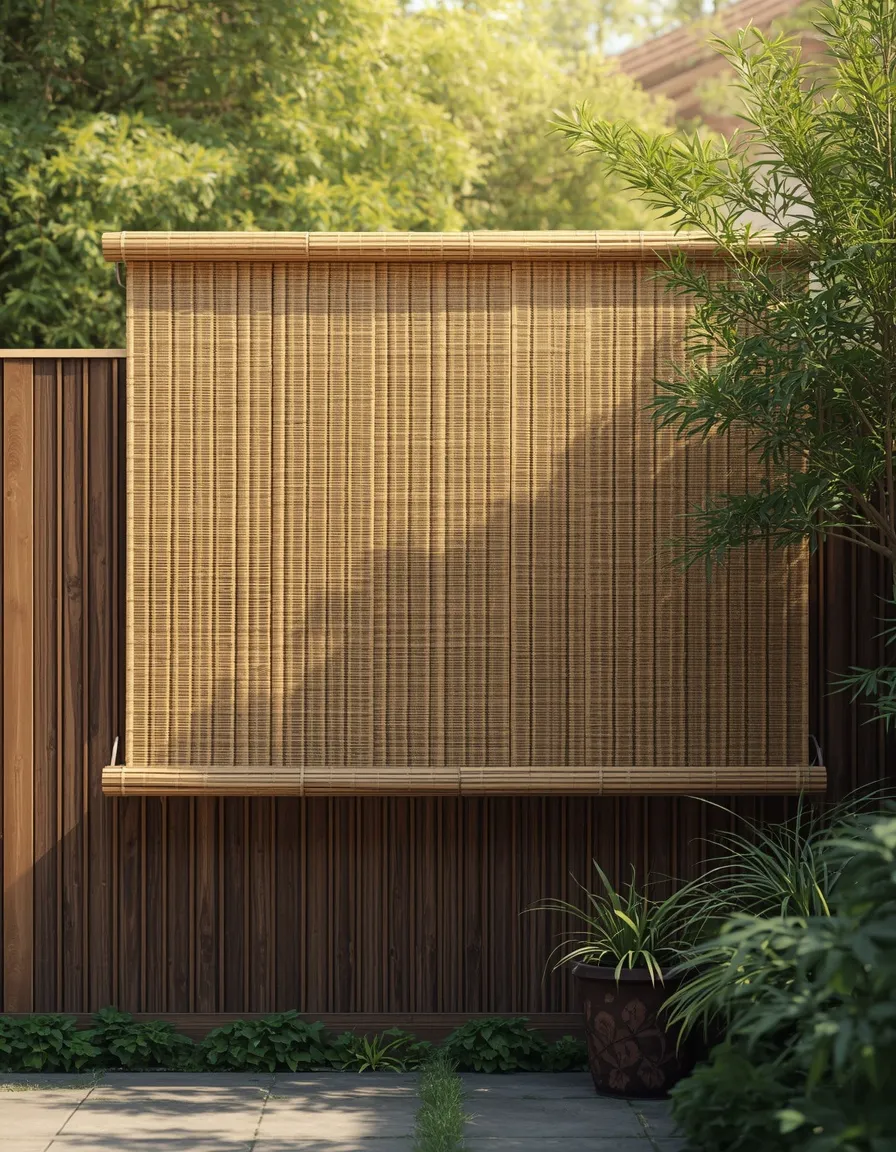
8. Bamboo Privacy Screen Fence
Rolled bamboo panels lashed over an existing chain link or wood frame fence create an instant, warm toned privacy screen, the kind that makes a small patio feel like a private courtyard rather than a fishbowl.
Attach bamboo rolls to the fence frame with galvanized wire or zip ties at 12 inch (30 cm) intervals, working from the top down so each row overlaps the one below and sheds rain properly. Bamboo screening lasts three to five years in most climates before it needs replacing, longer if treated with a UV protective sealant each spring. This is one of the fastest garden fence ideas privacy focused gardeners can pull off, since a full panel run can go up in an afternoon with no digging or permits in most areas. In very windy sites, bamboo screening acts like a sail, so reinforce the top rail or choose a slatted design with gaps instead of a solid roll.
- Fastest way to add privacy to an existing fence or chain link
- Best for patios, rentals, and gardens needing a temporary screen
- Solves overlooked sightlines from neighboring windows or balconies
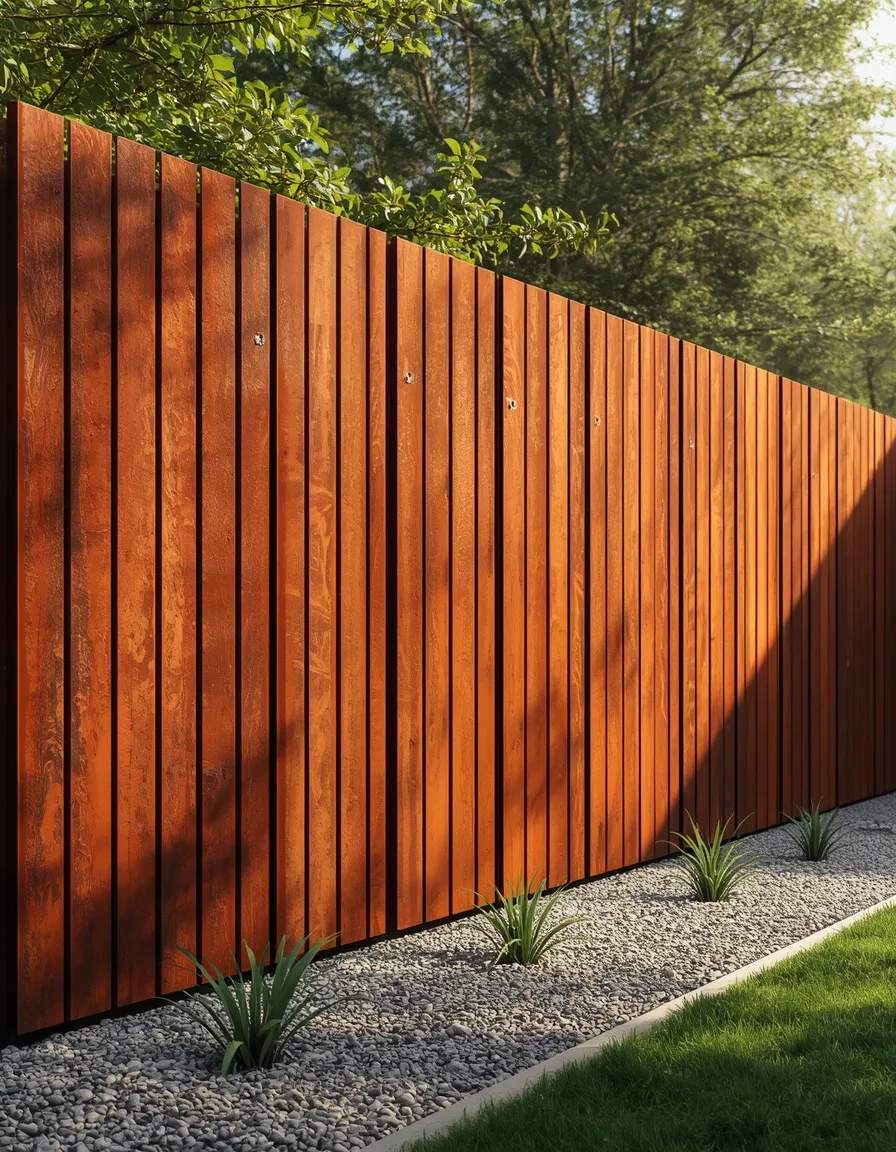
9. Corten Steel Modern Fence
Corten steel panels, the same rusted, weather resistant steel used in contemporary architecture, bring a warm, rust orange patina to a garden fence that reads as intentional and modern rather than neglected.
Corten develops its protective rust layer naturally within the first few months of weather exposure, so resist the urge to seal or paint it, since sealing interferes with the self-protecting oxide layer that keeps the steel from corroding further. Pair solid corten panels with slimline steel or timber posts for a minimalist look, and keep the base slightly elevated off the soil on a gravel strip so moisture does not pool against the metal. This garden fence design suits contemporary, architectural, or desert style gardens far better than cottage settings, and it is genuinely low maintenance once the patina sets. Expect initial rust runoff to stain nearby paving for the first season, so plan pale hard landscaping accordingly.
- Best for modern, architectural, or minimalist garden design
- Nearly maintenance-free once the protective patina forms
- Solves the demand for a fence with real material texture, not paint
10. Lattice Fence with Climbing Vines
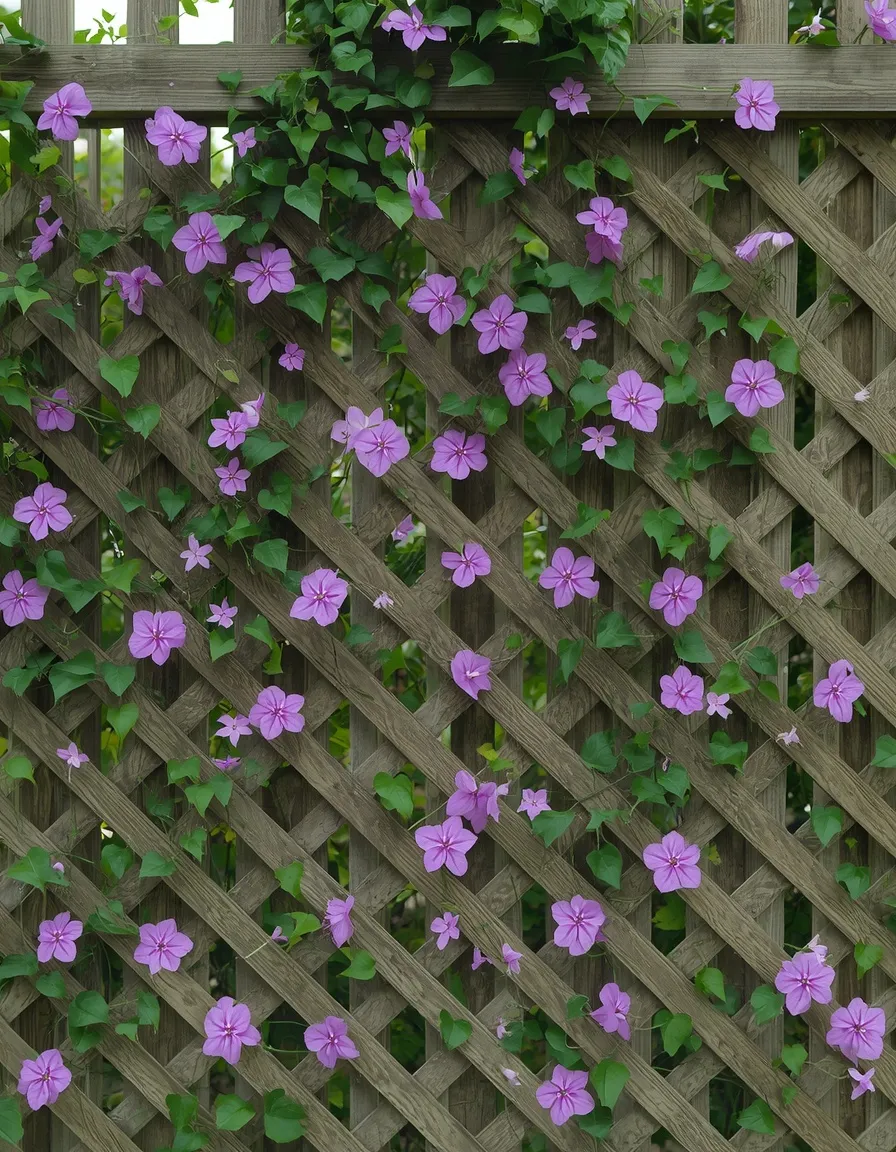
An open lattice panel dressed in climbing clematis, jasmine, or sweet pea turns a see-through boundary into a soft, fragrant living screen that still lets light and air move through the garden.
Choose the lattice spacing based on how much privacy you actually want, tighter diamond lattice for more screening, wider squares if you mainly want a support structure for vines to climb. Train young vines onto the lattice with soft garden twine rather than wire, which can cut into stems as they thicken, and prune spring flowering climbers right after they bloom so next year’s buds are not accidentally removed. If pets or young children spend time near the fence, note that some popular climbers, including sweet pea and certain jasmine varieties, are mildly to moderately toxic if chewed, so it is worth checking a plant safety resource such as the ASPCA’s toxic and non-toxic plant list before choosing a species for a garden used by pets. This combination is one of the more decorative garden fence ideas that still earns its keep functionally.
- Balances privacy with light, unlike a fully solid fence
- Best for framing a patio, arbor entry, or seating nook
- Solves the too stark look of a bare lattice panel
11. Repurposed Pallet Fence
Wooden shipping pallets, disassembled and reassembled into fence panels, are one of the cheapest ways to build a full garden boundary, and with a coat of paint or stain, nobody would guess the boards started life hauling freight.
Source heat treated pallets, stamped HT rather than MB (methyl bromide fumigated), since only heat treated pallets are safe to repurpose around edible gardens or anywhere pets and kids play. Pry the boards apart carefully with a flat bar to avoid splitting the wood, sand down rough edges, and reassemble the slats onto a simple frame of pressure treated 2x4s set into ground posts. This is genuinely one of the better garden fence ideas diy cheap budget projects deliver, often costing little beyond paint, screws, and the posts themselves. Wear work gloves throughout, since old pallets frequently have protruding nails and staples that are not obvious until you are mid project.
- Among the lowest cost ways to build a full fence from scratch
- Best for budget garden makeovers and rental-friendly temporary fencing
- Solves the high cost barrier of a full new fence build
12. Fence with Hanging Planter Boxes
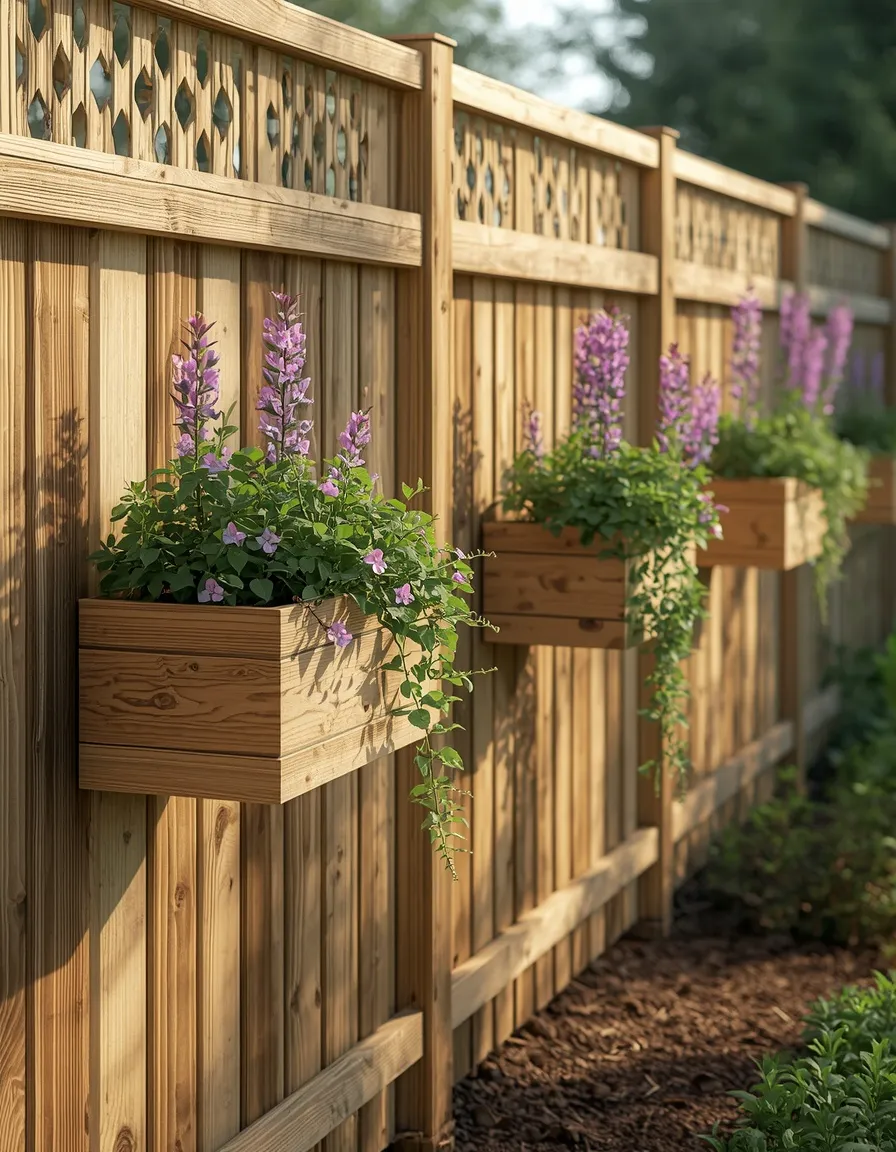
A row of simple wooden or galvanized planter boxes hung directly on fence rails turns a flat boundary into a staggered, blooming border, without digging a single new bed.
Use planter brackets rated for the box’s full watered weight, since wet soil is significantly heavier than dry, and check that the fence rail itself is sturdy enough to carry that load before hanging a full row. Fill boxes with a mix of trailing plants, like lobelia or ivy geranium, and upright accents, like dwarf salvia, so the boxes read as a designed border rather than a scattered afterthought. Space boxes evenly, roughly 18 to 24 inches (45 to 60 cm) apart, and keep a consistent box style and color along the whole run for a cohesive line. This solves the classic problem of wanting more planting space in a garden with limited ground area.
- Adds a full flowering border with zero digging
- Best for renters, small gardens, and gardeners without ground beds
- Solves the flat, empty fence problem cheaply and reversibly
13. Gallery Wall Fence with Vintage Frames
Empty picture frames, salvaged from flea markets or thrift stores, mounted directly onto a painted fence in a loose gallery wall arrangement, turn a plain boundary into a quirky outdoor art wall, with climbing vines or simply the fence itself framed inside each one.
Prime and paint the fence a single unifying color first, then arrange mismatched frames on the ground to test the layout before mounting any of them, working from a central anchor frame outward rather than starting at one edge. Use exterior-rated screws and washers rather than nails, since frames left outdoors need a stronger hold to survive wind and seasonal expansion. For a version with more depth, mount a few frames slightly proud of the fence surface on wood spacers so the arrangement casts a bit of shadow. This is one of the more creative garden fence decoration ideas for gardeners who want a genuinely one of a kind boundary.
- Turns a plain fence into a conversation-starting art feature
- Best for eclectic, bohemian, or maximalist garden styles
- Solves the desire for a truly unique fence with no direct copies

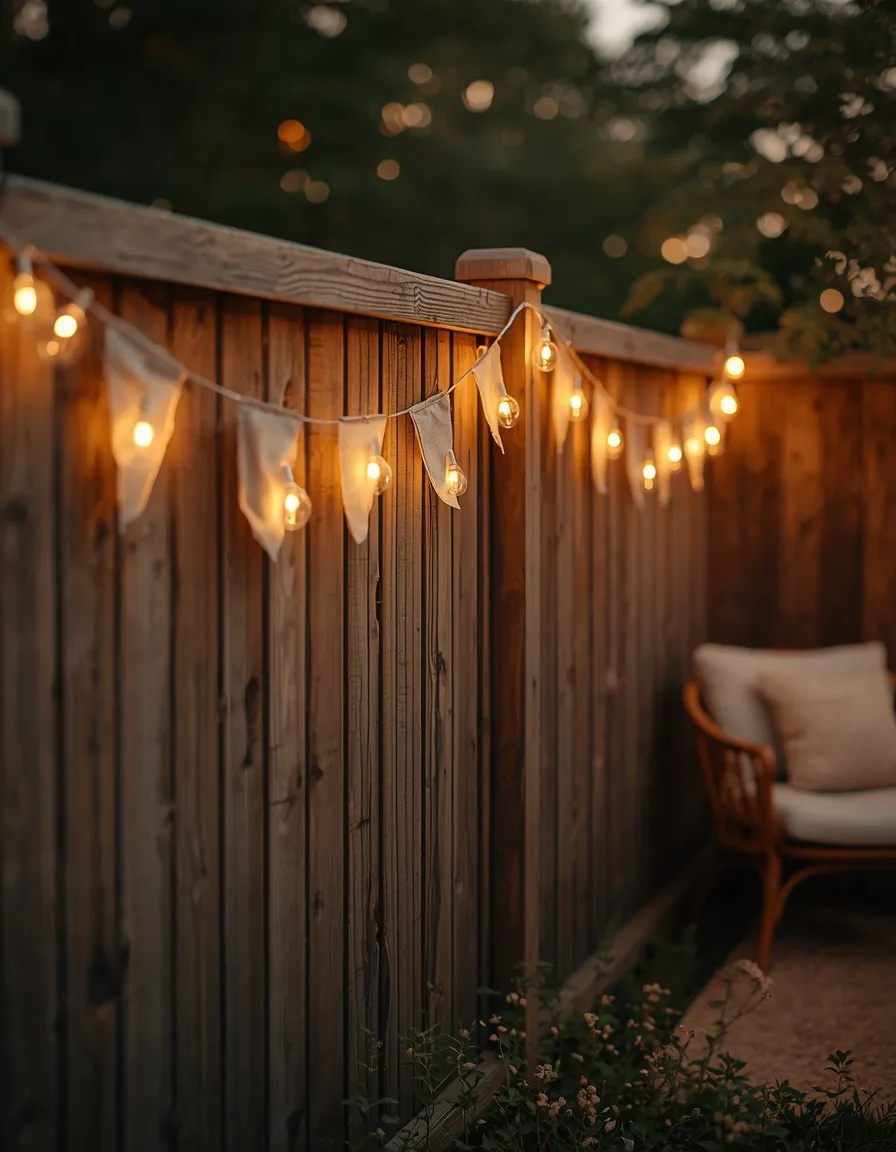
14. Fairy Light and Bunting Fence
Warm string lights woven along the top rail of a fence, paired with simple fabric bunting or paper lanterns, turn an ordinary boundary into the backdrop for every evening spent outside, without any structural changes to the fence itself.
Use solar-powered or low-voltage LED string lights rated for outdoor use, and mount them on cup hooks screwed into the top rail rather than draping them loosely, which prevents sagging and wind damage over a full season. Space hooks every 12 to 18 inches (30 to 45 cm) for an even, gentle drape rather than a tight, straight line. If running any mains-powered lighting outdoors, use only fixtures and extension cords rated for outdoor, damp-location use, and keep connections off the ground and away from standing water. This is a favorite among garden fence decoration ideas diy gardeners lean on for parties, since it can go up and come down in under an hour.
- Instantly upgrades a fence for evening entertaining
- Best for temporary or seasonal decoration without permanent changes
- Solves the fence disappears after dark problem for evening gatherings
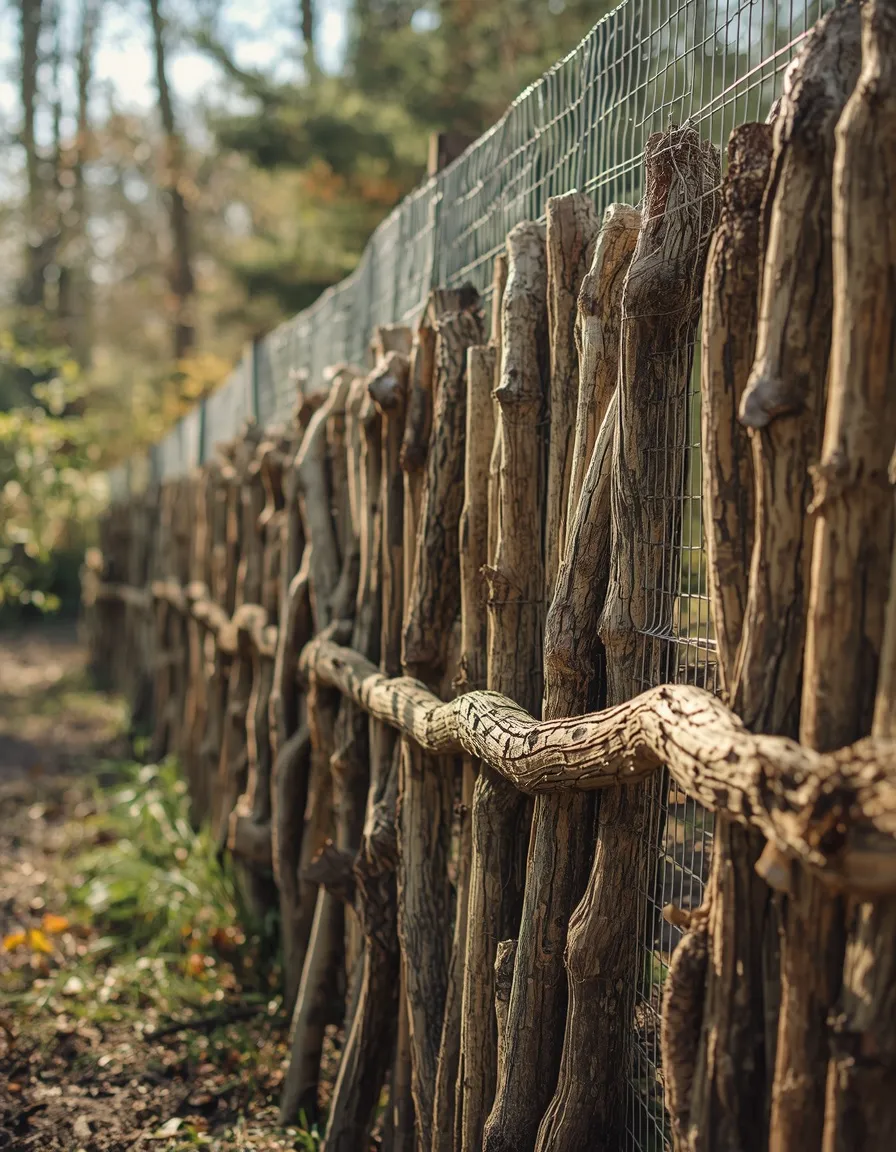
15. Branch and Chicken Wire Rustic Fence
Fallen branches or coppiced hazel poles, stacked horizontally between simple posts and backed with a layer of chicken wire, make a rustic, woodland style fence that costs next to nothing beyond wire and a bit of labor.
Set posts every 4 to 6 feet (1.2 to 1.8 meters), staple chicken wire to the inside face of the posts first for structure, then stack straight branches of similar diameter horizontally against the wire, securing every second or third branch with wire ties. This is one of the more genuinely rustic garden fence ideas diy cheap outdoor projects can produce, since the main material is often free from a garden’s own prunings or a neighbor’s brush pile. Choose branches from non-toxic, rot-resistant species like oak, hazel, or sweet chestnut where possible, since softer woods break down within a couple of seasons. The look suits woodland gardens, allotments, and naturalistic borders far better than formal or modern spaces.
- Nearly free if built from garden prunings or fallen wood
- Best for woodland, cottage, or allotment style gardens
- Solves the need for a low-cost screen along an informal border
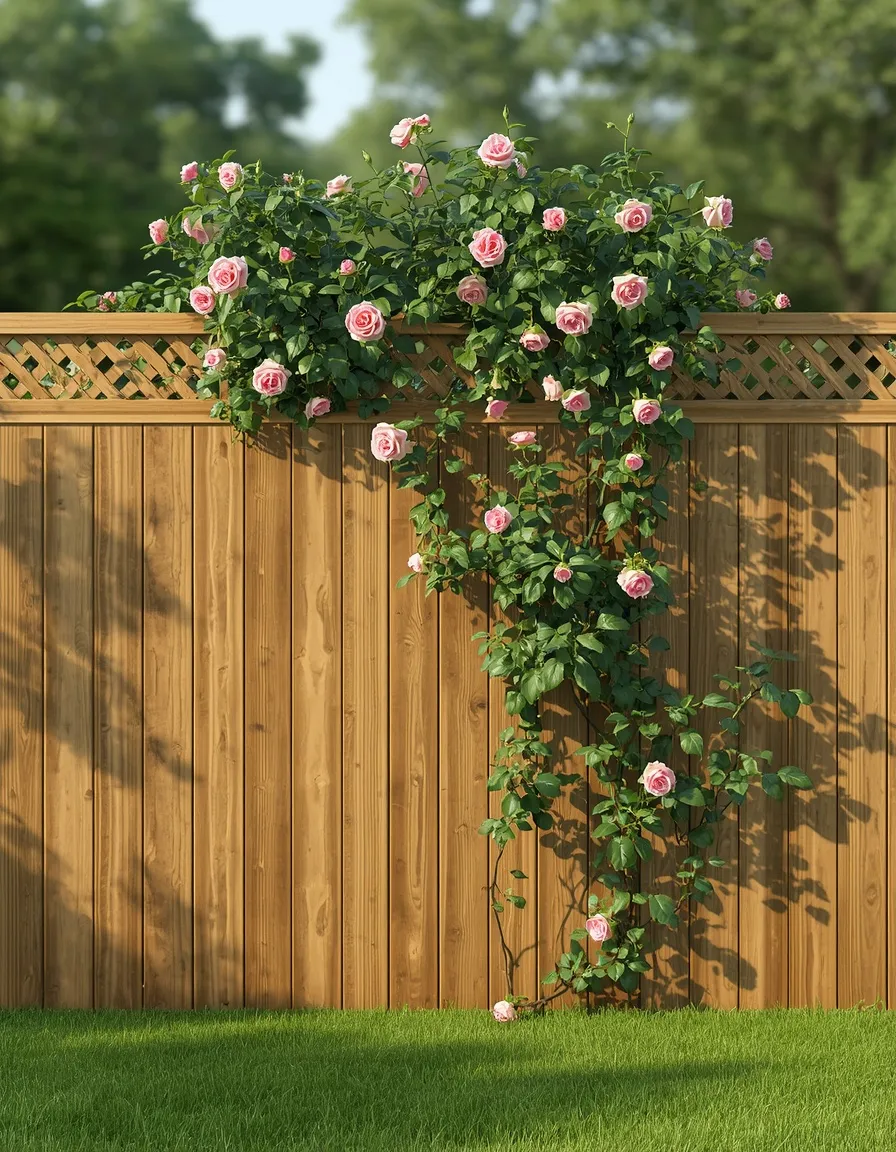
16. Trellis-Topped Climbing Fence
Adding a simple trellis panel to the top of a standard solid fence extends its height for extra privacy while giving climbing plants, clematis, roses, or runner beans, a purpose-built structure to scale.
Attach the trellis panel to the fence posts, not the fence panels themselves, using galvanized brackets, since posts carry weight far more reliably over time as plants mature and add significant load. Most residential boundary fences have a maximum height before requiring planning permission in many UK and European jurisdictions, commonly around 2 meters (about 6.5 feet), so check local regulations before adding trellis height that pushes the total structure over that line. Choose a trellis grid wide enough for the mature stem thickness of whatever you are growing, since roses in particular need generous spacing to avoid girdling their own canes. This solves the common problem of a fence that is technically tall enough but still feels overlooked.
- Adds height and privacy without replacing the whole fence
- Best for gardens needing more screening from upper-story windows
- Solves overlooked sightlines while adding a flowering or edible feature
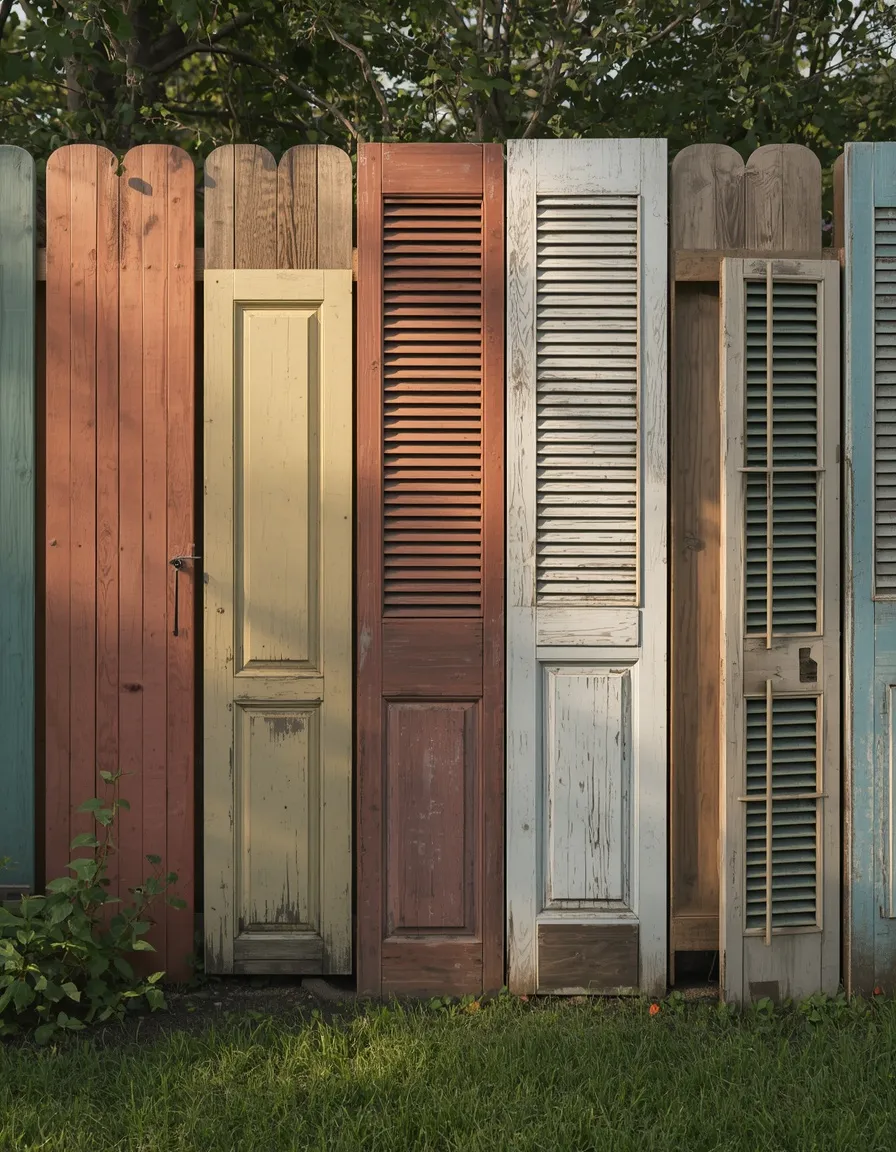
17. Upcycled Shutter and Door Fence
Old window shutters, cabinet doors, or salvaged interior doors, mounted side by side along a fence frame, create a boldly patterned, collected-over-time boundary that mixes colors, panel styles, and hardware into one deliberately imperfect line.
Source shutters or doors of similar height first, then build a simple frame of horizontal rails between posts sized to that height, mounting each piece with exterior screws through pre-drilled pilot holes to avoid splitting old, dry wood. Leave a small gap, roughly a half inch (12 mm), between each panel so the wood can expand and contract with humidity without warping the whole run. Strip old paint before repainting if the pieces predate 1978, when lead paint was still common, and always wet-sand rather than dry-sand old painted wood to keep any lead dust from becoming airborne. This is a standout among garden fence decoration ideas creative gardeners use to avoid a matchy, catalog look entirely.
- Creates a genuinely one of a kind, no two alike boundary
- Best for eclectic, farmhouse, or maximalist garden styles
- Solves the desire for a fence with real visual texture and history
18. Living Willow Fedge
A fedge, part fence, part hedge, is grown from living willow rods planted directly into the ground in a diamond lattice pattern, rooting in place and growing into a dense, self-supporting green wall over a single season.
Plant dormant willow rods in late winter or very early spring, pushing each rod about 12 inches (30 cm) into loosened, moist soil at a diagonal angle so the diamond pattern locks together as the rods sprout leaves and thicken. Willow roots aggressively and seeks out moisture, so keep a fedge at least 6 feet (1.8 meters) away from underground pipes, septic lines, or building foundations. Trim the fedge twice a year, once after the spring flush and once in late summer, to maintain the woven pattern and keep it from growing into a full hedge shape. This living alternative solves the problem of wanting a fence that actually gets greener and more established every year instead of aging and weathering down.
- A living, self-repairing alternative to a built fence
- Best for damp soil and gardens with room for root spread
- Solves the desire for a boundary that improves with age
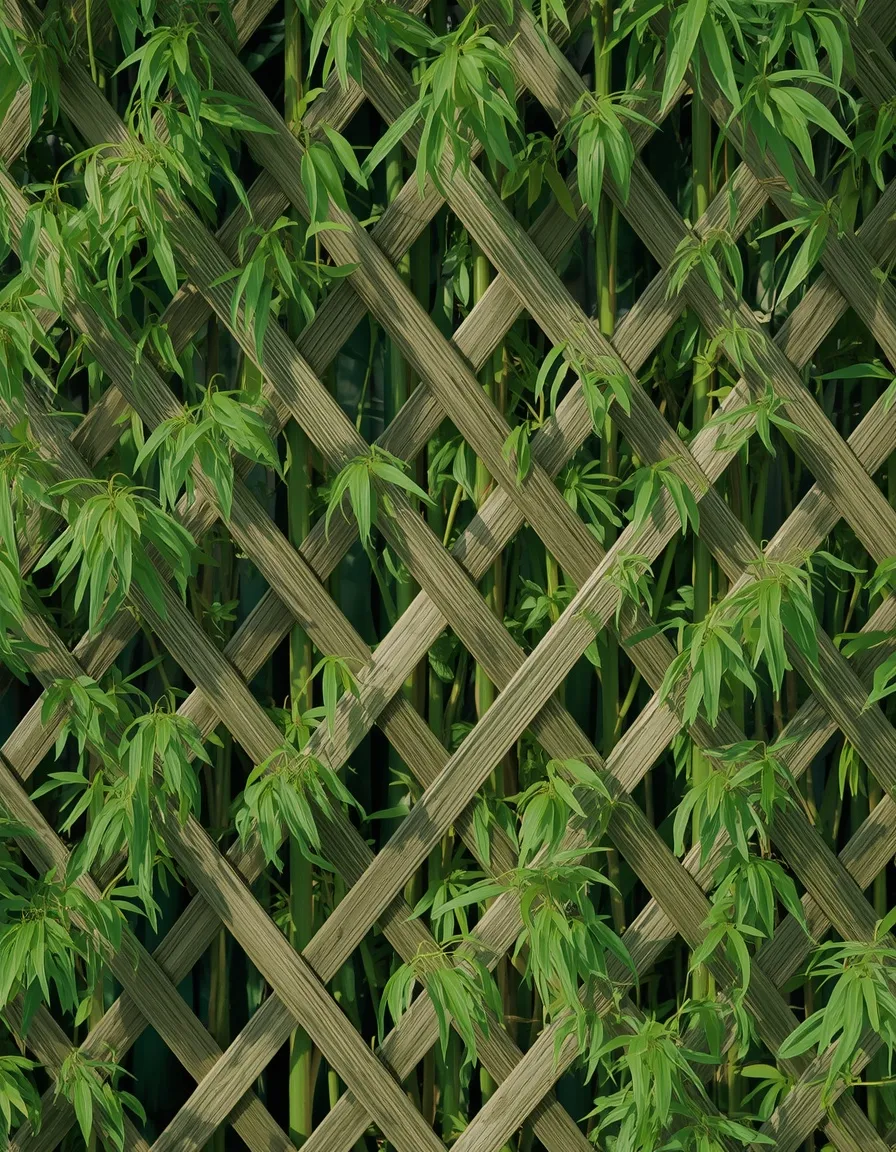
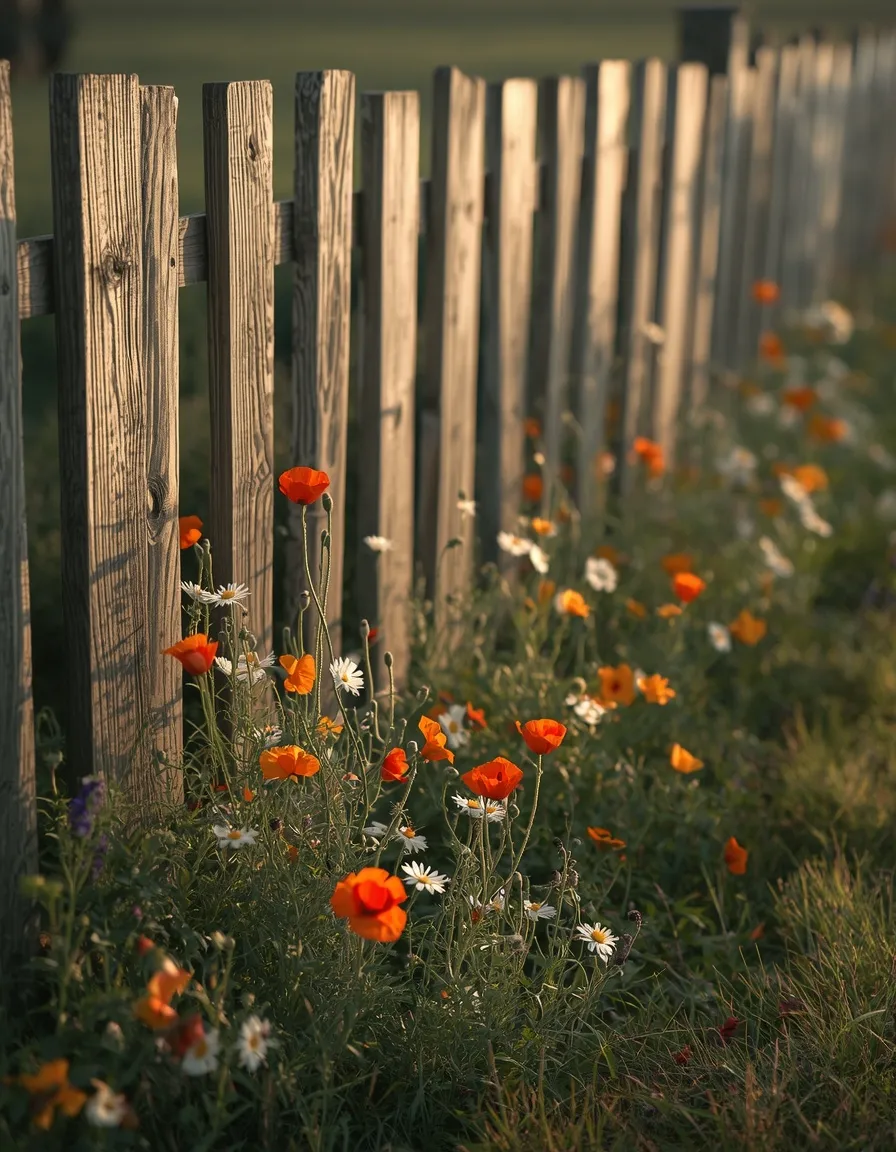
19. Split Rail Fence with Wildflower Border
A simple split rail fence, just two or three horizontal rustic rails threaded through upright posts, paired with a loose wildflower border planted right along its base, gives a boundary a relaxed, countryside feel without blocking any of the view.
Space posts 8 to 10 feet (2.4 to 3 meters) apart and use rot-resistant cedar or locust rails, which hold up outdoors far longer than softer woods without needing paint or stain at all. Sow a native wildflower mix suited to the local climate zone directly along the fence base in early spring or fall, choosing species that will not compete too aggressively with each other, since a mix heavy on cornflower, poppy, and yarrow tends to establish evenly. This style is especially popular among garden fence ideas uk gardeners lean toward for cottage and countryside plots, since it echoes traditional agricultural fencing rather than a suburban boundary. Because the rails sit open, this is not a privacy or security fence, so pair it with hedging further back if screening is also needed. If this relaxed, tucked-away feel is what you’re after, our guide to secret garden ideas has more ways to build that same atmosphere further into the garden.
- Marks a boundary without blocking sightlines or garden views
- Best for cottage, countryside, or informal meadow-style gardens
- Solves the desire for a boundary that does not feel like a wall
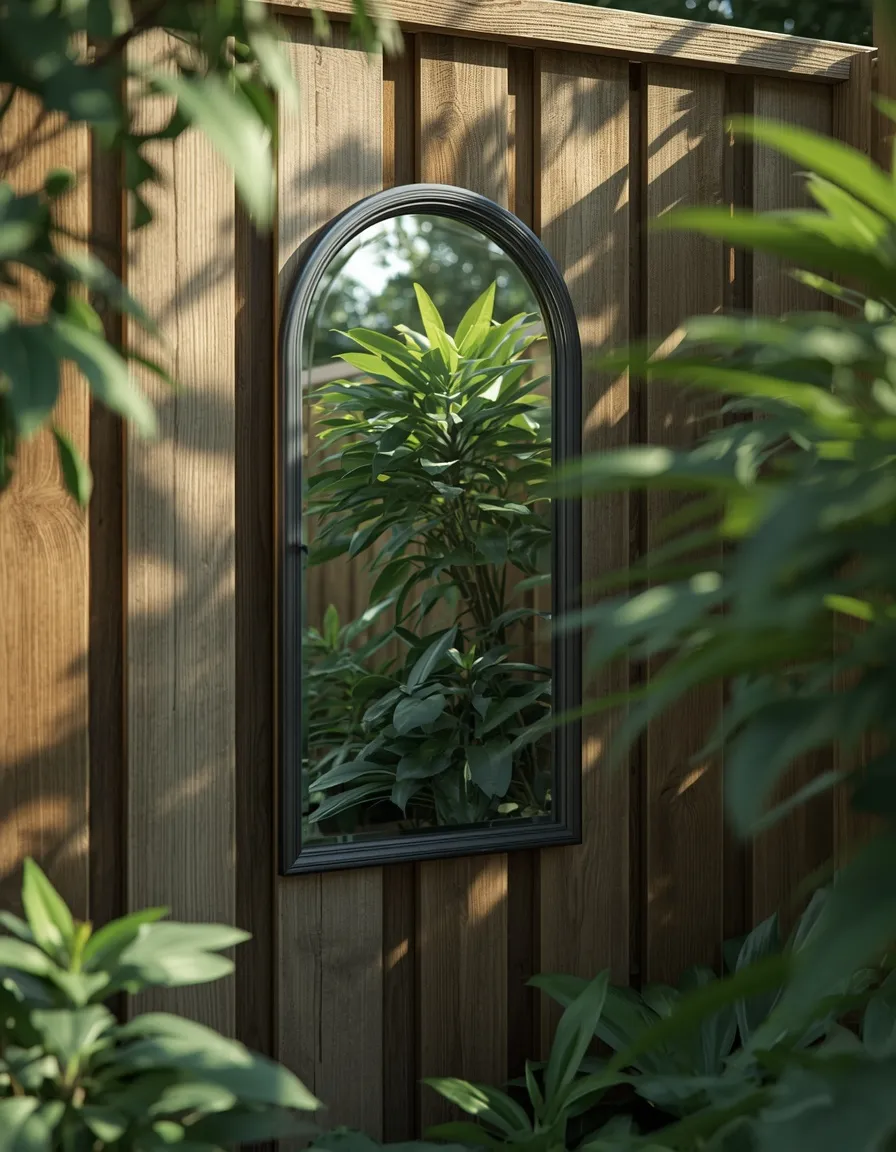
20. Mirror-Accented Fence for Small Gardens
A single weatherproof mirror, or a small cluster of them, mounted onto a fence in a shaded corner tricks the eye into reading a small garden as roughly twice its actual depth, while also bouncing extra light into planting beds that would otherwise stay dim.
Use acrylic or specially coated outdoor mirrors rather than standard household glass mirrors, which fog, degrade, and can crack from temperature swings much faster outdoors. Position mirrors to reflect greenery, such as an established shrub or a climbing vine, rather than a bare wall or the back of the house, since the goal is a doubled garden view, not an odd reflection of siding. Angle the mirror very slightly downward when mounting so it reflects planting rather than sky, which reads as a design choice rather than a mistake. This is one of the more clever, less obvious garden fence decoration ideas for compact courtyards, side returns, and small urban gardens where every foot of visual depth matters.
- Makes a small or narrow garden feel significantly larger
- Best for shaded corners, side returns, and compact courtyards
- Solves the visual dead end feeling of a small enclosed garden
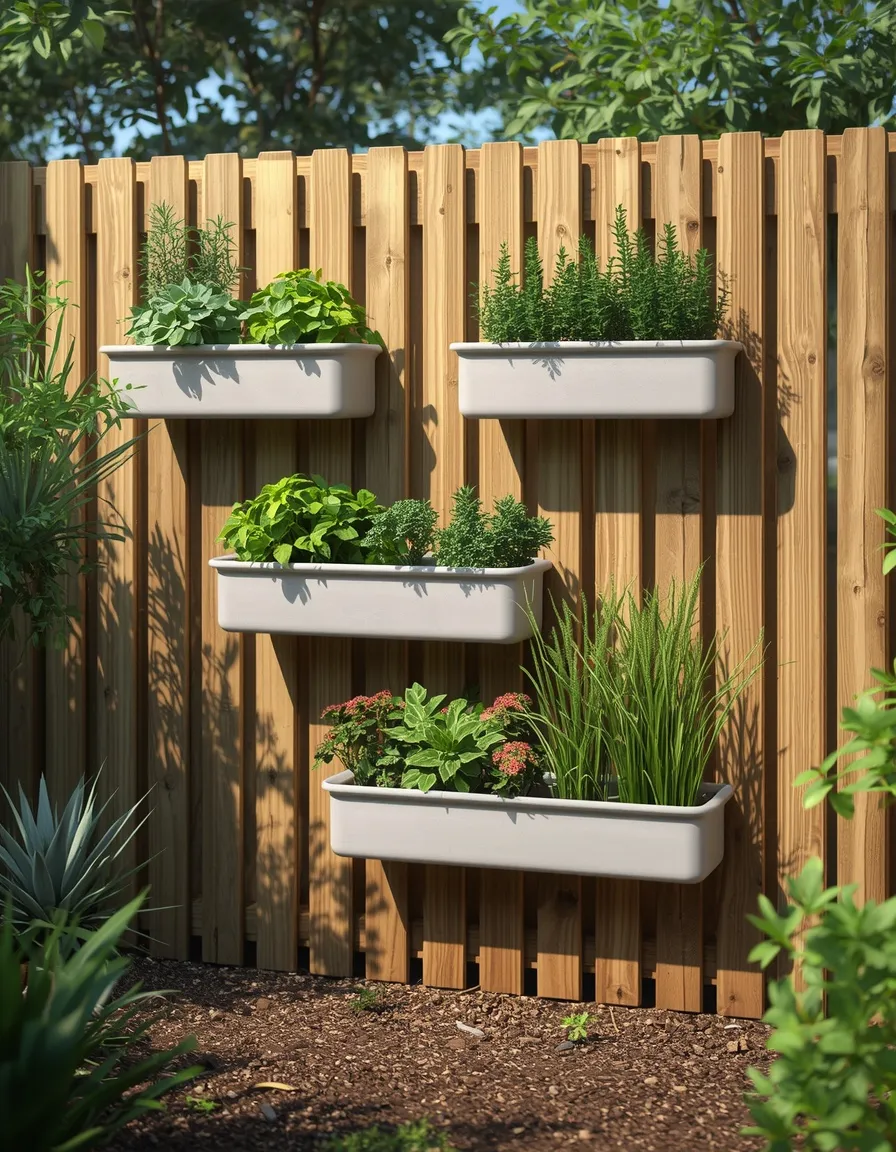
21. Vertical Herb and Succulent Planter Fence
A run of shallow wall-mounted planter troughs fixed to a sunny fence, planted with a mix of culinary herbs and drought-tolerant succulents, turns an unused vertical surface into a genuinely useful kitchen garden within arm’s reach of the back door.
Mount troughs with drainage holes already drilled, or add your own before installing, since standing water against a wooden fence accelerates rot far faster than rain exposure alone. Group plants by water needs rather than mixing randomly, thirsty herbs like basil and mint in one section, drought-tolerant thyme, rosemary, and succulents in another, so a single watering routine does not over or under-serve half the planting. Position the run within easy reach of the kitchen door if the goal is genuinely cooking with what is growing, since herb walls tucked in a far corner of the garden tend to get used far less. This idea pairs well with a raised bed vegetable garden nearby for a fully productive, edible fence line.
- Turns unused fence space into a working kitchen herb garden
- Best for sunny fences within easy reach of the kitchen door
- Solves limited counter or windowsill space for growing fresh herbs
Final Thoughts
A garden fence does not have to stay in the background. Whether you paint an ombre gradient onto plain pickets, weave a living willow fedge, or simply hang a row of planters along the rail, these garden fence ideas prove a boundary can carry as much personality as any flower bed. Start with whichever idea matches your climate, budget, and how much time you actually want to spend on upkeep, since a weekend paint job and a multi-year espalier project solve very different problems. For more structural inspiration, this pairs naturally with broader garden design thinking about how boundaries shape a space. Pick one idea, get it built this season, and let the rest of the garden grow up around it.
Frequently Asked Questions
What is the cheapest way to decorate a garden fence?
Paint is almost always the lowest-cost option, since a plain ombre or solid color update needs only exterior paint and a weekend. Beyond paint, repurposed materials like pallet wood, salvaged frames, or garden prunings woven into a screen cost little more than the fasteners needed to put them up.
How do I keep deer out of my garden without building an extremely tall fence?
A single fence would need to be around 8 feet (2.4 meters) tall to reliably stop deer, which is impractical for most home gardens. A more realistic solution is a double layer of shorter mesh fencing spaced a few feet apart, since deer are reluctant to jump when they cannot judge the landing space between two barriers.
Can I decorate a rented garden’s fence without causing damage?
Yes, several of these ideas are fully reversible, including hanging planter boxes, bamboo screening secured with wire ties, and string lights hung from cup hooks rather than nails driven into the fence itself. Check with a landlord before painting a shared or boundary fence, since paint changes are usually considered semi-permanent.
What is the best garden fence idea for a very small or narrow garden?
A mirror-accented fence panel is one of the most effective tricks for a small space, since it visually doubles the depth of the garden and reflects extra light into shaded corners. Vertical planting options, like a living wall fence or hanging planter boxes, also add greenery without taking up any ground space.
How tall can I build or extend a garden fence, especially in the UK?
In many UK gardens, boundary fences over roughly 2 meters (about 6.5 feet) typically require planning permission, and lower limits often apply near a public highway. Rules vary by council and country, so always confirm current height limits with local planning authorities before adding trellis extensions or building a new tall fence.
Are climbing plants on a garden fence safe if I have pets?
Not always, some popular climbers, including certain jasmine varieties and sweet pea, are mildly to moderately toxic if chewed by cats or dogs. Checking a plant safety resource such as the ASPCA’s toxic and non-toxic plant list before choosing a species is a quick way to plant a fence line that stays safe for pets to be around.