
Introduction
There’s a particular kind of satisfaction in walking out your back door with an empty basket and coming back with dinner. The best homestead garden ideas are built around exactly that moment a garden designed to feed you, not just to look pretty in June. Whether you’re working with a suburban backyard, a rented patch, or a few acres of small farm, the difference between a productive homestead garden and a frustrating one almost always comes down to layout decisions made before the first seed goes in. That’s the philosophy behind everything we share at Sunday Abode: practical design first, beauty woven through it. Below you’ll find 17 ideas layouts, planting systems, and infrastructure matched to real spaces, budgets, and skill levels.
Before You Dig: Planning Your Homestead Garden Layout
The single biggest predictor of a homestead garden’s success is where you put it, not what you plant in it. Before choosing any layout below, spend one week mapping three things: sunlight, water, and drainage.
Watch your space at 9 a.m., noon, and 4 p.m. and sketch where shadows fall. Most vegetables need 6–8 hours of direct sun, and a spot that looks bright in midsummer may sit in shade by early autumn. Then measure the walk from your nearest tap or rain barrel to the proposed beds; anything beyond about 15 m (50 ft) of hose-dragging quietly kills daily watering habits. Finally, after a heavy rain, note where water pools for more than a few hours. Puddling ground means raised beds or drainage work, not in-ground rows.
Be honest about scale, too. A well-managed 40 m² (about 430 sq ft) plot can supply a family’s salads, herbs, and summer vegetables; producing most of a family’s vegetables year-round realistically takes 150–400 m² (1,600–4,300 sq ft) plus storage crops. Good garden design starts with matching ambition to space then choosing the growing style that fits:
| Raised beds | In-ground rows | Containers | |
| Best for | Poor soil, wet sites, tidy backyards | Larger plots, small farms, storage crops | Renters, balconies, patios |
| Startup cost | Higher (frames + soil) | Lowest | Moderate (pots + potting mix) |
| Maintenance | Low weeding, frequent watering | More weeding, less watering | Daily watering in summer |
| Soil control | Full | Limited to what’s there | Full |
| Commitment | Semi-permanent | Permanent | Fully movable |
With that groundwork done, here are 17 homestead garden ideas worth building.
17 Homestead Garden Ideas Worth Stealing
1. Classic Four-Square Kitchen Garden
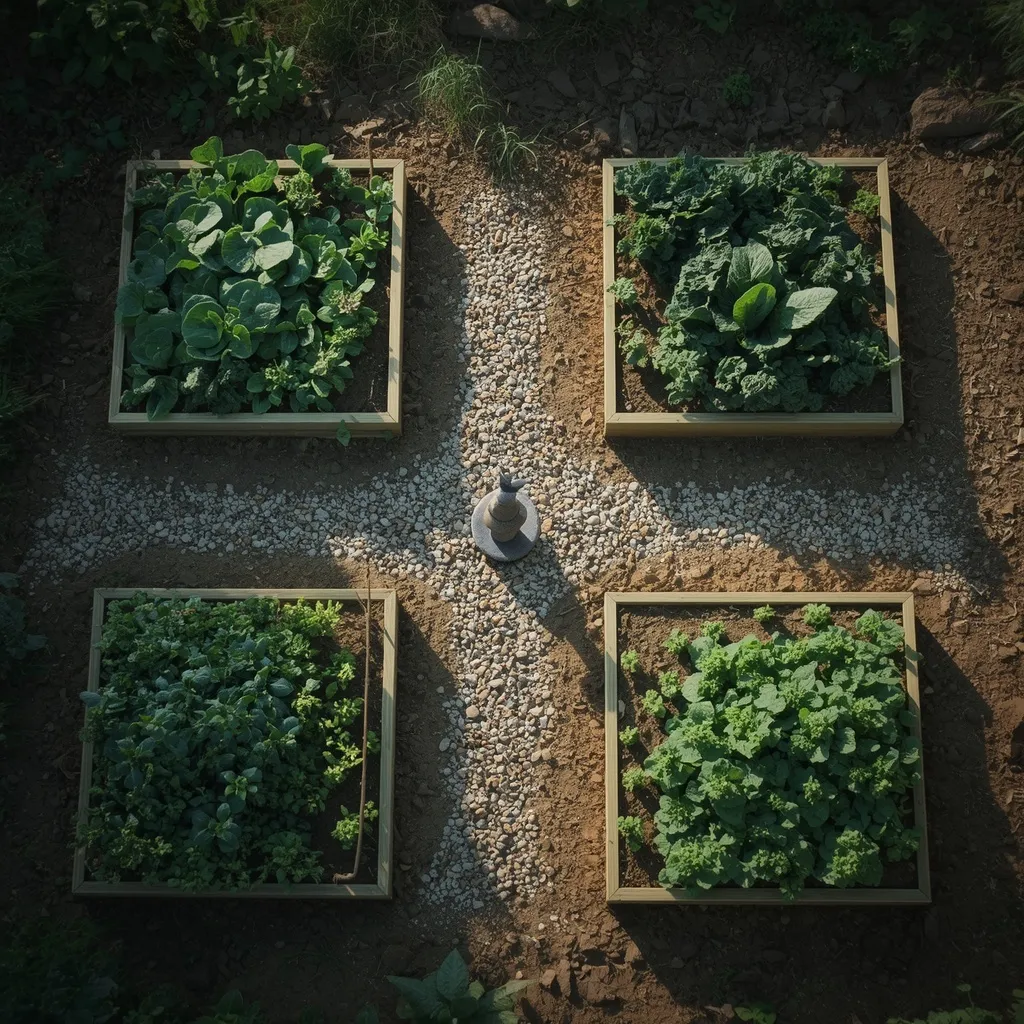
The four-square potager is the oldest homestead garden layout for a reason: four equal beds around a central path make crop rotation almost automatic. Picture four 2.4 × 2.4 m (8 × 8 ft) beds edged in timber, meeting at a crossing wide enough for a wheelbarrow, with a birdbath or obelisk marking the middle.
Assign each square a plant family leafy greens, roots, fruiting crops (tomatoes, peppers, squash), and legumes then shift every family one square clockwise each year. This four-year rotation starves soil-borne diseases like clubroot and blight of their host plants without you tracking anything on paper. The most common mistake is making the central paths too narrow; keep them at least 90 cm (36 in) so two people, or one person and a loaded barrow, can pass.
- Why it works: rotation is built into the geometry, so soil health manages itself.
- Best for: beginners who want structure, and anyone starting a garden from bare lawn.
- Problem it solves: disease build-up from planting tomatoes in the same spot every year.
2. Raised-Bed Grid with Wide Working Paths
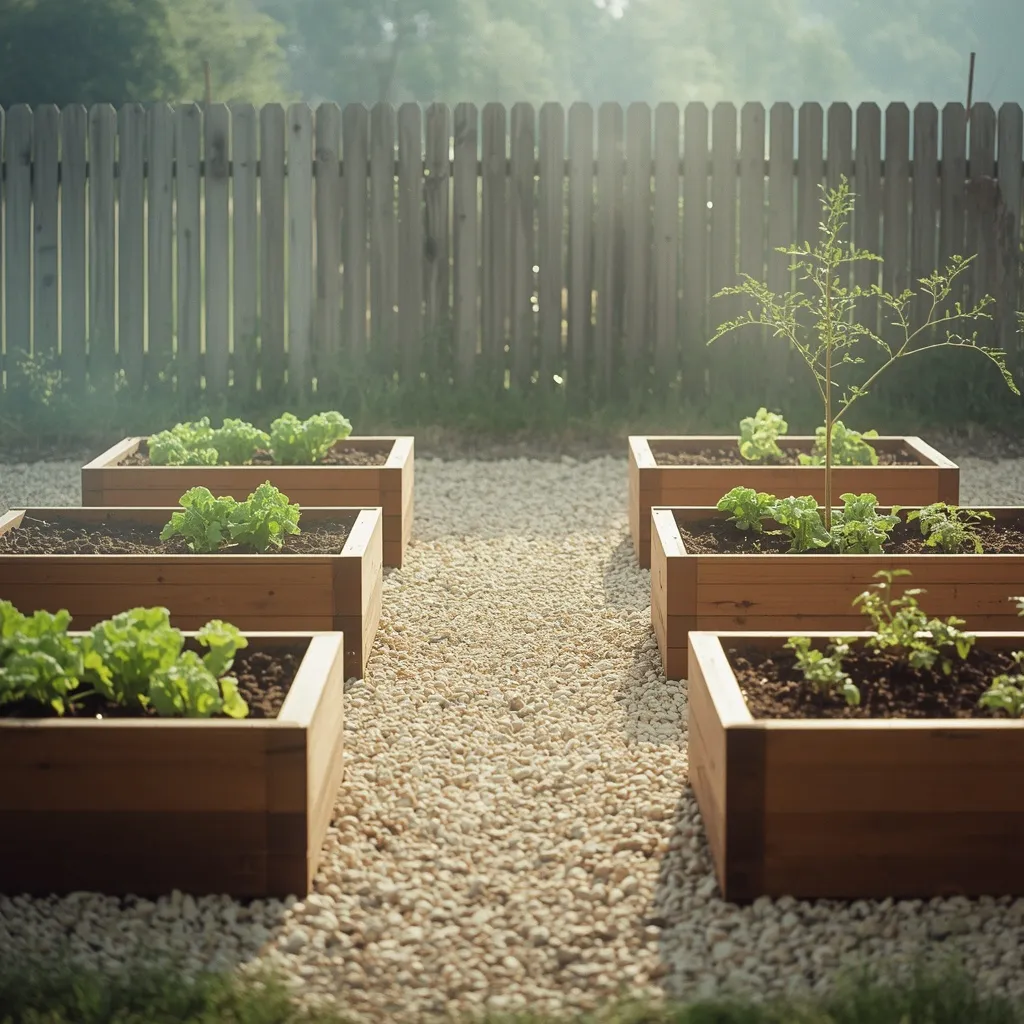
A grid of matching raised beds is the fastest way to make a backyard homestead look intentional and work efficiently. Imagine six cedar or larch beds, each 1.2 m wide × 2.4 m long (4 × 8 ft), set in two neat rows over weed membrane and gravel, steam rising off the soil on a cool morning.
Never build beds wider than 1.2 m (4 ft) that’s the maximum you can reach across from both sides without stepping on the soil, and compaction is the silent killer of raised-bed productivity. Fill them at least 30 cm (12 in) deep, or 45 cm (18 in) if you’re growing carrots and parsnips. Gravel paths of 60 cm (24 in) between beds stay mud-free year-round; if a wheelchair or garden cart needs access, widen the main path to 90 cm (36 in).
- Why it works: perfect soil from day one, minimal weeding, and clean sight lines that suit a homestead garden aesthetic.
- Best for: wet or clay-heavy sites, tidy suburban backyards, and gardeners with back or knee issues.
- Smart variation: cap one bed’s edges with a 15 cm (6 in) board to double as seating while you weed.
3. Keyhole Bed for Tight Corners
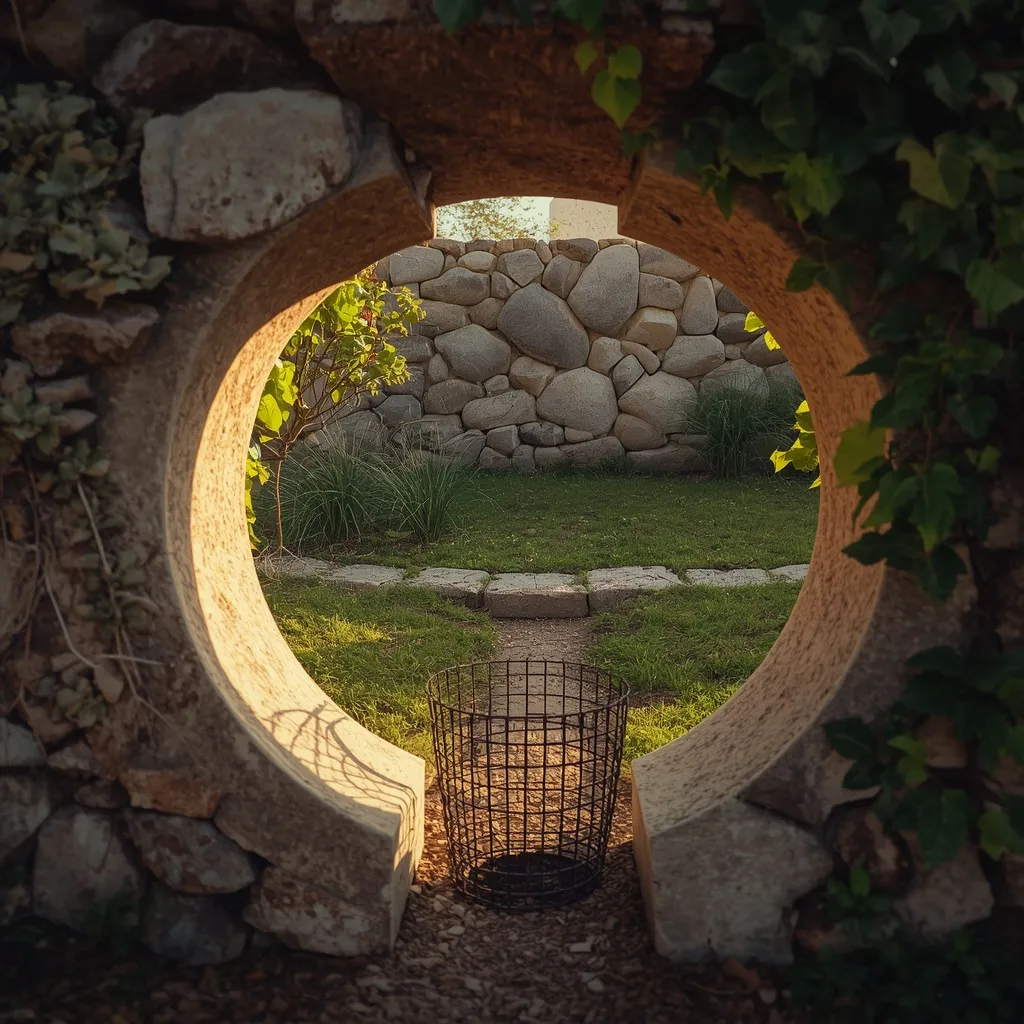
A keyhole bed packs composting and grows into one circular footprint about 2 m (6.5 ft) across. From above it looks like a pie with one slice removed: a round, waist-high stone or brick bed with a notch cut to the center, where a mesh basket receives kitchen scraps that feed the surrounding soil.
Originally developed for dry climates in southern Africa, the design shines anywhere water is precious moisture and nutrients wick outward from the compost core every time you water into the basket. Build the walls 80–90 cm (32–36 in) high for no-bend gardening, and layer the base with cardboard, sticks, and rough compost before topping with 20 cm (8 in) of good soil. Skip meat and dairy in the central basket; stick to vegetable scraps, coffee grounds, and eggshells so it never attracts rodents.
- Why it works: one structure handles composting, watering efficiency, and ergonomic growing.
- Best for: small budgets (walls can be salvaged brick), dry-summer climates, and awkward corners.
- Problem it solves: “no room for a compost pile” in a small homestead garden.
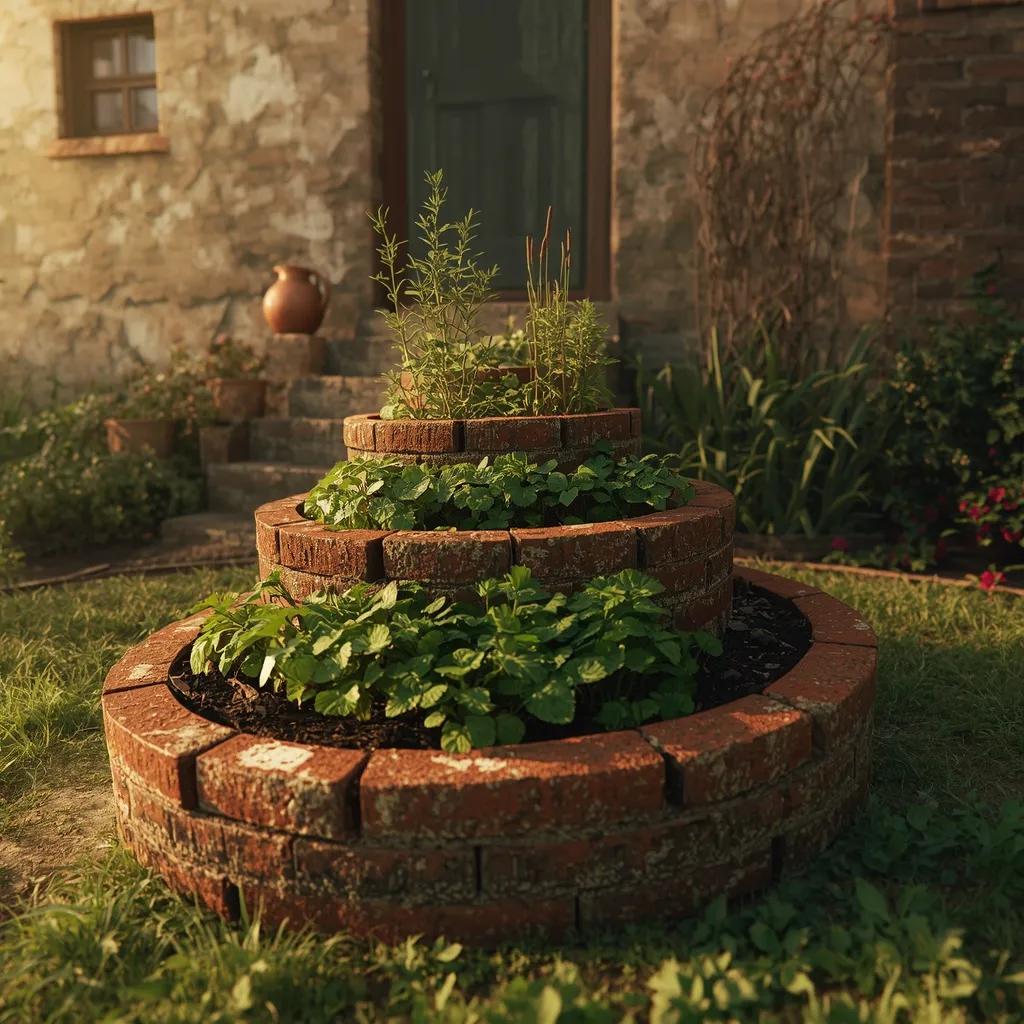
4. Herb Spiral by the Kitchen Door
An herb spiral turns one 1.5 m (5 ft) circle into four different growing climates. Stones wind upward into a mound 60–80 cm (24–32 in) tall: the sunny top drains fast for rosemary, thyme, and oregano; the shadier, damper base suits parsley, chives, and mint (plant mint in a sunken pot, or it will colonize everything).
Site it within ten steps of the kitchen door herbs you have to walk for are herbs you stop using. One honest caveat: the top of a spiral dries out fast, and in hot-summer regions it can bake Mediterranean herbs by August. If your summers regularly top 35 °C (95 °F), face the spiral’s high side away from afternoon sun and water the peak every two to three days. As a sculptural feature in reclaimed stone or brick, it does more for a homestead garden aesthetic than almost anything else its size.
- Why it works: vertical microclimates mean one small structure grows herbs with opposite needs.
- Best for: cooks, small gardens, and anyone who wants beauty and function in the same square metre.
- Common mistake: building it in the lawn’s far corner where nobody harvests from it.
5. Trellis Archway Tunnel
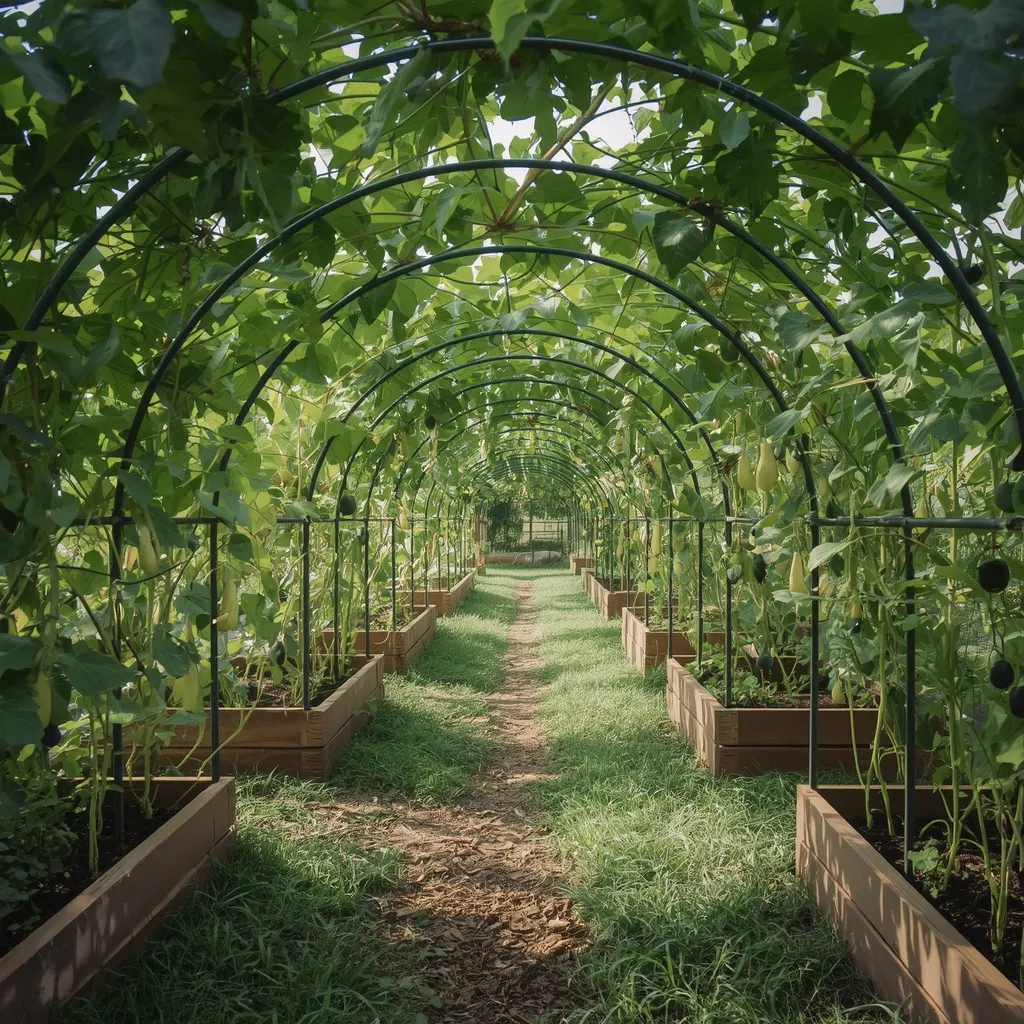
A tunnel of arched trellises turns a plain path into the most photographed spot on the property while doubling growing space. A single livestock panel roughly 1.3 × 4.9 m (50 in × 16 ft) bent between two raised beds forms an instant arch sturdy enough for winter squash; three or four in a row create a green tunnel dripping with beans, cucumbers, and ‘Tromboncino’ squash by midsummer.
Vertical growing keeps fruit clean, straight, and visible at eye level, which alone cuts the “missed zucchini turned into a marrow” problem dramatically. Anchor each panel with 60 cm (24 in) T-posts or screw it directly to the bed frames a fully loaded arch in an autumn storm carries serious weight, and cut panel edges are sharp enough to warrant gloves during installation. Underplant the arch’s shaded interior with lettuce, which appreciates the summer relief.
- Why it works: doubles yield per square metre and creates shade you can farm underneath.
- Best for: small backyards where ground space is the limiting factor.
- Problem it solves: sprawling squash vines swallowing half the garden.
6. Three Sisters Companion Bed
The Three Sisters corn, climbing beans, and squash grown together is a living lesson in companion planting refined by Indigenous farmers across the Americas over centuries. Picture low soil mounds about 45 cm (18 in) across and 1 m (3 ft) apart, corn rising from each, beans spiraling up the stalks, and broad squash leaves shading the ground between.
The mechanics are elegant: corn provides the trellis, beans fix nitrogen that feeds next year’s soil, and squash leaves suppress weeds and slow evaporation. Timing is the part most articles skip sow corn first, then wait until it’s 15 cm (6 in) tall, roughly two to three weeks, before planting beans, or the beans will outrun and smother the young stalks. Choose a tall heritage corn like ‘Golden Bantam’ rather than short modern hybrids, which can’t carry the bean load.
- Why it works: three crops from one bed, with each plant doing a job for the others.
- Best for: families gardening with kids, and anyone with at least a 3 × 3 m (10 × 10 ft) sunny block smaller plantings pollinate poorly.
- Common mistake: planting all three sisters on the same day.

7. Chicken Moat Around the Garden
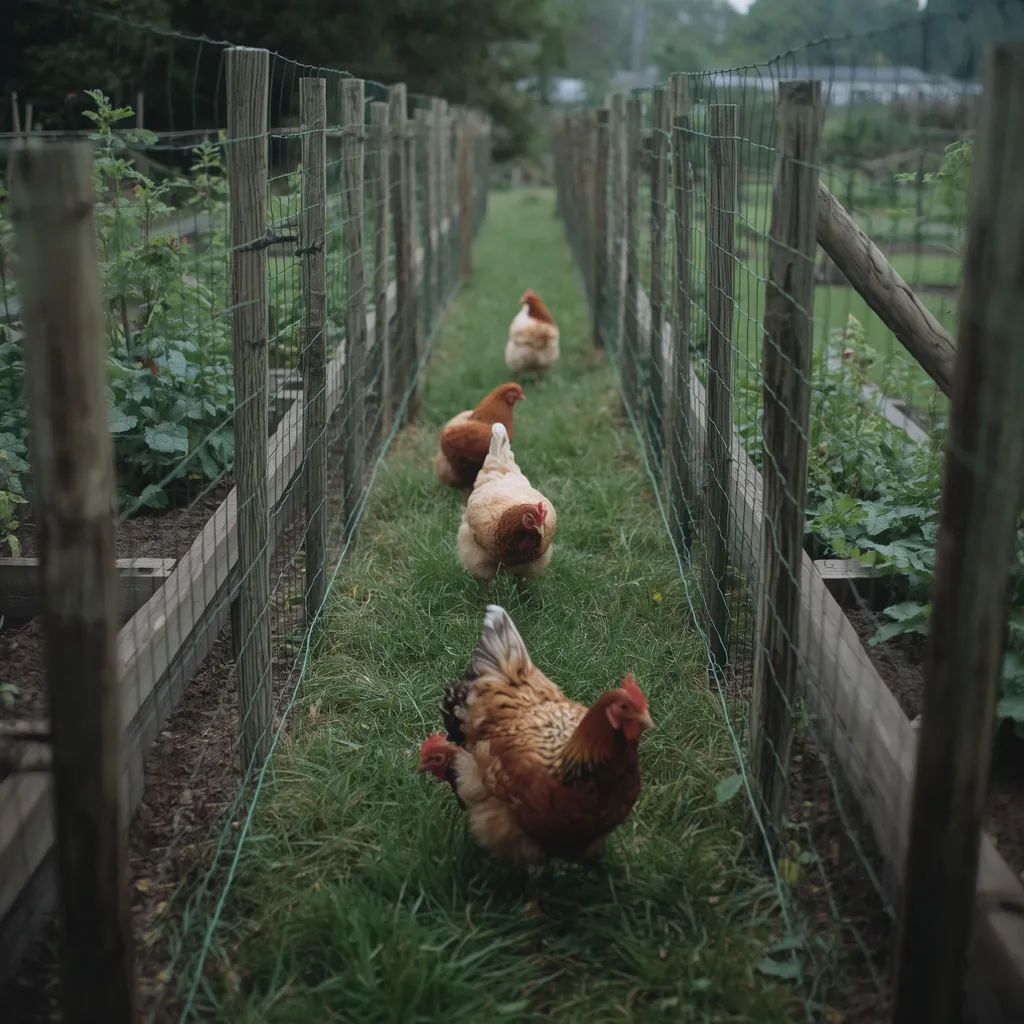
A chicken moat is a narrow run typically 1–1.2 m (3–4 ft) wide that wraps around the vegetable garden’s perimeter, turning your flock into a living pest barrier. Slugs, snails, and crawling insects heading for your brassicas must cross the moat first, and very few make it past a patrolling hen.
The layout needs honest food-safety handling, which most homestead garden ideas gloss over. Fresh chicken manure can carry Salmonella and E. coli, so never let birds range directly on beds within 90–120 days of harvesting crops that touch the soil. Use the longer window for anything eaten raw, like lettuce or carrots. The moat solves this neatly by keeping birds adjacent to, never on, growing beds during the season; open the gates and let them till and clean the beds only after the final autumn harvest. Fence both sides at 1.5 m (5 ft), or clip flight feathers on one wing.
- Why it works: pest control, weed-seed cleanup, and manure production from one perimeter strip.
- Best for: established gardeners on larger backyard or small-farm plots who already keep (or plan to keep) hens.
- Safety note: always wash hands after handling birds, and site coops and runs away from household water sources.
8. Backyard Food Forest in Layers
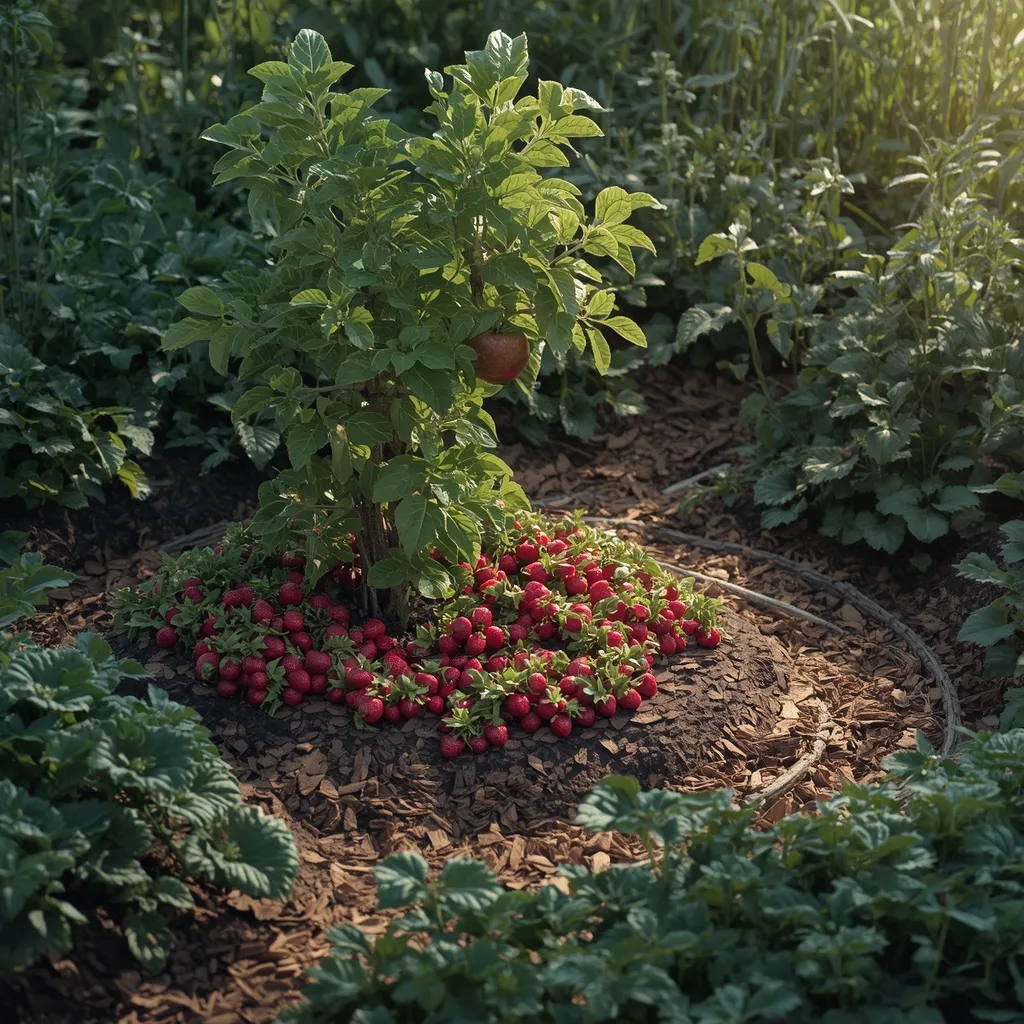
A food forest stacks edible plants the way a woodland does: fruit trees up top, berry shrubs beneath, herbs and perennial vegetables at ground level, all sharing one footprint. Even a 6 × 6 m (20 × 20 ft) corner can hold a dwarf apple, three currant bushes, a skirt of rhubarb and sorrel, and strawberries as living mulch.
Match every tree and shrub to your climate before buying a quick check of the USDA Plant Hardiness Zone Map (or your national equivalent, such as RHS hardiness ratings in the UK) prevents expensive mistakes like planting zone-8 figs into a zone-5 winter. The honest caveat: food forests cast shade, and that shade spreads as trees mature. Site yours on the north side of the garden (south side in the Southern Hemisphere) so it never shadows your annual vegetable beds the most common regret among people who planted trees first and planned later.
- Why it works: perennials front-load the work into year one, then maintenance drops to pruning and picking.
- Best for: low-maintenance seekers and anyone planning to stay in their home five or more years.
- When it doesn’t work: tiny yards where a maturing canopy would shade the only sunny growing space.
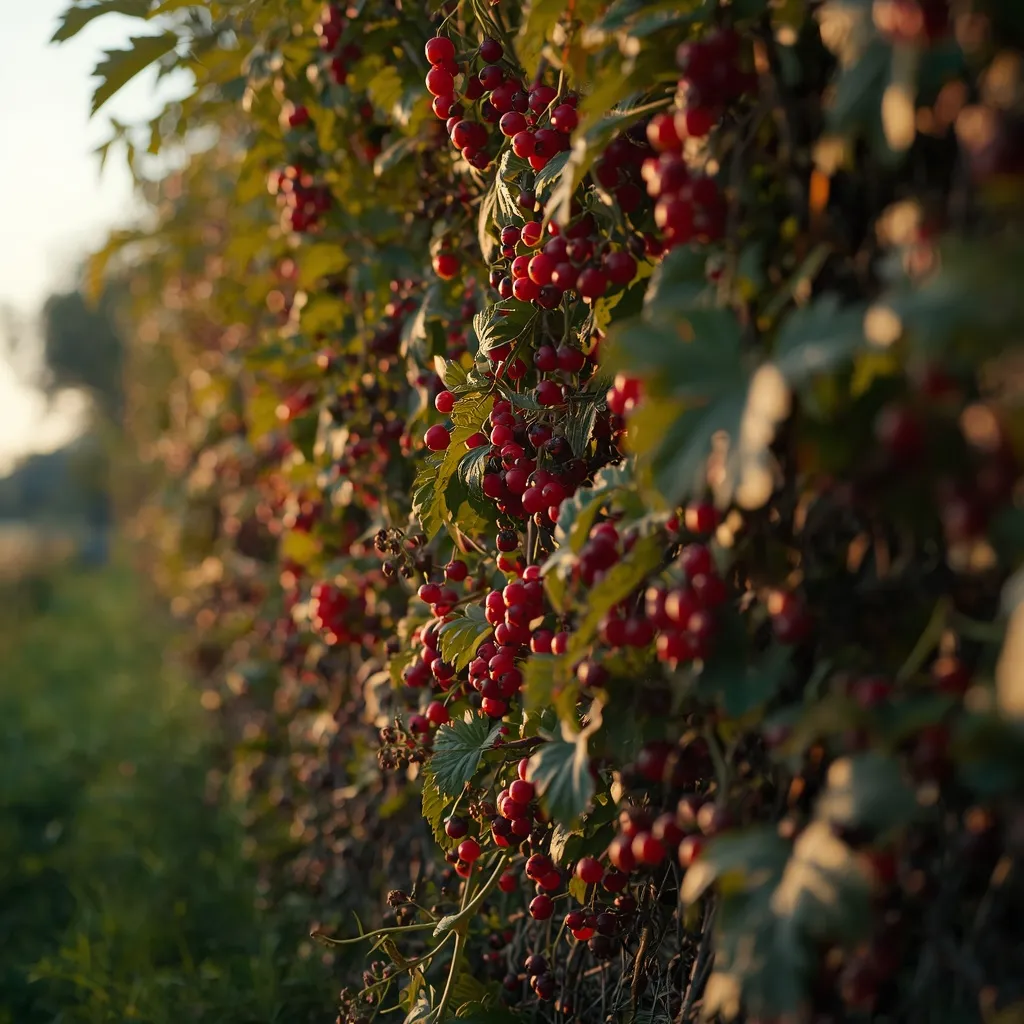
9. Berry Hedge as a Living Fence
Why fence a boundary with dead timber when a berry hedge marks the line and pays rent in fruit? Along a sunny property edge, alternate red currants, gooseberries, and jostaberries at 1–1.2 m (3–4 ft) spacing; within three years you have a chest-high hedge yielding 2–4 kg (4.5–9 lb) of fruit per mature bush.
Currants and gooseberries are the workhorses here they tolerate partial shade, fruit reliably in cool climates, and shrug off neglect that would sulk a blueberry. Blueberries, by contrast, demand acidic soil at pH 4.5–5.5 and are usually happier in dedicated containers of ericaceous compost than in a mixed hedge. If deterrence matters as much as dessert, weave a thorny gooseberry like ‘Invicta’ along the most trespassed stretch. Net the hedge with taut mesh in the fortnight before ripening, or the birds will schedule the harvest for you.
- Why it works: one planting handles privacy, boundary-marking, and a freezer full of fruit.
- Best for: small farms and larger backyards with a sunny fence line doing nothing.
- Smart variation: in hot climates, swap in pomegranate or pineapple guava for the same hedge-plus-harvest effect.
10. Cut-Flower and Pollinator Strip
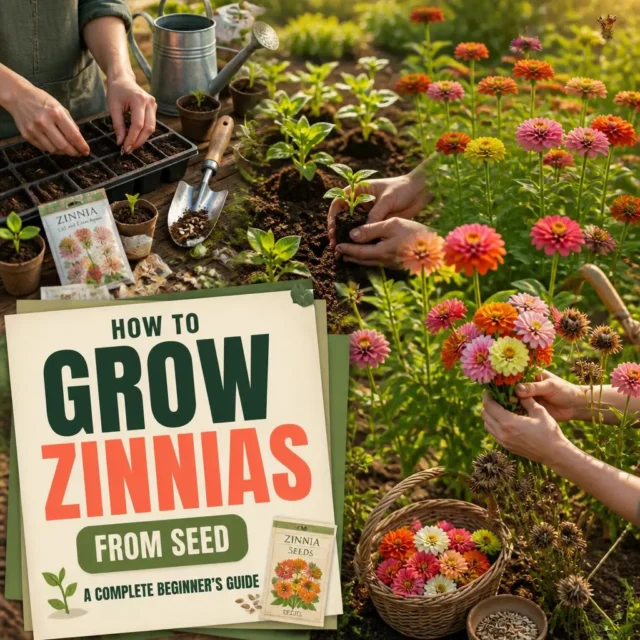
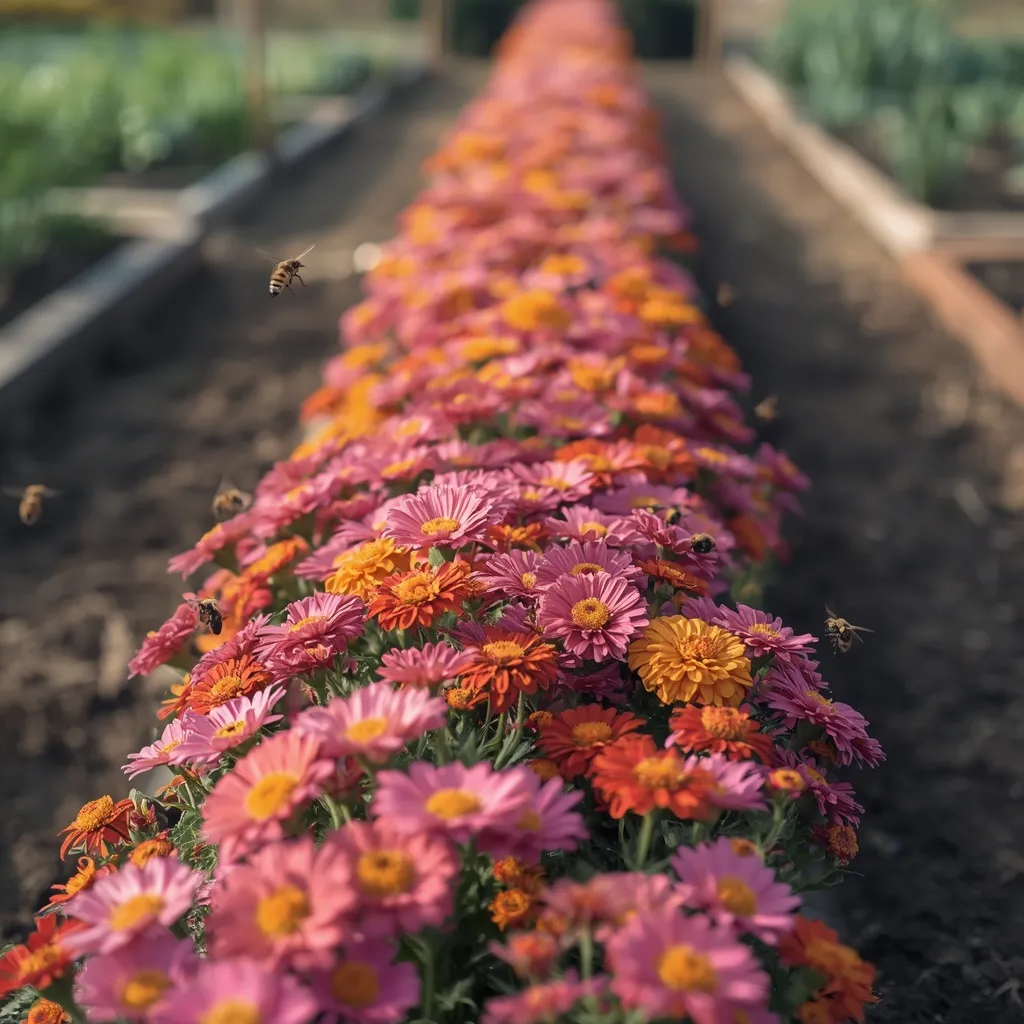
A dedicated flower strip isn’t decoration on a homestead ‘s infrastructure. One 1 × 6 m (3 × 20 ft) band of zinnias, cosmos, calendula, and sweet alyssum along the garden’s edge measurably boosts pollination of squash, beans, and fruit while feeding the hoverflies and lacewings that eat your aphids.
Sow hard-working annuals thickly in spring and cut blooms constantly cutting is what keeps zinnias and cosmos producing from early summer to first frost, so this strip doubles as a bouquet supply all season. Calendula earns a permanent spot by self-seeding and pulling kitchen duty as edible petals. If you love a softer, romantic palette, the same strip design works beautifully with the blush tones from our pink flowers garden ideas ‘Benary’s Giant Pink’ zinnias hold up especially well in a vase.
- Why it works: more pollinator visits mean measurably better fruit set on vegetables, not just prettier borders.
- Best for: every homestead garden, at every scale the closest thing to a universal idea on this list.
- Problem it solves: poor squash and bean yields caused by too few pollinator visits.
11. Market-Garden Rows for a Small Farm
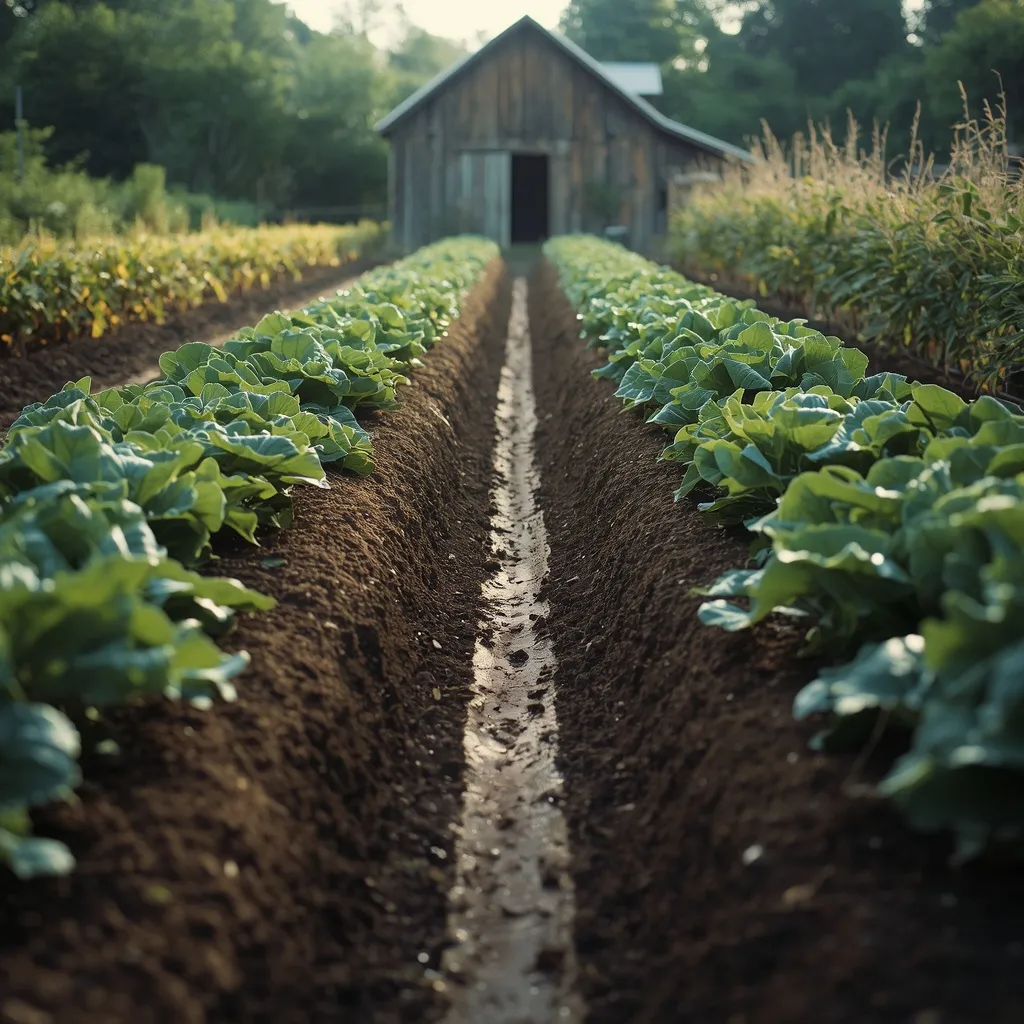
Once you pass roughly 200 m² (2,150 sq ft) of growing space, the raised-bed grid gives way to the market-garden standard: permanent in-ground beds 75 cm (30 in) wide with 45 cm (18 in) paths. Picture long, arrow-straight beds of uniform length 10 m (33 ft) is a common module stretching across a small-farm plot, each mulched and edged only by the worn footpath beside it.
The 75 cm width matters because nearly every professional tool broadfork, seedbed rake, row cover, drip line comes sized to it, and uniform bed lengths mean one set of hoops or covers fits everywhere. Keep the beds permanent and the paths permanent: feet compact paths, roots enjoy beds, forever. This layout is overkill for a salad garden but exactly right if you’re feeding a large family, selling at a stall, or filling a chest freezer with potatoes, onions, and winter squash.
- Why it works: standardization turns growing into a repeatable system instead of a series of one-off decisions.
- Best for: small-farm and large-plot homesteaders producing serious volume.
- Common mistake: tilling the whole plot annually instead of maintaining permanent beds you re-fight the same weeds every year.
12. Cottage-Style Edible Front Yard
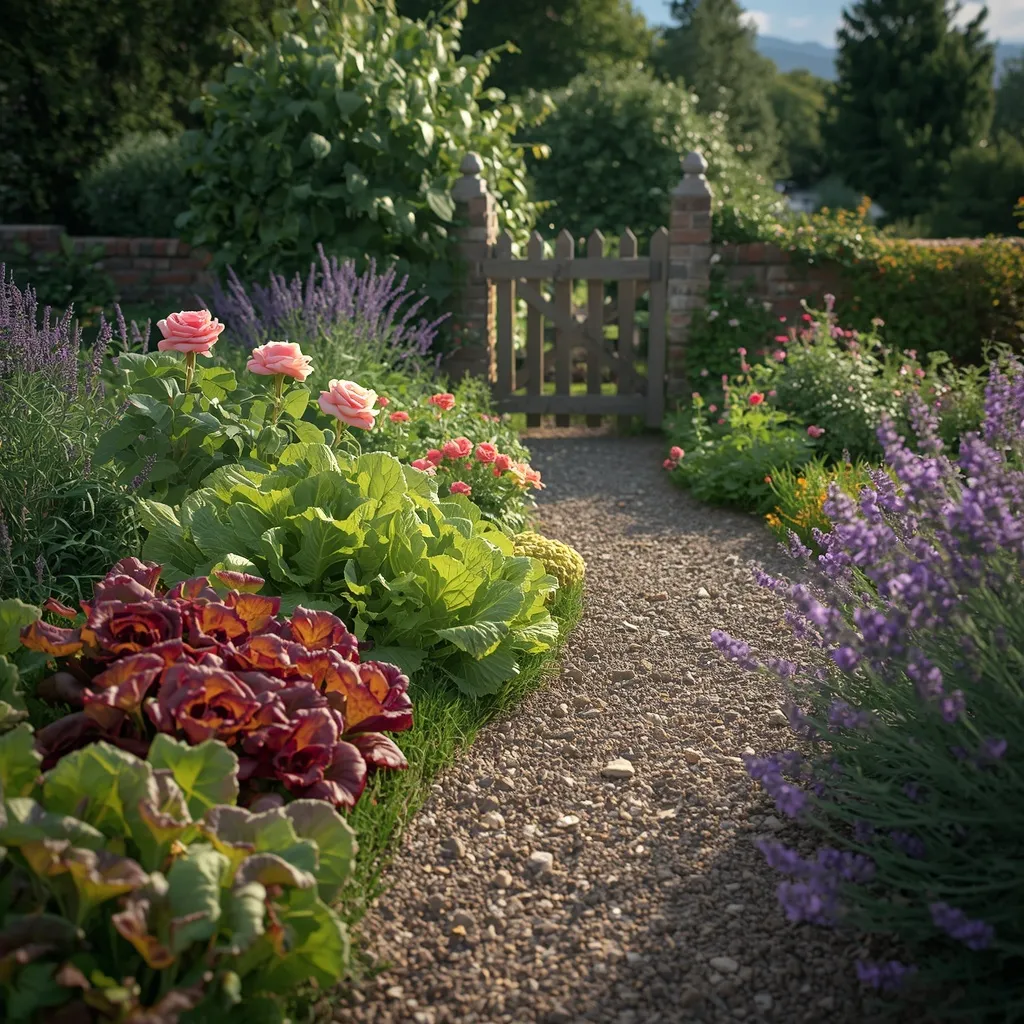
Who says the homestead has to hide out back? A cottage-style edible front yard mixes rainbow chard, bronze fennel, and frilly lettuces among roses and lavender so seamlessly that passersby see a flower garden and you see dinner. Curved gravel paths, a low picket or woven-willow edge, and plants repeated in clumps of three keep it reading as “designed” rather than “allotment.”
Structure separates charming from chaotic: anchor the beds with three or four woody evergreens (rosemary, dwarf fruit trees, lavender), then let annual edibles churn around them each season. Two cautions belong here. First, if you garden under a homeowners’ association or strict local ordinances, check the rules on front-yard vegetables before planting. Second, classic cottage flowers like foxglove are toxic to children and pets if eaten the ASPCA’s toxic plant database is worth a check before mixing ornamentals into a scheme your dogs, cats, or toddlers will graze from.
- Why it works: unlocks the front-yard sun that most homes waste on lawn.
- Best for: décor-minded gardeners who want the homestead garden aesthetic without a farm look.
- Problem it solves: a shady backyard paired with a sun-drenched, underused front.
13. Cold Frames and a Lean-To Greenhouse
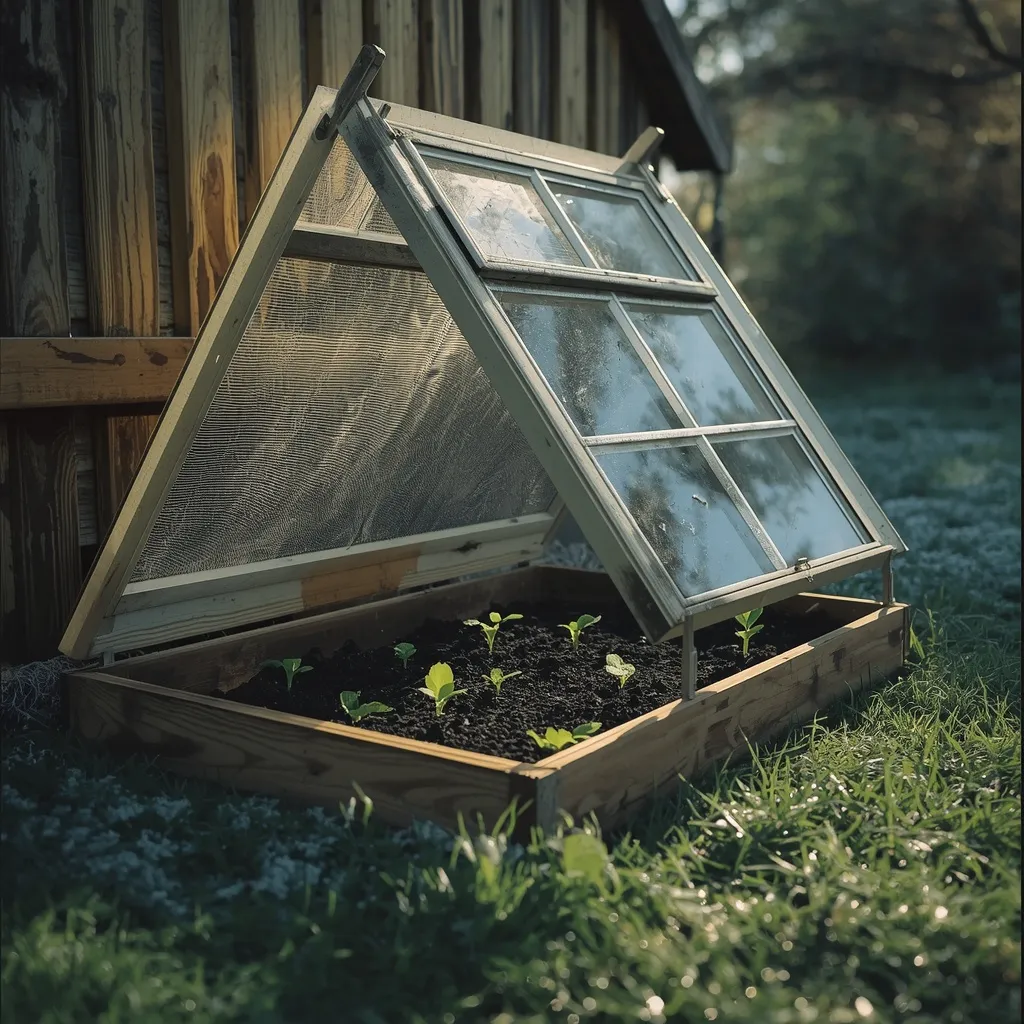
Season extension is the cheapest yield increase available: protecting crops from frost adds four to eight growing weeks at each end of the season in most temperate climates. The entry point is a cold frame a bottomless box with a sloped glass or polycarbonate lid buildable for nearly nothing from a salvaged window and four boards, sized to whatever the window dictates.
Face the sloped lid toward the equator (south in the Northern Hemisphere) and prop it open on any sunny day above 10 °C (50 °F), because a sealed frame can cook seedlings by noon even in early spring; an inexpensive automatic vent opener removes the human error. The step up is a lean-to greenhouse against a sun-facing house or shed wall, which borrows the building’s stored warmth and often stays 3–5 °C (5–9 °F) warmer overnight than a freestanding one. If using old windows, check painted frames for lead paint before sanding, and glaze with safety in mind wherever children play.
- Why it works: spinach in December and tomatoes planted three weeks early, for the price of scrap materials.
- Best for: budget-conscious gardeners in climates with real winters.
- Common mistake: forgetting to vent more cold-frame crops die of heat than of frost.
14. Rainwater Collection Station
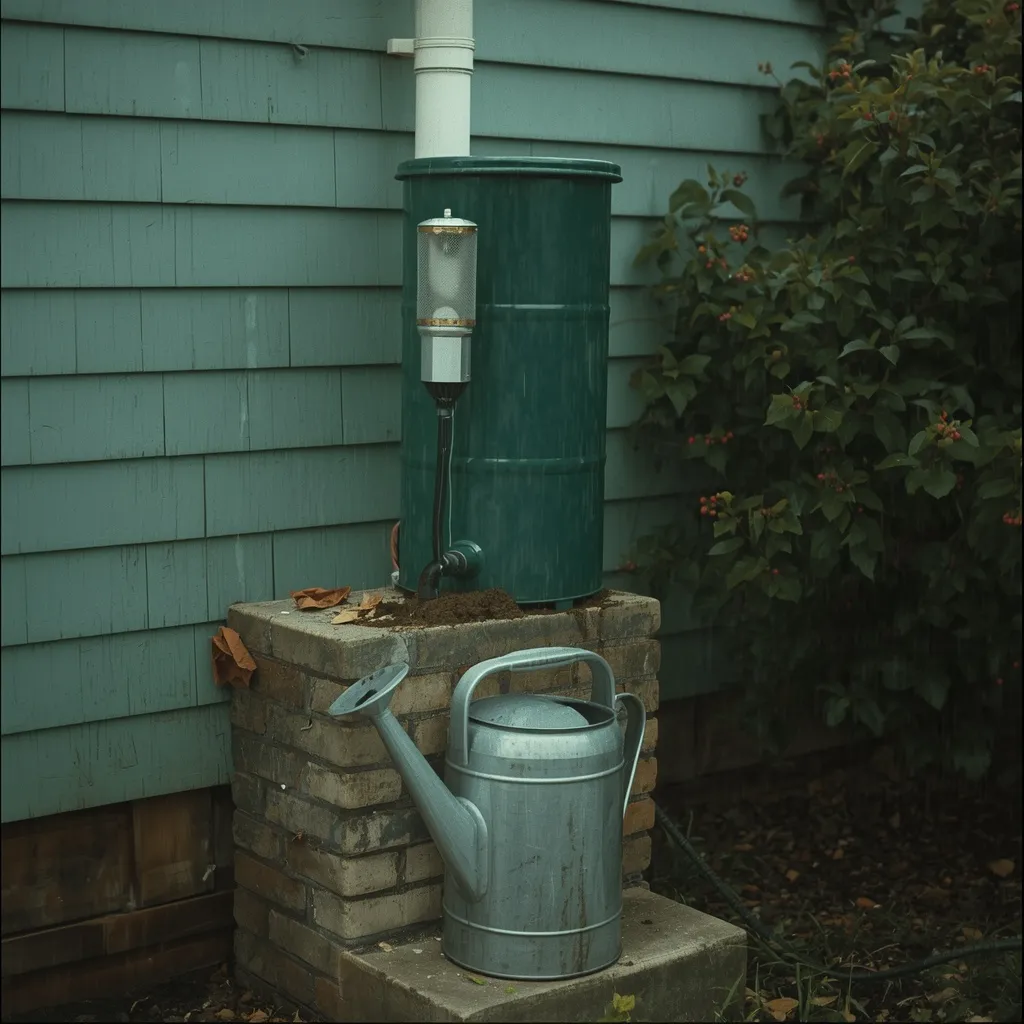
A single 200 L (roughly 55 gal) barrel under one downspout captures surprising volume: just 10 mm (0.4 in) of rain on a modest 50 m² (540 sq ft) roof section yields around 500 L (130 gal) enough to fill that barrel twice. Picture a slimline tank tucked against the shed, raised on a sturdy block plinth so a watering can slides under the tap, with an overflow hose directed to the berry hedge.
Three details separate an asset from a nuisance. Screen every inlet with fine mesh, or you’re breeding mosquitoes; raise the barrel at least 40 cm (16 in), because gravity pressure is what makes the tap usable; and fit a first-flush diverter or at least a leaf filter so roof grit stays out. Use collected water on soil rather than directly on leafy crops you’ll eat raw, and note that a few regions regulate rainwater harvesting checking local rules takes five minutes and is worth it.
- Why it works: free, chlorine-free water positioned exactly where the garden needs it.
- Best for: dry-summer climates, metered-water households, and gardens far from an outdoor tap.
- Safety note: a full 200 L barrel weighs about 200 kg (440 lb) the plinth must be dead level and solid.
15. Three-Bay Compost Hub
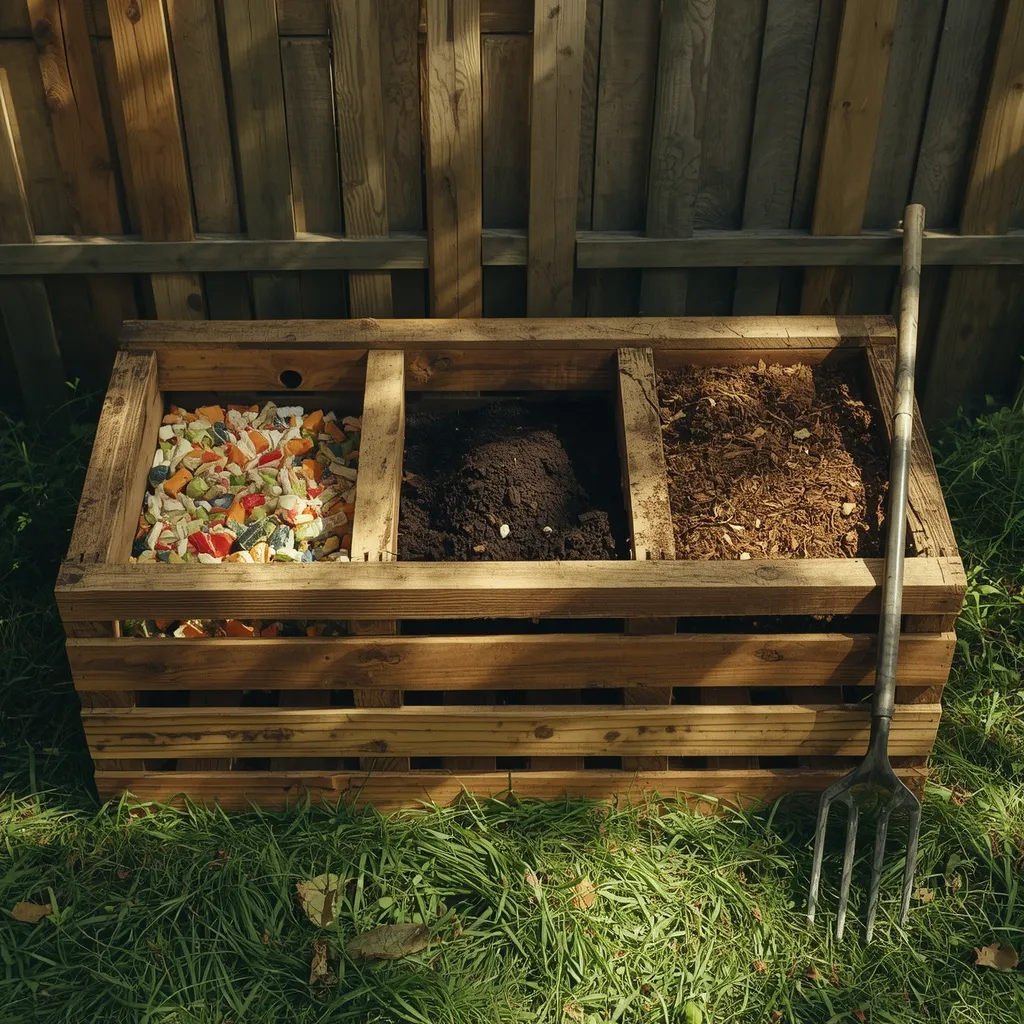
Compost is the engine of a homestead garden, and a three-bay system is what makes it run continuously rather than in frustrating stops and starts. Three open-fronted bays, each about 1 × 1 × 1 m (3 × 3 × 3 ft) built from pallets, timber, or wire hold the sequence: fresh material collecting in bay one, an active pile cooking in bay two, finished compost curing in bay three.
The cubic-metre size isn’t arbitrary; it’s the minimum mass for a pile to reach the 55–65 °C (130–150 °F) core temperatures that kill most weed seeds and pathogens. Feed it roughly two parts dry “browns” (leaves, straw, shredded cardboard) to one part fresh “greens” (kitchen scraps, grass clippings), and turn the active bay every two to three weeks. Site the hub in light shade within wheelbarrow distance of both kitchen and beds a compost pile at the property’s far corner is a compost pile that starves.
- Why it works: continuous flow means finished compost is always ready at planting time.
- Best for: any plot over about 100 m² (1,075 sq ft); smaller gardens do fine with a single tumbler or the keyhole bed from Idea 3.
- Problem it solves: the eternal half-finished single pile you can never actually use.
16. Container Homestead for Renters and Balconies
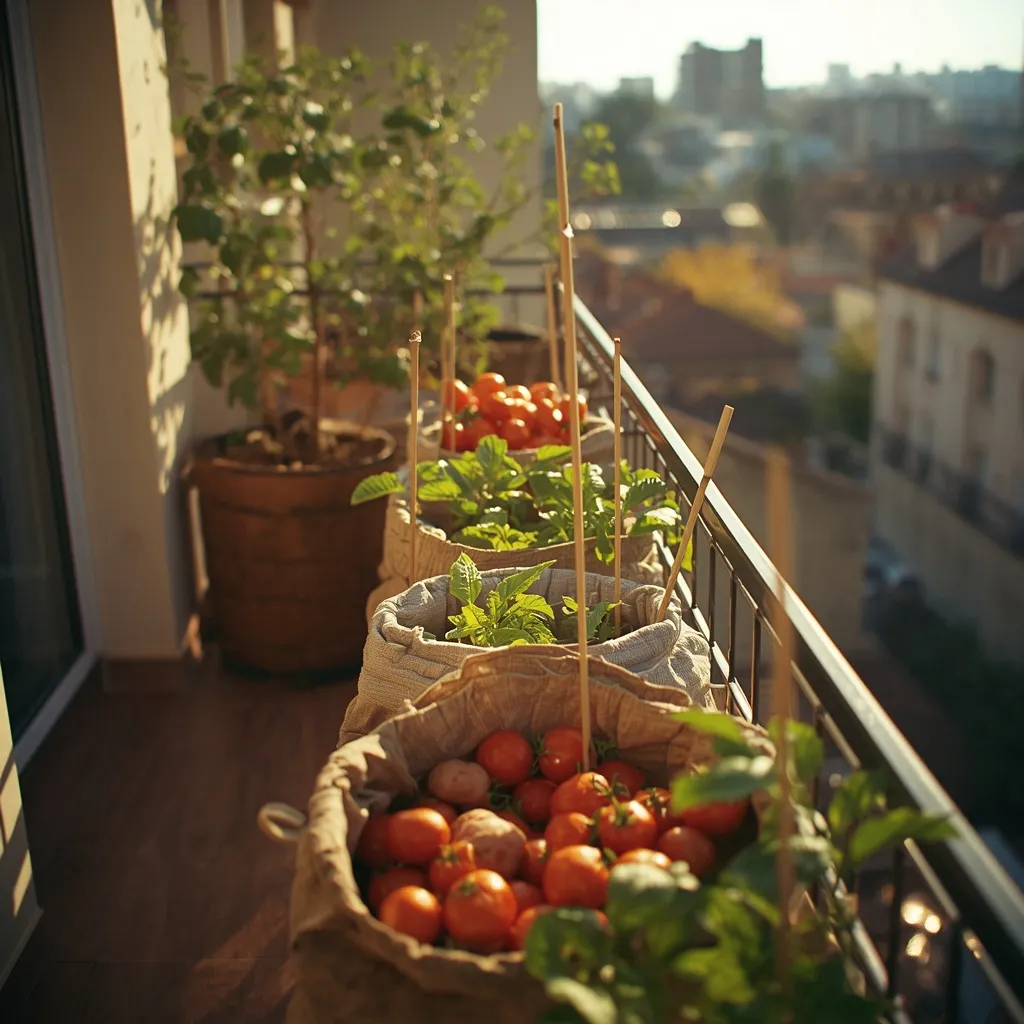
No yard, no permission to dig, no problem a serious amount of food grows in containers you can take with you when the lease ends. Picture a sunny balcony lined with five 40 L (10 gal) fabric grow bags of potatoes and tomatoes, a rail planter of salad leaves, and a half-barrel holding a dwarf ‘Meyer’ lemon.
Two rules govern container success. Size: fruiting crops need volume, so give tomatoes, peppers, and potatoes at least 40 L (10 gal) each, while herbs and lettuce thrive in 10 L (2.5 gal). Water: containers dry out daily in summer heat, so either commit to a morning watering routine or run a simple drip kit on a battery timer the single upgrade that keeps balcony gardens alive through holiday weekends. Check your balcony’s load rating before grouping large wet containers (soil-filled pots weigh far more than they look), and use saucers to protect neighbours below.
- Why it works: full soil control, zero digging, and the entire garden moves house with you.
- Best for: renters, apartment dwellers, and anyone testing homestead gardening before committing to beds.
- Smart variation: one 60 L (15 gal) bag grows a genuine 2–3 kg (4.5–6.5 lb) potato harvest the most satisfying container crop for beginners.
17. A Gathering Heart at the Garden’s Center
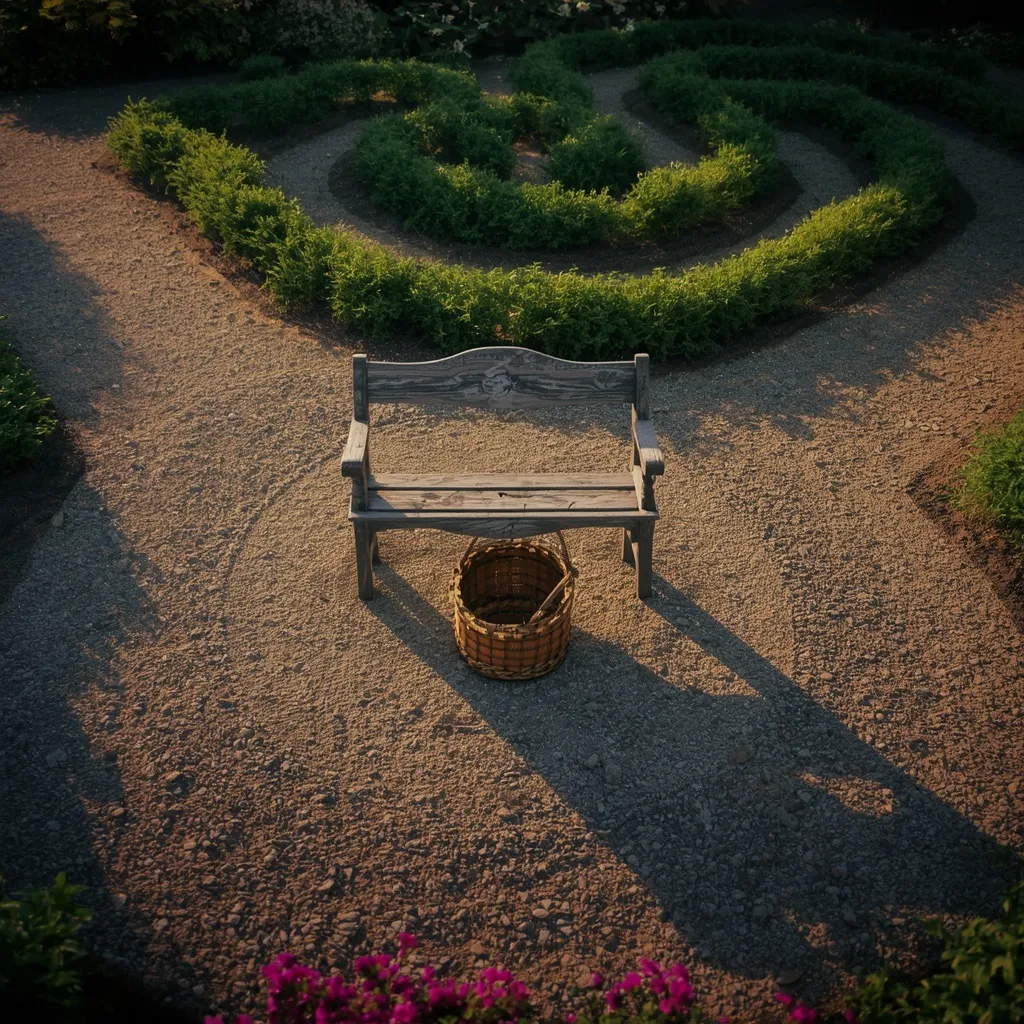
The most overlooked homestead garden idea isn’t a plant at all it’s a place to sit. A garden with a gathering point at its heart gets visited, and a garden that gets visited gets weeded, watered, and harvested on time. Picture a 3 m (10 ft) circle of crushed gravel where the main paths cross, holding a weathered bench or a small café table, ringed by the herb spiral and flower strip.
Designers call this a terminal point: paths need somewhere to arrive. Position it where you’ll actually pause morning-coffee sun for early risers, evening shade for after-work gardeners and station a harvest basket and snips there so five idle minutes turns into deadheading or a picked salad. Even ten minutes of daily presence catches pests, drought stress, and ripening crops days earlier than a twice-weekly visit ever will.
- Why it works: the garden you linger in is the garden you maintain.
- Best for: every layout on this list it’s the piece that ties the other sixteen together.
- Problem it solves: the “out of sight, out of mind” neglect that quietly ends most first-year gardens.
Conclusion
A homestead garden succeeds on design decisions, not heroic effort: a layout matched to your sun and water, beds sized to your real space, and one or two systems (compost, rainwater, a flower strip) doing quiet work in the background. Start with a single idea from this list rather than five: one four-square plot or one row of grow bags, built well, teaches you more than an overambitious plan ever could. Then add a new element each season as the garden proves itself. When you’re ready to shape the wider picture, our Garden Design collection is full of layouts worth borrowing from. Pin the homestead garden ideas that fit your space now your future self, basket in hand, will thank you.
FAQs
What is the best homestead garden layout for beginners?
The four-square kitchen garden is the most forgiving starting layout because crop rotation is built into its geometry you simply shift each plant family one square clockwise every year. Pair it with beds no wider than 1.2 m (4 ft) and paths of at least 60 cm (24 in), and the design prevents most beginner mistakes before they happen.
How big does a homestead garden need to be to feed a family?
A well-managed 40 m² (430 sq ft) plot reliably covers a family’s salads, herbs, and summer vegetables, while producing most of your year-round vegetables realistically takes 150–400 m² (1,600–4,300 sq ft) plus space for storage crops. Start at the smaller end and expand a bed or two each season as your skills and appetite grow.
Can I start a homestead garden in a small backyard or rental?
Yes keyhole beds, herb spirals, and trellis arches are designed for tight spaces, and a container setup of 40 L (10 gal) grow bags works on a balcony with no digging or landlord permission required. Containers also move with you at the end of a lease, which makes them the lowest-risk way to start.
What should I plant first in a homestead garden?
Begin with high-value, hard-to-fail crops: salad leaves, chard, bush beans, zucchini, and culinary herbs like thyme and chives. These produce within 6–10 weeks, teach you your site’s quirks quickly, and cost far more to buy fresh than staples do, which makes early wins both likely and worthwhile.
How do I keep chickens from ruining my vegetable beds?
Keep birds adjacent to the garden rather than in it during the growing season; a chicken moat run around the perimeter gives you their pest control without the crop damage. Only open the beds to the flock after the final autumn harvest, and allow 90–120 days between fresh manure contact and harvesting crops that touch the soil.
How much does it cost to start a homestead garden?
An in-ground four-square plot with saved seeds and homemade compost can start for little more than the price of seed and some timber edging, while a six-bed raised-bed grid with purchased soil is the expensive route. Salvage cuts costs dramatically: pallet compost bays, a salvaged-window cold frame, and a secondhand rain barrel deliver most of the infrastructure on this list for very little.