
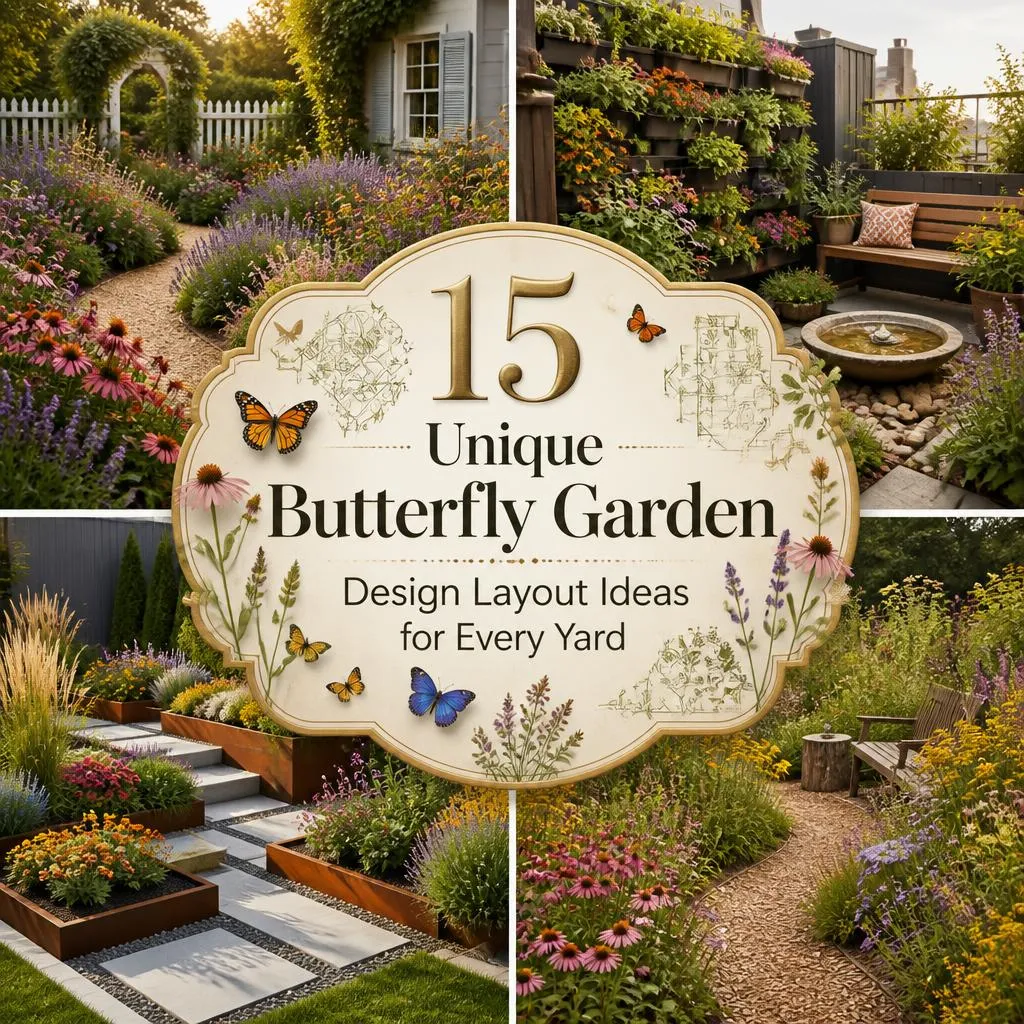
caterpillars and a cafe for adult butterflies, arranged so both can thrive within a few feet of each other. Most planting lists skip that part entirely, which is why so many “butterfly gardens” attract a few passing visitors but never become a place butterflies actually settle into. At Sunday Abode, we treat every outdoor space, however small, as an abode worth designing with intention, and a butterfly garden is one of the most rewarding places to start. The fifteen layouts below cover everything from full sun island beds to balcony containers, each built around real spatial logic you can adapt to your own yard, climate, and space.
The Layout Logic Behind Every Great Butterfly Garden
Before choosing a specific layout, it helps to understand the three things every version below is built around. First, host plants (where caterpillars actually feed and grow, such as milkweed, dill, fennel, or parsley) are different from nectar plants (where adult butterflies feed, such as zinnia, salvia, or coneflower). A layout needs both, positioned so caterpillars are not exposed to constant foot traffic or wind. Second, height layering, tall plants toward the back or center, mid height in the middle, low plants at the front or edges, keeps every plant visible to both pollinators and people. Third, a basking spot (a sun warmed stone) and a mineral source (a shallow dish of damp sand) round out a layout that supports the full butterfly lifecycle, not just a snack stop. For more structural inspiration for the beds and borders themselves, our Garden Design collection has additional layout principles that pair well with these ideas.
15 Butterfly Garden Design Layout Ideas
1. Layered Habitat Border
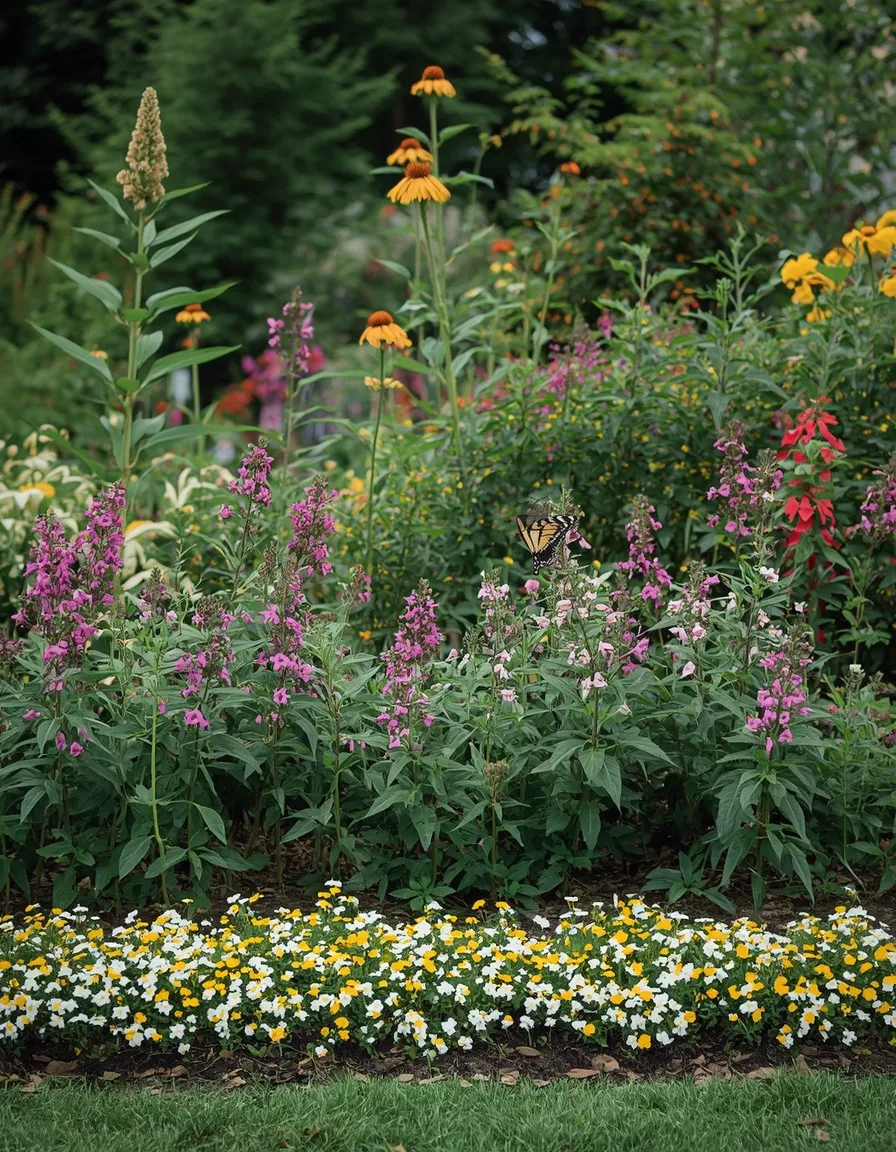
Picture a garden border where tall purple coneflowers sway behind blowsy zinnias, while low growing milkweed and violets tuck in near the front edge, close enough that a caterpillar hatching there is only steps from a nectar source once it becomes an adult. This is the foundational butterfly garden design layout: everything organized by height and function rather than scattered for looks alone.
To build it, divide the border into three rows. The back row holds taller host plants, 3 to 4 feet (90 to 120cm), like milkweed, fennel, and dill, planted with some wind shelter since caterpillars are vulnerable to being knocked off. The middle row holds nectar rich perennials at 18 to 30 inches (45 to 75cm), such as bee balm and phlox. The front row stays low, 6 to 12 inches (15 to 30cm), with alyssum or verbena. Group each species in drifts of three to five plants rather than single specimens, since clustered color and scent read far more strongly to a passing butterfly. The most common mistake is planting only nectar flowers and skipping host plants entirely, which draws visitors but gives them no reason to stay or lay eggs.
- Works for long, rectangular borders along a walkway or fence
- Solves the “pretty but nothing stays” problem common in nectar only gardens
- A reliable starting layout for beginners, adaptable to almost any climate
2. Sunny Island Bed
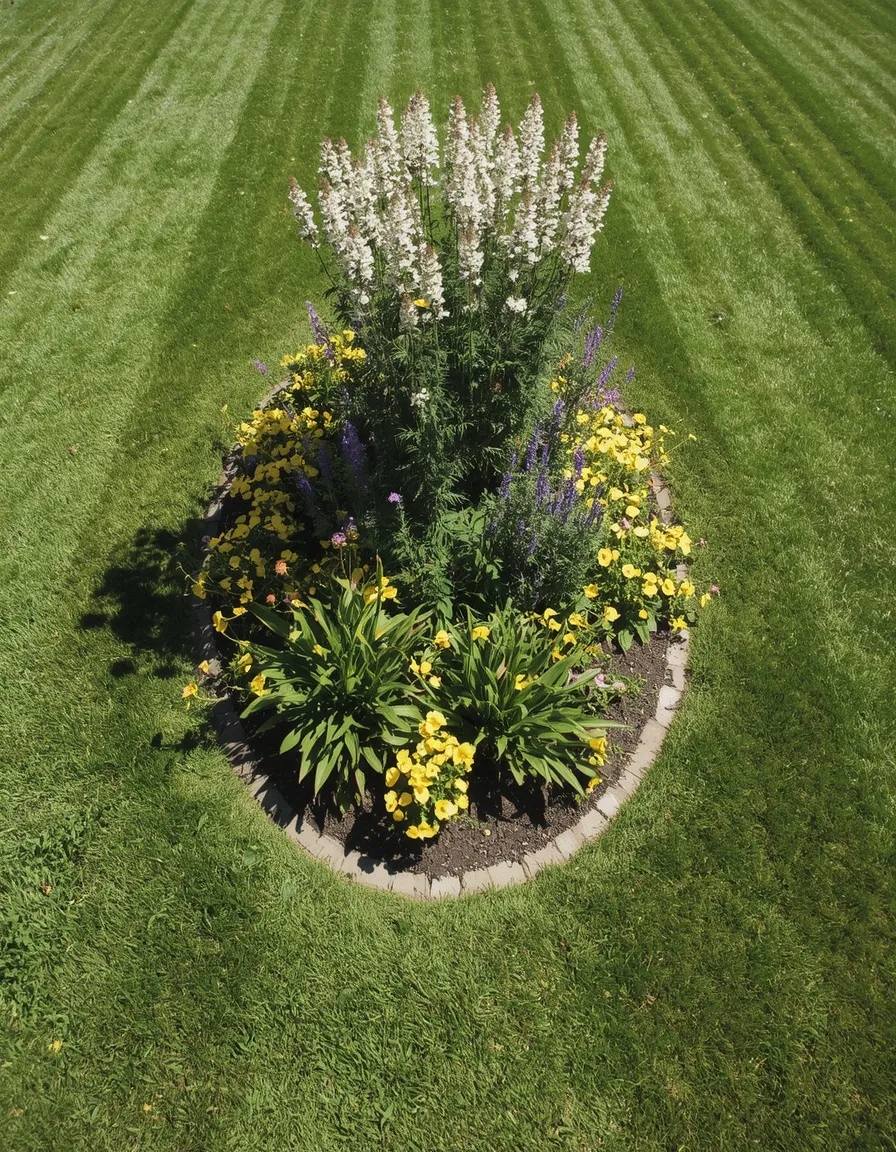
A freestanding oval bed set in the middle of an open lawn, visible from all sides, packed shoulder to shoulder with sun loving blooms, is one of the most striking butterfly garden ideas for full sun yards with no fence or wall to anchor a border against.
Island beds need 6 to 8 hours of direct sun and soil that drains well, since standing water is one of the fastest ways to lose perennials. Place the tallest plants, such as joe pye weed or ironweed, at the center, tapering down to shorter edging plants around the perimeter so nothing is hidden from any viewing angle. Orient the bed’s long axis east to west to maximize sun exposure across the day. A frequent mistake is overcrowding tall plants based on their nursery pot size rather than their mature spread, which leaves the center shaded out and struggling within two seasons.
- Ideal for open, sunny backyards or front lawns with no existing structure to build against
- Solves the “boring, empty lawn” problem with a single focal bed
- Scales from a 6 foot (1.8m) starter bed up to 20 feet (6m) as plants establish
3. Front Yard Curb Appeal Strip
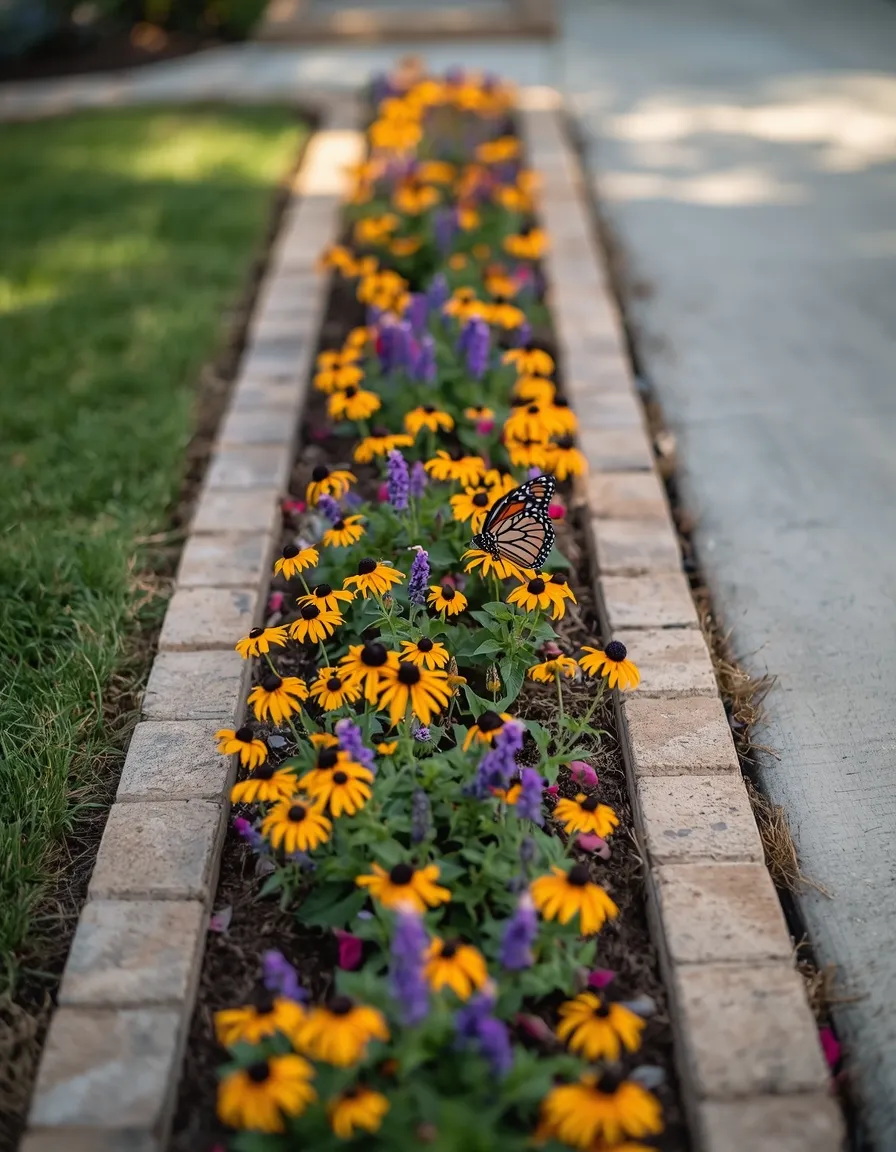
Replacing a narrow strip along the front walkway with a tidy, repeating sequence of blooming nectar plants gives visitors and pollinators the same warm welcome, and it is one of the more practical butterfly garden design layout ideas for front yards where appearance matters as much as function.
Keep plant heights under about 30 inches (75cm) near walkways so sightlines and house numbers stay visible, and lean on polished looking natives such as black eyed Susan, salvia, or dwarf butterfly weed. Add crisp edging, steel or natural stone both work, to keep the bed looking maintained rather than wild. Repeat two or three plant varieties in a steady rhythm down the strip rather than planting one of everything, which reads as curated instead of cluttered. Check any local HOA guidelines on plant height near sidewalks before finalizing your selection.
- Solves the “wants pollinators but needs it to look neat from the street” tension
- Ideal for foundation strips or walkway borders roughly 2 to 4 feet (60 to 120cm) wide
- Works well in suburban settings with visibility or association rules to consider
4. Small Courtyard Corner Garden
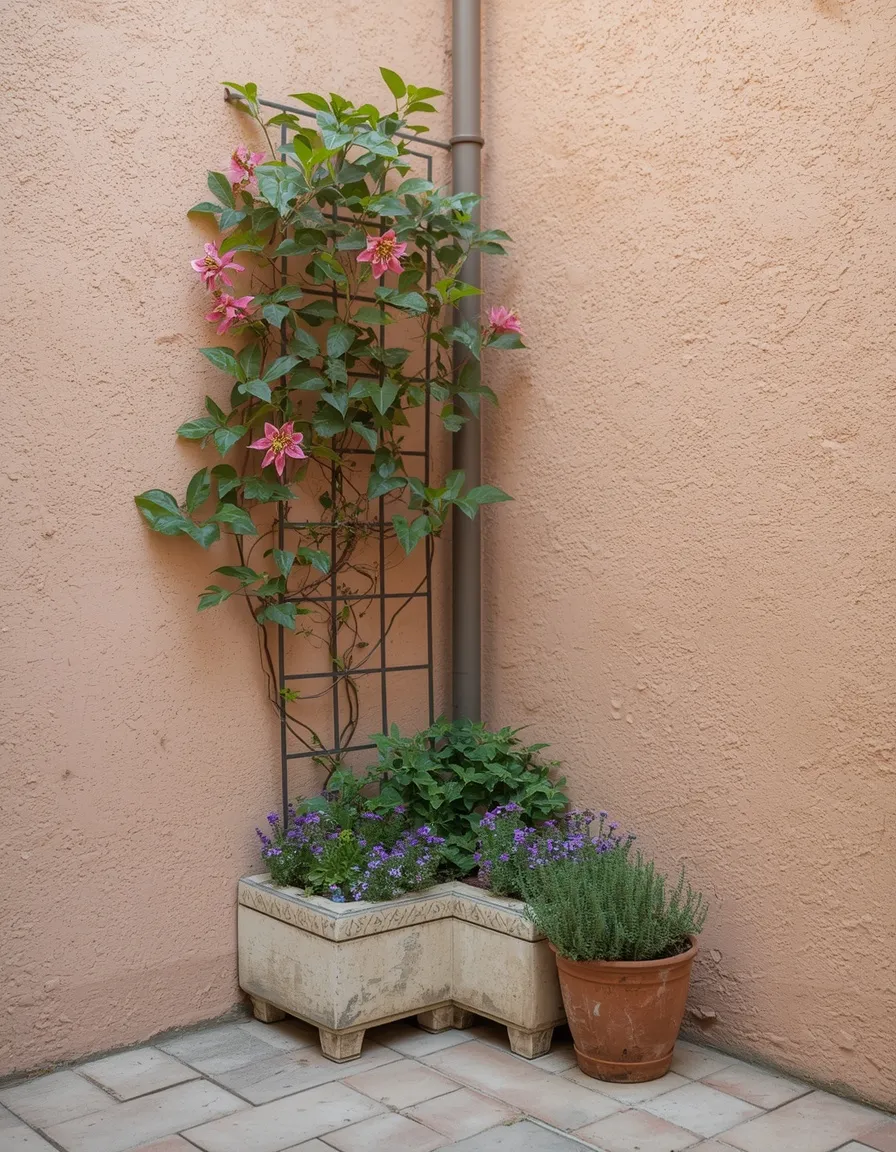
Tucked into an L shaped patio corner, a compact cluster of pots paired with a single raised planter can form a complete, self contained butterfly stop in a space many homeowners assume is too small to bother with. If you already have an awkward or shaded yard corner in mind, pairing this idea with our backyard corner landscaping ideas can help you plan the hardscape first, before adding the planting.
For a small butterfly garden design layout, prioritize vertical space over floor space: a trellised passionflower or vining nasturtium against the wall, mid height salvia in a raised planter, and low thyme or alyssum in pots at ground level. Even a 4 by 4 foot (1.2 by 1.2m) corner can complete the full nectar and host cycle if the plant choices do double duty, dill, for instance, works as both an herb and a swallowtail host plant. The main mistake here is cramming in too many species; four or five that genuinely thrive together will outperform a crowded mix every time.
- Solves the “no real yard” problem for townhouses and courtyards
- Ideal for L shaped or awkward corners that otherwise go unused
- Fully container based, so it moves with you if you rent
5. Zone 9 Warm Climate Layout
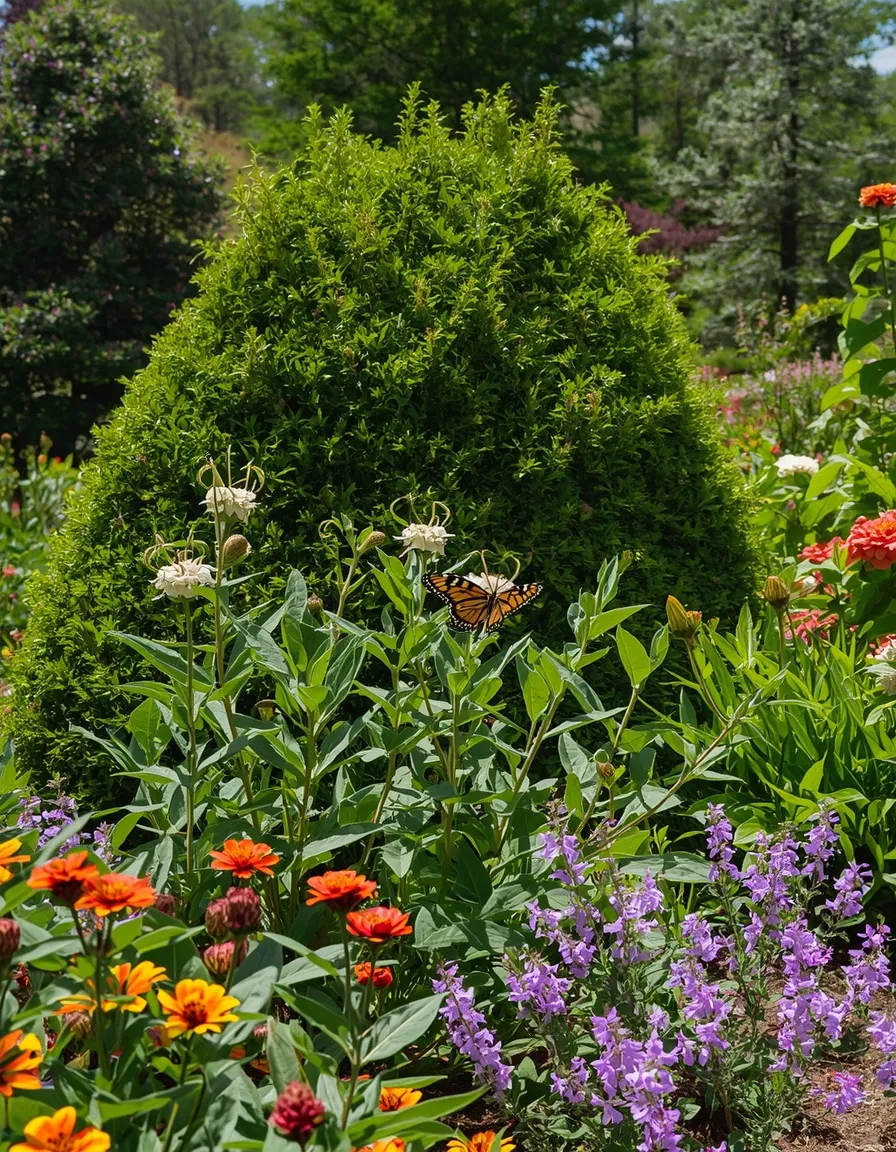
A layout built for zone 9’s long growing season and mild winters can stay in near continuous bloom, mixing evergreen structure with heat tolerant flowering plants rather than relying on the short, single season bursts typical of colder climates. Zone 9 spans parts of the southern and coastal United States, and roughly corresponds to warm temperate to subtropical climates elsewhere, with average annual minimum temperatures around 20 to 30°F (-6 to -1°C) according to the USDA’s official plant hardiness zone reference, so it is worth confirming your exact zone before treating any perennial as reliably hardy.
Anchor the layout with evergreen shrubs like Texas sage or dwarf yaupon for year round form, then fill in with heat lovers such as pentas, lantana, and zinnia. Tropical milkweed can be used in warmer zones but should be cut back hard each fall, a detail most general plant lists skip, since leaving it growing year round can allow a parasite that harms monarch populations to build up. Note that lantana is toxic to pets if ingested, so keep it out of areas where dogs regularly graze.
- Solves the “what actually survives our winters” question most national plant lists ignore
- Ideal for hot, humid, or arid warm winter climates with a long bloom window
- Supports near year round color with the right seasonal cutbacks
6. Florida Coastal Butterfly Garden
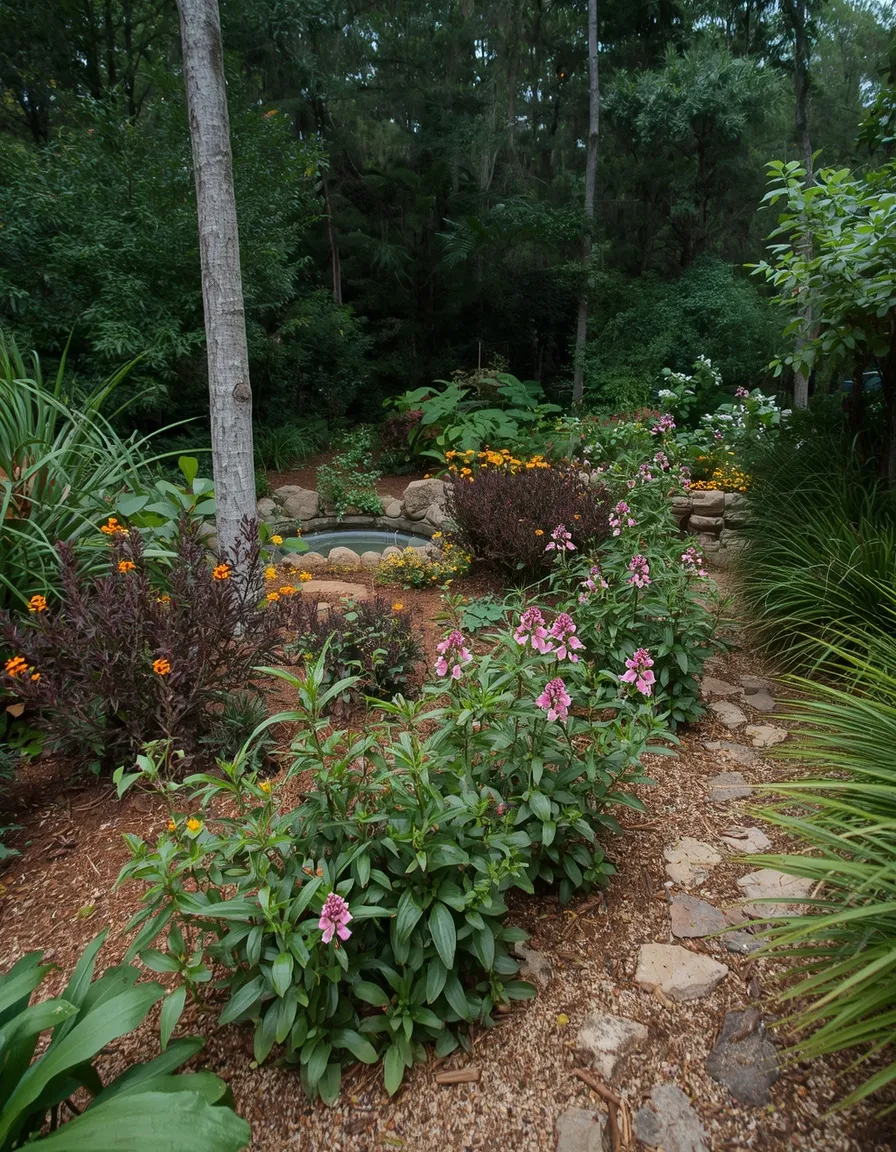
A sandy, humidity adapted plant palette arranged around a small water feature gives a Florida butterfly garden design layout the extra moisture control that fast draining coastal soil cannot provide on its own. This is a genuinely different design problem from a typical inland garden, and most generic butterfly garden ideas for Florida gloss right past it.
Amend beds with compost to help sandy soil hold moisture, then plant natives like firebush and coral honeysuckle alongside native milkweed species such as Asclepias tuberosa. In far southern Florida, extension guidance generally recommends favoring native milkweed over tropical milkweed, since year round tropical milkweed growth in that climate can worsen disease buildup for monarchs. Space plants a little wider than usual to improve airflow and reduce fungal issues in high humidity, and water deeply but infrequently, since sandy soil drains fast and shallow, frequent watering encourages weak roots.
- Solves the regional plant failure problem caused by sandy, fast draining soil
- Ideal for coastal or humid subtropical yards, including salt exposed properties
- Reflects real regional guidance most national blogs never mention
7. Backyard Wildlife Corridor
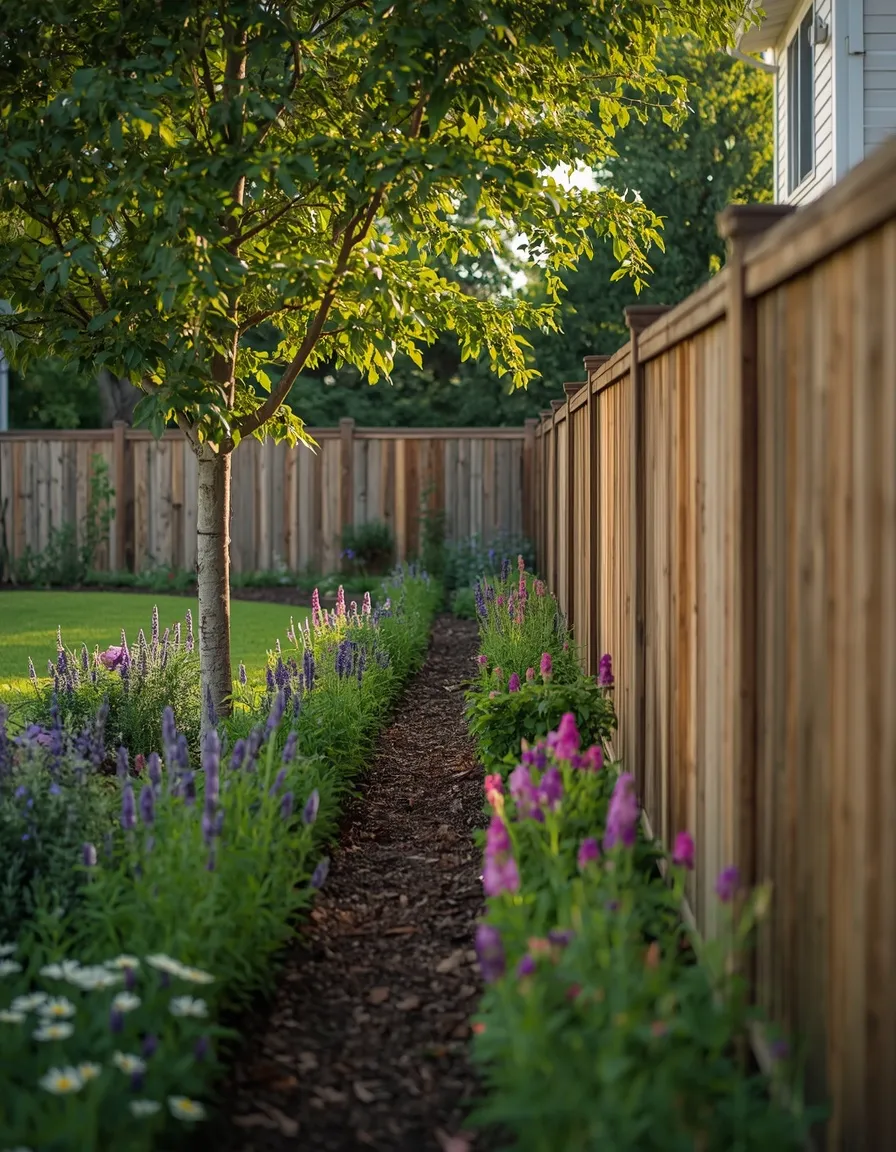
A naturalistic ribbon of plantings running along the back fence line, linking existing trees and shrubs into one continuous stretch of habitat, is one of the more overlooked butterfly garden ideas for backyard landscaping. Instead of isolated flower islands, the whole property edge becomes one uninterrupted corridor.
Include a few larval host trees or shrubs at intervals, spicebush or native cherry work well in many regions, underplanted with nectar perennials to fill the gaps between. Leave a small brush pile or a patch of unraked leaf litter in one back corner for overwintering chrysalises, a detail almost no plant list article mentions but one that genuinely determines whether butterflies return the following spring. The most damaging mistake in this layout is mowing right up to the bed edge each fall, which destroys exactly the overwintering habitat the corridor was built to provide.
- Solves the fragmented habitat problem common in larger yards with scattered beds
- Ideal for yards with an existing fence line or mature trees to connect
- Supports the full butterfly lifecycle, not just adult feeding
8. Kid Friendly Discovery Garden
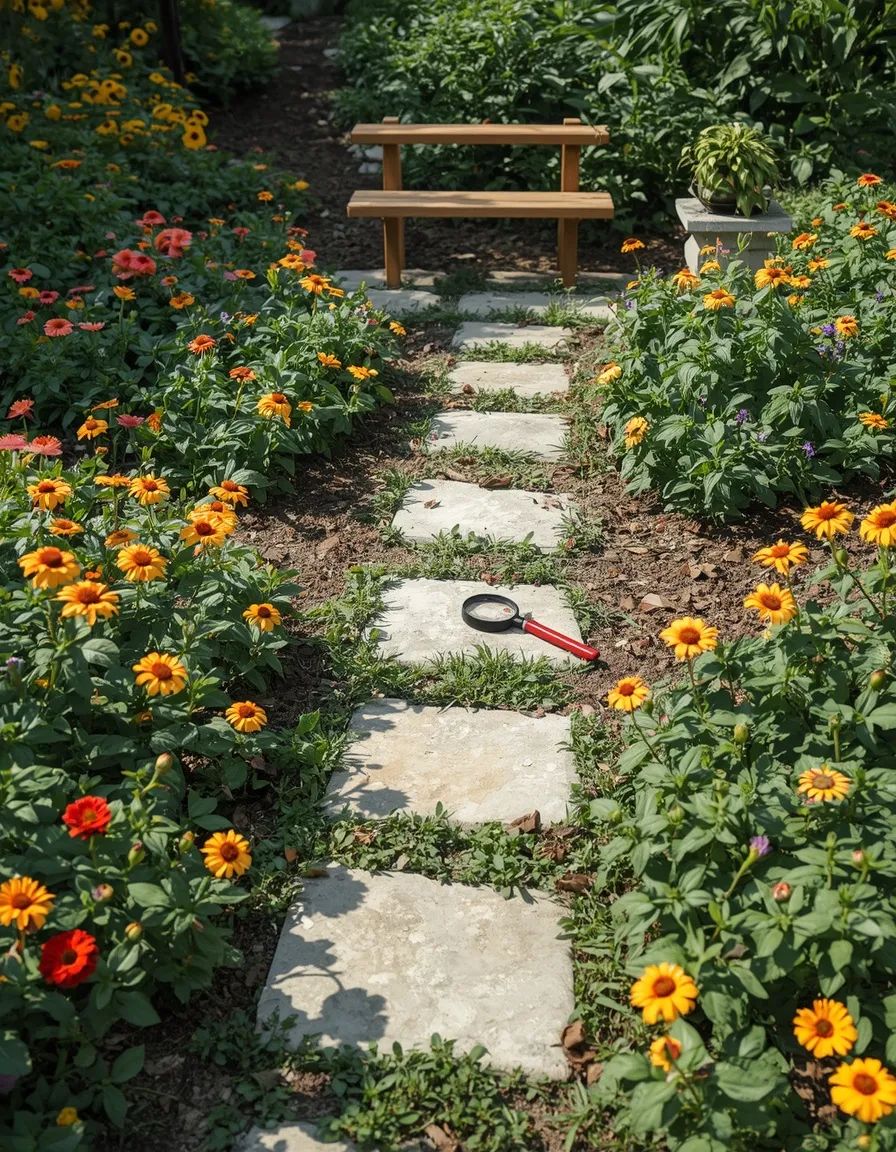
A looped stepping stone path through low, touchable plantings, sized for small hands and curious eyes, with a simple viewing bench at the center, turns a garden into an outdoor classroom. This is one of the most requested butterfly garden ideas for kids, and it needs a slightly different safety standard than an adult only bed.
Keep most plant heights under knee level along the path for clear sightlines, and choose host plants that make caterpillars easy to spot, parsley, dill, and fennel are reliable choices for swallowtail species. Skip toxic ornamentals like larkspur, foxglove, and lantana entirely in a child accessible layout rather than simply placing them further away, since certain garden plants can cause illness if ingested by pets or curious children according to the ASPCA’s plant safety guidance. A shallow dish of damp sand doubles as a puddling station kids can refill themselves.
- Solves the “how do I make this genuinely safe and engaging for kids” problem
- Ideal for family backyards with young children or regular visiting grandkids
- Doubles as a simple, hands on outdoor learning tool
9. Flower Bed Integration Layout
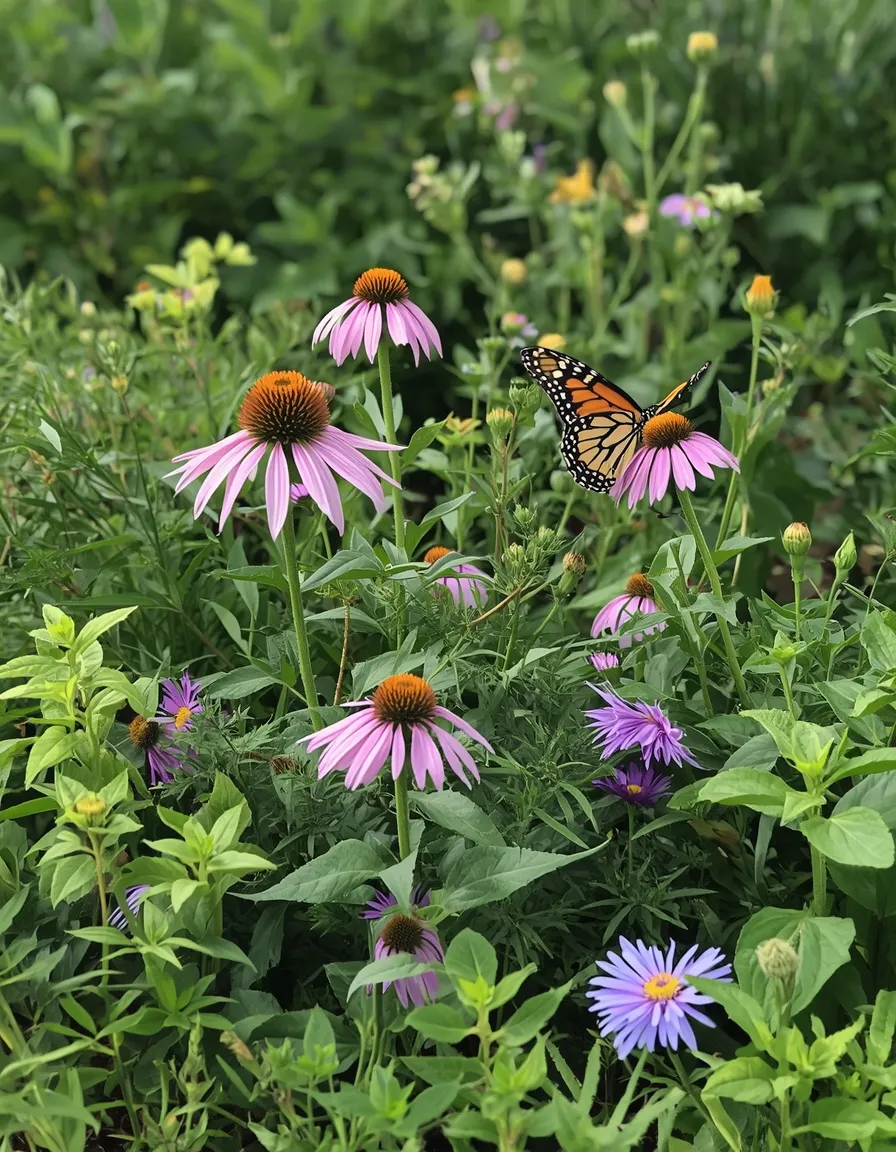
Weaving butterfly friendly plants into an existing perennial or foundation bed, rather than starting a separate garden from scratch, is often the fastest way to see results. This approach to butterfly garden ideas for flower beds means swapping out roughly 30 to 40 percent of existing filler plants for flowering nectar plants of a similar size and form, replacing a gap of plain hostas or boxwood with coneflower or aster in the same visual spot.
Group new additions together instead of scattering single plants randomly through the bed, so the added color reads as intentional rather than accidental. A simple bloom succession plan, catmint in spring, zinnia or salvia through summer, aster in fall, keeps the bed interesting well past its usual peak. The most common mistake is adding plants that all bloom at the same time, which leaves the rest of the season nectar poor despite the extra effort.
- Solves the “I don’t want to redo my whole bed” hesitation
- Ideal for gardeners upgrading an existing space rather than starting fresh
- A low disruption entry point for beginners new to pollinator gardening
10. Puddling Station and Basking Zone
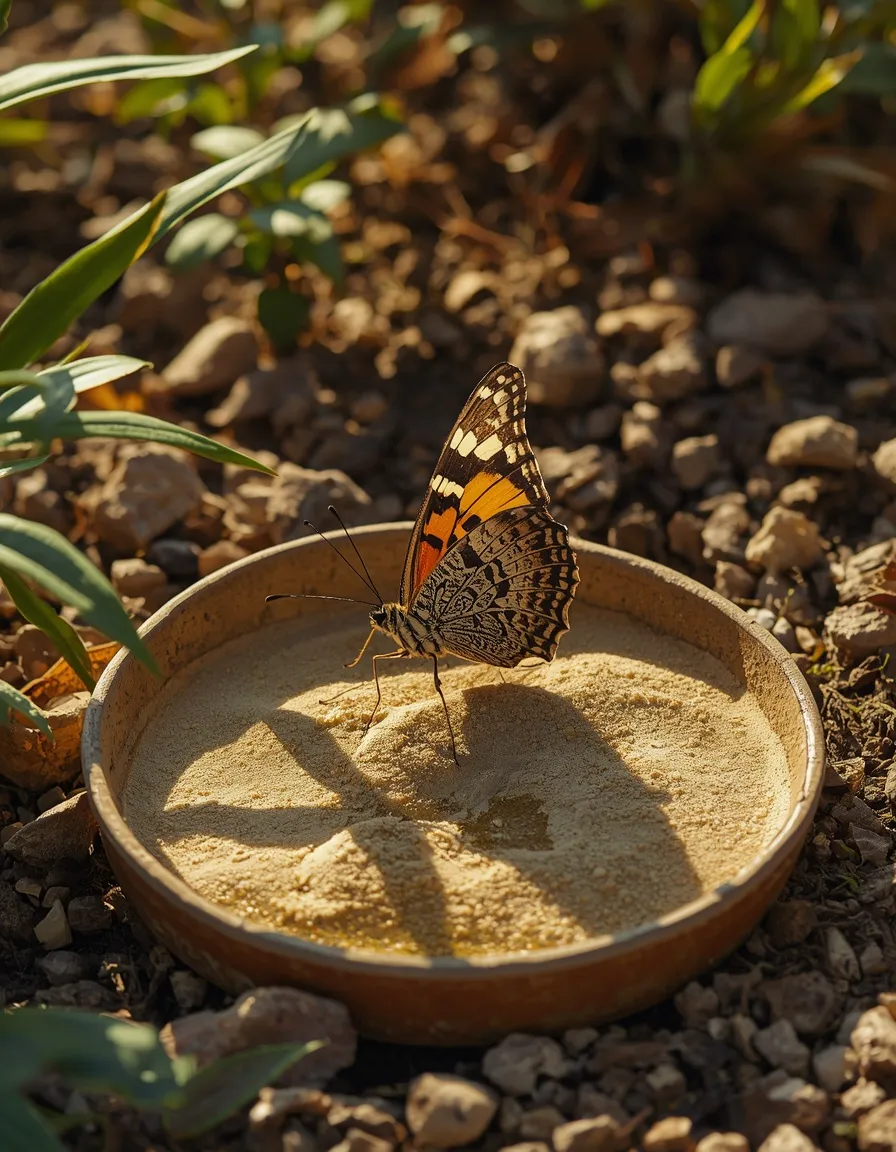
A shallow dish of damp sand tucked beside a flat, sun warmed stone, positioned where morning light lands first, addresses something most butterfly garden idea lists skip entirely: butterflies need minerals and warmth as much as they need nectar.
Site the puddling dish, a mix of coarse sand, a pinch of compost, and enough water to keep it damp rather than soggy, alongside one or two flat stones in a spot that is sheltered from wind but gets direct morning sun. Keep it near the nectar bed but out of high foot traffic, and refresh the sand’s moisture every few days in dry weather. Placing a puddling station in full shade is the most common mistake, since butterflies will not visit a spot where they cannot also warm their flight muscles.
- Fills the “flowers but visitors don’t linger” gap in an otherwise good garden
- Works as an add on to any style of layout, from cottage to formal
- Especially useful in cooler climates or early spring gardens
11. Vertical Layered Hedge Border
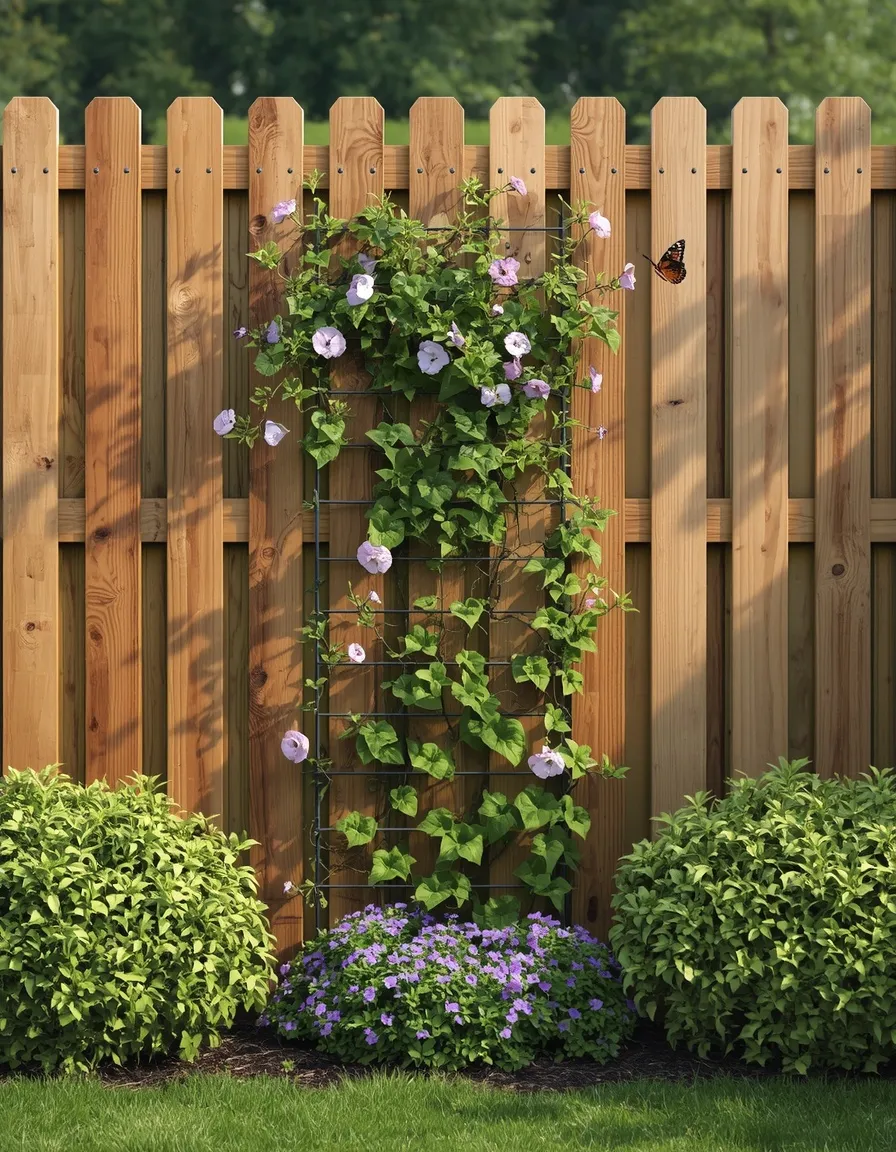
A living wall of flowering vines and shrubs trained up a privacy fence turns a plain boundary into a multi level nectar corridor, and it is one of the most space efficient butterfly garden design layout ideas for narrow yards.
Attach simple wire trellising to the fence for climbers such as coral honeysuckle or passionflower, the latter doubles as a host plant for gulf fritillary and zebra longwing caterpillars. Underplant with mid height shrubs like buttonbush or spirea, then finish with a low front row of salvia or verbena. This layout can work in as little as 18 to 24 inches (45 to 60cm) of depth, since it builds height rather than width. One caution worth noting: butterfly bush (Buddleja davidii) is a strong nectar plant but is classified as invasive in parts of the Pacific Northwest and mid Atlantic United States. Check regional guidance or choose a sterile cultivar before planting it near a fence line where seed can spread into wild areas.
- Solves the narrow space problem along fences and property lines
- Ideal where width is limited but vertical space is available
- Adds privacy screening as a genuine secondary benefit
12. Circular Pollinator Wheel Layout
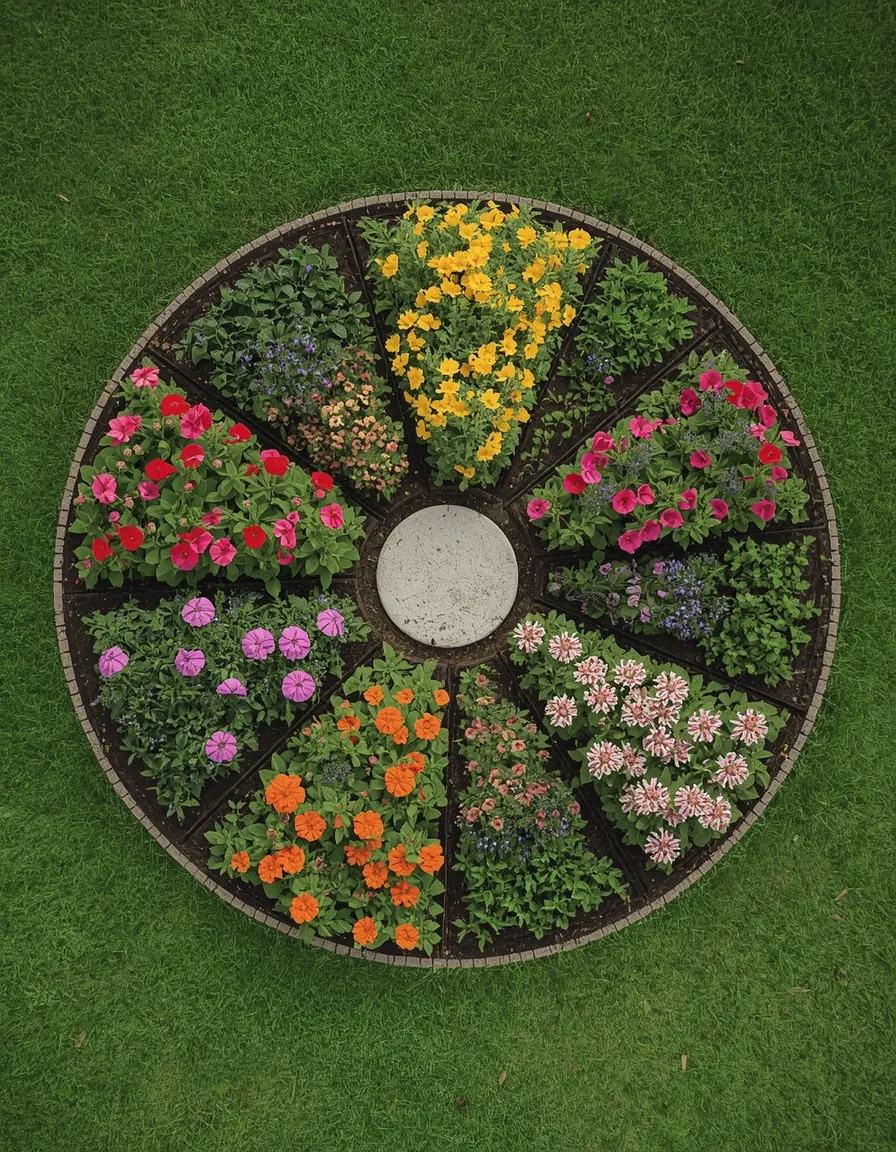
A wheel shaped bed divided into wedge shaped sections, each planted with a single species and radiating out from a center stepping stone or sundial, brings a more formal structure to a butterfly garden design plan than a typical scattered border.
Divide a circular bed, roughly 6 to 10 feet (1.8 to 3m) in diameter, into four to eight pie shaped sections using edging or mulch paths, then plant one species per wedge for a bold, patterned bloom display that is also easier to maintain, since each section can be replaced or adjusted independently. Keep the tallest species toward the outer wedges if the bed will be viewed mainly from outside, or toward the center if it is meant to be seen from every angle. Choosing plants with very different bloom times is the main mistake here, since it leaves the wheel visually unbalanced for much of the season.
- Solves the “want something more designed, not just a scattered bed” preference
- Makes an excellent focal point layout for a lawn or courtyard center
- Easier to maintain than a mixed border, since each wedge is single species
13. DIY Raised Bed Butterfly Garden
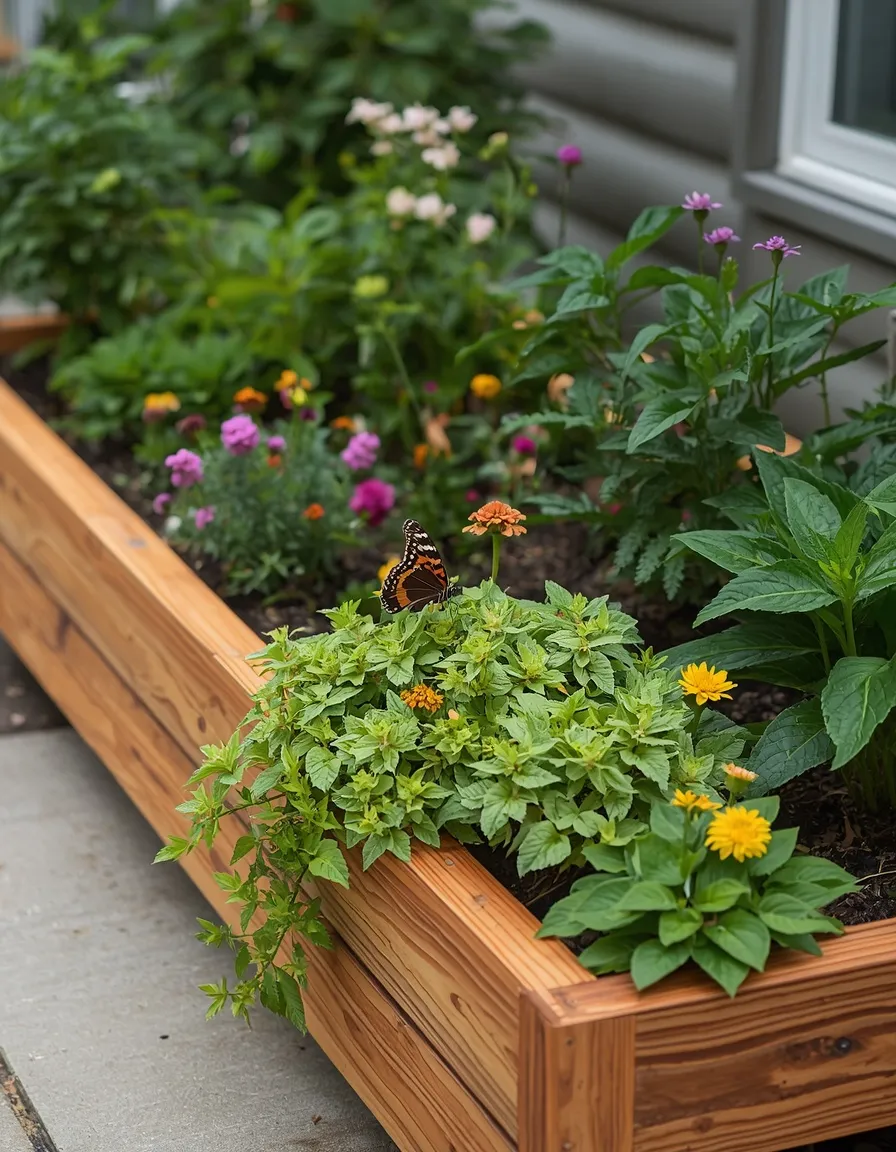
A simple cedar raised bed, built in an afternoon and filled with a ready planned mix of host and nectar plants, is one of the most approachable butterfly garden ideas for landscaping DIY projects, especially where the existing soil is not cooperating.
This layout suits patios, rentals, or yards with compacted or poor native soil. Build or buy a bed at least 8 to 12 inches (20 to 30cm) deep, deeper if milkweed is included, since it grows a long taproot, and fill it with a well draining garden soil and compost blend. Follow the same back tall, front short zoning used in an in ground border. If using treated lumber, choose modern, untreated cedar or redwood rather than older chemically treated wood, since the bed sits close to herb type host plants like dill and parsley that people also handle directly.
- Solves the poor soil or rental restriction problem in one contained project
- Ideal for patios, rentals, and temporary setups that may need to move
- A beginner friendly project with a clearly defined, manageable scope
14. Native Meadow Style Layout
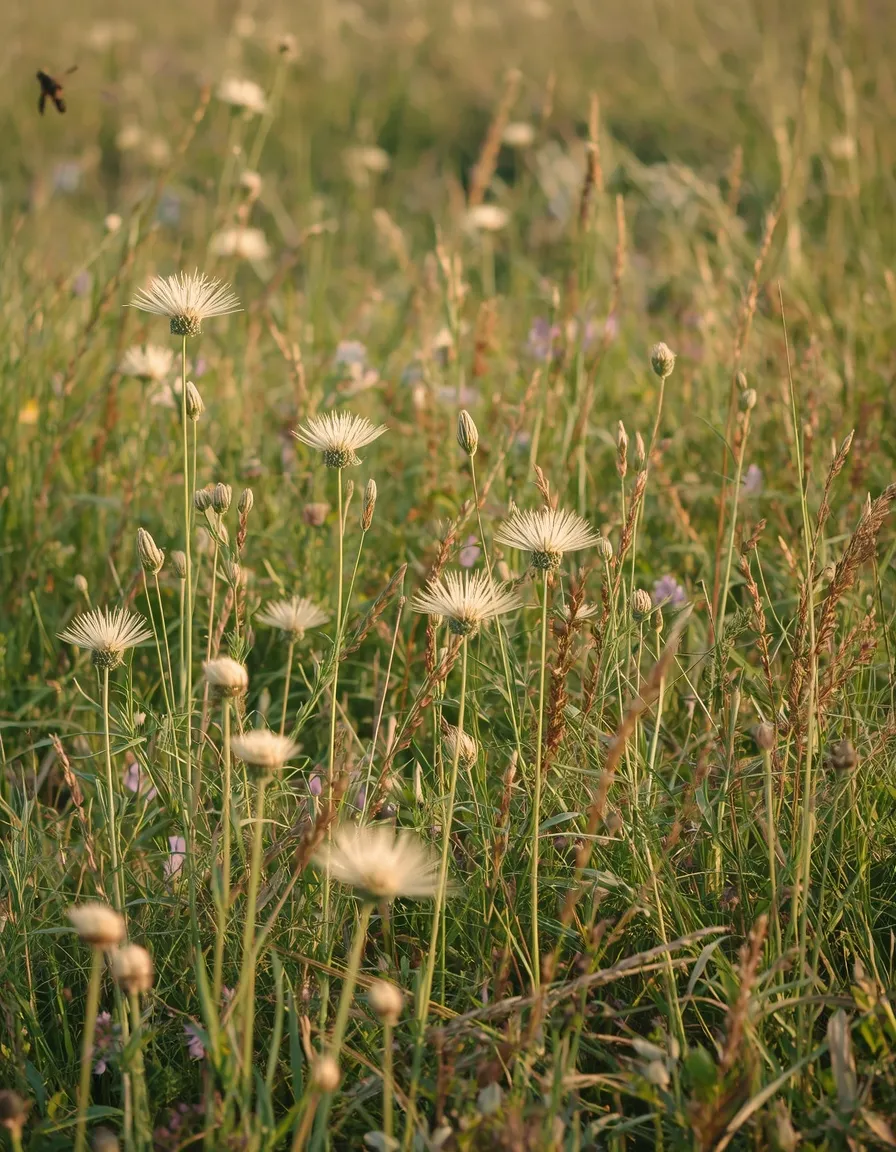
A loose, naturalistic drift of native wildflowers and grasses, left to self seed and spread informally, mimics a wild meadow edge rather than a manicured bed, and it is the lowest maintenance option on this list once established.
For larger yards, interplant native grasses such as little bluestem with regional wildflowers and a milkweed species genuinely native to your area, a local native plant society list is a better source here than a generic national one. Mow or cut back only once, in late winter, leaving stems standing through fall and winter, since many butterflies and other insects overwinter inside old plant stems. Treating this bed like a lawn and mowing it mid season is the most damaging mistake, since it removes both the season’s blooms and the overwintering habitat in one pass.
- Solves the “want low maintenance and genuinely wildlife supportive” goal
- Ideal for yards a half acre (about 0.2 hectares) or larger, or screened back sections
- The lowest water, lowest input layout on this list over the long term
15. Container and Balcony Butterfly Garden
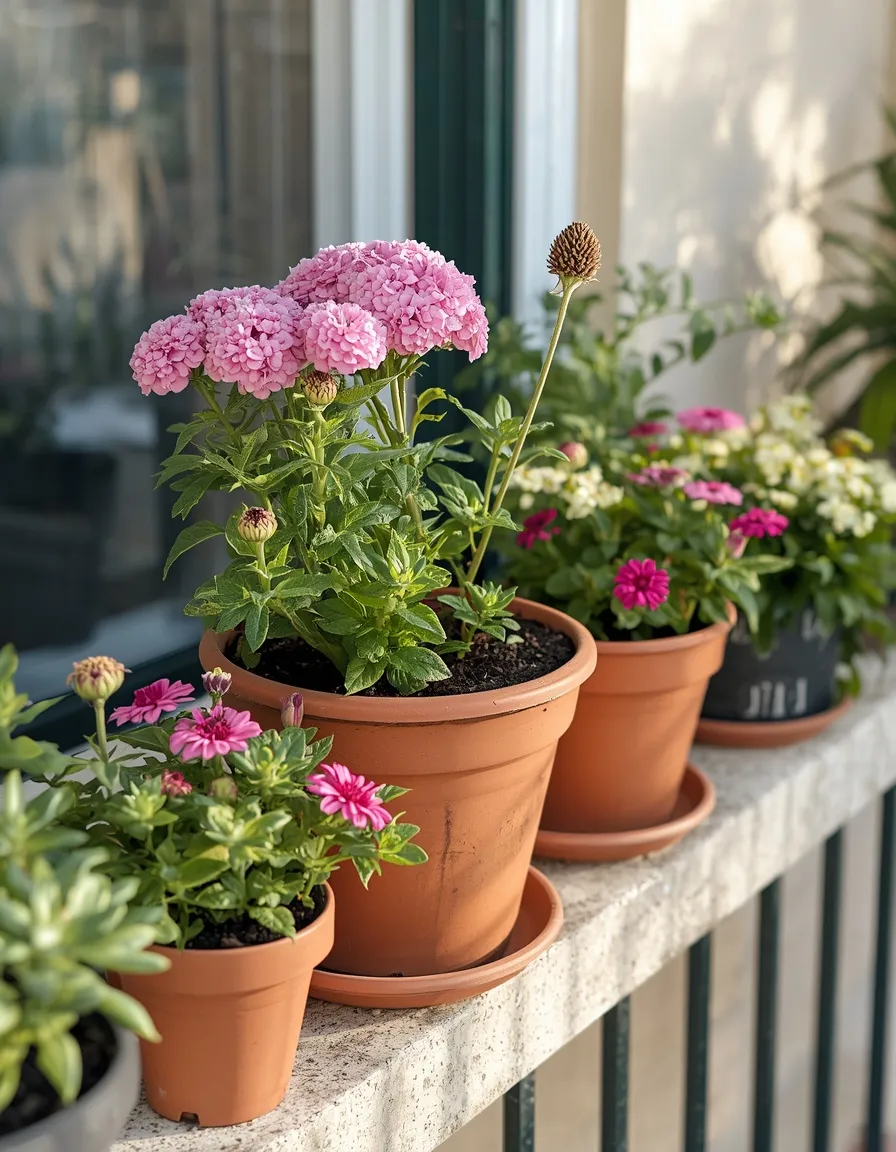
A tight grouping of three to five pots on a balcony rail or patio corner, chosen specifically to cover both larval hosts and adult nectar, proves that a butterfly garden design layout does not require any ground access at all.
Container gardens dry out faster than in ground beds, so plan on more frequent watering, but they can still complete the full butterfly lifecycle. Use one deeper pot, at least 12 inches (30cm), for a taprooted host plant like milkweed or dill, paired with compact nectar bloomers such as dwarf zinnia or verbena. Group the pots close together rather than spacing them out, since clustering increases the color and scent signal that draws butterflies to a small space. Choosing pots under 8 inches (20cm) deep for milkweed is the most common mistake, since it stunts the taproot and weakens the plant.
- Solves the no yard problem entirely for renters and apartment dwellers
- Ideal for balconies, patios, and small rental spaces of any kind
- Fully portable, so pots can chase the sun through the season
Frequently Asked Questions
What’s the best butterfly garden design layout for a small space?
For a small space, prioritize vertical layering over floor area, using a trellised vine, one raised planter, and a few grouped pots rather than spreading plants across a wide bed. Even a 4 by 4 foot (1.2 by 1.2m) corner can support a full host and nectar cycle if the plant choices are efficient.
Do I need both host plants and nectar plants in every layout?
Yes. Nectar plants feed adult butterflies, while host plants like milkweed, dill, or fennel are where caterpillars actually feed and grow. A layout with only nectar plants will attract visitors but give them no reason to lay eggs or stay.
What plants work best in a zone 9 butterfly garden design layout?
Zone 9 supports heat tolerant, near year round bloomers like lantana, pentas, salvia, and evergreen shrubs such as Texas sage for winter structure. Confirm your exact zone using the USDA Plant Hardiness Zone Map before treating any perennial as reliably hardy through winter.
Are butterfly gardens safe for pets and kids?
Most butterfly friendly plants are safe, but a few common choices, including lantana, are toxic to pets if ingested, and some ornamentals like larkspur and foxglove are not suitable near children. Choose a kid and pet safe plant palette in family accessible layouts rather than assuming every pollinator plant is automatically safe.
How do I keep a butterfly garden design layout blooming all season?
Plan bloom succession deliberately: early bloomers like catmint, mid summer bloomers like zinnia and salvia, and fall bloomers like aster, so something is always flowering. A layout where everything blooms at once looks great briefly, then leaves several nectar poor months.
Can I create a butterfly garden layout without any yard at all?
Yes. A container and balcony layout using grouped pots, at least one deep enough for a taprooted host plant like milkweed, can complete the full butterfly lifecycle in just a few square feet. Cluster pots together rather than spacing them out to strengthen the scent and color signal.
Is butterfly bush safe to include in a garden layout?
Butterfly bush (Buddleja davidii) is a strong nectar source, but it is classified as invasive in parts of the Pacific Northwest and mid Atlantic United States. Check regional guidance before planting it, or choose a sterile cultivar to avoid unwanted spread near fence lines or wild areas.
Bringing Your Butterfly Garden Layout Together
The best butterfly garden design layout is not the one with the longest plant list, it is the one where zoning, sun exposure, and a few small functional details (a puddling dish, an unmown corner, the right plant at the right depth) work together so butterflies have a reason to stay, not just pass through. Start with whichever layout matches your actual space, whether that is a full sun island bed, a shaded courtyard corner, or a cluster of containers on a balcony, and let it fill in over a full season before judging the results. For more ways to shape the beds and borders around it, our Garden Design collection has additional layout ideas worth exploring. Pick one layout this week, plant it properly, and give it the season it needs to prove itself.