

Introduction
There’s a reason the silver birch shows up in almost every designer’s small-garden plan: few trees give so much for so little space. Birch trees bring a garden slender white trunks, a light dappled canopy that never casts heavy shade, and a glowing presence that carries the whole scene through winter when everything else is bare. This guide goes past the usual photo gallery to show you how to actually use birch trees in a garden which type to choose, where to place it, and the tough plants that will genuinely grow underneath. At Sunday Abode, we treat the garden as part of the home, and below you’ll find 16 birch tree garden ideas for spaces large and small, along with the practical care that keeps them looking their best.
Choosing and Placing Birch Trees in Your Garden
The key to using birch trees well is understanding two things: they stay slim but grow tall, and their roots are shallow, wide, and thirsty. A silver birch (Betula pendula) can reach 15–25 m (50–80 ft) in height yet spread only 4–8 m (13–26 ft) wide, which is exactly why it suits narrow gardens.
Those greedy surface roots are the catch most articles skip. They spread well beyond the canopy, drink a lot of water, and can lift paving or invade old drains, so plant a birch at least 3 m (10 ft) from the house, patios, and pipes more for the largest species. In a small garden, choose a compact type or a multi-stem specimen rather than a full-size forest tree.
Match the species to your goal using the quick guide below:
| Birch type | Mature height | Best for |
| Silver birch (Betula pendula) | 15–25 m (50–80 ft) | Classic look, larger gardens, native wildlife |
| Himalayan birch (B. utilis jacquemontii) | 12–18 m (40–60 ft) | The whitest bark, focal points |
| Multi-stem birch (any species) | Usually kept 6–10 m (20–33 ft) | Small gardens, screening, sculptural form |
| River birch (Betula nigra) | 12–20 m (40–65 ft) | Hot, humid, or wet sites; peeling cinnamon bark |
Because birch are so widely grown, our garden design collection is a good next stop for pairing them with borders and paths but the 16 ideas below cover the tree itself.
16 Birch Tree Garden Ideas Worth Planting
1. A Single Statement Birch
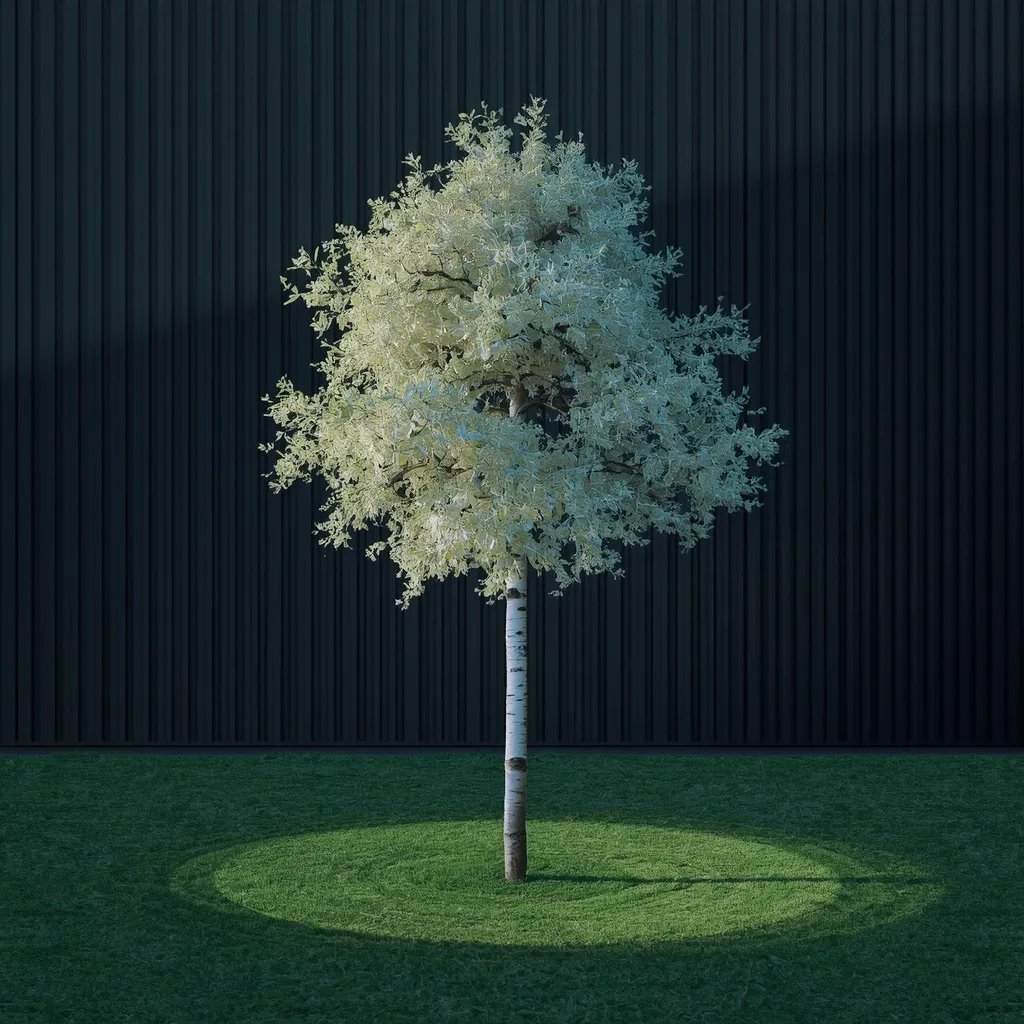
One well-placed birch can carry an entire garden. Picture a single silver birch rising from a circle of clipped lawn or gravel, its white trunk glowing against a dark fence or brick wall, the canopy shivering with the slightest breeze.
A lone specimen works best when it has room to be seen from your main window or seating area, so it reads as a deliberate focal point rather than an afterthought in a corner. Plant it against a contrasting dark backdrop: a green hedge, a charcoal fence, or an evergreen to make the pale bark pop. Give it space: keep it at least 3 m (10 ft) from paving and walls to avoid root trouble later. For the strongest effect in a small plot, choose the whiter-barked Himalayan birch over the more mottled native silver birch.
- Why it works: a single trunk creates instant structure and a year-round focal point.
- Best for: front gardens and small plots that need one strong feature, not many.
- Common mistake: tucking it in a far corner where the trunk can’t be appreciated.
2. Multi-Stem Birch for Small Gardens
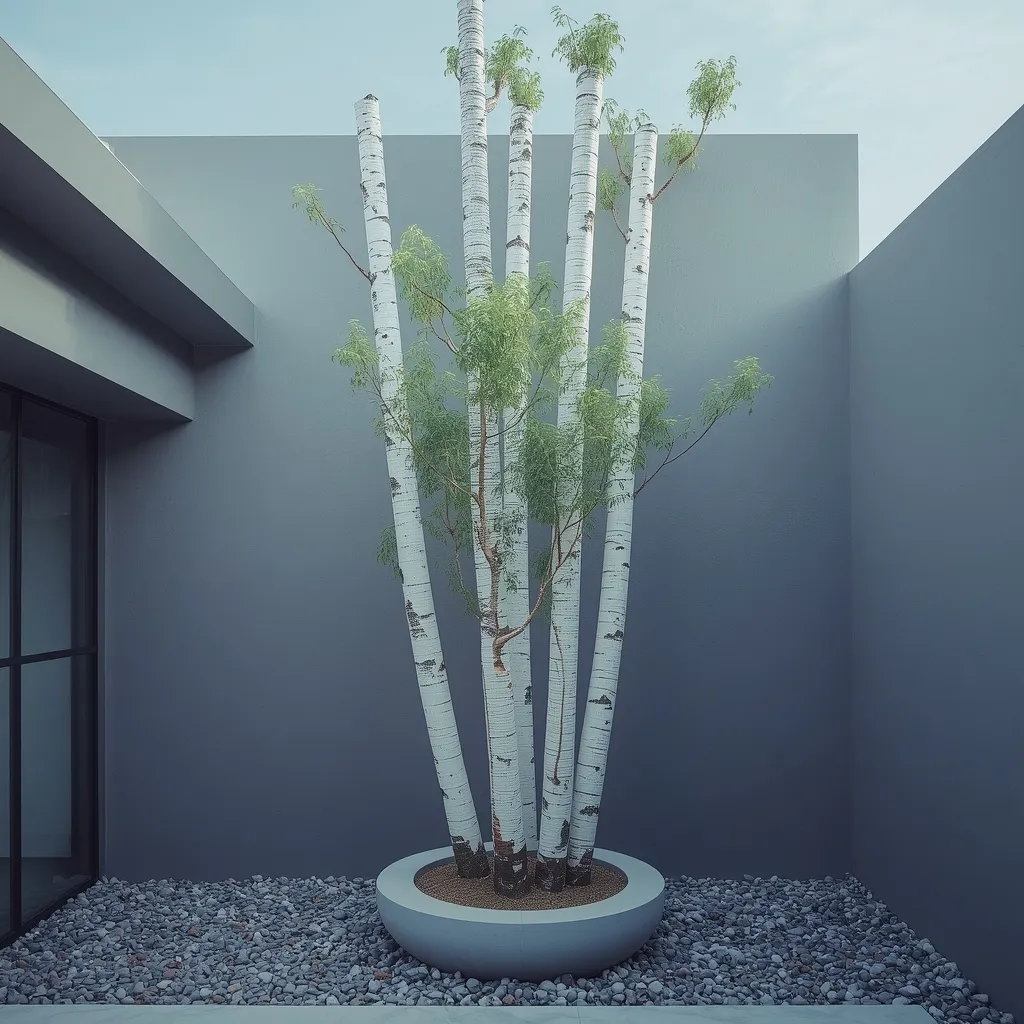
A multi-stem birch is the classic designer’s trick for a small garden; several slim trunks rising from one base give you sculptural impact without the bulk of a big canopy. Three or four pale stems fanning up from a low planter or gravel bed feel like living architecture beside a modern house.
Because the growth is spread across several stems, a multi-stem birch stays shorter and airier than a single-trunk tree of the same age, letting far more light reach the ground beneath. Buy it ready-formed from a nursery rather than trying to create one yourself, and underplant the base to hide the join and show off the trunks. It suits contemporary courtyards especially well, where the vertical lines echo clean architecture.
- Why it works: maximum trunk impact with a compact, light-friendly footprint.
- Best for: small and courtyard gardens, and modern, minimalist schemes.
- Smart tip: buy a nursery-trained multi-stem, don’t try to force one from a single trunk.
3. A Grove of Three or Five
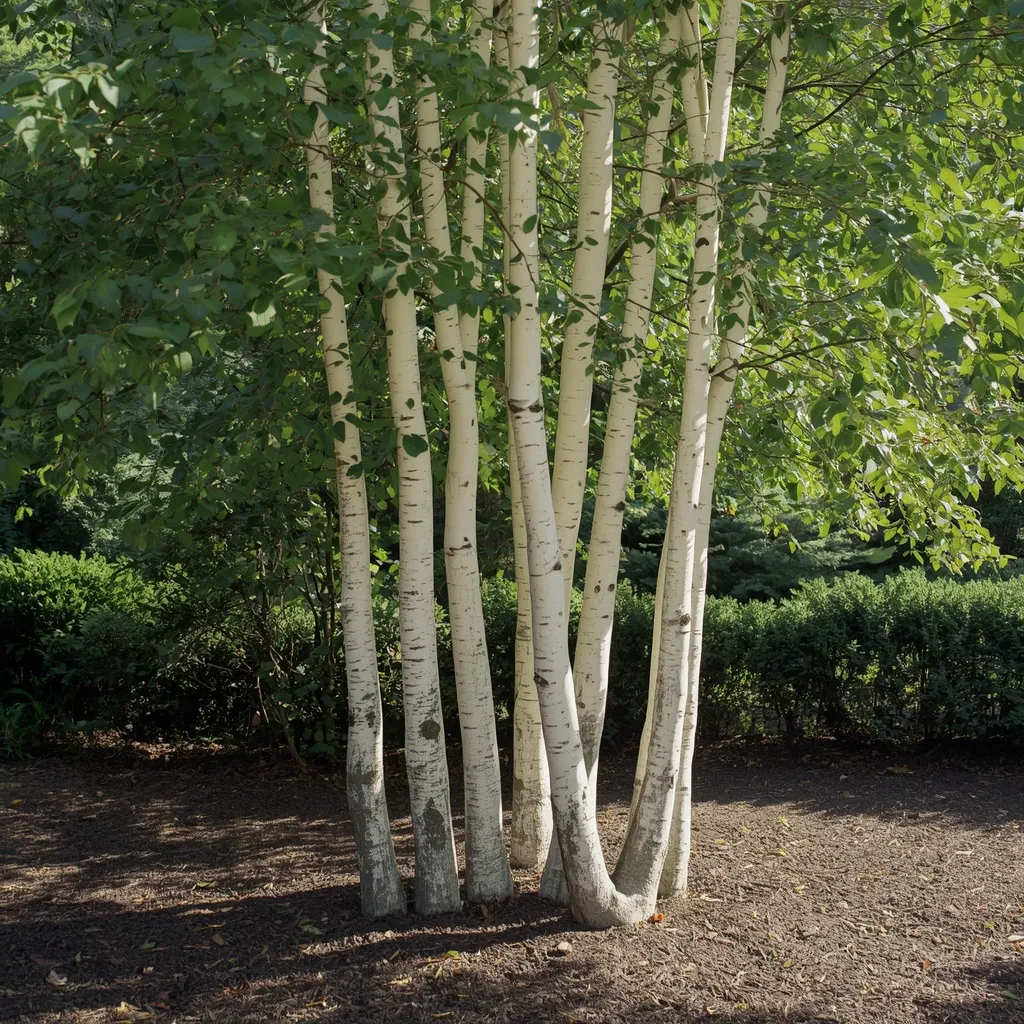
Planting birch in an odd-numbered group creates the effect of a natural woodland edge, even in a suburban garden. Three or five slender trunks clustered close together read as a mini forest, their canopies merging into one light, shifting ceiling.
Odd numbers look more natural than even ones, and staggered spacing of roughly 1–2 m (3–6 ft) apart lets the trunks overlap as you move around them, so the grove feels denser than the tree count suggests. This is a strong choice along a boundary or at the bottom of a garden to draw the eye and blur the fence line. Keep the ground beneath simple bare mulch, gravel, or a single ground cover so the trunks stay the star.
- Why it works: a few trees create an immersive, woodland feel in a modest space.
- Best for: larger gardens, boundaries, and anyone wanting a naturalistic look.
- Smart tip: plant in odd numbers with uneven spacing for the most natural effect.
4. The Whitest-Bark Himalayan Birch
If the white trunk is the whole point, choose a Himalayan birch bred for exceptionally bright bark. Varieties like Betula utilis jacquemontii ‘Grayswood Ghost’ and ‘Snow Queen’ hold a chalk-white, almost luminous bark that outshines the more silver-grey native birch.
These named cultivars are grafted or grown specifically for their bark color, so buy by variety name rather than a generic “white birch” label to be sure of the result. Plant against something dark and give the trunk a clear line of sight from the house. The white is at its most dramatic in low winter sun and after rain. Young trees develop their fullest white bark after a few years, so a little patience pays off.
- Why it works: the brightest, most photogenic bark of any garden birch.
- Best for: focal points, winter interest, and small gardens where every feature counts.
- Common mistake: buying an unnamed “white birch” and getting duller, greyer bark.
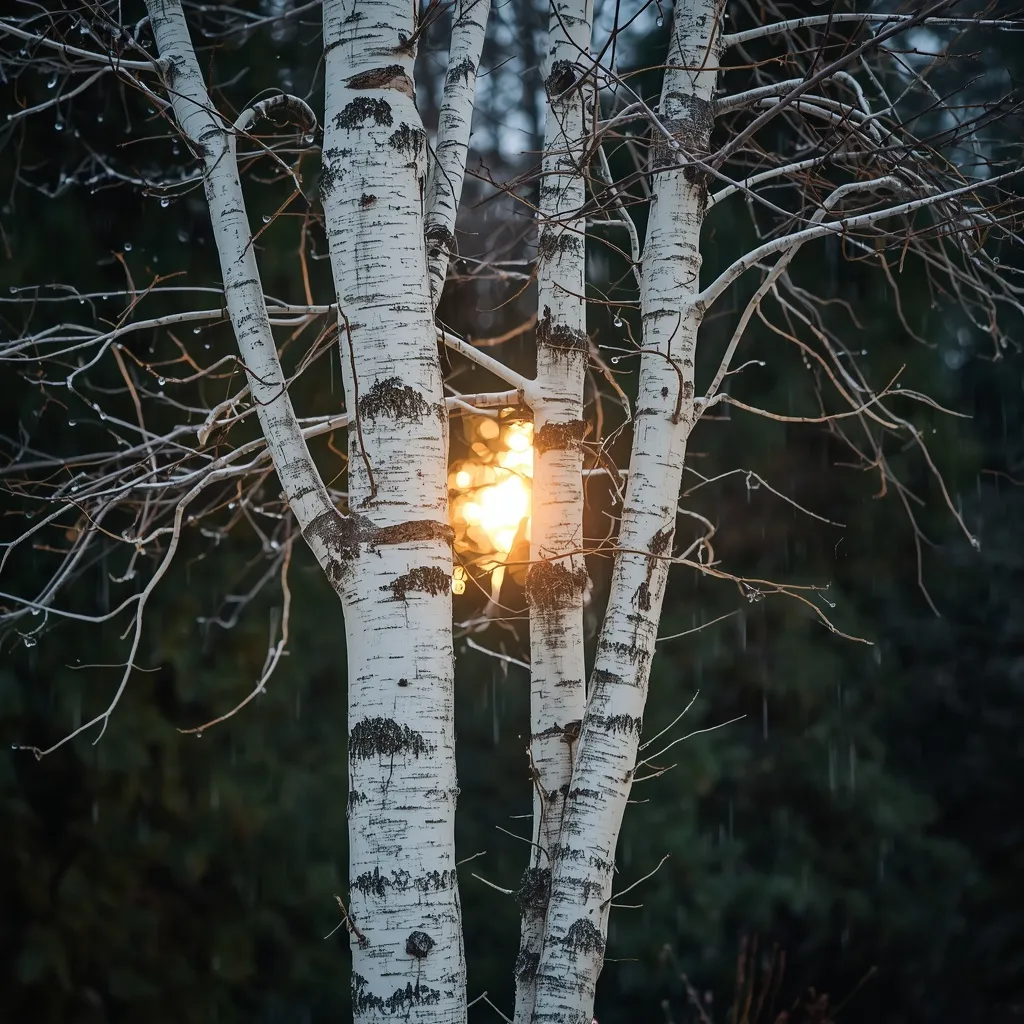
5. Underplanting with Spring Bulbs
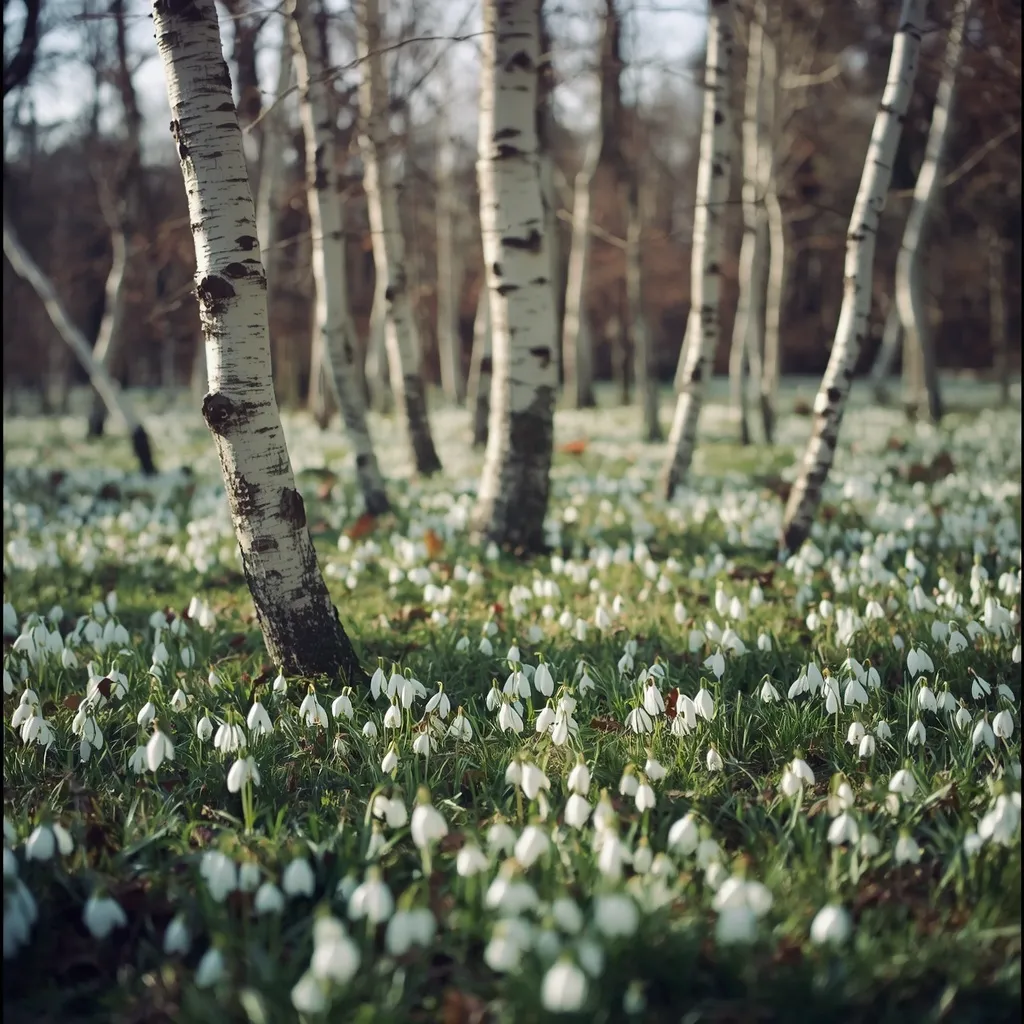
The ground under a birch is dry and root-filled by summer, but in early spring it’s bright and open, perfect for a carpet of bulbs before the canopy leafs out. Sheets of white crocus, snowdrops, and small daffodils flowering around pale trunks are one of the great sights of the early garden.
The trick is timing: spring bulbs do their growing while the birch is still bare and the soil is moist, then go dormant before the tree’s thirsty roots take over in summer. Plant bulbs in autumn in generous drifts of 50 or more for impact, choosing tough naturalizing types like Crocus tommasinianus and snowdrops that come back and spread each year. Blue scilla and wood anemones extend the display.
- Why it works: uses the one season the ground under a birch is genuinely hospitable.
- Best for: every birch planting is the easiest way to dress the base.
- Smart tip: plant naturalizing bulbs that multiply, so the carpet thickens each year.
6. A Dry-Shade Ground Cover Carpet
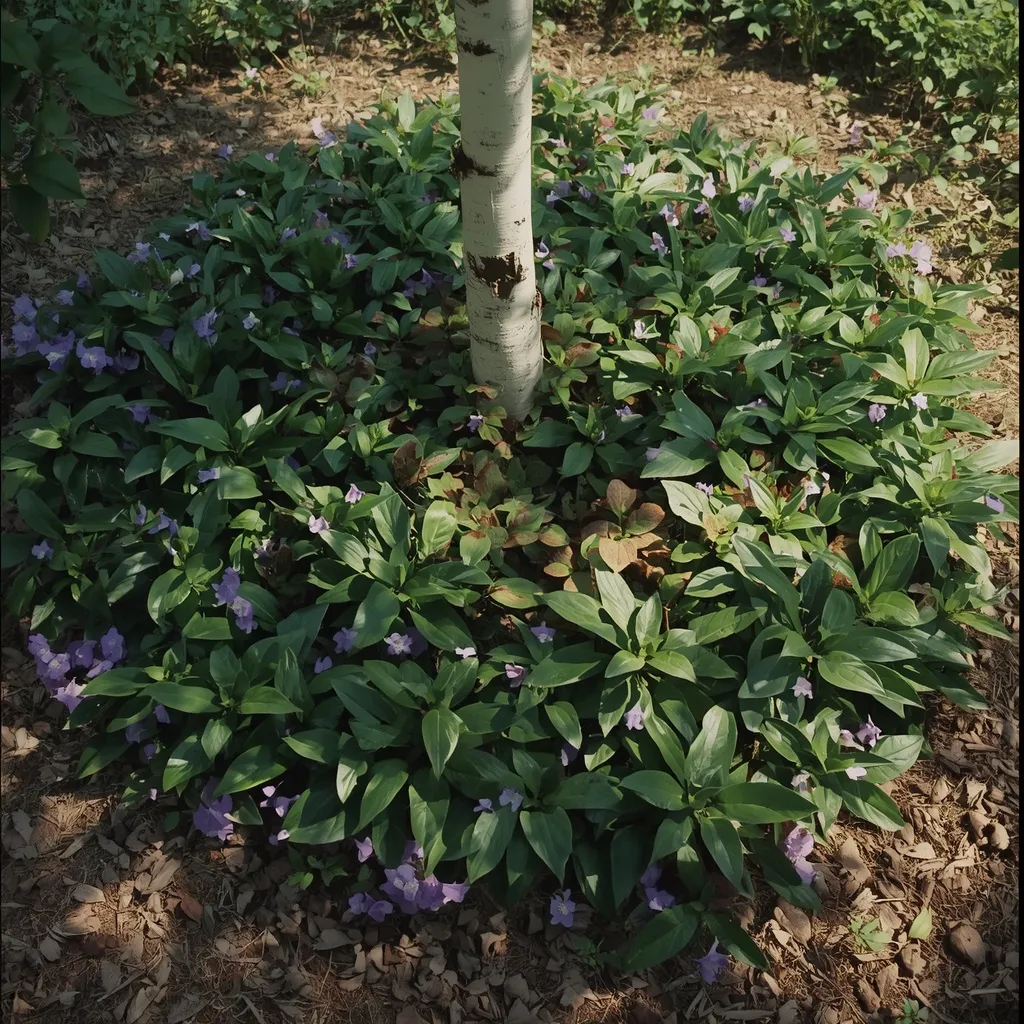
The single hardest question with a birch is what grows underneath, and the honest answer is: only plants that tolerate dry shade and root competition. A living carpet of tough evergreen ground cover solves the bare, dusty patch most birch owners end up with.
Reach for genuinely drought-and-shade-tolerant survivors barren strawberry (Waldsteinia), epimedium, ajuga, or hardy geraniums like Geranium macrorrhizum and water them well for the first full year while they establish against the birch’s greedy roots. Improve the soil with leaf mould before planting, and keep a mulch layer to hold moisture. Avoid thirsty, delicate plants here; they’ll lose the water war every time. This is the fix for the “nothing grows under my birch” complaint.
- Why it works: solves dry root competition with plants built to handle it.
- Best for: established birches with bare, difficult ground beneath.
- Common mistake: planting moisture-lovers that can’t compete with birch roots.
7. Ferns and Grasses Beneath the Canopy
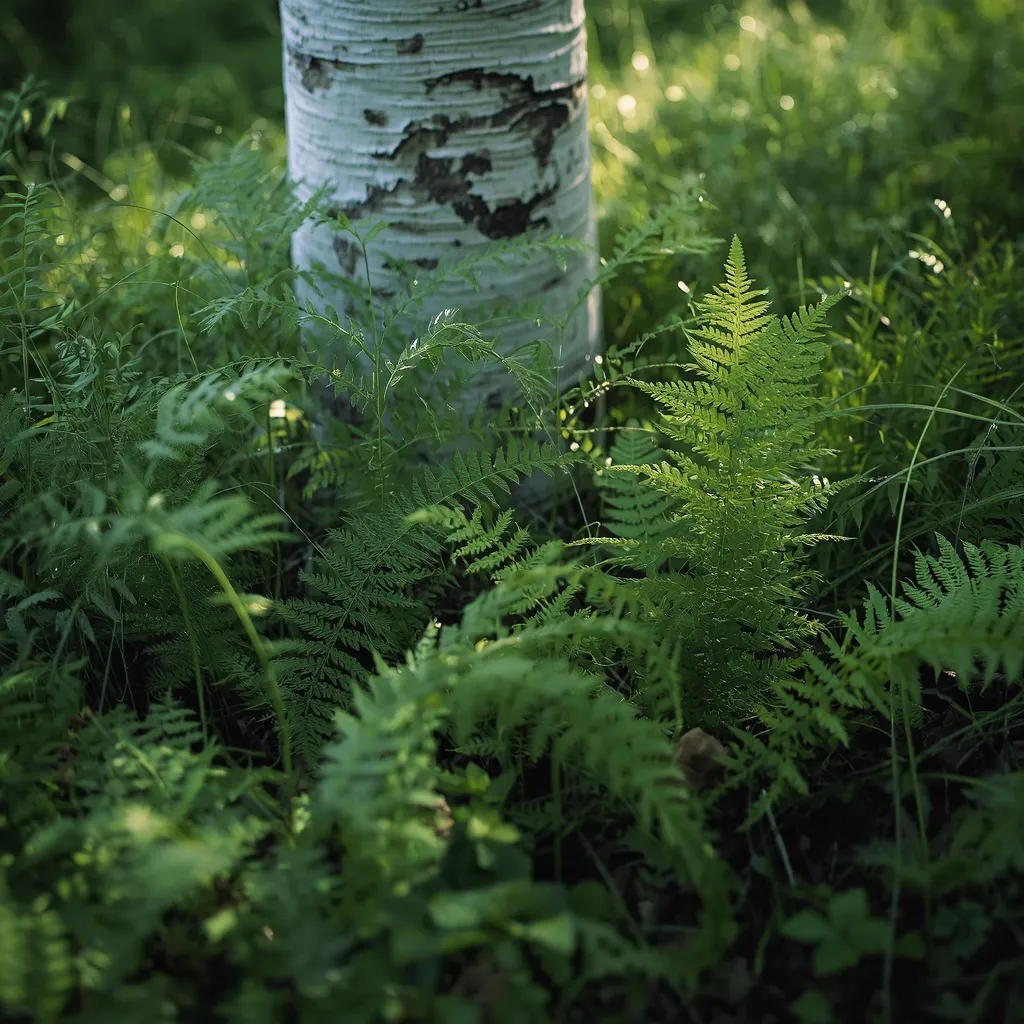
For a softer, more textural look under birch trees, combine shade-tolerant ferns with airy grasses that echo the dappled light. Clumps of hardy fern unfurling beside a pale trunk, with fine grasses catching the breeze, feel like a natural woodland floor.
Choose ferns suited to drier shade, such as the tough male fern (Dryopteris filix-mas), rather than moisture-hungry types, and pair them with a shade grass or sedge like Carex for movement. Plant in autumn or spring and mulch well, and remember that even “dry shade” plants need regular water for their first year under a birch. The contrast of vertical white trunks and soft green fronds is what makes this combination sing.
- Why it works: ferns and grasses read as authentic woodland and handle dappled shade.
- Best for: naturalistic and woodland-style gardens under an established canopy.
- Smart tip: pick drought-tolerant ferns like the male fern, not moisture-lovers.
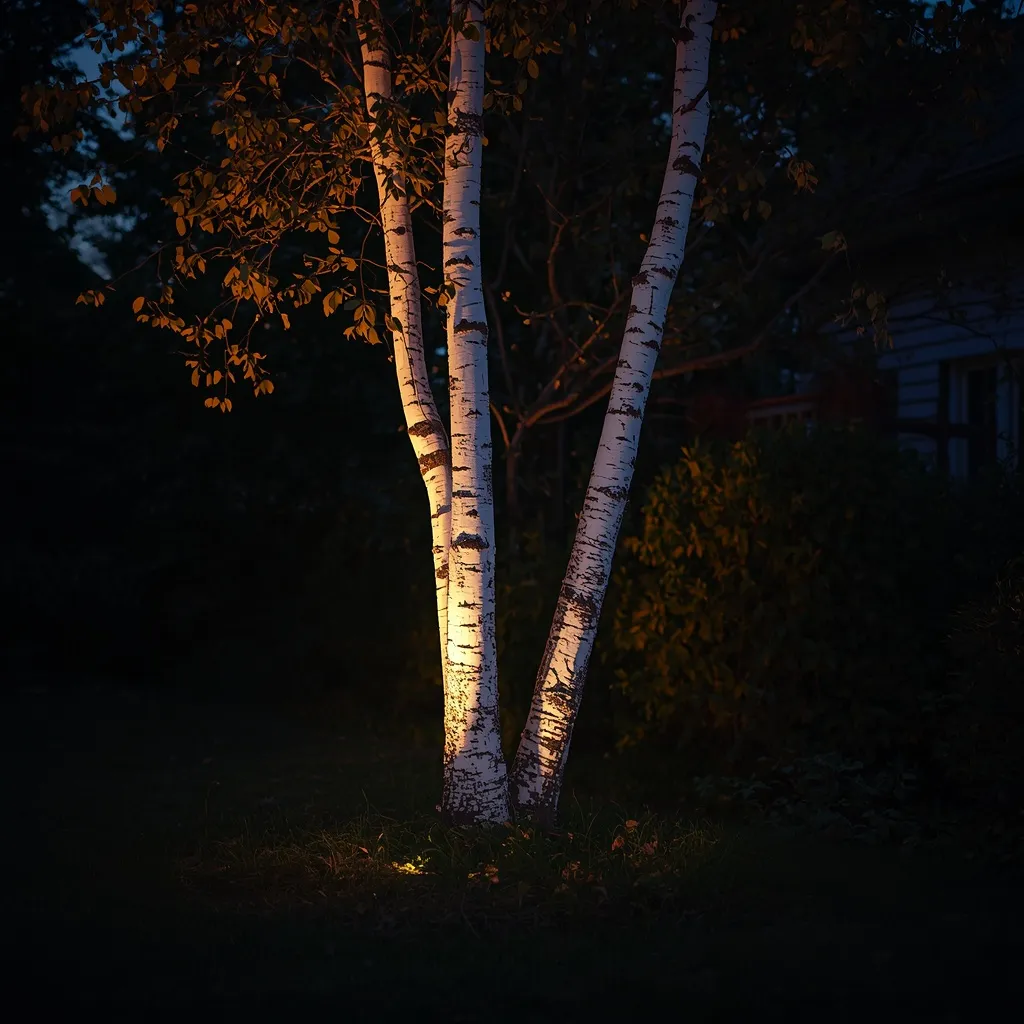
8. Uplighting the Bark at Night
A birch trunk lit from below becomes pure sculpture after dark. A single well-placed spotlight aimed up the pale bark turns the tree into a glowing feature you enjoy from indoors on winter evenings, long after the flowers are gone.
Use a warm-white LED uplighter (around 2700K) set into the ground a short distance from the base, angled to graze up the trunk and catch the branching pattern. Low-voltage garden lighting is the safest and easiest for DIY, but any mains-powered outdoor wiring should be installed by a qualified electrician and on a residual-current device for safety. One or two lights are plenty over-lighting flattens the effect and creates glare.
- Why it works: extends the birch’s impact into the evening and the dark months.
- Best for: trees visible from the house, and gardens used after dark.
- Safety note: leave mains outdoor wiring to a qualified electrician; use low-voltage for DIY.
9. A Birch and Gravel Courtyard
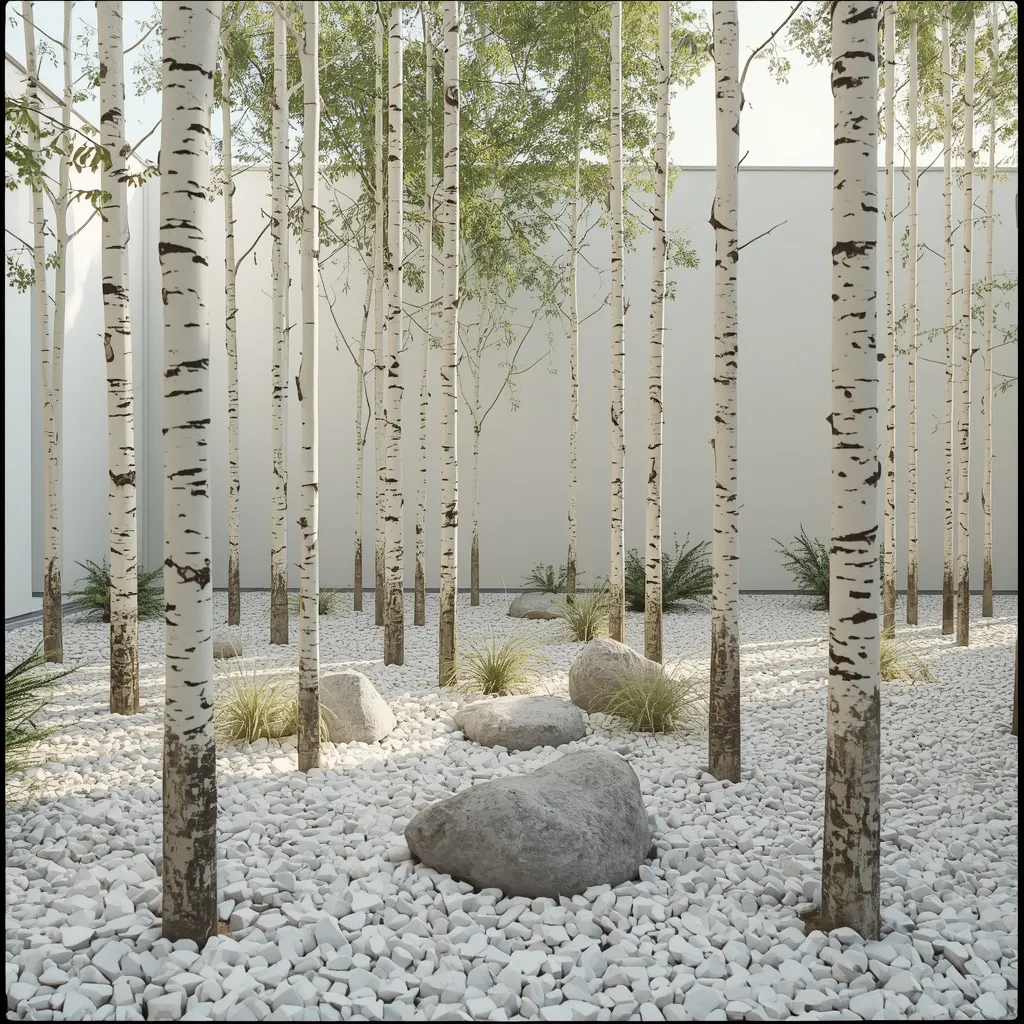
Pairing birch with a clean gravel base creates a calm, low-maintenance courtyard that looks good every day of the year. Slim white trunks rising from pale gravel, with a few boulders and grasses, give a Scandinavian, almost Japanese sense of quiet.
Lay a permeable membrane under the gravel to suppress weeds while still letting the birch roots breathe and drink, and leave a generous open ring of bare soil or gravel around the trunk base never pile gravel or soil against the bark, which can rot it. Choose a pale, angular gravel around 10–20 mm to complement the white bark. This works especially well in a small front garden or side return where planting beds would feel fussy.
- Why it works: birch plus gravel is striking, tidy, and needs almost no upkeep.
- Best for: low-maintenance, modern, and small front or courtyard gardens.
- Common mistake: heaping gravel against the trunk, which can rot the bark.
10. Birch as a Living Privacy Screen
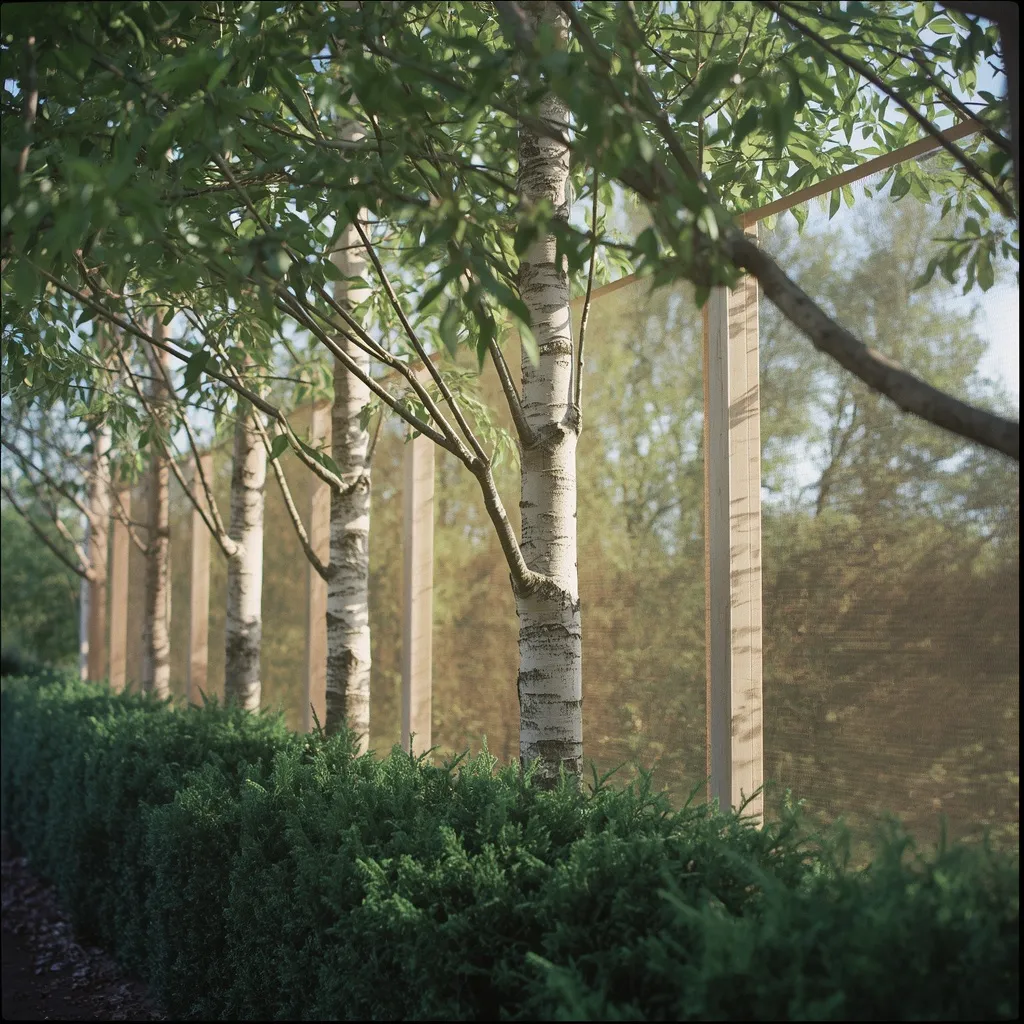
A row of birch makes a light, elegant screen that softens an overlooking view without the heavy, dark wall a conifer hedge creates. Their high canopies filter sightlines from upstairs windows while keeping the ground level open and bright.
Space single-trunk trees about 2–3 m (6–10 ft) apart for a screen, or use a run of multi-stem birch for denser, lower coverage. Because birch lose their leaves in winter, they screen best in the growing season pair them with an evergreen shrub layer beneath if you need year-round cover. Site the row a safe distance from boundaries and buildings, remembering those wide roots, and check that mature height won’t block a neighbour’s light.
- Why it works: filters overlooking views while staying light and airy, unlike a conifer wall.
- Best for: overlooked gardens wanting soft, non-oppressive screening.
- Smart tip: add evergreen shrubs beneath for privacy once the birch drops its leaves.
11. A Front-Garden Focal Point
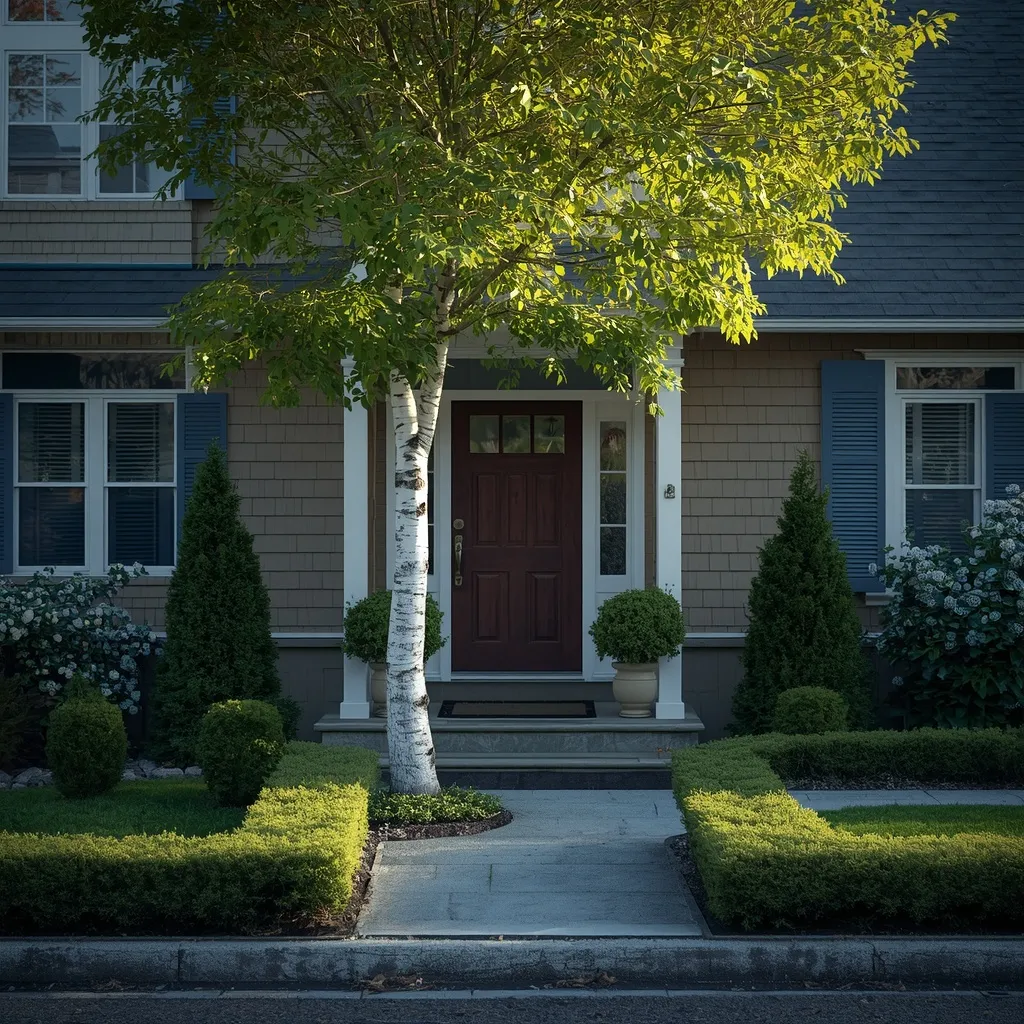
A birch in the front garden gives a home instant kerb appeal and a sense of establishment. A single white-barked tree beside the path or in a gravel bed frames the entrance and looks smart from the street in every season.
In a front garden, scale matters most: measure the distance to the house, the path, and any drains, and pick a compact or multi-stem birch if space is tight, keeping the trunk at least 3 m (10 ft) from the walls and services. Underplant with low, tidy evergreens or seasonal bulbs so the bed stays neat and welcoming. A birch also filters street dust and light, softening the boundary between pavement and home.
- Why it works: delivers year-round kerb appeal in a slim footprint.
- Best for: front gardens, entrances, and small urban plots.
- Safety note: keep the tree well clear of drains and foundations root damage is costly.
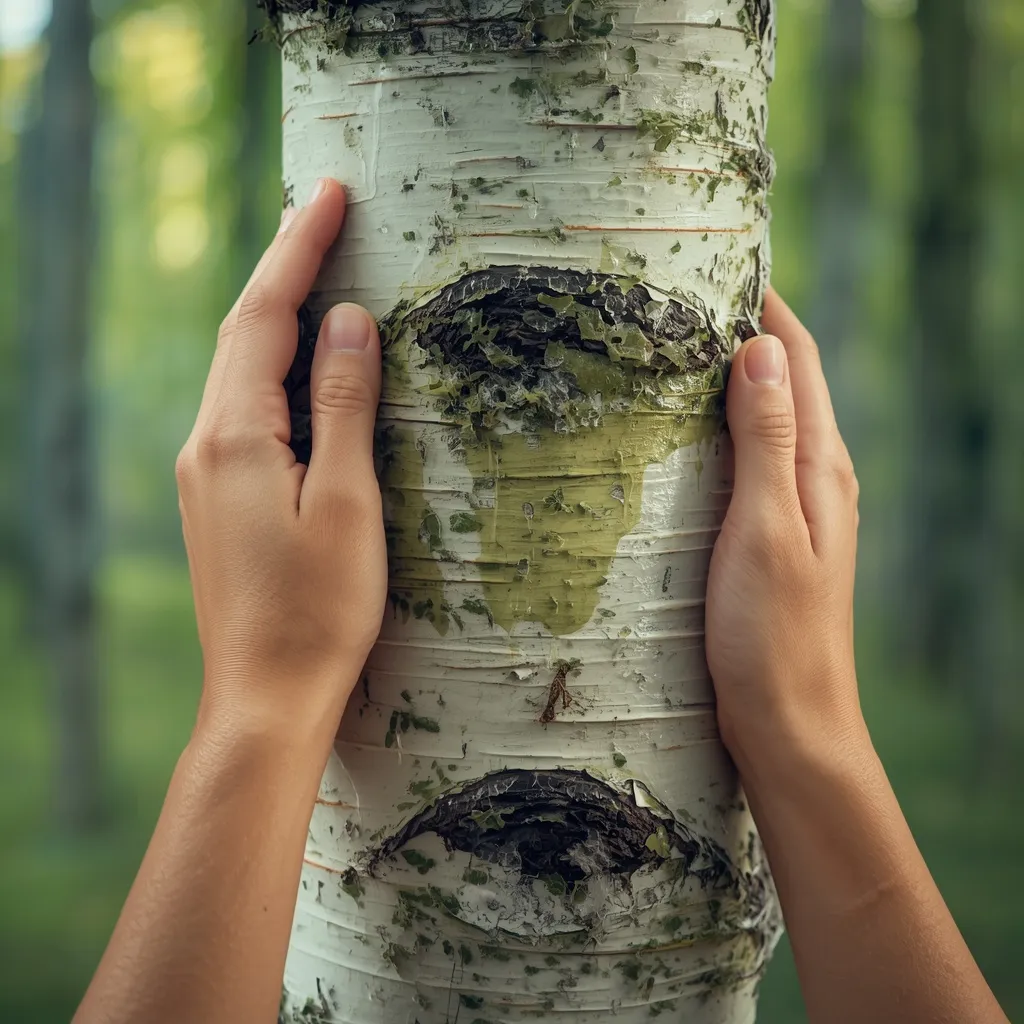
12. Keeping the White Bark Bright
Here’s the detail most birch articles never mention: white bark doesn’t stay white on its own. Over time, green algae and grime dull the lower trunk, especially in damp or shaded spots, turning that crisp white a muddy grey-green.
To restore the glow, gently wash the lower trunk once or twice a year with plain water and a soft brush or cloth, working from the bottom up; for stubborn algae, a very dilute solution of specialist bark-safe cleaner can help, but avoid harsh chemicals and pressure washers, which damage the delicate bark. Late winter, before the leaves return, is the ideal time so the freshly cleaned trunk shows off in spring. Improving airflow around the base also slows regrowth.
- Why it works: simple cleaning keeps the bark’s signature whiteness looking its best.
- Best for: anyone whose main reason for planting birch was the pale trunk.
- Common mistake: using a pressure washer or harsh chemicals, which harm the bark.
13. A Woodland-Edge Border
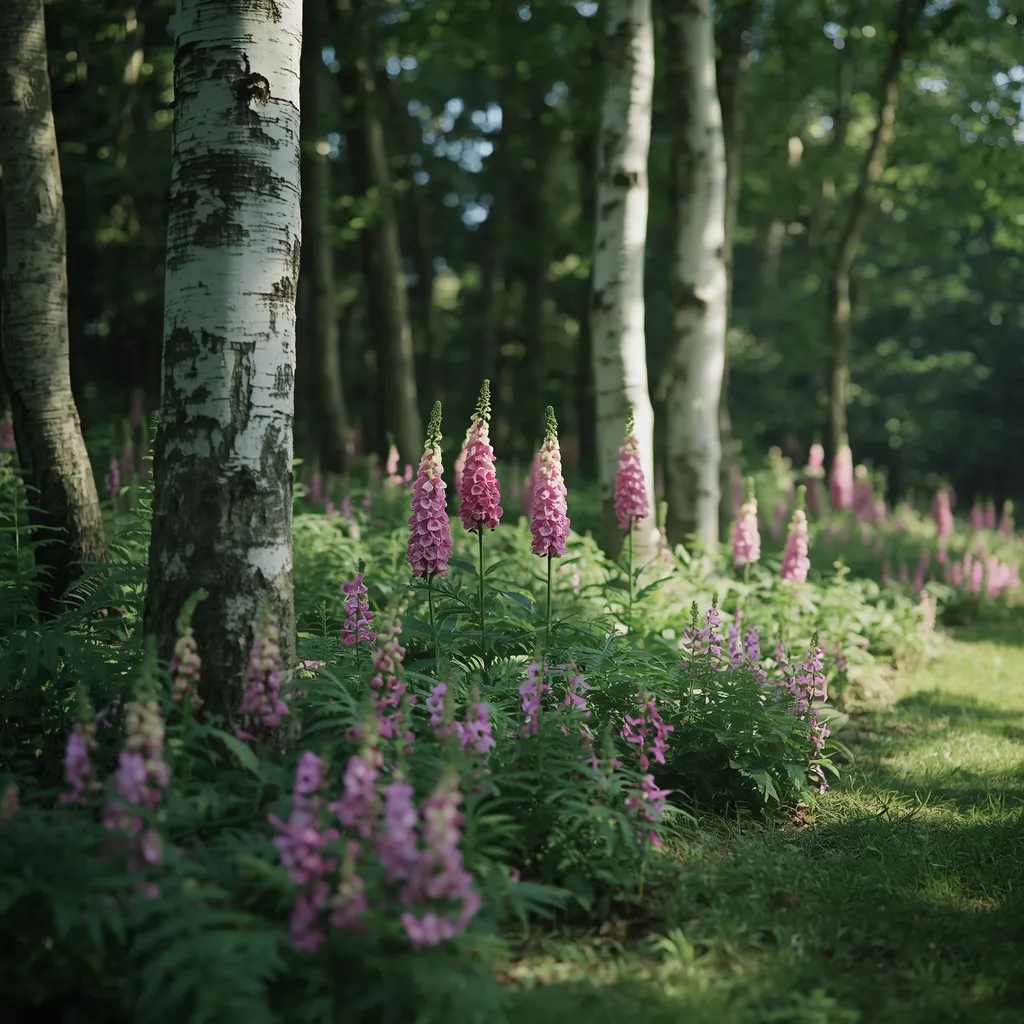
Birch are woodland-edge trees by nature, so a border that mimics that habitat looks effortlessly right beneath them. Imagine pale trunks rising behind a loose, layered planting of foxgloves, hardy geraniums, and ferns, fading into dappled shade.
Build the border in layers: the birch canopy on top, a middle layer of shade shrubs like hydrangea or viburnum, and a ground layer of the dry-shade perennials from earlier ideas. Keep the planting naturalistic and slightly wild rather than formal, letting plants drift and self-seed. Water new plantings through their first summer, since the birch will compete hard for moisture. This is the richest, most immersive way to plant around birch if you have the room. For quick, cheerful colour in the sunnier gaps at the border’s edge, you can even grow zinnias from seed and let them self-seed each year.
- Why it works: recreates the birch’s natural woodland-edge setting for a cohesive look.
- Best for: medium to large gardens and naturalistic planting styles.
- Smart tip: layer canopy, shrubs, and dry-shade ground cover for depth.
14. Birch with a Simple Bench
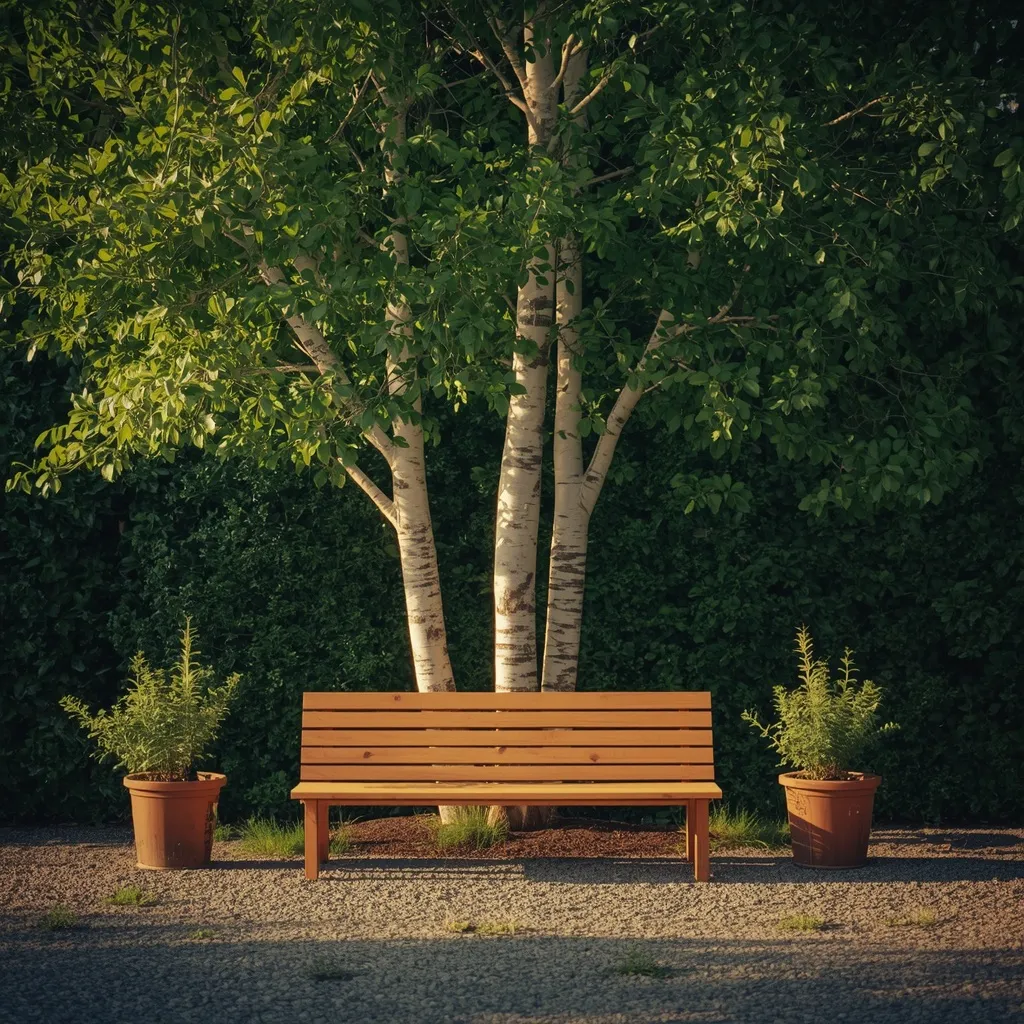
Place a bench beneath a birch and you create a destination, a shaded, dappled spot that invites you to actually sit in the garden. A simple timber or stone bench encircling or facing a pale trunk turns the tree into a private retreat.
Birch cast light, moving shade rather than dense gloom, which makes the space beneath genuinely pleasant to sit in on a warm day, unlike the deep shade of many broadleaf trees. Position the bench to look back toward the house or a border, and set it on a firm gravel or paved pad kept clear of the trunk’s root zone. Add a couple of shade-tolerant pots for softness. This is a small idea with an outsized effect on how much you use the garden.
- Why it works: birch’s light shade makes the space beneath a comfortable seating spot.
- Best for: any garden with room for a quiet corner.
- Smart tip: set the bench pad clear of the roots to avoid heaving over time.
15. Winter Interest by Design
Birch trees earn their keep most in winter, when bare white trunks become the whole garden’s backbone. Designing with that in mind means placing the tree where its winter silhouette and glowing bark are the view from your warmest indoor seat.
Combine birch with other winter performers for a full cold-season scene: red-stemmed dogwoods at the base, evergreen structure nearby, and the whitest-bark Himalayan birch for maximum contrast against a grey sky. Skip heavy underplanting that flops in winter and instead keep clean lines and evergreen shapes around the trunk. Low winter sun striking the bark, especially after rain, is when a well-sited birch looks its absolute best.
- Why it works: turns the bleakest season into the birch’s finest moment.
- Best for: gardeners who want year-round, not just summer, interest.
- Smart tip: pair with red-stemmed dogwood for a striking winter colour contrast.

16. Container Birch for Patios
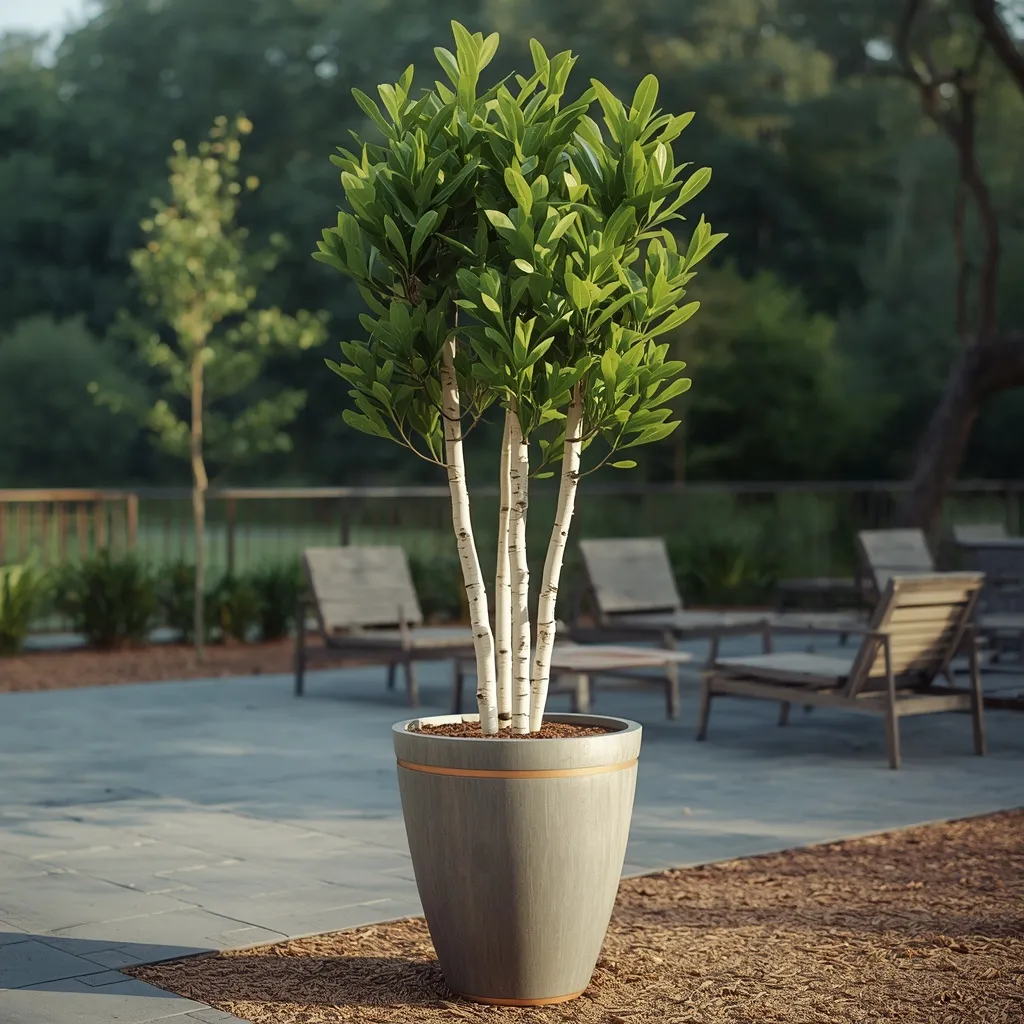
No garden bed? A birch can grow in a large container for years, bringing its trunk and canopy to a patio, balcony, or roof terrace. A slim multi-stem birch in a tall, weighty planter makes a living screen or centrepiece where there’s no open ground at all.
Choose the largest container you can manage at least 60 cm (24 in) wide and deep with strong drainage, and use a loam-based potting mix that holds moisture better than lightweight composts. The catch is water: potted birch dry out fast and won’t tolerate drought, so daily watering in summer and a mulch on the surface are essential, and a container tree will ultimately stay smaller and shorter-lived than one in the ground. Check weight limits before placing a big planter on a balcony or roof.
- Why it works: brings birch to spaces with no soil, like patios and balconies.
- Best for: renters, balcony gardeners, and paved courtyards.
- Safety note: confirm balcony or roof load limits before adding a large, heavy planter.
Conclusion
Birch trees give a garden something rare height without heaviness, structure without gloom, and a glowing presence that peaks exactly when the rest of the garden sleeps. The secret to using them well is choosing the right type for your space, keeping those wide roots clear of the house and drains, and underplanting with tough companions that can handle dry, dappled shade. Start with one well-placed tree and the right ground beneath it, then build the scene outward as it establishes. For more ways to design around trees and borders, our Garden Design collection is full of ideas to pair with birch. Plant with the winter view in mind, and your birch will earn its place every single month of the year.
FAQs
Are birch tree roots a problem near a house or drains?
Birch roots are shallow, wide-spreading, and thirsty, so they can lift paving and get into old, cracked drains if planted too close. As a general rule, keep a birch at least 3 m (10 ft) from the house, patios, and pipes more for the largest species like silver birch and choose a compact or multi-stem type in tight spaces.
What can I plant under a birch tree?
Only plants that tolerate dry shade and root competition thrive under a birch, since the canopy shades the ground and the roots drink most of the moisture. Spring bulbs (crocus, snowdrops), tough ground covers like epimedium and hardy geraniums, and drought-tolerant ferns are the reliable choices and all need watering through their first year to establish.
Which birch tree is best for a small garden?
A multi-stem birch or a compact Himalayan birch is ideal for a small garden, giving strong trunk impact and an airy canopy without the bulk of a full-size forest tree. Multi-stem forms stay shorter and let more light reach the ground, and you can keep them to around 6–10 m (20–33 ft) with careful selection.
Which birch has the whitest bark?
The Himalayan birch tree, Betula utilis jacquemontii, has the brightest white bark, and named varieties like ‘Grayswood Ghost’ and ‘Snow Queen’ are selected specifically for it. Buy by variety name rather than a generic “white birch” label, as unnamed trees can have duller, greyer bark.
Why is my birch bark turning green or grey instead of white?
White birch bark naturally collects green algae and grime over time, especially on the lower trunk in damp or shaded spots. Gently washing the lower trunk once or twice a year with plain water and a soft brush restores the brightness; avoid pressure washers and harsh chemicals, which damage the delicate bark.
Can I grow a birch tree in a pot or container?
Yes a birch can live in a large container for several years on a patio or balcony, ideally at least 60 cm (24 in) wide with strong drainage and a loam-based mix. The main challenge is water, since potted birch dry out fast and won’t tolerate drought, so daily summer watering and a surface mulch are essential.