

Key Takeaways
- The best laundry room floors are water-resistant, slip-resistant, and easy to wipe clean, style comes second to those three.
- Porcelain tile and luxury vinyl plank (LVP) are the two most reliable all-round choices for durability and moisture.
- “Water-resistant” survives splashes; “waterproof” survives standing water, which you need depends on your appliance leak risk.
- Renters can get the look with peel-and-stick vinyl tile or loose-lay sheet vinyl, with zero permanent changes.
- Matte or textured finishes are safer underfoot than polished ones, which get slippery when wet.
Introduction
The floor is the hardest-working surface in the room, and the right laundry room floor ideas make daily washing feel less like a chore. This is a space that deals with splashes, dropped detergent, heavy machines, and the occasional leak, so the flooring has to be tough, water-friendly, and safe underfoot, while still looking good enough to enjoy.
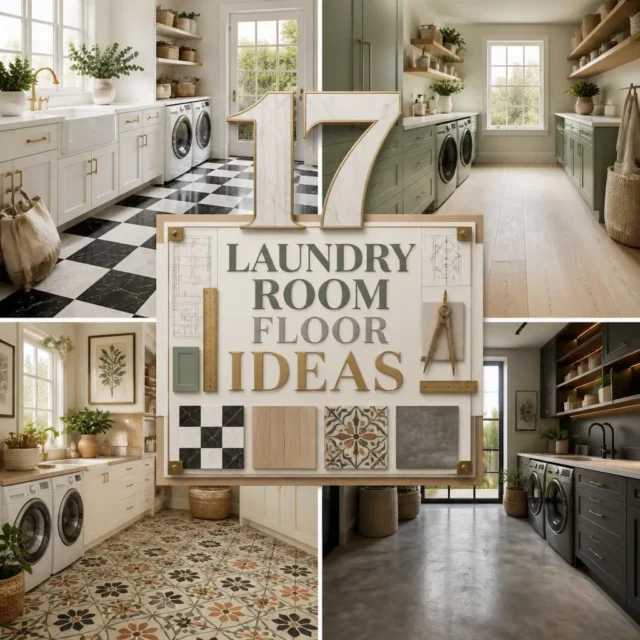
Below are 17 complete flooring looks, from classic checkerboard tile to warm cork and budget-friendly vinyl. Each one covers how it holds up to water, how slip-safe it is, and who it suits best, so you can match a floor to your space and skill level. Think of it as giving one of the most overlooked corners of your abode a foundation that actually lasts.
Before you choose, two quick rules: First, prioritize water resistance and a matte or textured surface for grip near the machines. Second, know your subfloor, most tile and vinyl need a flat, dry base, and a floor drain is a smart safeguard if your room has room for one.
17 Laundry Room Floor Ideas
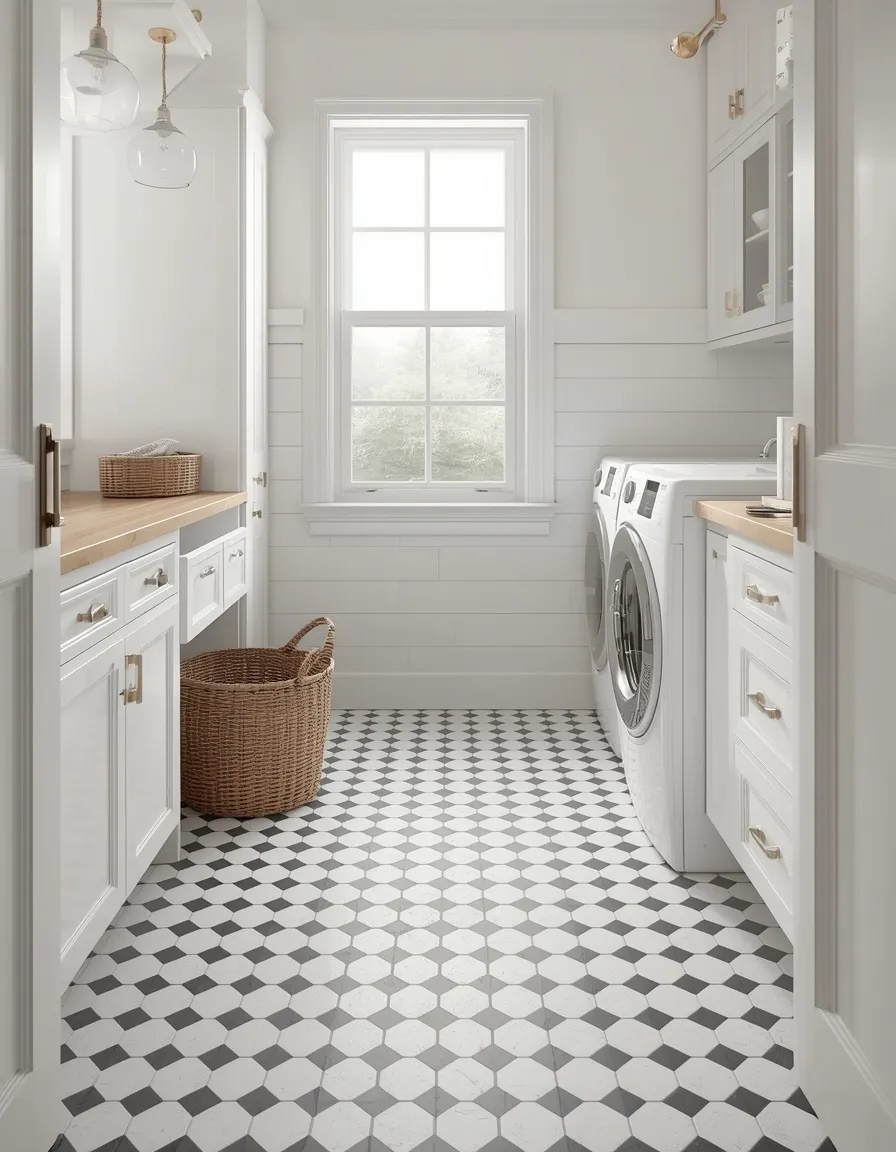
1. Classic Black-and-White Checkerboard
A checkerboard floor in crisp black-and-white tile turns a plain laundry room into a bright, timeless space. The alternating squares add movement and a vintage-meets-modern charm that pairs beautifully with white cabinets and warm wood counters. It reads clean, cheerful, and instantly recognizable.
Lay 20–30 cm (8–12 in) porcelain or ceramic tiles in a straight or diagonal checker pattern; diagonal makes a narrow room feel wider. Choose a matte or honed finish rather than polished so it stays slip-safe when wet. A common mistake is using pure bright white grout, which stains fast in a laundry room, a mid-grey grout hides dirt and detergent marks far better. Porcelain is denser and more water-resistant than ceramic, so it is the safer pick underfoot.
- Why it works: The pattern hides lint and scuffs while staying visually crisp and classic.
- Best for: Homeowners wanting a timeless, high-impact tile floor.
- Solves: A dull, forgettable floor that shows every mark.
2. Wood-Look Porcelain Plank
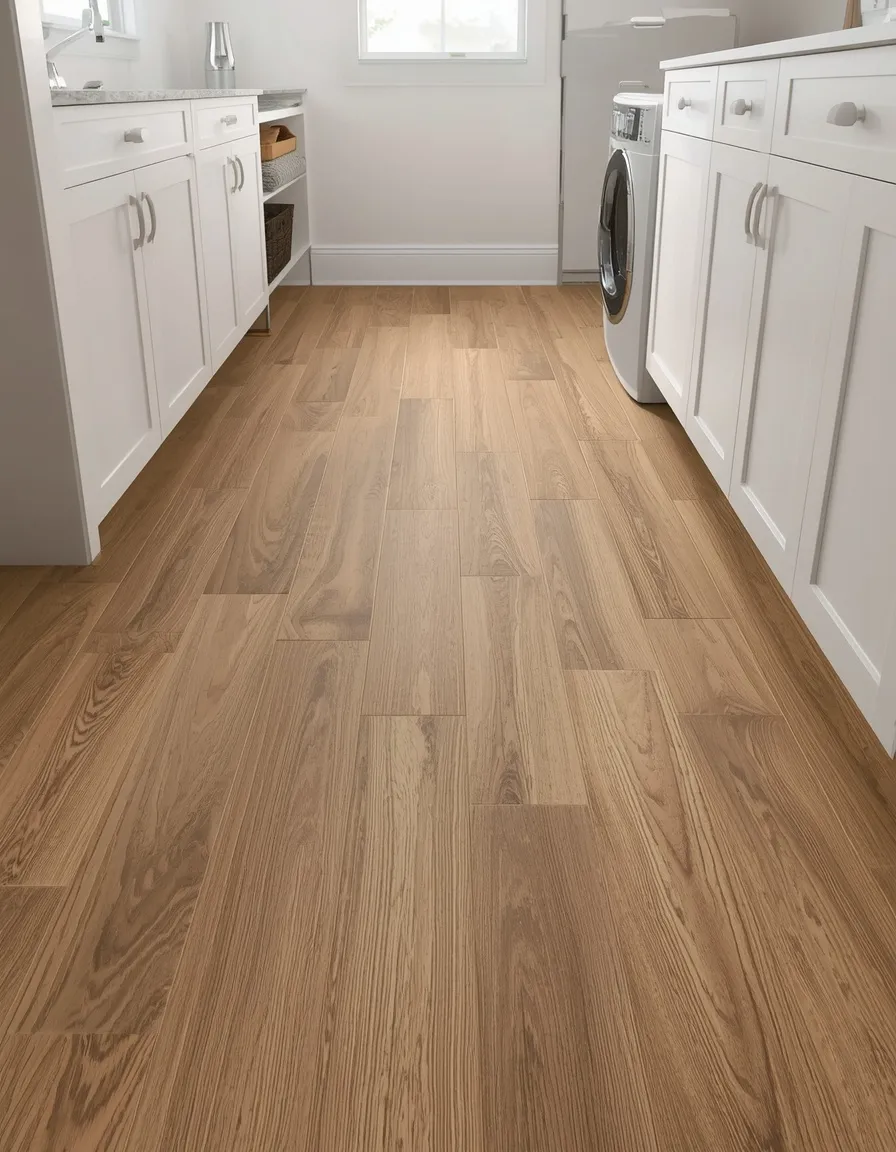
Wood-look porcelain plank tile gives you the warmth of hardwood with none of its fear of water. Long planks in oak, walnut, or weathered grey tones run across the floor, complete with realistic grain and texture, so the room feels cozy rather than utilitarian. From a step back, most people can’t tell it isn’t real wood.
This is the smart way to get a wood aesthetic in a wet room, because real hardwood warps with moisture and standing water. Choose a textured (not glossy) surface for grip and a rectified plank for tight, even grout lines. Run the planks in the direction of the longest wall to stretch the space visually. Porcelain is fully water-resistant and rated for wet areas, unlike laminate, which can swell at the seams if water sits.
- Why it works: Combines hardwood looks with true water resistance and low maintenance.
- Best for: Anyone who loves wood floors but needs moisture-proofing.
- Solves: Wanting warmth without the water risk of real timber.
3. Luxury Vinyl Plank (LVP)
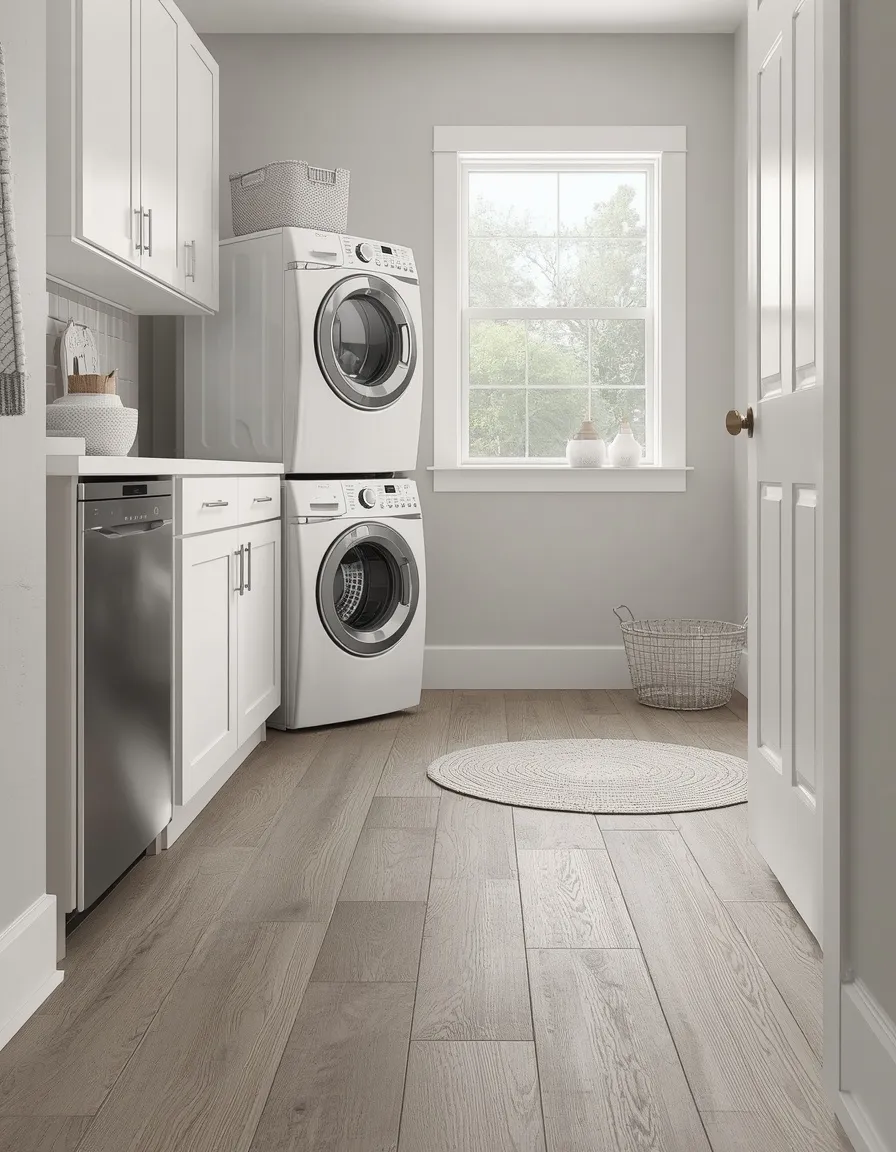
Luxury vinyl plank, or LVP, delivers a realistic wood or stone look with a softer, warmer feel underfoot than tile. The planks click together over the subfloor, creating a seamless, comfortable surface that shrugs off splashes and stays quiet under a spinning washer. It’s the practical favorite for busy households.
LVP is one of the most forgiving laundry room floors: many products are fully waterproof, comfortable to stand on, and DIY-friendly with a click-lock, floating installation. Look for a wear layer of at least 12 mil for durability and a waterproof (not just water-resistant) rating if leaks are a concern. Acclimate the planks in the room for 48 hours before installing so they don’t expand or contract after. It installs over most flat subfloors without adhesive, which renters with permission can even take with them.
- Why it works: Waterproof options, warm underfoot, and genuinely DIY-friendly.
- Best for: DIYers and families wanting comfort plus water protection.
- Solves: Cold, hard tile that’s tiring to stand on while folding.
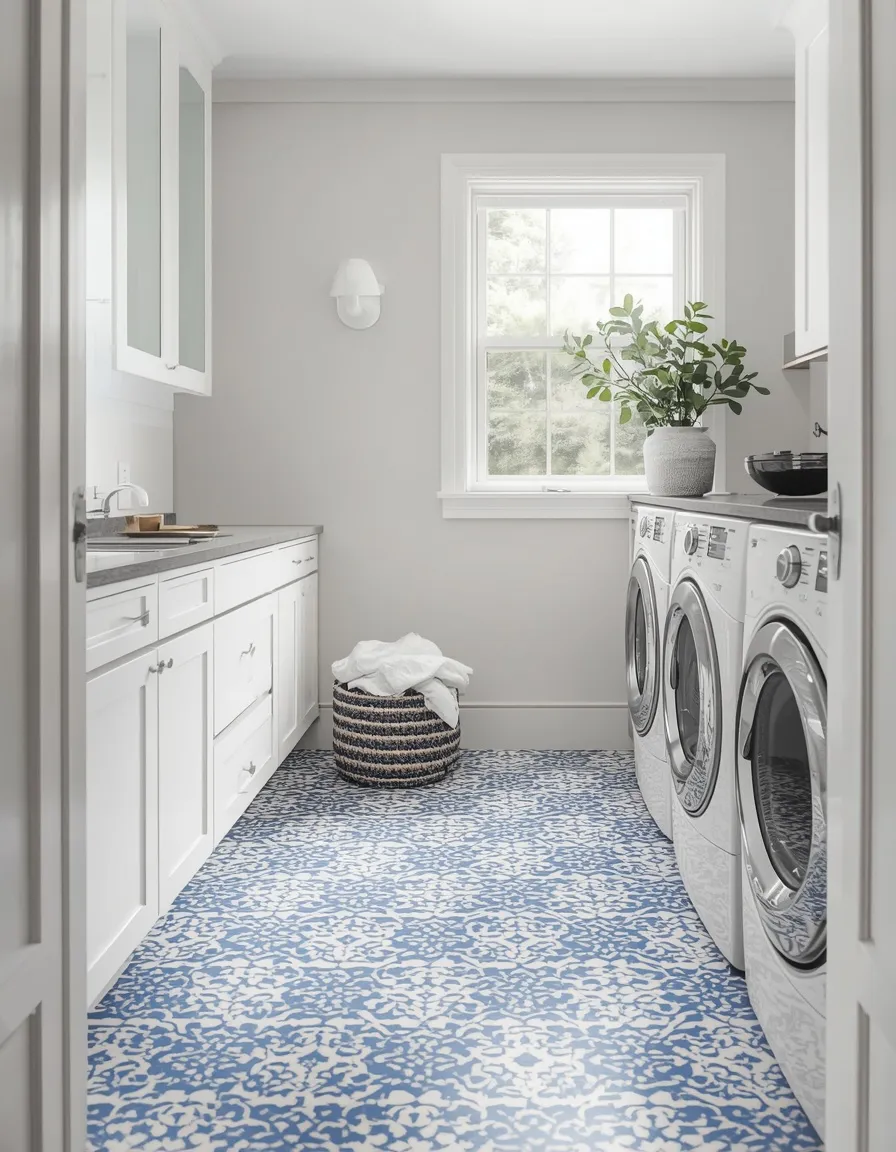
4. Patterned Encaustic Cement Tile
Encaustic-look cement tile brings bold pattern and color to the floor, turning laundry into a designed room. Moroccan-inspired motifs, florals, or geometric prints cover the space like a painted rug, adding personality that plain flooring can’t match. It’s the most decorative choice on this list.
For a laundry room, choose porcelain tiles printed with an encaustic pattern rather than true cement tiles, real cement is porous, stains easily, and needs regular resealing, which is impractical near detergent. The porcelain version gives the same look with far better water and stain resistance. Keep the rest of the room simple, since the floor is the star. Pattern also hides lint and marks brilliantly, a real bonus in this room.
- Why it works: High-impact pattern that also disguises everyday dirt.
- Best for: Renovators wanting a statement floor with low upkeep.
- Solves: A boring floor in a room that needs personality.
5. Herringbone Tile Floor
A herringbone layout takes rectangular tiles and sets them in a classic V-shaped zigzag, adding elegance and a sense of craftsmanship. In a soft white, marble-look, or wood-tone tile, the pattern makes even a small laundry room feel intentional and high-end. The angles draw the eye and add quiet luxury.
Herringbone works with porcelain planks or rectangular tiles; a 45-degree layout feels more dynamic than a 90-degree one. Because the pattern has many cuts, order about 15% extra tile to cover waste and mistakes. This layout is best left to confident DIYers or a tiler, since alignment errors show badly. Keep a matte finish for slip safety, and use a contrasting grout only if you want the pattern emphasized.
- Why it works: A simple tile shape becomes a refined, custom-looking floor.
- Best for: Detail-lovers wanting an upscale finish.
- Solves: A plain straight-lay floor that feels basic.
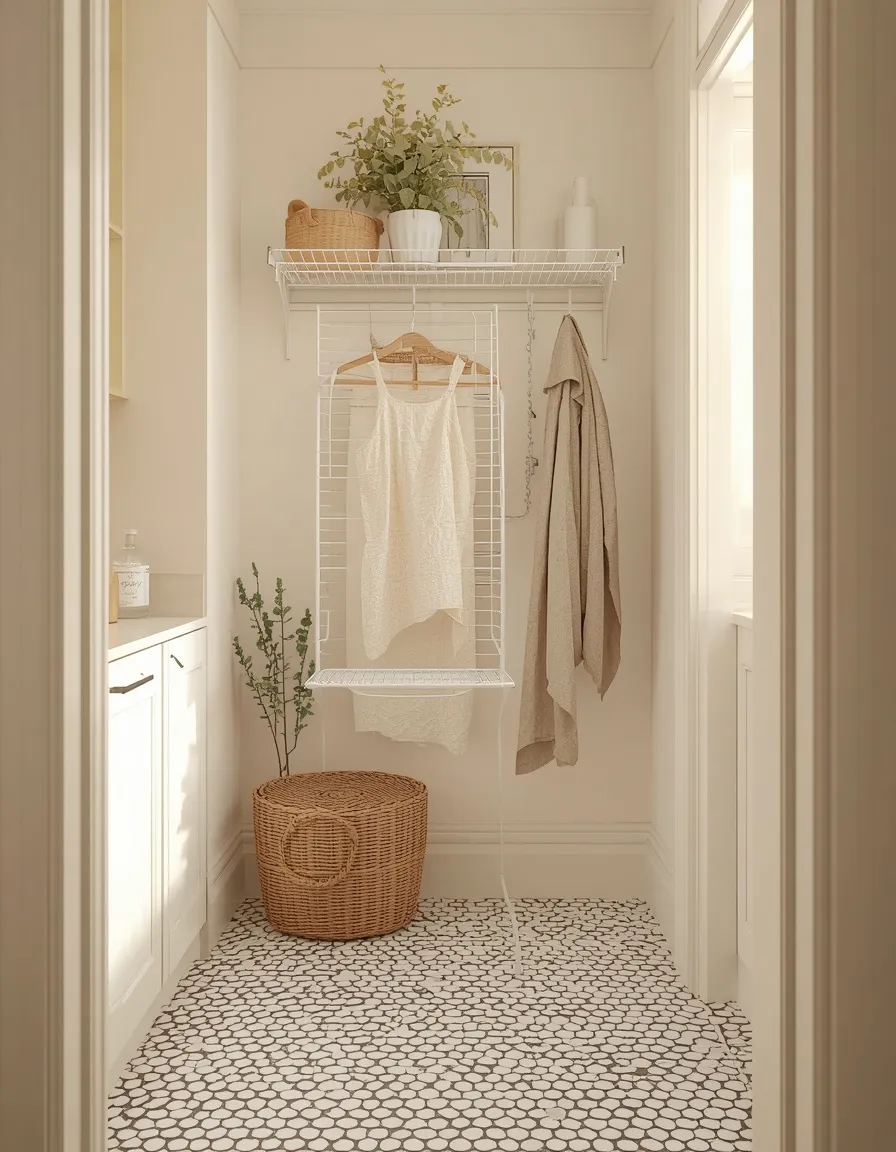
6. Penny Round Tile Floor
Penny round tiles, small circular mosaics on mesh sheets, create a charming, tactile floor with vintage character. In white with dark grout, or a soft sage or blue tone, they read retro and cozy, perfect for a smaller laundry room or a cottage-style home. The rounded shapes feel handcrafted.
The many grout lines in penny round tile give excellent grip underfoot, which is a genuine safety plus in a splash-prone room. Choose an epoxy or stain-resistant grout and a darker shade, because the sheer amount of grout will show dirt if it’s pale. Mosaic sheets are more beginner-friendly to lay than large tiles since they flex over minor subfloor imperfections. Seal the grout after installation to keep moisture out.
- Why it works: Extra grout lines add grip and vintage texture at once.
- Best for: Small rooms and lovers of retro, cottage character.
- Solves: A slippery floor that also lacks personality.
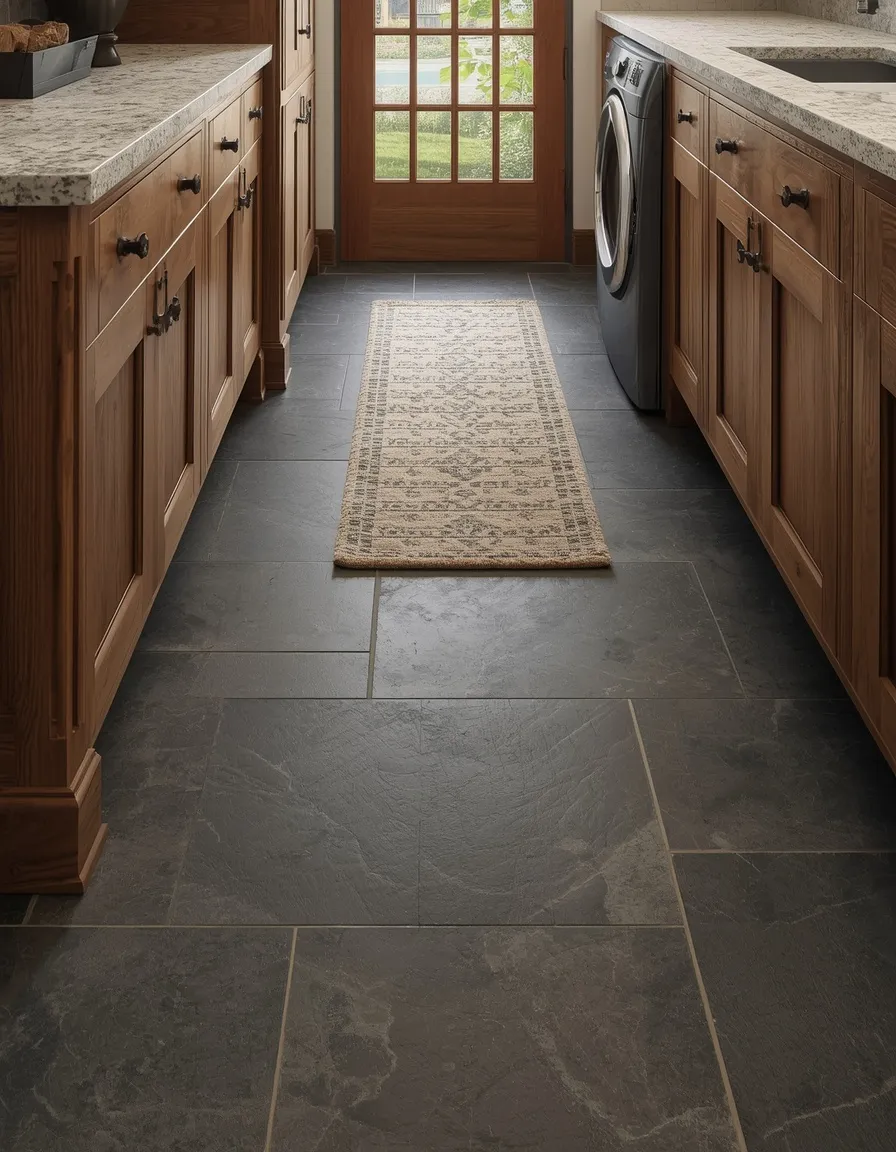
7. Natural Slate Tile
Slate tile brings rich, earthy color and a naturally textured surface that feels grounded and rustic. Its cleft, uneven face, in charcoal, green-grey, or rusty tones, hides dirt and adds organic depth that manufactured tile can’t fully copy. It suits farmhouse and country-style laundry rooms.
Slate’s naturally riven surface makes it one of the most slip-resistant natural stones, ideal where water splashes. Because it’s porous, it must be sealed on installation and resealed every year or two to resist stains and moisture. It’s harder and colder than porcelain, so pair it with a washable runner in the standing zone. Choose gauged (uniform-thickness) slate for an easier, flatter installation.
- Why it works: Natural texture gives grip and hides dirt with rustic warmth.
- Best for: Farmhouse and rustic homes that don’t mind occasional sealing.
- Solves: A flat, characterless floor needing organic texture.
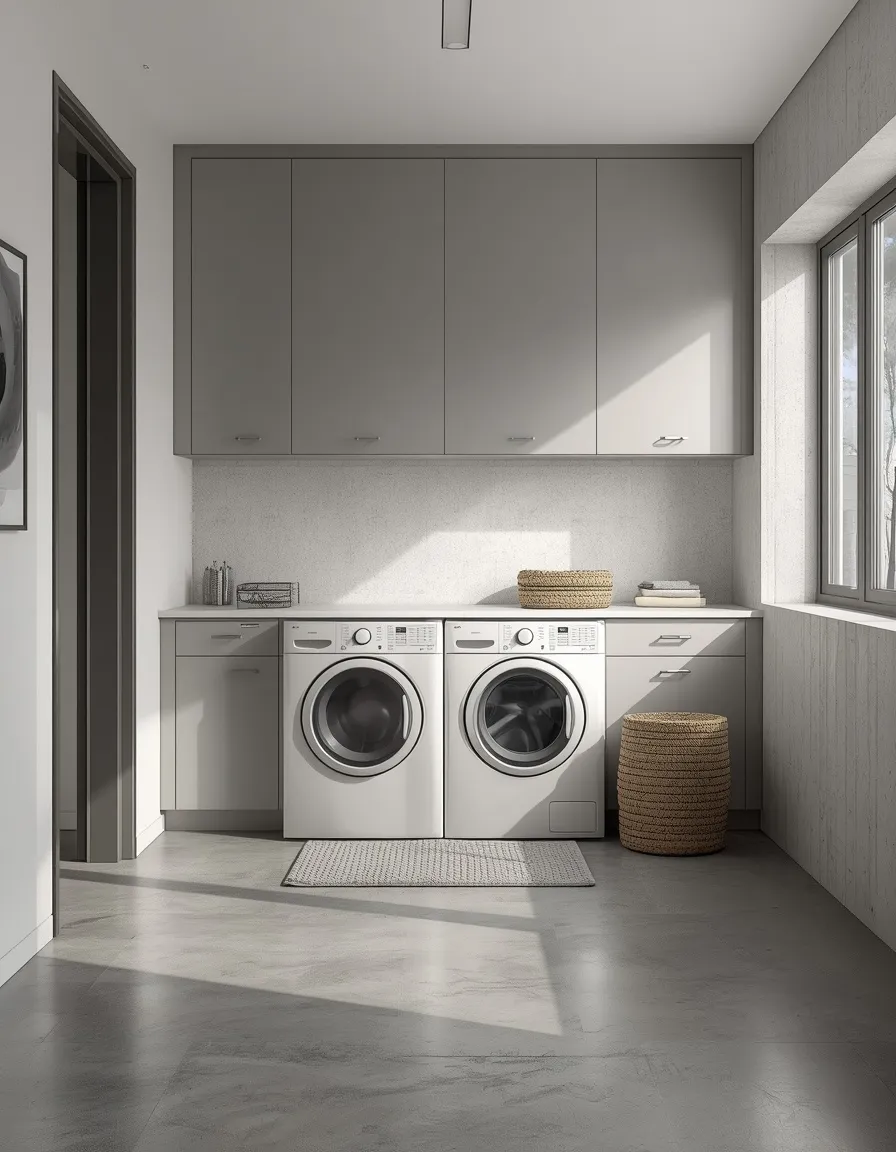
8. Polished Concrete Floor
A polished or sealed concrete floor gives a laundry room a sleek, modern, industrial edge. Smooth grey concrete, optionally stained a deeper charcoal or warm tan, creates a seamless, grout-free surface that feels contemporary and endlessly durable. It’s the minimalist’s dream floor.
Concrete is extremely hard-wearing and, when properly sealed, resists water and stains well, making it a strong laundry choice, especially on a ground-floor slab. Add a matte anti-slip sealer rather than a high-gloss one, since polished concrete gets slick when wet. Reseal every couple of years to maintain water resistance. It is hard and cold underfoot, so a cushioned mat where you stand is worth adding.
- Why it works: Seamless, grout-free, and nearly indestructible when sealed.
- Best for: Modern homes and ground-floor or basement laundry rooms.
- Solves: Grout-cleaning fatigue and a dated floor surface.
9. Budget Sheet Vinyl
Sheet vinyl covers the floor in one continuous, water-resistant surface with almost no seams for water to sneak through. Modern designs convincingly mimic tile, stone, or wood, so a budget floor can still look considered. It’s the most affordable way to fully cover a laundry room.
Because it comes in large rolls, sheet vinyl has very few seams, which makes it one of the most water-tight budget floors, a real advantage near a leaky machine. It installs over a clean, flat subfloor and is gentle and quiet underfoot. Choose a thicker gauge with a decent wear layer so heavy appliances don’t dent it. A textured or matte print grips better than a shiny one.
- Why it works: Nearly seamless water resistance at the lowest cost.
- Best for: Tight budgets and quick, low-fuss makeovers.
- Solves: Needing full water protection without spending much.
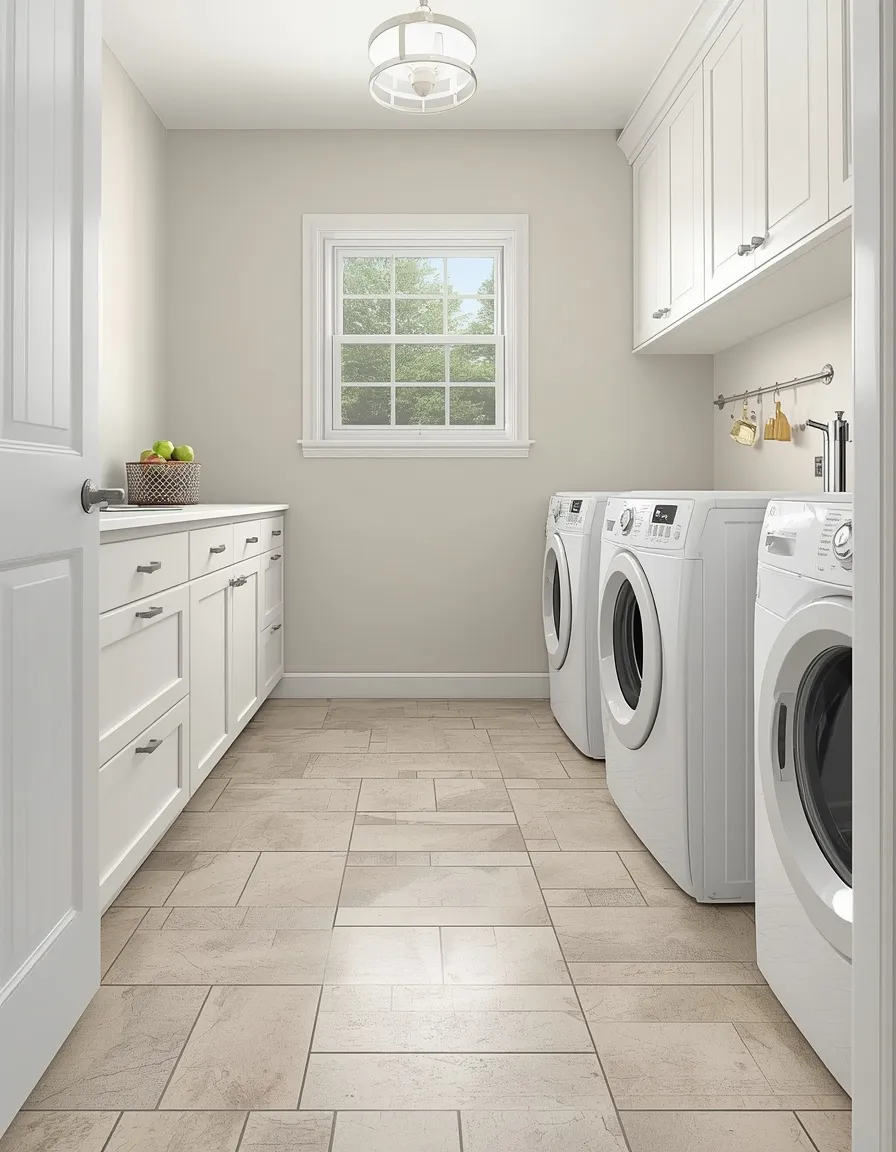
10. Peel-and-Stick Vinyl Tile
Peel-and-stick vinyl tiles let you lay a whole new floor by hand, no grout or glue buckets required. Available in checkerboard, marble, terrazzo, and wood looks, they transform a rental laundry room in an afternoon. Just peel, press, and repeat.
This is the top renter-friendly option: peel-and-stick tiles apply directly over a smooth, clean, dry floor and can often be removed later without damage. They handle splashes fine but aren’t for standing water, so they suit low-leak-risk rooms. Press each tile down firmly and roll the seams to stop edges lifting in humidity. For extra hold, some lines offer a grout-look strip between tiles for a more convincing finish.
- Why it works: A removable, no-tools floor upgrade for renters.
- Best for: Renters and quick, reversible refreshes.
- Solves: Wanting a new floor without permanent changes.
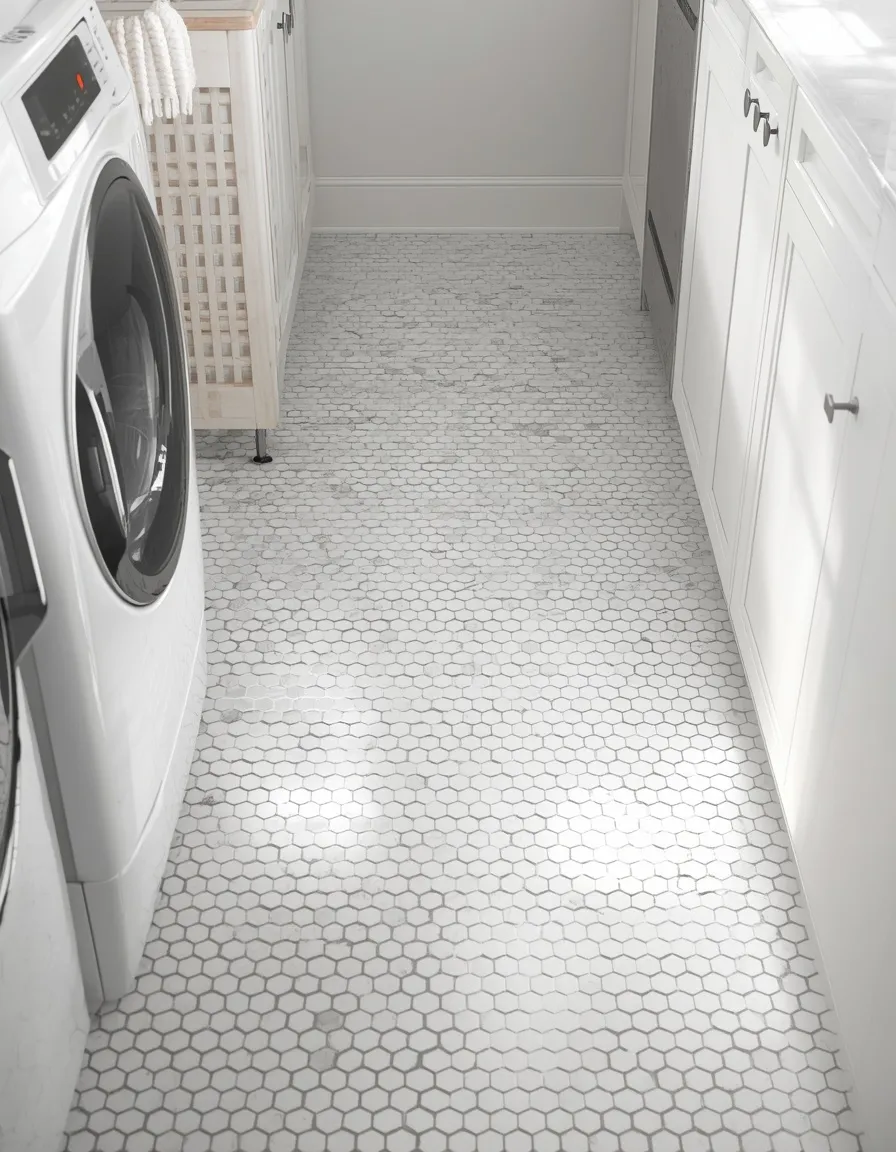
11. Hexagon Mosaic Tile
Hexagon tiles bring a honeycomb geometry that feels both classic and current. In matte white, black, or a two-tone accent pattern, the six-sided shapes give a laundry room subtle interest underfoot without overwhelming it. Small hex mosaics especially suit compact spaces.
Small hexagon mosaics arrive on mesh sheets, making them easier to install and more slip-resistant thanks to the dense grout lines. Larger hex tiles read more modern but need a flatter subfloor. Use a stain-resistant grout in grey or charcoal so it stays clean-looking. You can create a simple bordered ‘rug’ effect by switching color in the center of the room, a designer touch at little extra cost.
- Why it works: Geometric interest plus grippy grout lines in one floor.
- Best for: Small rooms and fans of classic-modern tile.
- Solves: A plain floor that needs quiet visual interest.
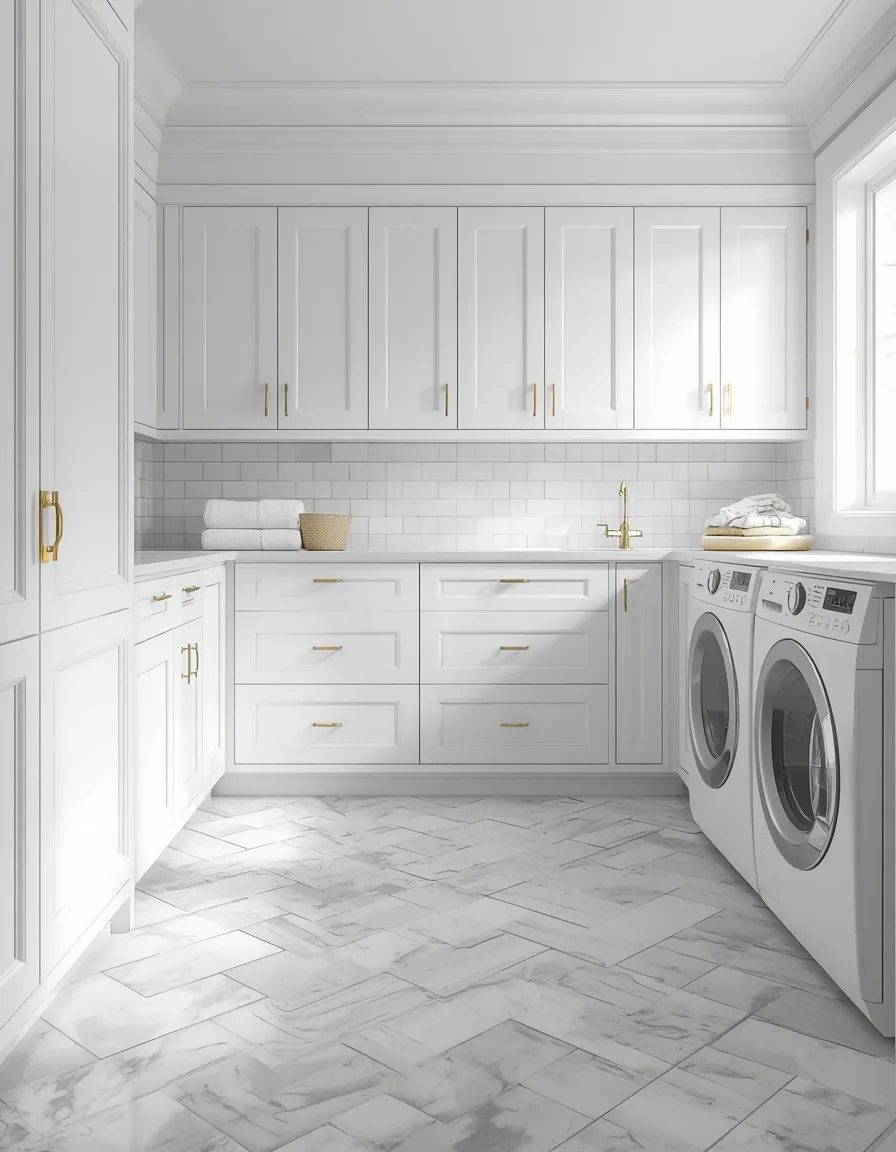
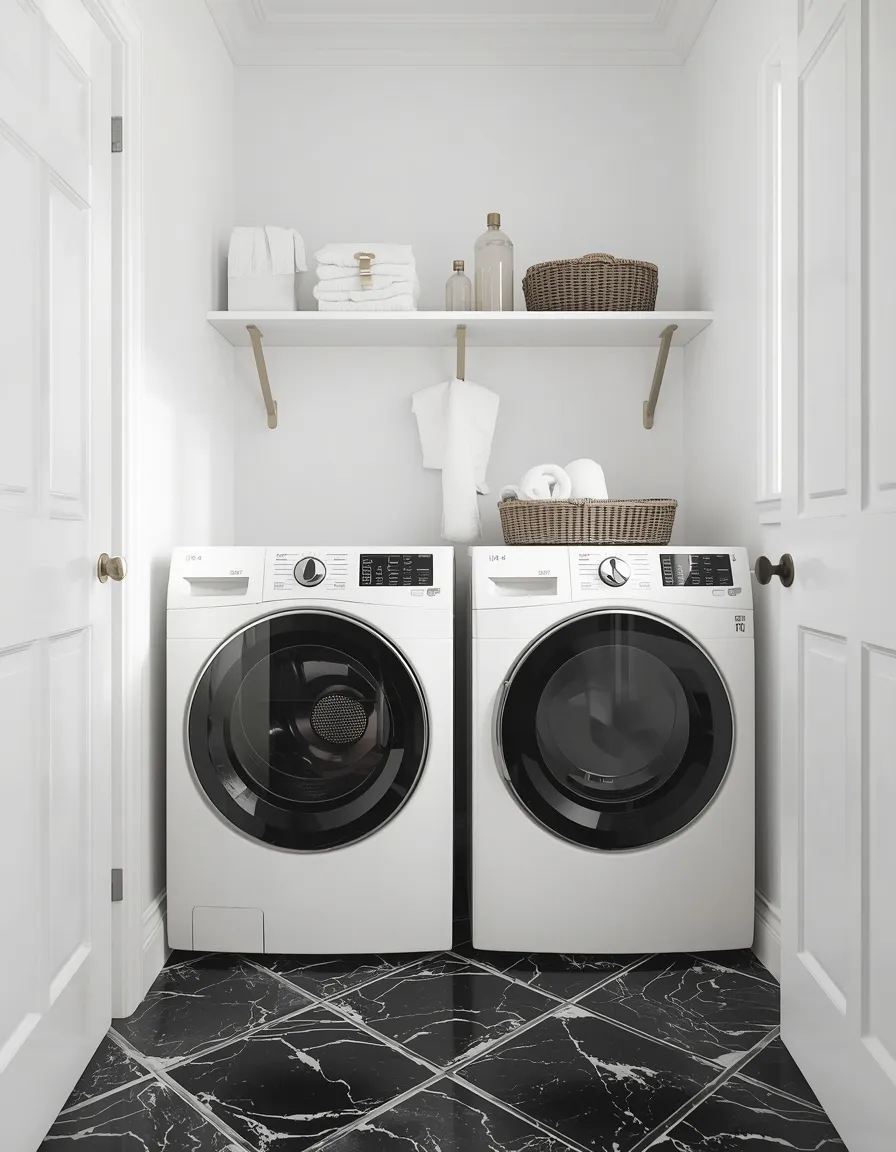
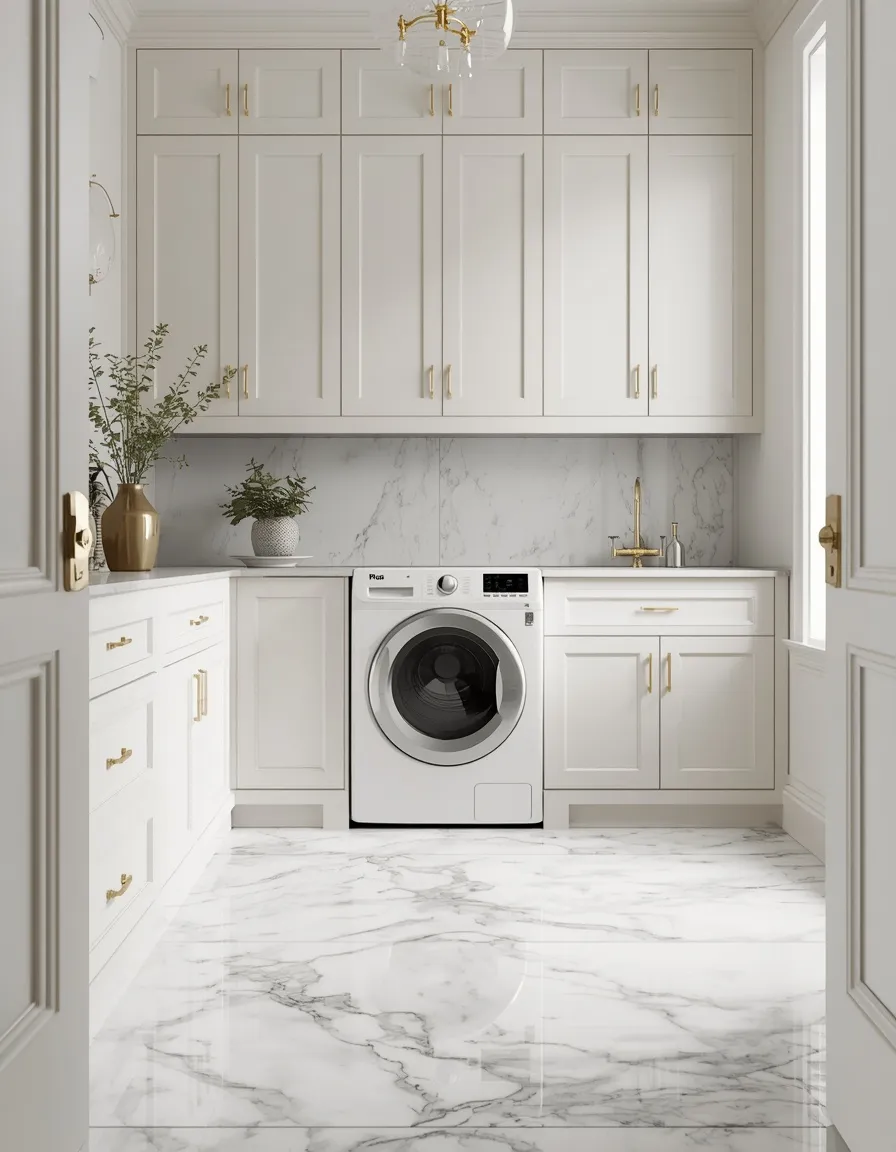
12. Marble-Look Porcelain
Marble-look porcelain delivers the luxury of veined white-and-grey stone without marble’s fragility. Soft veining runs across the floor for an elegant, spa-like calm that lifts the whole room. It feels expensive while staying practical.
Real marble is porous, stains from detergent, and etches from acids, so marble-look porcelain is the sensible swap for a laundry room, it gives the veined look with full water and stain resistance. Choose a honed or matte finish over polished for grip. Large-format marble-look tiles mean fewer grout lines and a more seamless, high-end result. Pair with brass or matte black fixtures to complete the elevated look.
- Why it works: High-end marble aesthetic with real-world durability.
- Best for: Anyone wanting a luxe floor that can take a splash.
- Solves: Loving marble but fearing stains and etching.
13. Large-Format Tile
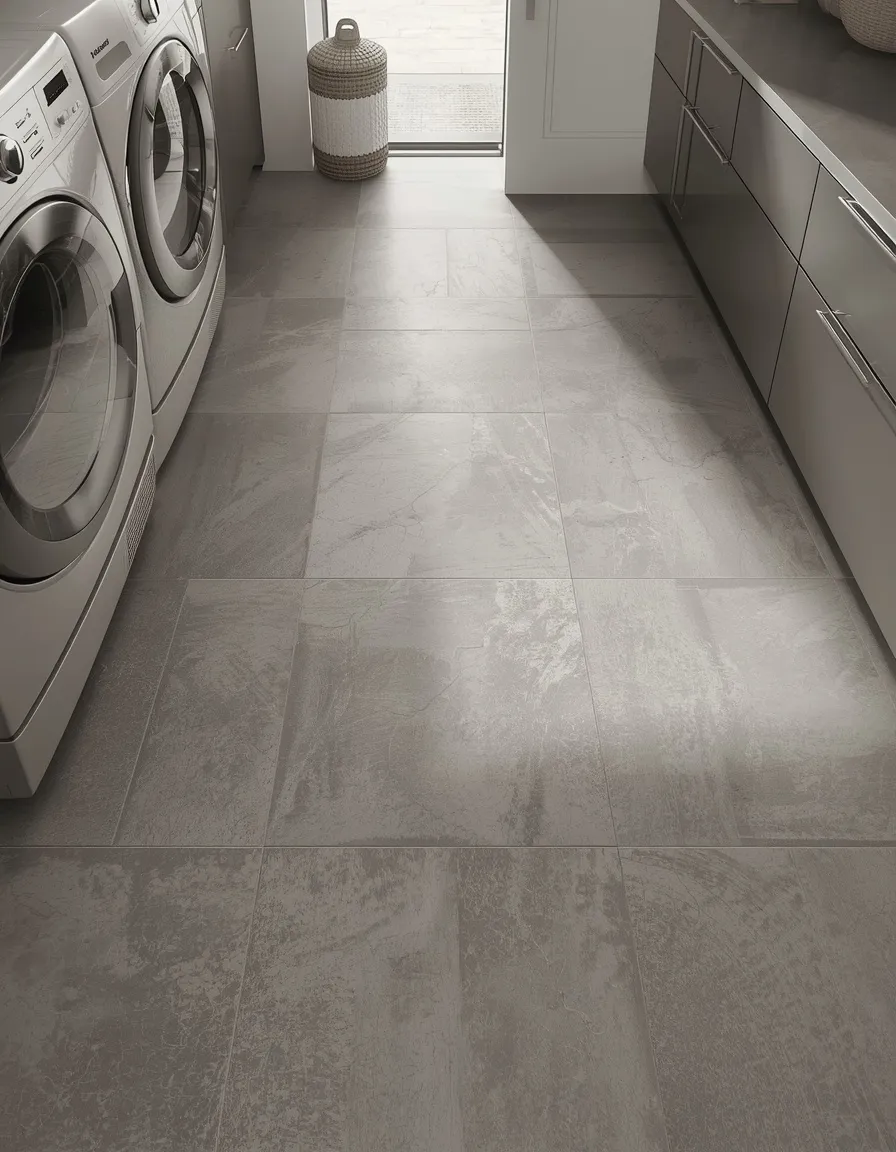
Large-format tiles, think 60 cm (24 in) squares or bigger, cover the floor with minimal grout lines for a clean, expansive, modern feel. In a soft concrete-look grey or warm greige, they make a small laundry room read bigger and calmer. Fewer lines mean a more seamless surface.
Large-format tile’s biggest practical win is fewer grout lines, which means less grout to clean and fewer places for moisture and dirt to collect. It does require a very flat subfloor, so leveling is essential before laying. Choose a slip-rated matte finish, since big glossy tiles are especially slick when wet. A tight grout line in a matching color keeps the look seamless and contemporary.
- Why it works: Fewer grout lines make cleaning easier and the room feel larger.
- Best for: Small or modern laundry rooms wanting a calm, seamless floor.
- Solves: Grout-heavy floors that trap dirt and feel busy.
14. Terrazzo Floor
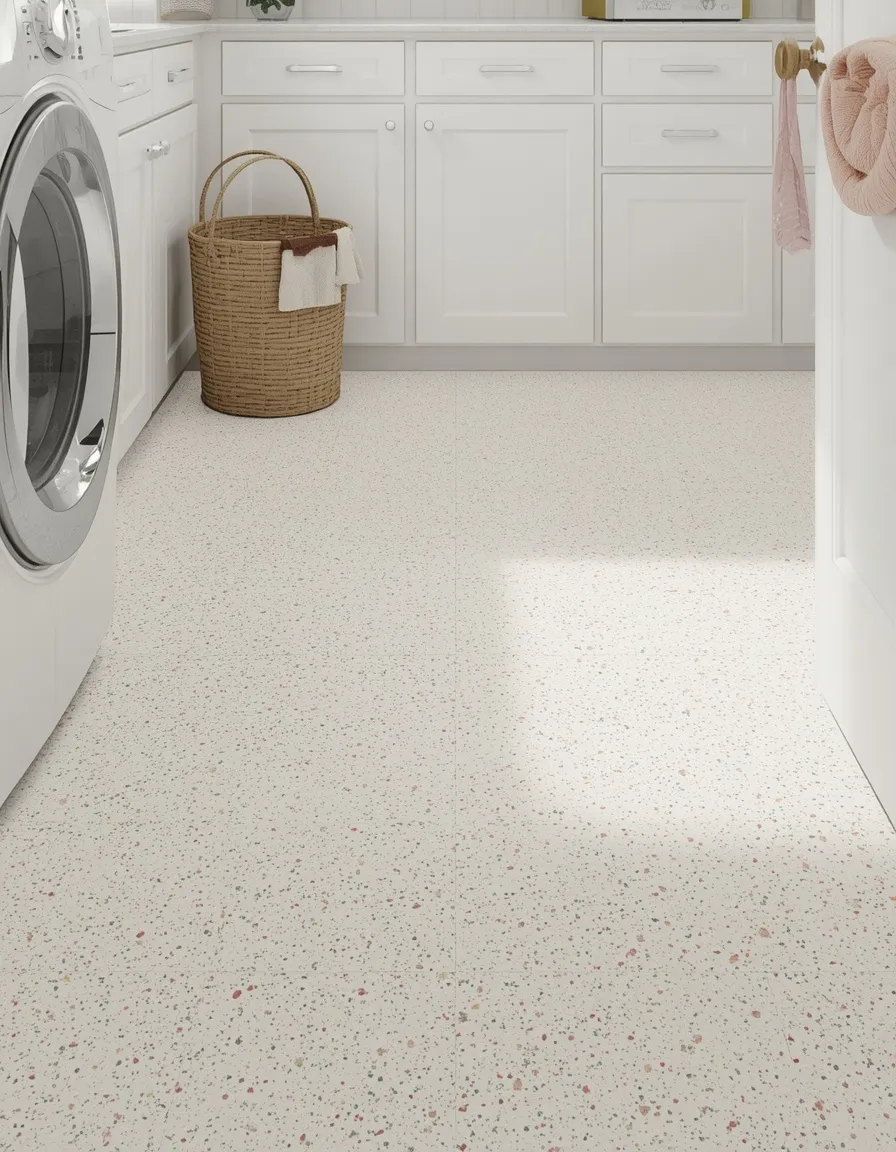
Terrazzo scatters colorful chips of marble, quartz, and glass across a speckled base for a playful, retro-modern floor. Whether in a subtle neutral or a bold confetti mix, it adds cheerful texture and hides crumbs and lint remarkably well. It’s having a well-earned revival.
For a laundry room, terrazzo-look porcelain tiles give the speckled effect with better water resistance and a far lower price than poured terrazzo. The busy pattern is genuinely practical here because it camouflages the lint, dust, and detergent specks a laundry floor collects. Keep walls and cabinets calm so the floor can be the fun element. A matte finish keeps it slip-safe underfoot.
- Why it works: A speckled pattern hides mess while looking fresh and modern.
- Best for: Playful, design-forward homes.
- Solves: A floor that shows every crumb and speck.
15. Terracotta and Saltillo Tile
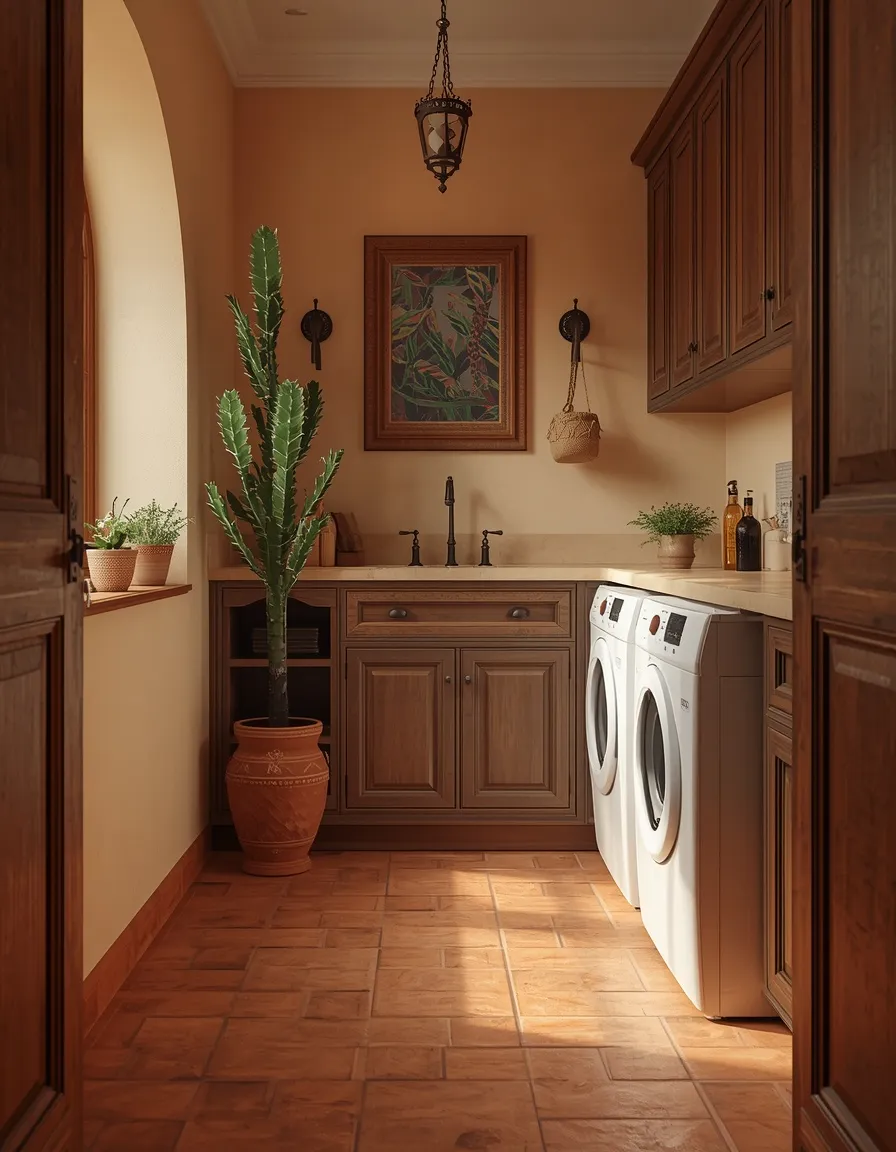
Terracotta and Saltillo tiles glow with warm, earthy clay tones that bring Mediterranean and Southwestern character to a laundry room. Their handmade, slightly irregular surface feels sun-baked and inviting, pairing beautifully with wood, wrought iron, and warm-toned walls. It’s cozy and full of soul.
Terracotta is naturally porous, so it must be sealed well and resealed periodically to survive a wet room, an unsealed clay floor will stain and absorb moisture. Choose a penetrating sealer plus a surface sealer for the best protection near splashes. The clay’s matte, slightly textured face gives good grip. It reads warmest in rooms with plenty of natural or warm-toned light.
- Why it works: Warm clay tones add cozy, earthy character.
- Best for: Mediterranean, rustic, and Southwestern-style homes.
- Solves: A cold, clinical-feeling laundry room.
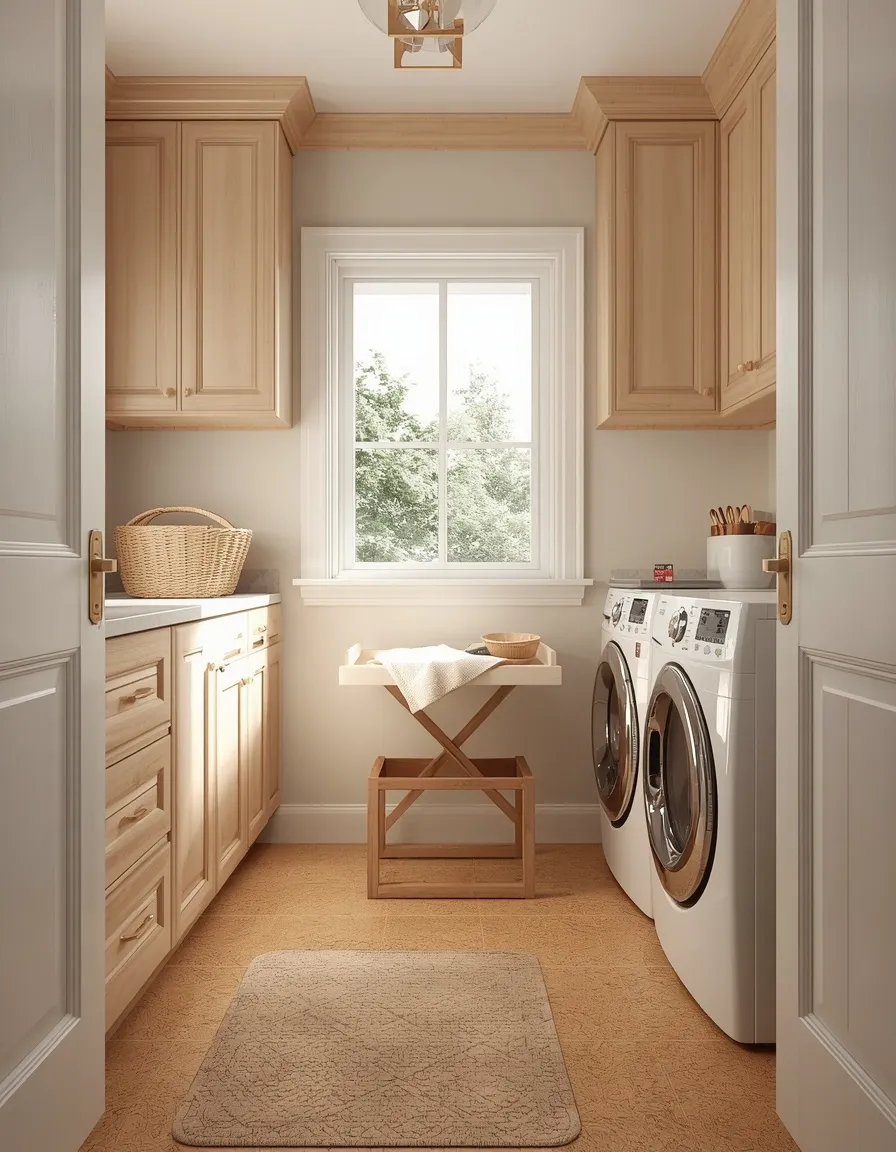
16. Sealed Cork Flooring
Cork flooring brings unexpected warmth and softness to a laundry room, cushioning your feet and quieting the space. Its natural honey-to-caramel tones and subtle grain feel organic and comforting, and it’s warm to stand on even in winter. It’s the coziest floor here.
Cork is naturally soft, warm, and sound-dampening, genuinely pleasant for standing while folding, but it must be properly sealed to handle a laundry room’s moisture. Choose a factory-finished, sealed cork and add a topcoat, keeping standing water wiped up promptly, since prolonged wet is cork’s weakness. It also resists mold naturally, a plus in a humid room. Place a mat under the washer to buffer vibration and drips.
- Why it works: Warm, soft, and quiet underfoot when properly sealed.
- Best for: Comfort-seekers who’ll keep it sealed and wiped dry.
- Solves: Cold, hard floors that tire your feet and echo.
17. Rubber Utility Flooring
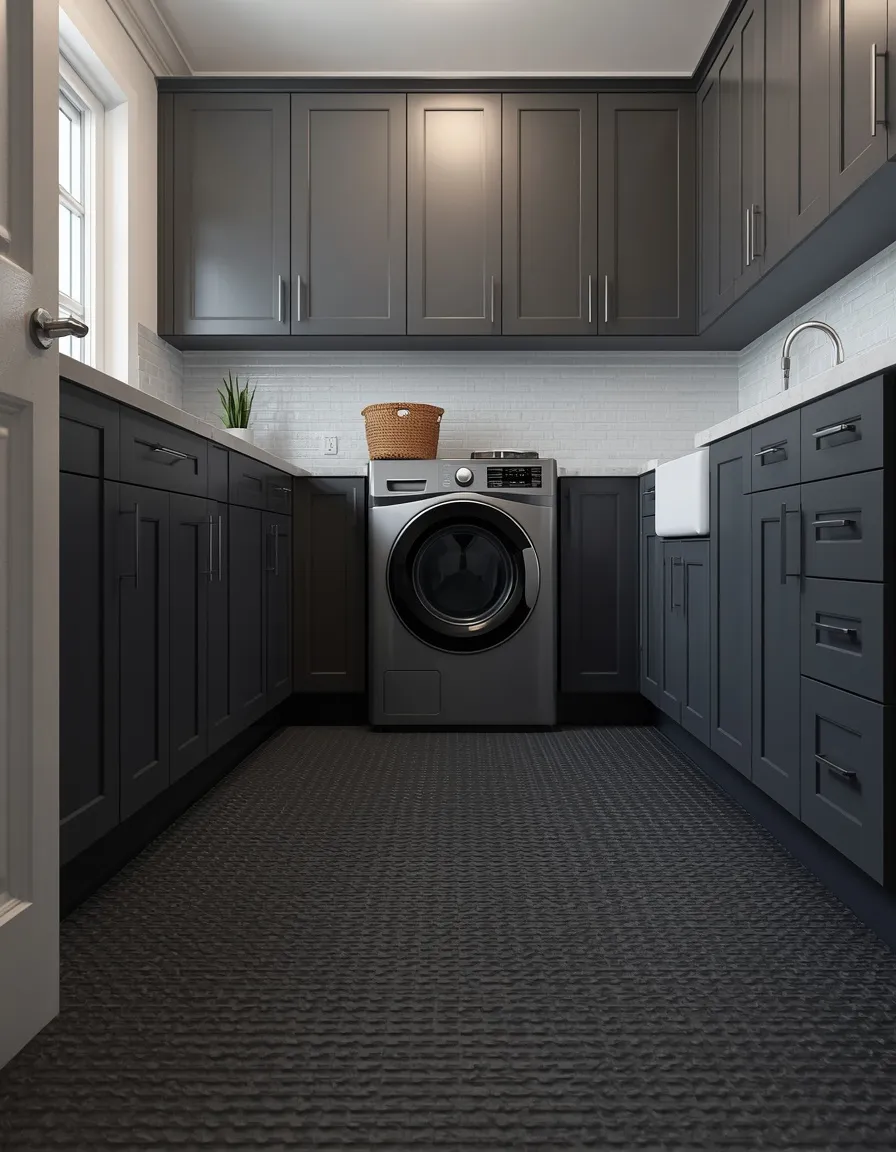
Rubber flooring, in tiles or a rolled sheet, gives a laundry room a tough, cushioned, no-nonsense surface that’s nearly impossible to damage. Its slightly textured, matte finish comes in slate greys, charcoals, and speckled tones, keeping a hardworking utility room looking tidy. It’s the most practical, forgiving floor of all.
Rubber is water-resistant, exceptionally slip-resistant even when wet, and cushions both your feet and any dropped items, ideal for a high-traffic or garage-adjacent laundry space. Interlocking tiles are fully DIY and removable, making them renter-friendly, while rolled sheet gives a more seamless finish. Choose commercial-grade rubber for the best durability. It’s the safest underfoot of any option here, which matters most in a wet room.
- Why it works: Grippy when wet, cushioned, and almost indestructible.
- Best for: Utility-focused, high-traffic, or garage-adjacent rooms.
- Solves: Slippery floors and standing fatigue in one move.
Matching the Floor to How You Live
The best floor is the one that fits your habits, budget, and leak risk, which is exactly the practical, live-in approach the whole Sunday Abode philosophy is built on. If you love the warm, characterful look of clay underfoot, it’s worth reading our dedicated guide to brick flooring for the laundry room for a closer look at that style. And for more ways to finish the space, browse the rest of our laundry room ideas.
A note on water resistance: “Water-resistant” flooring handles splashes and quick spills; “waterproof” flooring survives standing water for a time. If your washer sits on the floor with real leak potential, prioritize waterproof LVP, sheet vinyl, or sealed tile over water-resistant-only options.
Laundry Floor Comparison at a Glance
| Flooring | Water rating | Slip safety | Cost | DIY-friendly? |
| Porcelain tile | Waterproof | Good (matte) | Mid–High | Moderate |
| Luxury vinyl plank | Waterproof* | Good | Low–Mid | Yes |
| Sheet vinyl | Water-resistant | Good (matte) | Low | Yes |
| Peel-and-stick vinyl | Splash-only | Fair | Low | Yes (renter) |
| Sealed concrete | Water-resistant | Fair (needs anti-slip) | Mid | No |
| Natural slate | Water-resistant (sealed) | Very good | Mid–High | No |
| Cork (sealed) | Splash-only | Good | Mid | Moderate |
| Rubber flooring | Water-resistant | Excellent | Low–Mid | Yes |
*Waterproof rating varies by product, confirm the individual LVP is rated waterproof, not just water-resistant.
Frequently Asked Questions
What is the best flooring for a laundry room?
Porcelain tile and luxury vinyl plank (LVP) are the two most reliable choices, because both resist water, wear well, and clean easily. Tile is the most durable and fully waterproof; LVP is warmer and softer underfoot and easier to install yourself. Your leak risk, budget, and comfort preference decide between them.
Is vinyl flooring good for a laundry room?
Yes, vinyl is one of the best laundry room floors. Luxury vinyl plank and sheet vinyl are water-resistant to waterproof, comfortable to stand on, and quiet under a spinning washer. Choose a product rated waterproof with a wear layer of at least 12 mil if leaks are a real concern.
What flooring is fully waterproof for a laundry room?
Porcelain and ceramic tile, most luxury vinyl plank, and sheet vinyl are the most waterproof options. Sealed concrete is also highly water-resistant. Just confirm any vinyl is labeled waterproof rather than only water-resistant, and seal natural stone or terracotta well, since those are porous by nature.
Can you put new flooring over concrete in a laundry room?
Yes. Tile can be set directly onto a clean, level concrete slab, and luxury vinyl plank floats over it easily with the right underlayment. The slab must be flat, dry, and free of major cracks first. Testing for moisture in a basement slab before installing helps prevent problems later.
What is the cheapest laundry room floor?
Sheet vinyl and peel-and-stick vinyl tile are the most affordable options that still resist water. Sheet vinyl gives nearly seamless coverage for the lowest cost, while peel-and-stick tile is the easiest DIY and works well for renters. Both convincingly mimic pricier tile, stone, and wood looks.
Which laundry room floor is safest and least slippery?
Rubber flooring is the most slip-resistant, even when wet, followed by textured natural slate and small mosaic tiles with lots of grip-giving grout lines. Whatever material you choose, pick a matte or textured finish over a polished one, since glossy surfaces become slick as soon as water hits them.
Do renters have good laundry room flooring options?
Absolutely. Peel-and-stick vinyl tiles, loose-lay sheet vinyl, and interlocking rubber tiles all install without permanent changes and can often be removed cleanly later. They deliver a fresh, water-resistant floor in an afternoon without adhesives or grout, making them ideal for rentals.
Conclusion
A laundry room asks a lot of its floor, and the right laundry room floor ideas balance three things: water resistance, slip safety, and a look you’ll enjoy. Whether you go for the crisp classic of checkerboard tile, the easy comfort of luxury vinyl plank, or the tough practicality of rubber, match the material to your leak risk, budget, and how long you’ll stand on it. Start by deciding whether you need waterproof or simply water-resistant, then pick the style that fits your home. For more ways to finish the space, explore the laundry room ideas collection on Sunday Abode and save the floor that fits your washday routine best.