
Key Takeaways
- Late summer decor bridges high summer and early fall, leaning into warmer, deeper tones while keeping summer’s freshness.
- Think golden ochre, terracotta, deep green, and plum alongside sunflowers, dahlias, figs, and the first wheat.
- A low centerpiece under about 30 cm (12 in) keeps sightlines open so guests can talk across the table.
- Layering natural textures, linen, stoneware, wood, and dried elements, makes a dining room feel seasonal without a full redecorate.
- Most of these looks are low-cost and renter-friendly, built on produce, blooms, and things you likely already own.
Introduction
Late summer has a mood all its own, golden light, gardens heavy with the last blooms, and the first hint of fall in the air. These late summer dining room ideas capture exactly that in-between magic, styling your table and space with warm, deepening color and the season’s final harvest. It’s the loveliest time to gather, when summer’s ease meets autumn’s warmth.
Below are 16 complete dining room looks, from a golden harvest table to a sunflower farmhouse setting and an elegant formal centerpiece. Each covers the palette, centerpiece, textures, and place settings that make it cohesive, plus tips for transitioning smoothly toward fall. Consider it a way to make the dining room of your abode feel current and welcoming through the season’s warm, generous final weeks.
What makes decor read “late summer”? Late summer sits between high summer and early fall, so the palette deepens: golden ochre, terracotta, warm green, and plum join summer’s brights. Swap fresh-cut wildflowers for longer-lasting sunflowers, dahlias, and the first dried wheat, and lean into late-harvest produce like figs, plums, and grapes.
16 Late Summer Dining Room Ideas
1. Golden Harvest Table
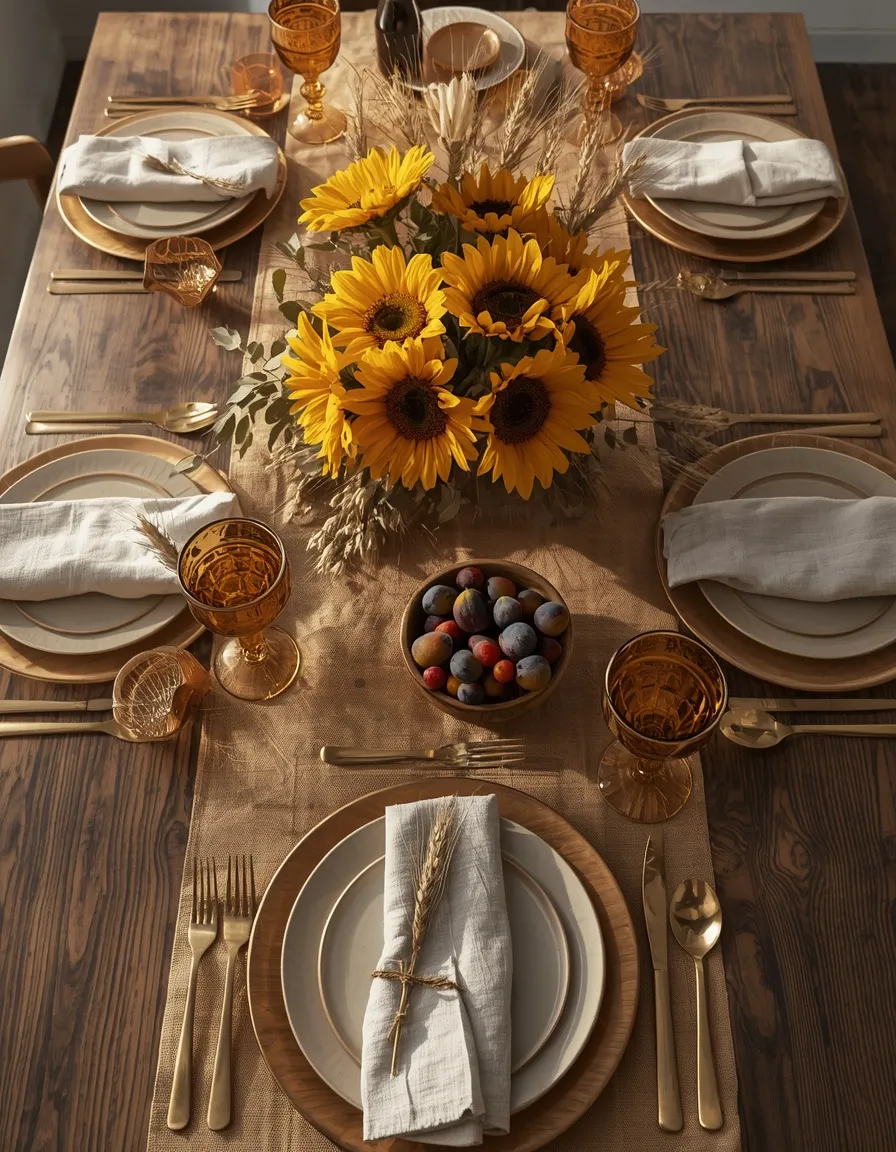
A golden harvest dining table glows with late-summer abundance: a warm linen runner, brass or amber accents, and a low centerpiece of sunflowers, wheat, and late-summer fruit like figs and grapes. It feels generous, warm, and gathered from the garden. This is late summer at its most inviting.
Build the harvest look on a natural linen base in oatmeal or gold, then layer a low centerpiece mixing sunflowers, early wheat stems, and a bowl of figs, plums, or grapes. Add amber glassware and brass or wooden accents for warmth. Keep the arrangement under about 30 cm (12 in) so guests can see across the table. Real produce doubles as centerpiece and dessert, so nothing is wasted. This suits harvest dinners and hosts who love an abundant, seasonal look.
- Why it works: Late-harvest produce and warm metals feel abundant and seasonal.
- Best for: Harvest dinners and lovers of a generous, gathered table.
- Key elements: linen runner, sunflowers, wheat, figs and grapes, brass accents.
2. Sunflower Farmhouse Dining
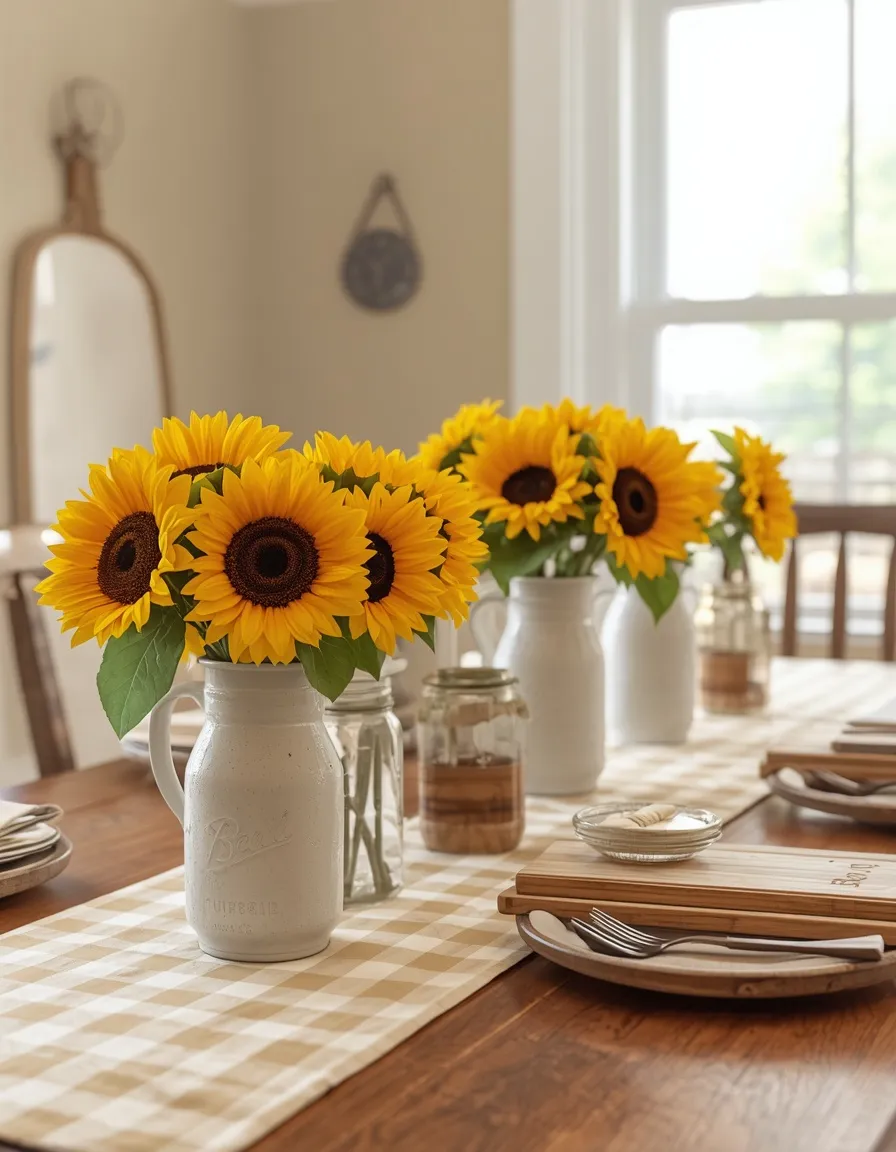
Bold sunflowers in rustic pitchers anchor this cheerful farmhouse dining room: gingham or ticking-stripe linens, wooden serving boards, mason-jar glassware, and warm cream walls. It’s the essence of late-summer country warmth. Bright, homey, and welcoming.
Gather sunflowers in enamel pitchers or mason jars down a gingham or striped runner, paired with wooden boards and simple white dishware. Sunflowers peak in late summer and last well indoors, holding up for a week or more with fresh water. Mix in a few wheat stems or smaller blooms for texture, and keep the styling casual and abundant. This look suits family dinners and rustic, farmhouse-style homes wanting seasonal cheer.
- Why it works: Peak-season sunflowers bring instant late-summer farmhouse warmth.
- Best for: Family dinners and farmhouse-style homes.
- Key elements: sunflowers, pitchers, gingham linens, wooden boards, mason jars.
3. Elegant Formal Centerpiece
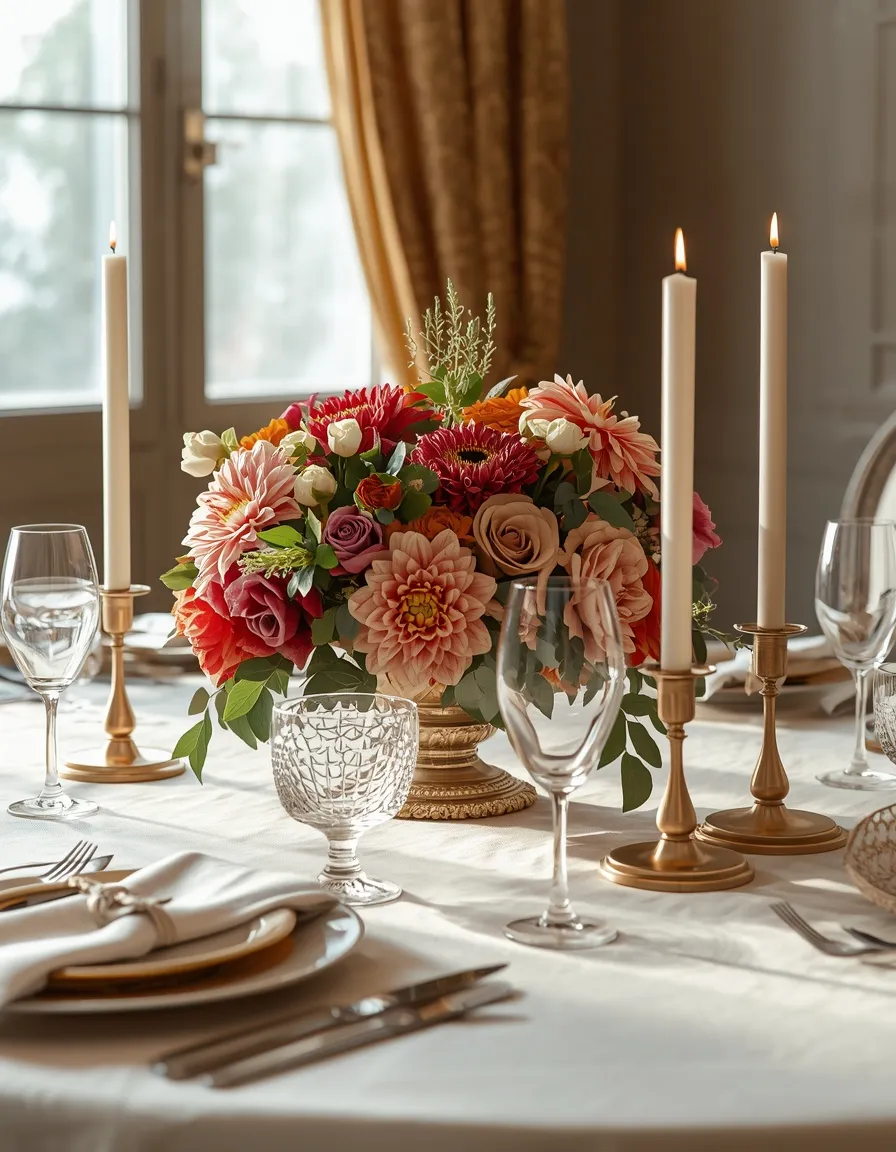
A formal late-summer dining room calls for a refined low centerpiece: a footed bowl or compote of dahlias, garden roses, and trailing greenery, flanked by taper candles and polished glassware on a crisp tablecloth. Elegant and dinner-party-ready, it elevates the whole room.
For a formal centerpiece, arrange late-summer blooms like dahlias and garden roses in a low footed compote so it reads elegant without blocking sightlines. Flank it with dripless taper candles in polished holders and add fine glassware and folded linen napkins. Choose deep, jewel-toned dahlias for a late-summer feel that nods toward fall. Safety note: never leave lit candles unattended and keep flames clear of low-hanging arrangements. This suits dinner parties and formal entertaining.
- Why it works: A low footed arrangement plus candles reads refined and dinner-party elegant.
- Best for: Formal dinners and elegant entertaining.
- Key elements: footed compote, dahlias, garden roses, taper candles, fine glass.
4. Warm Terracotta & Ochre
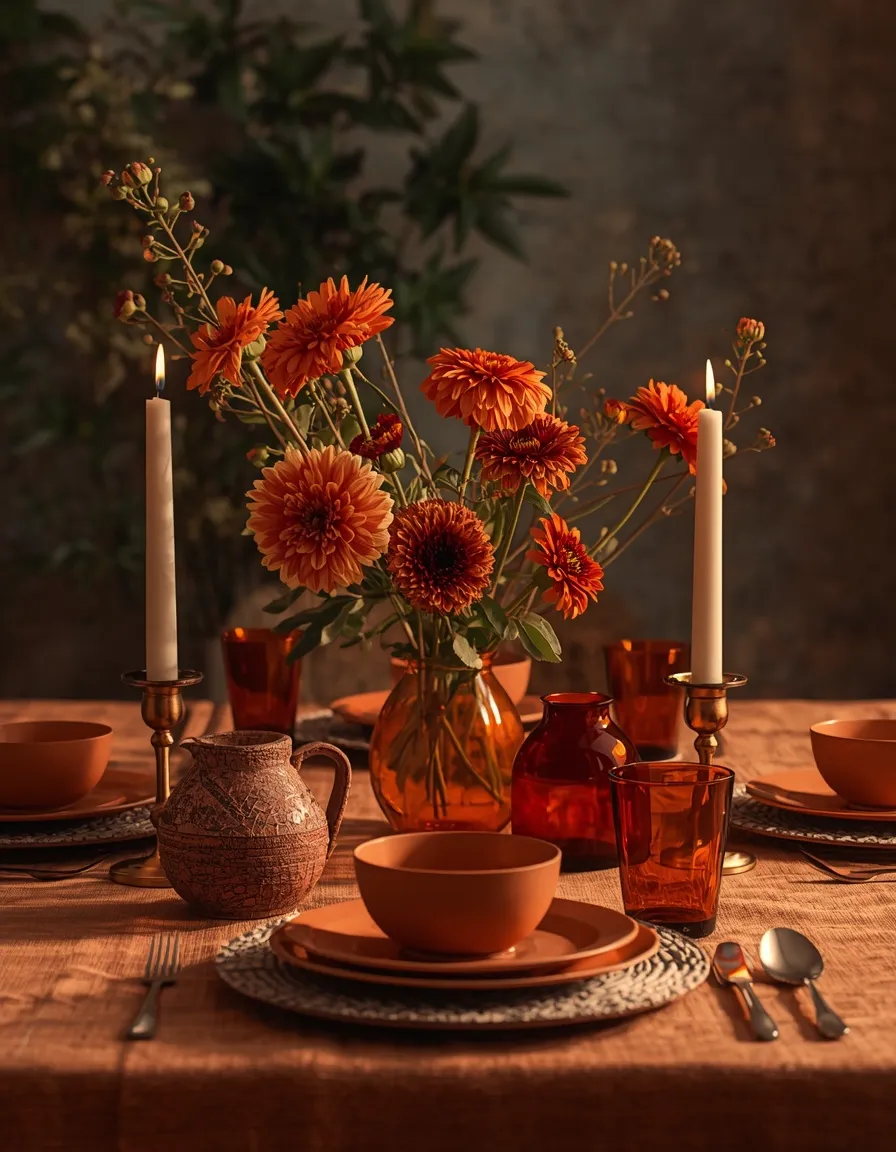
This scheme drenches the table in late-summer’s warmest tones: terracotta and ochre linens, rust-colored stoneware, amber glass, and blooms in apricot and deep orange. It glows in golden evening light and gently signals the shift toward autumn. Warm, earthy, and atmospheric.
Layer terracotta or ochre linens with rust-toned stoneware and amber glassware, then add flowers in apricot, coral, and burnt orange, zinnias, dahlias, or roses. This warm palette bridges summer and fall beautifully, making it ideal for late August into September. Add a few candles to amplify the golden glow at dinner. Keep greenery minimal so the warm tones lead. This suits sunset dinners and anyone easing their decor toward autumn.
- Why it works: Warm earthy tones bridge summer and fall and glow at dinner.
- Best for: Late-August-to-September dinners and warm-palette lovers.
- Key elements: terracotta linens, rust stoneware, amber glass, apricot blooms.
5. Fresh Green & White Classic
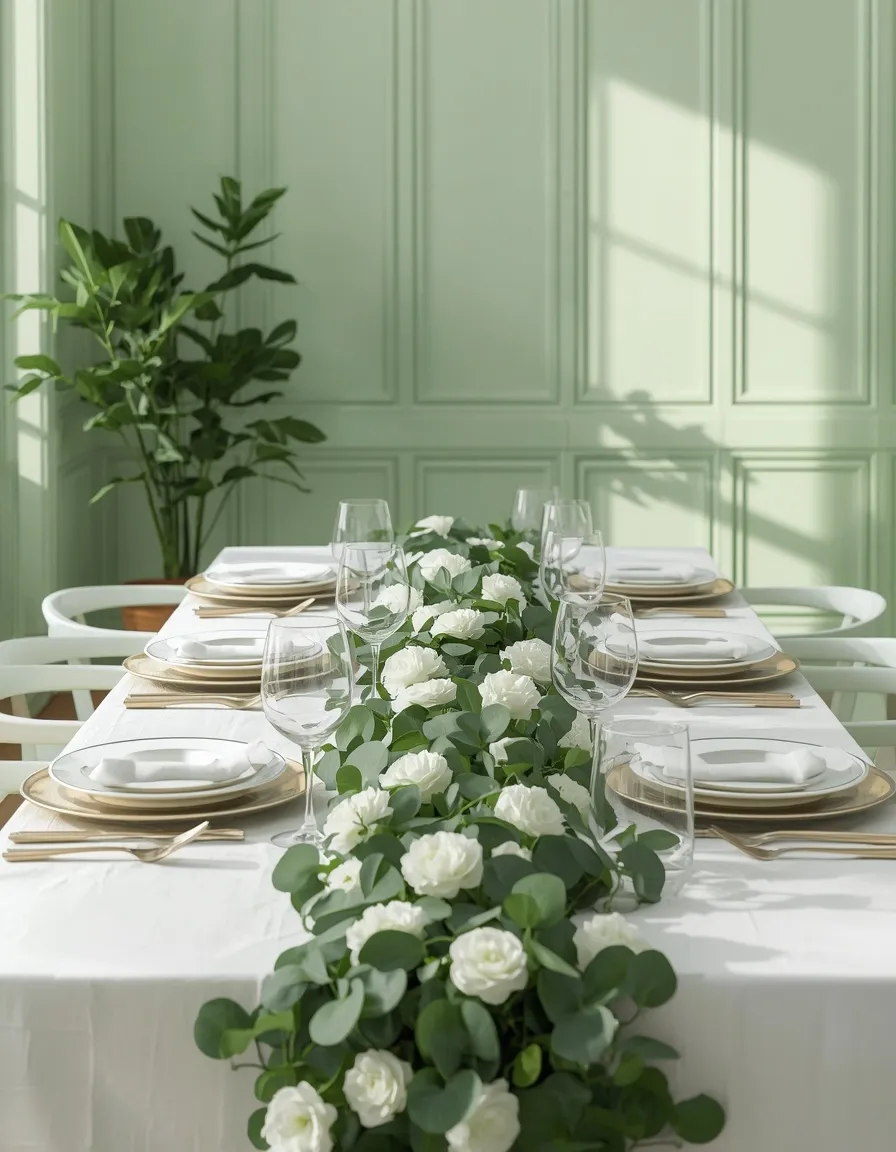
A crisp green-and-white dining room stays timeless right through late summer: white linens and dishware, clear glassware, and abundant fresh greenery, eucalyptus, ferns, or garden clippings, down the center. Clean, cool, and elegant. It’s the easiest look to keep fresh.
This foolproof scheme lets greenery do the decorating: run a loose eucalyptus or garden-clipping garland down a white cloth, add white blooms if you like, and keep glassware clear. Greenery is cheaper than cut flowers and lasts well, and clippings from your own late-summer garden cost nothing. Mist the foliage and keep it cool until serving so it stays perky. This suits any occasion and hosts wanting timeless, low-cost elegance that carries across seasons.
- Why it works: Greenery is cheap, long-lasting, and effortlessly classic year-round.
- Best for: Any occasion and budget-minded, classic hosts.
- Key elements: white linens, clear glass, eucalyptus or garden greenery.
6. Dried & Foraged Naturals
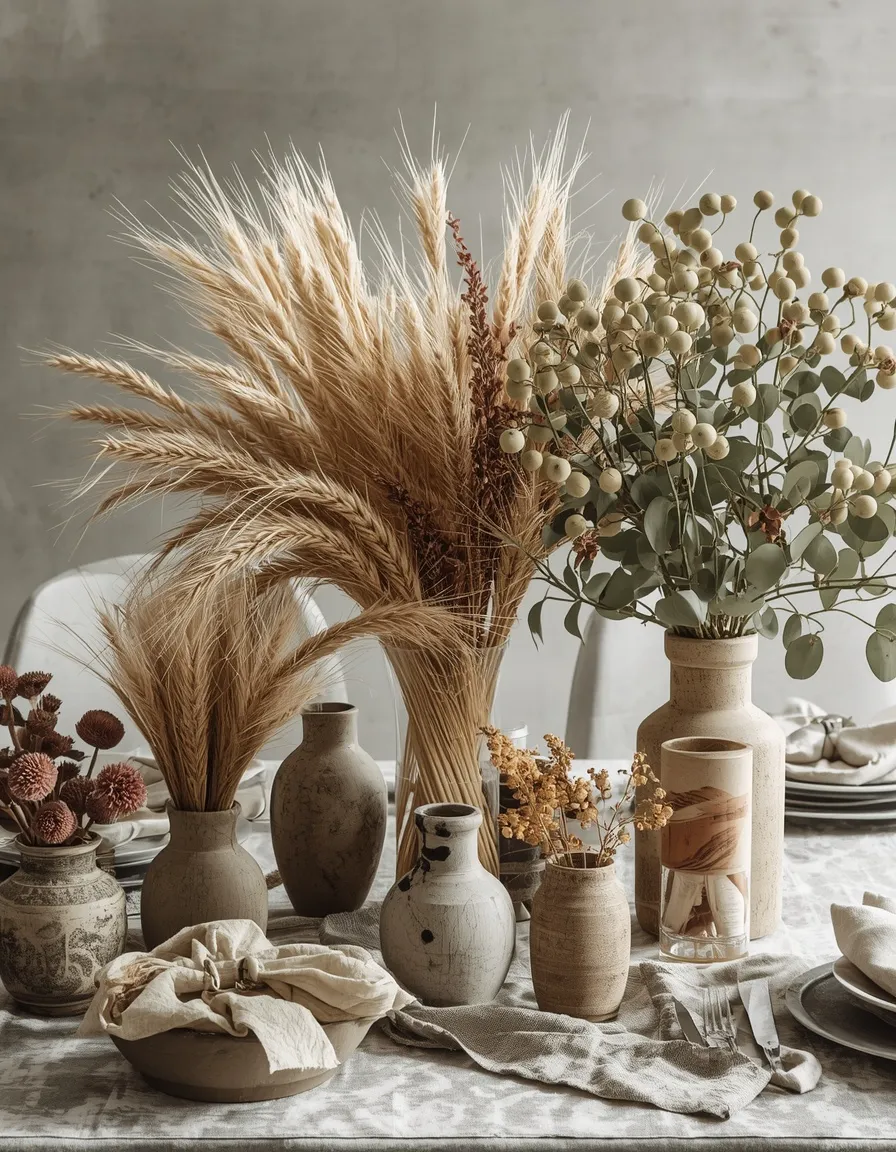
A dried-and-foraged table leans into late summer’s turn: bundles of dried wheat, grasses, seed heads, and eucalyptus in earthy vessels, with linen and stoneware in muted tones. Textural and low-maintenance, it lasts for weeks. It quietly signals the season’s shift.
Gather dried wheat, pampas or other grasses, poppy seed heads, and preserved eucalyptus into low vessels for a centerpiece that needs no water and lasts all season. Keep the palette muted, wheat, sand, sage, and taupe, with stoneware and linen. This is one of the most budget- and effort-friendly looks, since dried elements can be foraged or kept year to year. Keep dried grasses away from open flames, as they’re flammable. This suits low-maintenance hosts and anyone starting the shift to fall.
- Why it works: Dried naturals last for weeks and bridge late summer into fall.
- Best for: Low-maintenance hosts easing toward autumn.
- Key elements: dried wheat, grasses, seed heads, earthy vessels, linen.
7. Late-Harvest Fruit Table
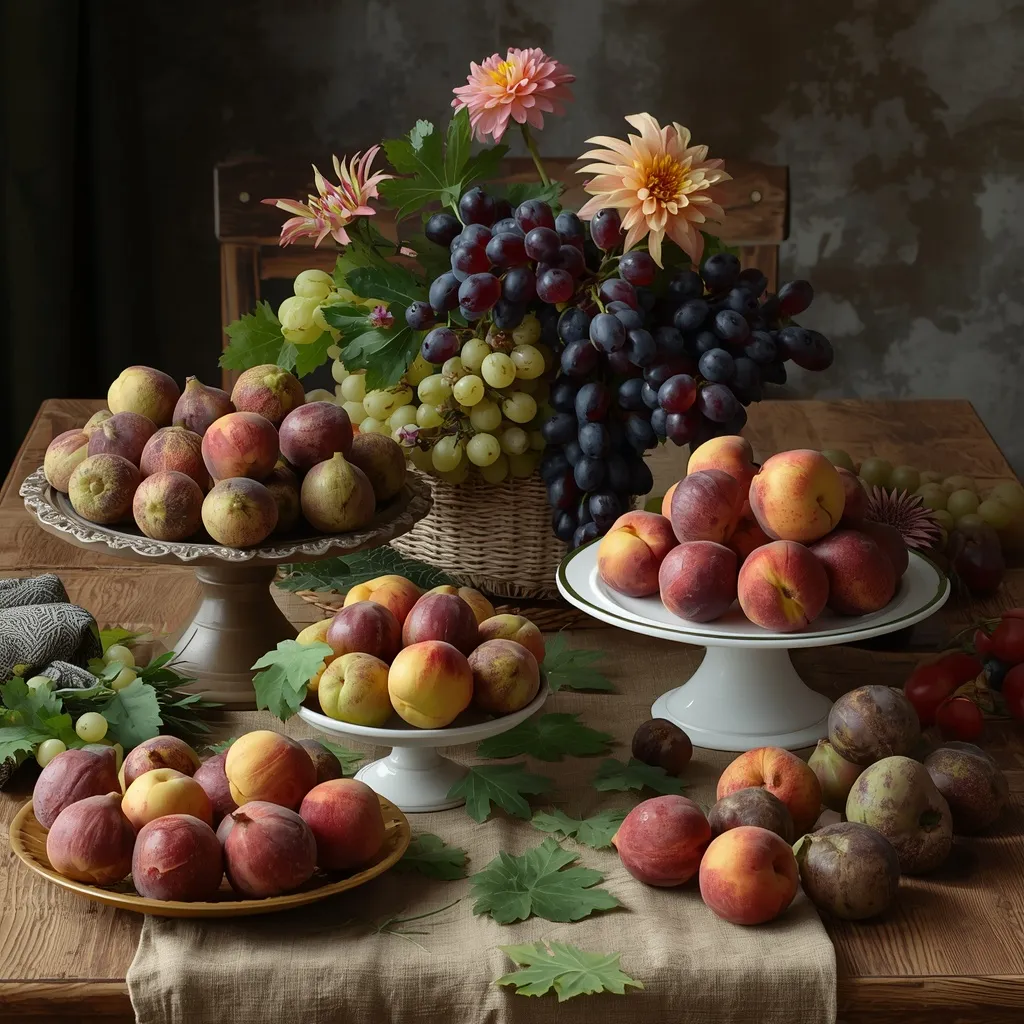
A fruit-forward table celebrates late-summer’s harvest as decor: bowls and footed stands piled with figs, grapes, plums, and peaches, mixed with a few blooms and greenery down a natural runner. Abundant and Old-World, it doubles as edible styling. It’s a feast for the eyes.
Use late-summer fruit as the centerpiece: pile figs, grapes, plums, and peaches on footed cake stands or in low bowls, interspersed with vine leaves and a few dahlias. Vary the heights with different stands for an abundant, still-life effect. The fruit is edible afterward, so it’s zero-waste and budget-smart. Keep it food-safe by washing produce and using a barrier under any non-edible foliage. This suits harvest dinners and lovers of an Old-World, abundant look.
- Why it works: Seasonal fruit is abundant, edible, budget-smart, and beautifully Old-World.
- Best for: Harvest dinners and abundant-table lovers.
- Key elements: figs, grapes, plums, footed stands, vine leaves, dahlias.
8. Modern Neutral Minimalist
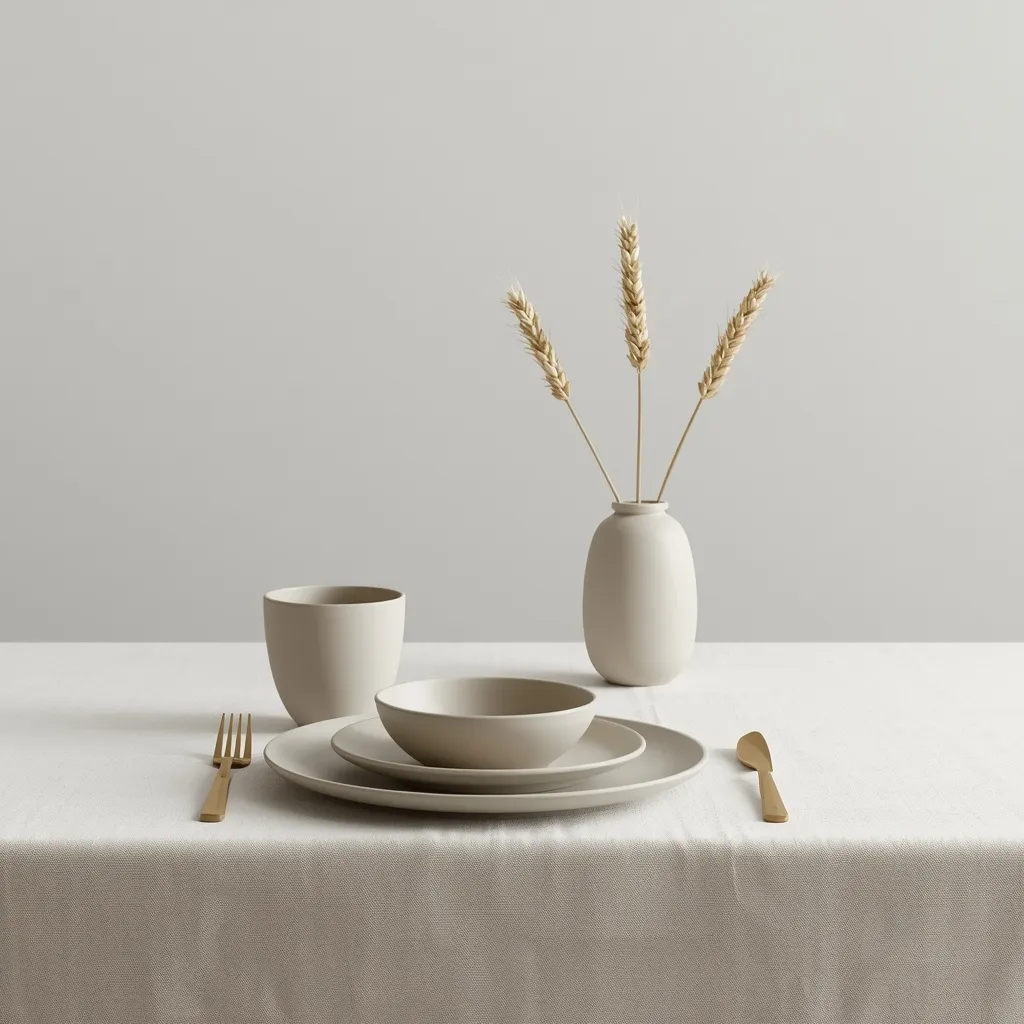
A modern minimalist late-summer dining room is calm and pared-back: a neutral linen base, matte stoneware, simple flatware, and one low arrangement of grasses or a single seasonal bloom. Understated and refined, it lets warm light and texture do the work.
Minimalist styling relies on quality over quantity, a natural linen cloth, handmade stoneware, and one restrained centerpiece such as a low bundle of wheat or a few dahlias in a simple vase. Keep the palette tonal (cream, oatmeal, warm taupe) with one wood or matte black accent. Because decoration is minimal, invest in beautiful linens and dishware. This calm look suits modern homes and hosts who prefer restraint over abundance, and it transitions to fall with just a color tweak.
- Why it works: Restraint and quality textures feel refined and transition easily.
- Best for: Modern homes and minimalist hosts.
- Key elements: neutral linen, stoneware, one low arrangement, tonal palette.
9. Mediterranean Late Summer
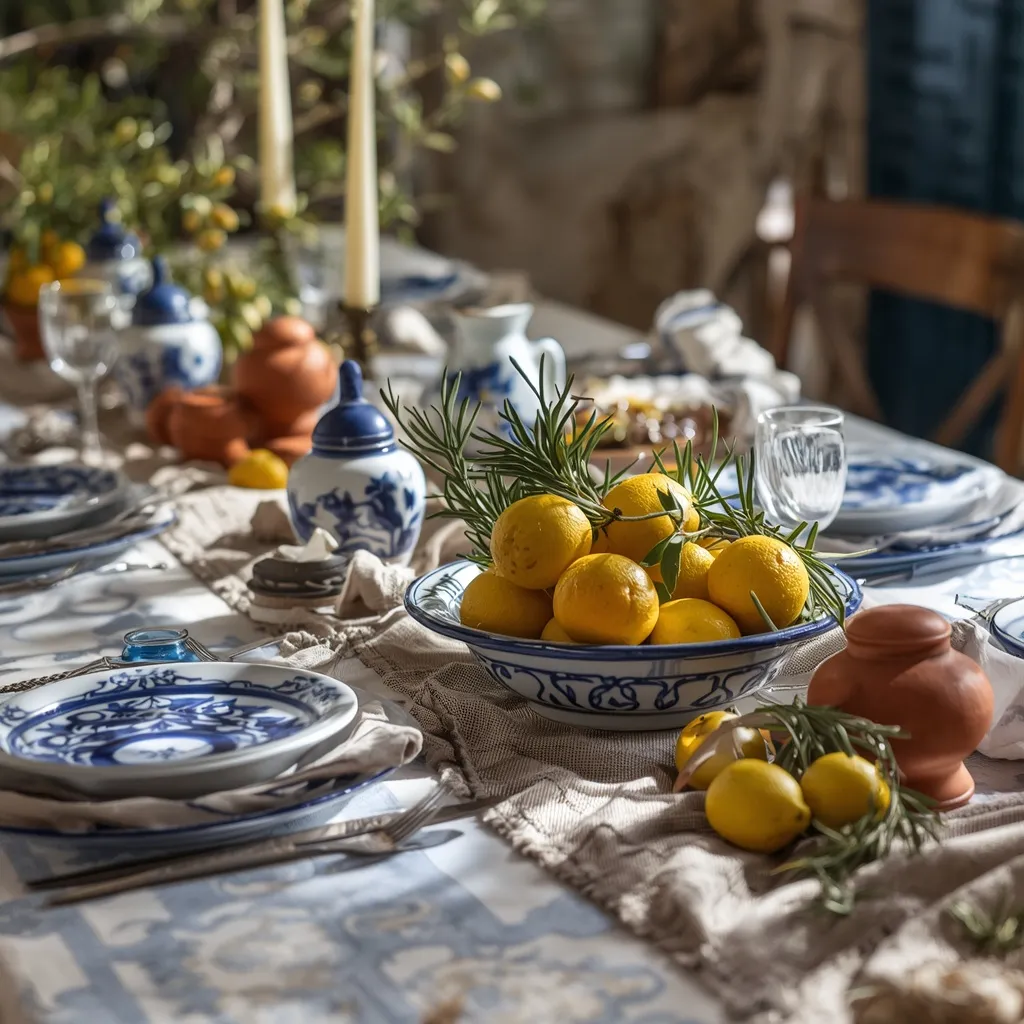
A Mediterranean dining room brings sun-soaked ease indoors: blue-and-white ceramics, lemons and olive branches, a rustic linen runner, and terracotta accents. Relaxed and warm, it holds onto summer’s glow. It feels like a long lunch on the coast.
Style a Mediterranean table with blue-and-white or hand-painted ceramics, then layer whole lemons, olive branches, and fresh herbs like rosemary down the center. Add a carafe of wine and simple bud vases of white blooms. Olive branches and citrus hold up far longer than delicate flowers, making this a low-maintenance choice. Keep it rustic and abundant rather than formal. This suits relaxed dinners and anyone wanting to stretch summer’s warmth into September.
- Why it works: Citrus and olive branches are hardy, warm, and hold onto summer.
- Best for: Relaxed dinners stretching summer into early fall.
- Key elements: blue-and-white ceramics, lemons, olive branches, herbs, linen.
10. Boho Eclectic Dining
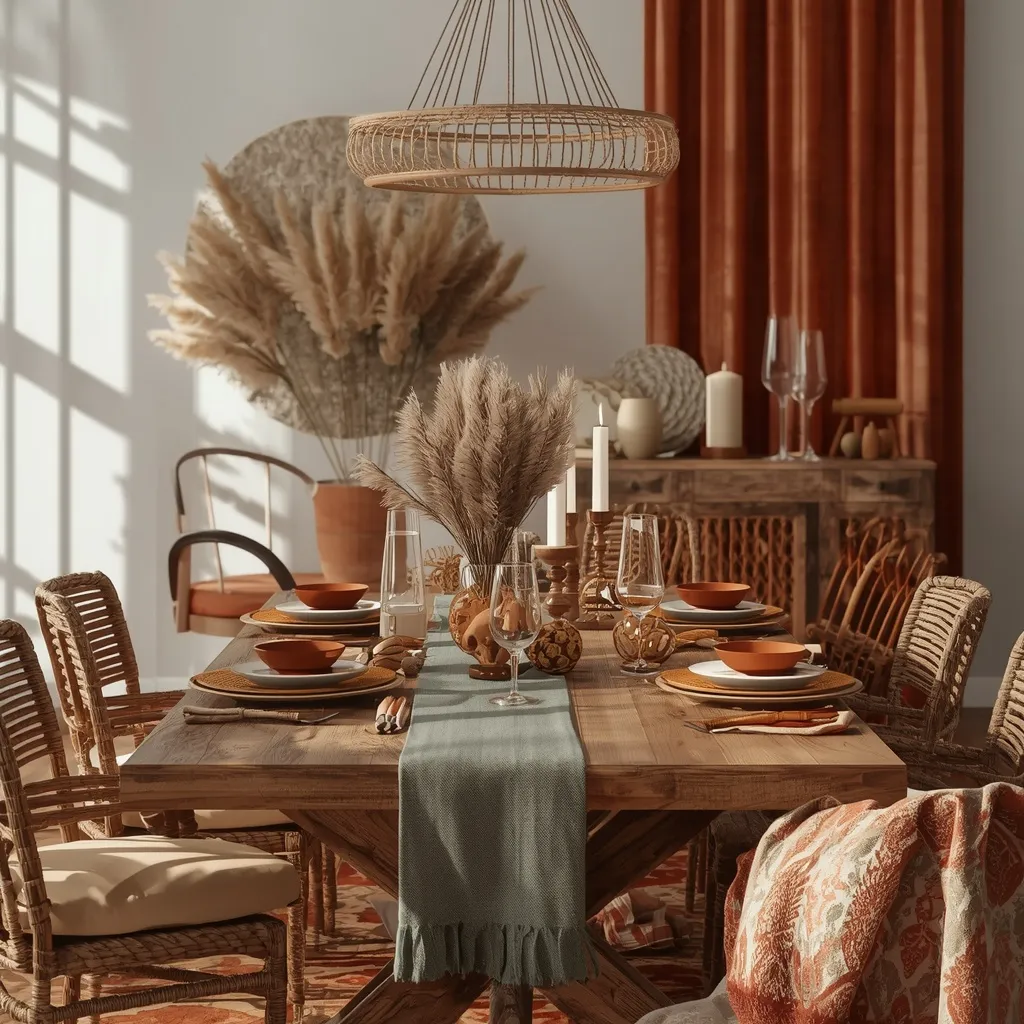
A boho late-summer dining room layers warm, collected texture: terracotta and rust tones, mixed patterned linens, rattan accents, dried grasses, and clustered candles. Relaxed and personal, it feels gathered over time. It’s seasonal warmth with character.
Boho styling mixes textures and warm earthy colors, terracotta, ochre, cream, with rattan, macrame, and dried or fresh grasses. Combine patterned and plain napkins in a shared palette and cluster candles and bud vases informally. Dried elements like pampas suit both the boho look and the late-summer season, lasting for months. Repeat two or three colors so it reads collected, not chaotic. This suits relaxed gatherings and boho-leaning homes wanting cozy seasonal texture.
- Why it works: Warm eclectic layering feels personal and leans into the season.
- Best for: Relaxed gatherings and boho-style homes.
- Key elements: terracotta tones, rattan, dried grasses, mixed patterns, candles.
11. Candlelit Evening Dining
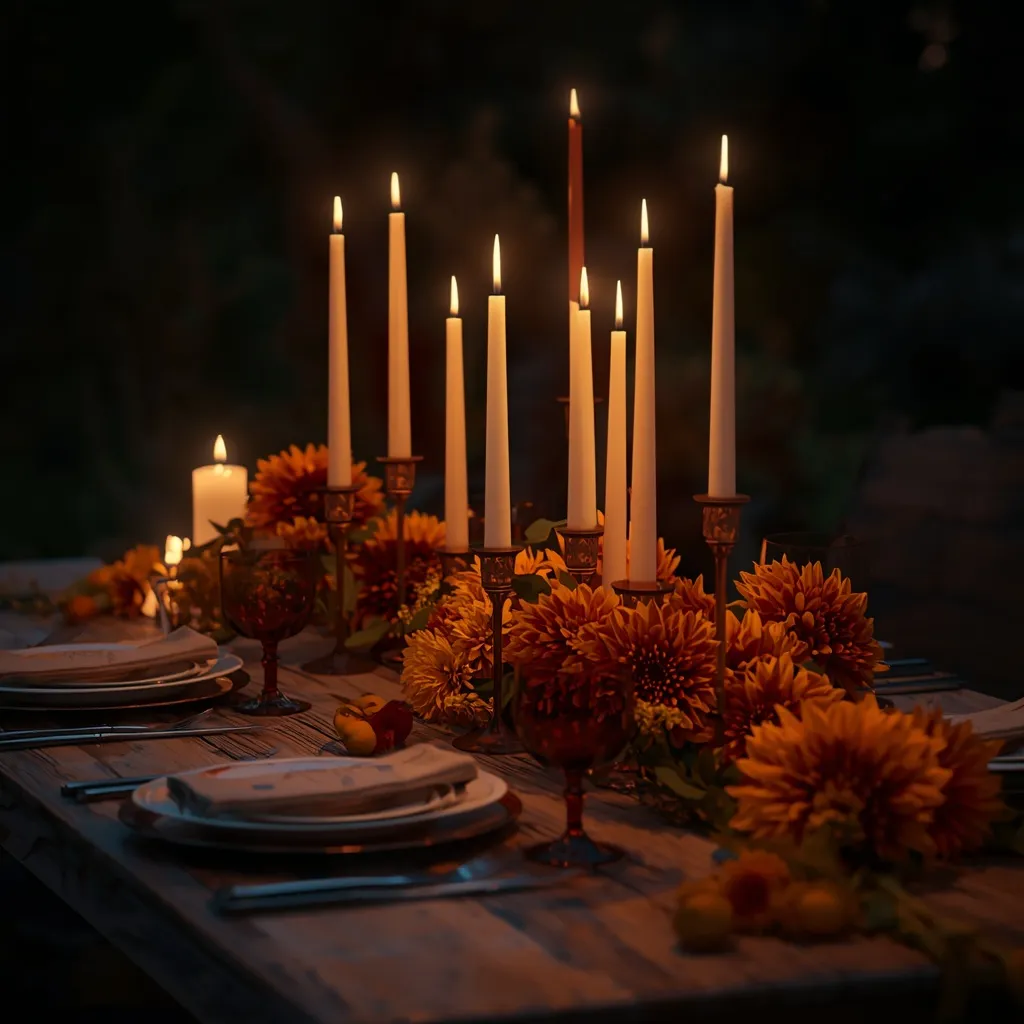
As the days shorten, a candlelit late-summer dining room turns dinner into an occasion: clusters of taper and pillar candles at varying heights, warm amber glassware, and low seasonal florals against soft evening light. Intimate and atmospheric, it makes the most of earlier sunsets.
Mass candles of varying heights down the table, tapers in holders and pillars in hurricane glasses, with warm amber glassware and a low arrangement of dahlias or sunflowers. Late summer’s earlier evenings make candlelight especially worthwhile now. Safety note: use dripless candles in stable holders, keep flames away from linens and dried elements, and never leave them unattended; battery LED candles are a safe alternative around children. This suits evening dinners and romantic gatherings.
- Why it works: Layered candlelight suits late summer’s earlier, cozier evenings.
- Best for: Evening dinners and romantic gatherings.
- Key elements: taper and pillar candles, amber glass, low seasonal florals.
12. Plum & Deep Jewel Tones
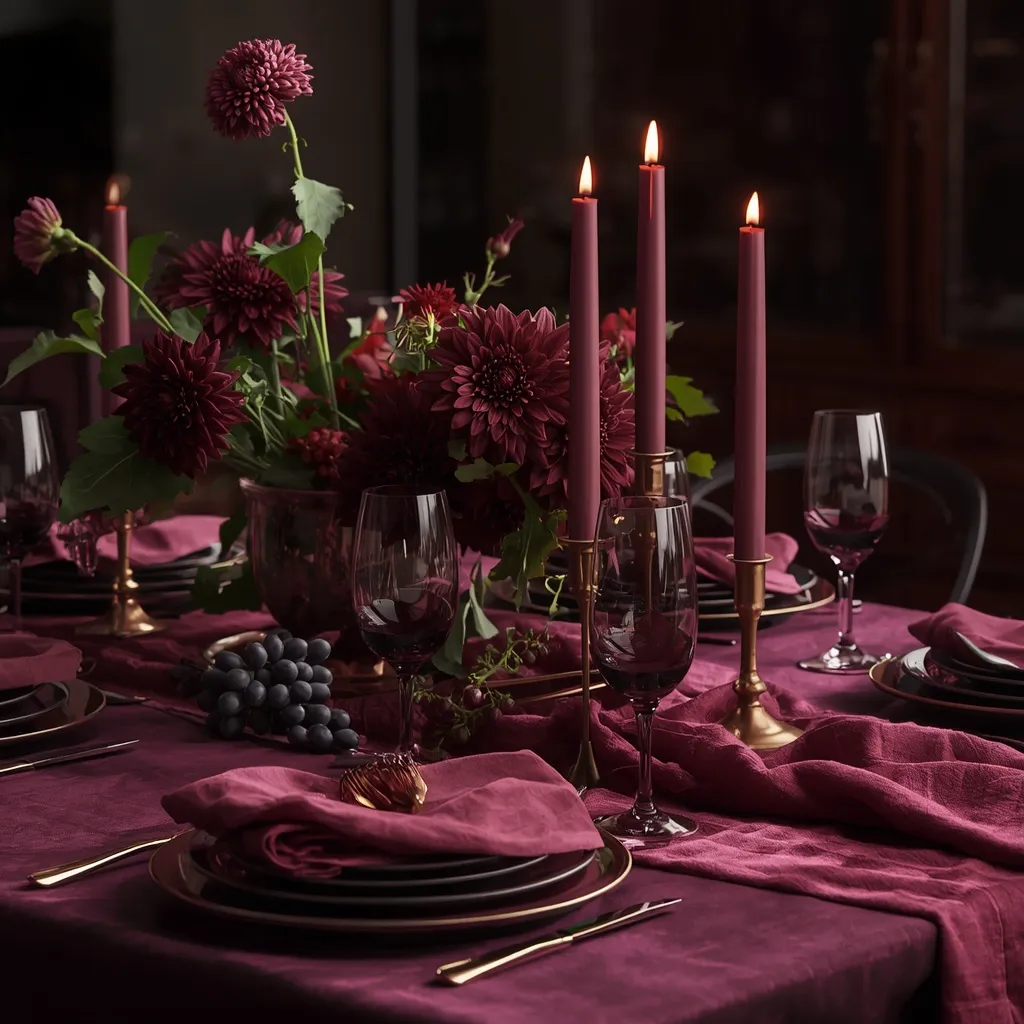
This richer scheme nudges the room toward fall: plum, aubergine, and deep berry linens with dark dahlias, grapes, and burgundy accents against moody glassware. Luxurious and warm, it feels like late summer deepening into autumn. It’s the most transitional look here.
Layer plum or aubergine linens with deep-toned dahlias, burgundy grapes, and dark stoneware or smoked glassware. Jewel tones like these are the natural bridge from summer brights to fall’s depth, making this ideal for late September. Add brass or gold accents to warm the richness and candlelight to deepen the mood. Keep greenery dark and minimal. This suits hosts ready to ease into autumn and anyone who loves a moody, saturated table.
- Why it works: Jewel tones bridge summer brights to fall depth for a transitional feel.
- Best for: Late-September dinners and lovers of moody, rich color.
- Key elements: plum linens, dark dahlias, grapes, brass accents, smoked glass.
13. Coastal Late Summer
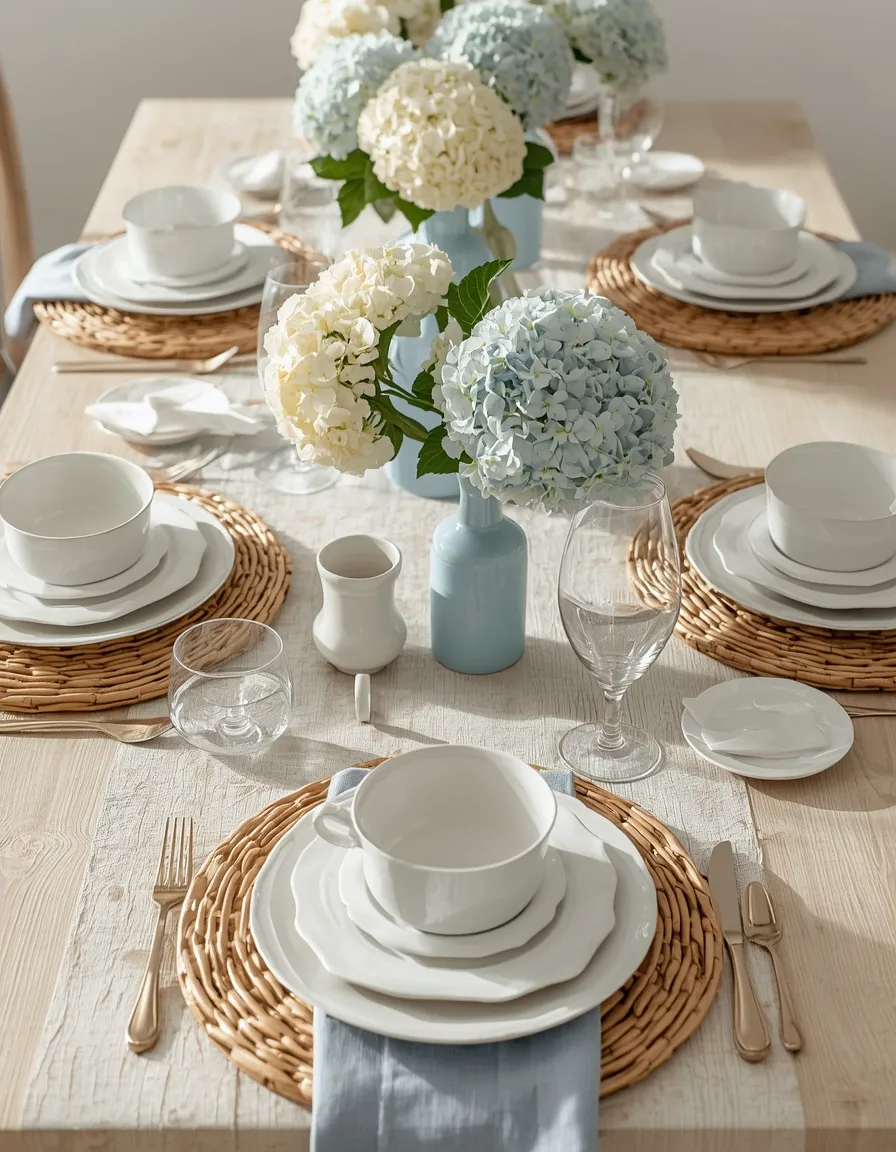
A coastal dining room keeps things cool and breezy into late summer: soft blues and sandy neutrals, rattan chargers, woven placemats, white dishware, and airy grasses or hydrangeas. Light and relaxed, it’s a fresh counterpoint to warmer schemes. It holds onto summer’s calm.
Layer natural textures, rattan or seagrass chargers, linen napkins, and stoneware, over a sandy or white base, with soft blooms like hydrangeas (which dry beautifully as the season turns) in low vases. Keep the palette cool: white, sand, and soft blue. A tip: late-summer hydrangeas can be left to dry in the vase for a look that carries into fall. This suits coastal homes and anyone wanting a cool, calm palette in the warm months.
- Why it works: Cool blues and hydrangeas stay fresh and even dry gracefully into fall.
- Best for: Coastal homes and cool-palette lovers.
- Key elements: rattan chargers, blues and sand tones, hydrangeas, stoneware.
14. Herb & Potted Green Table
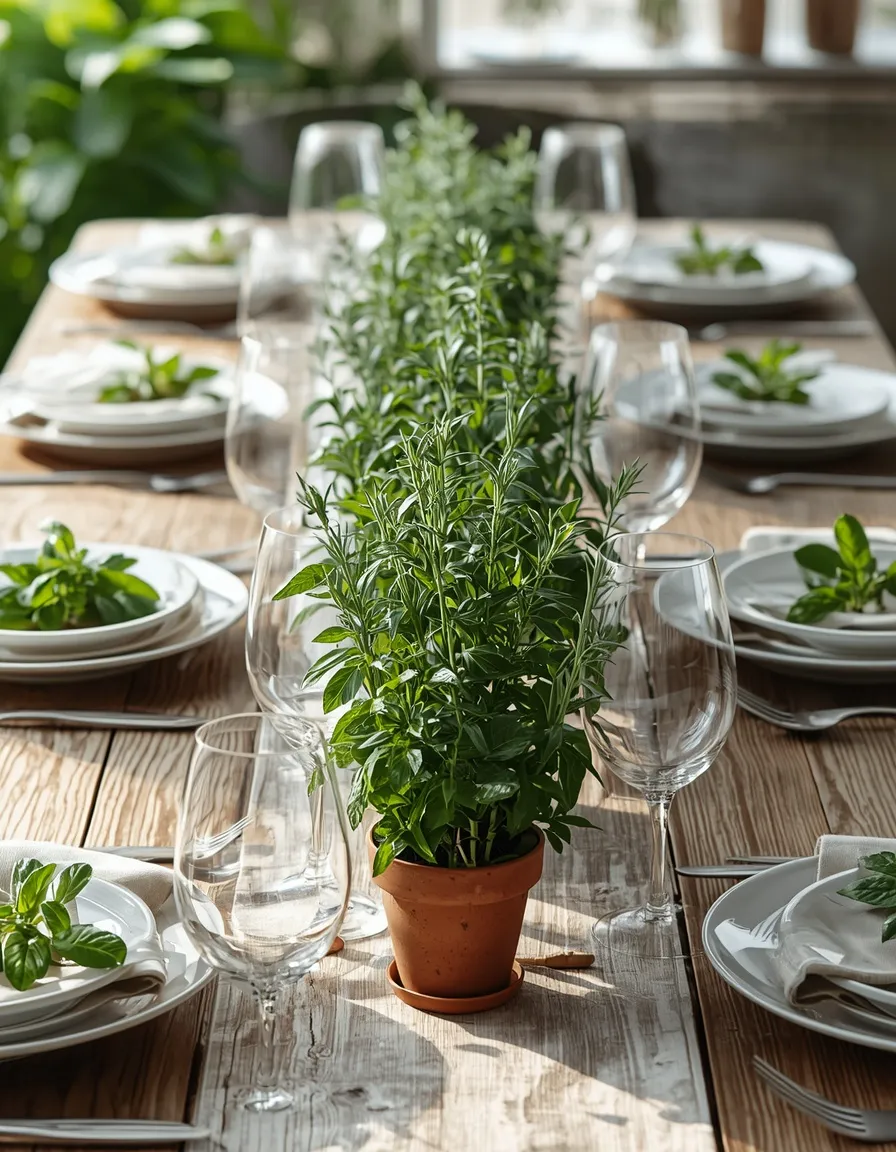
A living herb centerpiece doubles as decor and garnish: potted basil, rosemary, and mint in terracotta pots down the center, with sprigs at each place setting. Fresh, fragrant, and practical, it makes the most of the late-summer herb garden. It smells as good as it looks.
Line small terracotta pots of late-summer herbs, basil, rosemary, mint, thyme, down the table as a living, fragrant centerpiece guests can snip from. Choose sturdy herbs at their peak now in late summer. Add a sprig at each place setting. After dinner, the pots return to the windowsill or garden, so there’s zero waste. Group pots low for impact. This suits eco-minded hosts, cooks, and small-space gardeners wanting a fresh, functional table.
- Why it works: Peak-season herbs are fragrant, functional, reusable, and zero-waste.
- Best for: Cooks, eco-minded hosts, and small-space gardeners.
- Key elements: potted herbs, terracotta pots, fresh sprigs, low grouping.
15. Wildflower & Bud Vase Room
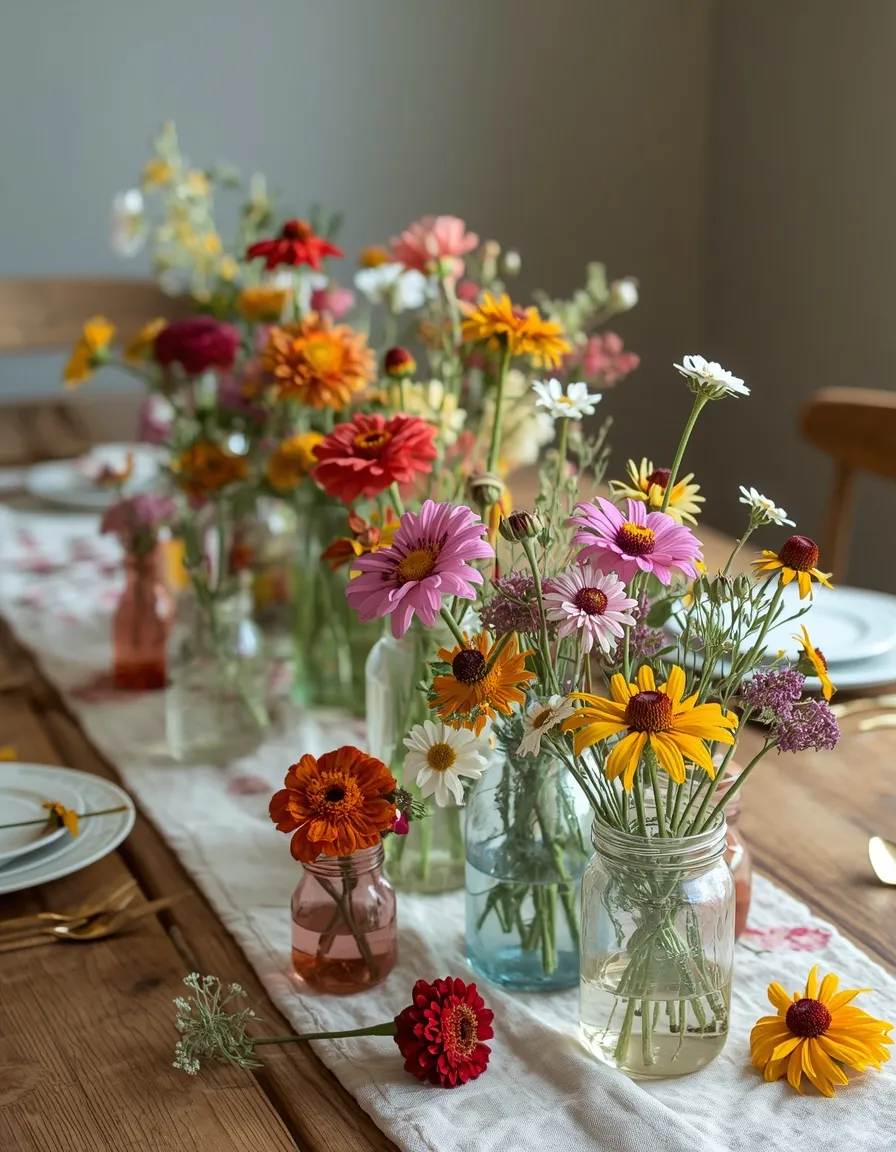
A relaxed wildflower dining room scatters the last of the season’s blooms in bud vases and jars down the table: cosmos, zinnias, and late daisies at mixed heights on a simple linen runner. Loose and romantic, it celebrates the garden’s final flush. It feels freshly gathered.
Arrange late-summer wildflowers, cosmos, zinnias, rudbeckia, and daisies, loosely in an assortment of small jars and bud vases down the table, varying heights but keeping each low enough to see over. A bud vase runner uses just a few stems, so it’s budget-friendly. Cut flowers in the cool morning and condition them in water for a few hours so they last through dinner. This suits garden lovers and relaxed gatherings wanting an unfussy, seasonal centerpiece.
- Why it works: The season’s last loose blooms feel romantic and cost little.
- Best for: Garden lovers and relaxed, budget-minded hosts.
- Key elements: cosmos, zinnias, daisies, bud vases, jars, linen runner.
16. Summer-to-Fall Transition Table
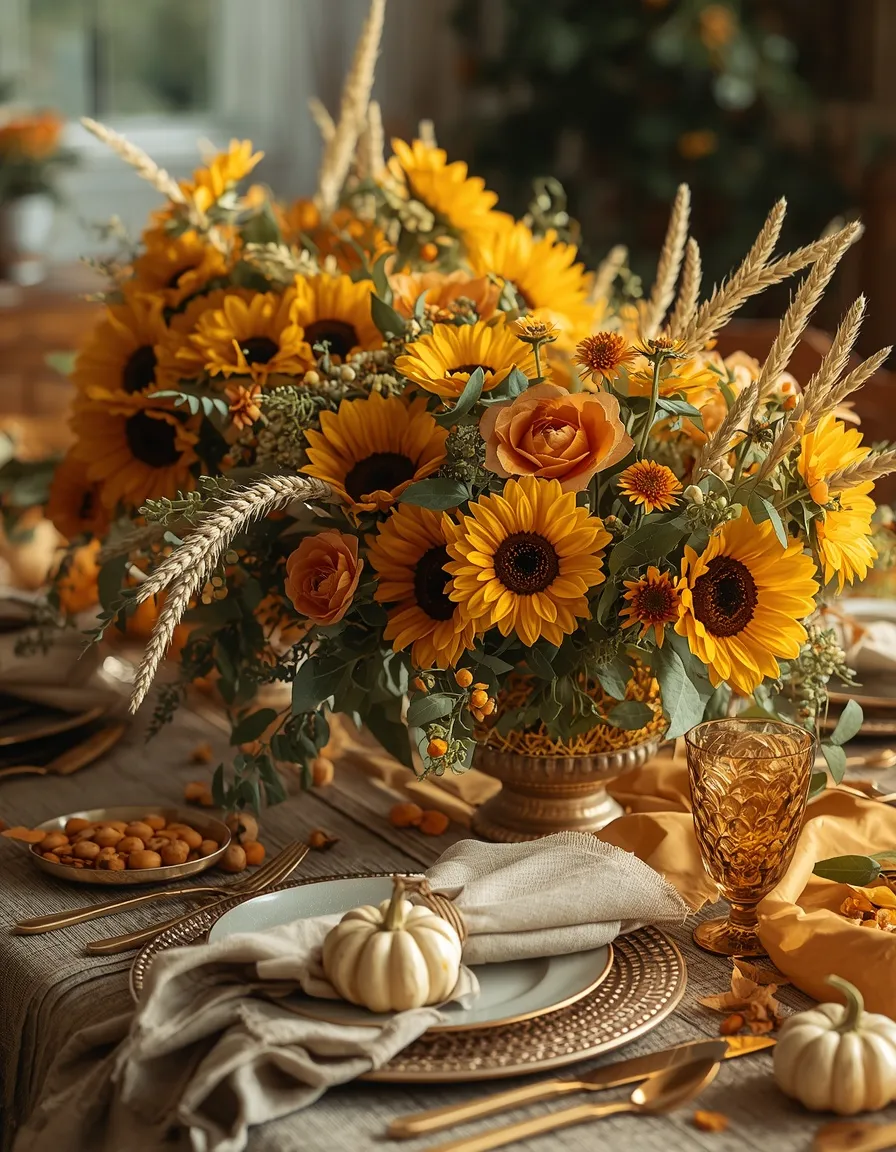
This purpose-built transitional look blends both seasons on one table: sunflowers and dahlias beside early wheat and a few small gourds, warm linens, and touches of green still holding on. It captures the exact turn of the season. It’s late summer shaking hands with fall.
To bridge the seasons, combine late-summer blooms (sunflowers, dahlias) with early-autumn signals (wheat, a few miniature pumpkins or gourds, dried elements) on a warm-toned linen base. Keep some fresh green in the mix so it doesn’t tip fully into fall too soon. This is the smart way to decorate once, then simply add more gourds and deeper tones as September progresses. Keep the centerpiece low and grouped. This suits anyone who wants their decor to evolve rather than be redone.
- Why it works: Blending both seasons lets decor evolve rather than needing a full redo.
- Best for: Anyone transitioning decor gradually into fall.
- Key elements: sunflowers, dahlias, wheat, small gourds, warm linens, some green.
How Do You Transition a Dining Room From Summer to Fall?
Transition a dining room from summer to fall gradually, by shifting the palette warmer and swapping fresh blooms for longer-lasting seasonal elements. Start by layering in golden, terracotta, and plum tones, trade wildflowers for sunflowers, dahlias, and dried wheat, then add small gourds and deeper accents as September progresses, so you decorate once and let it evolve.
Decorating with the season rather than against it is central to the whole Sunday Abode philosophy. If you’re taking the gathering outdoors while the weather holds, our guide to late-summer outdoor dining pairs perfectly with these indoor looks. For more seasonal inspiration, browse the rest of our dining room ideas.
Late Summer Palette & Seasonal Elements at a Glance
Late summer is a transitional season, so its palette deepens from summer’s brights toward fall’s warmth. Use this quick reference to build a cohesive, in-season dining room.
| Element | Late-summer choices | Why it works now |
| Palette | Golden ochre, terracotta, plum, warm green | Bridges summer brights and fall depth |
| Flowers | Sunflowers, dahlias, zinnias, hydrangeas | At their peak and long-lasting now |
| Produce | Figs, grapes, plums, peaches | Late harvest, edible, abundant |
| Dried / foraged | Wheat, grasses, seed heads | Signals the turn toward fall |
| Textures | Linen, stoneware, wood, brass | Warm and tactile for the season |
| Transition cue | Add small gourds, deeper tones in September | Evolves the look into fall |
Candle safety: keep lit candles away from dried wheat, grasses, and low arrangements, and never leave them unattended. Battery LED candles are a safe alternative around children or near dried elements.
Frequently Asked Questions
How do you decorate a dining room for late summer?
Lean into late summer’s deepening palette, golden ochre, terracotta, and warm green, with a low centerpiece of sunflowers, dahlias, or late-harvest fruit. Layer natural textures like linen and stoneware, and keep arrangements under about 30 cm (12 in) so guests can see across the table. Most of the look comes from seasonal blooms and produce rather than new purchases.
What is a good late-summer dining table centerpiece?
A low arrangement of sunflowers, dahlias, and wheat, or a footed bowl of figs, grapes, and plums, both capture late summer beautifully. For a formal look, use dahlias and garden roses in a low compote flanked by taper candles. Keep any centerpiece low so it doesn’t block conversation across the table.
What colors are best for late-summer decor?
Late summer suits a warming, transitional palette: golden ochre, terracotta, rust, deep green, and plum, alongside the last of summer’s brights. These deeper tones bridge high summer and early fall, which is exactly why they feel right in August and September. Warm metals like brass and amber glass enhance the golden, late-season glow.
How do I transition my dining room from summer to fall?
Do it gradually: shift the palette warmer, swap fresh wildflowers for longer-lasting sunflowers, dahlias, and dried wheat, then add small gourds and deeper tones as September progresses. Keeping some fresh green in the mix stops it tipping fully into fall too soon. This lets you decorate once and simply evolve the look.
What flowers are best for a late-summer table?
Sunflowers, dahlias, zinnias, and hydrangeas are at their peak in late summer and last well indoors. Dahlias in deep jewel tones feel especially transitional toward fall, and hydrangeas can be left to dry in the vase for a look that carries into autumn. Cut and condition fresh flowers in water beforehand so they last through dinner.
How can I decorate a late-summer table on a budget?
Lean on what the season gives you: garden clippings, late-harvest fruit like figs and grapes, potted herbs, and dried wheat all make beautiful, low-cost centerpieces. A bud vase runner uses just a few stems, and greenery is far cheaper than cut flowers. Mixing these with linens and dishware you already own keeps costs minimal.
Do these dining room ideas work for renters?
Yes. Nearly all of these looks are styling rather than structural, relying on linens, centerpieces, candles, and seasonal produce or blooms that require no permanent changes. Renters can fully embrace late-summer dining room decor and simply pack it away or compost it when the season turns.
Conclusion
Late summer is a fleeting, golden window, and these late summer dining room ideas help you make the most of it before fall arrives. Whether you set a glowing golden harvest table, a cheerful sunflower farmhouse spread, or a refined formal centerpiece, the formula stays the same: a warming, transitional palette, low seasonal centerpieces, and layered natural textures. Best of all, most of the look comes from the season’s own blooms and produce, so it’s easy and budget-friendly to achieve. Pick the look that suits your gatherings, then let it evolve toward autumn. For more seasonal inspiration, explore the dining room ideas collection on Sunday Abode and save the table you’ll want to set all season.