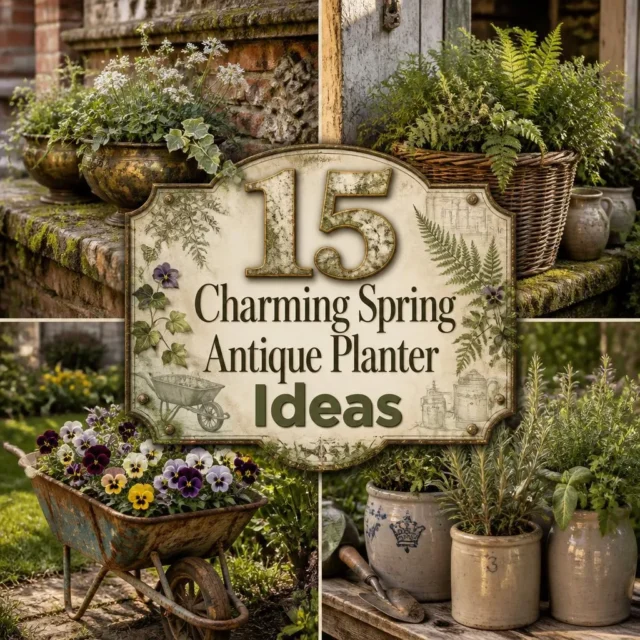

There’s a quiet magic in planting spring’s first tulips inside a vessel that has already seen a hundred springs. Spring antique planter ideas let you pair fresh, living color with the worn brass, crackled stoneware, and weathered stone that new pots simply can’t fake. A tarnished copper boiler spilling over with pansies or an old wicker basket of ferns turns a plain corner into something with a story. At Sunday Abode, we believe your home should feel gathered over time, not bought all at once. The looks below show you how to style genuine vintage finds beautifully, and, just as importantly, how to plant in them without ruining either the antique or the plant.
Key Takeaways
- Antique planters bring instant character that new pots can’t replicate, patina, age, and history do the styling for you.
- Most antique vessels have no drainage holes, so use the pot-in-pot method (a nursery pot inside the antique) to keep plants healthy and protect the piece.
- Never grow edible herbs directly in old painted, galvanized, or unknown-metal containers; line them first, as old paint may contain lead.
- Bring ceramic and stoneware crocks indoors before frost, trapped water freezes, expands, and cracks them.
- Many classic spring blooms (tulips, daffodils, hyacinths, and especially lilies for cats) are toxic to pets, so choose pet-safe plants where animals roam.
1. Antique Brass Bowl Grouping
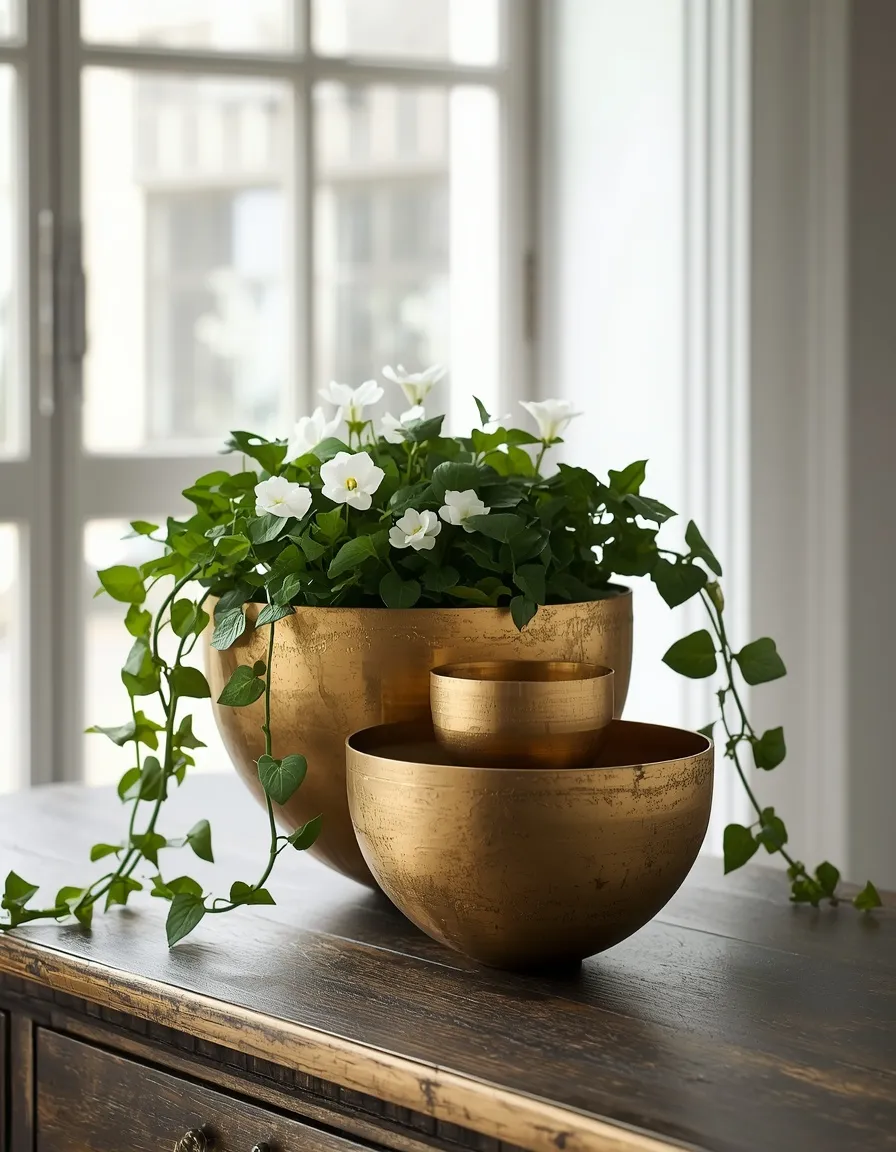
A cluster of tarnished brass bowls and small planters catches the low spring light like nothing else, throwing warm gold across a console or windowsill. Grouped in odd numbers at varying heights, they turn a few sprigs of ivy and a pot of white ranunculus into a glowing little still life.
Choose two or three brass vessels of different sizes and set trailing pothos or English ivy in the largest, with compact blooms like ranunculus or primrose in the smaller ones. Brass has no drainage, so drop a plastic nursery pot inside each bowl (the pot-in-pot method) and lift it out to water at the sink, this keeps standing water off the metal and prevents root rot. A light coat of paste wax on the outside slows further tarnishing if you want to hold the current patina.
- Best for: renters and indoor stylists wanting warmth without drilling anything.
- Why it works: warm metal against fresh green is a timeless, high-contrast pairing.
- Key elements: 2–3 graduated brass bowls, trailing ivy, one bright spring bloom.
2. Wicker Fern Sunroom Corner
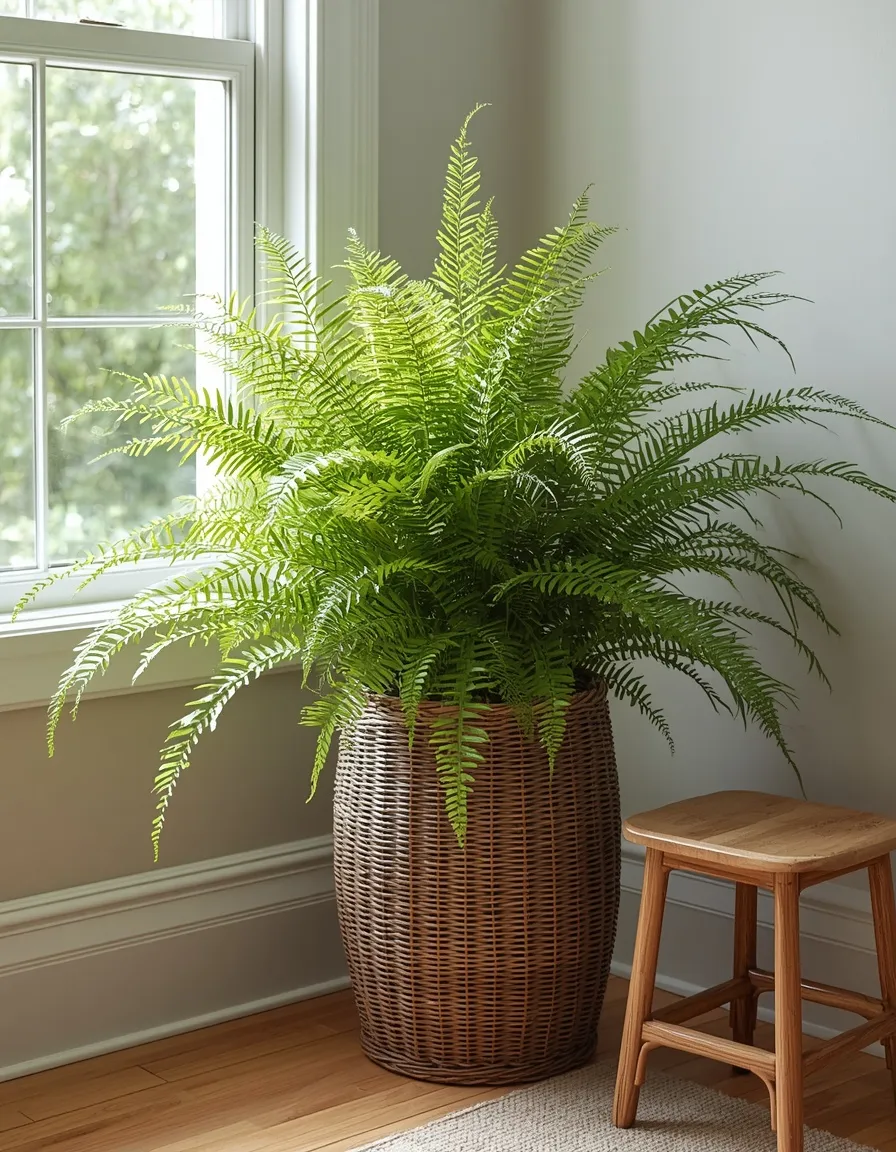
An antique wicker planter overflowing with a lush Boston fern instantly softens a bright sunroom or covered porch corner. The woven texture and the feathery fronds share the same relaxed, cottage-garden mood, and a low stool or side table nearby completes the reading-nook feel.
Set a well-watered fern (Boston or maidenhair both love the humidity) into a plastic liner that fits snugly inside the wicker, since damp soil against bare wicker rots the weave within a season. Keep this look in bright, indirect light rather than harsh direct sun, which scorches fern fronds. If the wicker is fragile or flaking old paint, this is a display-only piece best kept indoors and dry. Mist the fern every few days when indoor air is dry.
- Best for: sunrooms, covered porches, and anyone who loves soft, textural greenery.
- When to use it: bright indirect spots, never blazing afternoon sun.
- Watch out: line the wicker so moisture never touches the bare weave.
3. Stoneware Crock Herb Cluster
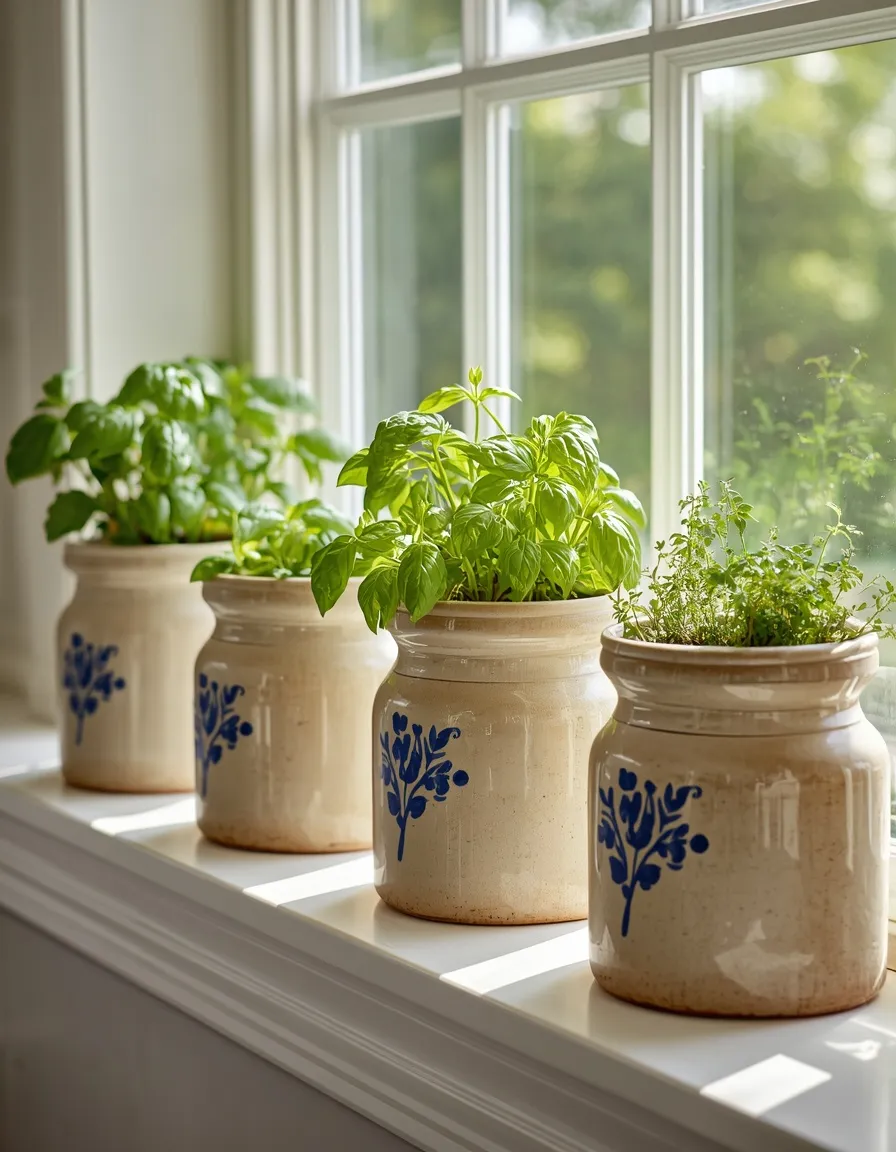
A row of old salt-glazed stoneware crocks lined along a kitchen counter or windowsill makes a working herb garden feel like a farmhouse heirloom. The creamy grey glaze and cobalt stenciling set off the bright greens of basil, thyme, and parsley beautifully.
Pick crocks in graduated sizes and plant one herb per crock for easy harvesting. Because crocks rarely have drainage, add a 3–5 cm (1–2 in) layer of gravel at the bottom and water sparingly, letting the top 2–3 cm of soil dry between waterings so roots never sit in water. Avoid using a chipped, old painted crock for edible herbs, line it or reserve it for ornamentals, as antique glazes and paints can contain lead. A sunny south- or west-facing sill keeps culinary herbs compact and flavorful.
- Best for: cooks and kitchen gardeners who want function plus farmhouse charm.
- Why it works: the aged glaze flatters fresh herb greens and reads instantly vintage.
- Watch out: gravel layer plus careful watering prevents root rot in a hole-free crock.
4. Wheelbarrow Cottage Flower Cart
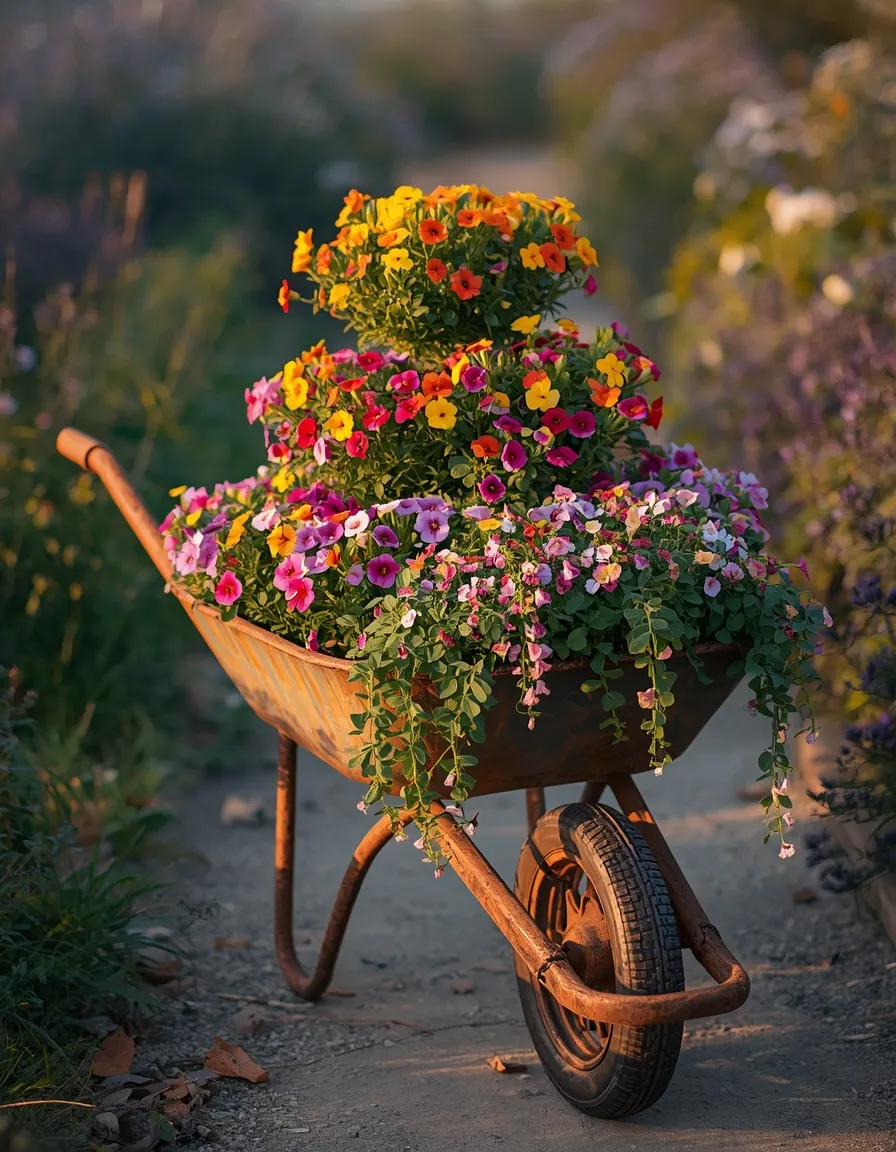
An antique wooden or rusted-steel wheelbarrow packed with spring annuals becomes a rolling centerpiece for a front yard, patio, or garden path. Spilling petunias, lobelia, and trailing bacopa soften its hard edges, and the whole thing can be wheeled to catch the sun.
Drill a few drainage holes in the metal bed (or work around existing gaps in old timber) and add a layer of landscape fabric before filling with quality potting mix. Plant tall snapdragons or geraniums at the back, mounding blooms in the middle, and trailing lobelia at the front for a tiered, overflowing look. A rusty patina is part of the charm, but seal a wooden barrow’s interior or line it so wet soil doesn’t rot the boards. This large planter suits gardens and roomy patios rather than tight balconies.
- Best for: homeowners with yard or patio space and a love of cottage-garden abundance.
- Key elements: vintage wheelbarrow, tiered annuals, trailing edge plants.
- Why it works: a mobile, oversized display becomes the garden’s natural focal point.
5. Weathered Stone Urn Entrance
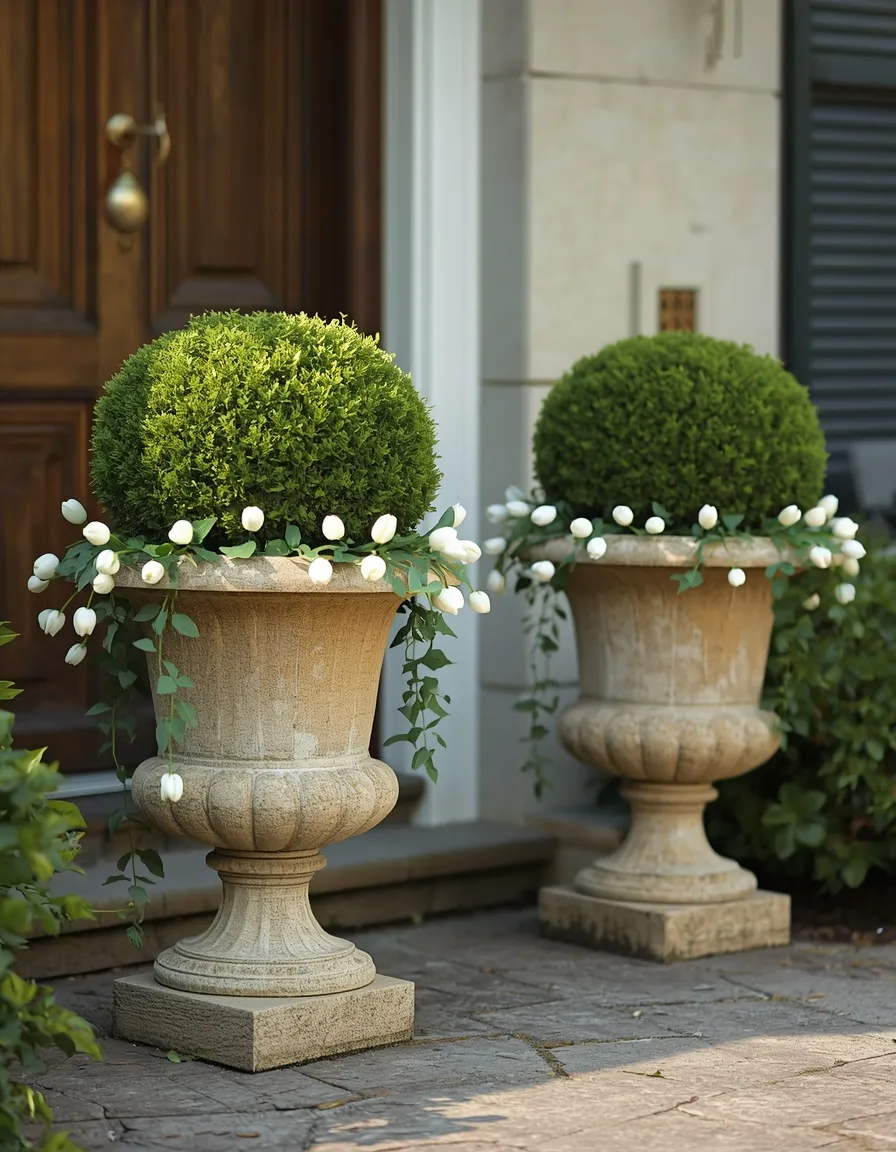
A pair of weathered stone or cast-concrete urns flanking a front door brings instant grandeur and old-world symmetry to an entrance. Filled with clipped boxwood underplanted with white tulips or trailing ivy, they signal a home that’s been loved and tended.
Use matched urns on either side of the door and plant them identically for that formal, symmetrical effect. Stone urns usually drain well, but raise them on small pot feet so water escapes freely and the base doesn’t stain the porch. For year-round structure, keep an evergreen like dwarf boxwood as the anchor and swap the seasonal color around it, bulbs in spring, annuals in summer. In frost-prone climates, real terracotta cracks, so choose frost-proof stone or concrete for exposed entryways.
- Best for: homeowners wanting a polished, symmetrical curb-appeal statement.
- When to use it: covered or open entrances with room for a matched pair.
- Watch out: pick frost-proof material for exposed, cold-winter porches.
6. Copper Boiler Porch Bloom
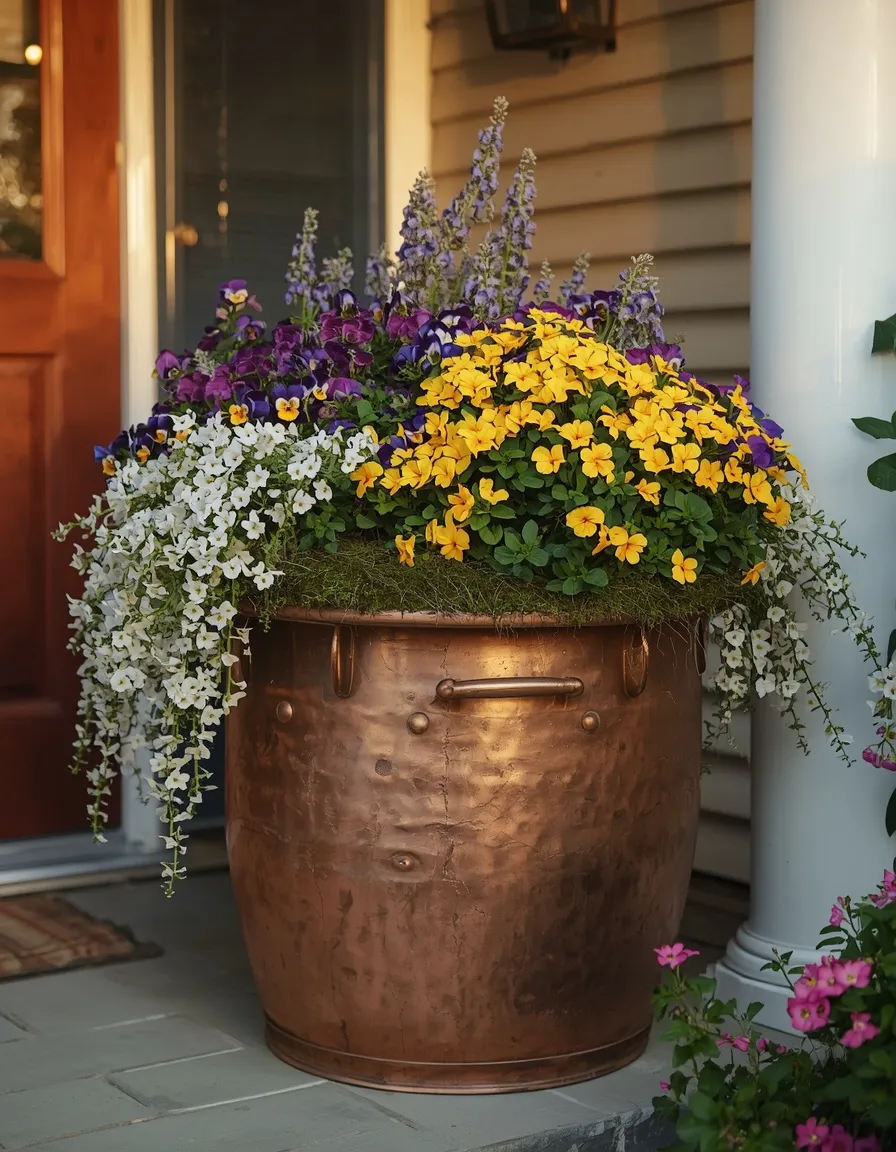
A large antique copper wash boiler brimming with a riot of spring color anchors a porch or patio like a piece of living sculpture. The rosy-gold metal glows against masses of pansies, violas, and trailing verbena, and its generous size lets you build real fullness.
Set nursery pots directly inside the boiler on an upturned pot or bricks so plants sit near the rim, then tuck sphagnum moss around them to hide the containers, this pot-in-pot approach protects the copper interior and lets you rearrange blooms easily. Copper develops a green verdigris over time; leave it for character or buff it back with a lemon-and-salt rub. Because copper heats up in sun, water in the morning and choose heat-tolerant annuals for a south-facing porch.
- Best for: porch and patio owners wanting a large, glowing statement vessel.
- Why it works: warm copper against cool spring pastels is a striking color pairing.
- Key elements: copper boiler, massed pansies and violas, hidden nursery pots, moss.
7. Cast Iron Cottage Garden Pot
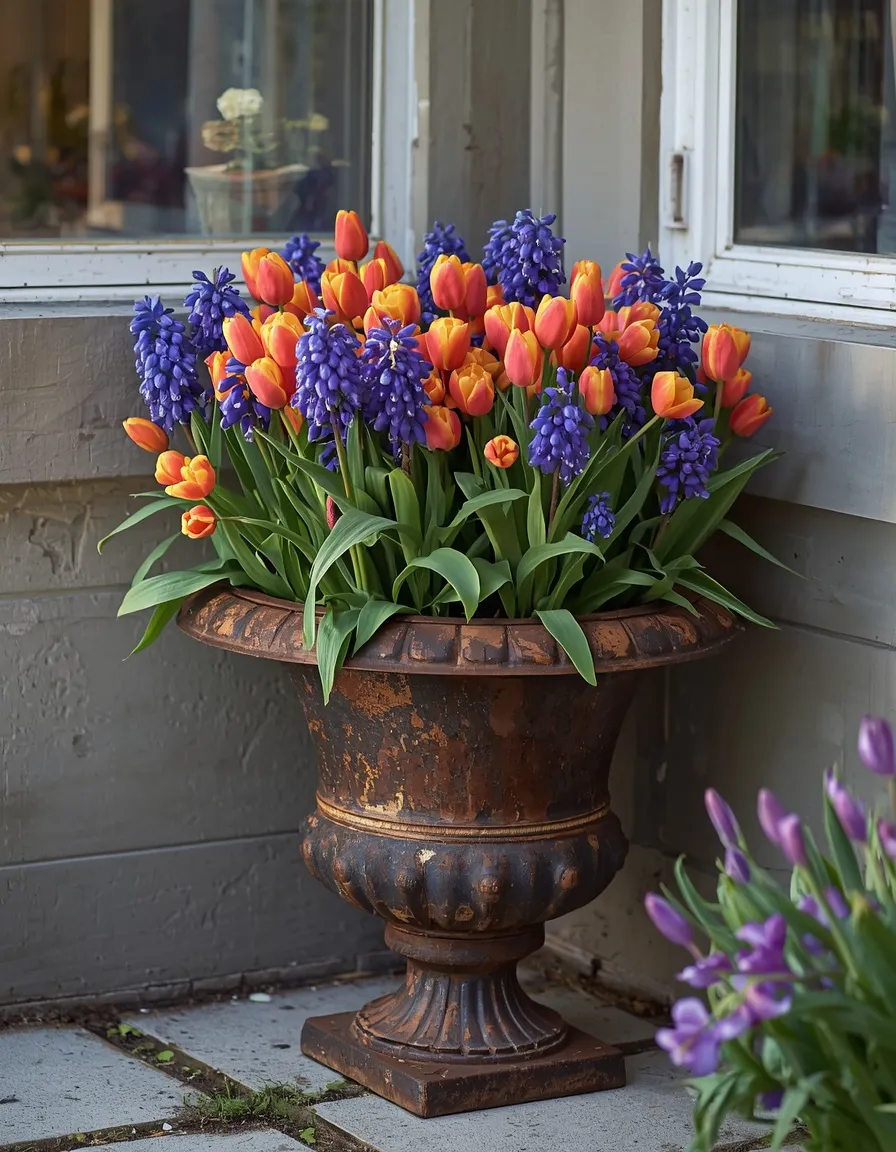
A heavy antique cast iron pot or old cauldron planted densely with spring blooms brings a grounded, rustic weight to a garden bed or courtyard corner. The dark, pitted iron makes bright tulips and grape hyacinths pop, and its solidity holds up to wind and weather.
Cast iron is heavy and stays put, which makes it ideal for exposed or windy spots where lighter pots blow over. Drill drainage holes if there are none, or use a liner, and add gravel at the base, iron rusts, but a rusty patina simply adds to the aged look and won’t harm plants. Plant it full and layered: bulbs like tulips and muscari for early spring, then transition to summer annuals. Site it where you won’t need to move it often, as a filled iron pot is genuinely heavy to lift.
- Best for: windy or exposed garden spots and lovers of dark, rustic texture.
- When to use it: permanent placements, it’s too heavy to reposition casually.
- Watch out: ensure drainage; standing water speeds rust-through over years.
8. Repurposed Corn Planter Accent
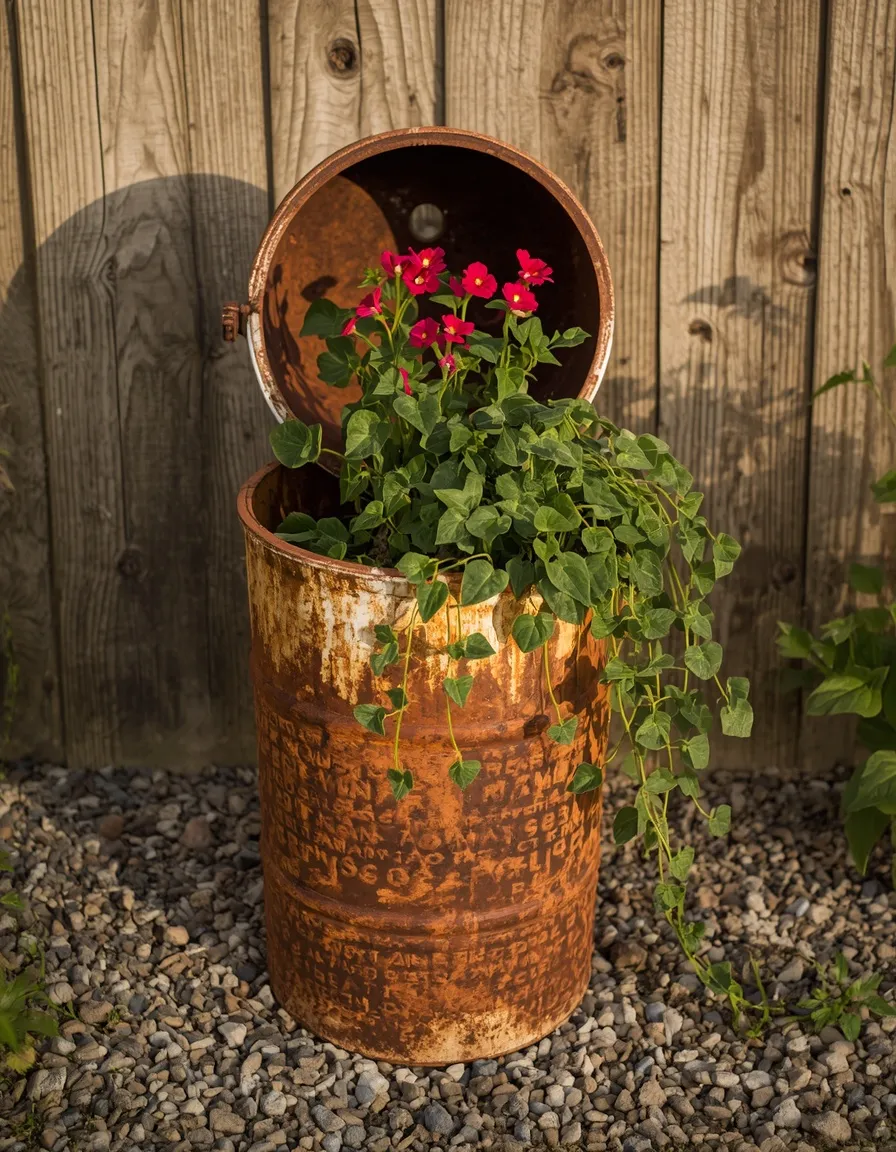
An old cast-iron corn planter or seed drill, repurposed as a garden accent, turns farm history into a sculptural spring display. Its wheels, hopper, and weathered iron become a talking point, with trailing plants softening the machinery and a few blooms tucked into the hopper.
Rather than planting the whole implement, use its hopper or seed box as the container and let the rest stand as rustic sculpture. Set a shallow liner inside the box and plant creeping Jenny, sedum, or trailing lobelia so greenery drapes over the iron. Position it against a fence, wall, or gravel bed where its silhouette reads clearly. Because vintage farm iron is often heavy and rusted, place it on stable, level ground and check for sharp edges before siting it near walkways or where children play.
- Best for: rustic and farmhouse gardens with room for a statement conversation piece.
- Key elements: repurposed corn/seed planter, trailing greenery in the hopper, gravel setting.
- Watch out: heavy, sometimes sharp-edged iron, site it safely on level ground.
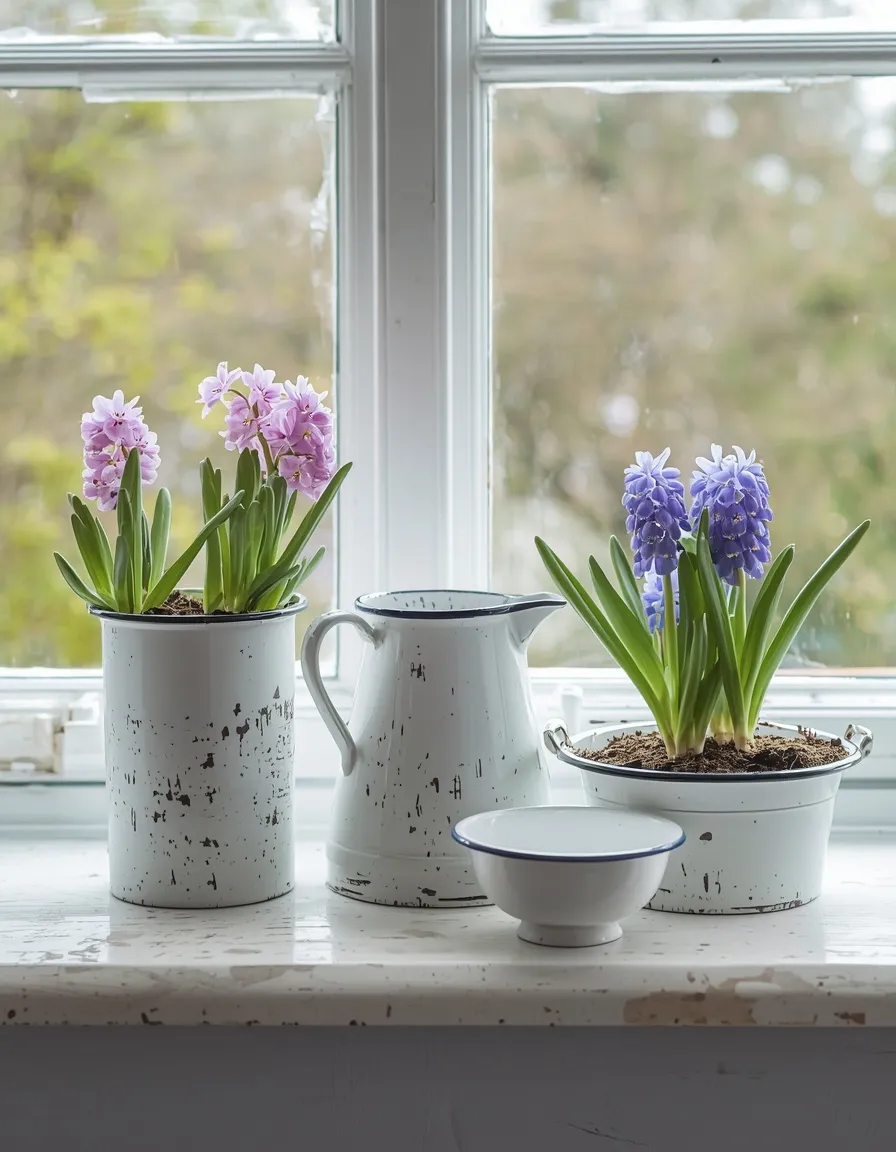
9. Chippy Enamelware Windowsill Trio
A trio of chipped vintage enamelware pots, pitchers, and pails lined along a windowsill gives a bright, nostalgic cottage look. The white-and-blue speckled enamel and rolled rims frame small spring blooms like primroses and grape hyacinths with cheerful, lived-in charm.
Group three enamelware vessels of different shapes, a pail, a jug, a small basin, and plant compact spring flowers in nursery liners set inside each. Enamelware is metal underneath, so where the enamel has chipped to bare steel it will rust with damp soil; keep a liner between soil and surface and empty any standing water. This look shines in a bright kitchen or bathroom window. Skip edible herbs in chipped enamel, since exposed vintage coatings are an unknown quantity for food safety.
- Best for: renters and small-space stylists wanting cheap, cheerful vintage charm.
- Why it works: speckled enamel and small blooms create instant cottage nostalgia.
- When to use it: bright interior windowsills where the trio catches morning light.
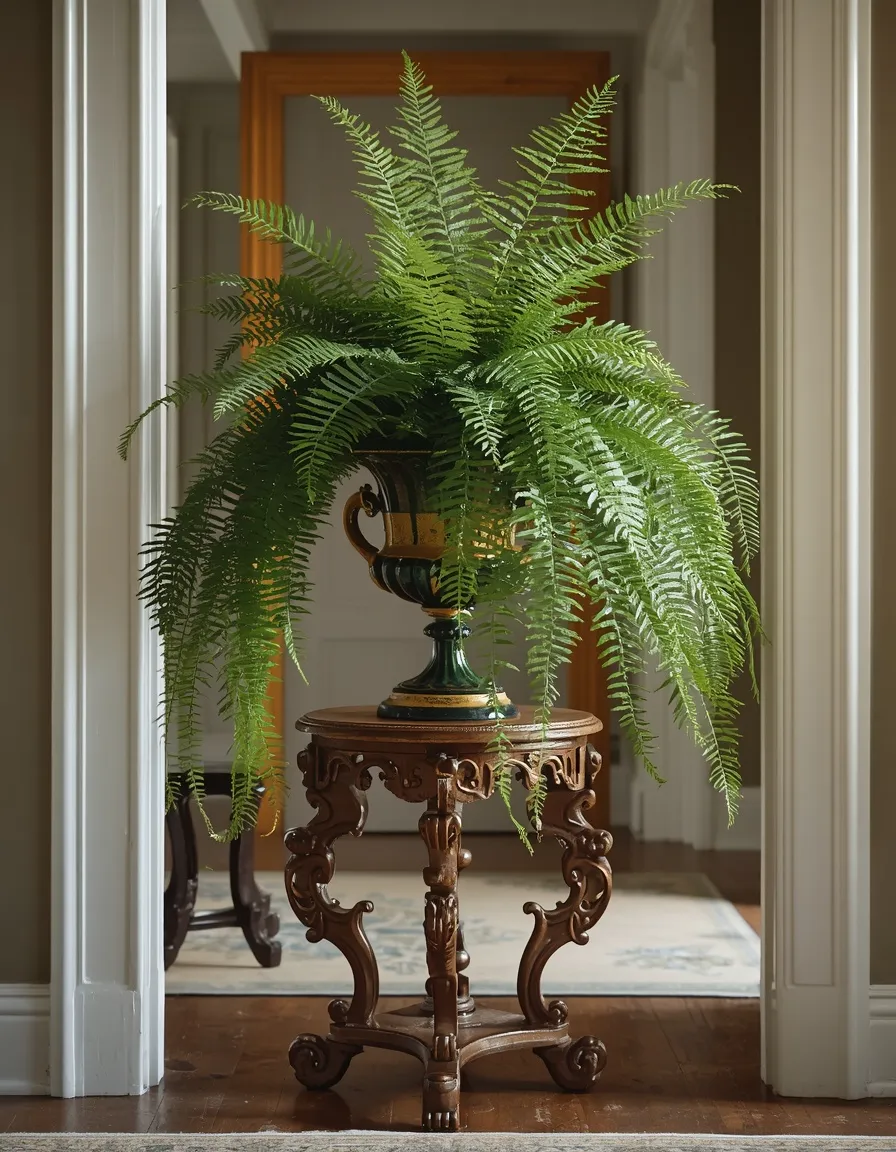
10. Victorian Jardinière on a Stand
A ceramic Victorian jardinière raised on its matching antique plant stand creates a single, elegant focal point in a living room or entryway. The ornate glazed bowl lifted to waist height lets a full fern or a flowering azalea cascade dramatically, drawing the eye upward.
Choose a statement plant with presence, a Boston fern, a peace lily, or a spring azalea in bloom, and set it in a liner inside the jardinière to protect the glaze from moisture. An antique planter stand puts the display at eye level, which suits rooms with high ceilings or a bare corner that needs height. Check that the stand is sturdy and level before loading a heavy planted bowl on top. Keep the peace lily in mind around pets, as it’s mildly toxic to cats and dogs if chewed.
- Best for: formal living rooms and entryways needing an elegant vertical accent.
- Key elements: ornate jardinière, matching antique stand, one full statement plant.
- Watch out: confirm the stand is stable before adding a heavy planted bowl.
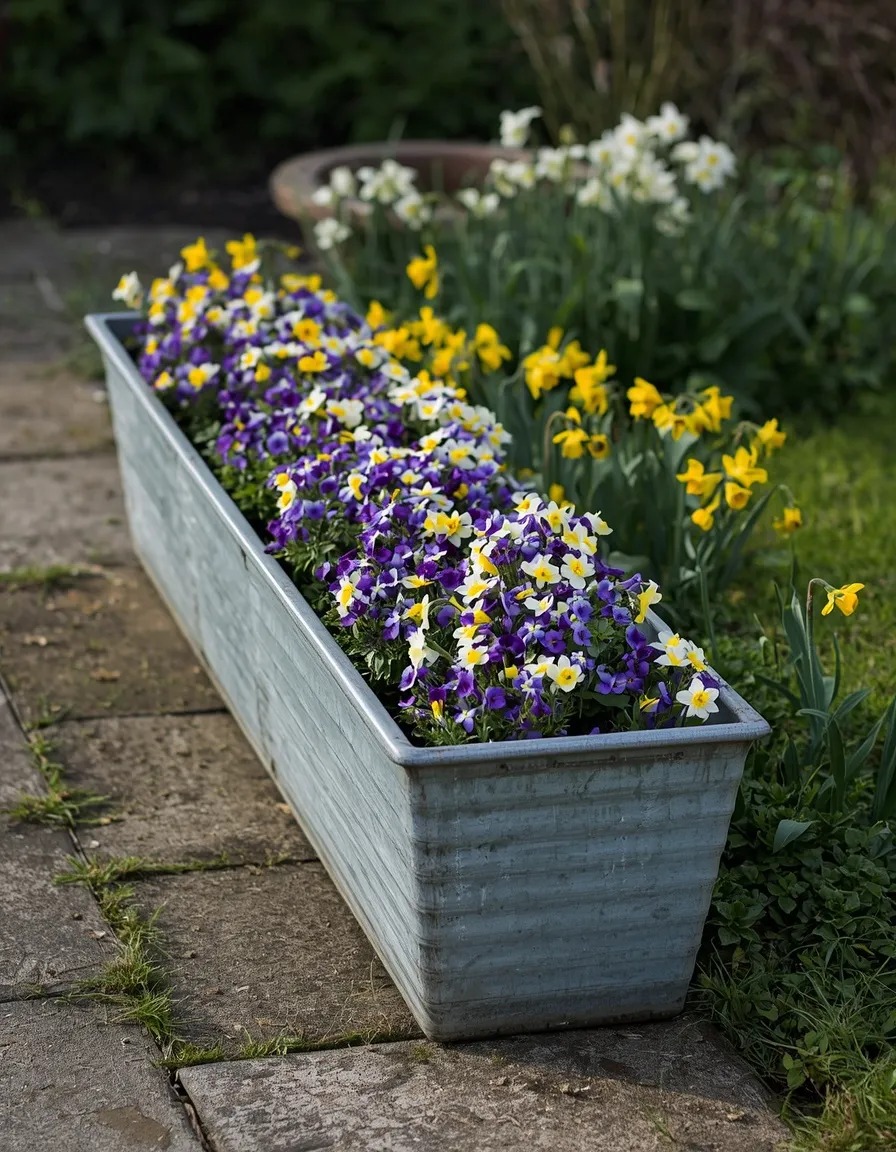
11. Galvanized Trough Balcony Bed
A long antique galvanized trough or feed bin turns a balcony rail-side or patio edge into a mini raised bed brimming with spring flowers. The dull silver metal is understated enough to let a dense mix of violas, alyssum, and dwarf daffodils take center stage.
A trough gives you real planting length, so treat it like a garden bed: drill drainage holes along the base, add gravel, and fill with potting mix. Plant in drifts rather than dotting single plants for a fuller, more natural look. Old galvanized coatings can leach zinc over time, so line the trough or keep it to ornamental (non-edible) blooms if the piece is very old or the coating is flaking. This works well on sturdy balconies and patios where its length fits against a wall or rail.
- Best for: balconies and patios wanting a long, bed-like spring display.
- When to use it: against a wall or rail where its length sits neatly.
- Watch out: line or reserve old galvanized metal for ornamentals, not edibles.
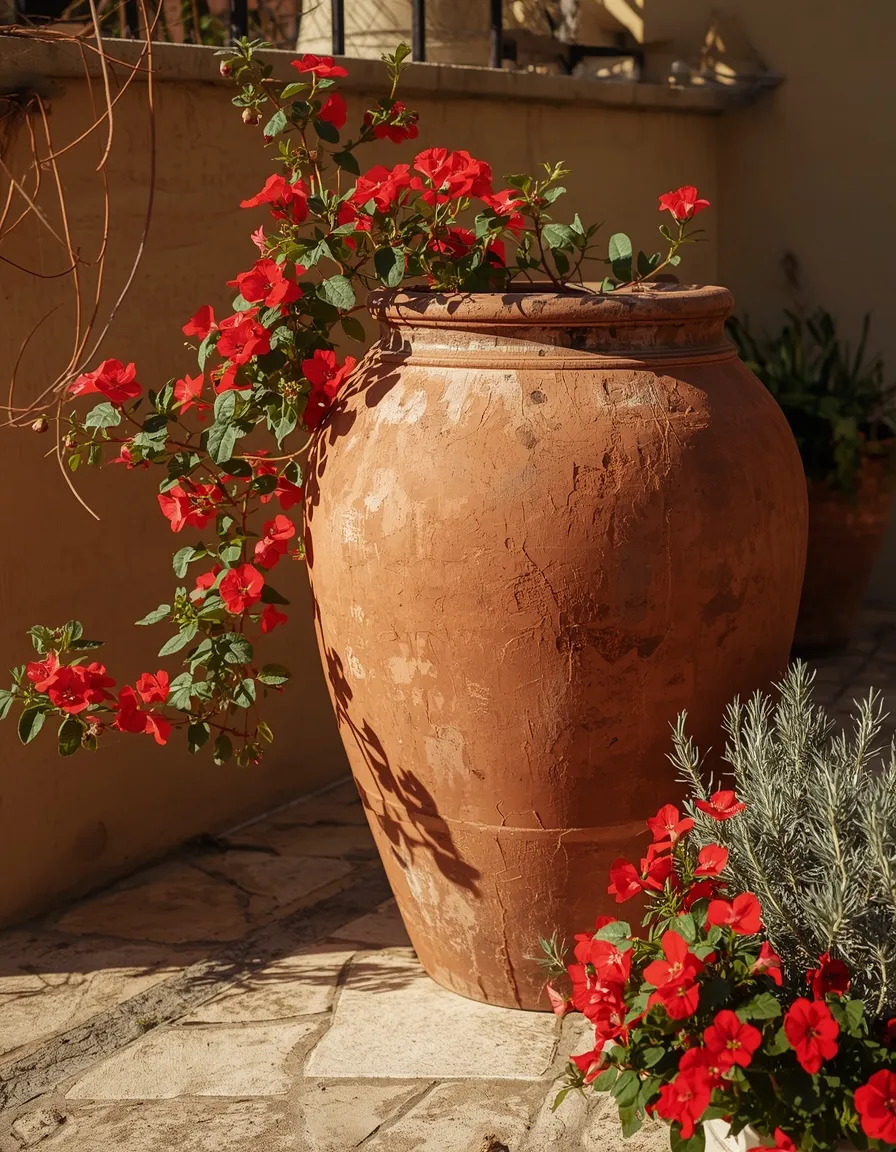
12. Terracotta Olive Jar Terrace
A large aged terracotta olive jar on a sunny terrace brings sun-warmed Mediterranean calm to spring. Its tall, curved silhouette works beautifully as a standalone sculptural piece or planted with a single olive sapling, rosemary, or a spill of trailing geraniums.
An oversized olive jar makes a strong statement on its own, so let it stand as sculpture or plant it simply with one bold specimen. If planting, ensure a drainage hole (many decorative jars have none) and raise the jar on feet. Real terracotta is porous and cracks if water freezes inside it, so empty and shelter it before hard frost, or choose a frost-proof version for cold climates. Its warm clay tone suits sunny, south-facing terraces and pairs naturally with silvery herbs like rosemary and lavender.
- Best for: sunny terraces and Mediterranean-style outdoor spaces.
- Why it works: warm aged clay and a single bold plant create effortless elegance.
- Watch out: porous terracotta cracks in frost, shelter it or buy frost-proof.
13. Vintage Teacup and Tin Windowbox
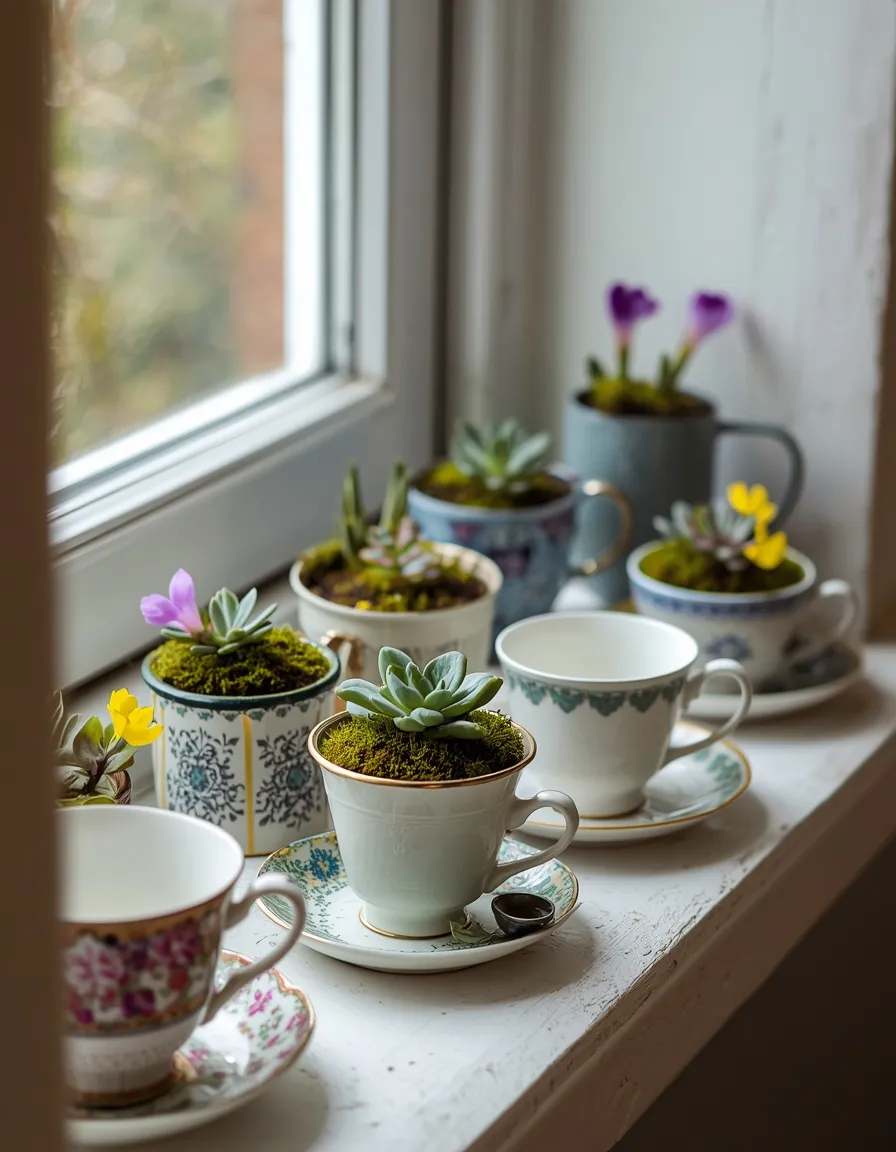
A collection of mismatched vintage teacups, tea tins, and small enamel mugs planted with tiny spring flowers makes a delicate, upcycled windowsill display. Miniature succulents, moss, and small blooms like violas turn thrifted odds and ends into a charming little garden.
This is the ideal use for orphaned antique china and tins too pretty to discard. Add a thin layer of gravel for drainage (teacups have none) and plant shallow-rooted picks like sempervivum succulents or violas that don’t need deep soil. Water with a small spoon or dropper to avoid overfilling these tiny hole-free vessels. Because it uses cast-offs, this is one of the most budget-friendly antique planter looks and a lovely way to display a broken tea set’s survivors.
- Best for: budget decorators and anyone with orphaned vintage china to rescue.
- Key elements: mismatched teacups and tins, mini succulents, violas, gravel base.
- Why it works: tiny thrifted vessels become a delicate, personal windowsill garden.
14. Reclaimed Wood Crate Centerpiece
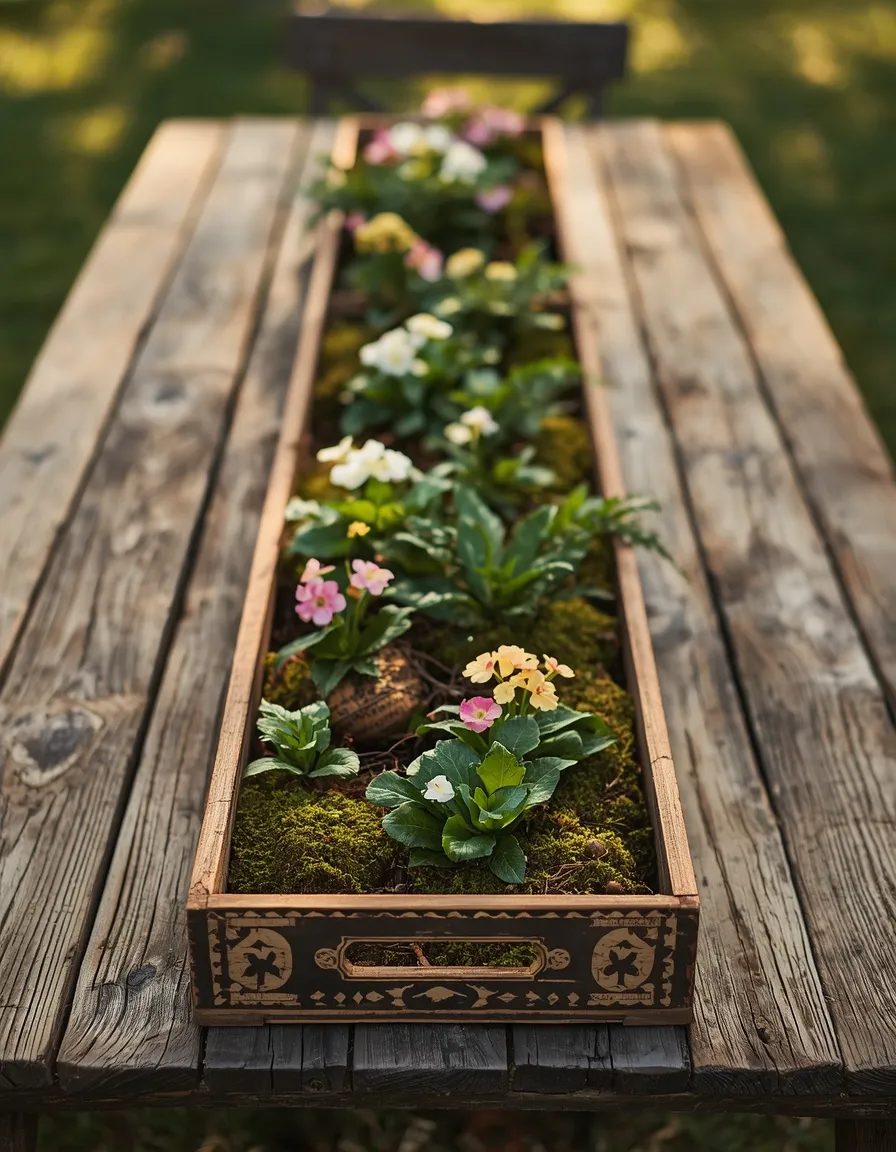
A weathered antique wooden crate or seed box running down the middle of an outdoor dining table becomes a living spring centerpiece. Rows of potted primroses, muscari, and small ferns nestled in the crate bring the garden right to the table for brunches and gatherings.
Use the crate as a caddy rather than planting directly into it: set small potted plants inside and pack moss or straw around them to hide the pots. This keeps the wood dry and lets you swap plants or lift the whole crate indoors after a meal. Choose low plants so guests can see across the table, and mix a little height with a single taller sprig at the center. A vintage stamped or stenciled crate adds the most character and often costs little at flea markets.
- Best for: outdoor entertainers and anyone wanting a movable table centerpiece.
- When to use it: brunches and gatherings, lift it indoors afterward to protect the wood.
- Watch out: keep it a caddy for potted plants, not a directly-planted box.
15. Mixed Metals Console Vignette
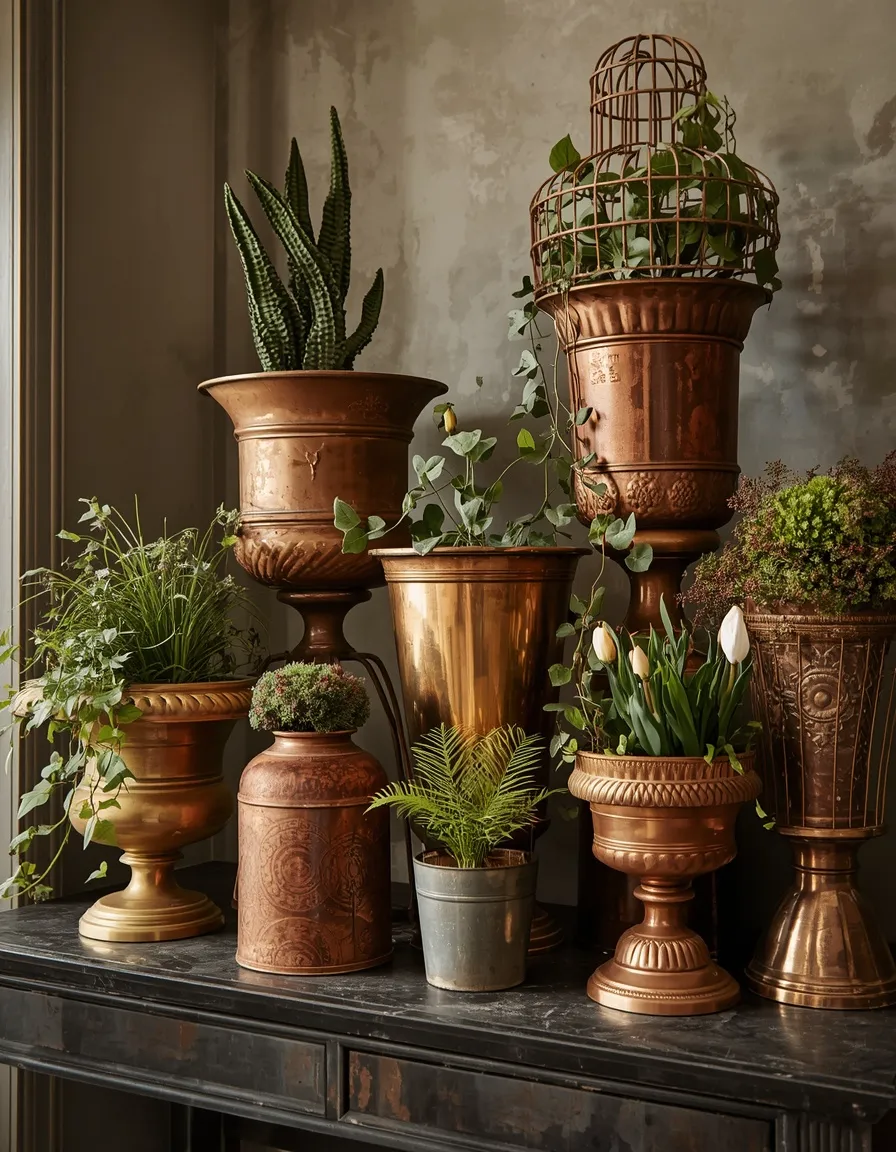
An eclectic grouping of antique brass, copper, and tin planters clustered on a console or shelf creates a collected, layered vignette full of warmth and depth. Varying heights and finishes, all tied together by fresh green plants, make the mix feel curated rather than random.
The trick to mixing metals is repetition and greenery: repeat each finish at least twice and let a common thread of foliage, trailing ivy, small ferns, a spring bulb or two, unify the group. Vary the heights using stacked books or small risers hidden behind the pots. Line every metal vessel with a nursery pot, since none will have drainage, and rotate plants toward the light every week or so for even growth. This suits a mantel, hallway console, or open shelf that needs warmth without a single dominant piece.
- Best for: stylists who love a collected, layered look over a single statement piece.
- Key elements: brass, copper, and tin vessels, unifying greenery, varied heights.
- Why it works: repetition and shared foliage make a mixed-metal group feel intentional.
Where to Find Genuine Antique Planters
The best antique planters come from flea markets, estate sales, architectural salvage yards, and farm auctions, where prices stay reasonable and patina is genuine. Look over each piece before buying: check ceramic and stoneware for hairline cracks that will worsen with frost, and inspect metal vessels for rust-through at the base. A little wear is the whole point, but structural damage will cut a piece’s life short.
Bring your finds together with the same layered, gathered-over-time spirit found across our spring decorating collection, where seasonal pieces are styled to feel personal rather than showroom-perfect. If your antique planters live above or around kitchen cabinetry, our guide to styling the space above your cabinets pairs naturally with this look and helps tie the vignettes together across a room.
Antique Planter Materials at a Glance
Different antique materials need different care. This quick reference shows how the main types compare on drainage, indoor or outdoor use, frost tolerance, and whether they’re safe for edible herbs.
| Material | Drainage | Indoor / Outdoor | Frost-safe? | Edible-herb safe? |
| Brass / copper | Rarely (use liner) | Best indoors | N/A | No, line it |
| Stoneware crock | Rarely (add gravel) | Both | No, cracks | Only if unpainted |
| Wicker | None (display only) | Indoors, dry | No | No, line it |
| Cast iron | Drill holes | Outdoors | Yes | With liner |
| Terracotta / olive jar | Sometimes | Both | No, shelter it | Yes |
| Galvanized metal | Drill holes | Outdoors | Yes | Line or avoid |
| Stone / concrete urn | Usually good | Outdoors | Usually yes | Yes |
Conclusion
The beauty of spring antique planter ideas is that the container does half the styling for you, decades of patina, glaze, and honest wear give every arrangement instant depth that a new pot can’t match. Whether you group tarnished brass on a console, roll out a wheelbarrow of pansies, or line crocks of herbs along the kitchen sill, the plants stay healthy as long as you respect drainage and keep old paint and metal away from anything edible. Browse more seasonal styling in our spring decor ideas, then take a slow wander through a flea market and see which weathered vessel is quietly waiting to hold this year’s first blooms.
Frequently Asked Questions
Q: How do I plant in an antique container with no drainage holes?
Use the pot-in-pot method: place a plastic nursery pot with drainage inside the antique, then lift it out to water at the sink so no water sits in the vessel. If you’d rather plant directly, add a 3–5 cm (1–2 in) gravel layer at the base and water sparingly to keep roots from sitting in water.
Q: Can I grow herbs I’ll eat in vintage or antique planters?
Only in vessels you know are food-safe. Old painted ceramics, chipped enamelware, and aged galvanized metal can contain lead or leach zinc, so line them with a food-safe liner or reserve them for ornamental flowers. Unpainted terracotta, stone, and clean glazed pots are generally fine for edible herbs.
Q: Will antique planters survive winter outdoors?
It depends on the material. Cast iron, stone, and concrete usually handle frost, but ceramic, stoneware crocks, and porous terracotta crack when trapped water freezes and expands. Empty and shelter fragile pieces before the first hard frost, or keep them for indoor and warm-season display.
Q: Where can I find affordable antique planters?
Flea markets, estate sales, farm auctions, and architectural salvage yards are the best sources for genuine pieces at fair prices. Thrift stores are ideal for smaller finds like enamelware, brass bowls, and teacups. Always check ceramics for cracks and metal for rust-through before buying.
Q: Which spring flowers are safe to plant if I have pets?
Petunias, violas, snapdragons, and primroses are generally considered pet-friendly. Many classic spring blooms, including tulips, daffodils, and hyacinths, are toxic to cats and dogs, and lilies are especially dangerous to cats. Keep toxic plants out of reach or choose safer blooms where pets roam.
Q: How do I stop antique brass and copper planters from tarnishing?
A thin coat of paste wax on the outside slows tarnishing while preserving the current patina. If you prefer a bright shine, buff copper with a lemon-and-salt rub and brass with a dedicated metal polish. Many people simply leave the aged finish, since patina is a large part of an antique planter’s charm.
Q: Can I use antique planters on a balcony or in a rental?
Yes, many of these looks are ideal for renters because they need no drilling or permanent changes. Lightweight brass, enamelware, and wicker suit indoor sills and shelves, while a galvanized trough or cast iron pot works on a sturdy balcony. Just secure heavier pots away from the railing edge on upper floors.