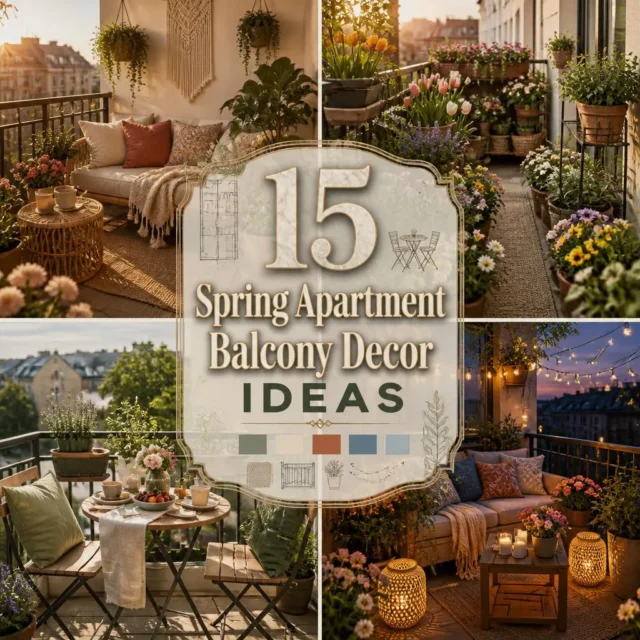

The first warm evening of spring is when a neglected balcony suddenly feels like the best room you’re not using. The right spring apartment balcony decor ideas turn a few square meters of concrete into an outdoor retreat for morning coffee, evening drinks, and pots of fresh blooms, without a single hole drilled or a deposit lost. Whether you’ve got a narrow rail-side ledge or a roomy patio-style space, small changes make a big difference out there. At Sunday Abode, we believe renters deserve a beautiful home as much as anyone, so every look below is designed to be removable, budget-friendly, and lease-safe, with the practical notes on weight, wind, and rules that most guides skip.
Key Takeaways
- A balcony is usable square footage, styling it well can add a whole outdoor room to a small apartment for very little money.
- Everything can be renter-safe: interlocking tiles, freestanding screens, and no-drill lighting all leave the space exactly as you found it.
- Check your lease and building rules first, many restrict drilling, grills, railing planters, and what can hang over the edge.
- Mind weight and wind on upper floors: secure lightweight furniture and pots so nothing blows over the railing onto people below.
- Plan for drainage, water pouring onto a neighbor’s balcony is a common, avoidable complaint; use trays and saucers under every pot.
1. Cozy Boho Lounge Corner
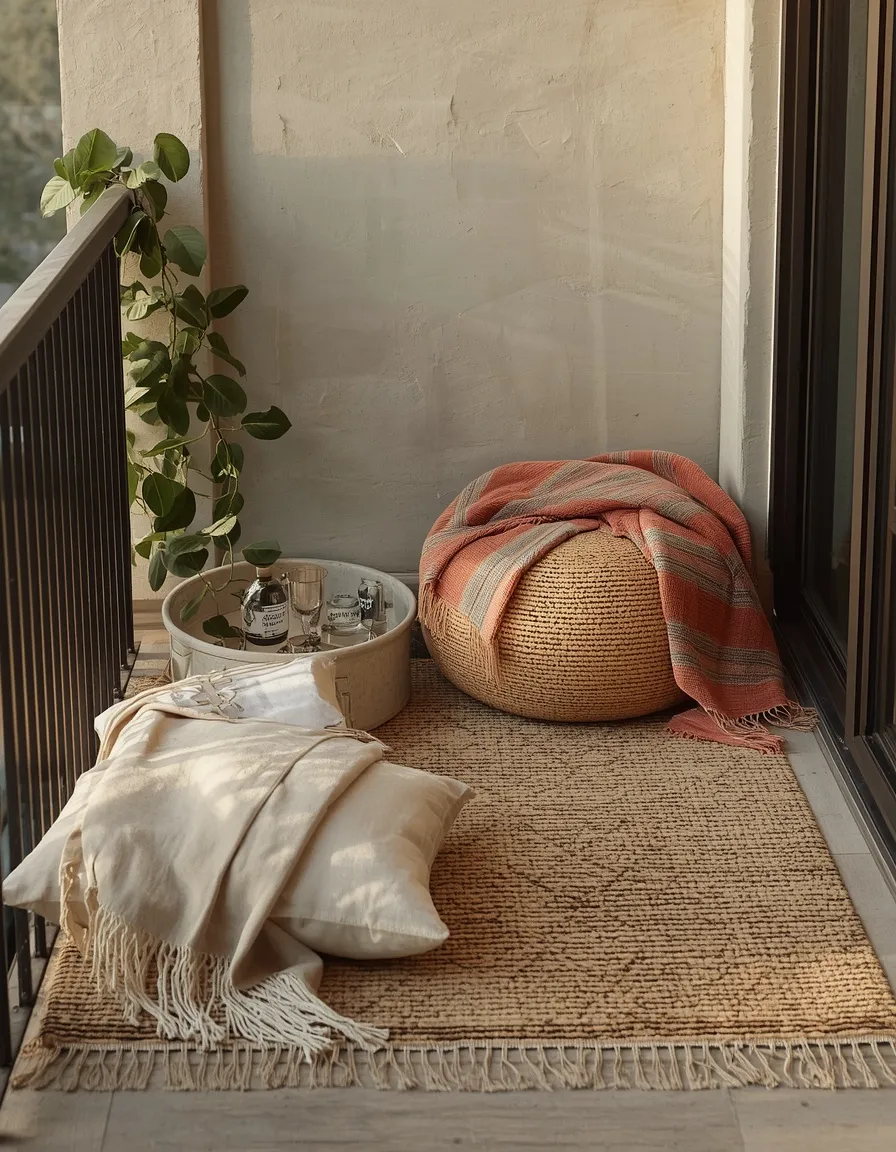
A layered boho corner turns a bare balcony into a soft, inviting nook you’ll actually want to sit in. A flatweave outdoor rug, a couple of floor cushions, a rattan pouf, and a draped throw create a relaxed, textured spot for reading or slow mornings.
Start with an outdoor rug to define the zone, then layer low seating, floor cushions and a pouf keep sightlines open on a small balcony better than a bulky chair. Add a small folding side table and a trailing plant like pothos for greenery. Choose covers rated for outdoor use, since indoor cushions soak up dew overnight and go musty fast; bring them in or store them in a bench box when rain is forecast. This look is ideal for renters because nothing is fixed to the walls or floor.
- Best for: renters and small balconies wanting a comfortable, no-drill lounge.
- Key elements: outdoor rug, floor cushions, rattan pouf, throw, trailing plant.
- Watch out: use outdoor-rated fabrics; indoor cushions mildew quickly outside.
2. Container Garden Oasis
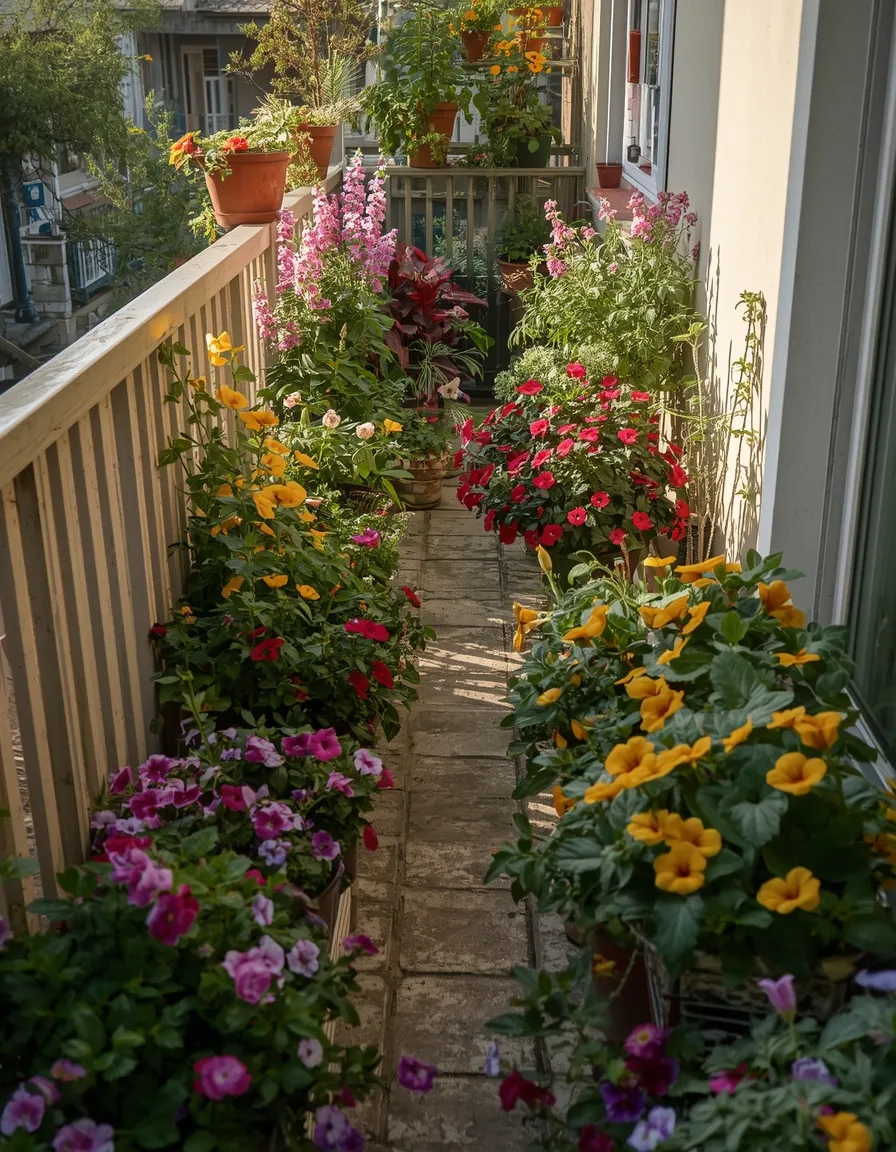
A balcony packed with potted plants of different heights becomes a lush little garden that spills greenery across the whole space. Tall snapdragons, mounding petunias, and trailing lobelia layered in pots turn even a narrow ledge into a spring bloom.
Group pots along the edges, tall plants at the back, mounding in the middle, trailing at the front, and leave a clear walking path through the center. Raising pots on stands and stacked risers creates a tiered, full look. Put a saucer under every pot so water doesn’t drain onto the balcony below, a frequent source of neighbor complaints. If pets share the space, note that many spring bulbs like tulips, daffodils, and hyacinths are toxic to cats and dogs; choose pet-safe blooms such as petunias, snapdragons, and calendula instead.
- Best for: plant lovers and anyone wanting maximum bloom in a small footprint.
- Why it works: layered pot heights create a garden feel with no planting bed.
- Watch out: use saucers to protect the neighbor below; pick pet-safe blooms.
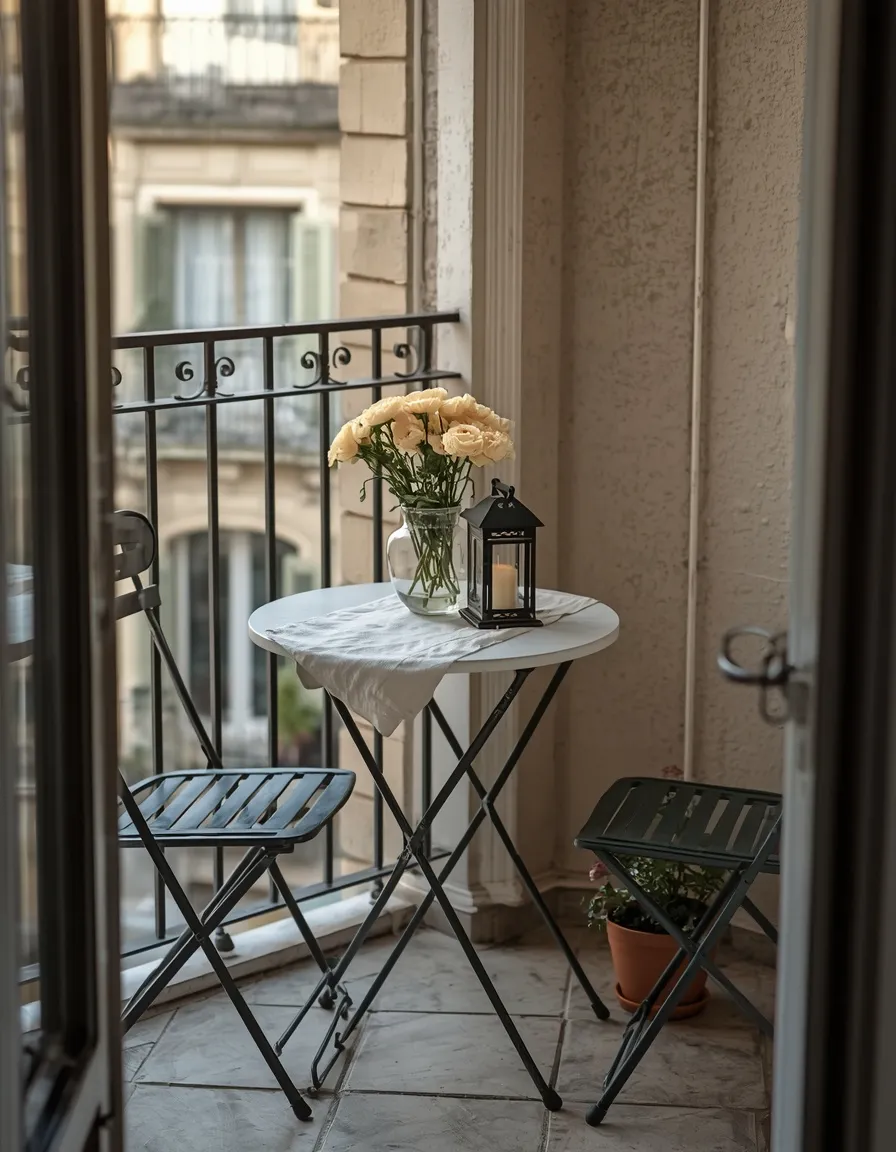
3. Bistro Breakfast Nook
A compact bistro set tucked into the corner creates a charming spot for morning coffee or an evening glass of wine. A small round café table and two folding chairs, styled with a linen runner and a jar of fresh flowers, bring European-café charm to the smallest balcony.
A folding bistro set is the smart choice for tight spaces because it collapses flat for storage or winter. Position the table against the railing to save floor space, and keep the styling simple: a small vase of ranunculus or tulips, a candle lantern, and a potted herb. Metal bistro sets can get hot in direct sun, so a seat cushion adds comfort on a south-facing balcony. This works for even the narrowest balcony with room for one small table.
- Best for: couples and coffee-lovers with a small or narrow balcony.
- Key elements: folding bistro table and chairs, linen runner, fresh flowers, lantern.
- When to use it: any balcony with room for one small round table.
4. Vertical Green Wall
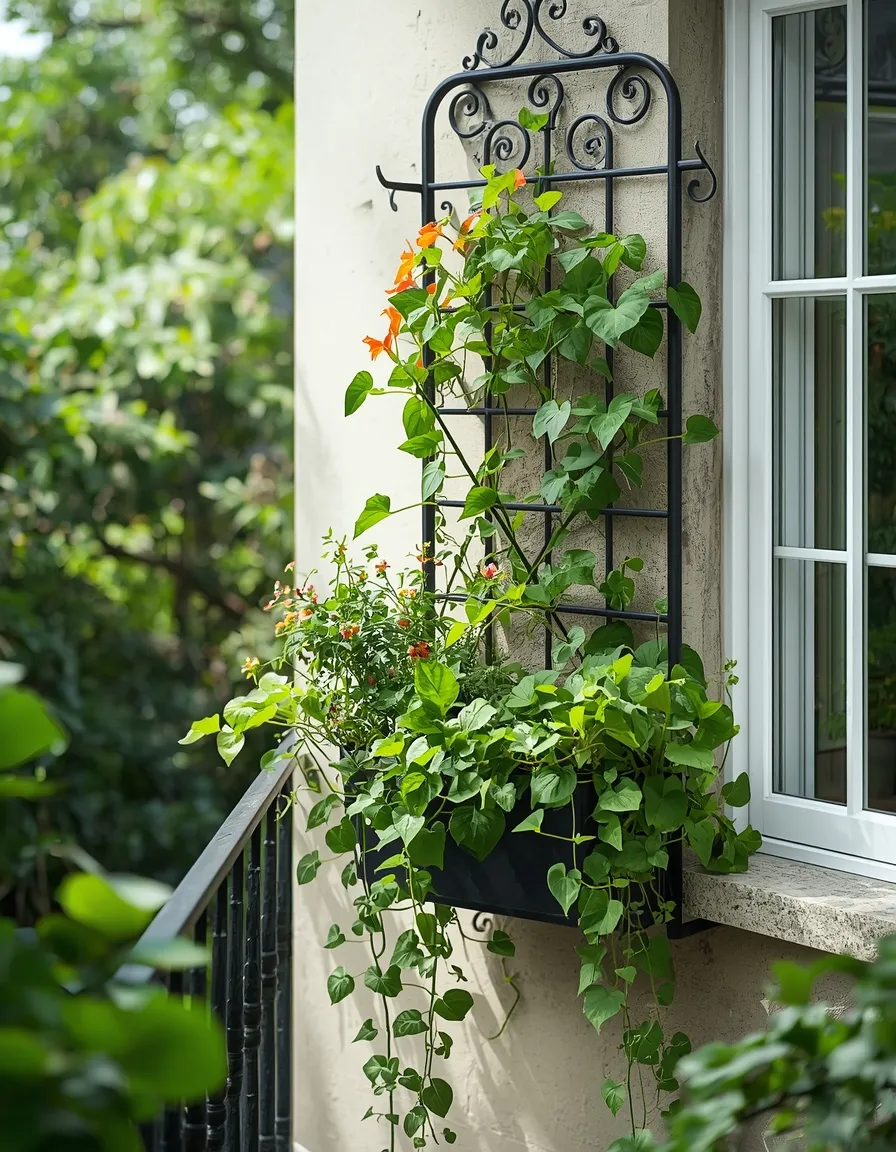
A living wall of plants climbing up the railing or a freestanding trellis makes the most of vertical space when floor room is scarce. Stacked planters, hanging pockets, and climbing vines draw the eye up and create privacy and greenery at once.
Use a freestanding trellis or an over-the-rail planter system rather than drilling into walls, keeping it renter-friendly. Fast climbers like sweet peas or a potted clematis fill a trellis in a single spring, while a felt pocket planter suits trailing herbs and flowers. Crucially, secure any rail-mounted planter on the inside of the railing, never the outside, so nothing can fall onto the street or a neighbor below. Check your lease first, as some buildings prohibit anything attached to or hanging over the railing.
- Best for: tiny balconies needing greenery and privacy without floor space.
- Watch out: mount rail planters inside the railing only; check building rules.
- Key elements: freestanding trellis, over-rail planters, climbing sweet peas.
5. Budget DIY Refresh
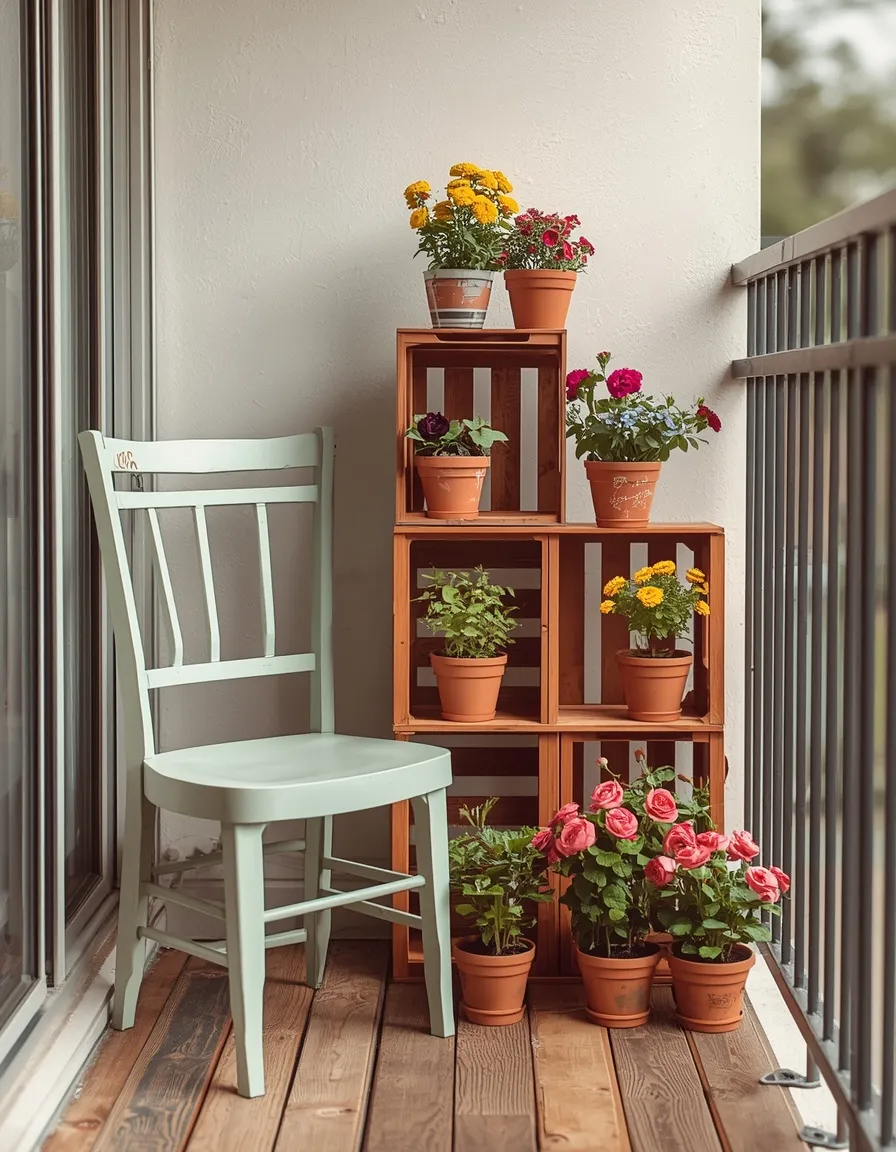
A thrifted, do-it-yourself balcony proves you don’t need money to create a beautiful spring space. Upcycled crates as shelving, painted terracotta pots, and a secondhand chair with a new cushion come together into a charming, personal look for very little.
Hunt thrift stores and marketplace listings for a small chair, a side table, and interesting pots, then unify mismatched finds with a coordinated color of outdoor paint. Wooden crates stacked on their sides make instant plant shelving. This is the most affordable look here and ideal for first apartments and college renters. Sand any secondhand wood to remove splinters and seal it against the weather, and check that thrifted chairs are structurally sound before trusting them outdoors.
- Best for: first apartments, students, and anyone decorating on a tight budget.
- Why it works: paint and upcycling unify cheap finds into one cohesive look.
- Key elements: thrifted chair, upcycled crates, painted terracotta pots.
6. String Light Evening Retreat
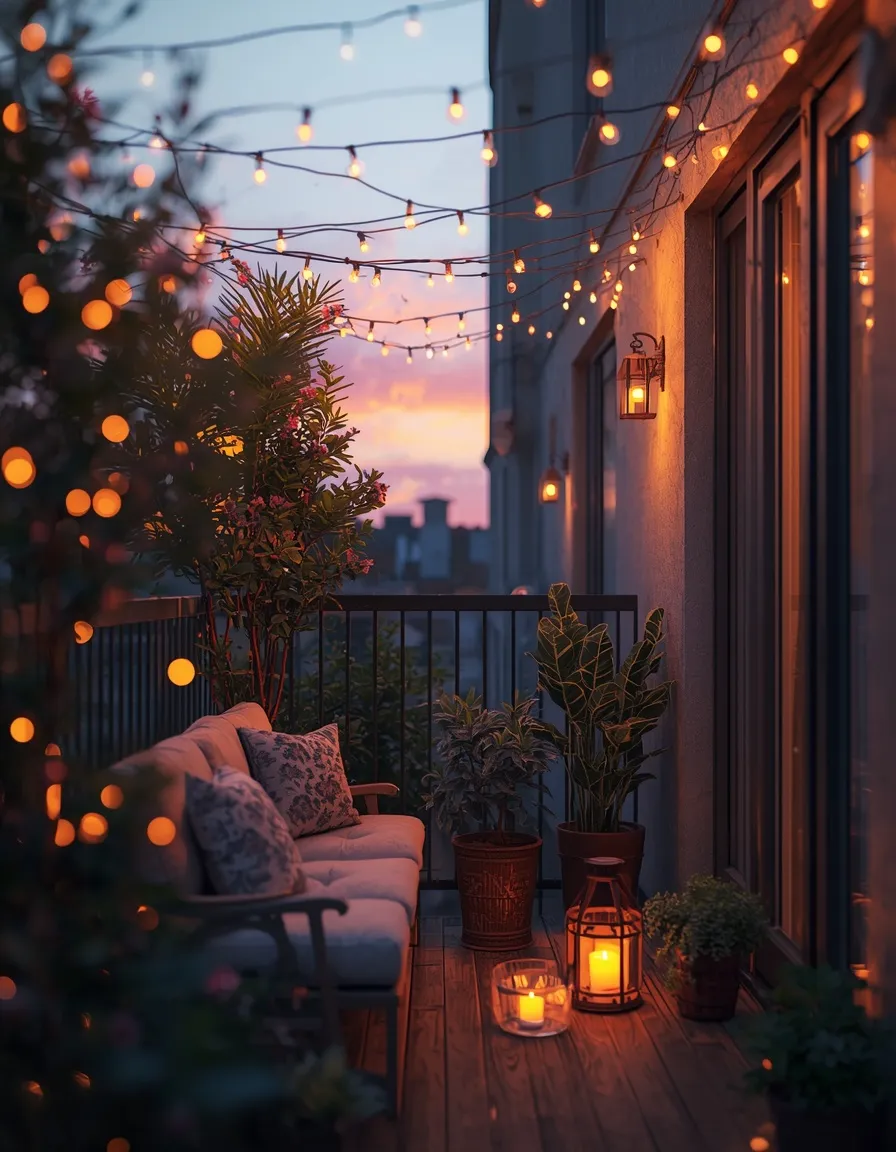
Warm string lights transform a balcony into a magical evening retreat the moment the sun goes down. Bulbs zigzagged overhead cast a soft golden glow over seating and plants, making the space feel like a destination after dark.
Because most renters can’t drill, hang lights using adhesive outdoor hooks, or thread them along the railing and up a freestanding pole or tension rod. Choose solar or battery string lights to avoid running cords through a door or window. Warm-white LEDs around 2700K give the coziest glow and stay cool to the touch. Pair the lights with lanterns and a couple of flameless candles for layers. This look suits anyone who uses their balcony most in the evening.
- Best for: evening loungers and entertainers wanting ambiance without drilling.
- Key elements: warm-white solar string lights, lanterns, adhesive hooks.
- When to use it: balconies used mostly after dark; pairs with any other look.
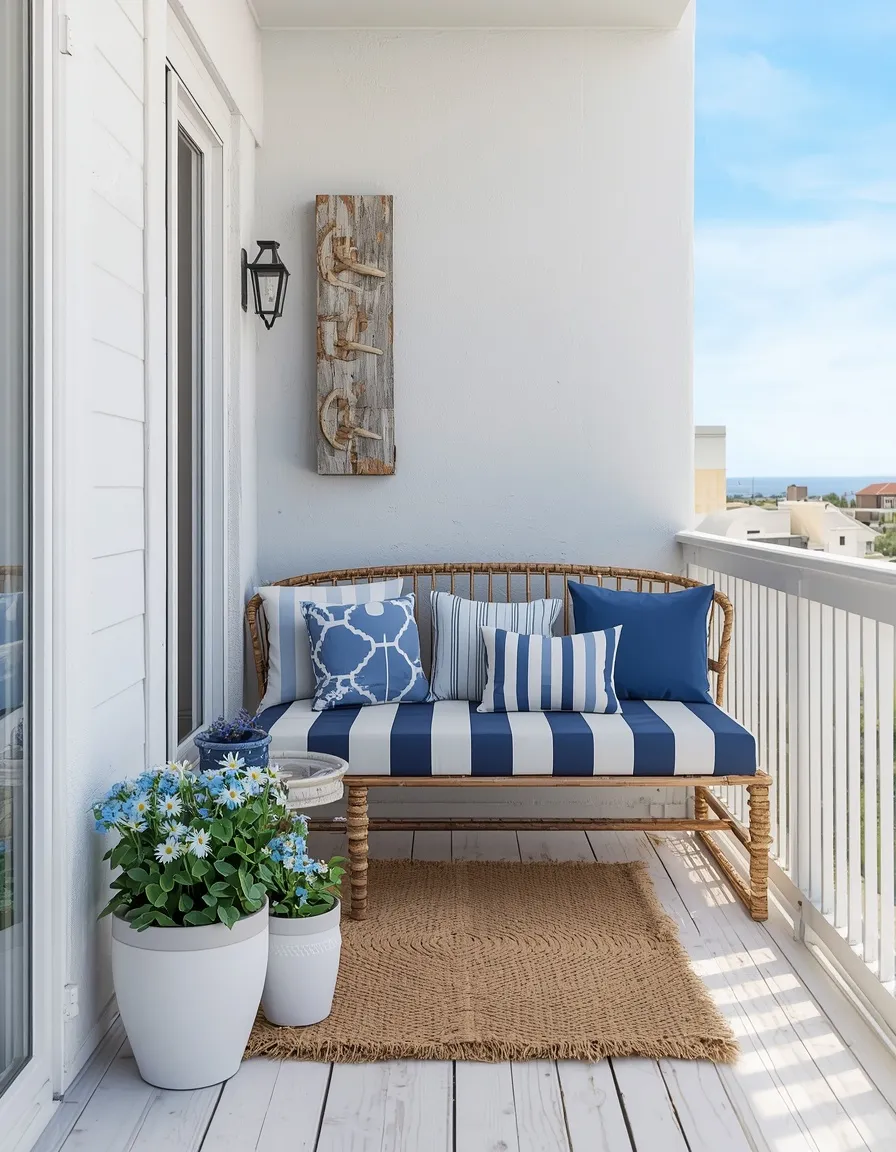
7. Coastal Blue and White Escape
A breezy blue-and-white scheme gives a balcony a fresh, seaside feel perfect for spring. Navy-and-white striped cushions, a jute-look rug, white pots, and touches of rope and rattan create a calm, coastal escape.
Keep the palette tight, white, navy, and natural fiber, and repeat it across cushions, planters, and accessories so the small space reads as one cohesive look. Plant white daisies, blue lobelia, and silvery dusty miller to echo the colors. Light, cool tones make a cramped balcony feel more open and airy, which is the practical bonus here. Use synthetic outdoor fabrics rather than natural cotton, which fades and mildews faster in sun and damp.
- Best for: small or dark balconies that need to feel brighter and more open.
- Why it works: a tight cool palette makes tight spaces feel larger and calmer.
- Key elements: navy-white striped cushions, jute-look rug, white pots, rope accents.
8. Private Screened Sanctuary
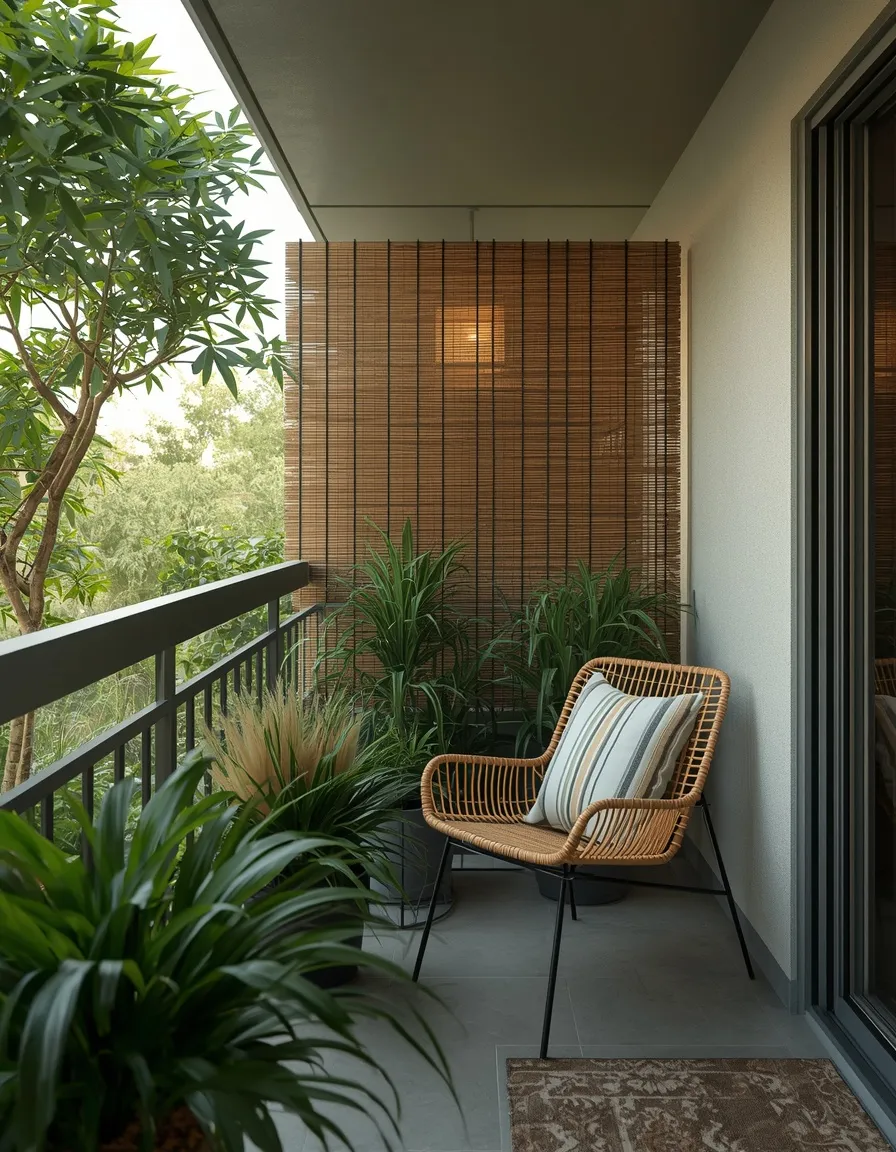
Adding privacy screening turns an exposed balcony into a secluded sanctuary shielded from neighbors’ views. Bamboo roll screening, tall potted grasses, or a freestanding folding screen create a green, enclosed feel without blocking all the light.
Attach bamboo or reed screening to the inside of the railing with cable ties for a fully removable, renter-safe privacy layer. For a softer approach, line the rail with tall potted plants like bamboo, miscanthus grass, or a slim bay tree. A folding outdoor screen adds instant coverage on one side with zero installation. Check wind exposure first, since solid screening acts like a sail on a high, windy balcony and must be secured well. This suits overlooked balconies and anyone wanting a calmer, enclosed space.
- Best for: overlooked balconies and renters craving privacy without construction.
- Watch out: solid screening catches wind on high floors, secure it firmly.
- Key elements: bamboo roll screening, tall potted grasses, folding screen.
9. Minimalist Scandi Balcony
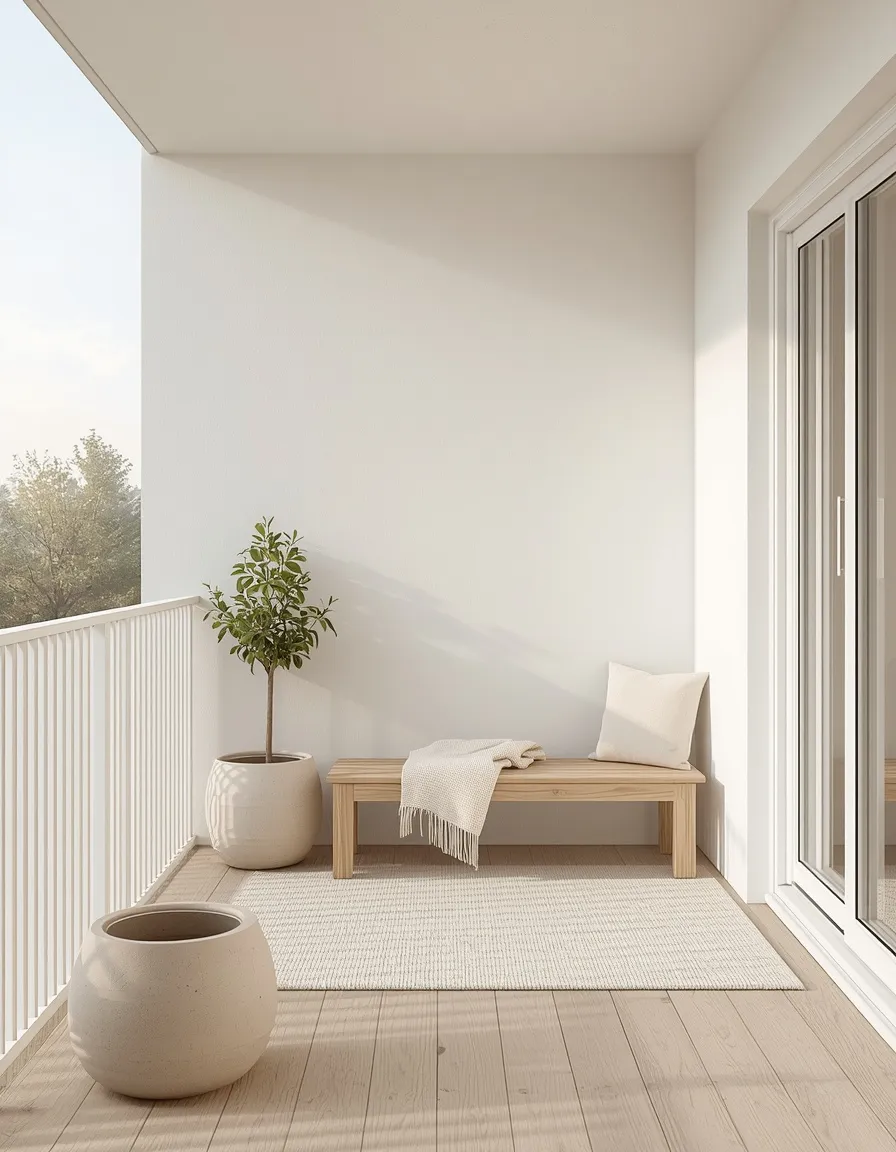
A pared-back Scandinavian look gives a balcony a calm, uncluttered simplicity. A single light-wood bench, one or two sculptural planters, a soft neutral throw, and lots of empty space create a serene, modern spot to breathe.
The key to minimalist balcony styling is restraint: choose a few quality pieces and leave deliberate open space rather than filling every corner. Stick to a neutral palette of pale wood, white, and grey, with greenery as the only real color. A slim wall-hung or freestanding bench with hidden storage keeps cushions dry and the space tidy. This suits modern renters and anyone who finds busy spaces stressful, and it photographs beautifully in soft daylight.
- Best for: modern, clutter-averse renters wanting a calm, tidy balcony.
- Why it works: negative space and a neutral palette read intentional and serene.
- Key elements: light-wood bench, sculptural planters, neutral throw, open space.
10. Herb and Kitchen Garden
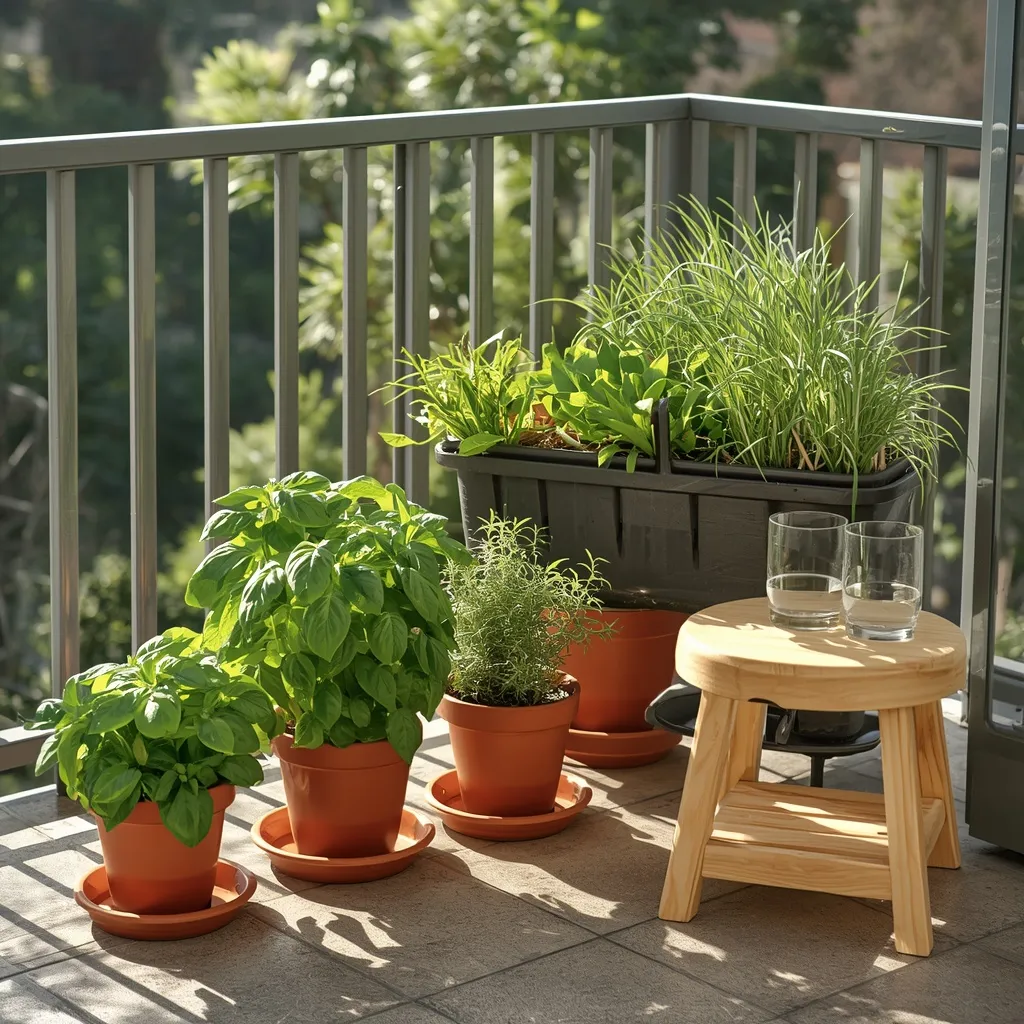
A balcony herb garden puts fresh cooking ingredients right outside the kitchen door. Pots and rail boxes of basil, mint, rosemary, and chives create a productive, fragrant spring space that earns its keep as well as looking good.
Most culinary herbs need at least six hours of direct sun, so site this on a south- or west-facing balcony and check your light before planting. Keep vigorous spreaders like mint in their own pots, as they choke neighbors in a shared container. Harvest little and often to keep plants bushy. Set herb pots in saucers to catch drainage, and if you use a rail box, secure it inside the railing. This look is perfect for cooks and anyone wanting a balcony that’s useful as well as pretty.
- Best for: cooks and sunny balconies (6+ hours of direct sun).
- Watch out: keep mint contained; it overwhelms other herbs in shared pots.
- Key elements: potted basil, rosemary, chives, rail boxes secured inside.
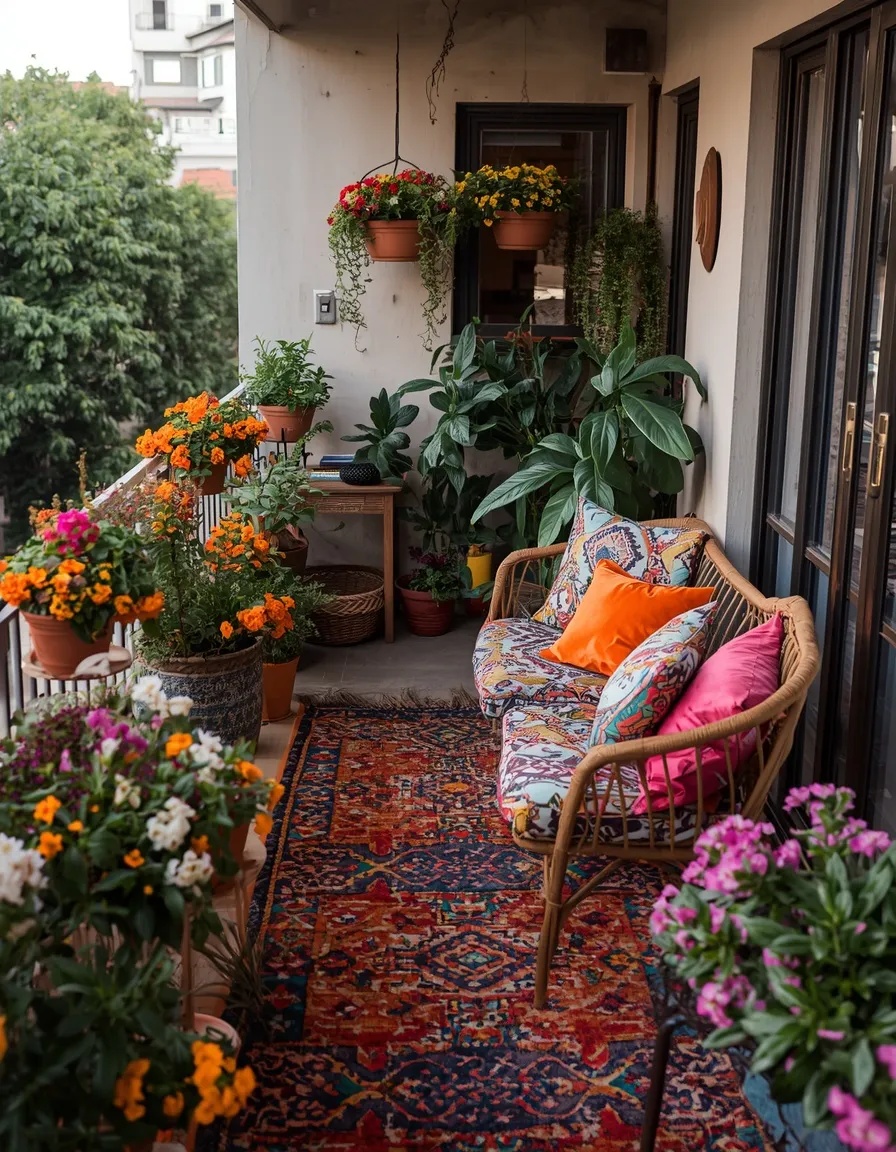
11. Colorful Eclectic Mix
A bold, colorful balcony celebrates personality with a joyful mix of patterns and hues. A patterned rug, bright cushions in clashing-but-coordinated colors, and flowers in every shade turn the space into a cheerful outdoor room.
The trick to making an eclectic mix feel intentional rather than chaotic is a shared thread, repeat two or three colors across cushions, pots, and blooms so the riot of pattern still hangs together. Mix a Moroccan-style rug with solid cushions, or busy florals with plain textiles, balancing pattern with calm. This renter-friendly, all-textiles look needs no installation. Choose fade-resistant outdoor fabrics, since bright dyes on cheap materials wash out fast in direct spring sun.
- Best for: maximalists and renters wanting big personality with zero commitment.
- Why it works: a few repeated colors tie a bold pattern mix into one look.
- Watch out: use fade-resistant fabrics so bright colors last a full season.
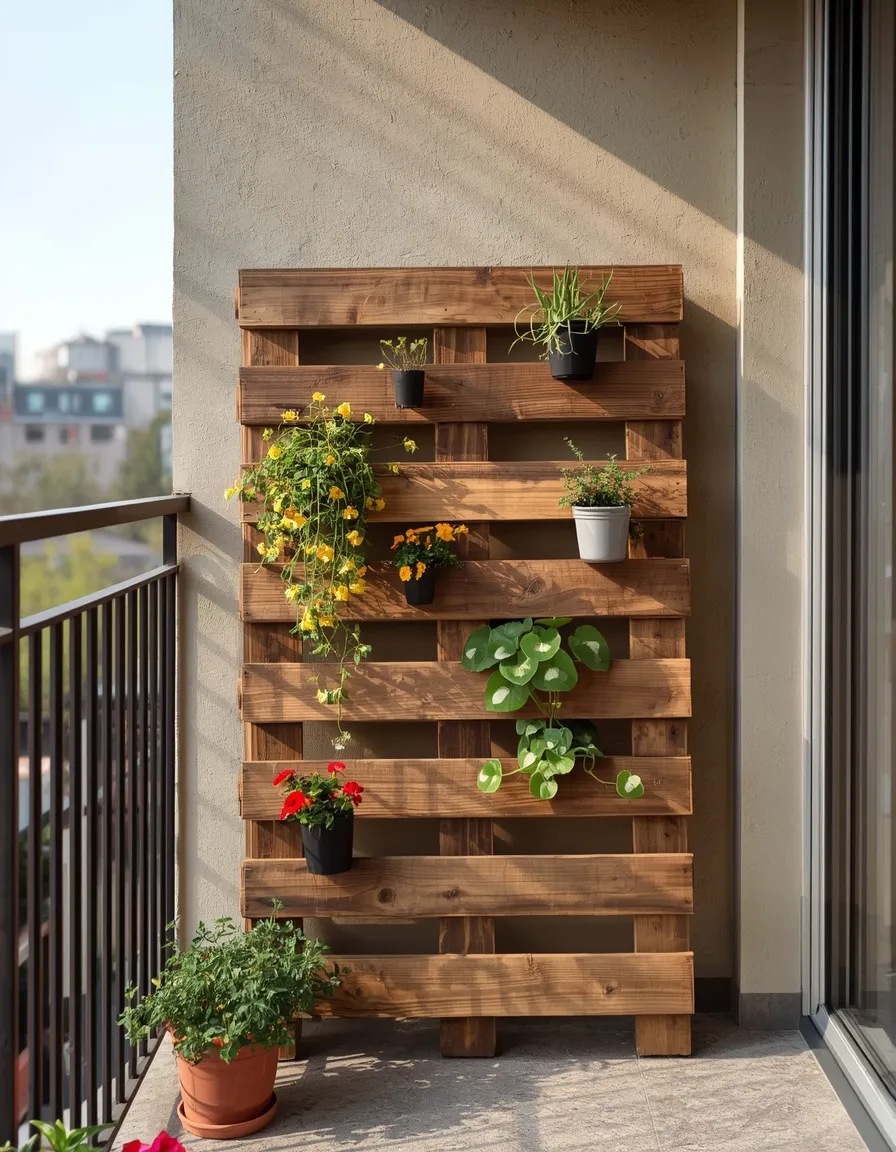
12. Vertical Pallet Plant Stand
An upcycled pallet stood upright against the wall becomes a rustic vertical planter and shelf. Small pots of trailing flowers and herbs tucked into the slats create a living green feature that uses almost no floor space.
Sand a heat-treated pallet (stamped ‘HT,’ never ‘MB’ for chemical treatment) to remove splinters, seal it, and lean it securely against the wall or fix it with removable straps so it can’t tip. Slot in small pots or line the gaps with landscape fabric to hold soil and trailing plants like nasturtiums and creeping herbs. Because it’s vertical, it’s ideal for the tiniest balconies. Make sure it’s genuinely stable, as a loaded pallet is heavy and dangerous if it falls, especially where children are around.
- Best for: tiny balconies and DIY-minded renters short on floor space.
- Watch out: use only HT-stamped pallets; secure firmly so it can’t tip over.
- Key elements: upright sealed pallet, small pots, trailing nasturtiums and herbs.
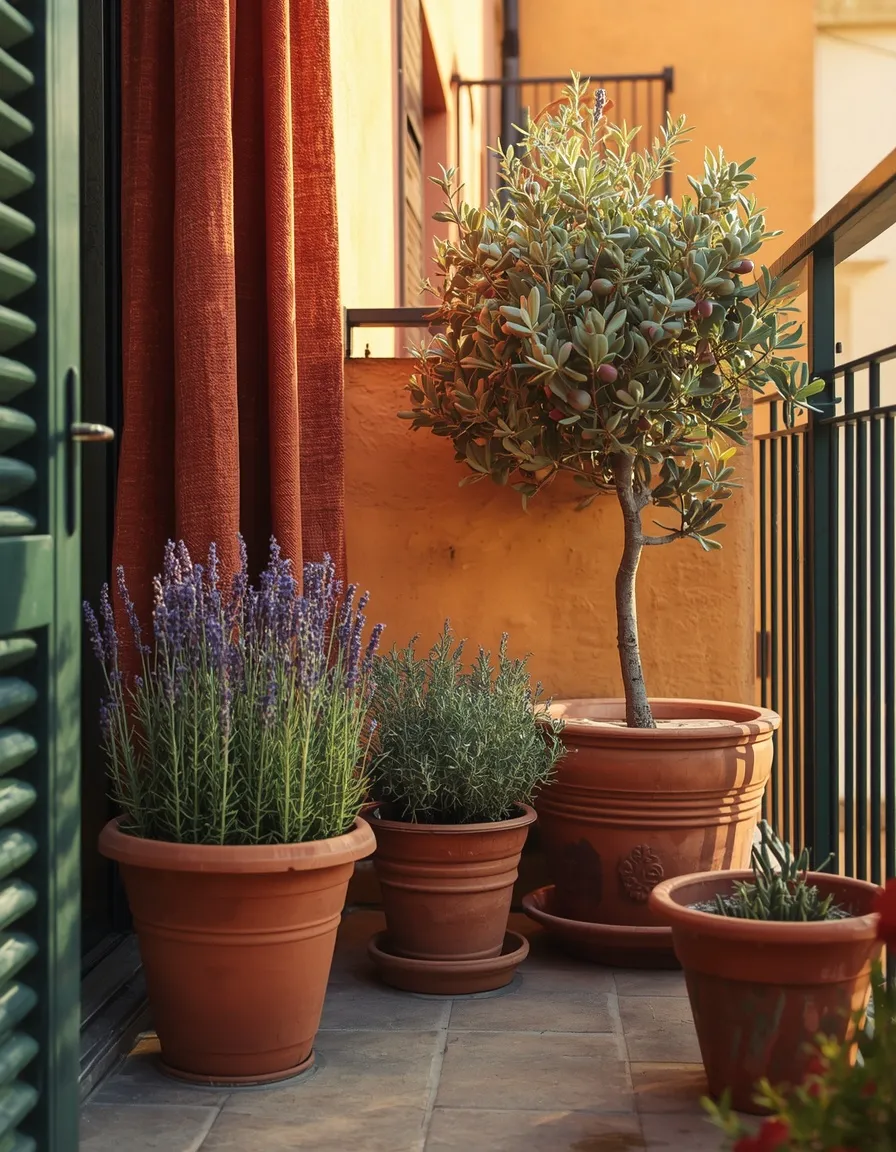
13. Warm Mediterranean Terrace
A Mediterranean-inspired balcony brings sun-warmed, terracotta-toned calm to spring. Aged clay pots, olive and lavender plants, warm earthy textiles, and a wrought-iron accent evoke a terrace in southern Europe.
Build the look around terracotta and warm neutrals, planting drought-tolerant Mediterranean staples like lavender, rosemary, and a potted olive or citrus tree that thrive in sun and don’t mind drying out between waterings. Add a woven rug and cushions in ochre and rust tones. This suits sunny, south-facing balconies and low-maintenance gardeners, since these plants forgive occasional neglect. In cold-winter climates, an olive or citrus tree needs to come indoors before frost, so keep it in a pot you can move.
- Best for: sunny balconies and low-maintenance, drought-tolerant planting.
- Key elements: terracotta pots, lavender, rosemary, potted olive, earthy textiles.
- Watch out: move olive or citrus indoors before frost in cold climates.
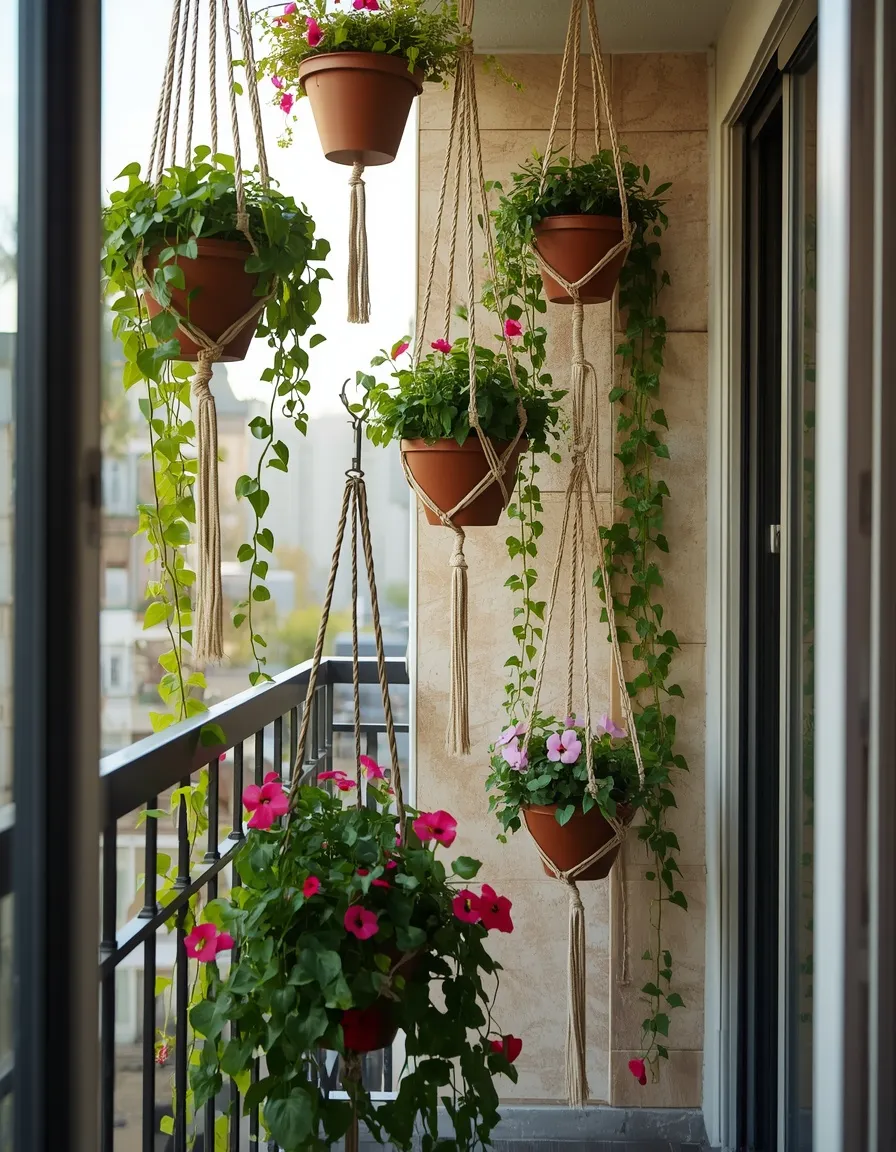
14. Hanging Garden Display
A cascade of hanging planters at different heights creates a lush garden overhead when floor and rail space run out. Trailing plants spilling from macrame hangers and baskets bring greenery to eye level and above.
Hang planters from a freestanding plant stand, a tension rod between walls, or a ceiling hook only if your lease allows drilling; otherwise a clothing-rail-style stand works with no holes. Trailing plants like string of hearts, ivy, and trailing petunias look best cascading from height. Water hanging pots carefully with a long-spout can, and hang them where drips won’t fall on seating or a neighbor below. Vary the heights for a layered, garden-like effect. This look suits renters wanting greenery without sacrificing precious floor space.
- Best for: renters short on floor and rail space wanting overhead greenery.
- Watch out: position hanging pots so drips don’t fall on seating or neighbors.
- Key elements: macrame hangers, freestanding stand, trailing string of hearts and ivy.
15. Multi-Function Small-Space Setup
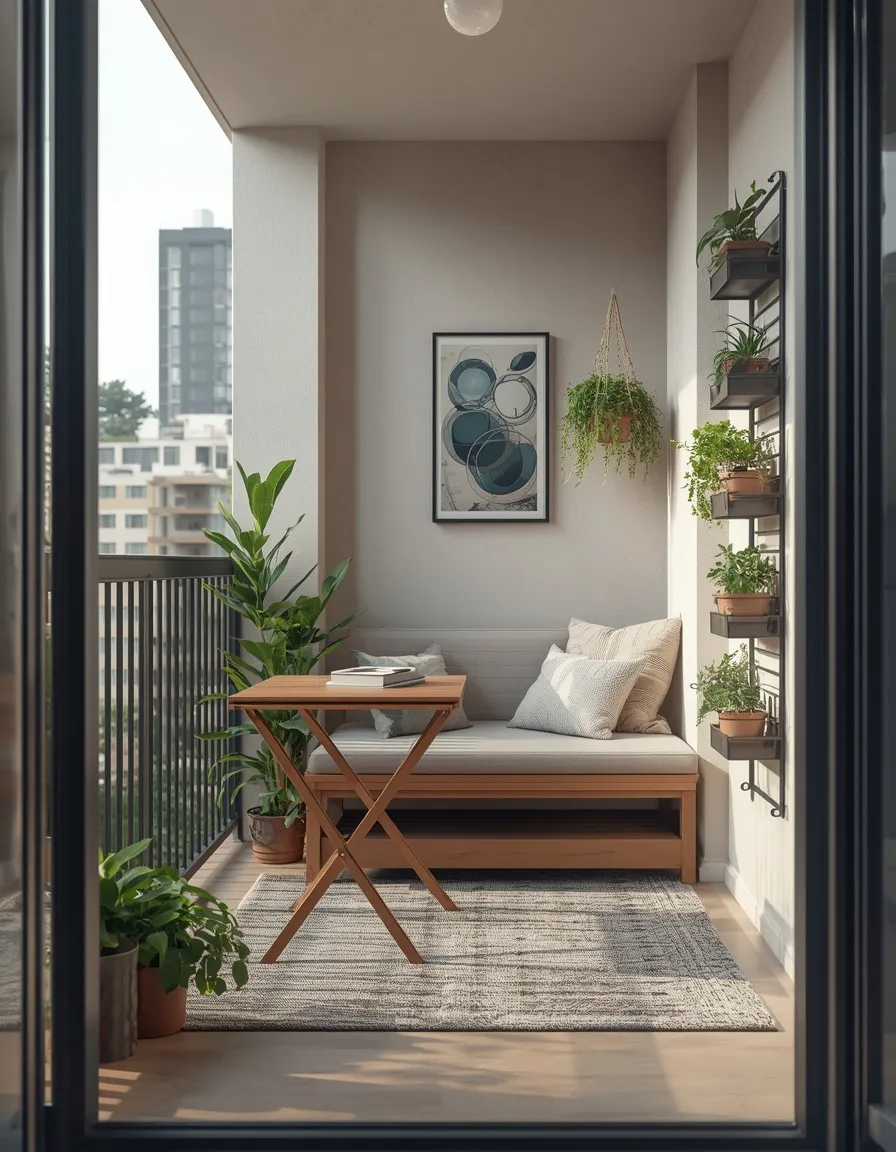
A cleverly zoned balcony works as lounge, dining spot, and mini garden all at once, even in a few square meters. Folding furniture, a storage bench, and a wall-side plant rack combine so the space flexes to whatever you need.
The secret to a multi-function balcony is furniture that folds or doubles up: a drop-leaf rail table for dining that folds flat, a storage bench that seats two and hides cushions, and vertical planting to keep the floor clear. Define a small lounge zone with a rug and keep the dining setup collapsible. Measure your balcony before buying anything, as the most common small-space mistake is furniture that’s simply too big to move around. This suits renters who want their small balcony to do everything.
- Best for: renters wanting one small balcony to lounge, dine, and garden.
- Why it works: folding and double-duty pieces let a tiny space flex to each use.
- Watch out: measure first, oversized furniture is the top small-balcony mistake.
What Should Renters Check Before Decorating a Balcony?
Before buying anything, read your lease and building rules, because many apartments restrict what you can do on a balcony. Getting this right protects your deposit and keeps the peace with neighbors.
Common restrictions include no drilling into walls or railings, no grills or open flames, no planters mounted on the outside of the railing, and limits on what can hang over the edge. Weight matters too: balconies have a load limit, so avoid heavy stone pots and large water features on older structures. On upper floors, secure lightweight furniture and pots against wind so nothing blows over the edge onto people below.
This renter-first, leave-no-trace approach runs through our whole spring decorating collection, where every idea is built to work in a rented home. To carry the same fresh, removable style indoors, our guide to styling a rental apartment for spring pairs naturally with this one for a full seasonal refresh, inside and out.
Which Balcony Look Fits Your Space?
Your balcony size, budget, and how much sun it gets narrow the choice quickly. This quick reference matches each look to the space and effort it suits best.
| Look | Best balcony size | Budget | Effort |
| Boho lounge corner | Small–medium | Medium | Low |
| Container garden | Any | Low–medium | Medium |
| Bistro nook | Narrow / tiny | Low | Very low |
| Vertical green wall | Tiny | Medium | Medium |
| Budget DIY refresh | Any | Very low | Medium (DIY) |
| String light retreat | Any | Low | Low |
| Screened sanctuary | Small–medium | Medium | Low |
Conclusion
The best spring apartment balcony decor ideas share one thing: they treat a small rented outdoor space as a real room worth living in. Whether you build a cozy boho corner, pack the edges with a container garden, or string warm lights overhead for evenings out, the looks here are removable, budget-friendly, and kind to your deposit. Keep the practical notes in mind, check your lease, use saucers so water stays on your side, and secure everything against wind on high floors, and your balcony becomes the outdoor room you use most. Explore more seasonal refreshes in our spring decor ideas, then step outside and picture this spring settling in on your own balcony.
Frequently Asked Questions
Q: How do I decorate a small apartment balcony on a budget?
Start with thrifted and upcycled pieces, a secondhand chair, wooden crates as shelving, and painted terracotta pots unified by one color of outdoor paint. Add an inexpensive outdoor rug and solar string lights for instant atmosphere. Textiles and plants give the biggest visual change for the least money.
Q: What can I do on a balcony without drilling holes?
Almost everything. Use interlocking floor tiles, freestanding trellises and screens, over-the-rail planters, adhesive outdoor hooks for lights, and cable ties for bamboo screening. All of these leave the balcony exactly as you found it, protecting your deposit while still giving a fully styled space.
Q: How do I stop water from draining onto my neighbor’s balcony?
Set a saucer or drip tray under every pot so runoff collects instead of pouring over the edge. Water slowly and only until the soil is moist, not flooded, and empty saucers after heavy rain. Water dripping onto the balcony below is one of the most common apartment-living complaints and is easily avoided.
Q: Which plants are safe if I have pets on my balcony?
Petunias, snapdragons, calendula, and roses are generally considered pet-friendly. Many popular spring bulbs, including tulips, daffodils, and hyacinths, are toxic to cats and dogs, so keep them out of reach or skip them. Always double-check a plant before adding it where pets roam.
Q: How do I create privacy on an overlooked balcony?
Attach bamboo or reed screening to the inside of the railing with cable ties, line the rail with tall potted grasses or bamboo, or add a freestanding folding screen. All are renter-safe and removable. On a high, windy balcony, secure solid screening firmly, since it catches wind like a sail.
Q: Do I need to worry about weight and wind on an upper-floor balcony?
Yes. Every balcony has a load limit, so avoid heavy stone pots and large water features on older buildings. Wind is stronger higher up, so choose or weight lightweight furniture and pots, keep them away from the railing edge, and never leave anything that could blow over onto people below.